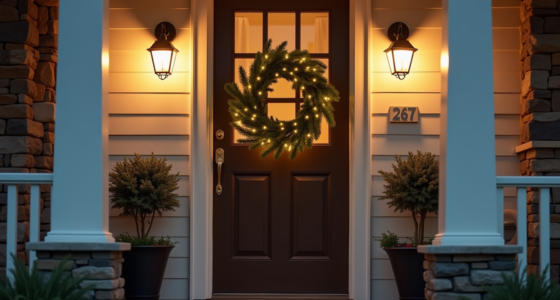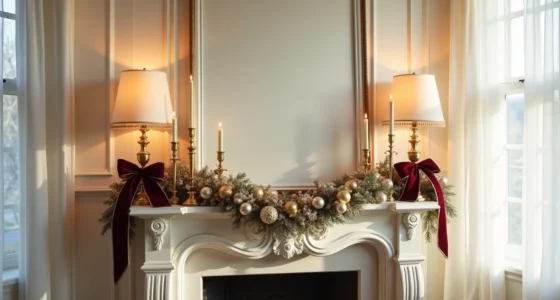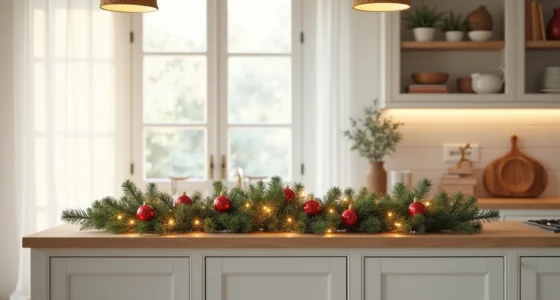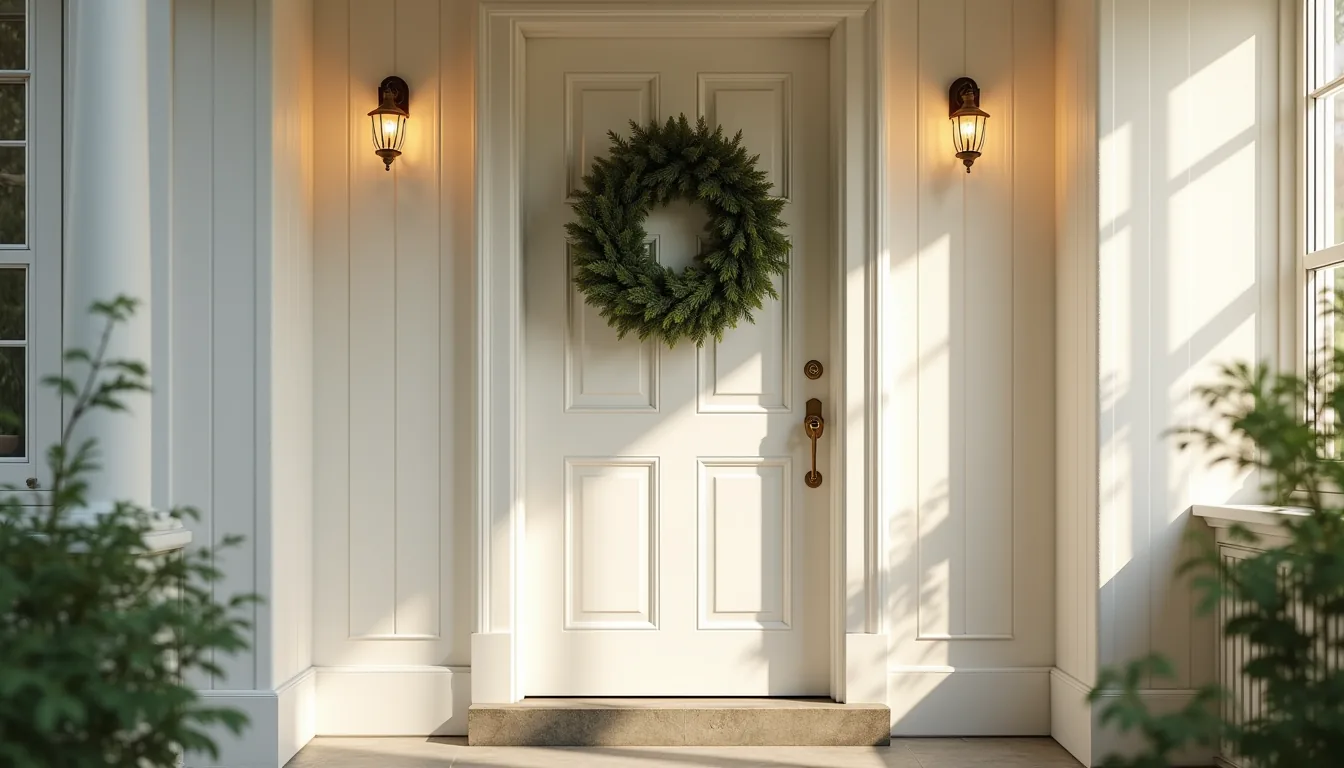

Your front door is the first thing guests see, and these six Christmas door decor ideas give you a clear, practical path to a festive entryway that fits your space, budget, and rental agreement. Each option below is matched to a specific constraint, apartment rules, small porches, or long-term curb appeal, so you can pick the one that solves your actual problem. You’ll also find the exact measurements, mounting methods, and maintenance timelines needed to execute each look without damaging your door or wasting a weekend.
Key takeaways
- Match wreath scale to your door’s width: 24–28 inches for a standard 36-inch door, 18–22 inches for narrow entries, and 30–36 inches for double doors.
- Use command hooks or over-door hangers for renter-safe garlands and bows, avoiding nails or adhesive residue that can forfeit your security deposit.
- Choose battery-operated LED lights with a timer (6–8 hour cycles) over plug-in strands, and never daisy-chain more than three sets to prevent outlet overload.
- Invest in a magnetic or slip-on door panel cover if you plan to reuse it for 3+ years; store it flat in a climate-controlled bin to prevent warping and fading.
Wreaths: Scale, Placement, and Material Trade-offs
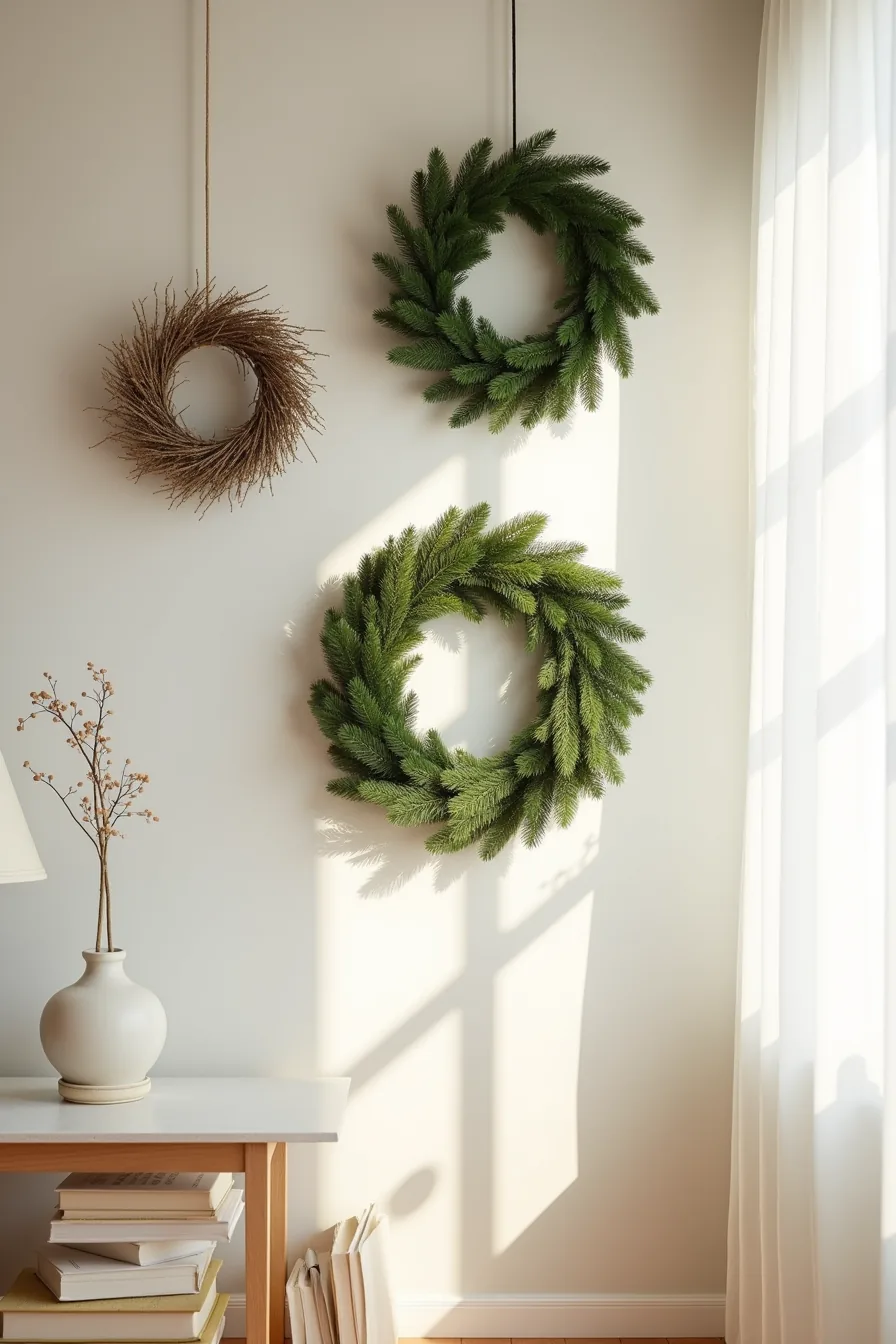
A 36-inch wreath will overwhelm a standard 32-inch exterior door, while an 18-inch version looks lost on a wide double entry. Measure your door’s width first; most single doors suit a 24-inch wreath, with 28–30 inches reserved for grander entrances. Hang the center of the wreath at eye level, roughly 62–66 inches from the floor, so it reads naturally without blocking sightlines or hardware.
The materials dictate your maintenance schedule. Fresh pine wreaths (think the 24-inch example wrapped in that deep green) last 3–4 weeks indoors but dry out faster on a sun-exposed door; mist daily and expect needle drop by mid-January. Faux greenery holds its shape for years, but UV exposure will fade it within two seasons, store it flat in a bin, not crushed in a sack.
Dried branches, like the 18-inch option, shed less than pine but snap if you hang them by a high-traffic hinge. For a rental, skip nails: use a lightweight over-the-door hook rated for 10–15 pounds and check the gap between door and frame first.
Garland Swags: Creating Proportion in Narrow vs. Wide Entries
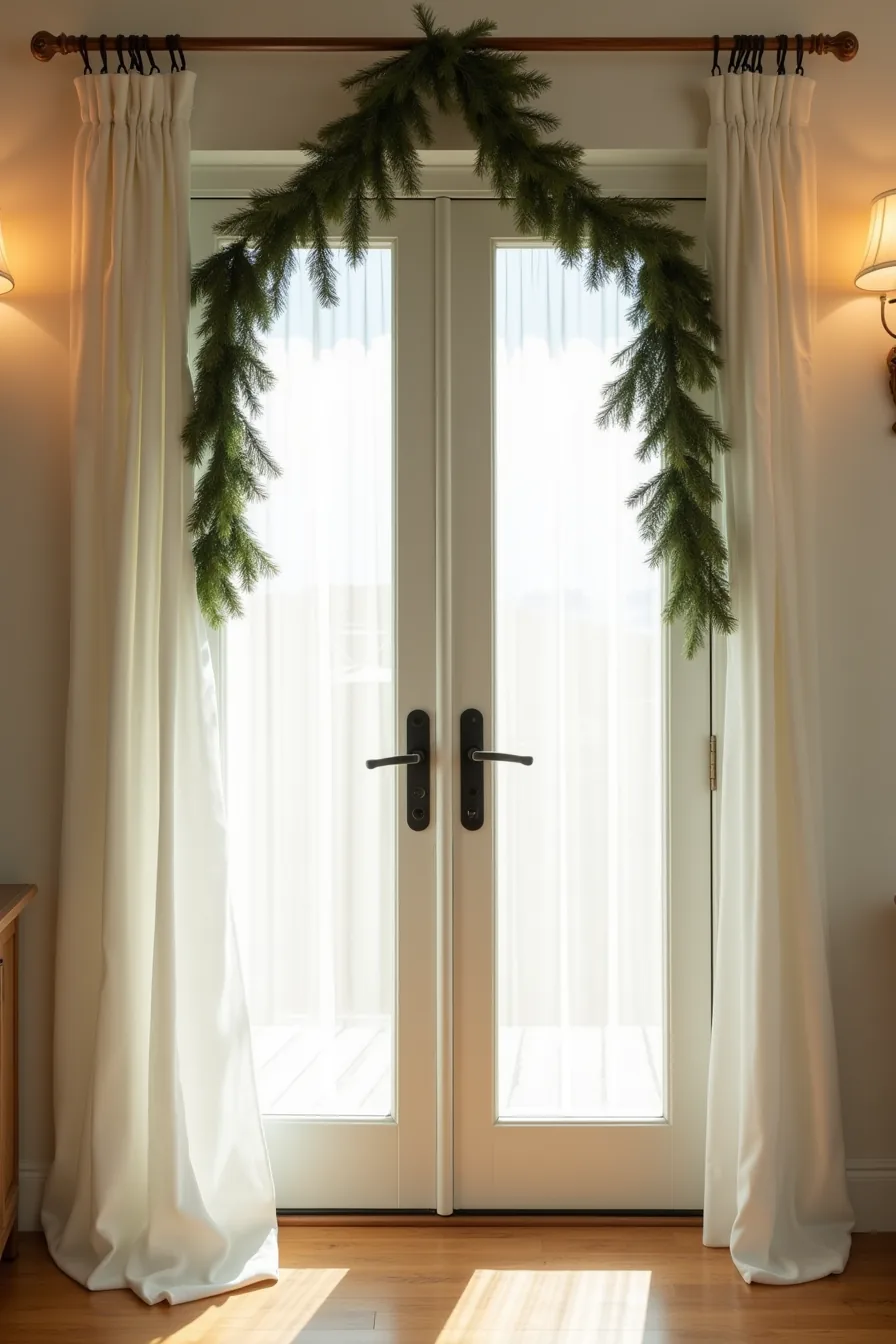
A single garland swag solves the proportion problem on a narrow doorway without eating into your walkway. Anchor it at the top corners of the frame, letting it drape so the center dips roughly 12 inches below the header. That shallow curve keeps clearance above head height for most adults, anything deeper starts brushing taller visitors and blocks the sightline through a sidelight.
For wide double doors, you need two symmetrical swoops rather than one stretched line. Run a fuller garland from each outer top corner toward the center, crossing or meeting at the midpoint with a 16–18 inch drop. The doubled visual weight balances the wider span, while the gap at the center preserves access to the handle and lock.
Match garland fullness to your entry’s scale: a 6–8 inch diameter garland suits a single 36-inch door, while double doors call for 10–12 inch diameter branches. Use zip ties or floral wire at the anchoring points, they hold firm against wind and release without damaging the frame. For practical Christmas door decor ideas planning tips, measure the drop before cutting; you can always trim, but you can’t add length back.
Ribbon and Bow Accents: Renter-Friendly Layering
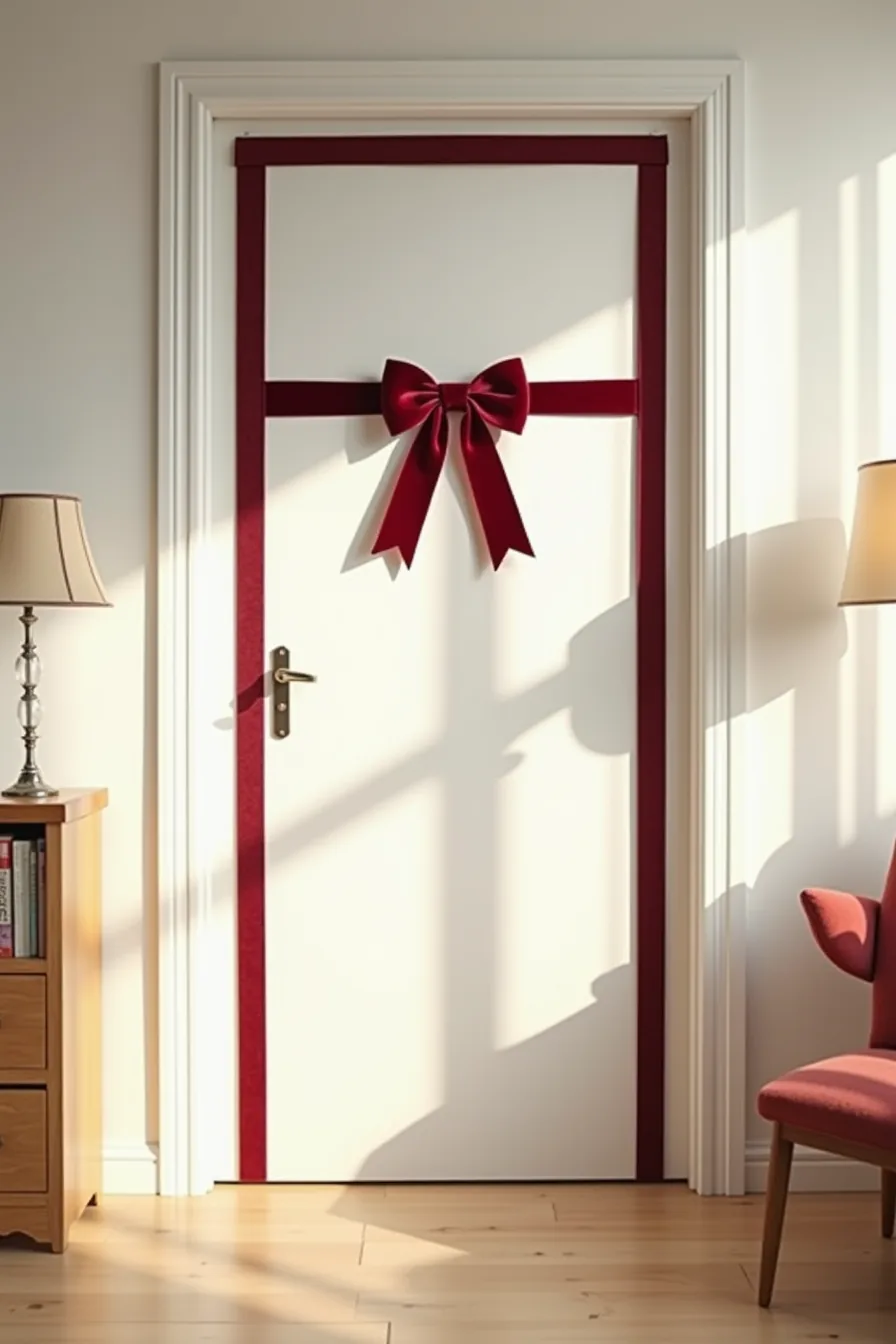
Velvet ribbon with adhesive backing transforms a plain white door into a framed statement without a single nail or screw. The burgundy strips in this setup follow the perimeter about 2 inches from the edge, creating a clean border that reads as intentional rather than temporary. Command strips at each corner hold the ribbon flush; expect them to release cleanly when you pull the tab straight down in spring.
This approach suits renters because it leaves zero residue and takes under 20 minutes to install or remove. The red bow centered at the top anchors the composition without competing with the frame, position it where a wreath hanger would sit, roughly 6 inches below the header. For budget vs. Splurge Christmas door decor ideas, the ribbon costs $8–$15 per roll, while the bow runs $10–$25; total spend stays under $40 and stores flat in a drawer.
Coordinate the burgundy with existing red or green accents in your entryway, if your hallway leans neutral, swap in forest green or cream ribbon instead. Avoid glossy ribbon on exterior doors; matte velvet grips better and resists wind fraying.
Lighted Door Frames: Electrical Setup and Safety Considerations
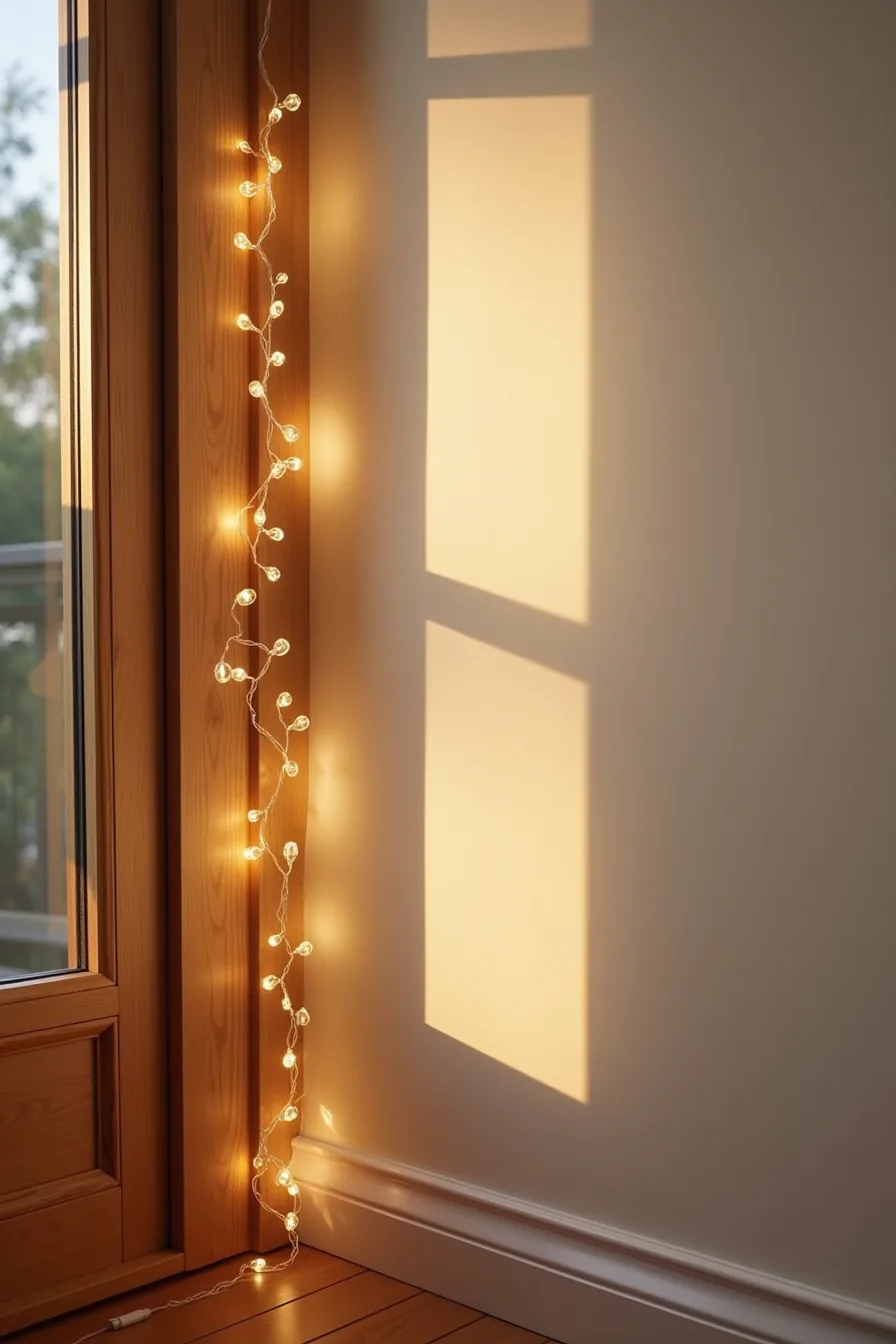
Warm white LED string lights wrapped around the door trim deliver the strongest curb appeal of any Christmas door decor ideas, but the setup demands planning before you hang a single bulb. The example here runs a single strand along the outer edge of the frame, with the plug emerging at the base near an outdoor-rated outlet, that outlet placement is non-negotiable. If your nearest exterior receptacle sits more than 6 feet from the door, factor in a heavy-duty extension cord rated for outdoor use and keep the connection off the ground.
Battery-powered LED strands eliminate outlet constraints entirely; a quality set runs 40–60 hours on fresh batteries, enough for roughly six evenings of extended glow. For plug-in versions, verify the weatherproof connectors are fully seated and pointed downward to prevent water pooling. This treatment suits medium to large doors where the trim offers a continuous surface, skip it on narrow or textured frames where the cord won’t lie flush.
Expect installation to take 30–45 minutes, and budget $15–$30 for a 50-foot strand that wraps a standard 80-inch door twice. Check the insulation for cracks before each season; UV exposure degrades outdoor-rated cords after two or three winters.
Potted Arrangements and Planters: Seasonal Staging at Entry Level
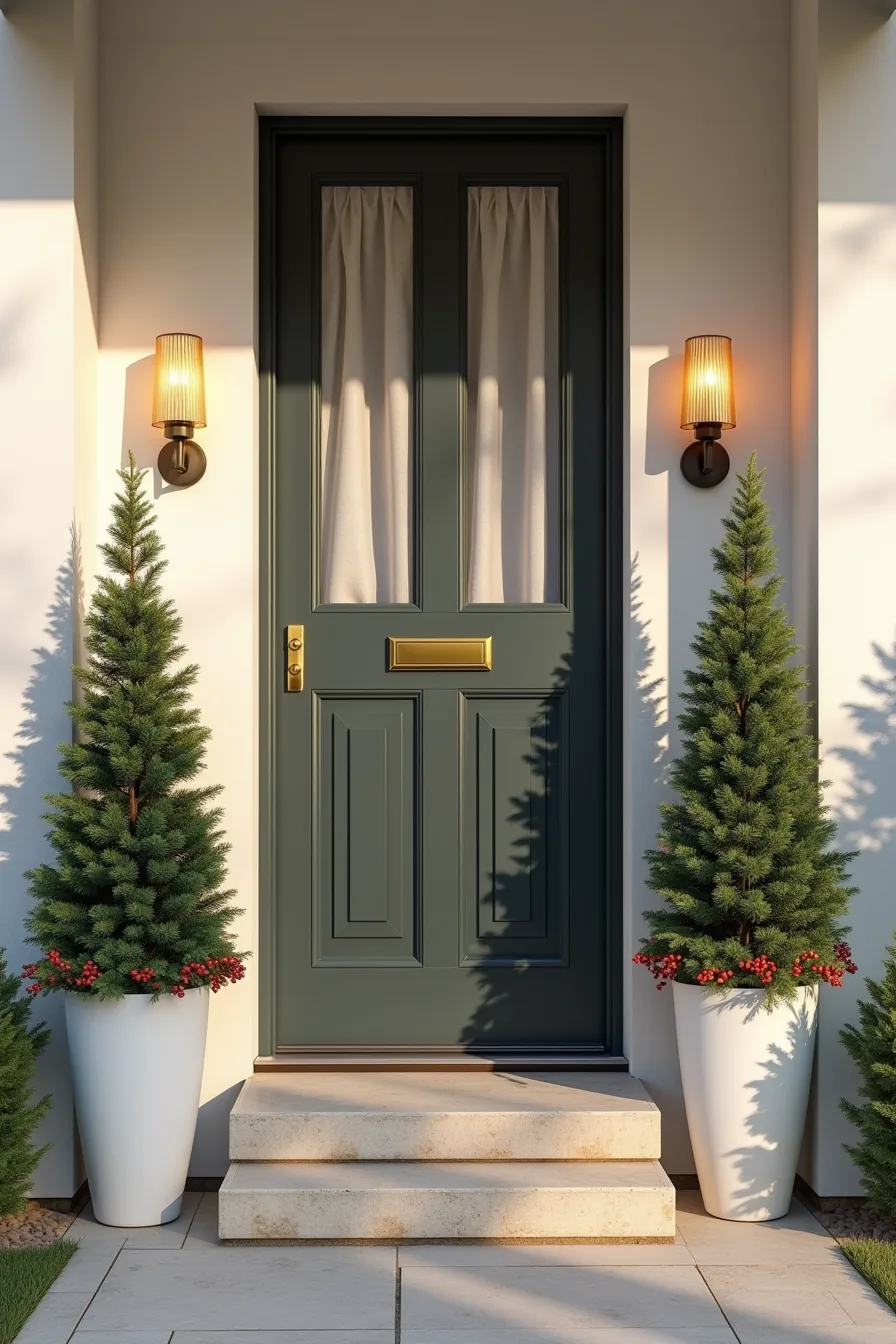
A symmetrical pair of tall ceramic planters flanking a dark front door creates instant architectural balance, and the stone entry step between them anchors the composition without crowding the approach. For this setup, choose planters roughly 18–24 inches tall and match their diameter to your entry width, leave at least 24 inches of clear walking space between the two vessels on a standard 36-inch door opening. The evergreen foliage and red berry stems you see here are cut branches, not rooted plants, which means you can refresh them in three to four weeks as they dry out.
This route suits renters and homeowners alike since nothing attaches to the door or frame. Maintenance is straightforward: water the floral foam or sand base every two to three days in mild climates, daily if you face full sun. In freezing zones, use a frost-proof ceramic blend and expect the greenery to hold its color for six to eight weeks.
Budget $40–$80 per planter for the ceramic vessels plus $20–$35 for fresh cuttings each season. For smaller entries, swap the pair for a single 14-inch planter positioned on the hinge side so the handle remains unobstructed.
Door Panels and Covers: Long-Term Investment vs. Seasonal Storage
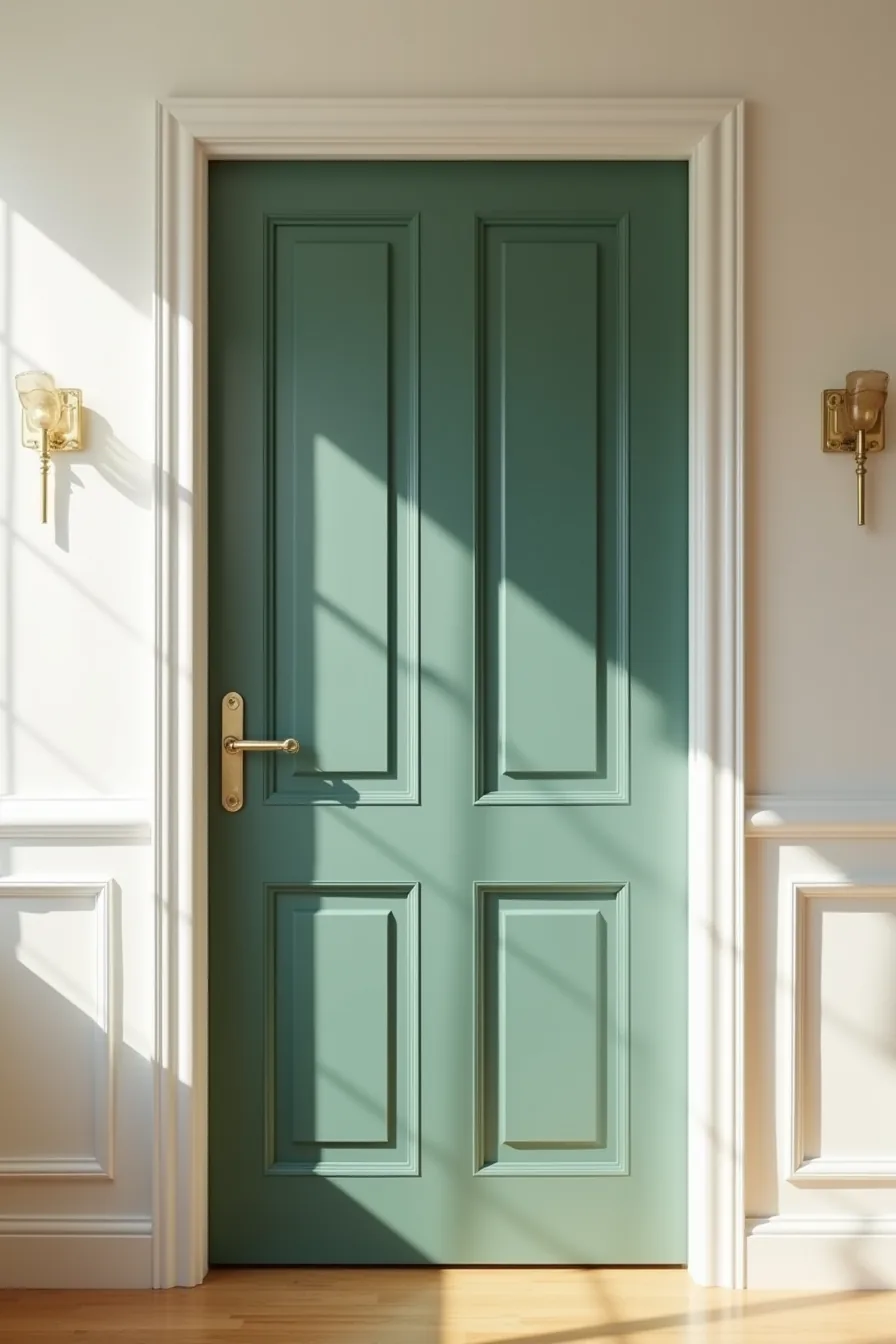
Adhesive-backed magnetic panels let you transform a standard six-panel door into a bold geometric statement in under an hour. In the setup visible here, deep forest green panels cover each recessed section, leaving the door hardware and frame exposed, the slight seam lines where panels meet read as intentional design rather than imperfection. Each panel measures roughly 12 by 18 inches, and you’ll need twelve to cover a typical six-panel door completely.
This approach suits homeowners with a consistent vision who plan to stay put for five-plus years. The upfront cost runs $60–$120 for quality magnetic vinyl, but you can reuse the panels annually with zero replacement expense. Storage is the trade-off: panels must lie flat in a dry space, so budget a closet shelf or under-bed bin of roughly 2 cubic feet during off-season months.
Rental alternatives, wreaths, garlands, or adhesive decals, cost $30–$50 per season and require repurchase yearly, making panels break even by year three. Avoid the common Christmas door decor ideas mistakes to avoid: never stack panels on textured or metal doors, as magnetic grip weakens significantly on surfaces thicker than 1/8 inch. Clean panels with a damp microfiber cloth only; abrasive cleaners dull the matte finish permanently.
Your 5-minute decision checklist
Before you buy anything, measure your door and its clearance zone. A 36-inch door needs a wreath no wider than 24-28 inches, and a swag must clear the hinge side by at least 4 inches. Match your choice to your lease terms, your budget, and how much time you want to spend undoing it in January.
Take this step now: Grab a tape measure, note your door’s width and overhang depth, then pick one idea from this list that fits both. Order only that one piece today.
Frequently Asked Questions
How do I hang a wreath on a rental apartment door without damaging the frame?
Use an over-the-door hanger with padded hooks that slip over the top edge. It holds up to 20 pounds, leaves no marks, and removes instantly. Avoid adhesive strips, they can peel paint.
What size wreath should I buy for a standard 36-inch door?
Choose 22–24 inches in diameter. This leaves at least 6 inches of clearance on each side, so the wreath won’t scrape the frame or obstruct peepholes. Larger sizes look crowded.
Can I use outdoor Christmas lights on my front door in wet climates?
Yes, but only if they carry a wet-rated (IP65 or higher) label. Standard indoor strings fail quickly in rain. Seal all plug connections with a waterproof cover and keep the transformer off the ground.
How do I keep potted evergreens alive through the holiday season indoors?
Water only when the top inch of soil feels dry, overwatering kills more than cold. Place them near a bright window but away from heat vents. Mist needles weekly.
They’ll last 4–6 weeks, not months.