

Your freshman dorm room is a 10-by-12-foot blank slate where you’ll sleep, study, and socialize for the next nine months, and the setup you choose will either make that space effortless or fight you daily. The difference comes down to a handful of deliberate decisions, bed height, storage zones, and lighting layers, that solve real problems before aesthetics even enter the conversation. Here are six distinct interpretations of the freshman dorm, each matched to a specific room size, budget, and personality, so you can pick the one that stops fighting and starts working.
Key takeaways
- Measure before buying: Most standard dorm beds are 36 by 80 inches, so confirm your room’s footprint and ceiling height (typically 8–9 feet) before planning a lofted frame.
- Choose a lofted bed to reclaim roughly 20–25 square feet of floor space, which is enough for a 40-inch desk and a compact chair without blocking a doorway.
- Use stackable plastic bins (12–16 inches deep) on a shelf wall instead of bulky dressers, cutting furniture bulk by half in a 10-by-12-foot room.
- Opt for a modular sectional with two interlocking pieces only if your room is at least 10 feet wide, since a full L-shaped setup needs 30–36 inches of clearance to stay safe and walkable.
The Minimal Setup: Maximize Floor Space in Tight Quarters
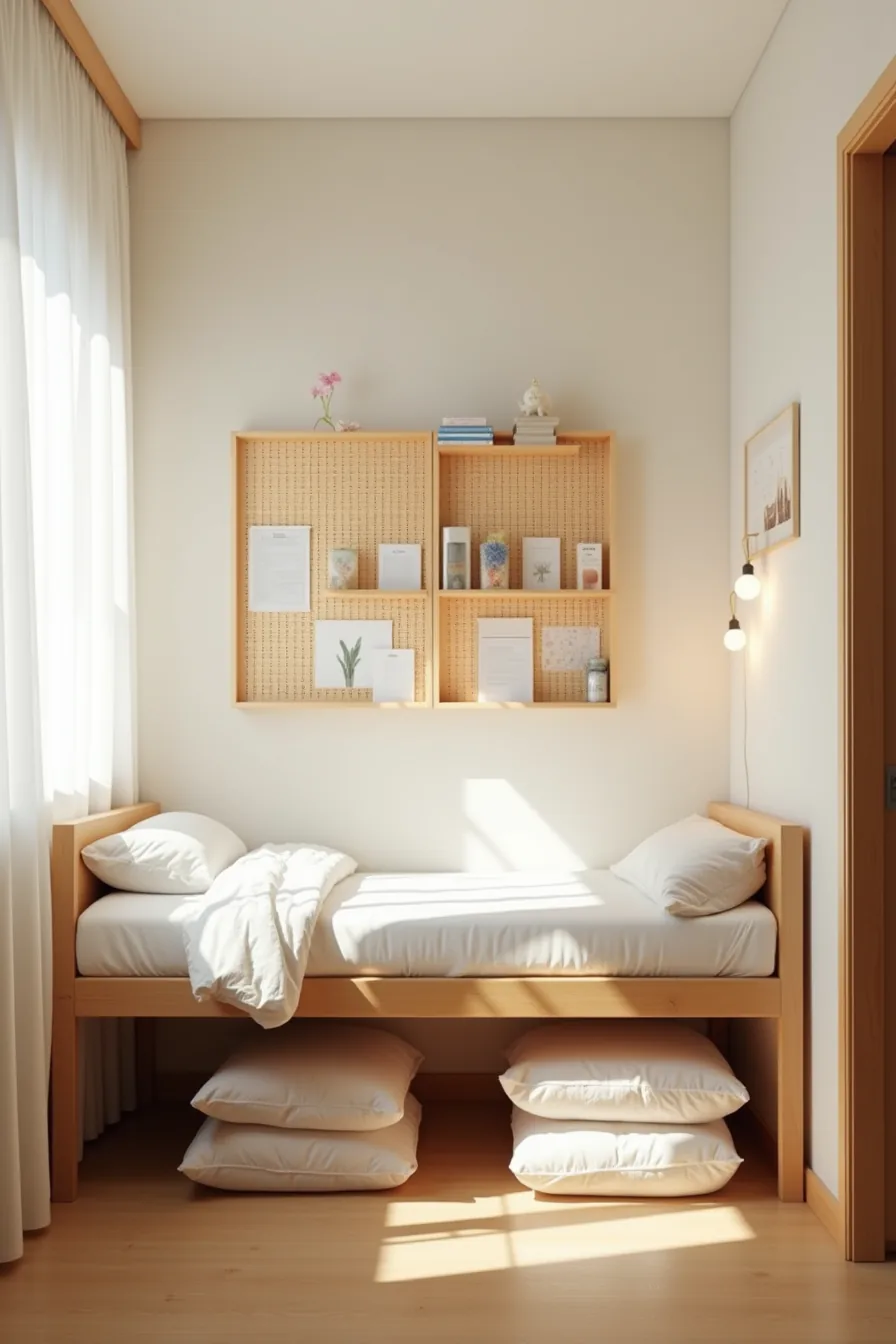
Your first move in a compact dorm is to reclaim the floor. A standard twin bed frame leaves 12–18 inches of clearance underneath, enough for vacuum-sealed storage bags holding off-season clothes and extra bedding. Stacking them flat keeps the space usable and prevents dust collection.
Wall-mounted pegboards work best above a narrow shelf unit, keeping your desk essentials and daily accessories within arm’s reach without consuming a single square foot of floor. Use the shelf for textbooks and a lamp; the pegboard holds headphones, keys, and charging cables. This arrangement suits anyone who prioritizes circulation, especially if you share a room with a roommate whose furniture layout you don’t control.
The critical maintenance rule: keep the center of the room completely clear. Not only does open space make the room feel twice its size, but it keeps your egress path compliant with fire codes, most dorms require 36 inches of clear walkway to the door. For the budget route, skip the bed risers and use the existing frame; a pegboard kit costs $15–$25, and storage bags run roughly $10–$20 for a set of six.
This approach also sidesteps the most common College Dorm Room Ideas Freshman Year mistakes to avoid: overcrowding, blocked vents, and furniture that prevents the door from fully opening.
The Lofted Bed Strategy: Create a Study Zone Underneath
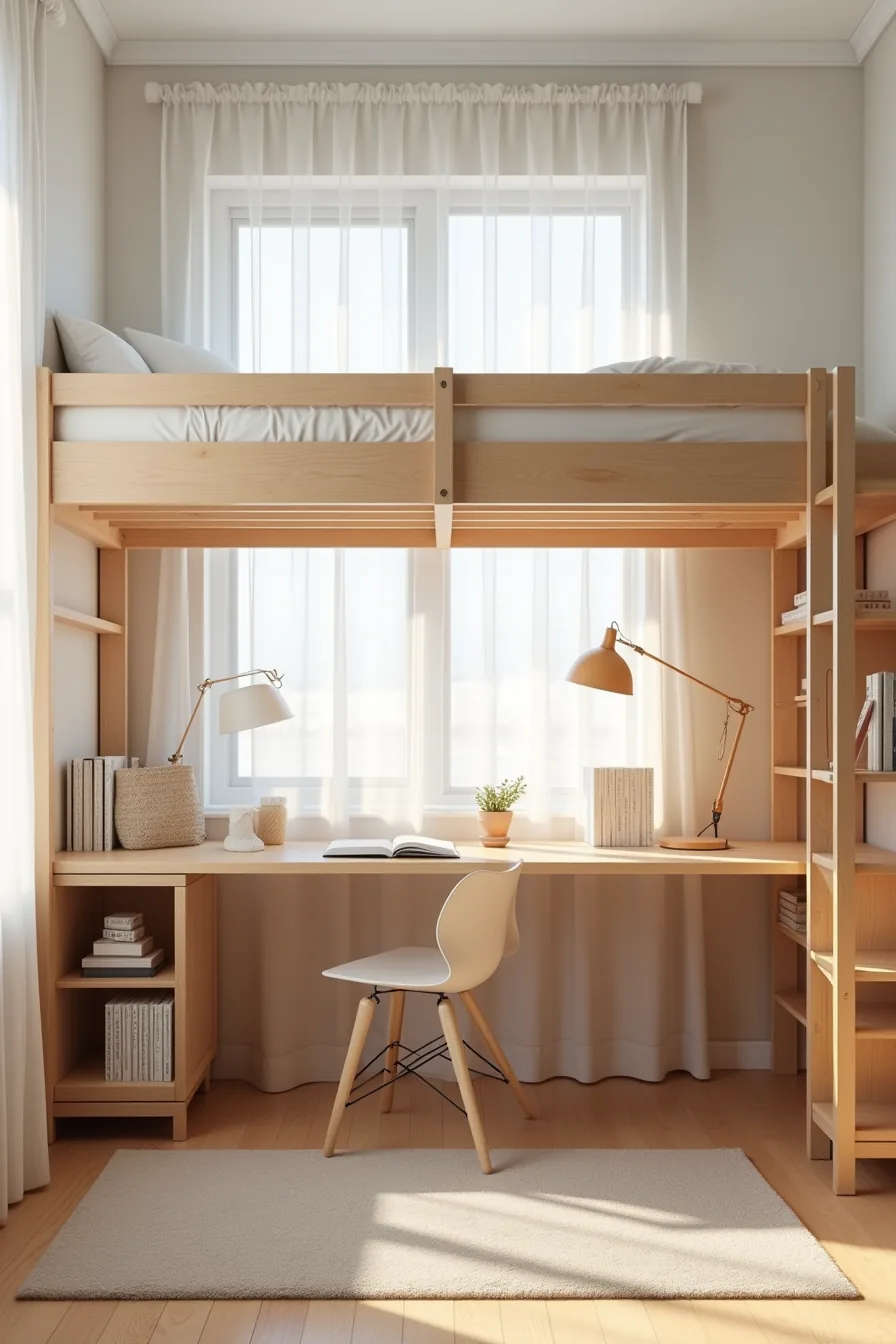
Raising your bed transforms dead vertical space into a dedicated work zone, but it only pays off if your ceiling allows. Standard dorm ceilings run 8–9 feet; a lofted bed needs roughly 4 feet of clearance beneath for comfortable seating. That leaves 4–5 feet above, tight but workable for sitting up in bed.
Confirm your dorm’s bed frame supports lofting, and check the weight limit before adding risers or a bunkie kit. Most standard frames cap out at 250–300 pounds including your body weight.
The setup photographed here works best in medium to large dorms with at least 100 square feet, since a desk underneath requires pulling the chair out 18–24 inches, something impossible in a narrow 8-foot-wide room. Place the desk centered beneath the loft, with the shelving unit flush against the adjacent wall carrying your printer, textbooks, and a small lamp. Anchor the area rug under the desk chair to protect carpet from caster wear.
A task chair fits better than an armchair because it tucks fully under the desk when not in use, freeing knee space.
For a budget route, buy a loft conversion kit ($40–$70) instead of a whole new frame. The renter-friendly option: a free-standing loft frame, which requires no drilling and comes down in minutes at year’s end. If you plan to keep the setup four years, invest in a welded steel frame ($200–$350), it eliminates wobble and squeaksthat plastic connectors develop by second semester.
Whichever route you take, measure your ceiling height before purchasing anything; a loft that doesn’t fit is just expensive clutter.
The Divided Room: Separate Sleep and Study Without Walls

A fabric room divider costs $30–$60 and instantly carves a bedroom from a workspace, making it the most renter-friendly wall you can buy. Positioned perpendicular to the wall, it blocks visual clutter without blocking light or airflow, and it folds flat for storage between semesters. This layout suits roommates with conflicting schedules or anyone whose brain associates bed with sleep and desk with work, the psychological separation reduces the urge to nap mid-assignment.
Anchor each zone with a distinct patterned area rug: a larger one under the bed, a smaller one beneath the desk chair. The rugs define territory visually, so your eyes register the change in function even while the divider stays open. Keep the divider at least 24 inches from the bed’s foot to allow easy pass-through, and choose a freestanding panel with a weighted base rather than a tension-rod style, which can topple when you bump it at night.
For a budget route, hang a curtain rod across the room’s midpoint and use clip-on panels. If you want a long-term investment, a folding wooden screen ($100–$180) adds acoustic dampening that fabric lacks. These Practical College Dorm Room Ideas Freshman Year planning tips assume a room of at least 120 square feet; in anything narrower, skip the divider and rely on rugs alone to avoid blocking the path between door and window.
The Vertical Storage Wall: Shelving and Pegboards for Small Footprints

The most efficient use of a 10-foot wall is to turn it into a vertical command center. Mount pegboards floor-to-ceiling for the items you reach daily, notebooks, headphones, keys, and install floating shelves at staggered heights above for decorative storage baskets and boxes that hide dorm-issued necessities. This configuration suits a room under 120 square feet where floor space is non-negotiable and desk real estate is precious.
Weight is the limiting factor. Command strips hold roughly 4–7 pounds per strip pair, so use them only for empty baskets and lightweight decor; screw-mounted pegboards safely support 15–25 pounds per square foot and handle full boxes of textbooks and supplies. Place the narrow desk directly beneath the lowest shelf, leaving 18–24 inches of clearance so you can sit without bumping your head or knocking a basket loose mid-essay.
Adhesive strips fail on textured or popcorn walls, so check your housing contract for a screw allowance before you commit. This layout suits renters who want minimal wall damage and students who struggle with surface clutter but have fewer than a dozen heavy books.
The Invested Bed Frame: Quality Furniture as a Multi-Year Asset

A solid wood platform bed with integrated drawers is the single purchase that justifies a splurge in your College Dorm Room Ideas Freshman Year budget vs. Splurge planning. Expect to pay 3–5 times more than a metal frame, but you gain a piece that survives four years of dorm moves and transitions directly into a first apartment. Hardwood construction with visible joinery, dovetail or mortise-and-tenon, holds up where particleboard delaminates within two semesters.
The integrated drawers replace a bulky dresser, freeing 2–3 feet of floor space in a standard 10×12 room. A quality mattress paired with the solid base eliminates the sagging and squeaking that plague cheap frames by sophomore year. When comparing budget vs. Splurge College Dorm Room Ideas Freshman Year, calculate cost-per-use: a $600 frame used for eight years beats a $200 frame requiring replacement at year three.
Choose a neutral finish like oak or walnut that matches both a dorm’s industrial aesthetic and a future rental’s living room.
The Modular Furniture Approach: Flexibility to Reconfigure

Modular pieces turn a static room into a system you can reshape in under ten minutes. Stacked plastic storage cubes in a corner give you 12–16 cubic feet of closed storage for off-season clothes or extra linens, but their real value is the ability to dismantle the tower into individual seats or side tables when friends visit. The rolling cart with multiple tiers parked beside them serves as a mobile nightstand, a snack station during study sessions, and a bathroom caddy on move-in day, lock the wheels when you need stability for a lamp or laptop.
This approach suits students who expect their routines to shift mid-semester, whether that means reorganizing for a roommate’s new schedule or creating floor seating for group projects. Modular seating cushions scattered on the floor replace a bulky sofa and store flat under the bed when not in use, while a low shelving unit anchors the arrangement without blocking the room’s airflow or window access. The cost trade-off is clear: individual pieces run $15–40 each, but you can replace only what breaks rather than an entire system.
Maintenance is low, wipe plastic with a damp cloth, vacuum fabric cushions weekly, and everything fits into a car or small trailer for summer storage.
What to Do First
Start with the room’s non-negotiables: measure the floor plan, note outlet and window positions, and confirm the bed height and lofting policy before you buy anything. That 15-minute survey prevents 80% of return trips and fit failures.
Sort your ideas into three buckets: must-haves, nice-to-haves, and skip-it. Allocate your budget accordingly, leaving 15% for surprise needs like extra storage or a mattress topper.
Your next step is simple: open a blank spreadsheet, list your measurements, and set your spending cap. Everything else flows from that one decision.
Frequently Asked Questions
Question
What size is a typical dorm room, and how does that affect furniture choices?
A typical double room runs 120–180 square feet. That means you need compact, multi-purpose pieces, twin XL bedding, under-bed storage, and a small desk, so you don’t crowd the floor or block the door.
Question
Can you loft a bed if your dorm doesn’t allow it, and what are the risks?
You can’t safely alter the bed frame without written permission. Risks include falling, damaging the frame, and violating housing policy, which can lead to fines. Use a bed riser (4–6 inches) only if the gap is under 12 inches.
Question
How much storage do you actually need for a freshman year dorm?
Plan for 15–20 cubic feet of closed storage, two 18-gallon bins, a rolling cart, and a hanging organizer. That covers seasonal clothes, toiletries, and snacks without overflowing a 6-drawer dresser.
Question
What college dorm room ideas work for both small and large spaces?
Modular furniture, like stackable cubes, a foldable desk, and wall-mounted shelves, scales up or down. In a small room, use vertical space; in a large room, add a reading nook or extra seating, but keep circulation paths clear.