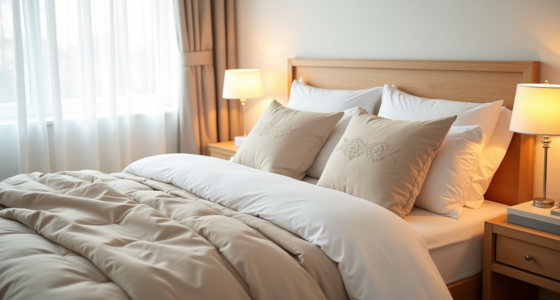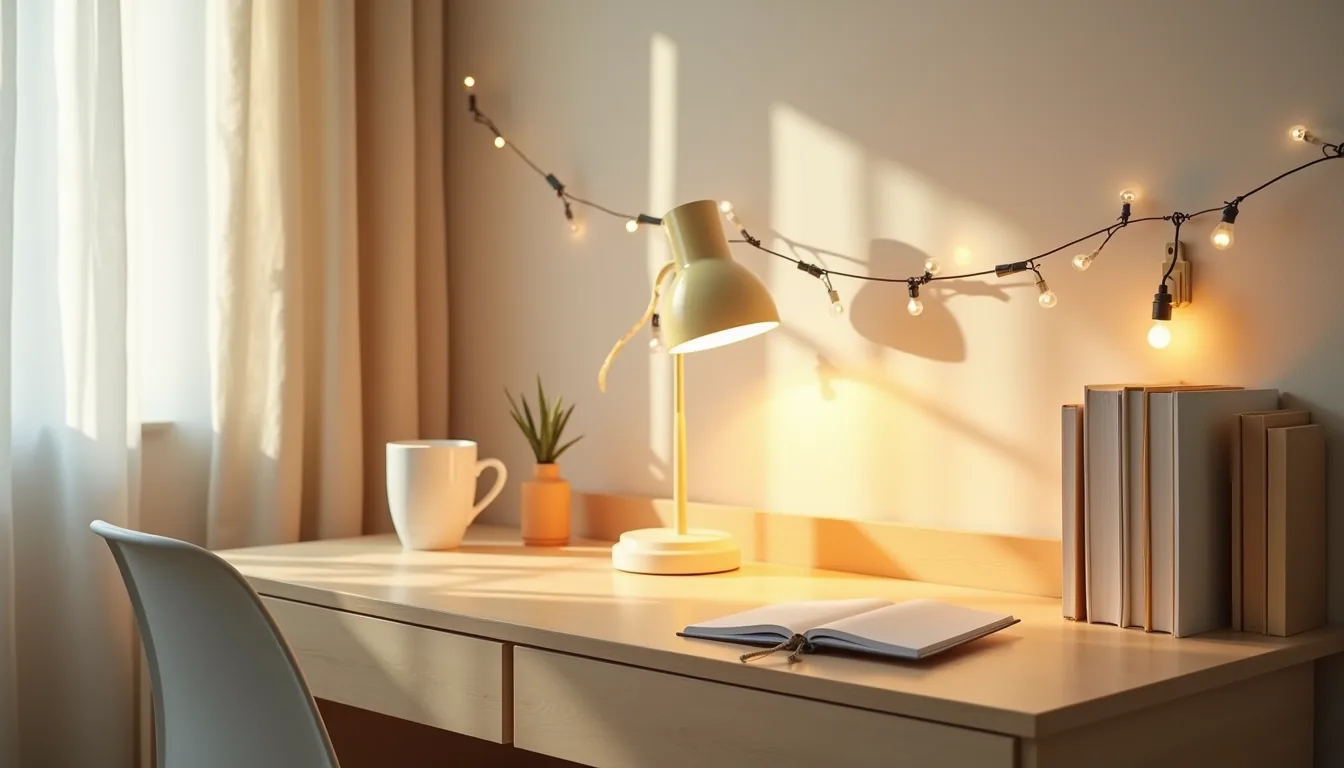

A dorm room becomes cozy the moment you stop decorating for a photo and start designing for how you actually live, sleep, and study in under 200 square feet. That means layering textures you can wash, choosing lighting that dims, and picking furniture that works double duty. The six setups below break down what actually holds up to a semester of wear, from budget floor cushions to renter-safe wall panels.
Key takeaways
- Layer three light sources, a warm floor lamp (2700K), a clip-on task light, and string lights on a dimmer, to kill overhead glare and create zones for studying versus winding down.
- Anchor your bed with a 5×7-foot rug that extends at least 18 inches beyond the mattress edges, and pair it with a chunky knit throw to trap heat and soften hard tile or wood floors.
- Mount tension-rod curtains and adhesive hooks for vertical storage of hats, bags, and cables, keeping all weight under 10 pounds per hook to avoid wall damage and maintain fire-safety clearance.
- Pick a muted palette of warm beige, sage, and terracotta for bedding and wall art, then add one high-contrast accent (like a mustard pillow) to prevent visual fatigue over a full semester.
Layered Lighting for Warmth Without Overhead Glare
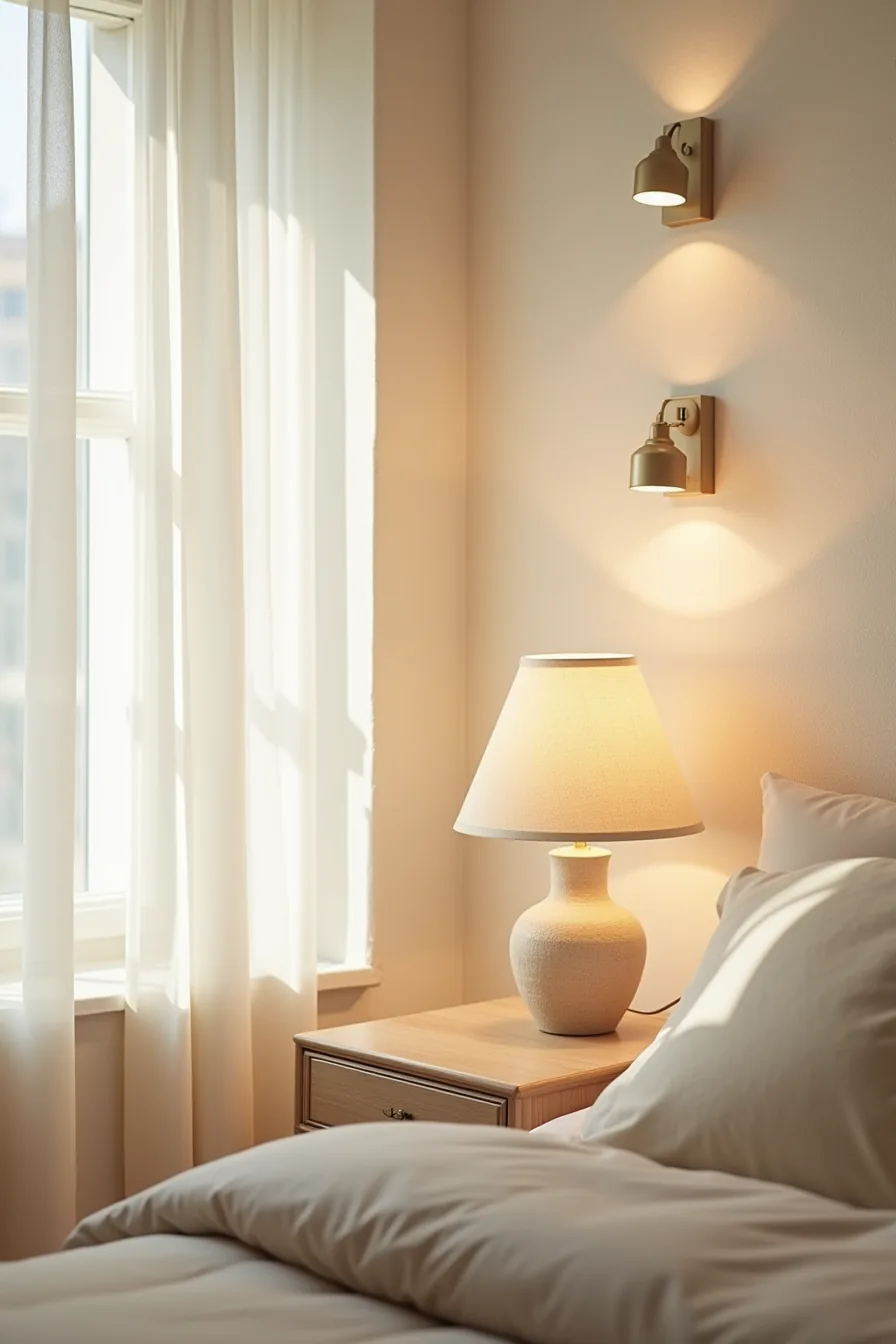
The fastest way to make a dorm feel cozy is to kill the ceiling light. A single overhead fixture creates flat, shadowless glare that makes any room feel like a waiting room. Instead, build three light layers at different heights: task lighting on your desk, ambient lighting at mid-height, and a low glow near the floor.
A bedside setup that works in most standard dorms pairs a ceramic table lamp with a warm linen shade (9-12 inches tall) with a wall sconce mounted at shoulder height. The sconce casts a soft pool onto the plaster wall, while the table lamp grounds the corner with warm, diffused light. Clip-on LED fixtures with adjustable arms cost $12-20 and attach to headboards or shelves without drilling, ideal for a room you’ll vacate in nine months.
Use warm bulbs (2700K) throughout; cool white will undo the effect. For medium or large rooms, add one floor lamp in a corner to fill the gap between the sconce and the desk. This setup suits anyone who studies late, dislikes harsh overheads, or wants to separate sleep from work zones without a physical divider.
Textile Layering: Rugs, Throws, and Bedding as Foundation
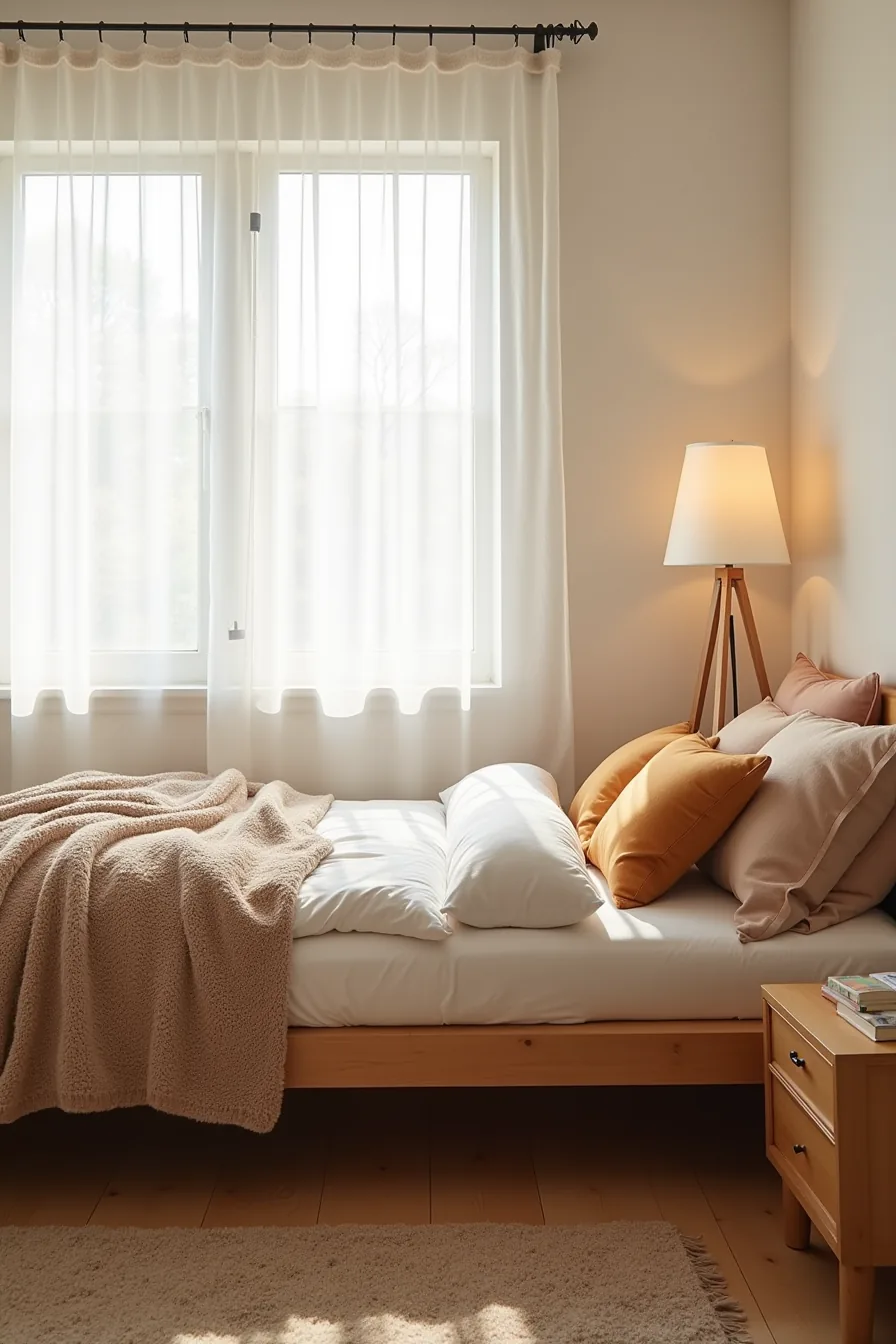
The image shows the single most effective cozy setup you can copy: a patterned area rug that extends at least 24 inches past the bed’s foot, a chunky knit throw draped diagonally over the bottom corner, and three or four throw pillows stacked against the headboard in coordinating warm tones. The linen bedding underneath ties it together, you want crisp, breathable fabric against your skin, with the heavier textures reserved for the layers you touch less.
Rugs do triple duty in a dorm: they absorb footstep noise, warm cold tile or hardwood, and visually anchor the bed as the room’s centerpiece. For a standard twin XL, choose a 5×7 or 6×9 rug; anything smaller floats awkwardly and catches your chair wheels. The chunky knit throw adds tactile contrast and doubles as an extra layer when your radiator underperforms in January.
As for pillows, resist the urge to buy a full matching set, mixing two textures and three coordinating solids reads as intentional, while six identical pillows reads as a hotel display. This setup suits anyone who studies in bed, has a roommate who sleeps at different hours, or simply wants a space that feels lived-in from day one. Budget route: a $30 fleece throw and a 4×6 rug from a discount home store give you 80 percent of the effect.
Vertical Storage and Wall Decor to Maximize Floor Space
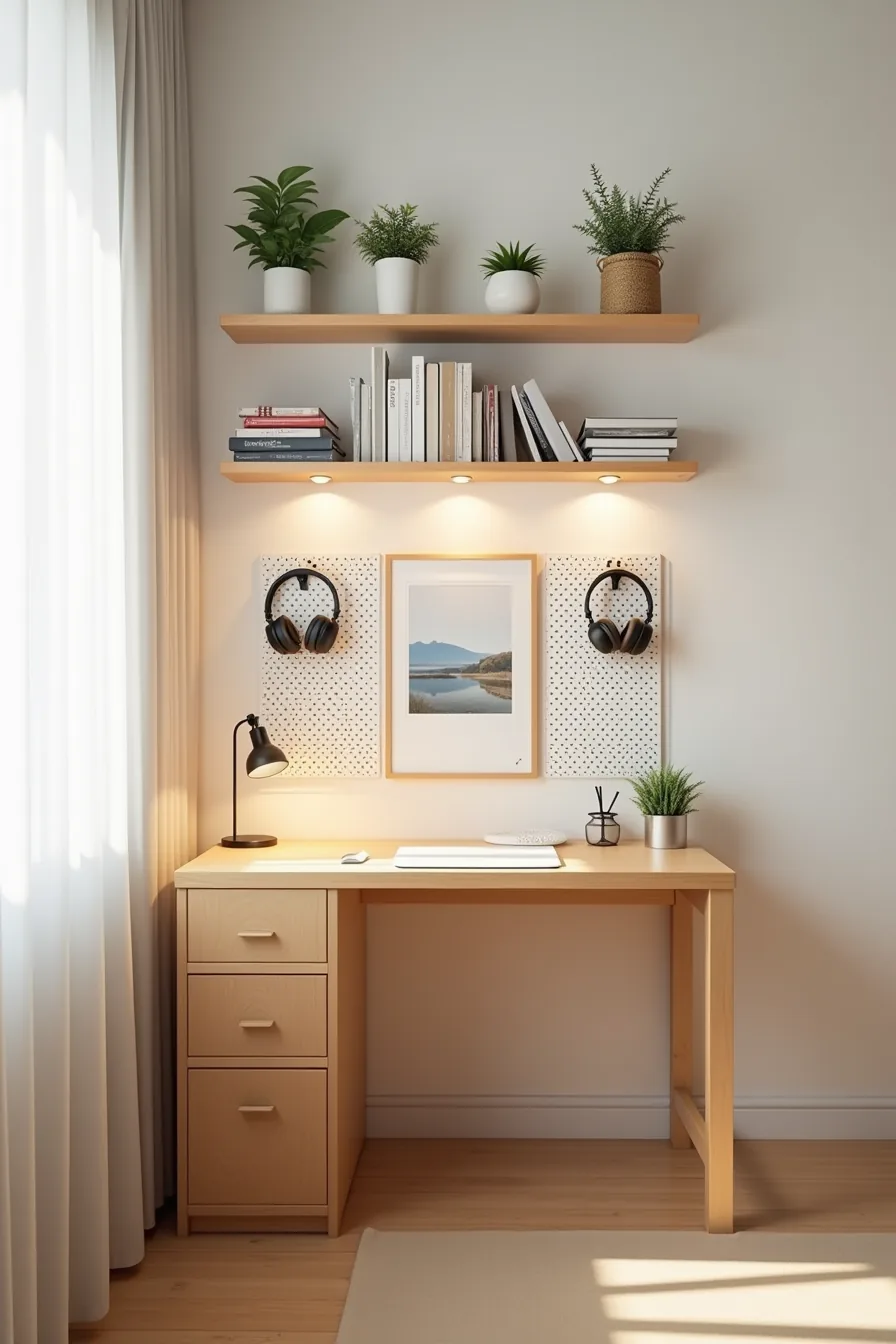
The setup that works hardest in a small dorm pairs floating wooden shelves with a pegboard directly above your desk. Two shelves, each 24-30 inches wide, hold stacked books and small potted plants, while the pegboard below keeps headphones, pouches, and chargers within arm’s reach without consuming a single inch of floor. A framed landscape print centered between the shelves pulls the arrangement together visually.
This system suits anyone who needs clear desk space for writing or laptop work but still wants personal items visible. The key is vertical layering: heavy items on lower shelves, lightweight decor above, and frequently used gear on the pegboard. For a medium room, extend the pegboard across the full wall width; in a large space, add a third shelf and a second print.
Use command strips rated for 5-10 pounds per shelf bracket, anything heavier risks wall damage and lost deposits. Budget route: a $15 pegboard kit and two pine boards stained to match your desk deliver the same function as custom millwork.
Color Palette and Material Choices for Sustained Comfort
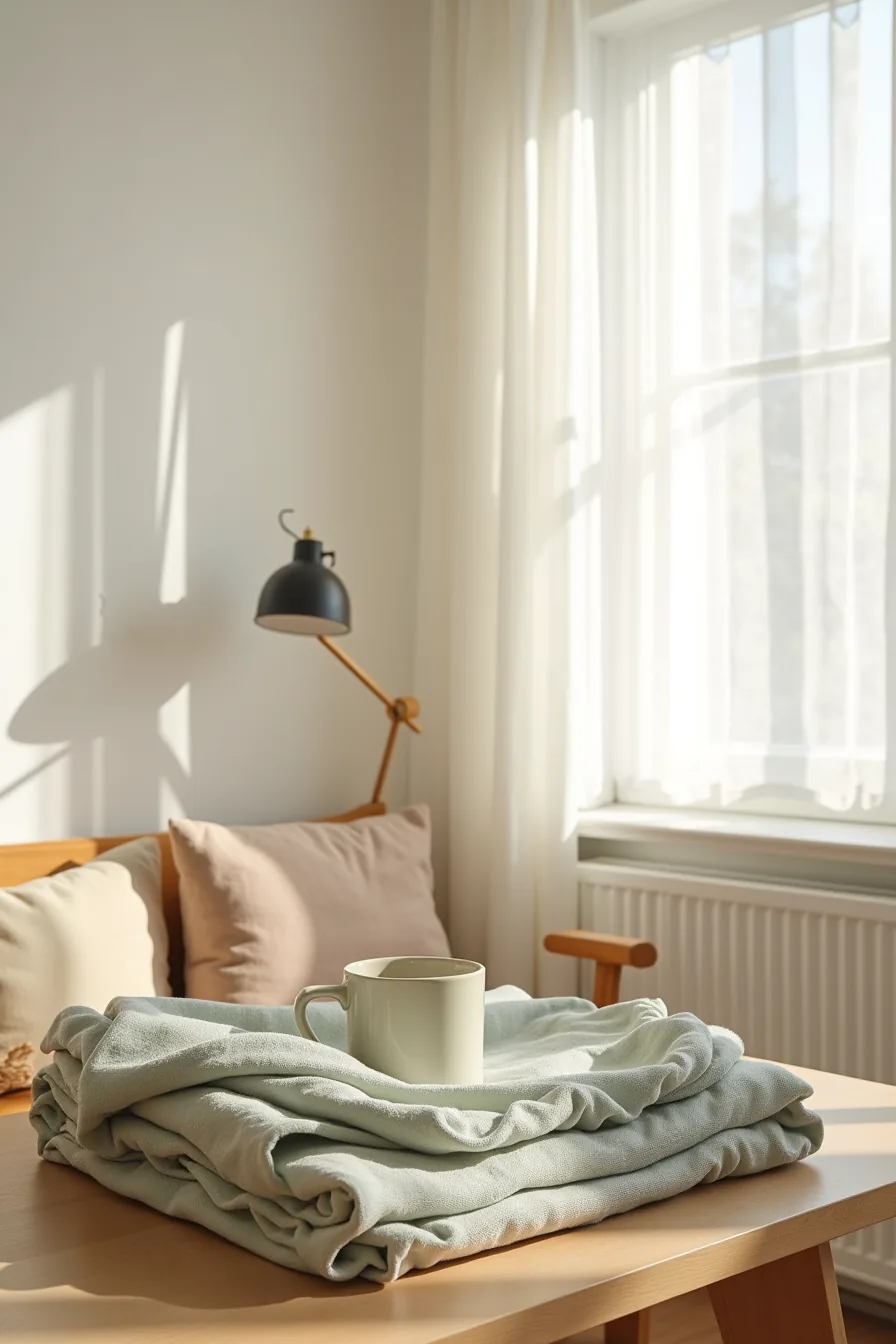
Warm neutrals and muted jewel tones do more than photograph well, they reduce visual noise in a room that doubles as your bedroom and study space. A flat-lay arrangement of a sage linen throw, a cream ceramic mug, a taupe wool pillow, and a natural wood desk organizer shows how this palette works in practice: none of the pieces compete for attention, yet each adds depth through texture rather than color saturation.
This approach suits students who find stark white walls or bright accent colors distracting during late-night study sessions. Linen and wool regulate temperature better than synthetic blends, meaning your bedding stays comfortable across seasonal dorm thermostat fluctuations. Keep wood tones consistent, match your organizer to your desk or shelf finish, and limit yourself to three material types maximum.
Budget vs. Splurge College Dorm Room Ideas Cozy often come down to this choice: mix a $25 linen throw with a $60 wool pillow, or substitute a cotton blanket and acrylic knit pillow to cut costs by half while keeping the same earthy palette.
Renter-Friendly Modifications and Reversible Installations
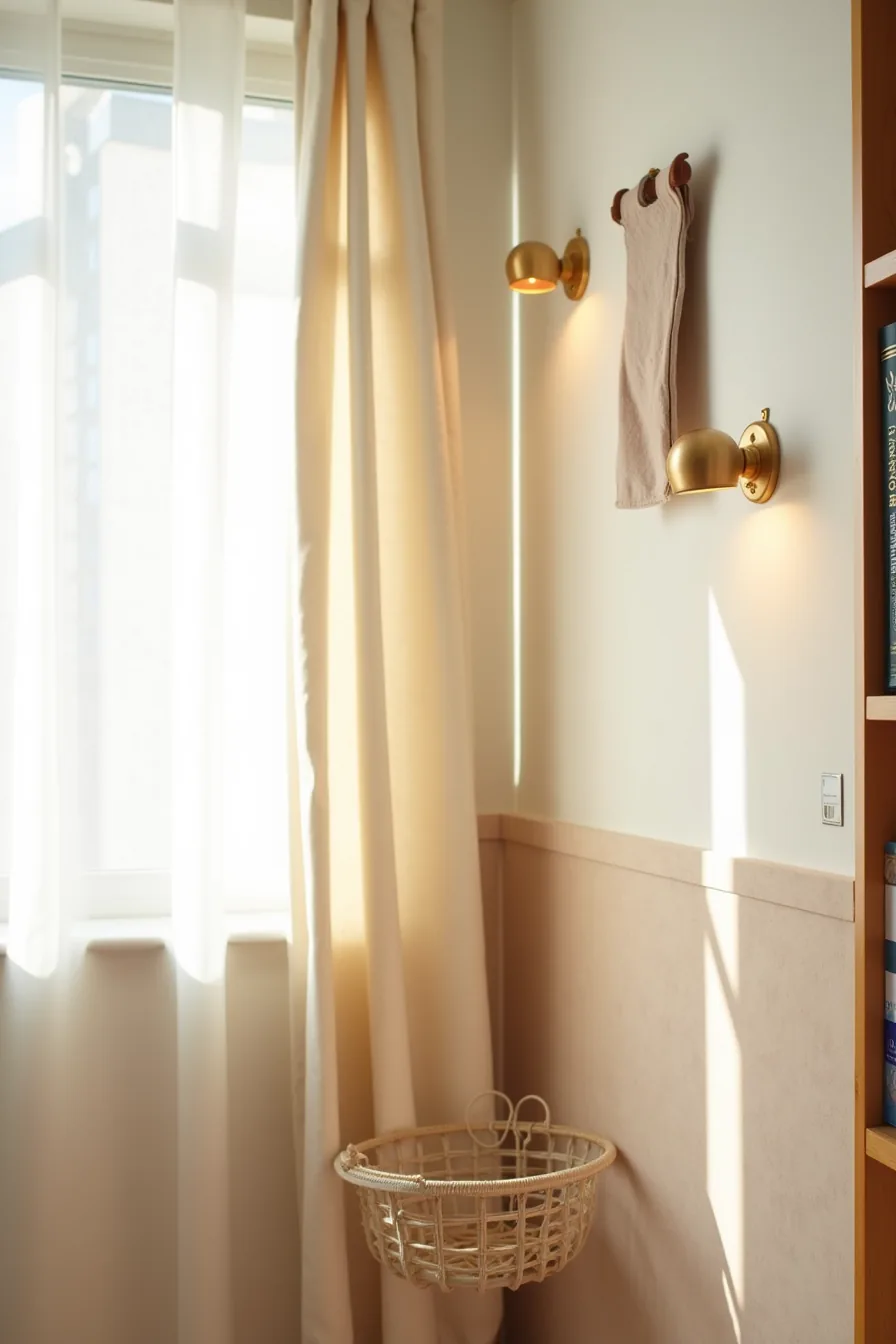
Removable wallpaper applied to just the lower half of a wall delivers the visual warmth of a patterned accent wall while staying fully compliant with standard dorm lease terms. Most renter-safe peel-and-stick papers specify a 24-hour cure period before you hang anything on them, and they remove cleanly when you follow the manufacturer’s slow-peel angle of about 45 degrees. This half-wall treatment suits students who want texture without committing to a full-room color scheme or who share a room and need a defined personal zone.
Adhesive command hooks rated for 4–10 pounds hold a small wire basket for daily essentials, while a fabric wall hanging suspended with removable strips adds softness without puncturing drywall. Choose woven wall hangings under 3 pounds to stay well within the strip’s weight rating, and avoid fuzzy or high-pile fabrics that trap dust in high-traffic rooms. Test a single strip on your wall 48 hours before installing the full set, dorm paint quality varies significantly, and a failed adhesion point is easier to reposition than a full wall of wallpaper.
This approach costs roughly $20–$60 total depending on wallpaper quality and hook count, making it the most budget-friendly route among College Dorm Room Ideas Cozy mistakes to avoid when you fear losing your deposit.
Balancing Personal Space with Roommate Boundaries
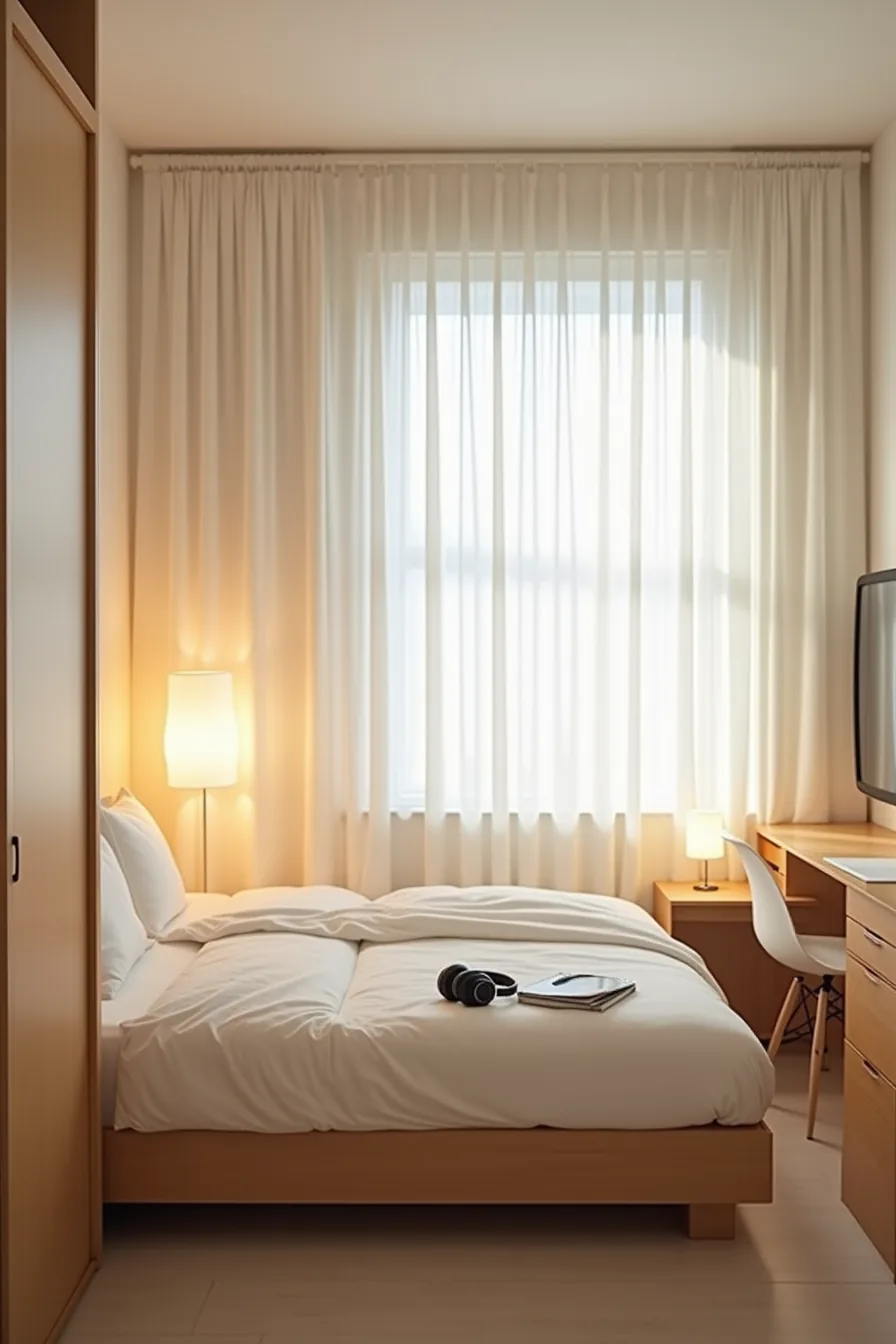
A ceiling-mounted tension rod fitted with sheer fabric creates a defined bed alcove without touching walls, floors, or your roommate’s side, the entire setup costs $25–$45 and installs in under ten minutes. Position the rod so the curtain hangs 12–18 inches past the bed’s foot, which blocks visual line-of-sight while still allowing airflow and a clear exit path from the room. The sheer material diffuses harsh overhead light into a soft glow, making your desk lamp the primary light source for late-night reading without disturbing anyone across the room.
Pair this with over-ear headphones stored on your pillow as a visible cue that you’re in focus mode, and you replace awkward verbal negotiations with a quiet, self-enforced boundary. This arrangement suits medium and large rooms best, in a tight double under 120 square feet, skip the rod and use a tension-pole privacy screen that folds flat against the wall when not in use. Lighting compromises work both ways: agree on a shared dimmer switch for overheads while reserving your personal lamp for after 11 p.m.
Use.
Your First Move
Start with the bed. It occupies the most visual space, so a duvet in a warm neutral or muted earth tone instantly sets the cozy baseline. Layer a textured throw and two pillows, that alone transforms the room’s feel for under $60.
Measure your bed’s actual dimensions before buying anything. Extra-long twin mattresses are standard in most dorms, but verify yours to avoid returns.
Then tackle lighting. Swap the overhead fluorescent for two warm-toned lamps (2700K bulbs) placed at different heights. This single change does more for coziness than any decor purchase.
Order these two items today, and you’ll have a foundation you can build on all semester.
Frequently Asked Questions
Can you make a dorm room cozy if you share it with a roommate?
Yes. Define separate zones with area rugs or curtains, coordinate colors, and use shared lighting like a warm floor lamp. Respect each other’s sleep schedules with dimmable bedside lamps.
What’s the cheapest way to add coziness to a dorm without buying furniture?
Layer textiles you already own, blankets, pillows, and a thrifted throw rug. Hang fabric tapestries with removable adhesive strips, and add warm LED candles. Total cost: under $30.
Will string lights or lamps get me in trouble with my college’s fire code?
Often, yes. Most dorms ban incandescent string lights and non-UL-listed lamps. Check your housing contract; LED rope lights and UL-rated clip-on lamps are usually allowed, but never cover bulbs with fabric.
How do you keep a cozy dorm room from feeling cluttered in a small space?
Use vertical storage, over-door hooks, under-bed bins, and wall-mounted shelves. Keep surfaces to three items max. Choose one warm accent color and repeat it in textiles, not decor knickknacks.