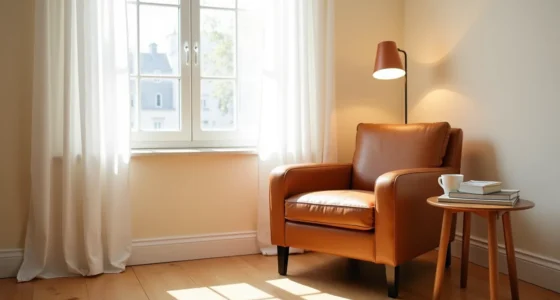
The wooden arm chair is one of the few furniture pieces that can anchor a reading corner, define a dining set, or soften a bedroom’s edge, provided you match the frame’s scale and joinery to the room’s actual dimensions. But that match rarely happens by accident. Most shoppers pick a chair for its silhouette, then discover it overwhelms a 9-foot wall or feels dwarfed beside a standard 72-inch sofa.
The fix is a simple pre-purchase audit: measure your floor plan, note traffic lanes, and decide whether you need a ladder-back, a wingback, or a slatted frame before you browse.
Key takeaways
Traditional frames with turned legs suit formal dining rooms and studies, pairing best with upholstered seats and a 19–22 inch seat height for comfortable dining. Modern minimalist frames work in compact apartments when you choose slim arms (under 3 inches wide) and a light wood tone like ash or maple to avoid visual bulk. Bare wood seats demand regular oiling every 6–12 months to prevent drying, while cushioned seats add 2–3 inches of height, so measure your table clearance before buying. Budget routes cost $80–$150 for solid pine or rubberwood, but renter-friendly options favor lightweight, stackable designs under 15 pounds that you can move without wall anchors.
Traditional Frame with Turned Legs
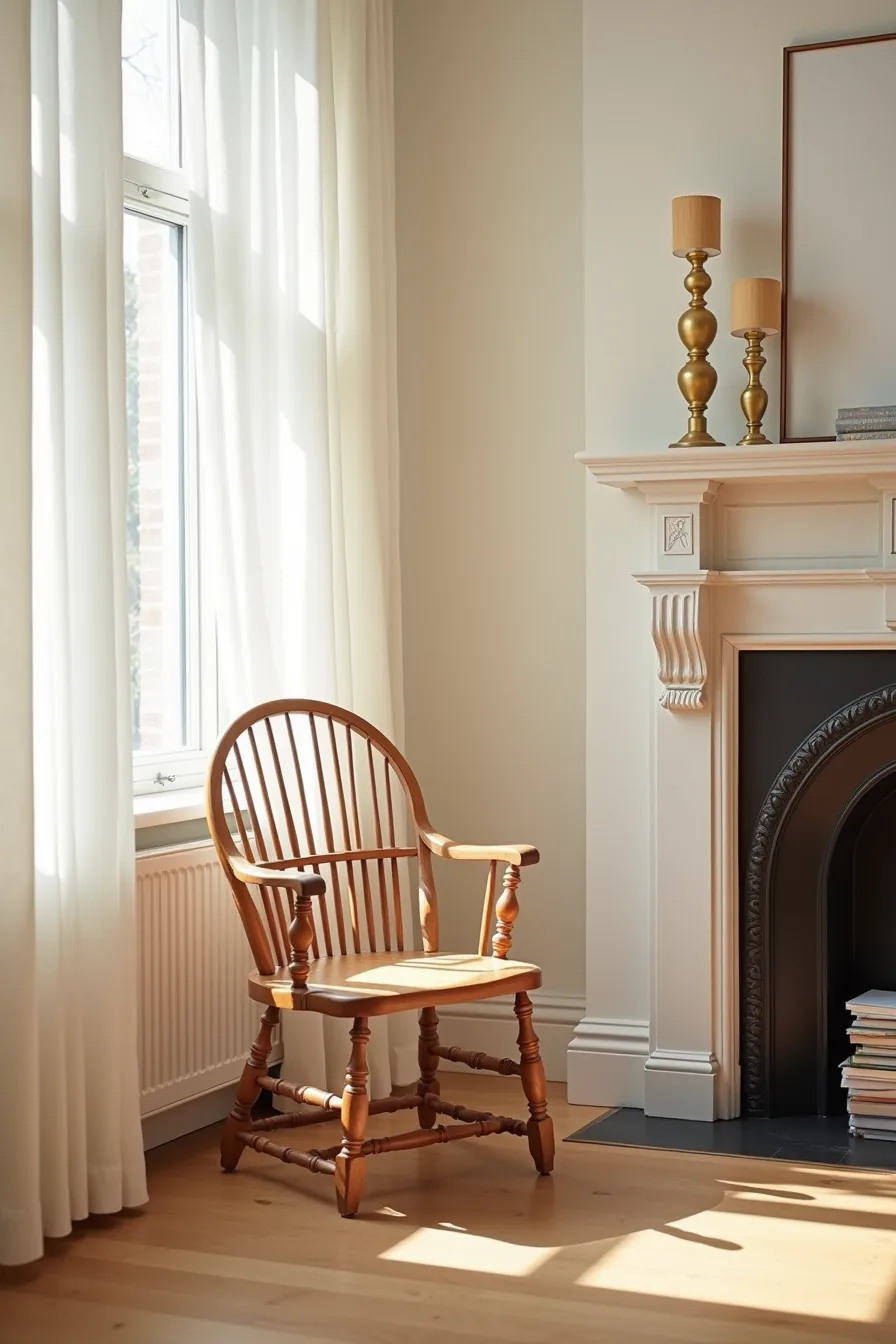
The carved spindle back and turned legs define this classic interpretation of the wooden arm chair, a design rooted in 18th-century joinery that still anchors formal living rooms and dining spaces today. Positioned before a fireplace mantel with candlesticks and framed artwork, this chair works because its vertical spindles and tapered legs echo the mantel’s clean lines, creating a cohesive focal point without competing for attention. The turned details catch light differently throughout the day, adding visual interest that flat-front frames can’t match.
This route suits you if your room leans traditional or transitional, and you want furniture that reads as permanent rather than temporary. Allow 24-28 inches of clearance behind the chair for pulling it out comfortably, and expect the turned legs to require periodic tightening, wood shrinks seasonally. Dust the spindles weekly with a microfiber cloth and apply furniture wax twice yearly to keep the joints stable and the finish from drying out.
A traditional vs modern frame choice matters here: the carved details push this toward formal spaces, while a modern frame would feel out of place against that same mantel.
Modern Minimalist Wooden Frame
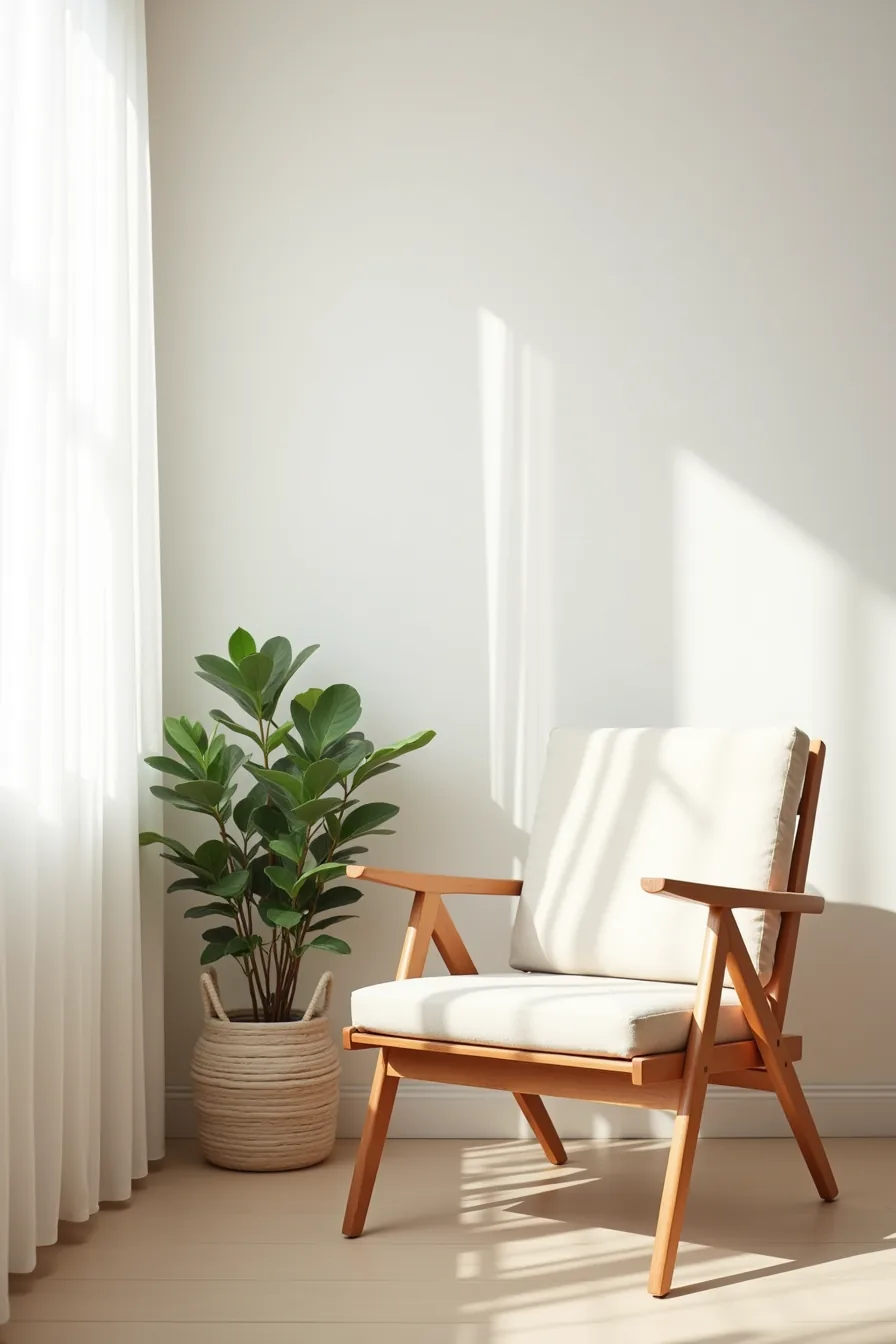
This interpretation strips away ornamentation entirely: straight tapered legs, a plain armrest curve, and a seat height that aligns with standard dining tables. Against a blank white wall with a potted plant beside it, the chair’s exposed joinery becomes the only decorative element, which is precisely why it works in compact spaces, nothing visual breaks the sightline, so the room reads larger than its footprint.
You should choose this route if your space is under 200 square feet or your decor leans Scandinavian or Japandi. The unadorned frame pairs best with a single upholstered cushion in a wool or linen blend; skip leather here, as its visual weight competes with the clean lines. Because there are no crevices or turnings, maintenance takes minutes: a damp cloth weekly and an annual oil treatment on the bare wood.
The tapered legs offer less floor contact than turned styles, so add felt pads to prevent rocking on uneven floors. Traditional vs modern frame comes down to this, the modern version forgives mixed materials around it, while the traditional frame demands consistent formality from everything nearby.
Bare Wood vs. Cushioned Seat Options
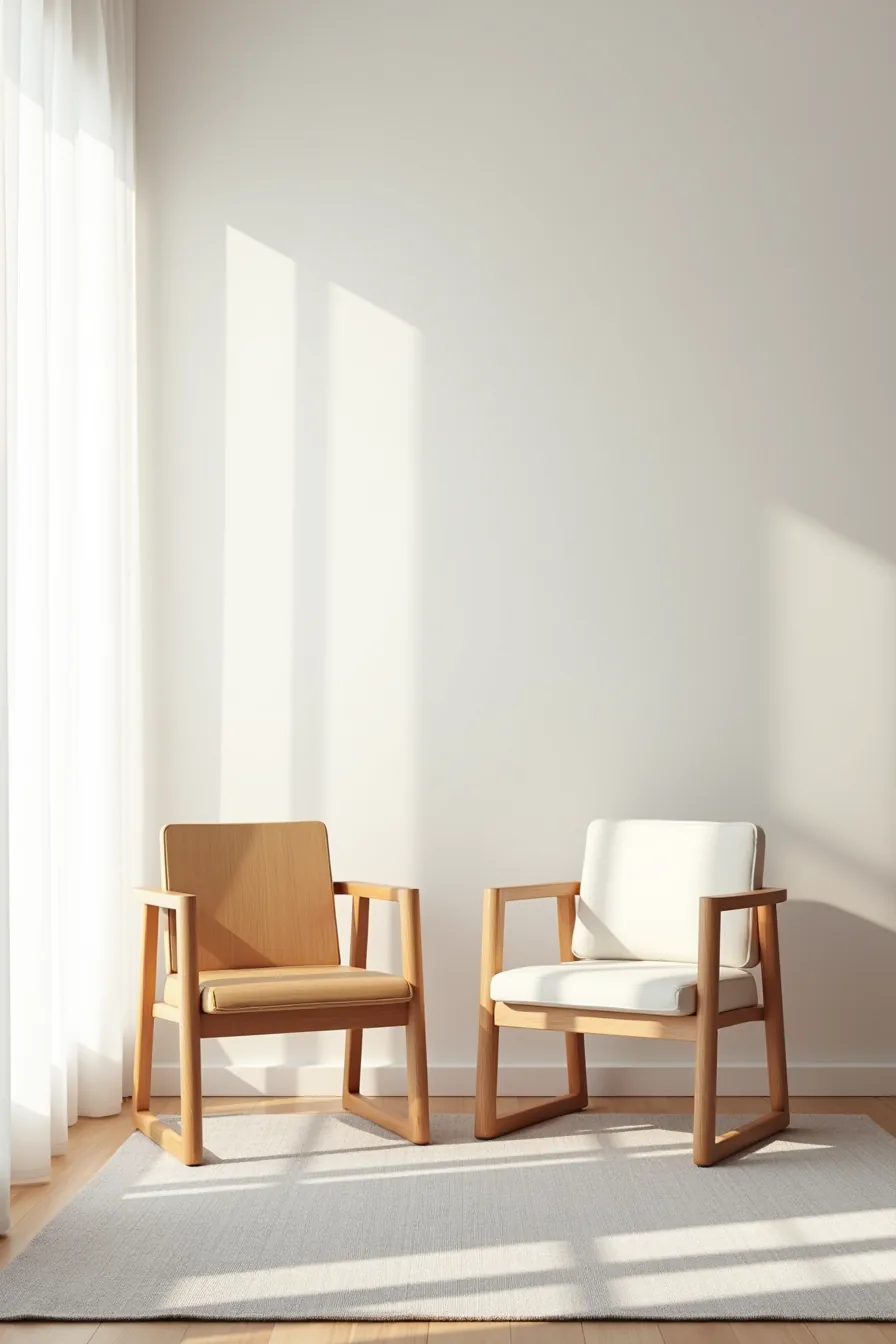
The choice between a bare wood seat and a cushioned one changes how you use the chair daily, not just how it looks. A bare wood seat on the left frame offers a firmer surface that resists spills and wipes clean with a damp cloth in under a minute, making it the better pick for dining areas or homes with kids and pets. The trade-off is comfort, most people find solid wood uncomfortable beyond 45 minutes of continuous sitting, so it suits short, social meals rather than long work sessions.
The right frame’s cream linen cushion introduces a softer sitting experience that extends your tolerance to two hours or more, ideal for reading nooks or home offices. Linen breathes well in warm climates, but it stains easily; you’ll need a removable cover, and budget for professional cleaning or replacement every two to three years with daily use. Your decision hinges on usage patterns: bare wood for high-traffic, spill-prone zones, cushions for spaces where lingering matters more than easy maintenance.
Fabric color and texture also influence perception, cream reads softer against a light gray rug, while a darker cushion would anchor the frame more heavily.
Wooden Arm Chairs for Relaxed Reading Corners
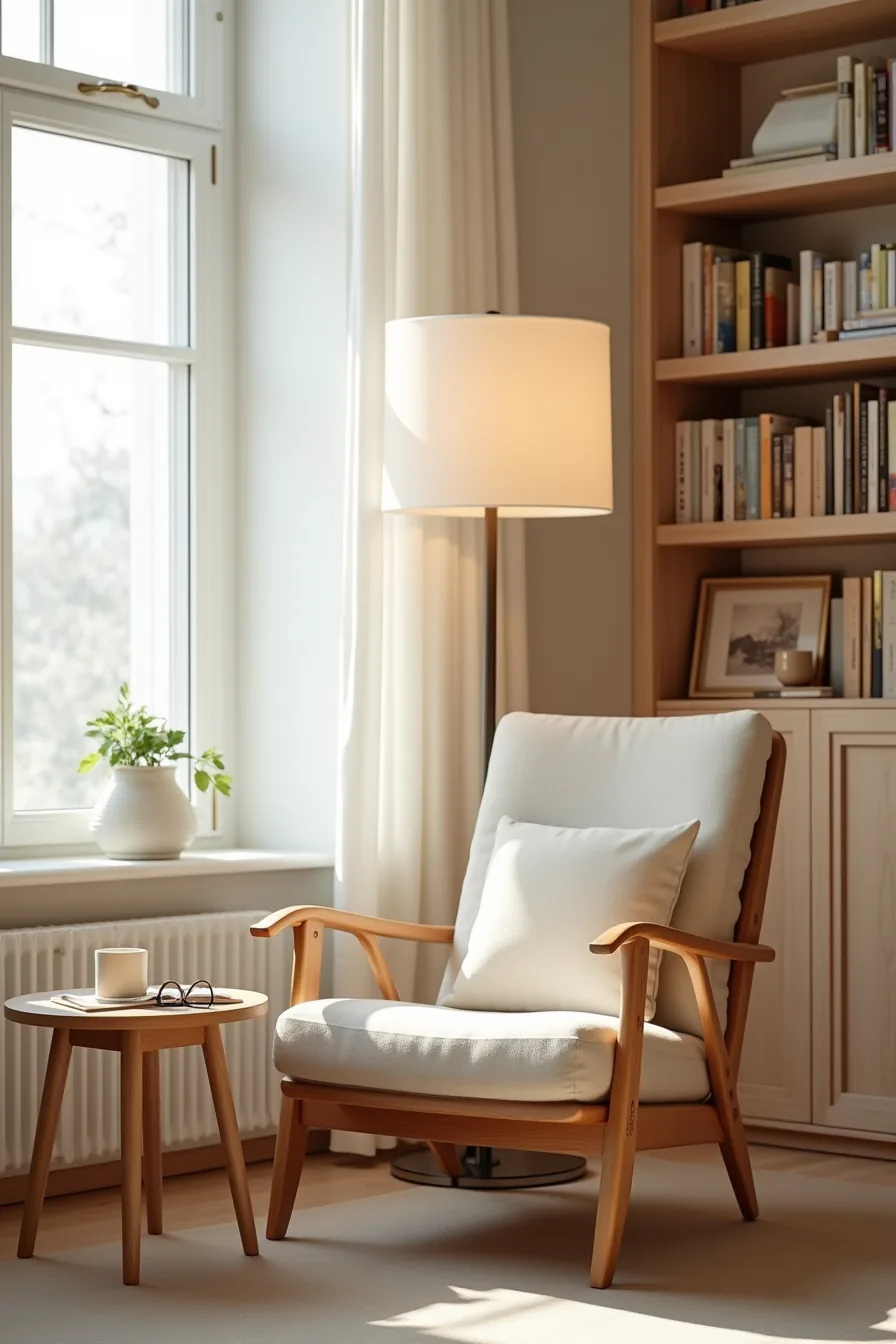
For a reading nook, the chair’s armrest height and angle matter more than the backrest. You want arms that let your elbows rest naturally at 90 degrees, ideally with a curved top that won’t dig into your forearms during a two-hour chapter. Most reading chairs fall in the 24–27 inch arm height range, but measure against your existing side table, which should sit within two inches of the armrest so your coffee mug and reading glasses stay within reach without stretching.
Placement in a corner alcove works best when the chair sits at a 45-degree angle to both walls, leaving 18–24 inches of clearance behind it for easy access. Against a tall bookshelf, the visual weight of the chair balances the vertical mass of the shelving, but skip oversized frames in a small alcove, a compact chair with a 20–22 inch seat depth fits a 60-inch-wide corner better than a lounge-scaled model. For medium spaces, pull the chair forward slightly and add a floor lamp behind it; in large rooms, anchor the nook with a patterned rug to define the zone.
Opt for hardwood frames like oak or walnut with a matte finish, they resist the scratches from frequent chair repositioning better than painted or veneered surfaces.
Craft-Focused Detail and Joinery

When you turn a wooden arm chair over and see a mortise-and-tenon joint, you’re looking at a connection that has held for centuries. The tenon, a projecting tongue cut from the leg, locks into a matching cavity in the seat rail, often secured with a wooden peg. This mechanical interlock outperforms glue-only joints under the lateral stress of daily sitting, which is why heirloom-quality chairs still use it while mass-produced frames rely on dowels or metal brackets.
The hand-finished surface texture on the leg and the visible grain selection matter beyond aesthetics. A craftsman who chooses quarter-sawn oak or rift-cut walnut aligns the grain direction with the joint’s load path, reducing the risk of splitting at the connection point. Expect to pay considerably more for this level of work, typically double to triple the price of a comparable factory chair, because each joint adds 20–40 minutes of skilled labor.
The trade-off is repairability: a loose mortise-and-tenon joint can be re-glued and re-pegged by any competent furniture restorer, while a failed dowel joint often means replacing the entire leg.
Budget, Rental, and Investment Routes

The left chair in that lineup is your fast-and-functional option, typically running $80–$150 from big-box retailers. Expect a solid wood frame (usually rubberwood or poplar) with a veneer seat, machine-cut joints, and a clear lacquer finish. It will serve a dorm room or a first apartment for three to five years before the finish wears at the armrests and the joints begin to loosen, acceptable if you treat it as a consumable.
The center chair solves a problem the others can’t: it fits in a car trunk and assembles without tools. Knock-down designs with cam-lock connectors or threaded bolts break down into four to six flat pieces, and most weigh under 25 pounds. Renter-friendly means more than portability, though, the bolt-together construction also survives a move intact, whereas glued joints often crack during transport.
Budget $120–$250 and you get a chair that will outlast two leases.
The heirloom chair on the right is the long-game purchase. At $600–$1,500, you’re paying for full hardwood (white oak, cherry, or walnut), hand-cut joinery, and a finish that can be repaired rather than stripped. Plan on 20-plus years of daily use, with a re-glue or re-finish at the 10-year mark costing $100–$200 from a restorer.
If you buy one piece of wooden furniture in the next decade, make it this one, it’s the only option here that will still hold its value when you hand it down.
Where to start
Start with the room’s traffic pattern, not the chair’s looks. Measure the clearance around your intended spot first, you need at least 18 inches of walkway in front of the chair and 12 inches on each side. That single measurement eliminates half the options before you compare styles.
Match the chair’s scale to your wall length, not your overall room size. A 36-inch-wide armchair suits a 9-foot wall; a 42-inch version needs at least 12 feet to avoid overpowering the space.
Order wood samples before committing to a finish. Oak, walnut, and acacia each take stain differently, and the sample against your flooring will reveal tone clashes a catalog photo never shows.
Your next step: measure that clearance right now, then narrow your search to chairs that fit within those dimensions.
Frequently Asked Questions
What armrest height works best for a wooden arm chair in a small living room?
Choose armrests between 24 and 27 inches from the floor. This range allows the chair to slide partially under a standard 30-inch table while keeping your elbows supported. Lower arms feel more casual and open.
How do I protect bare wood seats from daily wear and staining?
Apply three coats of polyurethane or a hard-wax oil, then reapply annually. Use felt pads under cushions and wipe spills within 60 seconds. For heavy use, add a washable seat cushion with a non-slip backing.
Can a wooden arm chair work in a modern apartment, or is it only for traditional homes?
Yes, it works if you choose a chair with clean, straight lines, minimal carving, and a matte or light finish. Pair it with metal or glass side tables and geometric textiles. Avoid dark, ornate frames in compact modern spaces.
What’s the difference between a wooden arm chair and a standard wooden dining chair?
An arm chair has armrests that require 6–10 extra inches of width and 4–6 inches more depth than a side chair. It offers upper-body support and suits lounging or long meals, while a dining chair is narrower and tucks tightly under tables.