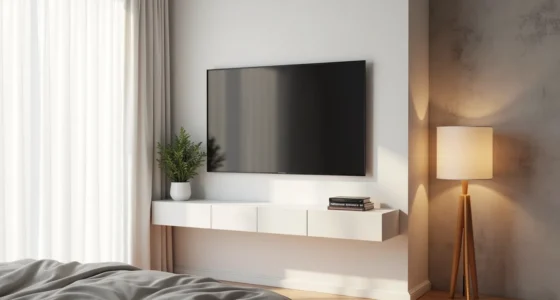
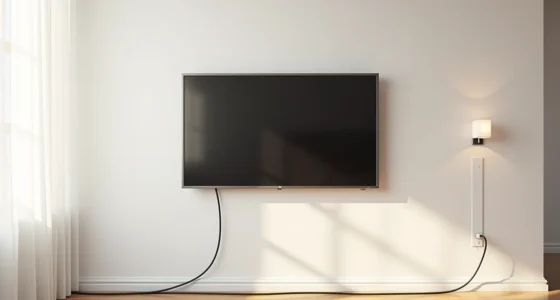
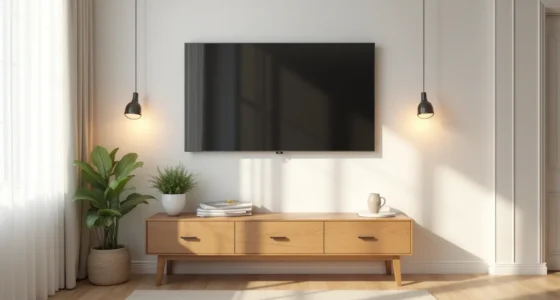
Luxury in a TV unit isn’t about price, it’s about how deliberately the piece controls sightlines, materials, and proportion within your room. A well-executed design hides cables, balances the screen’s visual weight, and anchors the space without dominating it. Whether you favor floating walnut, backlit stone, or matte lacquer, the goal remains the same: to make the television feel intentional rather than incidental.
The six approaches that follow break down exactly how to achieve that effect, with practical guidance on sizing, placement, and maintenance for every budget.
Key takeaways
Contrast sells luxury: pairing a honed stone slab with warm oak veneer creates visual weight and texture, but keep the stone to a 12–18-inch band behind the TV to avoid overwhelming a 10-foot wall. Lighting defines the room: install a 3000K LED strip recessed into a 4-inch-deep shadow gap above the unit to add ambient depth, and always wire it to a dimmer for evening flexibility. Proportion beats size: in a small living room under 200 square feet, a floating unit 48–60 inches wide and 18 inches deep leaves 30 inches of walkway, while a floor-standing piece works only if you’ve 36 inches of clearance. Modularity protects your deposit: choose a freestanding system with adjustable shelves and wall-mount brackets that require only two screw holes, so you can reconfigure or remove it without patching drywall or losing a security deposit.
Stone and Wood Mix: Why Contrast Works
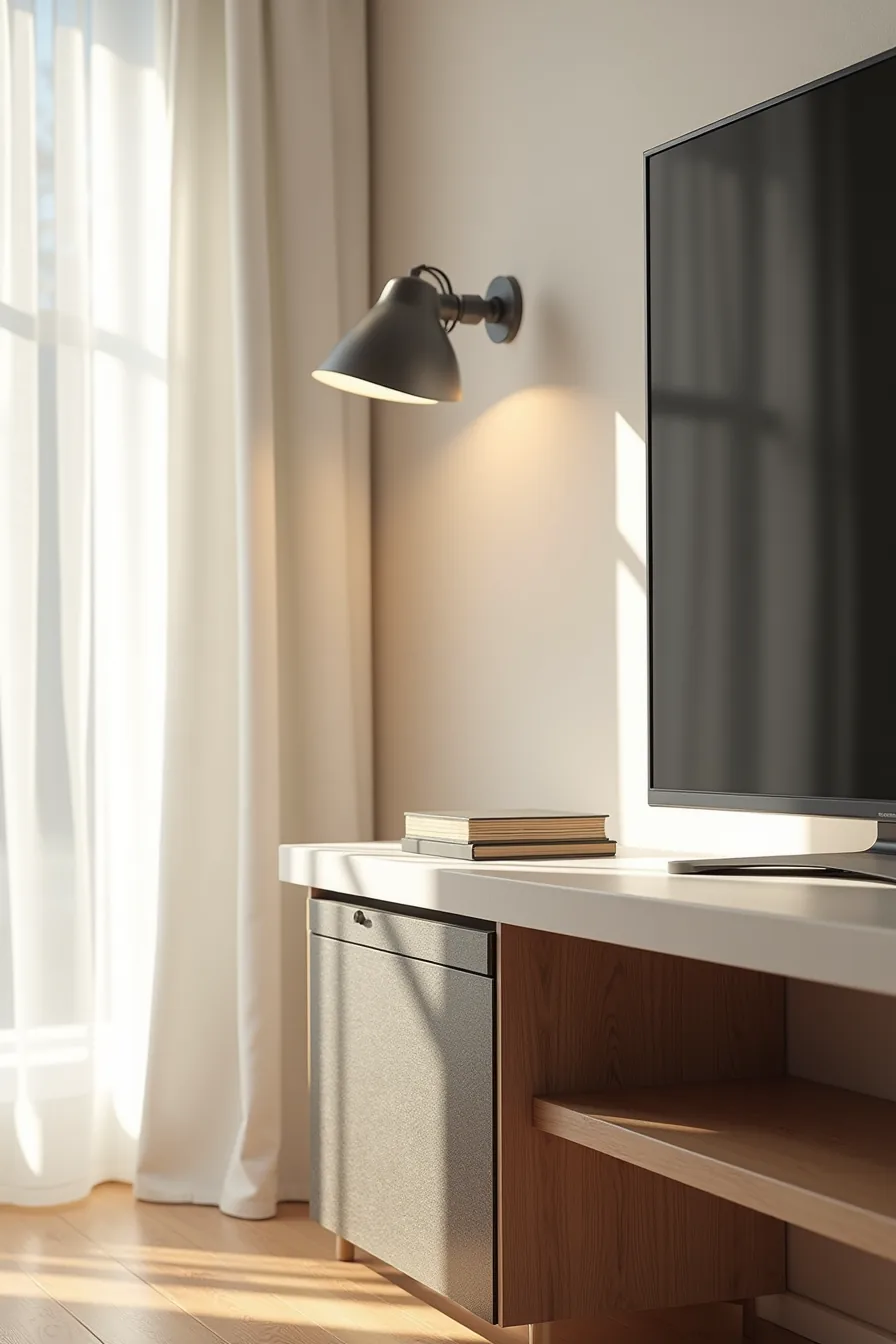
A horizontal stone panel in charcoal or cream paired with vertical walnut or oak slats creates depth without adding a single decorative object. The material joint, that visible gap where stone meets wood, becomes the design feature, and the shadow line cast by natural side light gives the composition a quiet, sculptural quality. You get the weight and permanence of stone balanced by the warmth of timber, so the unit feels luxurious rather than cold or museum-like.
The contrast works because it respects proportion. In a medium living room, keep the stone panel to roughly one-third of the unit’s total width and let the wood slats fill the rest; in a larger space, you can flip that ratio safely. For small rooms, use cream stone and light oak to prevent the darker material from dominating the wall.
This mix suits anyone who wants a high-end look without a maximalist statement, and it pairs well with neutral sofas and low-contrast accessories. Maintenance is minimal, stone wipes clean with a damp cloth, and wood slats need only occasional dusting, though keep them away from direct humidifiers to avoid warping.
Hidden Lighting for Ambient Depth
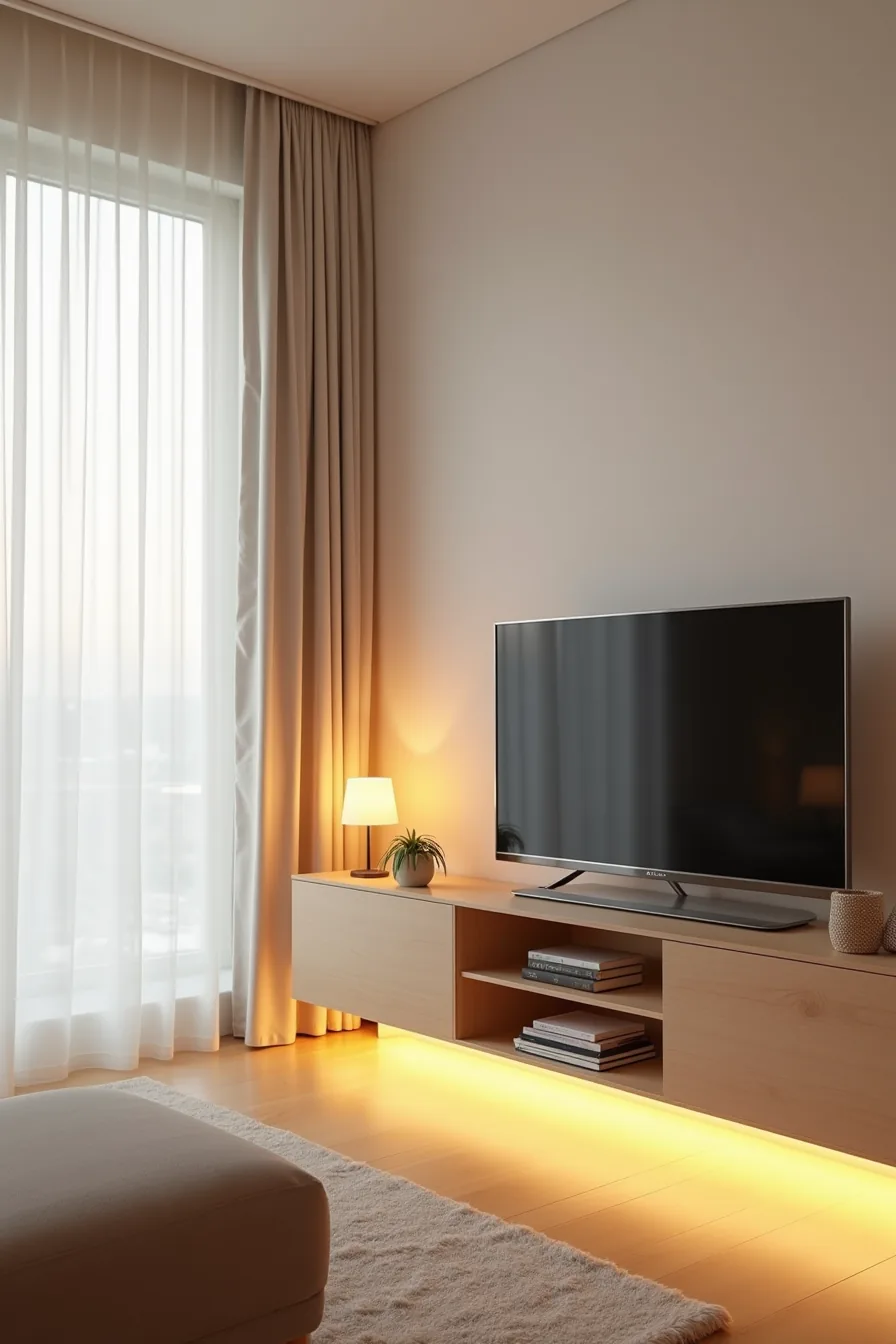
The most effective hidden lighting doesn’t illuminate the room; it defines the unit’s geometry. In the setup visible here, an LED strip beneath the lower cabinet edge creates a floating effect, while a second strip inside the open shelving washes the wall behind the TV with a faint, diffuse glow. The result is a layered depth that makes the unit feel recessed and intentional, even when the screen is off.
For this application, choose LED strips with a color temperature of 2700K to 3000K (warm white) and a density of 30 to 60 LEDs per meter. Install them in aluminum channels to diffuse the light and prevent hot spots. Use a dimmable driver rated for at least 20 percent more wattage than your total strip length requires, most 5-meter reels draw 30 to 60 watts, and place the driver in a ventilated cabinet bay, never directly behind the TV where heat accumulates.
Recess the strips 2 to 3 inches from the cabinet edge to create a clean, continuous light line rather than a harsh spotlight effect. This approach suits medium and large rooms where you want to reduce eye strain during evening viewing without turning on overhead fixtures.
Quiet Luxury Media Wall: Minimalist Approach

Quiet luxury media walls succeed through restraint, not ornament. The recessed TV frame sits flush with the wall surface, eliminating the visual bulk of a protruding screen. A single floating shelf above and another below carry three small sculptural objects spaced far apart, leaving generous negative space that signals deliberate curation rather than accumulation.
The blank walls on either side aren’t wasted, they’re the design.
This approach works best in medium to large rooms where you can commit to a symmetrical composition of at least 8 to 10 feet in width. The matte frame is essential: gloss reflects light and draws attention to the screen even when off, while matte finishes absorb ambient light and let the architecture dominate. Use a low-profile floating shelf 6 to 8 inches deep, mounted at least 10 inches from the TV frame to preserve the airy separation.
For the sculptural objects, stick to a single material family, stone, ceramic, or brass, and keep their total visual weight under 20 percent of the wall area. This route suits homeowners who prioritize calm over clutter and prefer a space that feels expensive through what’s left out rather than what’s added.
Make Luxury TV Units Feel Balanced in Small Rooms
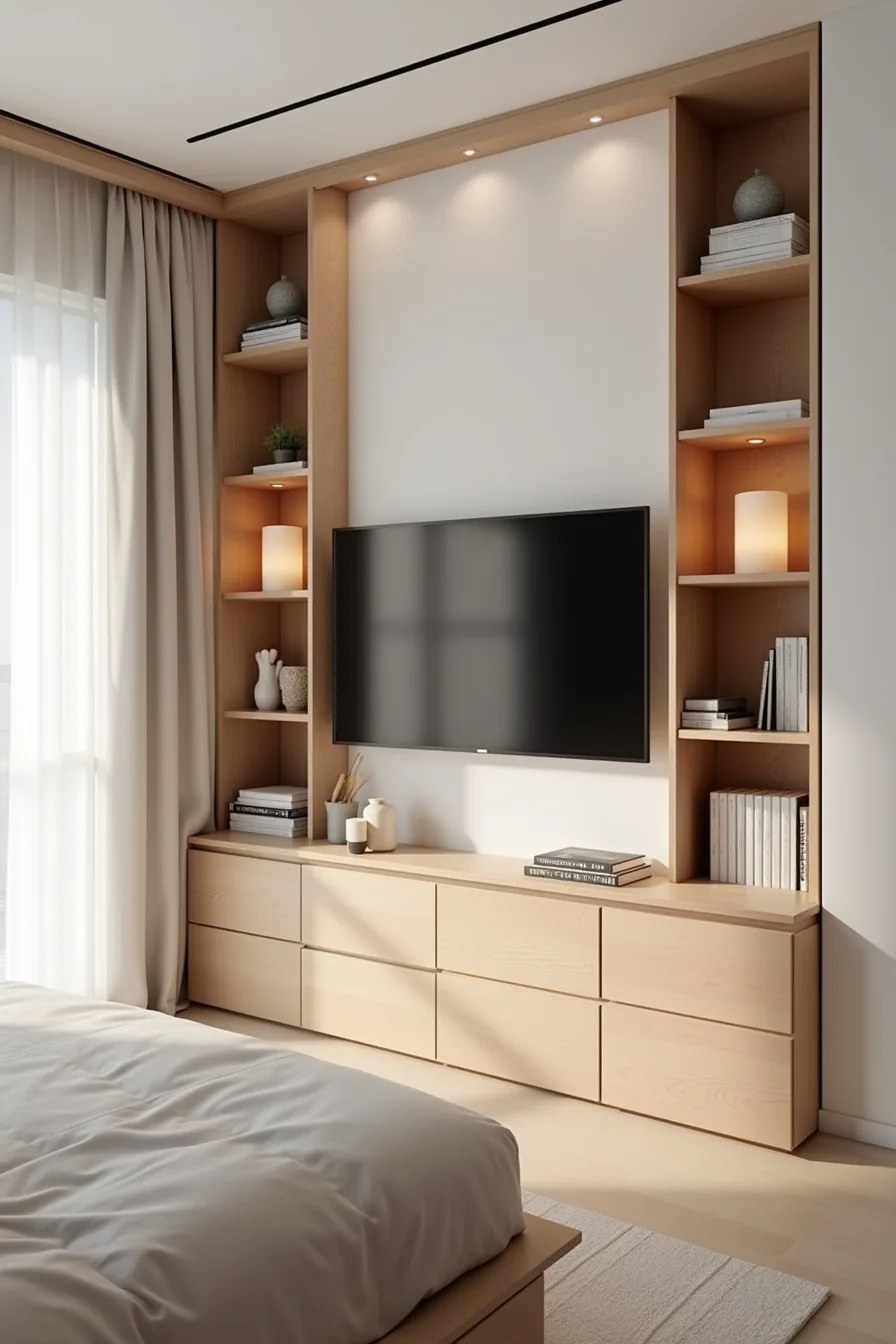
In a compact bedroom, the luxury is in the proportion, not the footprint. A wall-mounted unit measuring 36–42 inches wide keeps the visual weight off the floor, letting the bed frame and surrounding floor space breathe. The narrow vertical storage flanking each side draws the eye upward, creating height that makes the wall feel larger rather than crowded.
Mount the unit 18–24 inches above the floor, which aligns the screen with sightlines from the bed while preserving floor access for cleaning and circulation. Floating eliminates the 12–16 inches of depth a floor cabinet would consume, a meaningful gain in a room under 10 by 12 feet. Choose a matte or brushed finish, glossy panels in small rooms amplify reflected light and make the unit appear bulkier than its actual dimensions.
The vertical storage should hold no more than 30 percent of its capacity; packed shelves read as clutter, while sparse styling maintains the curated luxury feel.
Renter-Friendly Modular Systems
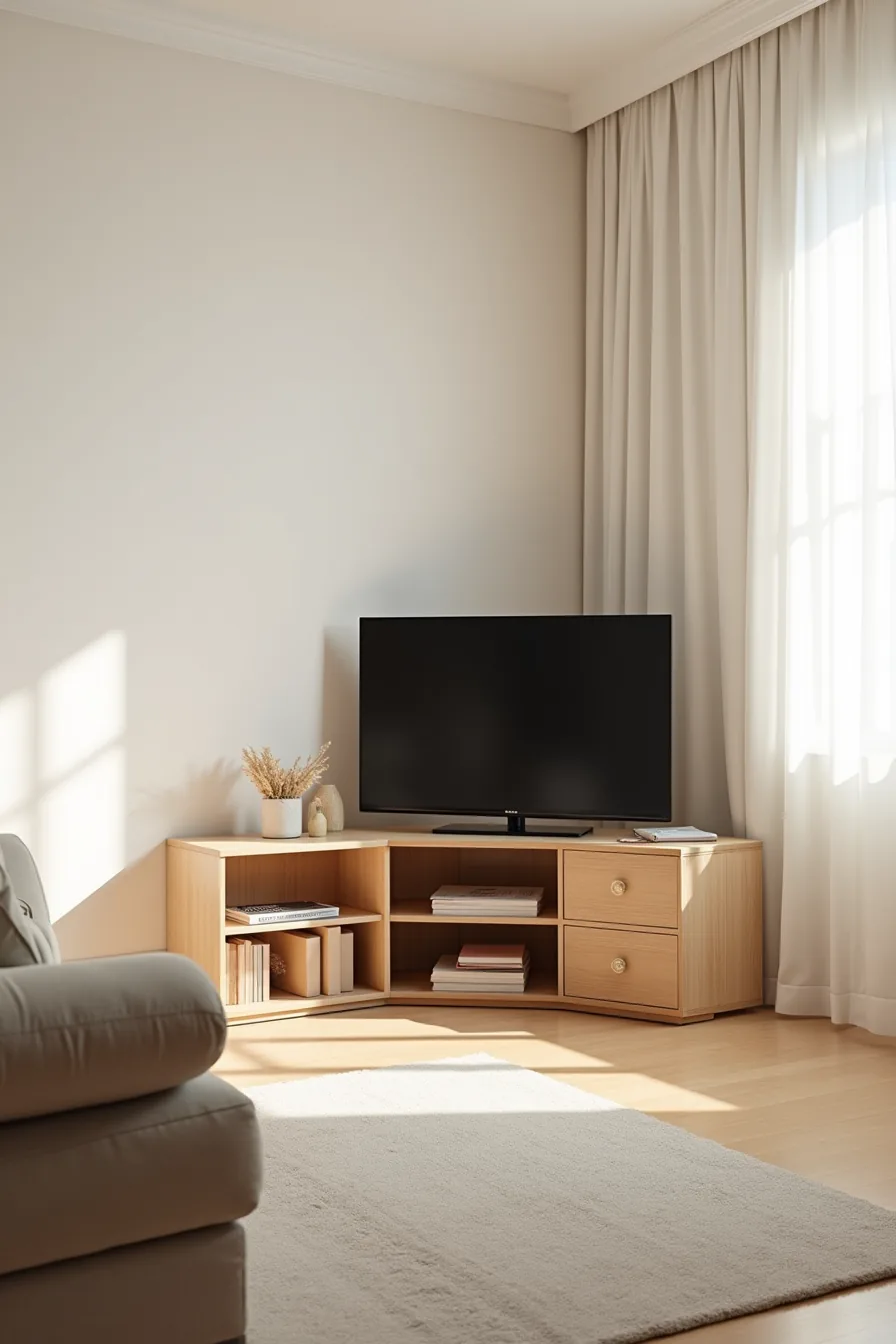
Three freestanding box units stacked asymmetrically give you a luxury silhouette without a single hole in the wall. The wood veneer finish reads as high-end cabinetry, but each piece lifts off independently, so you can reconfigure the arrangement when you move, or when you simply want a different composition. This setup suits renters who want visual weight and storage, not just a floating shelf, and it works in living rooms where the TV wall is load-bearing or covered in plaster you can’t drill into.
Choose laminate over solid wood to keep each box under 25 pounds, making the upper unit safe to lift and reposition alone. Since there are no fasteners, stability depends on footprint: the bottom box should be at least 16 inches deep, and the stacked columns should overlap by at least 8 inches. The asymmetry hides the absence of wall mounting, a deliberate, styled imbalance that looks curated rather than makeshift.
Long-Term Investment: Built-In Integration
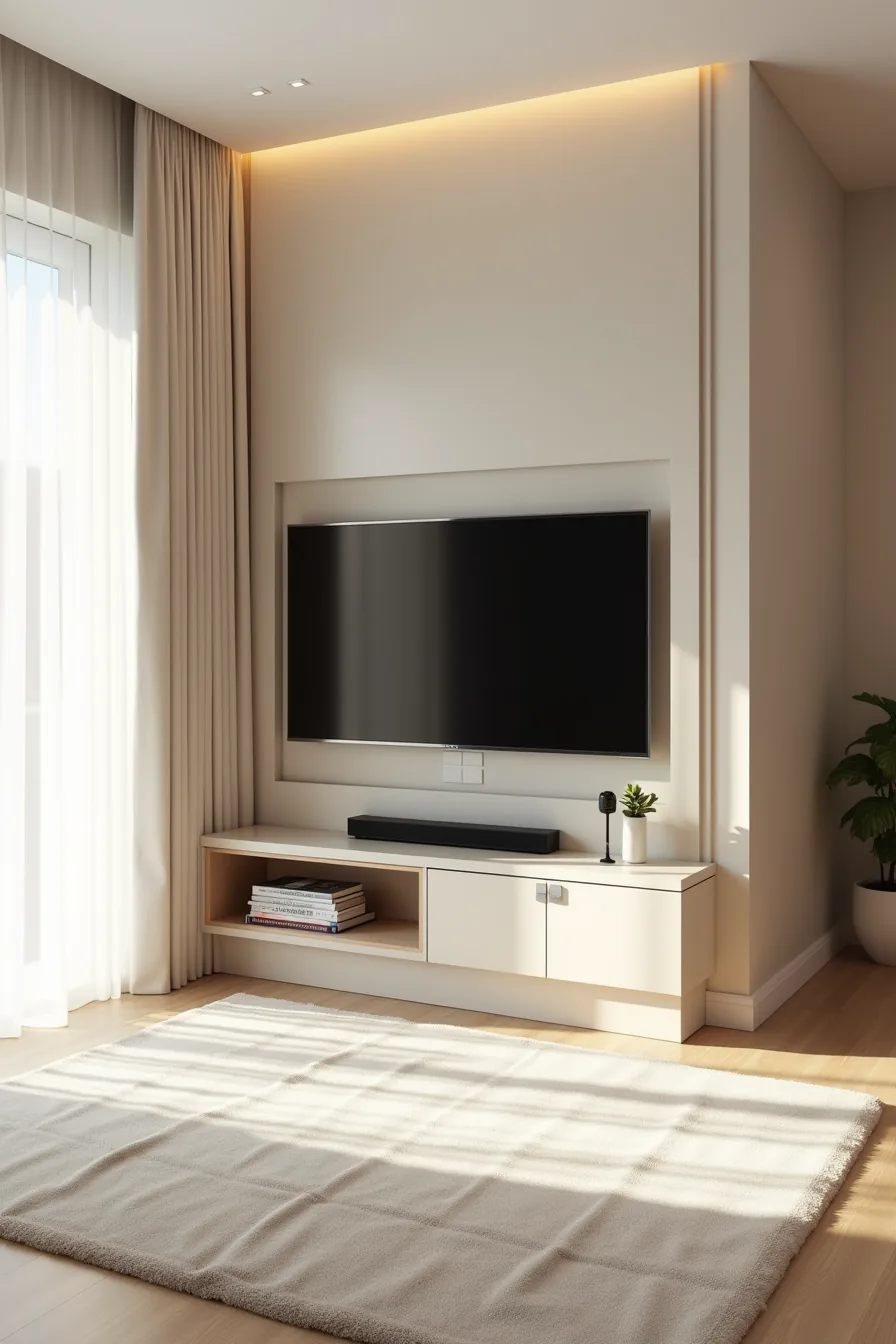
A full-wall built-in with the TV recessed into custom cabinetry is the definitive statement of TV unit design modern living luxury. The screen sits flush within the frame, connected via electrical conduit routed invisibly inside the structure, so no cords ever touch the wall. This suits homeowners planning to stay put for a decade or more, or anyone renovating with the intent to sell, a smooth surround of wood or stone reads as permanent architecture, not furniture.
Budget realistically: semi-custom built-ins with integrated storage and a recessed TV niche typically run $4,000–$12,000, depending on material and linear footage. Stone cladding adds another $1,500–$4,000, and you must reinforce the wall to carry its weight. The payoff is durability, solid hardwood or quartz surfaces outlast any freestanding unit by decades, but installation locks your TV size and layout in place.
Choose internal drawers with soft-close hardware and LED strip lighting to future-proof the design, and leave a 2–3 inch service gap behind the recessed niche for ventilation and future cable changes.
What to Do First
Match your chosen TV unit style to your actual room dimensions and viewing distance before you commit to a single piece. Measure your wall, seating position, and walkways first, this prevents the most common mistake of buying a unit that dominates the space.
Pick one route from the six that fits your living situation: renters should prioritize floating or freestanding modular units, while homeowners can invest in built-ins. Start with a tape measure and a clear budget range, then visit showrooms with those numbers in hand. Your next step: sketch your room’s floor plan and mark the exact wall where the TV will live.
Frequently Asked Questions
What materials make a TV unit look expensive without costing a fortune?
Use matte black metal, fluted wood veneer, or brushed brass accents. Combine these with a high-gloss lacquer or textured stone-look laminate. These mimic premium materials at a fraction of the cost.
How do I prevent a modern TV unit from looking cold or sterile?
Add warm textures through a reclaimed wood shelf, a linen-woven basket, or a wool throw draped nearby. Introduce soft ambient lighting behind the unit. Choose matte finishes over high-gloss for a softer feel.
Can I achieve luxury TV unit design in a rental apartment?
Yes, use freestanding units, peel-and-stick wallpaper panels, and tension rod curtains to hide cables. Avoid drilling by using floor-standing brackets or adhesive wall clips. Focus on styling with art and decor rather than permanent changes.
What’s the ideal height and distance for a wall-mounted TV unit in a living room?
Mount the TV center at eye level when seated, typically 40–45 inches from the floor. Distance should be 1.5 to 2.5 times the screen’s diagonal size. Adjust for reclining seating and room depth.