
College dorm rooms typically offer only 100 to 150 square feet of living space, so every cubic foot counts when you’re trying to fit a semester’s worth of clothes, books, and gear into a shared room. The trick isn’t buying more storage, it’s choosing pieces that work vertically, under the bed, and over the door. You’ll want modular systems that adapt as your needs shift mid-semester, not bulky furniture you’ll abandon in June.
The right mix of stackable bins, hanging organizers, and rolling carts can double your usable space without sacrificing floor area. Here’s how to prioritize your purchases for maximum impact.
Key takeaways
Measure first, most standard dorm beds sit 12–18 inches off the floor, so confirm your clearance before buying any under-bed bin taller than that. Use vertical tension rods, a spring-loaded rod between floor and ceiling costs $10–20 and holds multiple shelves without a single screw. Double your hanging space, stack two tension rods or add a hanging shelf unit to use the lower half of your closet, which typically goes wasted. Buy furniture with hidden storage, an ottoman or trunk that seats two people and holds 50–80 liters of gear replaces both a chair and a bin. Sort by weekly frequency, keep daily-use items (toiletries, chargers, textbooks) at waist-to-shoulder height, and relegate seasonal gear to the hardest-to-reach corners.
The safest all-around choice is the Simple Houseware 3-Tier Heavy Duty Metal Utility Rolling Cart because it adds useful vertical storage without depending on under-bed clearance, closet dimensions, or door fit. For most college dorms, that flexibility matters more than maximum capacity. If your floor is already crowded, the Lifewit under-bed bags or GRANNY SAYS hanging organizer are smarter space-specific alternatives.
In a hurry?
- Best all-around: Simple Houseware rolling cart for everyday items.
- Best for bulky textiles: Lifewit under-bed storage bags.
- Best for a cramped closet: GRANNY SAYS hanging organizer.
- Best when floor space is nearly gone: Whitmor door organizer or Kikkerland bedside caddy.
Comparison table
| Category | Product | Dimensions | Material | Check price |
|---|---|---|---|---|
| Best Overall | Simple Houseware 3-Tier Heavy Duty Metal Utility… | 12.5 D x 17 W x 31.5 H in | Alloy steel and metal | Check on Amazon (paid link) |
| Best for Bulk Bedding Storage | Lifewit 95L 4 Pack Under Bed Storage Containers | 39.4 L x 19.7 W x 7.1 H in | Breathable non-woven fabric with clear PVC window | Check on Amazon (paid link) |
| Best for Small Closets | GRANNY SAYS 3-Shelf Closet Organizers and Storage | 12 L x 12 W x 23.5 H in per organizer, excluding hooks | Polyester fabric with internal shelf supports and metal hooks | Check on Amazon (paid link) |
| Best for Shoes and Accessories | Whitmor Over the Door Shoe Organizer – 20 Section… | 22 W x 64 H in | Fabric with over-door hardware | Check on Amazon (paid link) |
| Best for Bedside Clutter | Kikkerland OR74 Bedside Caddy | 8.66 L x 1.57 W x 12.99 H in on the Amazon listing | Felt with internal support material | Check on Amazon (paid link) |
| Best Budget Multi-Bin Set | Amazon Basics Collapsible Fabric Storage Cubes… | 10.5 L x 10.5 W x 11 H in per cube | Breathable fabric | Check on Amazon (paid link) |
| Best Dual-Purpose Furniture | SONGMICS 43.3 Inches Folding Storage Ottoman Bench | 43.3 W x 15 D x 15 H in | Engineered wood panels, linen-look fabric, and foam | Check on Amazon (paid link) |
| Best for Creating Under-Bed Clearance | Utopia Bedding Adjustable Bed Risers 3 & 5 Inch | 3 in and 5 in lift components with stackable height configuration | Heavy-duty plastic | Check on Amazon (paid link) |
How we chose these picks
We shortlisted 8 products that are actually in stock on Amazon, then compared them on the specifications that actually change the decision — fit, materials and maintenance — rather than on marketing copy.
We don’t print prices or star ratings, because both move constantly and a number frozen in an article is misleading by the time you read it. Every pick below also carries at least one genuine drawback drawn from buyer reports; a list where nothing has a downside isn’t a real list.
Read our full selection methodology
The picks
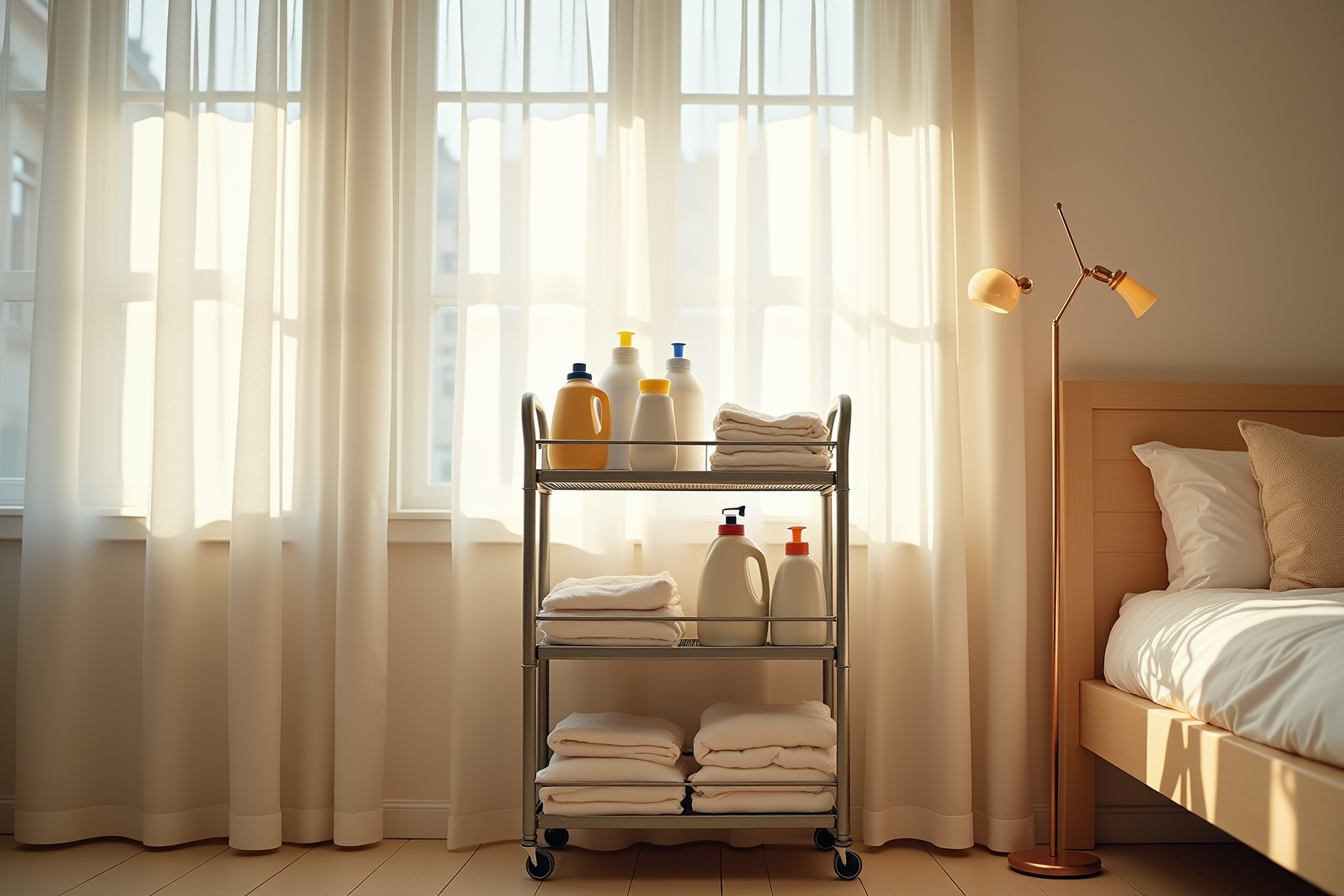
1. Simple Houseware 3-Tier Heavy Duty Metal Utility Rolling Cart, Black — Best Overall
Brand: Simple Houseware
This is the safest all-around dorm storage pick because it adds three levels of accessible storage without depending on bed clearance, closet dimensions, or door compatibility. The narrow rolling footprint also makes it easier to repurpose when a roommate arrangement or room layout changes.
Best for: Best for students who want one flexible storage station for snacks, toiletries, school supplies, or laundry items.
Avoid if: Don’t buy it if your room has virtually no spare floor footprint or you specifically need enclosed storage.
Pros
- Three open tiers keep frequently used items visible and easy to reach.
- Swivel casters make it practical to move between a desk, bed, closet, and bathroom area.
- Metal construction is better suited to dense everyday items than soft fabric organizers.
Cons
- Some owners report cosmetic dents or scratches on arrival, and occasional alignment issues can make setup more frustrating.
- Open shelves don’t hide visual clutter or protect contents from dust.
Key specs
- dimensions: 12.5 D x 17 W x 31.5 H in
- material: Alloy steel and metal
- storage_format: 3-tier open rolling cart
- setup: Freestanding frame with casters assembled before use
- mobility: 4 swivel casters with locking capability
(paid link)

2. Lifewit 95L 4 Pack Under Bed Storage Containers, Large Capacity Blanket Storage Bags with Reinforced Handle, Grey — Best for Bulk Bedding Storage
Brand: Lifewit
The Lifewit set makes better use of the broad, shallow space under a dorm bed than a tall freestanding organizer. Its soft construction is especially useful for bedding and clothing, but it behaves more like a structured storage bag than a rigid bin.
Best for: Best for students who need to move comforters, spare sheets, towels, and off-season clothing out of sight.
Avoid if: Don’t buy these if you need rigid containers that can be stacked or repeatedly dragged out by their handles while heavily loaded.
Pros
- Low-profile shape is designed around under-bed storage.
- Clear top panels make it easier to identify contents without opening every bag.
- Soft bags fold down when empty, which is useful during move-in and move-out.
Cons
- Recent buyer feedback includes handles tearing when bags are dragged or heavily loaded.
- The soft sides can collapse and make a lightly filled bag awkward to push deep under a bed.
Key specs
- dimensions: 39.4 L x 19.7 W x 7.1 H in
- material: Breathable non-woven fabric with clear PVC window
- storage_format: 4 zippered under-bed storage bags
- setup: Unfold, fill, and zip with no rigid frame
- mobility: Multiple fabric handles; better carried than dragged when heavily filled
(paid link)
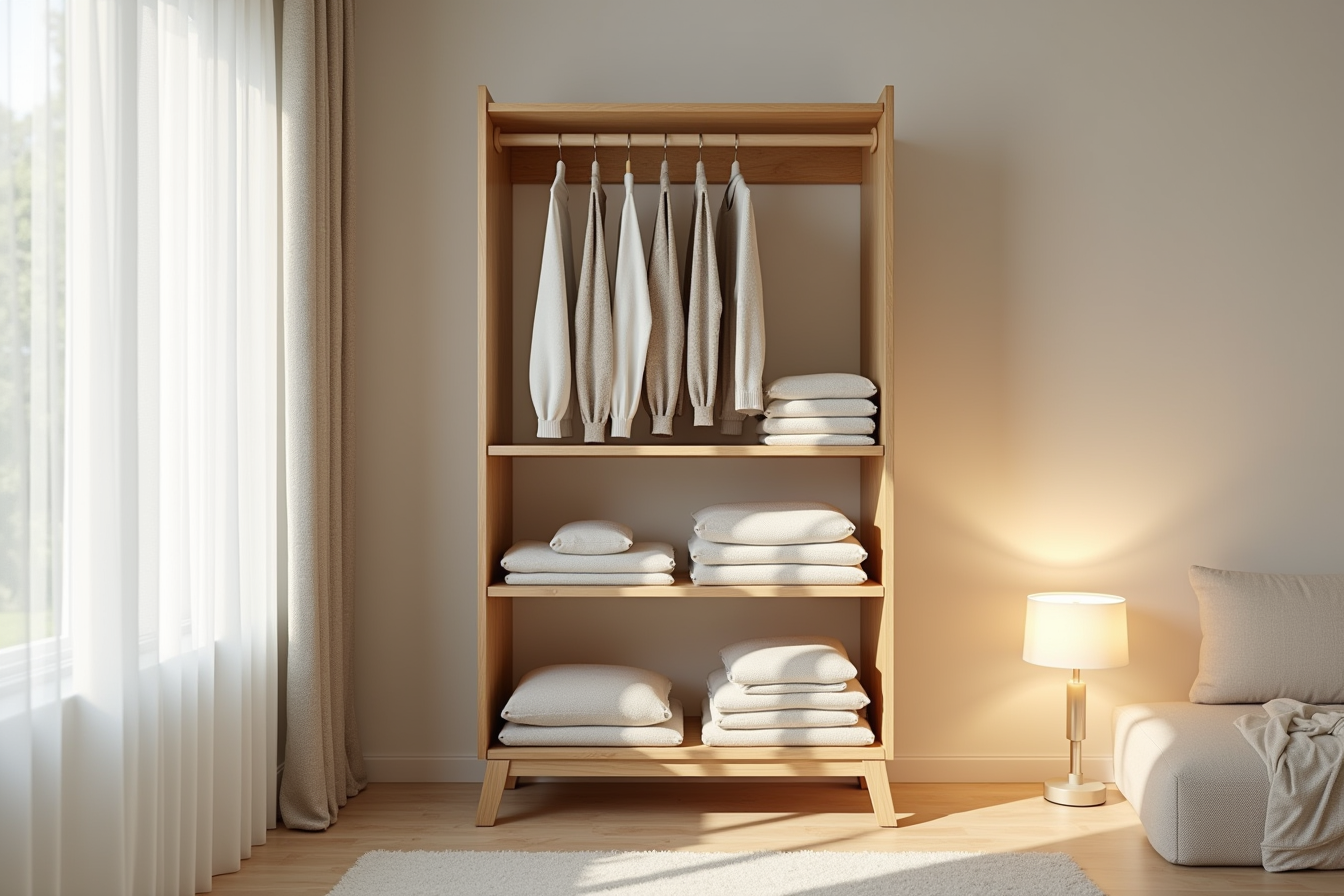
3. GRANNY SAYS 3-Shelf Closet Organizers and Storage, Foldable Hanging Closet Organizer, Gray, 2-Pack — Best for Small Closets
Brand: GRANNY SAYS
This organizer converts unused vertical space below a closet rod into shelves without drilling or adding furniture to the floor. It works particularly well for T-shirts, sweaters, towels, and accessories, although its fabric structure has practical load limits.
Best for: Best for students who have a closet rod but little or no built-in shelving for folded clothes.
Avoid if: Don’t buy it to hold textbooks, heavy footwear, or other dense items that would put sustained weight on fabric shelves.
Pros
- Creates shelving inside a closet without taking additional floor space.
- Hooks onto an existing closet rod without permanent installation.
- Folds flat for transport or storage between semesters.
Cons
- Some owners report shelf bowing or tearing after extended use, particularly with heavier loads.
- The relatively narrow shelves can feel cramped for bulky folded clothing.
Key specs
- dimensions: 12 L x 12 W x 23.5 H in per organizer, excluding hooks
- material: Polyester fabric with internal shelf supports and metal hooks
- storage_format: 3-shelf hanging closet organizer, 2-pack
- setup: Hooks over an existing closet rod with no tools
- mobility: Lightweight and folds flat when removed
(paid link)
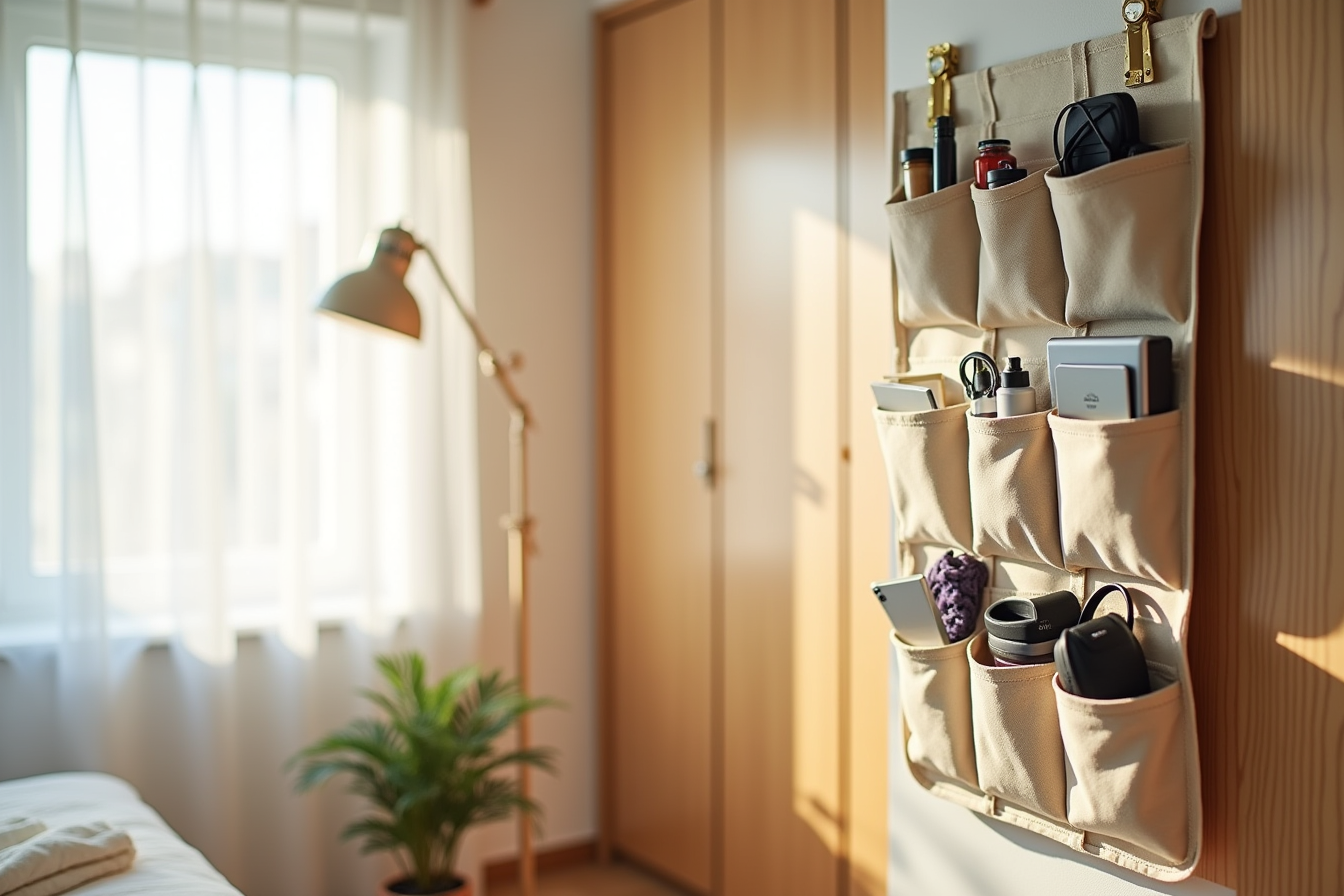
4. Whitmor Over the Door Shoe Organizer – 20 Section – Black Herringbone — Best for Shoes and Accessories
Brand: Whitmor
Whitmor turns the back of a dorm door into storage without consuming floor or closet-shelf space. The pocket layout is useful beyond shoes, but the door and hook fit should be checked before relying on it.
Best for: Best for students who have usable door space and want shoes, toiletries, cables, or small accessories off the floor.
Avoid if: Don’t buy it if your dorm door has extremely tight top clearance, an unusually thick profile, or rules that prohibit over-door hardware.
Pros
- Uses otherwise wasted vertical door space.
- Multiple pockets separate small items that tend to disappear inside larger bins.
- No drilling or permanent wall installation is required.
Cons
- The fabric is better suited to lighter items than dense or oversized footwear.
- Metal over-door hardware can rub against some door finishes unless the contact points are protected.
Key specs
- dimensions: 22 W x 64 H in
- material: Fabric with over-door hardware
- storage_format: 20-pocket over-door organizer
- setup: Hangs over the top of a compatible door
- mobility: Lightweight and removable without permanent installation
(paid link)

5. Kikkerland OR74 Bedside Caddy — Best for Bedside Clutter
Brand: Kikkerland
The Kikkerland caddy creates a small bedside landing zone for a phone, glasses, remote, notebook, or book without occupying any floor space. Its usefulness depends heavily on the bed design because the mattress or cushion must hold the support section securely.
Best for: Best for students with a lofted or compact dorm bed who have no room for a conventional nightstand.
Avoid if: Don’t buy it if your adjustable or platform bed doesn’t provide a suitable mattress gap for the support flap.
Pros
- Takes up no usable dorm-room floor space.
- Keeps frequently needed nighttime items within arm’s reach.
- Simple construction makes it easy to remove when changing rooms.
Cons
- A documented owner found that it didn’t fit an adjustable bed.
- Heavily stuffing the pocket can require occasional repositioning as the support flap works outward.
Key specs
- dimensions: 8.66 L x 1.57 W x 12.99 H in on the Amazon listing
- material: Felt with internal support material
- storage_format: Hanging bedside pocket caddy
- setup: Support flap slides beneath a mattress or sofa cushion
- mobility: Lightweight and easily repositioned
(paid link)

6. Amazon Basics Collapsible Fabric Storage Cubes Organizer with Handles, Sturdy, Foldable, Space-Saving, 10.5 x 10.5 x 11 Inch, Gray, 6-Pack — Best Budget Multi-Bin Set
Brand: Amazon Basics
These cubes are a straightforward way to divide an open shelf into separate zones for clothing, cables, cleaning supplies, or miscellaneous dorm gear. They’re most useful as lightweight drawer substitutes rather than containers for dense loads.
Best for: Best for students who already have cube shelving or open closet shelves and want inexpensive category-by-category organization.
Avoid if: Don’t buy this set if your cubbies are smaller than the listed dimensions or you need rigid, lidded, dust-resistant containers.
Pros
- Six matching bins make it easy to assign one category to each container.
- Sewn handles let the cubes work like pull-out drawers on compatible shelving.
- Each cube collapses flat when it isn’t needed.
Cons
- Buyer feedback includes a noticeable fabric or glue-like smell when first unpacked.
- Soft walls and sewn handles aren’t intended for repeatedly carrying heavy, dense contents.
Key specs
- dimensions: 10.5 L x 10.5 W x 11 H in per cube
- material: Breathable fabric
- storage_format: 6 open-top collapsible storage cubes
- setup: Pop open and place on a compatible shelf or cubby
- mobility: Sewn handles for light carrying and pulling; cubes collapse flat
(paid link)

7. SONGMICS 43.3 Inches Folding Storage Ottoman Bench, Dark Gray, ULSF77K — Best Dual-Purpose Furniture
Brand: SONGMICS
The SONGMICS bench earns its footprint by hiding bulky or unattractive items while also functioning as occasional seating or a footrest. It’s more furniture-like than the other picks, but that also makes it less convenient for extremely tight dorm layouts.
Best for: Best for students with enough floor length for one piece that combines concealed storage with occasional seating or a footrest.
Avoid if: Don’t buy it if you need a primary everyday chair or can’t dedicate roughly the length of a compact bench to permanent floor space.
Pros
- Concealed compartment keeps clutter out of sight.
- Top surface adds a second function instead of dedicating the footprint solely to storage.
- Foldable structure is easier to pack away than a conventional rigid storage bench.
Cons
- Recent owner feedback includes a strong or unusual odor immediately after unpacking.
- At least one owner specifically advised against relying on the foldable bench for daily seating if preserving its shape is important.
Key specs
- dimensions: 43.3 W x 15 D x 15 H in
- material: Engineered wood panels, linen-look fabric, and foam
- storage_format: Foldable enclosed storage ottoman bench
- setup: Unfold the body and position the internal support components
- mobility: Folds for storage when empty but is cumbersome to move when loaded
(paid link)
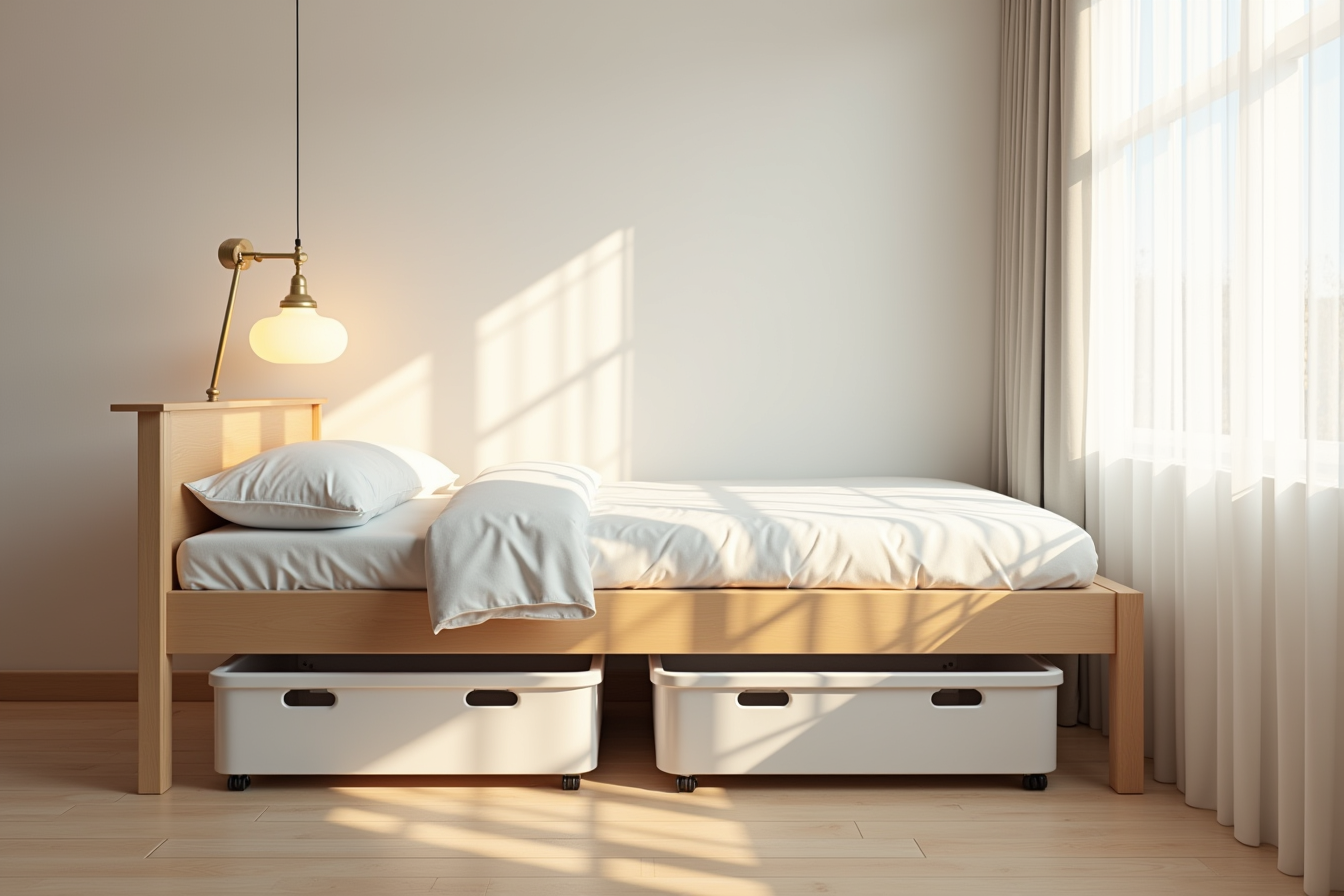
8. Utopia Bedding Adjustable Bed Risers 3 & 5 Inch, Black, 4-Pack — Best for Creating Under-Bed Clearance
Brand: Utopia Bedding
Unlike a container, these risers create storage capacity by increasing usable clearance beneath an existing bed. They can be effective in the right dorm, but compatibility and stability matter more here than with any other product in the roundup.
Best for: Best for students whose bed sits too low for useful storage containers and whose housing rules and bed-leg design permit aftermarket risers.
Avoid if: Don’t buy these if your dorm prohibits aftermarket risers, your bed uses incompatible casters or oversized legs, or the frame can’t sit securely in each recessed cup.
Pros
- Creates usable under-bed volume without adding another piece of furniture.
- Multiple lift configurations provide more flexibility than a fixed-height block.
- No drilling or modification of the bed frame is required when the frame is compatible.
Cons
- Owners report that furniture can feel less stable when legs aren’t precisely centered or when the risers are used at greater height.
- Installation under a heavy bed can be awkward, and moving the bed afterward can shift a leg out of position.
Key specs
- dimensions: 3 in and 5 in lift components with stackable height configuration
- material: Heavy-duty plastic
- storage_format: Bed and furniture risers that create additional clearance
- setup: Lift one leg at a time and center each compatible leg in a recessed cup
- mobility: Stationary during use; individual components can be packed for moving
(paid link)
Who should buy what
- Best Overall — Simple Houseware 3-Tier Heavy Duty Metal Utility… (paid link): Best for students who want one flexible storage station for snacks, toiletries, school supplies, or laundry items.
- Best for Bulk Bedding Storage — Lifewit 95L 4 Pack Under Bed Storage Containers (paid link): Best for students who need to move comforters, spare sheets, towels, and off-season clothing out of sight.
- Best for Small Closets — GRANNY SAYS 3-Shelf Closet Organizers and Storage (paid link): Best for students who have a closet rod but little or no built-in shelving for folded clothes.
- Best for Shoes and Accessories — Whitmor Over the Door Shoe Organizer – 20 Section… (paid link): Best for students who have usable door space and want shoes, toiletries, cables, or small accessories off the floor.
- Best for Bedside Clutter — Kikkerland OR74 Bedside Caddy (paid link): Best for students with a lofted or compact dorm bed who have no room for a conventional nightstand.
- Best Budget Multi-Bin Set — Amazon Basics Collapsible Fabric Storage Cubes… (paid link): Best for students who already have cube shelving or open closet shelves and want inexpensive category-by-category organization.
- Best Dual-Purpose Furniture — SONGMICS 43.3 Inches Folding Storage Ottoman Bench (paid link): Best for students with enough floor length for one piece that combines concealed storage with occasional seating or a footrest.
- Best for Creating Under-Bed Clearance — Utopia Bedding Adjustable Bed Risers 3 & 5 Inch (paid link): Best for students whose bed sits too low for useful storage containers and whose housing rules and bed-leg design permit aftermarket risers.
Buying guide
Measure the obstruction, not just the advertised space
For under-bed storage, measure from the floor to the lowest rail, crossbar, or hardware rather than to the mattress. For door organizers, check both door thickness and the clearance between the top of the door and the frame. In a closet, measure rod-to-floor height as well as shelf depth so a hanging organizer doesn’t block shoes or drawers below it.
Match the structure to the weight of what you store
Soft fabric bags and hanging shelves make sense for sweaters, bedding, towels, and other compressible items. Bottles, stacks of notebooks, appliances, and dense supplies are better placed on a metal cart or another rigid surface. A common dorm-storage failure is loading a lightweight organizer based on how much volume fits rather than how much weight its handles, hooks, or shelf panels can tolerate.
Put daily items where access is easiest
A rolling cart, door pocket, or bedside caddy is better for things you reach for every day. Folded clothing can live in closet shelves or cubes, while spare bedding and off-season clothes can go under the bed. Deep under-bed space looks efficient on move-in day but becomes irritating if you’ve to crawl under the bed every morning for a charger or toiletries.
Account for the next move before filling the room
Dorm furniture and room layouts can change from one academic year to the next, so collapsible, hanging, and rolling solutions are easier to reuse than highly specific built-ins. Also check housing rules before using bed risers or any hardware that contacts doors and walls. A storage product is less useful if it creates damage charges or can’t be used in the next room.
Common mistakes
- Buying under-bed storage before measuring the lowest bed-frame obstruction; rails and crossbars often reduce usable clearance more than expected.
- Dragging an overpacked fabric bag by its sewn handle instead of supporting the body of the bag; repeated pulling is a common route to torn handles.
- Installing an over-door organizer and assuming the door will still close normally; test the hook thickness and watch for rubbing before loading the pockets.
- Adding aftermarket bed risers before checking dorm policy and leg fit; every leg needs to sit centered and stable, and pushing the bed after installation can disturb the setup.
What pairs well with these
- Brother P-touch PT-D220 Label Maker — Labels make cubes, under-bed bags, and cart tiers easier to maintain when several containers look identical.
- Scotch Felt Pads, Assorted Sizes — Removable felt protection can help reduce rubbing where storage hardware contacts a door, wall, or other finished surface.
Frequently Asked Questions
What is the best dorm storage solution if I can buy only one?
For most students, the Simple Houseware rolling cart is the most versatile starting point because it handles several categories of everyday items and can move when the room layout changes. Choose a more specialized option only when you already know that your unused space is under the bed, inside the closet, or behind the door.
Are soft under-bed bags better than plastic bins?
Soft bags are easier to fold away and work well for bedding and clothing, while rigid bins are easier to slide repeatedly and protect items from being crushed. The deciding factor should be what you store and the actual clearance beneath the bed, not simply which container holds more.
Can an over-the-door organizer damage a dorm door?
It can if the hook rubs the finish or there isn’t enough clearance above the door. Install it empty first, close and open the door several times, and protect contact points with removable padding if permitted.
Are bed risers a good idea in a college dorm?
Only when the housing policy allows them and the bed legs fit securely inside the risers. The frame should remain level and stable after installation; if the legs use incompatible casters or don’t sit fully inside the cups, use another storage strategy.
How should I divide dorm storage between daily and seasonal items?
Keep daily-use items on a cart, door organizer, bedside caddy, or other easy-access surface. Use closet shelves for folded clothing and reserve under-bed bags or enclosed ottoman storage for bedding, spare towels, and less frequently used items.
Conclusion
For most college students, start with the Simple Houseware rolling cart because it solves the widest range of everyday storage problems and can adapt when the room changes. Add under-bed, closet, door, or furniture storage only after measuring the specific unused zone you want to reclaim; the most effective dorm setup gives every container a clear location and a clear job.