Your bathroom walls are the largest uninterrupted surface in the room, and the material you choose determines everything from daily maintenance to how the space feels at 6 a.m. That single surface dictates your cleaning routine, your lighting requirements, and your budget for the next decade. The six approaches below, ranging from peel-and-stick to full tile, each solve a specific problem, but only if you match them to your square footage and tolerance for upkeep.
The right choice hinges on three questions about your habits, your plumbing, and how long you plan to stay in the home.
Key takeaways
- Start with paint if you want the cheapest transformation: an accent wall costs $30-$80 in materials and takes one afternoon, while a full tile redo runs $500-$3,000 and requires 2-5 days of labor.
- Choose removable wallpaper or peel-and-stick tile for rentals, since both install in 2-3 hours, leave no residue when removed, and cost $50-$200 per wall, versus forfeiting a $500+ security deposit for permanent changes.
- Pair tile with paneling to balance budget and longevity: waterproof PVC panels run $2-$4 per square foot and install in a day, while ceramic tile costs $5-$15 per square foot plus grout and sealing, but lasts 20+ years without replacement.
- Mount floating shelves or a ladder-style rack for dual-purpose storage that works in any size bathroom, adding 4-6 square feet of usable space for $40-$150, and skip the trend-driven statement wall if your room is under 40 square feet.
Paint and Accent Walls: Low-Cost Impact
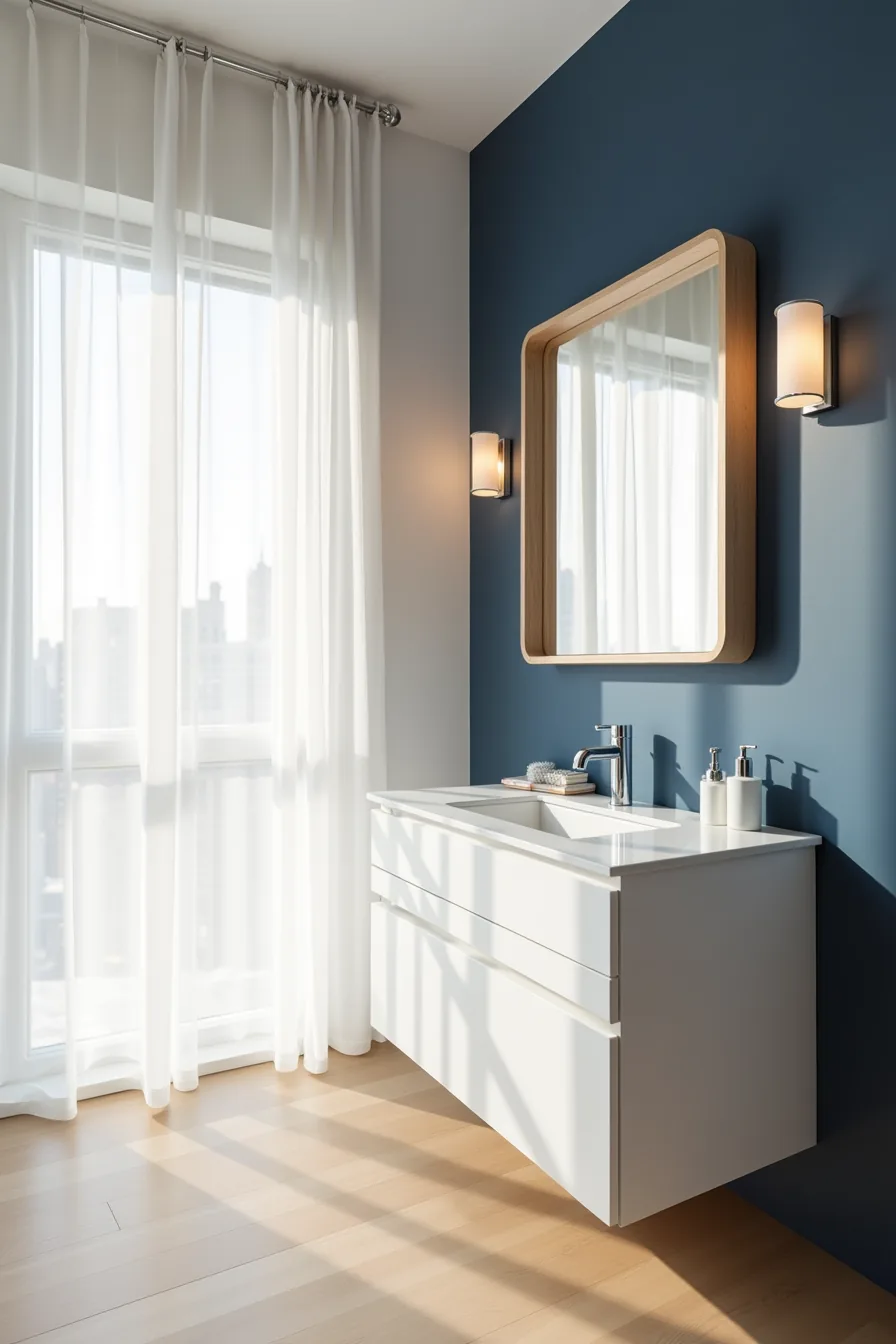
The fastest way to shift a bathroom’s mood is a single accent wall. Paint three walls in a soft white and reserve deep navy for the wall behind the vanity, the contrast frames the mirror and chrome fixtures, giving the room a focal point without adding a single tile. This setup suits medium-sized bathrooms (roughly 50–80 square feet) where a full dark room would feel cavernous but a single saturated plane adds depth.
For moisture resistance, use a matte or satin paint labeled specifically for bathrooms or kitchens; these formulas resist mildew and wipe down easily. Budget around $40–$70 per gallon, and expect one to two coats plus primer over bare drywall, a weekend project for most. In small bathrooms, skip the accent wall and instead paint the ceiling a contrasting shade; in large ones, an accent wall opposite the door carries the most visual weight.
Keep the other walls within the same hue family to avoid visual clutter.
Removable Wall Treatments for Renters
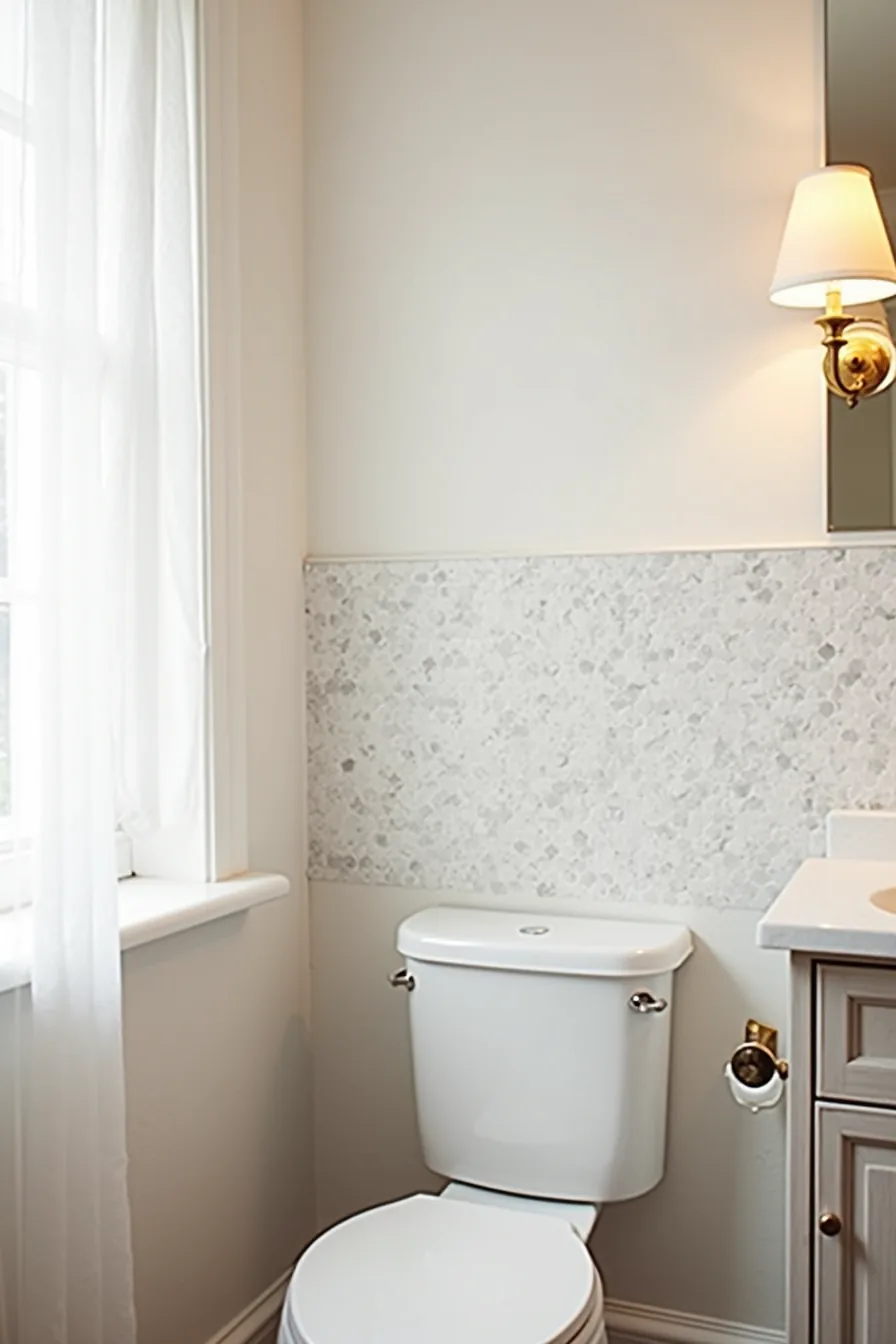
Peel-and-stick options give you the look of tile or wallpaper without a security deposit at risk. The white-and-gray hexagonal mosaic sheets shown here are a classic choice: they read as real ceramic from four feet away, yet each sheet pulls off cleanly with a hairdryer and a putty knife. The painted wall beside the tiled section frames the pattern, so you get an accent wall effect without covering every surface.
Installation takes roughly one hour per 10–15 square foot wall. Clean the drywall with rubbing alcohol, let it dry completely, then press the sheets from the center outward, using a plastic smoother to expel air bubbles. Expect a lifespan of two to five years depending on humidity and direct water contact, keep them at least twelve inches away from a showerhead to avoid edge peeling.
When removal time comes, heat a corner for thirty seconds, peel slowly at a 45-degree angle, and wipe any residue with soapy water. The base molding below remains untouched, which is exactly the point: nothing about this setup requires permission from a landlord.
Tile vs. Paneling: Permanent Wall Solutions
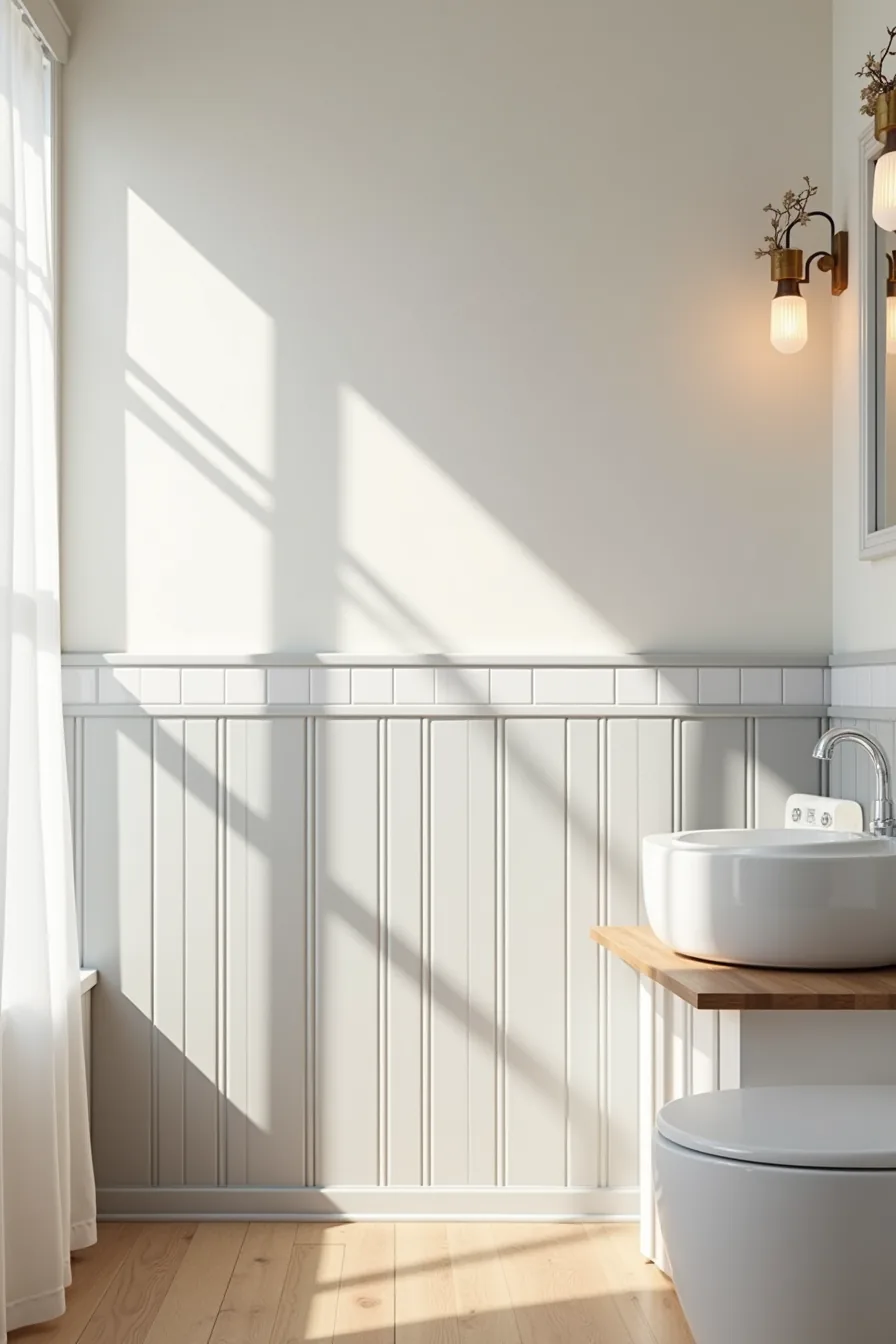
If you’re ready to commit to a wall finish that outlasts your lease, the decision comes down to how the surface handles moisture. That white subway tile is ceramic, which is non-porous, so it shrugs off steam and splashes indefinitely; grout lines are the weak point, which is why the waterproof grout between those tiles is non-negotiable. You’ll pay a premium for that permanence, expect a professional install to land in the $800–$1,500 range for a typical 40-square-foot accent wall, plus material costs of $3–$7 per square foot for the tile itself.
The vertical shiplap paneling in light gray is the budget-friendly alternative, costing $1.50–$3 per square foot in primed MDF. It’s easier to cut and fasten yourself over a weekend, but it demands a vapor barrier and a high-quality semi-gloss paint to survive bathroom humidity. Where tile tolerates direct spray, paneling needs to stay at least 24 inches from the showerhead, or the joints will swell within two years.
When weighing paneling vs tile, let the wet zone dictate your choice. Tile belongs inside the shower and on the immediate splashback; paneling works beautifully on the upper half of a powder room wall or behind a freestanding vanity, where moisture stays intermittent. The transition line down the center of this wall works because both materials share the same vertical rhythm, shiplap boards and subway tiles are both multiples of two to four inches, so the eye reads the shift as intentional design rather than a repair patch.
Storage Meets Decor: Functional Wall Design
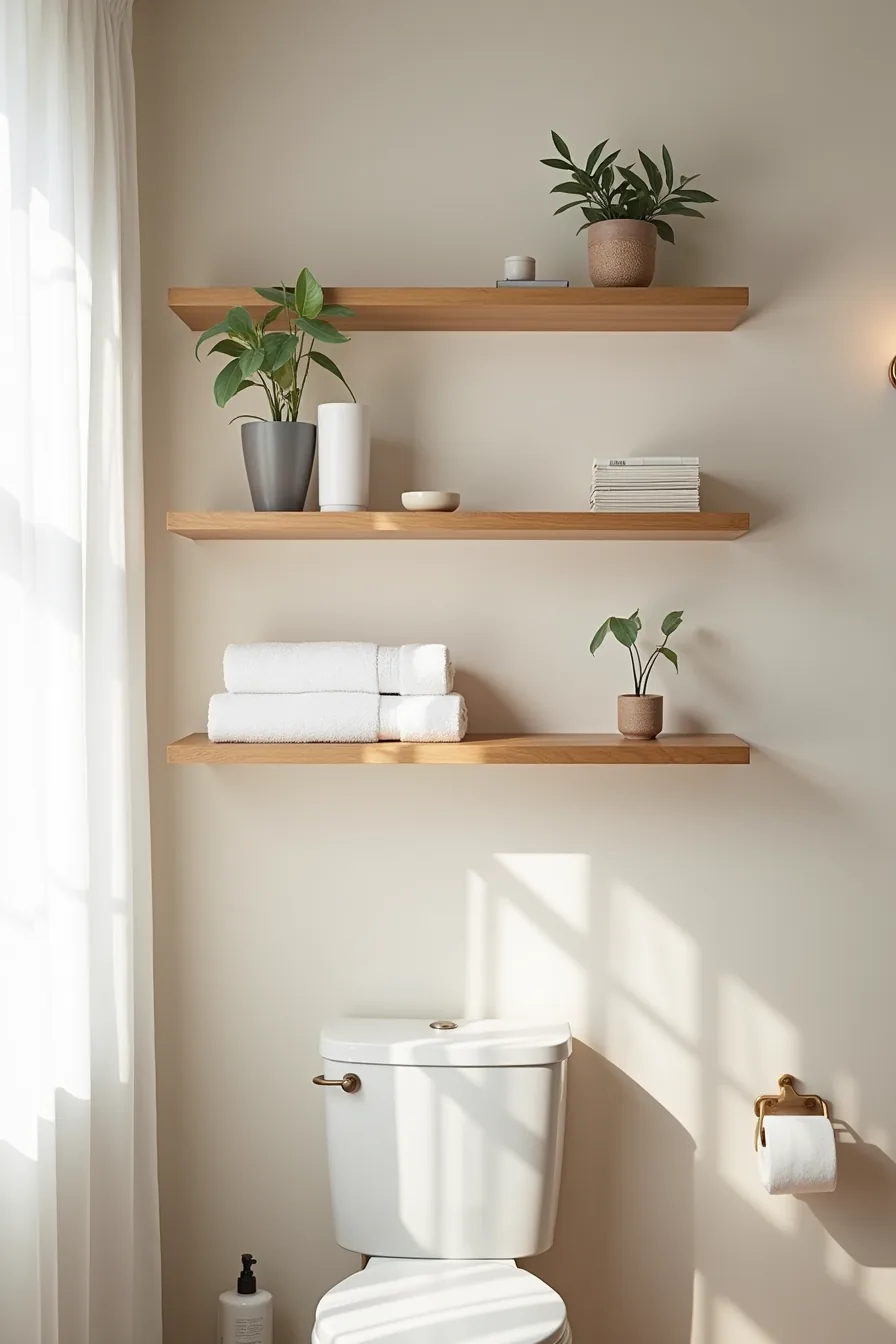
Floating wooden shelves in natural oak turn the space above your toilet into the most practical square footage in the room. That setup, three tiers holding rolled towels, ceramic containers, and small potted plants, works because each shelf carries a distinct job: towels within arm’s reach of the shower, containers for cotton rounds and q-tips, and plants that thrive on the steam. You avoid the visual clutter of a medicine cabinet by keeping the bottom shelf at least 24 inches above the toilet tank, which leaves headroom for tall users and makes every item accessible without stretching.
Load capacity matters here. Standard floating shelves with hidden brackets support 20–40 pounds per shelf when anchored into studs, but that drops by half in drywall without proper toggle bolts, so keep the heavy ceramic containers on the lowest tier. For the storage meets decor balance in a powder room, two shelves at 6–8 inches deep suffice; a large family bathroom warrants three at 10–12 inches deep to hold bulkier items like extra bath linens.
In a compact half-bath, skip the third tier entirely and push the containers to one side so the wall reads as intentional styling rather than hoarding.
Statement Wall or Subtle?: Choosing Your Approach
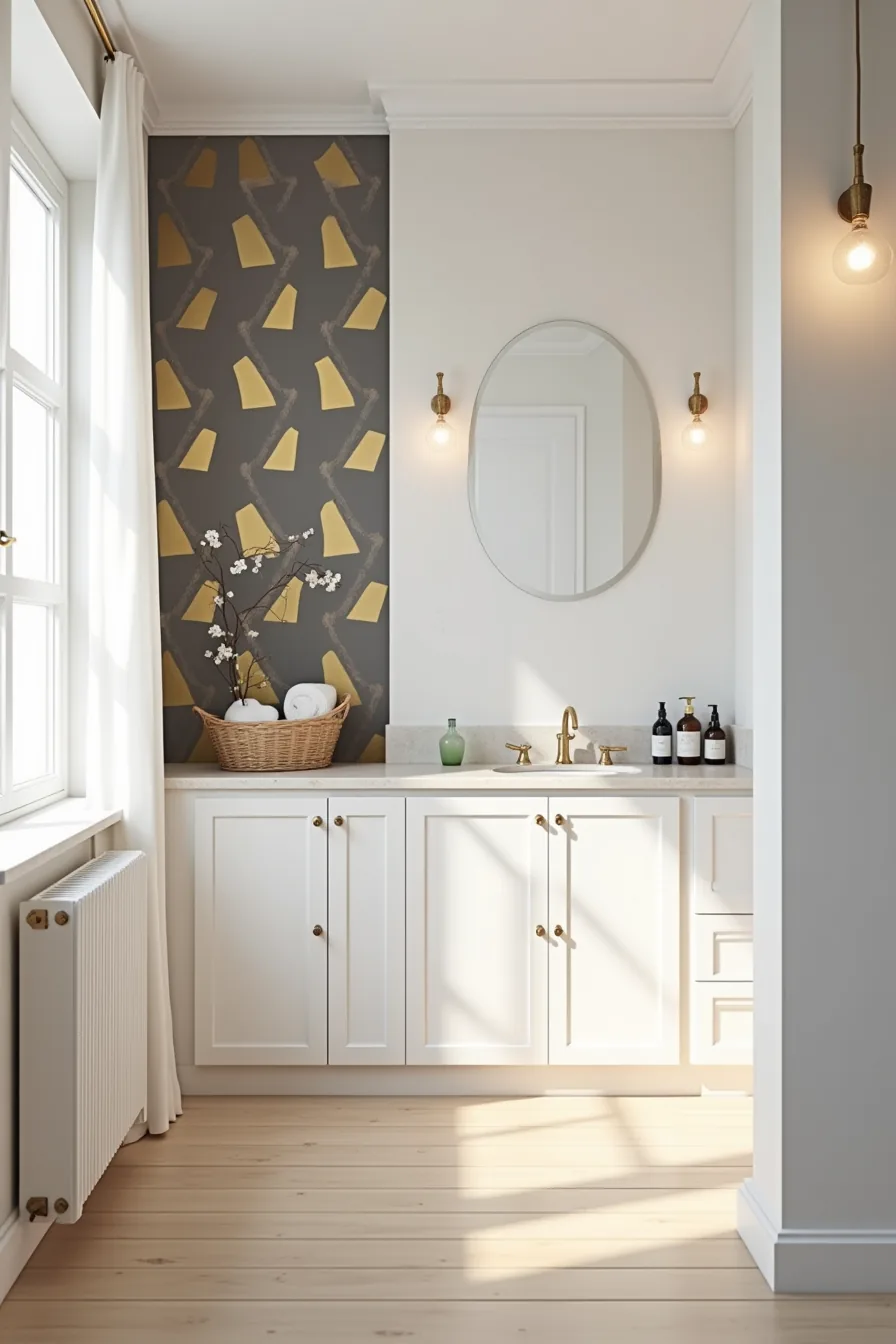
The difference between a statement wall and a subtle treatment comes down to one question: do you want the wall to do the talking, or the room? A large-scale geometric wallpaper in charcoal and gold behind the vanity, with the other three walls in plain white, creates a deliberate focal point that anchors the space. That approach works best in a bathroom where the vanity is the natural center of attention, typically a medium-to-large room of 50–100 square feet, because the pattern has enough visual distance to breathe rather than overwhelm.
A subtle approach suits smaller spaces under 50 square feet, where bold wallpaper can make the room feel tighter and compete with fixtures. It also fits rental bathrooms where you can’t commit to a permanent treatment, or any room where you prefer the fixtures, tile, or natural light to carry the design. Your lighting matters too: a statement wall needs adequate direct light to show its texture, while a subtle treatment tolerates dimmer, moodier conditions without losing its effect.
Choose bold when you want a daily visual anchor and have the wall area to support it; choose subtle when you want flexibility and longevity from your design.
Easy Updates Without Full Renovation
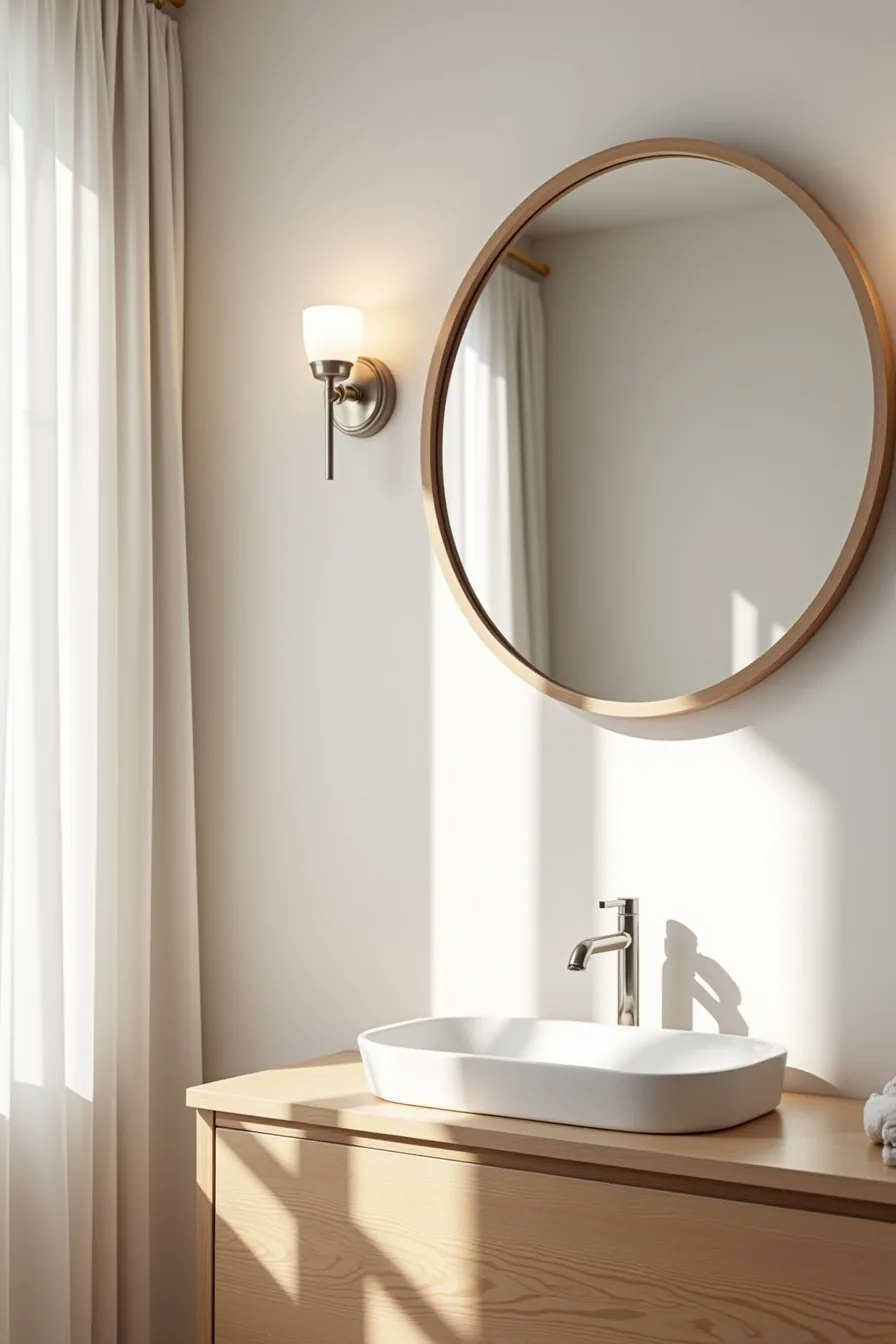
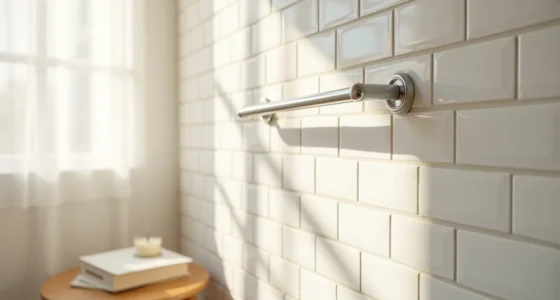
You can transform how a bathroom feels without touching a single pipe, and it rarely takes longer than a weekend. Start with fresh white paint on the walls, it immediately brightens the room, makes grout lines look cleaner, and gives you a neutral base that works with any fixture finish. From there, swap the old towel bar for a brushed-nickel model; the warm metallic tone reads as intentional even when the rest of your hardware is still original.
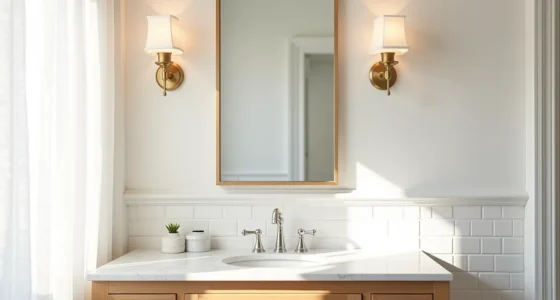
The mirror is your highest-impact change. A large round mirror with a slim metal frame softens the hard angles of a typical vanity and visually widens a narrow wall, most 24-inch round mirrors suit a 30-inch vanity perfectly, while a 36-inch round works for double sinks. Mount wall sconces on either side at eye level, roughly 60–66 inches from the floor, to eliminate shadows on your face.
This entire update costs well under $300, requires only a drill and a level, and you can reverse every piece of it before you move out.
Where to start
You now have six distinct directions, each with its own maintenance profile and budget. Before you buy anything, measure your wall area and note where the shower spray reaches. That one measurement will eliminate half the options immediately.
Pick the one idea that solves your biggest problem first, whether that’s moisture resistance, storage, or visual clutter. Match your choice to your actual routine, not a magazine photo.
Your next step: tape samples of your top two materials onto the wall and live with them for three days. The right answer will feel obvious by the end.
Frequently Asked Questions
What paint finish works best in bathrooms with high moisture?
Choose a satin or semi-gloss finish. These resist moisture better than flat paint and wipe clean easily. For ceilings, use a bathroom-specific mold-resistant paint.
Can I install peel-and-stick tiles over existing bathroom walls?
Yes, provided the wall is clean, dry, and smooth. Avoid applying over wallpaper, glossy paint, or damaged surfaces. They work best in low-splash zones like backsplashes, not behind showers.
How do I know if my bathroom walls can support shelving or cabinets?
Tap the wall, hollow sounds mean studs are spaced apart. Use a stud finder to locate framing. For heavy cabinets, anchor into studs.
Drywall alone supports only light items under 10-15 pounds.
What’s the difference between bathroom wall paneling and tile in terms of durability and cost?
Tile is more durable and waterproof but costs more, typically $10–$30 per square foot installed. Paneling runs $3–$8 per square foot, resists moisture well, but can chip or warp over time.