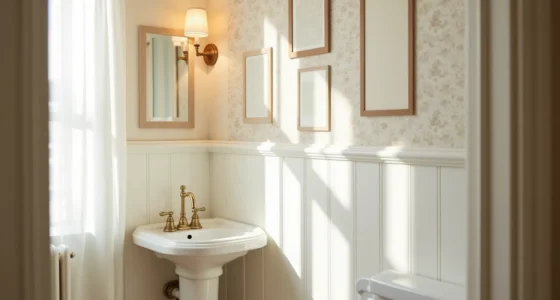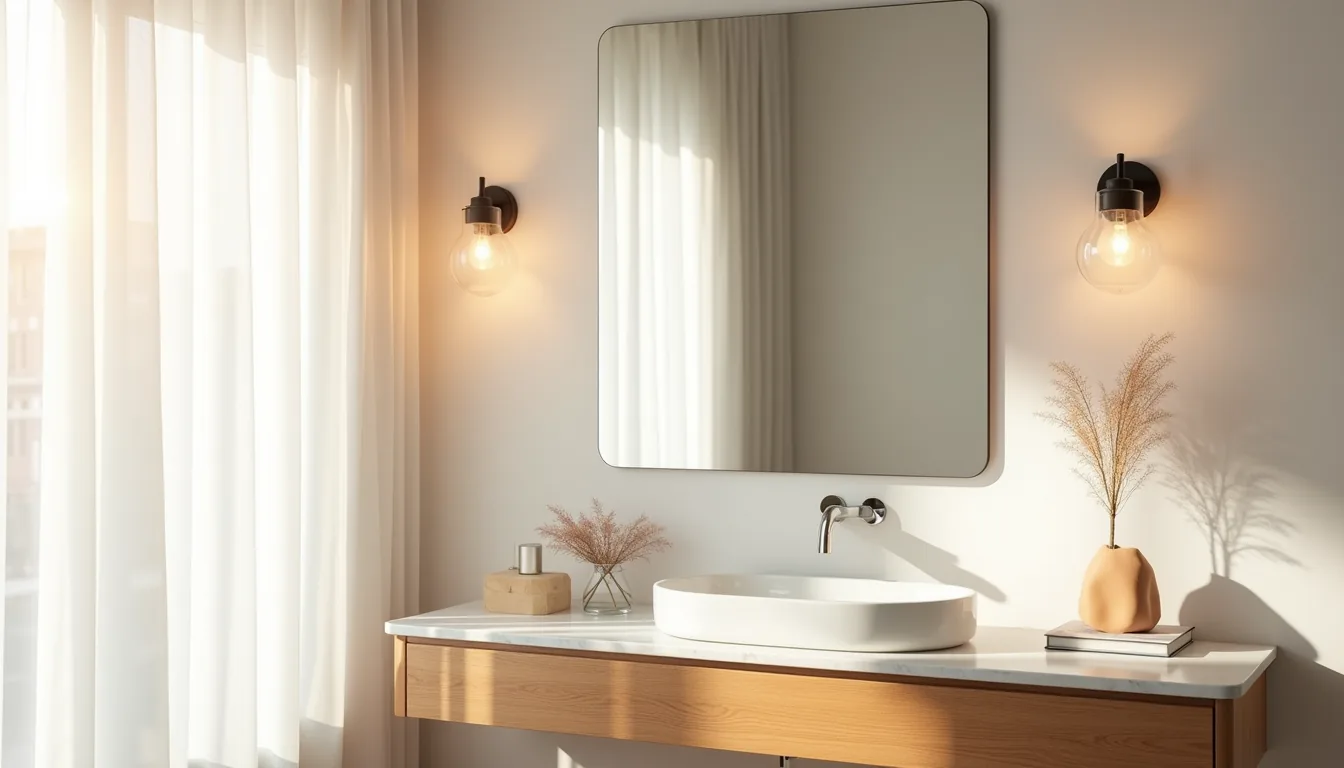

Bathroom wall lights are the single most effective way to reshape how your space feels, yet most homeowners install them too high, too few, or in the wrong spot entirely. The fix isn’t about chasing a trend; it’s about matching placement, scale, and finish to your actual room dimensions and daily routines. Below, six distinct approaches break down exactly what each look costs, who it serves, and the precise measurements to get it right the first time.
Key takeaways
- Side-mounted sconces beat overhead vanity lights for flattering facial illumination because they cast shadows downward instead of across your face, so place them 30–36 inches apart and 60–66 inches from the floor.
- Scale your fixtures to your wall width: for a 24-inch vanity, choose sconces no wider than 5–7 inches; for a 48-inch double vanity, opt for 8–10 inch widths and mount them 36–40 inches apart to avoid crowding.
- Layer your lighting by pairing wall sconces on a dimmer (2700K–3000K bulbs) with a separate ceiling-mounted ambient fixture and a recessed shower light, giving you three independent controls for morning grooming versus evening relaxation.
- Renter-friendly options like plug-in sconces with cord covers or adhesive-backed battery-operated fixtures (lasting 3–6 months per charge) deliver the same visual effect as hardwired lights, but verify the adhesive rating for humid bathrooms, standard strips fail above 60% humidity.
Side vs Overhead Mirror Light: Which Placement Wins
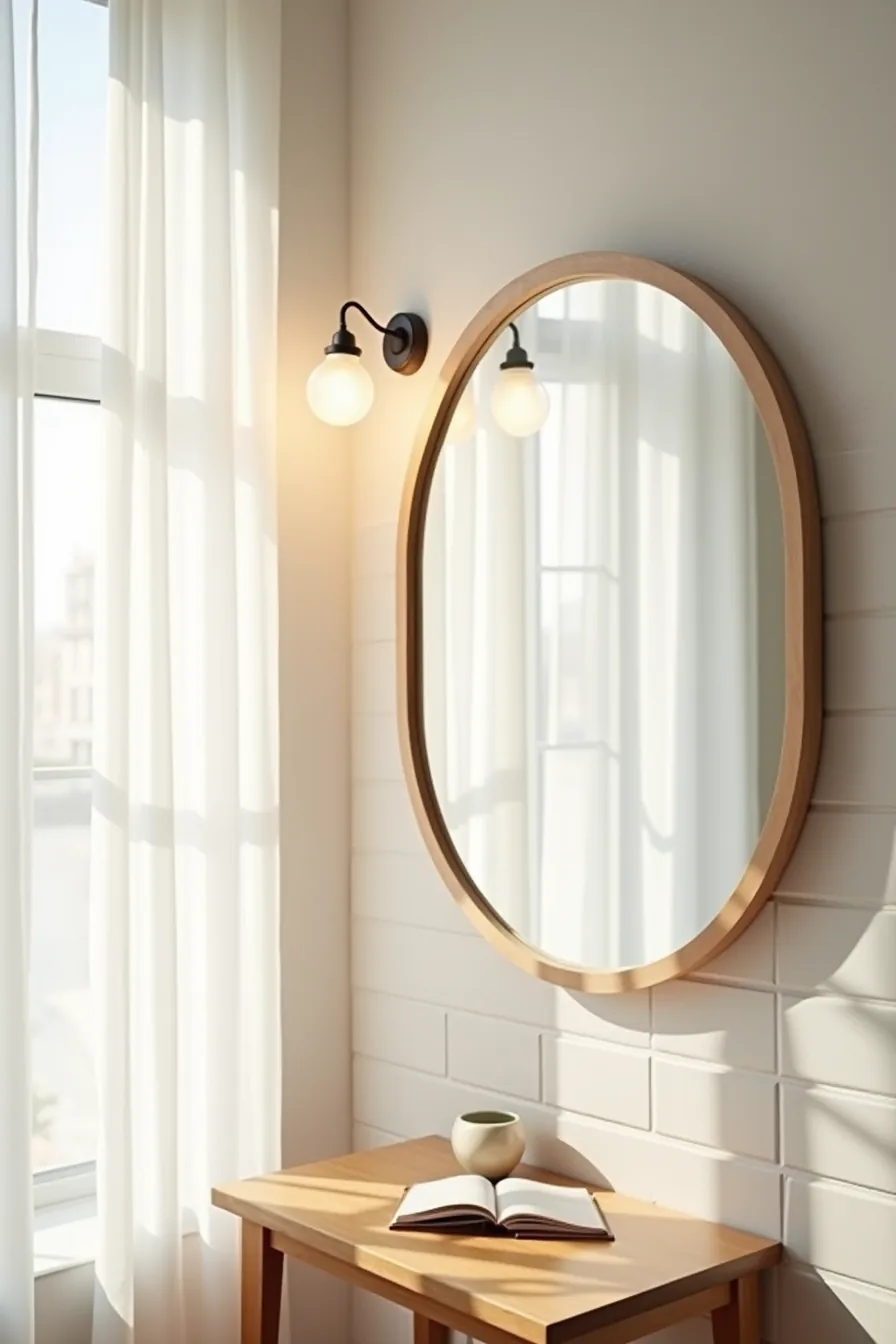
The decision between side-mounted and overhead placement comes down to shadow control. A single overhead fixture casts shadows downward across your face, leaving your eye sockets and jawline dim, acceptable for a powder room glow, frustrating for daily grooming. Side sconces eliminate this by throwing light horizontally across both cheeks, which is why makeup artists and barbers work with cross-lighting, not ceiling fixtures.
Take the setup beside your mirror: a ceramic sconce mounted at shoulder height, positioned just past the mirror edge. Its directional beam crosses your face rather than falling from above, casting even light across skin and reducing harsh shadows under brows. This suits anyone who shaves, applies makeup, or wears contacts daily, routines where uniform facial lighting matters more than ambient brightness.
Overhead fixtures work better for wide mirrors (48 inches or more) where a single sconce can’t reach both sides evenly)Skip the overhead-only approach in compact vanities; you’ll trade grooming quality for fixture symmetry. Choose side-mounted sconces when your mirror is 24-36 inches wide and you’ve 6-8 inches of clear wall on either side.
Sconce Scale and Spacing for Your Bathroom Size
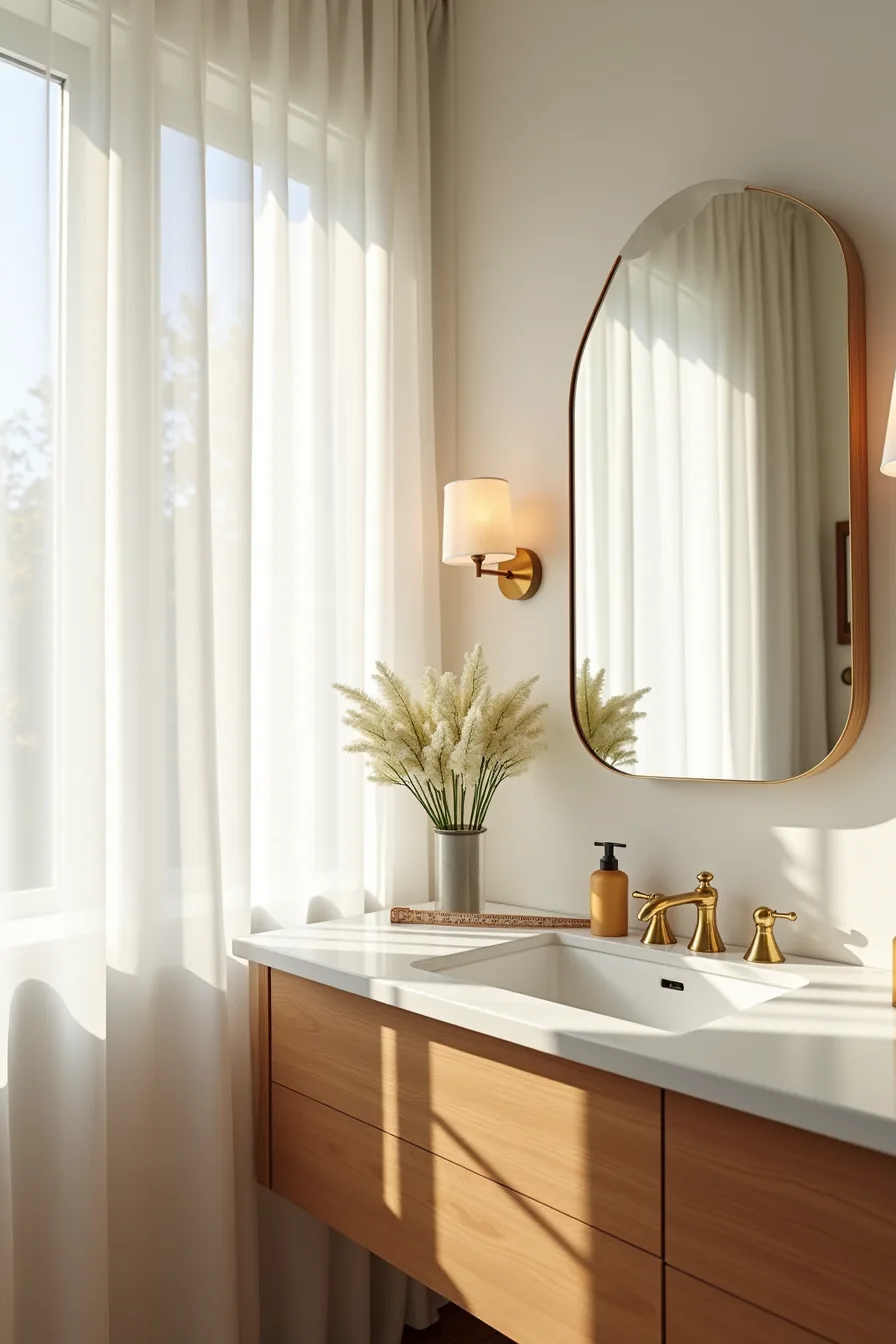
The measuring tape lying along that narrow countertop tells the real story: sconce scale follows your mirror, not your vanity width. For a medium mirror in the 24-36 inch range, each brass sconce should measure 5-7 inches across its widest point. Anything larger overwhelms a compact footprint and crowds the mirror edge; anything smaller reads as an afterthought against the wall.
Mount paired sconces at eye level, roughly 60-66 inches from the floor, and position them 4-6 inches out from the mirror’s edges. That spacing puts the light center directly beside your face, not dangling in peripheral vision. In a small bathroom under 50 square feet, this arrangement works because the fixtures take zero counter space and pull the eye upward, making the room feel taller than its square footage.
For a double vanity, scale up: use 7-9 inch sconces flanking each mirror, keeping the same 4-6 inch offset so the cross-lighting pattern stays consistent.
Layered Bathroom Lighting: Combining Wall Lights with Task and Ambient Sources
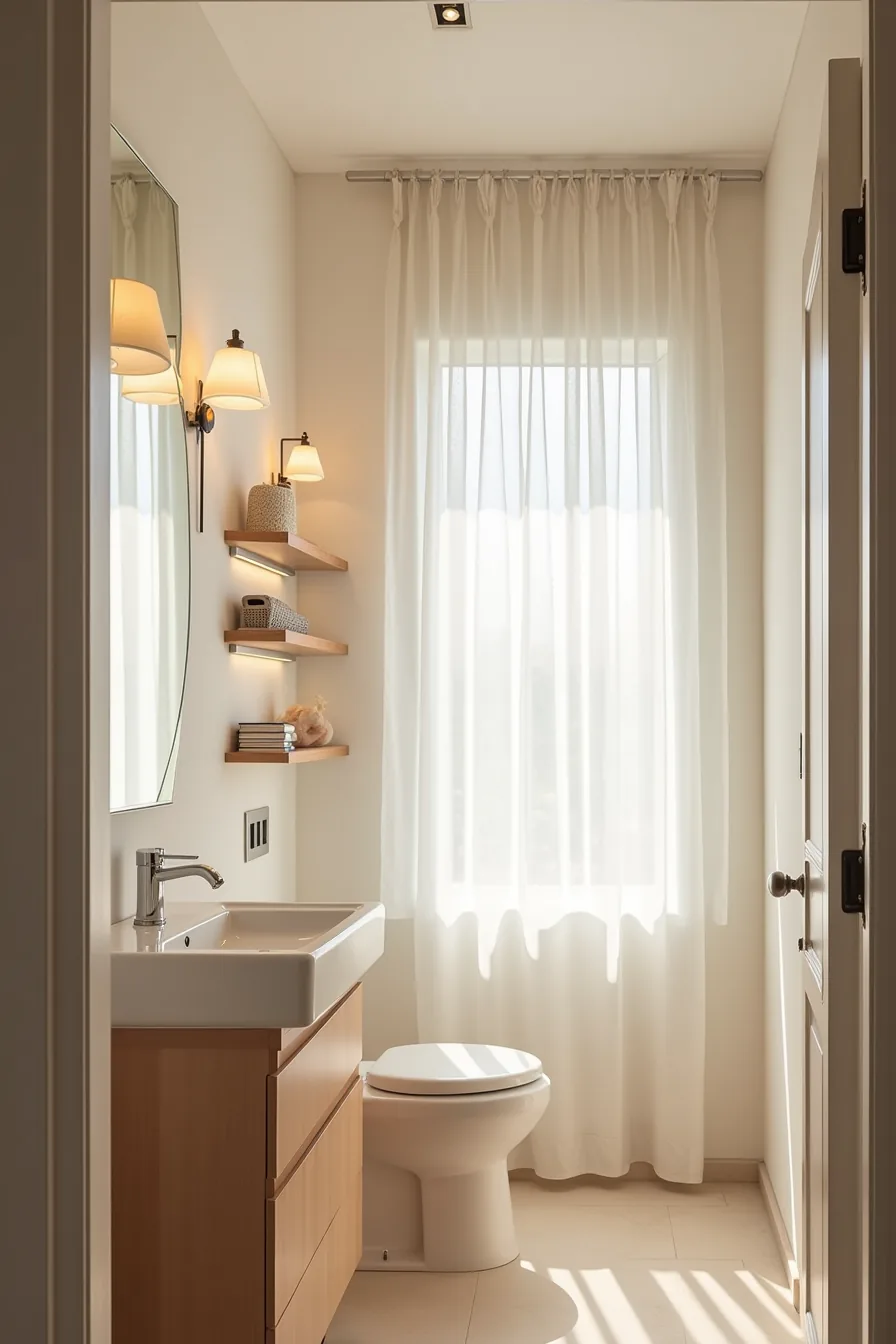
Layered bathroom lighting means designing three distinct circuits: sconces for face-level task light, recessed ceiling fixtures for overall ambient illumination, and accent lighting for depth. Imagine walking into a bathroom where warm sconces flank the mirror, four recessed ceiling lights cast a soft wash across the tile, and an LED strip tucked along the lower shelf throws light upward past decorative objects, each source doing a job the others can’t. The sconces eliminate shadows on your jawline, the ceiling fixtures keep the floor plan visible, and the accent strip separates the wall plane from the vanity visually.
Wire these on separate switches. You get full brightness at 7 a.m. And a dimmed, spa-like single-sconce glow at 10 p.m.
Without sacrificing either extreme. For a standard 5-by-8-foot bathroom, budget for three circuits; for a larger primary bath, add a fourth to control the accent strip independently on a timer.
Budget-Friendly Wall Light Options Without Compromise
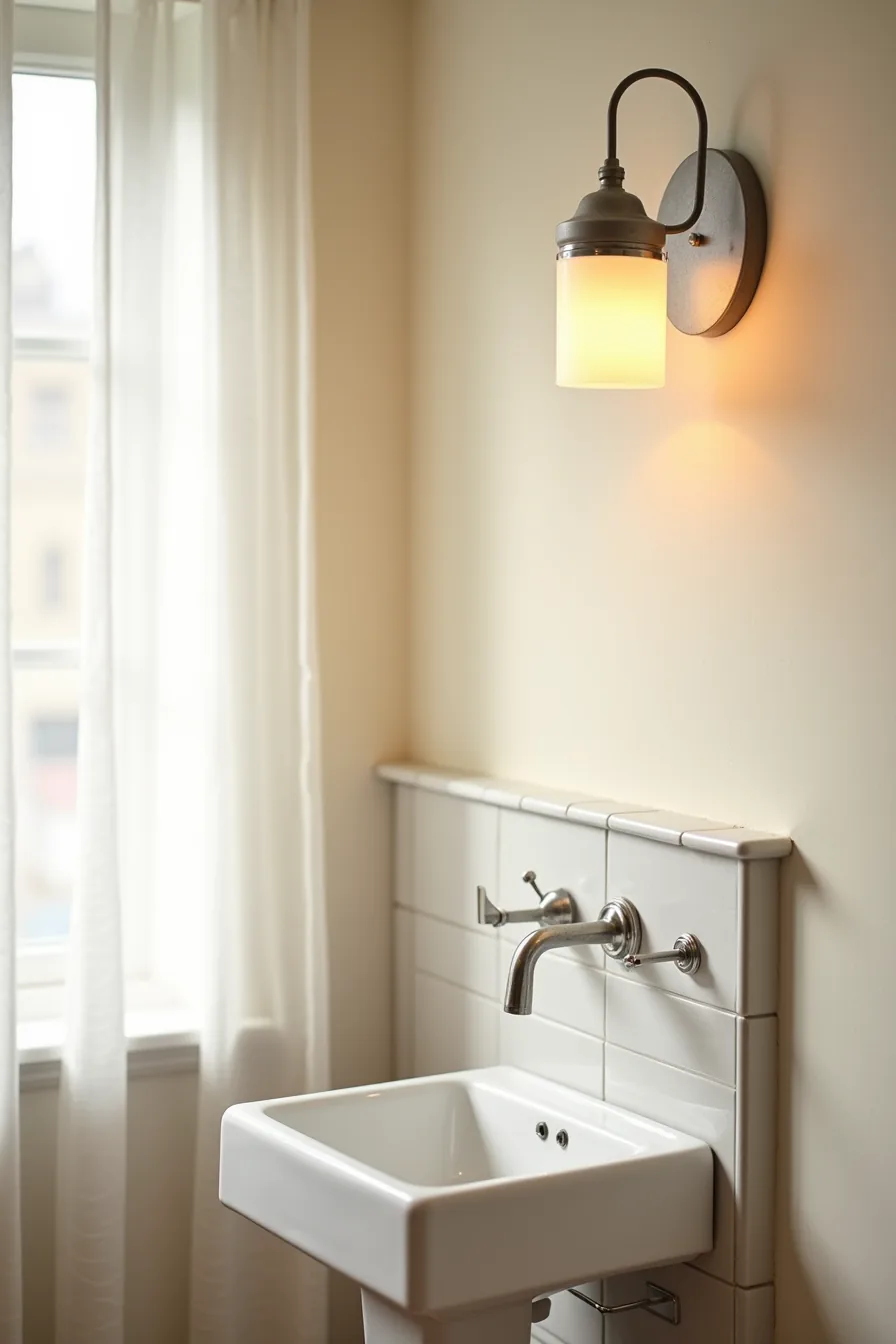
A simple metal sconce with a frosted glass shade delivers the same shadow-free face lighting as a designer fixture at roughly one-third the cost. The frosted glass diffuses light evenly across your jawline and neck, while the metal body resists corrosion better than plastic in humid air. This combination works best with a basic porcelain sink and chrome faucet, where the fixture’s neutral finish doesn’t compete with plumbing hardware.
Expect to pay within the $25–$60 range per sconce for brushed nickel or matte black finishes. The mounting process takes about 30 minutes per fixture if you’ve an existing junction box; add another hour and $15 in materials if you need to run new wire through drywall. For a rental, skip hardwiring entirely, choose a plug-in sconce with a cord cover painted to match the wall, and you’ll leave no trace when you move out.
Porcelain enamel finishes clean with a damp cloth and resist yellowing better than painted plastic.
For small bathrooms under 40 square feet, mount a single sconce at 60–66 inches from the floor beside the mirror. Larger spaces benefit from pairing two on each side of a double vanity at the same height, keeping them 36–40 inches apart.
Renter-Approved Wall Lights: Temporary Mounting and Adhesive Solutions
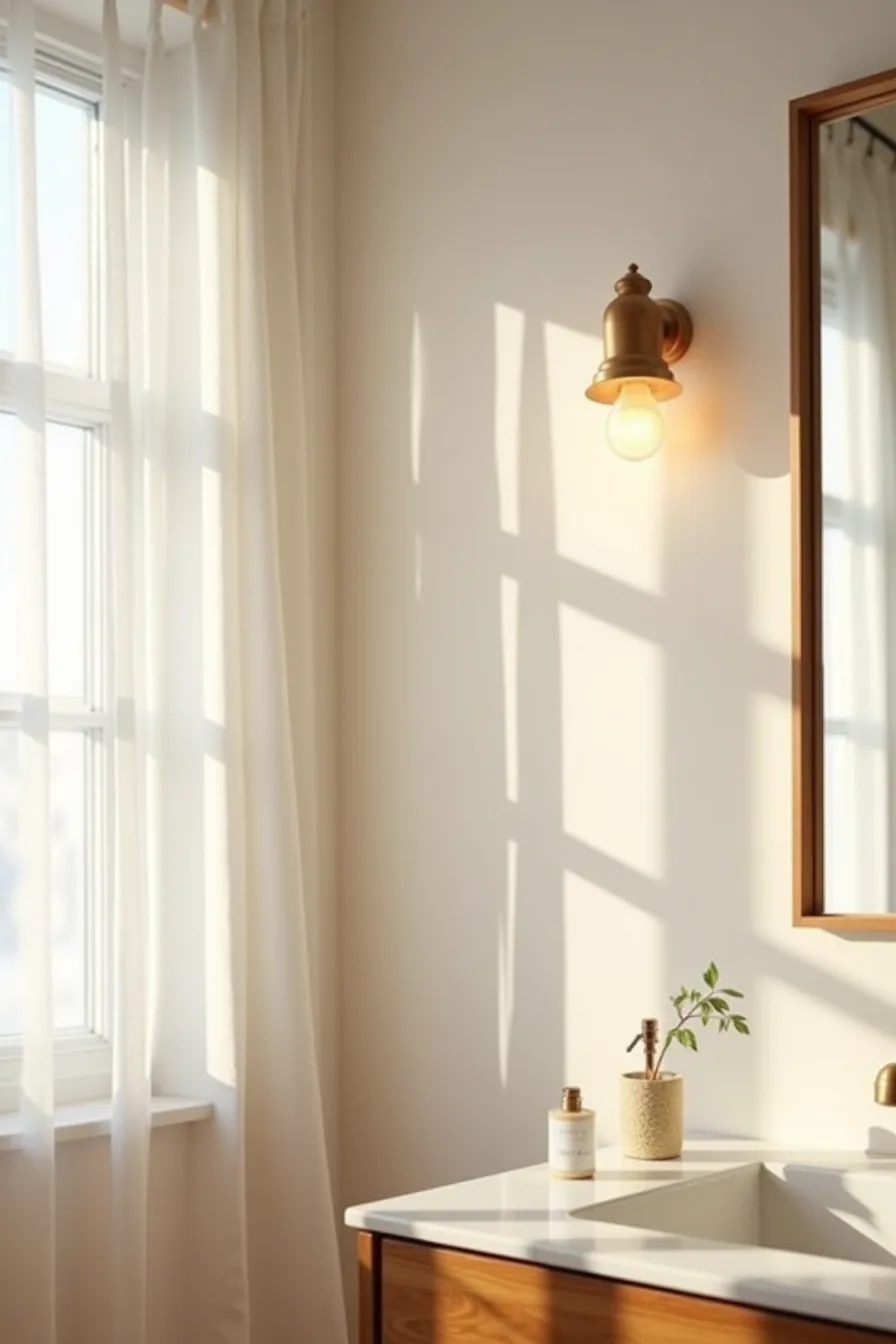
Adhesive-mounted peel-and-stick sconces hold up to 5 pounds and stick firmly to painted drywall, tile, or glass, making them the only damage-free route for leased bathrooms. The fixture in this setup uses a 3M-grade adhesive pad that releases cleanly when you pull the tab, no scraping, no spackle, no security-deposit deductions. It suits anyone whose lease explicitly prohibits drilling, or who simply doesn’t want to patch holes before moving out.
The small mirror beside the adhesive sconce keeps the arrangement compact, which is exactly what you want in a rental bathroom where you can’t control the existing vanity placement. Mount the fixture 60–66 inches from the floor, centered beside the mirror, and pair it with a rechargeable LED bulb so you avoid hardwiring entirely. Expect to replace the adhesive pad every 12–18 months, as humidity weakens the bond; replacement pads run $5–$10 per pack.
When you move, the whole setup comes down in under two minutes and leaves zero trace.
Bathroom Wall Lights for a Spa-Like Evening Glow: Dimming, Color Temperature, and Material Choices
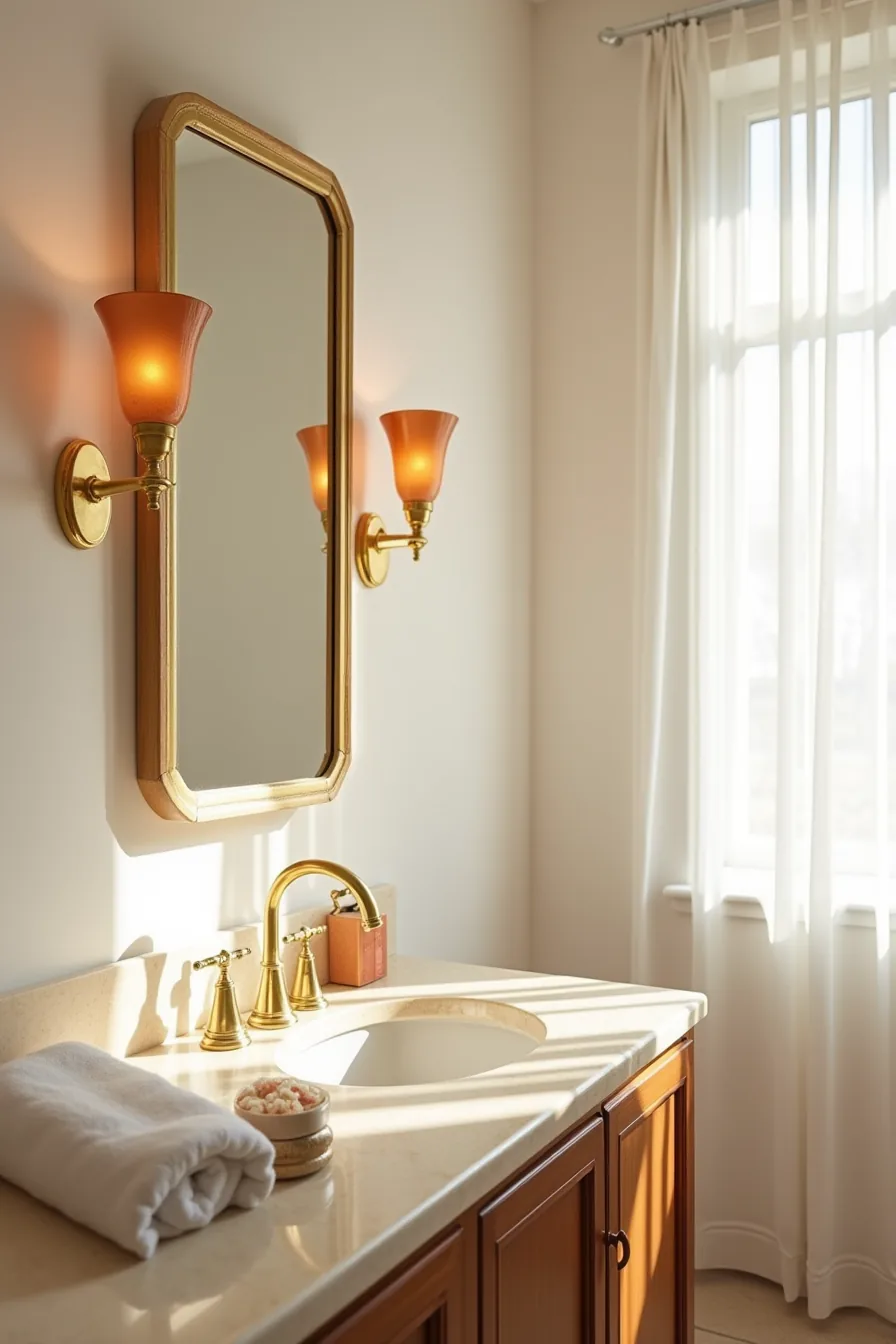
Pairing brass sconces with amber glass shades delivers the warmest possible version of bathroom wall lights for a spa-like evening glow. Amber glass filters the beam down to roughly 1800–2200K, mimicking candlelight, while the brass body reflects a soft golden pool across your travertine countertop. You lose crisp task lighting with this setup, so keep a separate vanity strip or mirror light for morning grooming, this look is strictly for unwinding.
Install a dimmer switch to drop the output from 100% down to 10–20%, which extends bulb life and lets you transition from bright prep to deep relaxation without flicker. For the full ritual, arrange a rolled towel beside the basin and keep bath salts within arm’s reach. Choose unlacquered brass if you want a patina that deepens with humidity; it will tarnish gracefully within 6–12 months.
Budget $120–$250 per sconce for solid brass, or $40–$80 for brass-finish aluminum if you prefer a maintenance-free surface.
Where to start
You now have six distinct routes, each with a clear cost and maintenance profile. The quickest win is swapping your current fixtures for matching sconces at 60-66 inches from the floor, a two-hour project that transforms the room’s symmetry.
Before buying anything, measure your vanity width and mirror height. Compare those numbers against the fixture dimensions listed in each product’s spec sheet. If you rent, the plug-in swing-arm option gives you full style without drilling a single hole.
Order one fixture first. Install it, live with it for a week, and confirm the light quality suits your morning routine. Then buy the second and complete the pair.
Frequently Asked Questions
How high should bathroom wall sconces be mounted above the sink?
Mount sconces 60–66 inches from the floor to the center of the fixture, or 20–24 inches above the countertop. This places light at eye level, reducing shadows on your face while you groom.
Can you use bathroom wall lights in a small bathroom without making it feel cramped?
Yes, choose compact sconces less than 6 inches deep and mount them at eye level beside the mirror, not above it. Vertical fixtures draw the eye upward, making the room feel taller without consuming wall space.
What’s the difference between 2700K and 3000K color temperature for bathroom lighting?
2700K emits a warm, amber glow, flattering for skin but weak for task work. 3000K is a neutral, crisp white that renders colors accurately, ideal for makeup application and shaving. Pick 3000K for mirrors, 2700K for ambient zones.
Do bathroom wall sconces need to be waterproof, and what does that actually mean?
Only fixtures in zones 0–2 (inside or directly above the bath/shower) require IP44 or higher ratings. Sconces placed 60+ inches from water sources need no rating, but use IP44 anyway to resist steam and humidity. “Waterproof” means sealed against splashes, not submersion.