Your dorm room walls are the largest blank canvas you’ve, and the right decor can transform a temporary box into a space that actually feels like yours. The challenge is balancing personality with practicality, what works for a 10×12 single room won’t suit a 12×16 double, and your landlord’s paint policy will dictate half your options. Below are six distinct approaches, each with the exact materials, costs, and trade-offs needed to pull them off.
Key takeaways
- Removable wallpaper and murals suit renters best because they peel off cleanly without damaging paint, but you’ll need to test a corner first, some low-quality adhesives leave sticky residue on textured walls.
- Gallery walls with prints work for any room size, but scale matters: use 3-5 large frames (18–24 inches) for a 10-foot wall, or 8-10 small ones (5–7 inches) for a cramped desk nook.
- Floating shelves are the only option that doubles as storage, so they’re ideal for small dorms, just stick to 8–12 inch depths to avoid bumping your head in narrow walkways.
- Fabric draping and tapestries are the cheapest route (under $20) but require a tension rod or command hooks rated for 10–15 pounds, and you’ll need to wash them monthly to prevent dust buildup in shared air.
Removable Wallpaper and Peel-and-Stick Murals
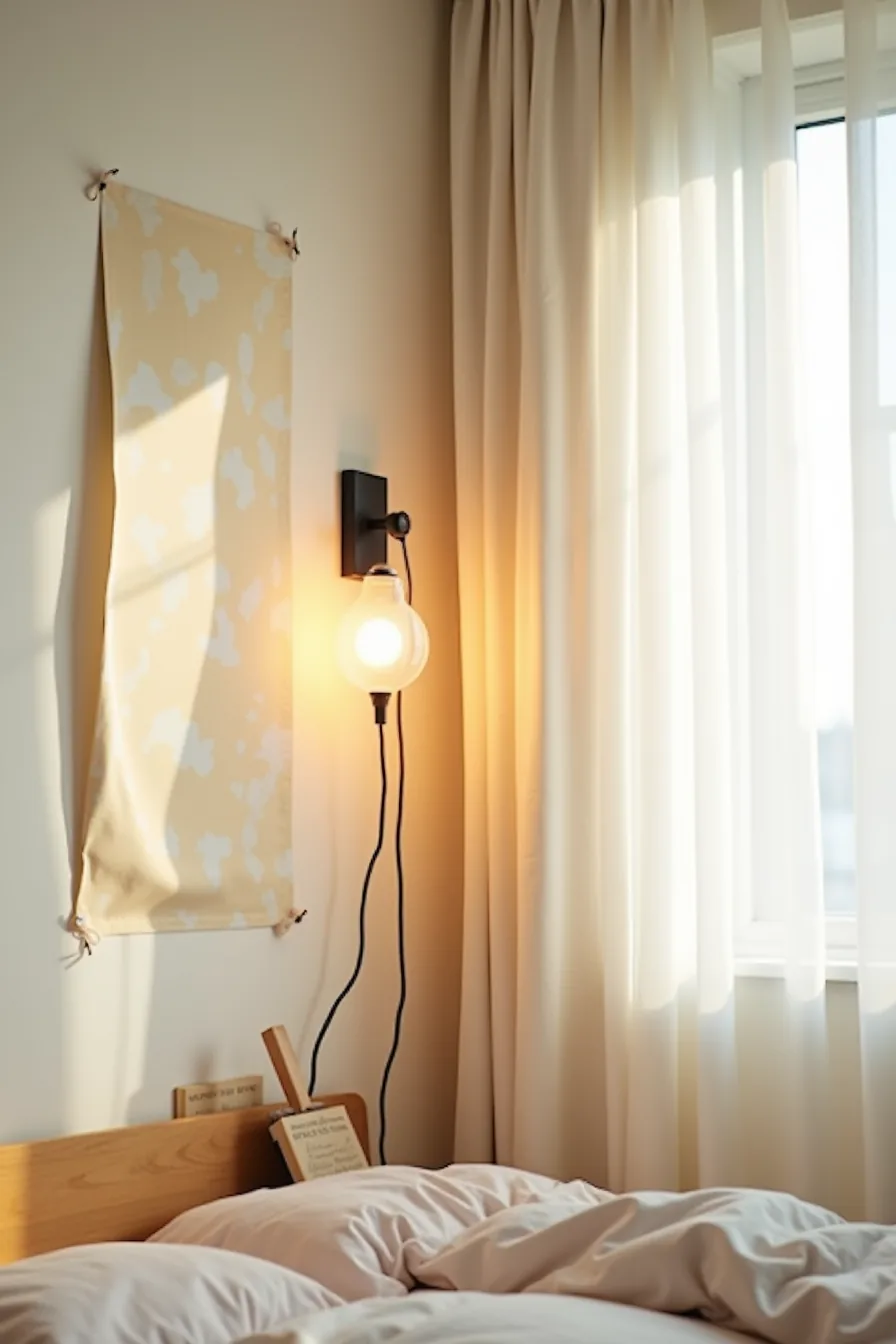
If you want a bold, graphic look without the commitment of paint, a peel-and-stick mural is the strongest renter-friendly route. The setup you’ve, a geometric pattern with the backing paper half-peeled, a squeegee resting nearby, and the adhesive edge visible, is exactly the process you’ll repeat across the wall. Work in 2-3 foot vertical strips, pressing from the center outward with the squeegee to push out air bubbles before they set.
Most quality brands hold for 2-5 years and remove cleanly if you pull at a 180-degree angle, though cheaper rolls may leave residue behind the longer they stay.
This works best for an accent wall behind your desk or bed, not all four walls, which can feel overwhelming in a 10×12 room. For a small space, limit the mural to a single 4-6 foot section; in a medium or large room, you can cover an entire wall. Measure your wall width before ordering, and add 4-6 inches for trimming errors.
For the most practical dorm room wall decor ideas planning tips: test a small corner first to confirm the paint beneath won’t peel, and keep the squeegee handy, it’s the difference between a smooth finish and one you’ll redo.
Gallery Walls with Prints and Posters
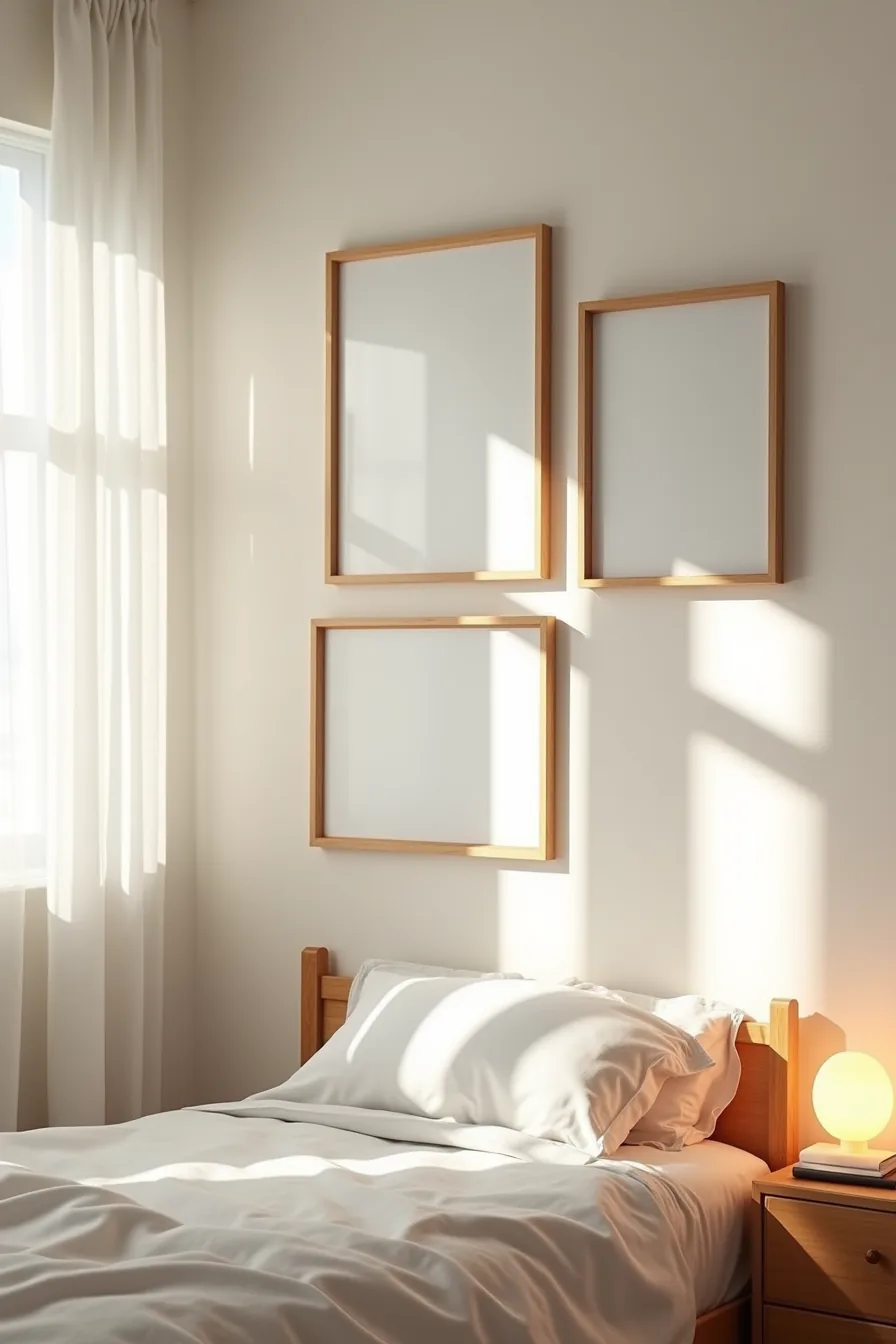
A nine-piece asymmetrical grid gives you the curated look without the commitment of matching frames. Mix wooden and metal frames deliberately, keep the ratio around 2:1 wood to metal so it reads as intentional rather than accidental. White matting is your secret weapon here; it adds breathing room and makes inexpensive posters look gallery-quality for roughly $3-5 per mat.
Start with the largest piece at eye level (57-60 inches from floor to center) and build outward, keeping 2-3 inches between frames. In a small room, limit the grid to one wall section above your desk; in a larger space, you can wrap the arrangement around a corner. Use command strips rated for 4-8 pounds per frame, anything heavier risks a 2 a.m.
Crash. The full setup runs $40-80 and takes about two hours, making it one of the best dorm room wall decor ideas examples for renters who want maximum impact with zero wall damage.
String Lights and Fabric Draping
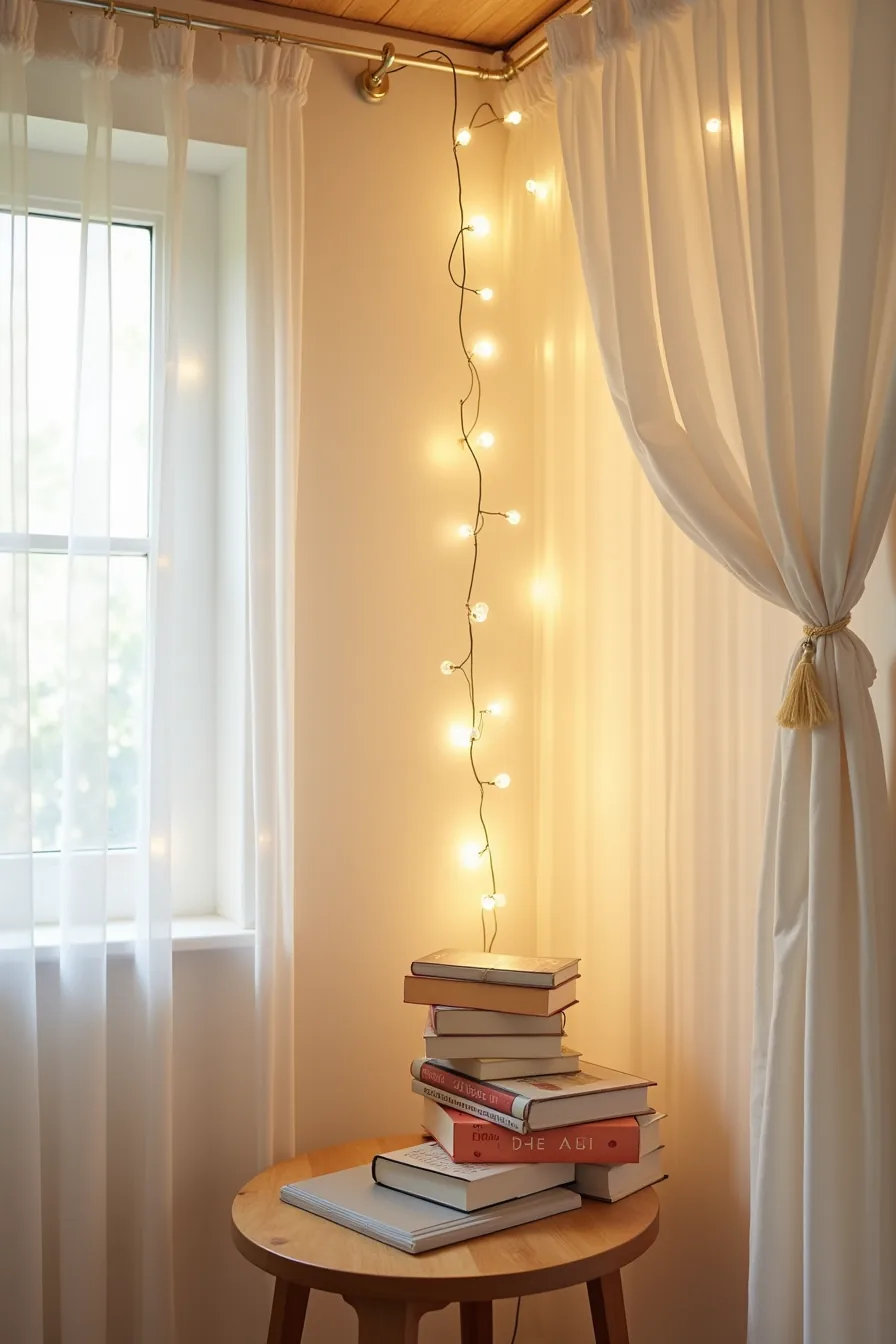
Layered lighting transforms a flat wall into a dimensional backdrop, and this setup, warm string lights in loose swoops across the upper half paired with sheer fabric pinned at the corners, creates a soft, tent-like canopy without a single nail. It suits the student who wants a cozy, ambient glow for late-night study sessions rather than a bright overhead fixture. The fabric pins and wall anchors you see here are rated for lightweight loads, so they hold the drape securely while the lights hang independently, letting you swap textiles seasonally.
Work with the architecture: clip the fabric only at the top corners and let it pool naturally on the floor, then drape the lights in a gentle U-shape between two anchor points. This is the budget tier of dorm room wall decor ideas, expect to spend $15-25 for 50 feet of LED string lights and $10-20 for two yards of sheer fabric. For a splurge, choose fabric with a subtle metallic thread that catches the light, but keep the pins rated for at least 5 pounds to avoid sagging.
In a small room, limit the drape to one corner to preserve vertical space; in a larger space, extend the swoops across a full wall for a more immersive effect. Avoid placing the lights near the ceiling vent, heat from the HVAC can shorten LED lifespan.
Floating Shelves and Wall-Mounted Storage
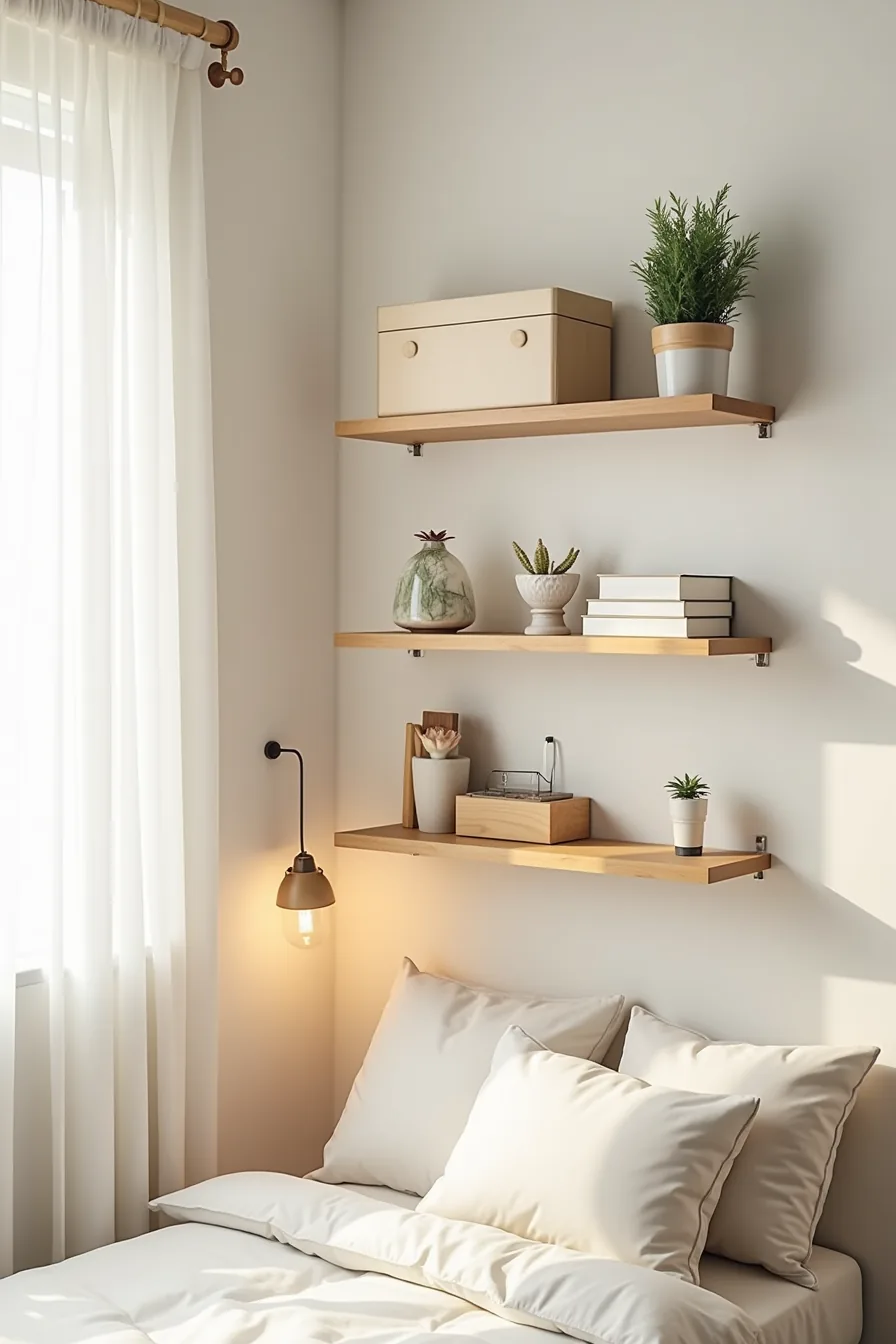
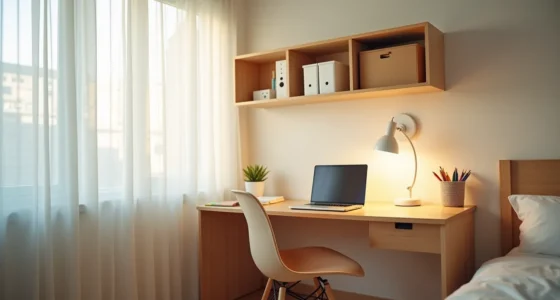
Three staggered floating shelves at different heights turn dead wall space into a display system that pulls double duty as a nightstand substitute and plant perch. The arrangement works because the varying shelf depths, most dorm-grade options run 8-12 inches deep, give you room for small storage boxes while keeping the profile shallow enough to avoid crowding a narrow walkway.
This is the renter-friendly middle tier of dorm room wall decor ideas: mounting hardware leaves only two small holes per bracket, easily patched with spackle at move-out. Expect to spend $30-60 for a set of three shelves rated for 15-20 pounds each. Distribute weight evenly, stacked books on the bottom, lighter boxes and potted plants on the upper shelves, to prevent sagging over the semester.
In a compact layout, align the shelves vertically above your desk to reclaim floor space; in a larger room, stagger them horizontally to balance an empty wall. Keep plants in sealed saucers to avoid water rings on the wood finish.
Tapestries and Fabric Wall Hangings
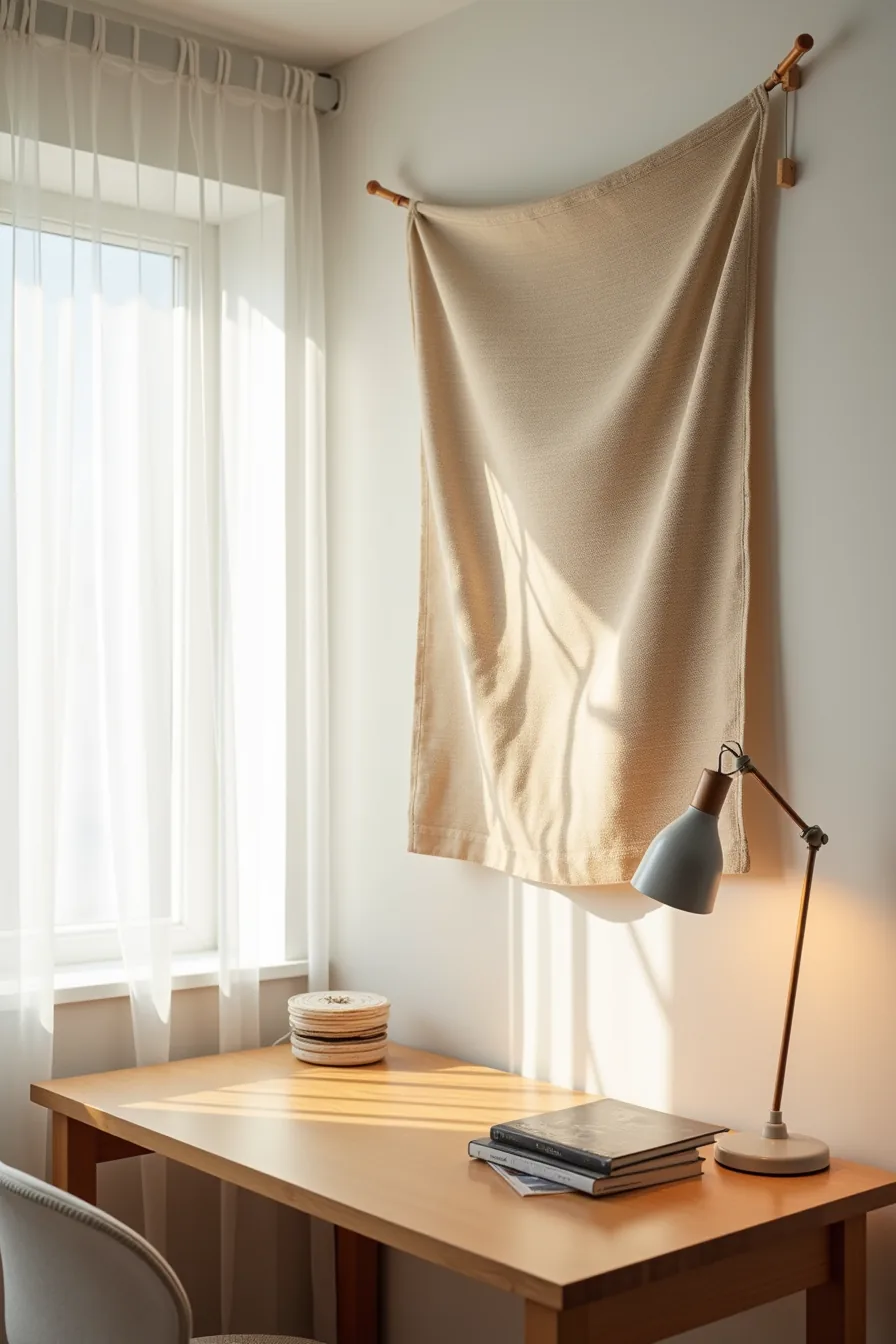
A woven mix hung with four adhesive hooks, one at each corner, delivers the largest visual impact per dollar of any dorm room wall decor idea. The fabric folds soften the hard lines of a cinderblock wall, and the textile pattern anchors the space above your desk without requiring a single nail. Adhesive hooks rated for 5-7 pounds will hold most medium-weight tapestries, but check the weave: tightly woven cotton and polyester blends hang flatter and resist sagging, while loosely woven fabrics stretch noticeably within a month.
Sizing matters more than pattern. For standard 8-foot dorm ceilings, a mix measuring 60-80 inches wide covers the ideal visual zone, roughly from 12 inches above your desk surface to 6-8 inches from the ceiling. Anything taller swallows the wall; anything shorter reads as a scarf.
Clean the fabric monthly with a lint roller to prevent dust buildup in the weave, and take it down before winter break if your dorm has steam radiators, the humidity cycles cause natural fibers to warp. This approach sidesteps common dorm room wall decor ideas mistakes to avoid, namely using command strips on textured walls or underestimating how much weight a single hook actually bears.
Paint Accents and Removable Wall Decals
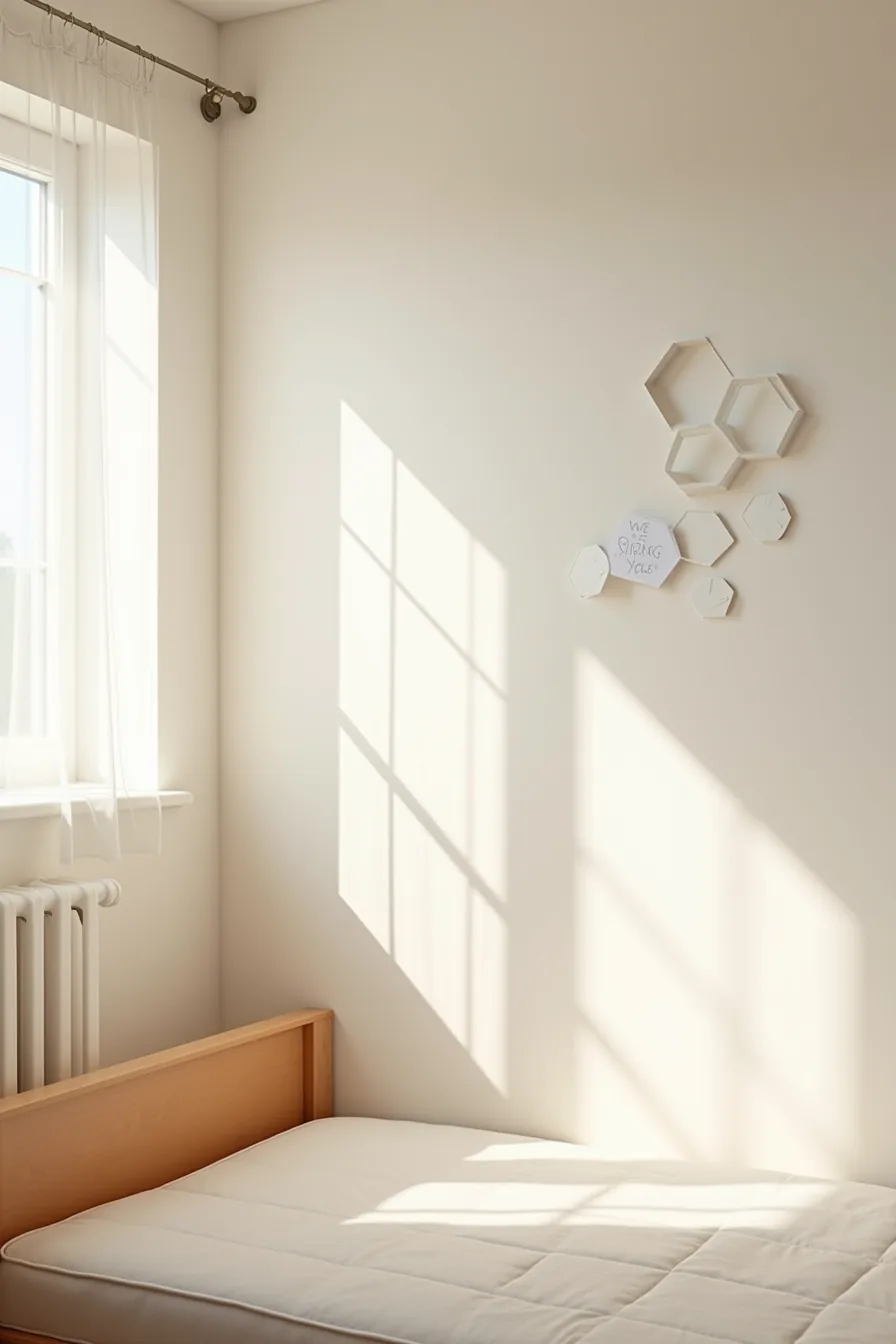
If you want a bold color story without forfeiting your security deposit, removable wall decals are the most forgiving dorm room wall decor ideas on the spectrum. The geometric cluster in this setup, applied to white painted drywall, creates a custom accent wall for roughly $15-30 per pack, depending on how many shapes you buy. Vinyl decals sit flat, require no tools, and peel off cleanly within seconds if you warm the edge with a hairdryer on low heat first.
That makes them the budget route: zero damage, zero paint cost, and full pattern control.
For a long-term investment, consider repositionable peel-and-stick wallpaper panels instead. A single 2-foot-by-8-foot panel runs $25-40 and covers the visual zone behind your bed or desk, but it demands a perfectly smooth surface, cinderblock ruins the adhesion, so test a 6-inch corner piece for 24 hours before committing. Skip paint entirely if your dorm prohibits it or your wall has texture; latex paint requires 2-3 coats, a drop cloth, and a weekend of drying time, and most contracts charge $50-150 to repaint at move-out.
Decals suit renters and first-years who want pattern variety; wallpaper suits upperclassmen who plan to stay put.
Your 10-minute decision plan
Match your priority to the list above: if you move yearly, start with the command strips and fabric panels; if you’re staying put for two years or more, invest in the peel-and-stick wallpaper or framed poster set first. Either way, buy your mounting hardware before any decor arrives, that removes the biggest friction point.
Set a timer, pick one wall, and install a single anchor piece today. That one finished corner will tell you exactly what scale and color to repeat across the rest of the room.
Frequently Asked Questions
Can you use paint in a dorm room, or do most colleges prohibit it?
Most colleges prohibit painting walls, including accent walls. Check your housing contract first. If allowed, use removable, low-VOC peel-and-stick paint film instead of traditional latex paint, which typically requires professional removal fees.
What is the best way to hang things on dorm walls without damaging them?
Use command strips rated for your wall texture, they hold up to 5 pounds each. For heavier frames, use removable adhesive hooks or tension rods. Avoid nails, screws, and double-sided tape, which strip paint or leave residue.
How much does it cost to decorate a dorm room wall from scratch?
A complete wall setup, command strips, a poster frame, a mix, and string lights, runs $30–$60. Budget routes using washi tape and printed photos cost under $15. Premium options like gallery-wall frames or a woven mix reach $80–$120.
What dorm room wall decor ideas work in rooms smaller than 100 square feet?
Focus on vertical space: floor-to-ceiling tapestries, wall-mounted shelves for plants, and magnetic boards for photos. Skip bulky frames; use lightweight fabric or paper art. Keep the lower 2 feet clear to avoid blocking outlets, vents, or bed clearance.