Easter table decor comes down to one practical decision: how much time, storage space, and money you’re willing to commit to a look that will likely stay up for three to six weeks. That single choice separates a centerpiece you actually enjoy from a dusty shelf fixture you dread packing away. The six approaches below range from a $15 grocery-store arrangement to a heirloom-worthy ceramic collection, each with specific scale, upkeep, and renter-friendly trade-offs you can weigh before buying a single egg.
Key takeaways
- Start with scale: measure your table’s usable length and width first, then choose a centerpiece that leaves at least 12 inches of clearance per place setting for dining comfort.
- Prioritize temporary fixings if you rent: use removable adhesive hooks, washable tablecloths, and freestanding candleholders that leave no wall or surface damage when the holiday ends.
- Repurpose for budget: turn a glass vase, mason jars, and dyed eggs into a centerpiece for under $15 total, but avoid plastic eggs that look glossy and cheap under direct light.
- Invest in linen longevity: buy 100% linen napkins and a table runner in neutral tones, they outlast seasonal prints, launder well over 50 washes, and work for Easter plus year-round dinners.
Minimalist Centerpiece for Small Spaces

If your dining area fits a 30-inch table or doubles as a work surface, a single-vessel centerpiece keeps the surface functional. Place one ceramic vessel off-center, grouping eucalyptus stems for height on one side and leaving the opposite corner clear for serving dishes. Two cream candles at the base add warmth without blocking sightlines across the table.
This setup suits renters and small apartments because it requires nothing permanent, no linens to wash, no hardware to install. A small nest with pastel eggs tucks beside the vessel, adding the Easter cue without committing to a themed tablescape you must store for eleven months. Total styling time runs under five minutes, and the eucalyptus stays fresh for one to two weeks with a water change every three days.
For practical Easter table decor planning tips, choose this route when your priority is keeping the table usable for meals rather than staging a display.
Layered Linens and Place Settings for Medium Tables
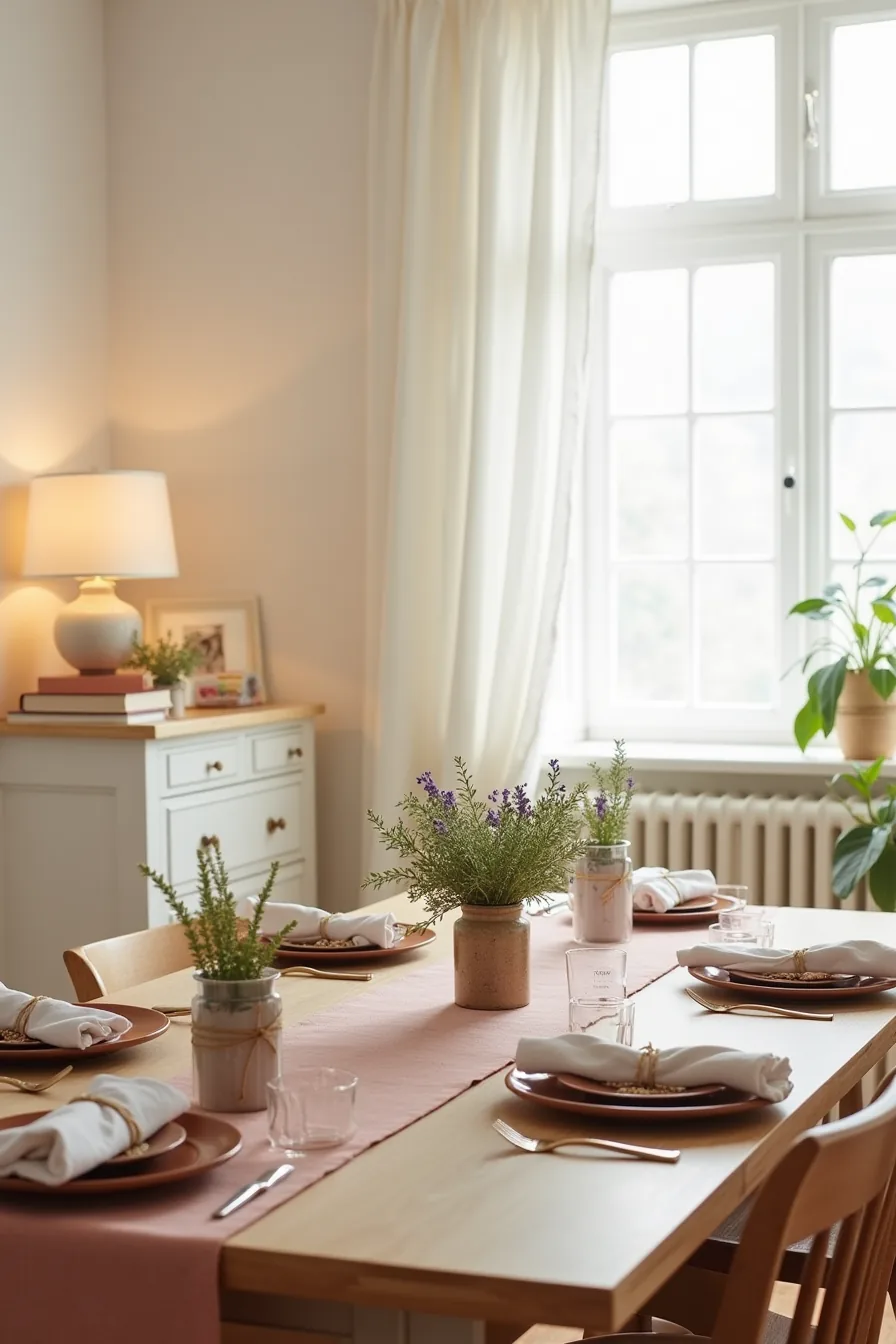
A standard 4–6 seat table benefits from layering, which creates depth without requiring a large centerpiece. Run a blush linen runner down the center, then place wooden chargers at each setting to anchor the eye. Fold napkins simply and tie them with twine, tucking a handwritten place card beneath the knot for a personal touch.
This examples works because it distributes visual interest across the full table surface rather than concentrating it in one spot. Small potted herbs at each place double as favors, letting guests take them home after the meal, a practical detail that suits hosts who entertain frequently. For Best Easter Table Decor examples on medium tables, keep the runner to roughly 12–14 inches wide so serving dishes still sit stably on the ends.
The setup requires about 20 minutes to assemble, and linen napkins need laundering after use, while wooden chargers only need a quick wipe.
Renter-Friendly Decor Using Temporary Elements

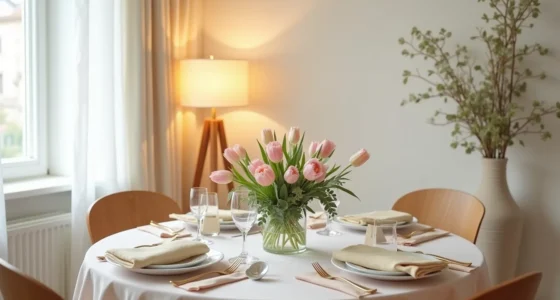
If you can’t paint walls or drill into plaster, build your Easter table decor entirely from freestanding pieces that leave zero trace. Drape a sage green fabric over the tabletop, letting the edges hang loose; tuck the corners under placemats to hold them in place if needed. Lay a paper table runner down the center, then arrange potted tulips still in their nursery pots, slipping each into a rented ceramic pot for a finished look.
Use fabric napkins folded simply and set directly on the table, no rings, no clips, nothing adhesive.
This setup suits apartment dwellers and lease-bound renters because every element packs into a box when the season ends. The paper runner and silk or real tulips cost under $25 total if you buy blooms at a grocery store, while the fabric doubles as a picnic blanket afterward. Budget an hour to assemble and 10 minutes to dismantle; the only maintenance is watering the tulips and wiping any soil drips from the ceramic pots.
Budget Route: Repurposed Household Items
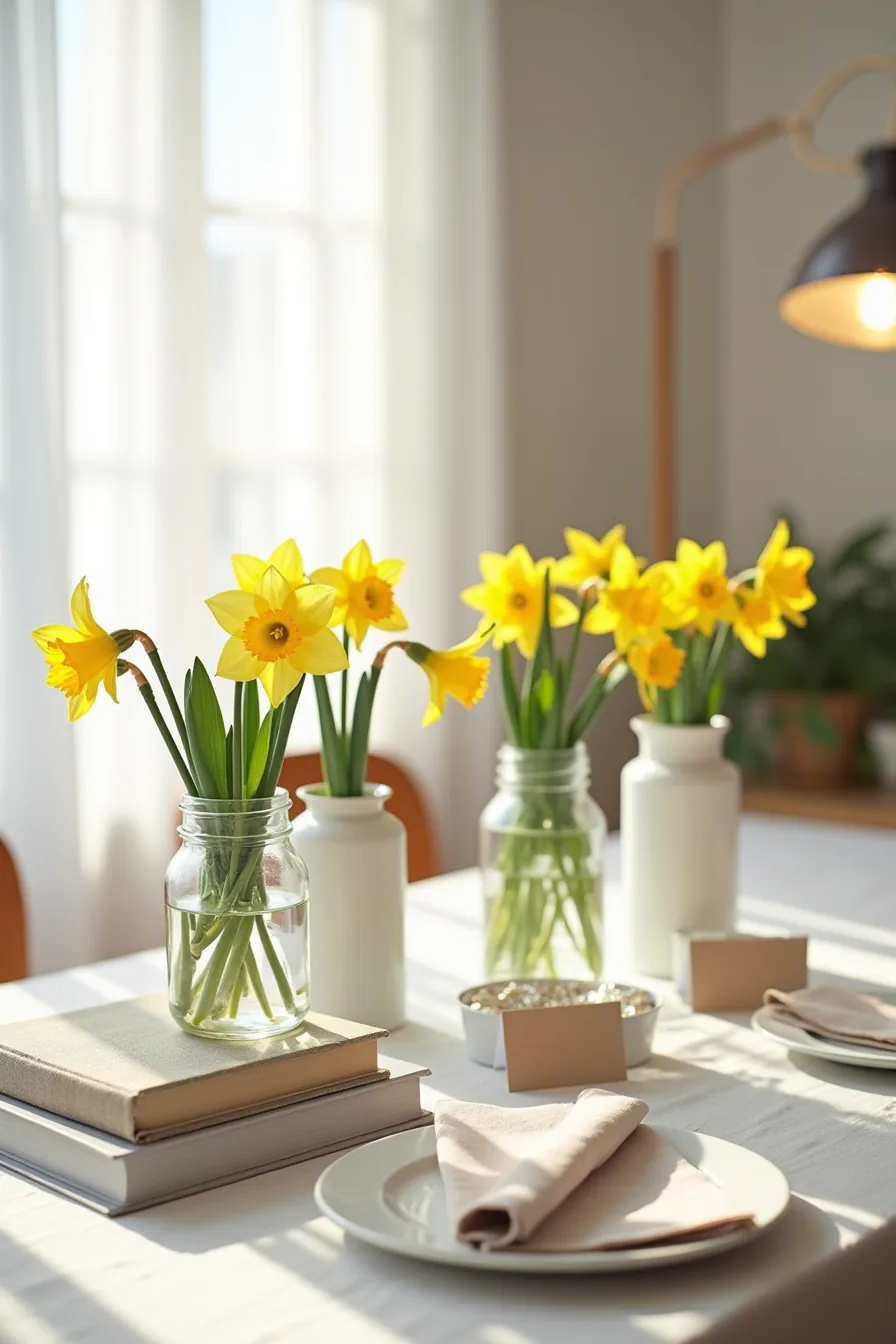
Your kitchen and garden likely hold most of what this look requires. Mason jars become vases for daffodils cut from your yard, while tin cans, washed, labels removed, and painted matte white, serve as rustic candle holders or utensil caddies. Roll linen napkins you already own and set them directly on the table; no chargers or rings necessary.
Cardboard place cards cut from shipping boxes, written on with a fine marker, add a handmade touch that costs nothing but 15 minutes of your time.
This route works best for casual brunches and family-style meals where imperfection reads as charm. Total spending stays under $10 if you skip buying flowers, and cleanup means composting the stems and recycling the cardboard. The painted cans keep their finish for roughly a year of storage if you let them dry fully before stacking, but touching up chips takes under a minute with leftover paint.
Investment Route: Heirloom-Quality Linens and Serving Pieces
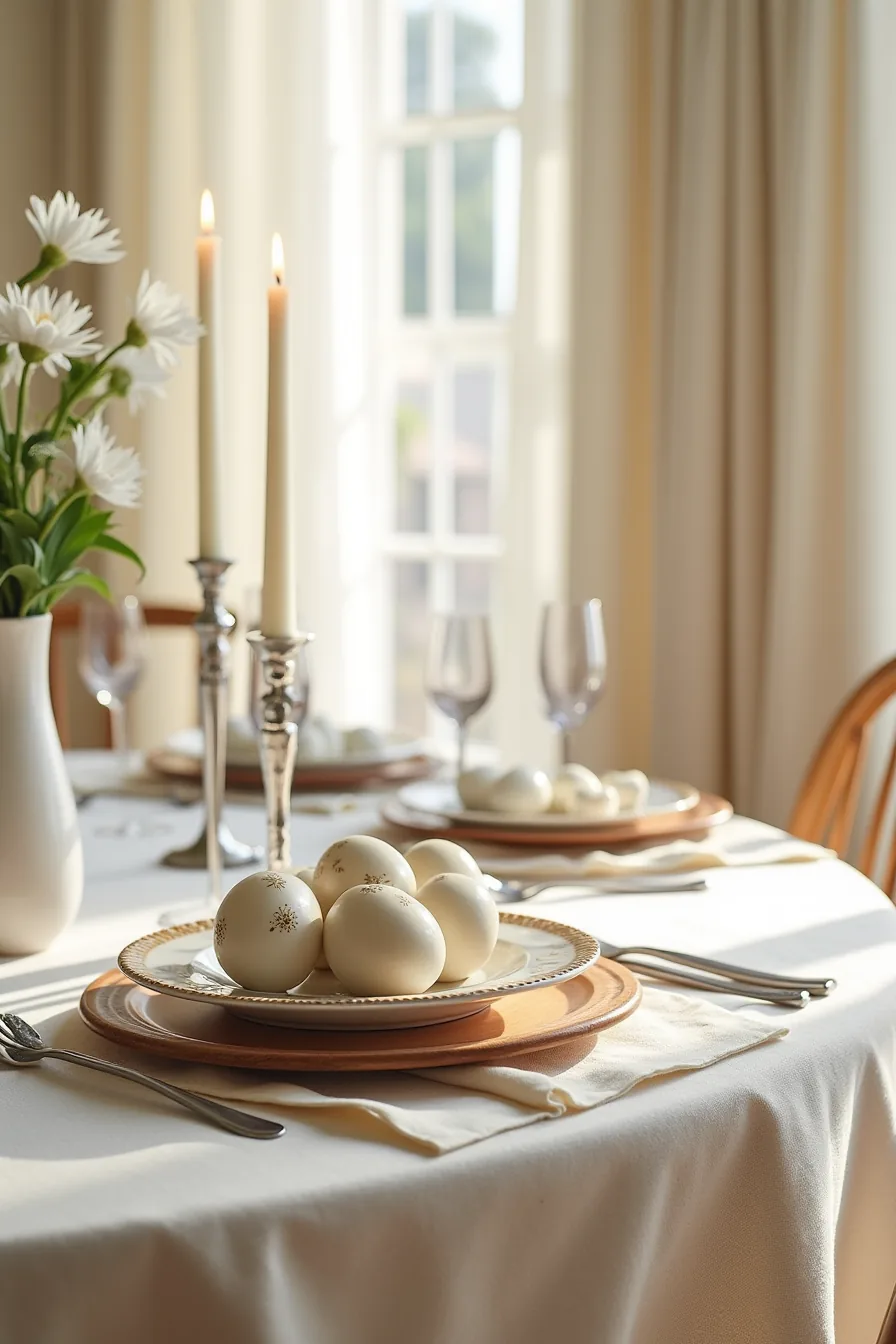
A cream damask tablecloth, matching napkins, and wooden chargers with inlaid detail form the backbone of this setup. Pair them with a ceramic serving dish hand-painted with Easter eggs and two silver candlesticks–the combination reads formal but stays approachable when you set the table for eight or fewer guests. Damask linen in 100% cotton or flax runs $40-$120 per tablecloth depending on thread count; a full set with napkins and chargers typically lands between $150 and $300 upfront.
This is the budget vs. Splurge Easter table decor decision that pays off across decades, not seasons. Damask resists stains better than plain weaves because the pattern masks spills, and linen softens with each wash rather than degrading–expect 15-plus years of regular spring use. The wooden chargers require hand-washing and occasional oiling to prevent cracking, while the ceramic dish is dishwasher-safe but shouldn’t go under a broiler.
Silver candlesticks need polishing twice a year unless you store them in anti-tarnish cloth. Choose this route if your dining room hosts more than just Easter meals; the same pieces transition to Thanksgiving and holiday dinners without looking out of place.
Scaling Easter Table Decor for Large Gatherings
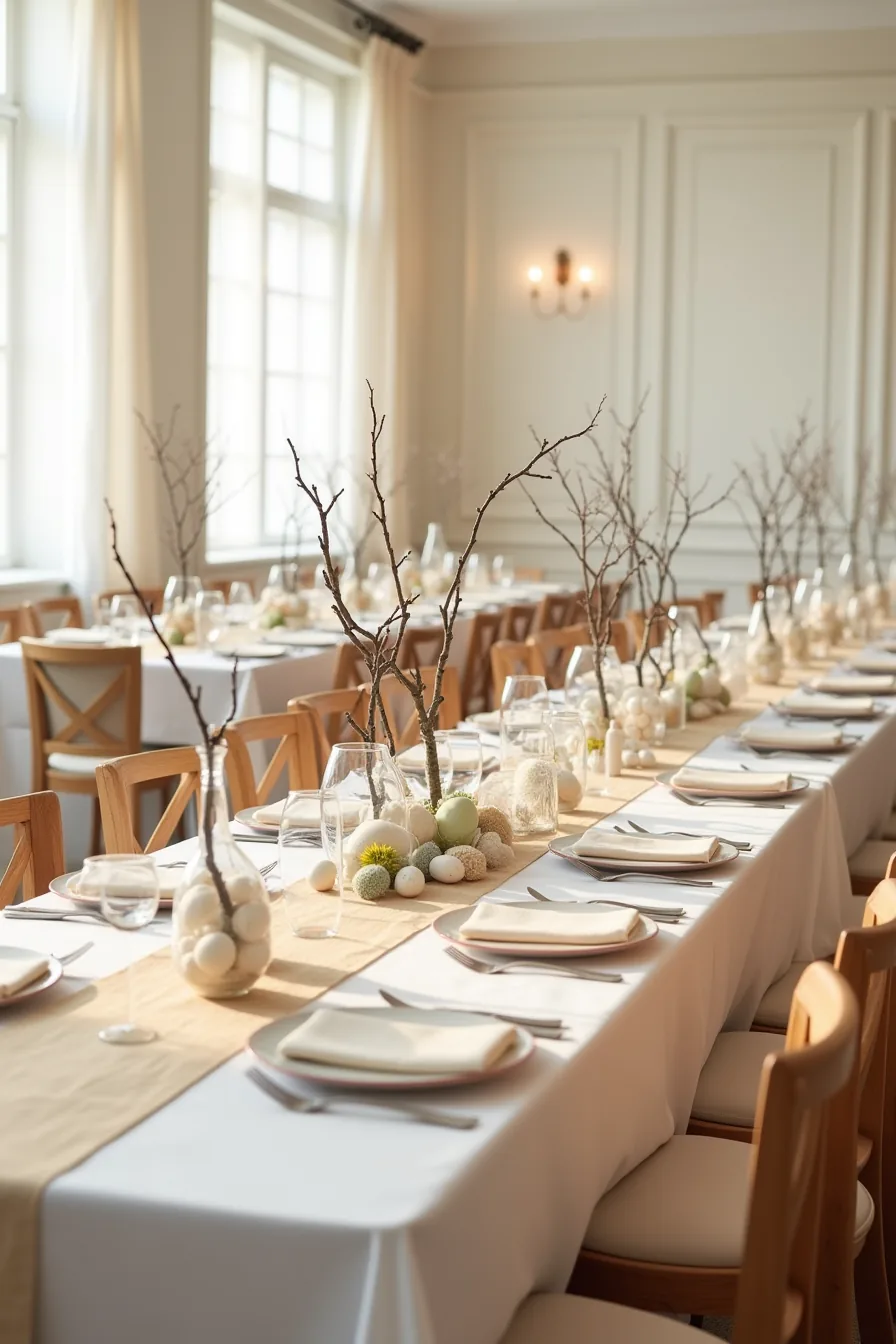
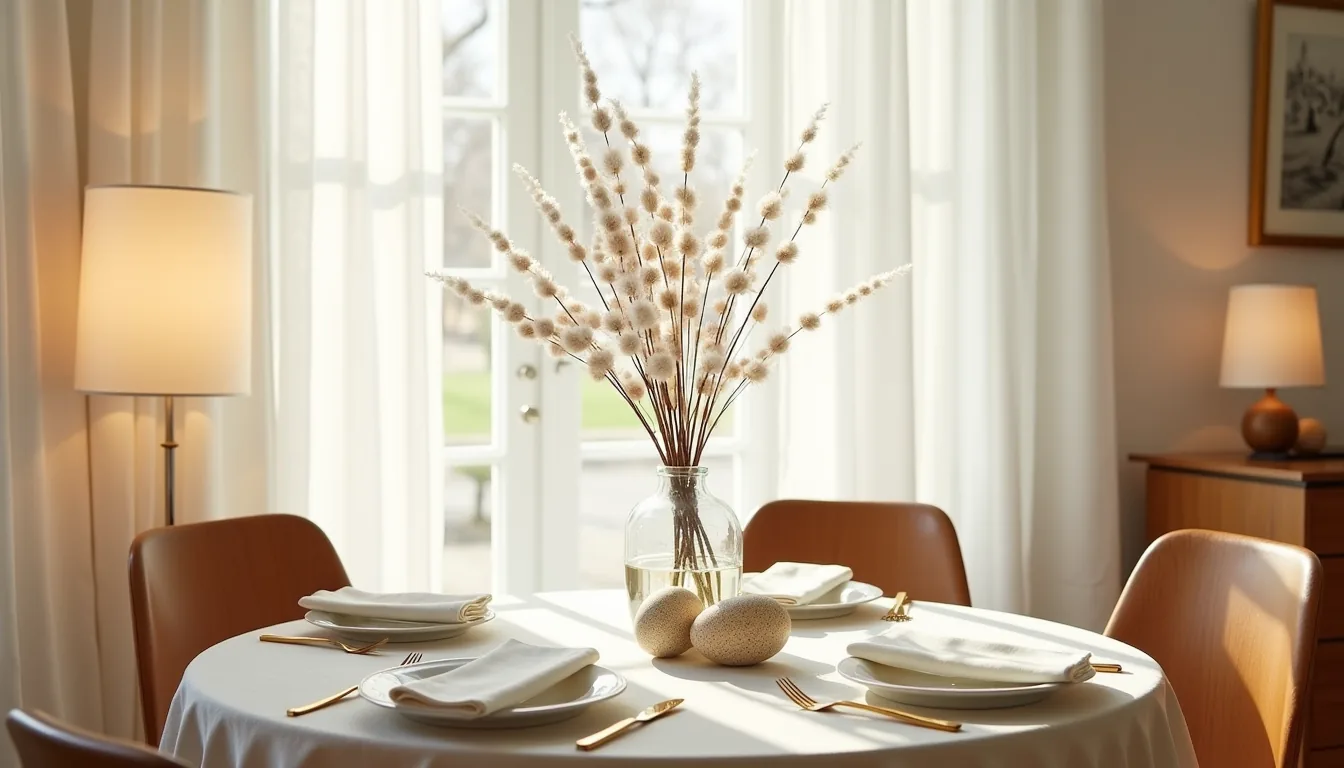
When you push two banquet tables together to seat 10-12 guests, the mistake most people make is scaling up one centerpiece instead of repeating smaller ones. A single oversized arrangement forces guests at the table ends to lean around it to see each other, and it blocks platter traffic. Instead, place identical low arrangements of branches and pastel eggs every 18 inches down the centerline–this creates rhythm, keeps sightlines clear, and lets you swap in a fresh arrangement when one gets jostled.
Cream runners running the full length of each table unify the surface without competing with place settings. Repeat the same napkin fold and charger at every seat; in large gatherings, consistency reads as intentional design while variation reads as clutter. Budget for two runners at $15-$30 each rather than one tablecloth, and buy branches in bulk from a florist supply–you’ll need roughly one bundle per 3 feet of table.
This is one of the most common Easter Table Decor mistakes to avoid: assuming larger tables need larger decor when they actually need more repetitions of the same small-scale elements.
Where to Start
You now have six distinct directions, each with its own maintenance and cost profile. The fastest way to decide is to match your table’s daily use to the decor’s durability. If you host weekly dinners, skip the delicate eggs and invest in linen runners you can wash.
If this is a one-day affair, paper botanicals and thrifted ceramic bunnies cost under $30 and pack away in a single box.
Start by measuring your table’s length and width, this determines centerpiece height (keep it under 12 inches for conversation) and how many place settings you can style. Then pick one anchor piece, whether that’s a runner, a vase, or a set of napkin rings, and build everything else around it. Your next step: clear the table, lay down a tape measure, and commit to one anchor item within the next 24 hours.
Frequently Asked Questions
What is the difference between Easter table decor and spring table decor?
Easter decor centers on specific symbols, eggs, bunnies, nests, crosses, and often uses pastel palettes tied to the holiday. Spring decor is broader, featuring florals, greenery, and fresh colors without religious or holiday-specific motifs.
How far in advance should I purchase Easter table decor items?
Buy non-perishable pieces, linens, ceramics, faux eggs, three to four weeks before Easter for best selection. Fresh flowers and real eggs wait until the week of, ideally two to three days ahead, to stay crisp and safe.
Can I use Easter table decor outdoors, and what materials hold up to weather?
Yes, but limit to weatherproof materials: powder-coated metal, treated wood, resin, ceramic, or UV-stable plastic. Avoid paper, raw wood, and delicate fabrics. Secure lightweight items against wind, and bring anything porous inside during rain.
What is the most common mistake people make when styling an Easter table?
Overcrowding the surface with too many small objects, which blocks sightlines and dining space. Keep the centerpiece under 12 inches tall and leave at least 6 inches of clear table edge per place setting for comfortable meals.