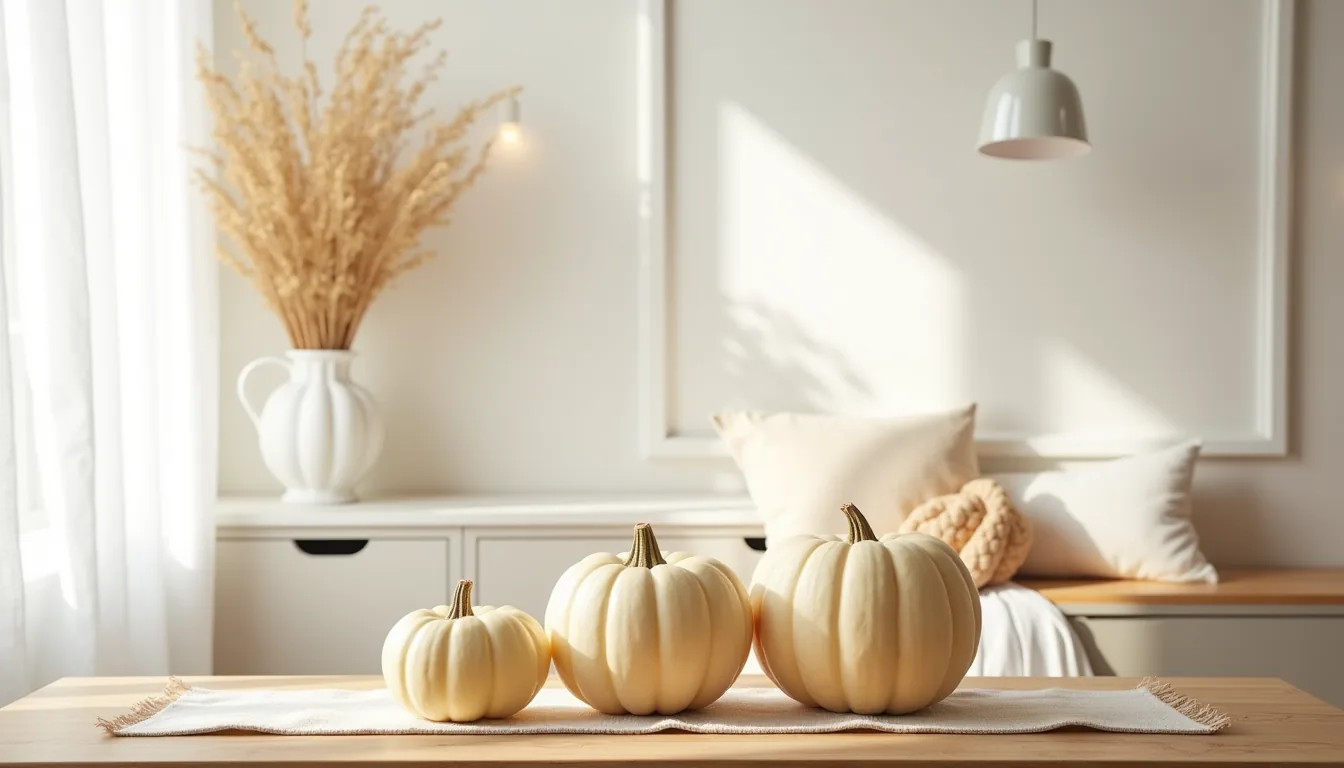
Fall and Halloween decor spans a wider range than most people assume, from subtle seasonal touches like textured throws and dried botanicals to bold, playful statements, and the right approach for you depends entirely on your space, budget, and how much effort you want to invest. You can achieve a convincing seasonal shift in under two hours for under $40, or commit to a weekend-long investment in pieces that last years. The six approaches below break down each look’s true cost, required tools, and which room layouts they suit best, so you can match your choice to your actual living situation.
Key takeaways
- Monochromatic pumpkin displays work best in entryways when you group 3–5 pumpkins in a single hue, varying heights by 4–6 inches, to create visual rhythm without clutter.
- Fabric draping and gauze offer a renter-friendly Halloween look by using tension rods or removable adhesive hooks, requiring zero wall damage and taking under 15 minutes to install per window.
- Lighting as primary decor suits small spaces best, use warm LED string lights or a single spotlight to cast shadows, which costs $20–$50 and needs no floor or table space.
- Permanent architectural changes like crown molding or built-in shelving are a long-term investment, typically running $200–$800 per room, and they pay off by supporting year-round styling beyond just fall.
Monochromatic Pumpkin Displays for Entryways
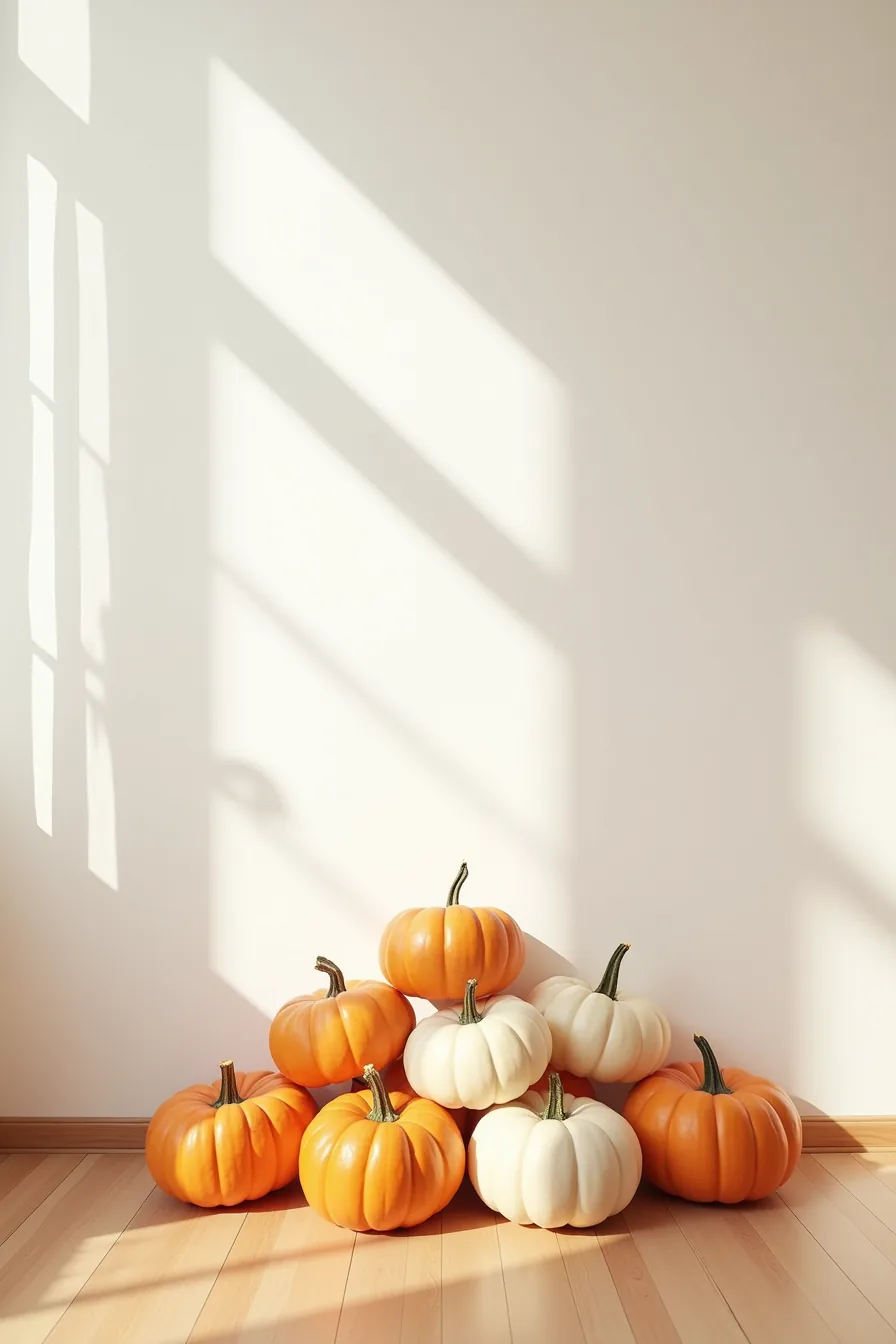
A monochromatic pumpkin arrangement delivers high visual impact without overwhelming a compact foyer. By restricting your palette to a single color family, like the ivory, tan, and pale orange seen here, you create a cohesive, intentional look that reads as curated rather than chaotic. This approach works especially well in narrow entryways because the uniform tones prevent the eye from bouncing between competing hues, allowing the sculptural forms to carry the design.
For this setup, cluster seven pumpkins in a loose triangular formation directly on the floor, with the largest specimen at the base and smaller ones stepping upward and outward. Use a mix of smooth, ribbed, and warty varieties within the same tonal range to add texture without introducing color contrast. Keep the triangle slightly asymmetrical, place the tallest pumpkin off-center and let the others cascade toward the door, so the arrangement feels organic rather than stiff.
When selecting sizes, stick to a range of 6 to 14 inches in diameter. Anything smaller disappears in a wide entry, while larger pieces can block foot traffic in a tight space. Leave at least 18 inches of clear walking path around the cluster, and if your entry has a mat, position the pumpkins on the bare floor beside it to avoid moisture trapping.
Because real pumpkins rot within three to five weeks indoors, consider foam or resin versions if you want the display to last the full season; they cost 15 to 40 dollars per piece but require zero maintenance. For real pumpkins, place a shallow dish or tray underneath to catch any soft-spot leakage and wipe the floor weekly to prevent staining.
This monochromatic approach suits homes with neutral, modern, or farmhouse styling, and it pairs well with a simple wood bench or a single black doormat. If your entry receives direct sunlight for more than two hours daily, expect fading on real pumpkins; move the arrangement to a shaded corner or swap in painted ceramic replicas that hold their color. The result is a refined welcome that echoes the season’s harvest without shouting, and it adapts easily, swap ivory for deep burgundy or olive green for a different mood next year.
Fabric Draping and Gauze for Renters
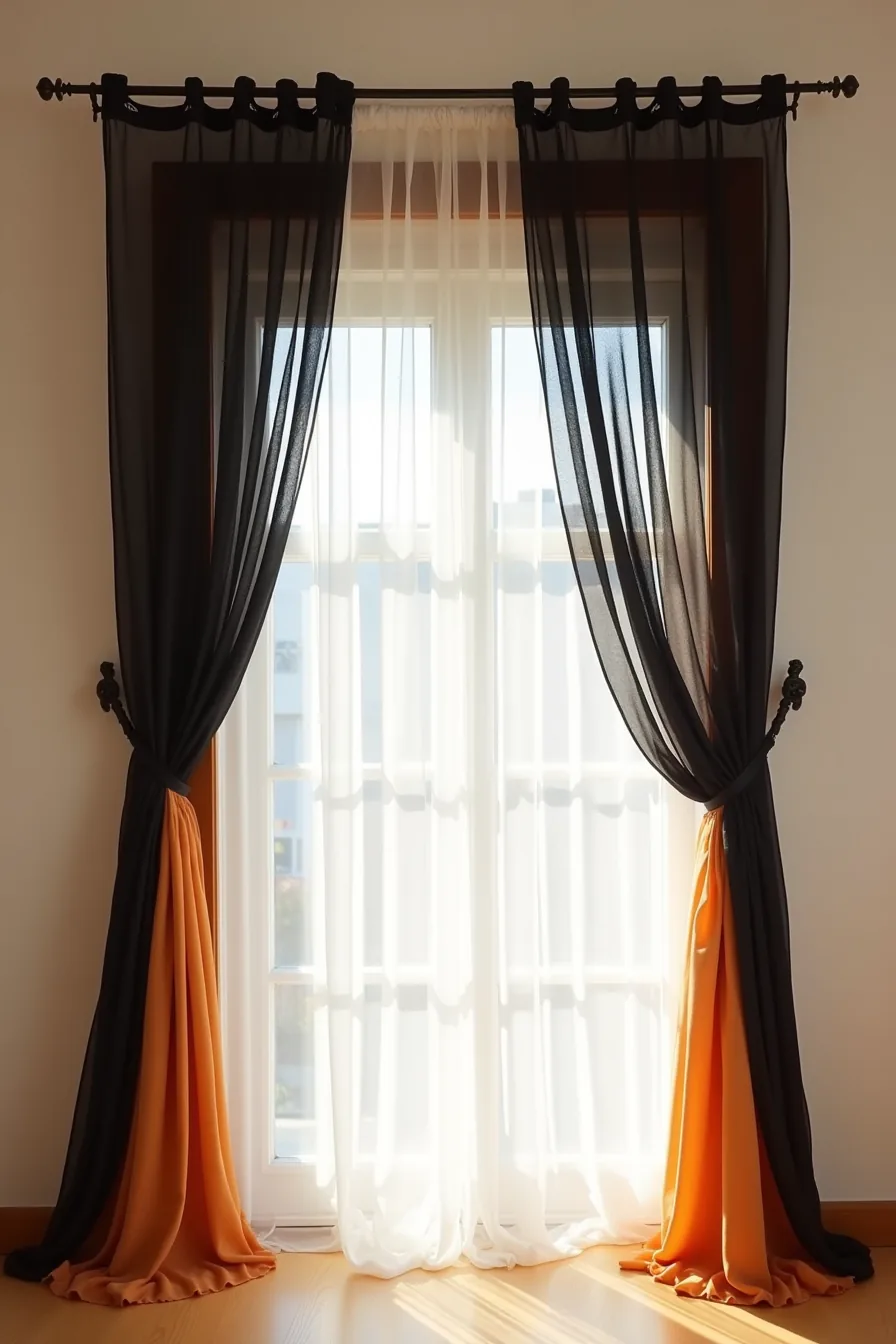
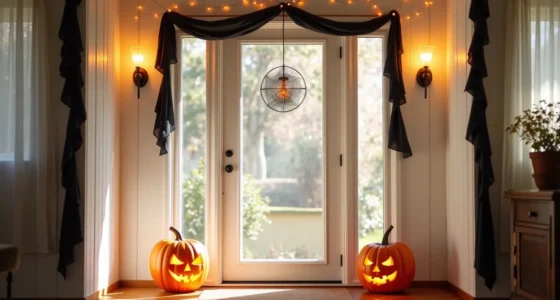
Transform a plain doorway into a seasonal focal point without a single nail or screw. Drape layers of sheer black gauze and burnt-orange cotton fabric over the top corners of the frame, securing them with removable adhesive hooks rated for at least 2 pounds each. Let the fabric cascade asymmetrically, longer on one side, shorter on the other, to create motion and depth.
This technique suits renters because adhesive hooks peel off cleanly with zero wall damage, and the textiles store flat for next year.
For a small apartment doorway, use two 1-yard panels per side; for a wide double door, double the fabric and add a third hook at the center top. Choose polyester blends for durability and wrinkle resistance, and avoid heavy velvet that could pull hooks loose. Wash the fabric at season’s end or shake it outdoors to remove dust before storing in a labeled bin.
This approach costs roughly $15–$25 and takes under ten minutes to install, making it an ideal low-commitment solution for temporary living spaces.
Lighting as Primary Decor
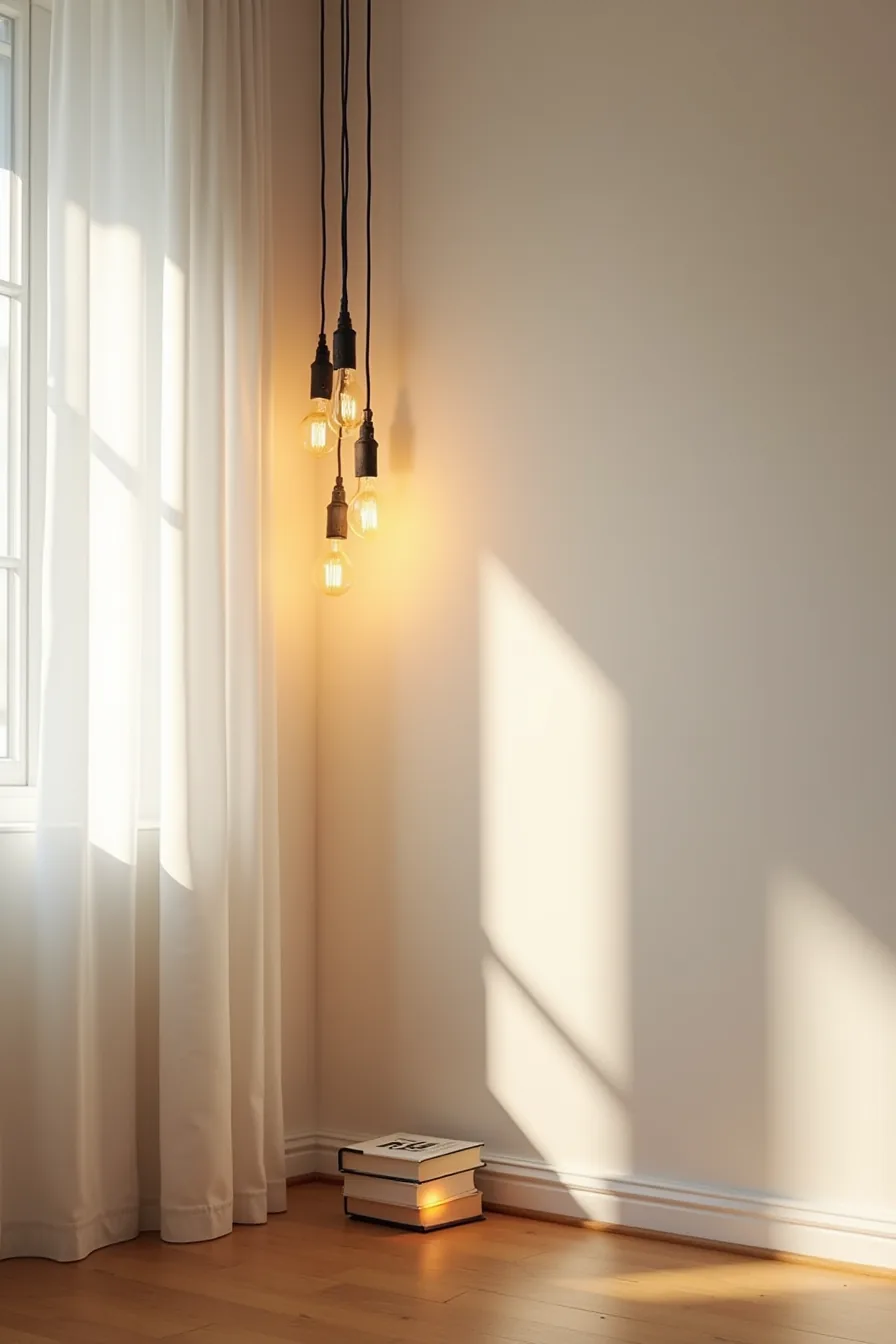
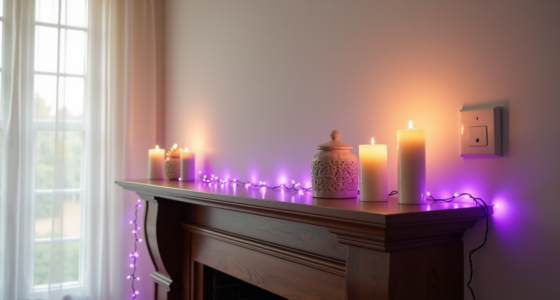
String three warm Edison-bulb strands across an empty wall at staggered heights, roughly 5, 6, and 7 feet, to transform a bare corner into the room’s focal point without adding a single piece of furniture. Angle each strand differently so the bulbs hang in a loose zigzag, creating overlapping light trails that draw the eye upward and make a low ceiling feel taller. Place a small amber uplighter on the floor, tilted so its beam washes vertically up the wall behind the strings.
This setup works best in a dark living room or hallway where you want mood without clutter, and it suits renters because the string lights hang from adhesive hooks and the uplighter simply sits on the floor, both fully removable. Use warm bulbs (2700–3000K) for a cozy harvest feel; swap in cool white (4000–5000K) bulbs if you prefer a crisp, moonlit Halloween edge. The three strands cost $20–$40 total, and the uplighter runs $30–$60, making it a mid-range option that takes about fifteen minutes to install and packs down into one box for storage.
Tabletop Vignettes with Seasonal Botanicals
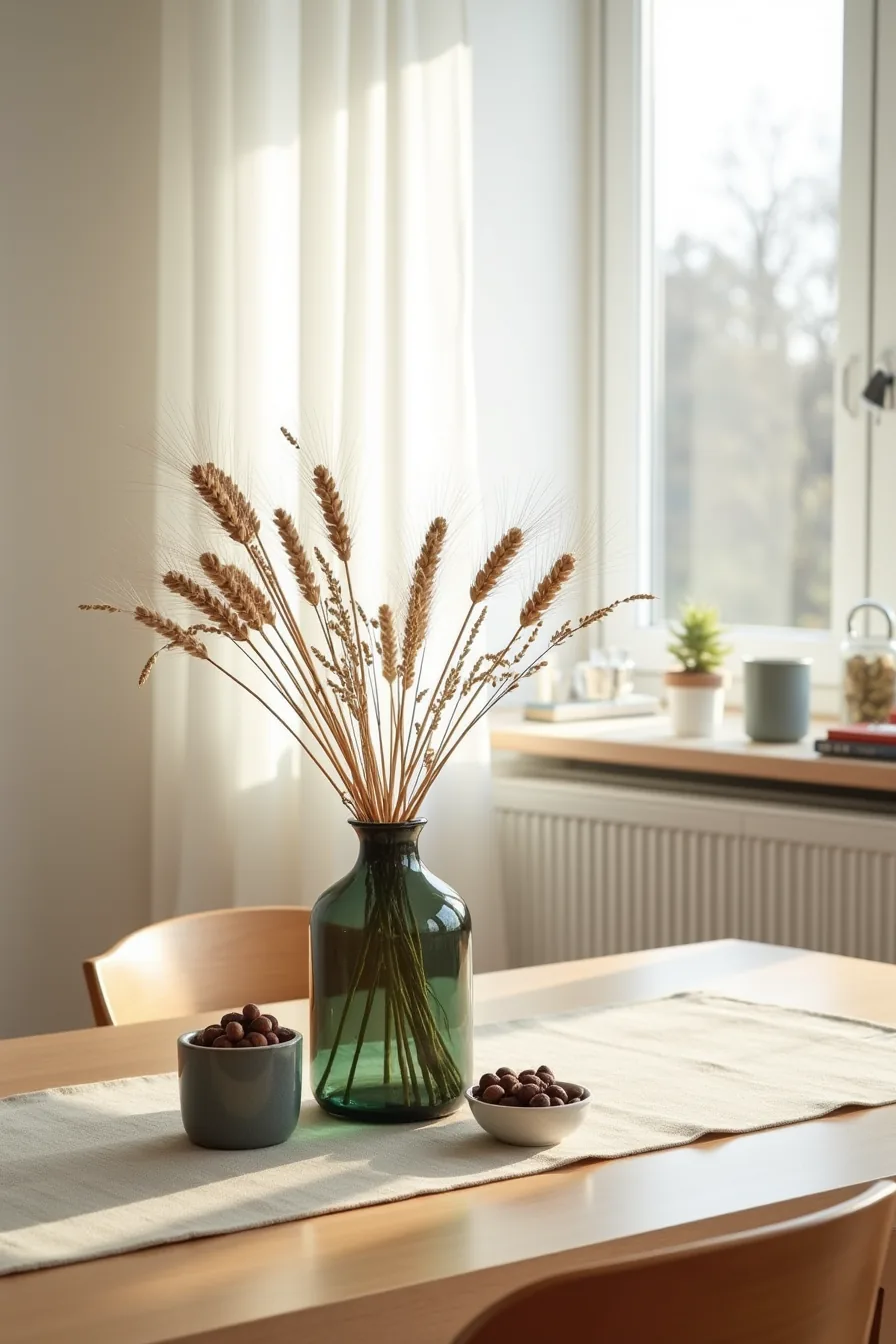
A trio of vessels, a dark green glass vase holding dried wheat and branches, flanked by two smaller ceramic pots filled with dried oak leaves and dark-brown seedpods, creates a textural centerpiece that reads unmistakably autumnal. The low profile keeps sightlines clear across a dining table, so conversation flows unimpeded.
This vignette suits renters and budget decorators alike, since every element is portable and reusable year after year. Dried botanicals cost $10–$30 per bundle and, with proper care, hold their shape for two to three seasons before needing replacement.
Scale the arrangement to your surface: a console table calls for a single vase with three to five stems, while a six-person dining table supports the full three-vessel spread. Keep the tallest stem under 12 inches for dining areas to avoid blocking guests. Group vessels in odd numbers and vary heights by 2–3 inches for visual rhythm.
Mist the dried elements monthly to prevent brittleness, and store them in a cardboard box with silica packets between seasons.
Permanent Architectural Changes for Long-Term Investment
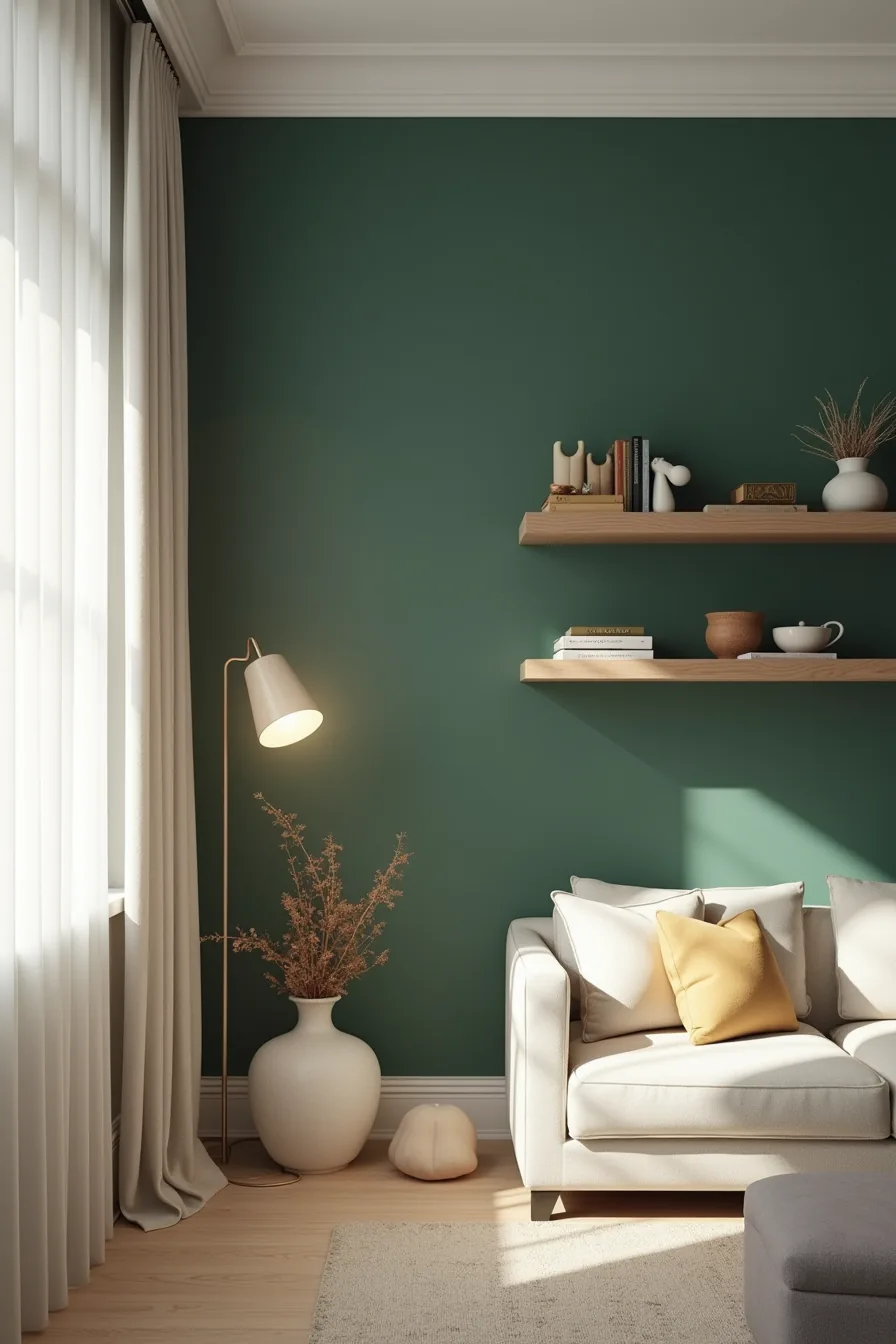
If you’re ready to commit beyond seasonal swaps, a painted accent wall offers the highest visual return for the lowest permanent alteration. Deep forest green, as seen on the featured living room wall, costs roughly $50–$150 in materials and transforms the entire room’s mood without touching your floor plan. This route suits homeowners who entertain frequently and want a dramatic backdrop that works with both autumn gourds and winter greenery.
Mounting floating wooden shelves at mid-wall height, typically 48–60 inches from the floor, creates year-round display real estate. Expect to pay $100–$300 for quality hardwood and hidden brackets, plus installation time if you’re not handy with a stud finder. The payoff: you rotate small seasonal accents (mini pumpkins, pine sprigs, ceramic figures) rather than buying new large decor pieces annually.
Consider the trade-offs before painting. Accent walls require two to three coats for even coverage, and repainting when you tire of the color adds another $150–$250. Floating shelves need proper wall anchoring, drywall alone won’t support heavy ceramics, so verify stud placement first.
For renters, skip this section entirely; the removable options elsewhere in this guide deliver similar impact without the permanent footprint.
Avoiding Common Placement and Safety Mistakes
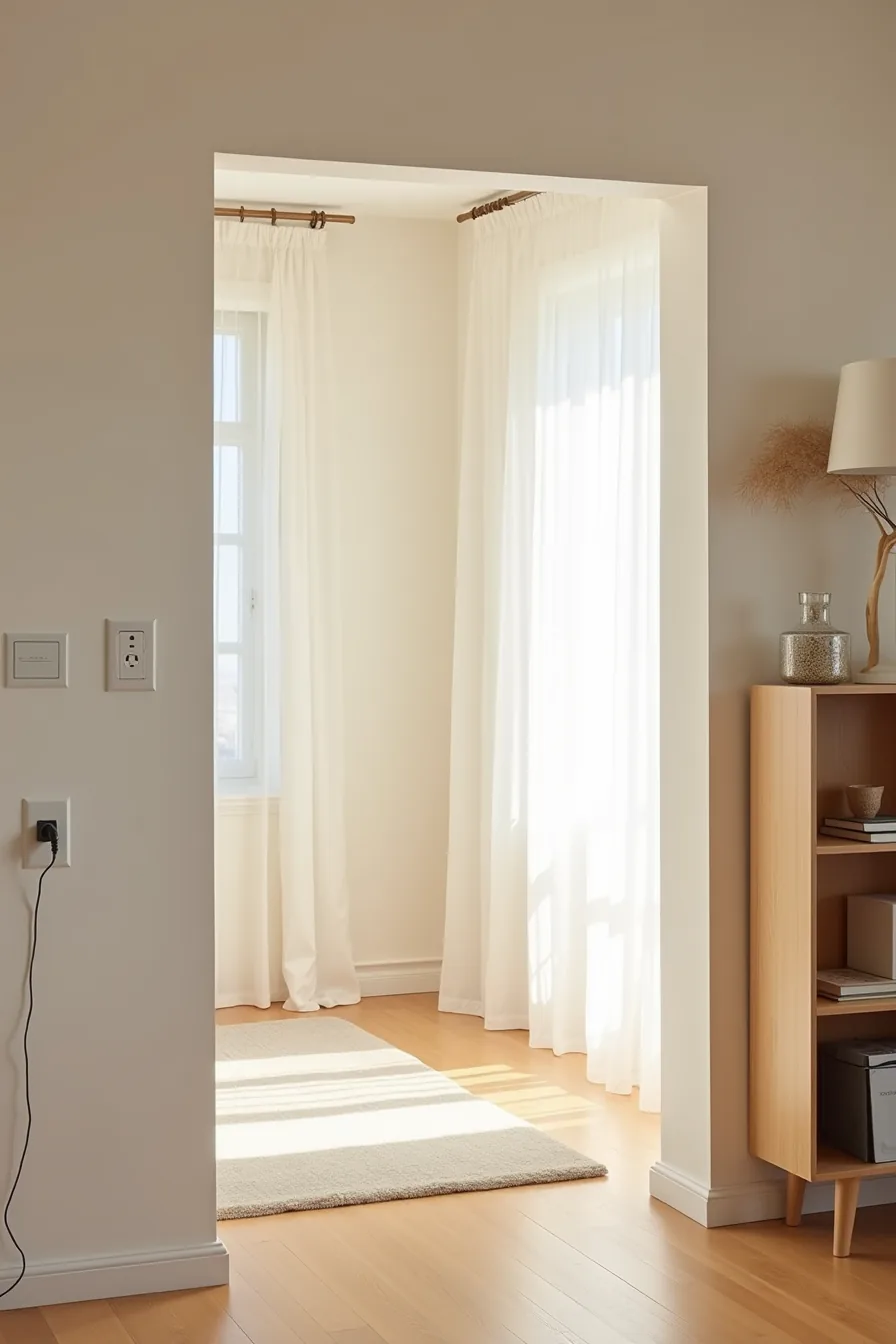
Before you arrange a single gourd, audit your space for hazards. Keep every walkway, especially exit doors, completely clear of decorations, a cornstalk leaning against a doorway or a hay bale blocking a path becomes a serious trip hazard during a power outage or emergency. Position any electrically powered items, like string lights or animatronics, at least three feet away from water sources and ensure all cords run along walls, never under rugs where they can fray or overheat.
Pay close attention to your outlet load. A single power strip handling multiple Halloween inflatables, fog machines, and LED displays can easily exceed its 15-amp rating; distribute the load across different circuits in your home. For any lit decor, verify the bulbs remain cool to the touch and keep flammable materials like crepe paper or dried florals at least 12 inches away from heat sources.
Finally, place heavy ceramic or glass pieces on low, sturdy surfaces, anchoring tall items like skeleton statues to walls with brackets to prevent tipping in high-traffic areas.
Your First Move
Start with the entryway, it’s the smallest commitment and the highest visual payoff. A single pumpkin trio on a stool or a doormat swap costs under $40 and takes ten minutes to set up.
Before buying anything, measure your door width and entry floor space. A 24-30 inch doormat works for most standard doors; anything larger blocks swing clearance.
Shop your own home first. Repurpose baskets, trays, or lanterns you already own rather than purchasing new containers. This narrows your focus to accent pieces only, keeping the budget tight.
Order everything within the next week, seasonal stock sells out by mid-October, and shipping delays eat into your decorating window.
Frequently Asked Questions
How do I decorate for fall and Halloween in a rental without losing my security deposit?
Stick to removable adhesives, freestanding pieces, and temporary solutions. Use command hooks for lightweight garlands, door-hanging wreaths with over-door straps, and tabletop displays that require no wall damage. Avoid paint, nails, or sticky residue left behind.
What’s the cheapest way to create a Halloween atmosphere without buying new decorations?
Repurpose household items: black trash bags become bats, empty jars turn into candle holders, and white sheets make ghosts. Collect pinecones, acorns, and branches outdoors for natural fall accents. Use colored LED lights and printed silhouettes taped to windows for instant mood.
How much space do I need to display fall and halloween decor ideas without making a room feel cramped?
Aim for one focal point per room, a mantel, entry table, or corner, rather than spreading decor everywhere. In small spaces, use vertical displays like hanging garlands or tall vases. For medium rooms, cluster items in groups of three; for large rooms, create layered vignettes without blocking walkways.
Can I leave fall and halloween decor ideas up year-round, or do they need seasonal storage?
Leave neutral fall items like pumpkins, woven textures, and warm-toned throws out all year. Store overtly Halloween pieces, spiders, skeletons, and orange-and-black signage, after October 31. Rotate storage bins seasonally to keep decor fresh; use clear containers with labels to simplify switching.