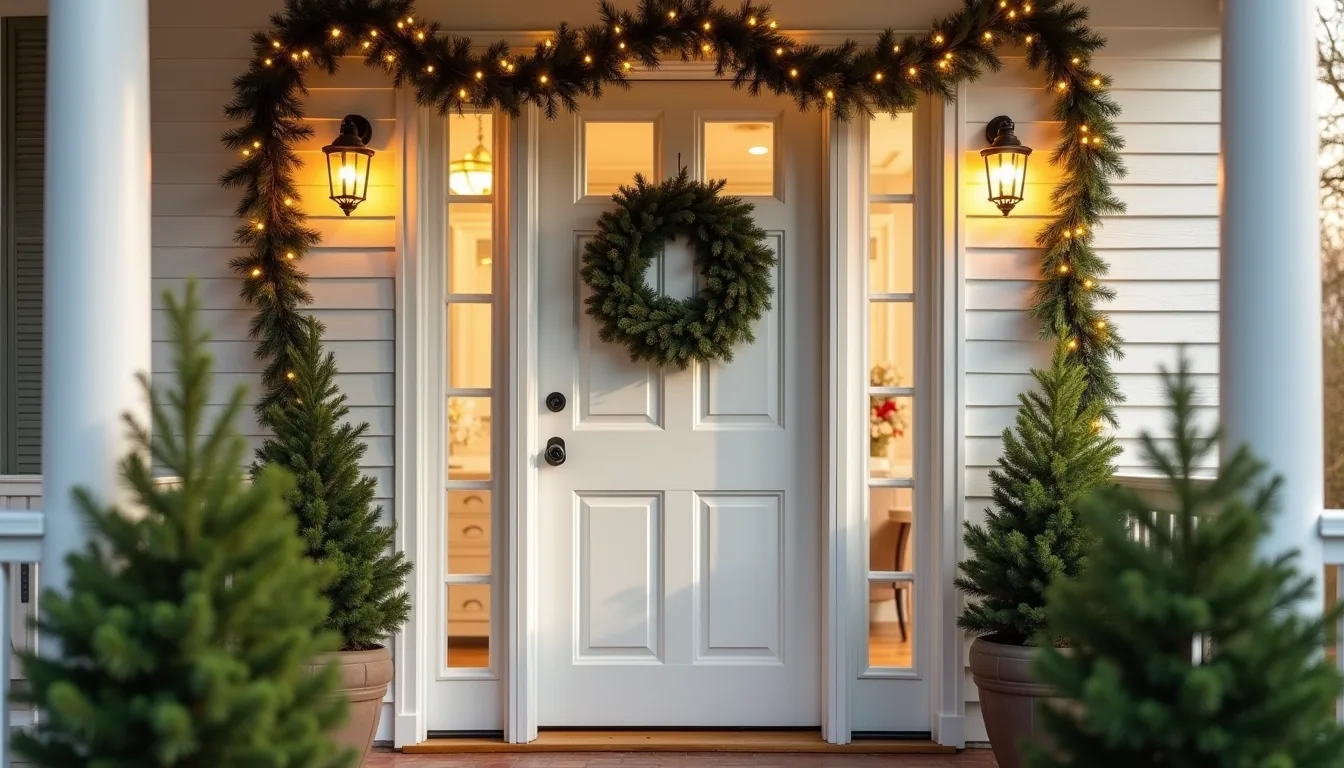
Your front door is the first thing guests see and the last thing you pass on your way out, so these six front door Christmas decor ideas give you a clear choice between budget-friendly, renter-safe, and investment-level looks that actually fit your entryway’s size and your maintenance tolerance. From a classic swag that takes ten minutes to hang to a layered planter arrangement that survives harsh weather, each option balances visual impact with practical upkeep. You’ll also learn which materials resist fading, how to secure decor without damaging your door frame, and what to skip if you live in a windy or rainy climate.
Key takeaways
- Match wreath size to door width: 24–28 inches for standard 36-inch doors, scaled down to 18–20 inches for narrow entryways to avoid crowding the hardware.
- Use command hooks or over-door hangers for renter-friendly garland swags, and always verify the hook’s weight limit against your greenery’s total heft before hanging.
- Group potted arrangements in odd numbers (3 or 5) with varying heights, placing the tallest container nearest the hinge side so the door opens fully without obstruction.
- Swap real candles in lanterns for LED flicker bulbs rated for outdoor use, and anchor any lantern on a flat, wind-sheltered surface to prevent tipping or heat damage to nearby mats.
Wreaths: Sizing, Mounting, and Material Trade-offs
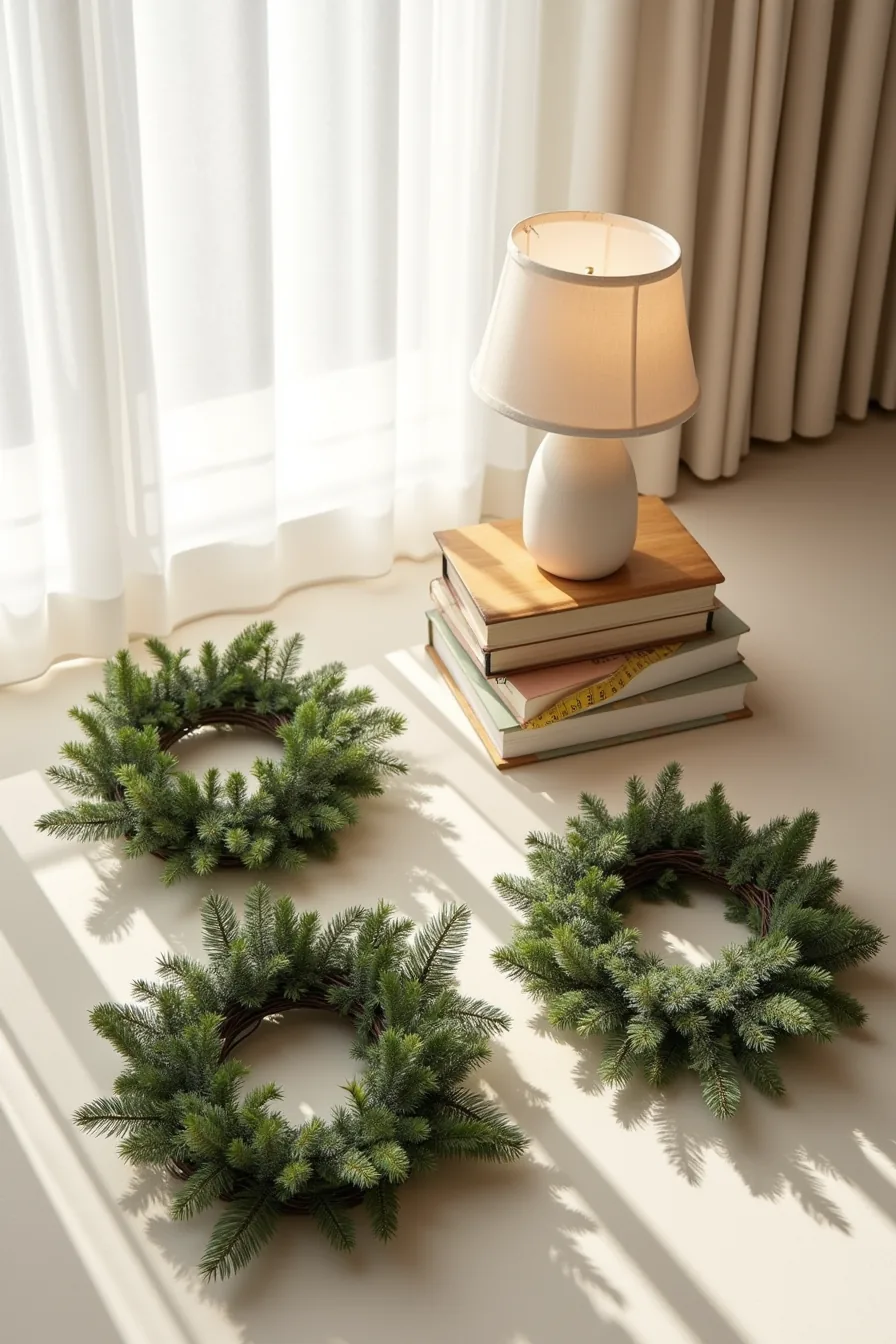
Your front door is the focal point of your holiday curb appeal, and the wreath is its crown. But picking the wrong size or material turns a warm welcome into a visual miss. Here’s how to get it right without damaging your door.
Match the diameter to the door width. For a standard 36-inch door, a 24-inch wreath hits the sweet spot. If you’ve a double door or a grand entry, step up to a 30-inch wreath. On a narrower 30-inch door, stick with an 18-inch wreath so it doesn’t overwhelm the hardware or sidelights.
A good rule: the wreath should cover roughly two-thirds of the door’s width for balance.
Mount it without leaving scars. Skip the nail if you rent. Use an over-the-door hanger, a hook that slips over the top edge, which works for most doors and holds wreaths up to 15 pounds. For heavier designs, use a command-style adhesive hook rated for outdoor use, but check the door’s finish first; some paints and varnishes don’t play well with adhesive strips.
Avoid suction cups; they fail in cold weather.
Choose material by your climate and effort level. If you live where it snows or rains often, a fresh wreath will look sad within days. Go with a high-quality artificial option, look for UV-treated tips to prevent fading, which lasts years and needs zero upkeep. A twig wreath is a rugged middle ground: it handles moisture fine and you can dress it up with berries or bows season after season.
For a fresh wreath, expect a lifespan of 2–3 weeks indoors, less outdoors in heat or frost, and plan to replace it if you want a pristine look through New Year’s.
Maintenance is minimal but real. Artificial wreaths need a quick shake to shed dust or snow, and store them in a breathable bag. Fresh wreaths benefit from a light misting every few days to slow needle drop. Check the hanger weekly, wind and door slams loosen it.
Scale matters beyond the door itself. On a porch with columns or a large lantern, a 24-inch wreath shrinks visually. Add a second smaller wreath to a window or a pair of 18-inch ones on flanking sconces for cohesion. In a tight entryway, a flat-back wreath hugs the door better than a bulky one, which might scrape when you open it.
Pick the size that fits your door, the material that matches your weather, and the mount that respects your door’s finish. That’s how you nail the best front door Christmas decor ideas without the hassle.
Garland Swags: Placement, Weight Limits, and Renter Adaptations
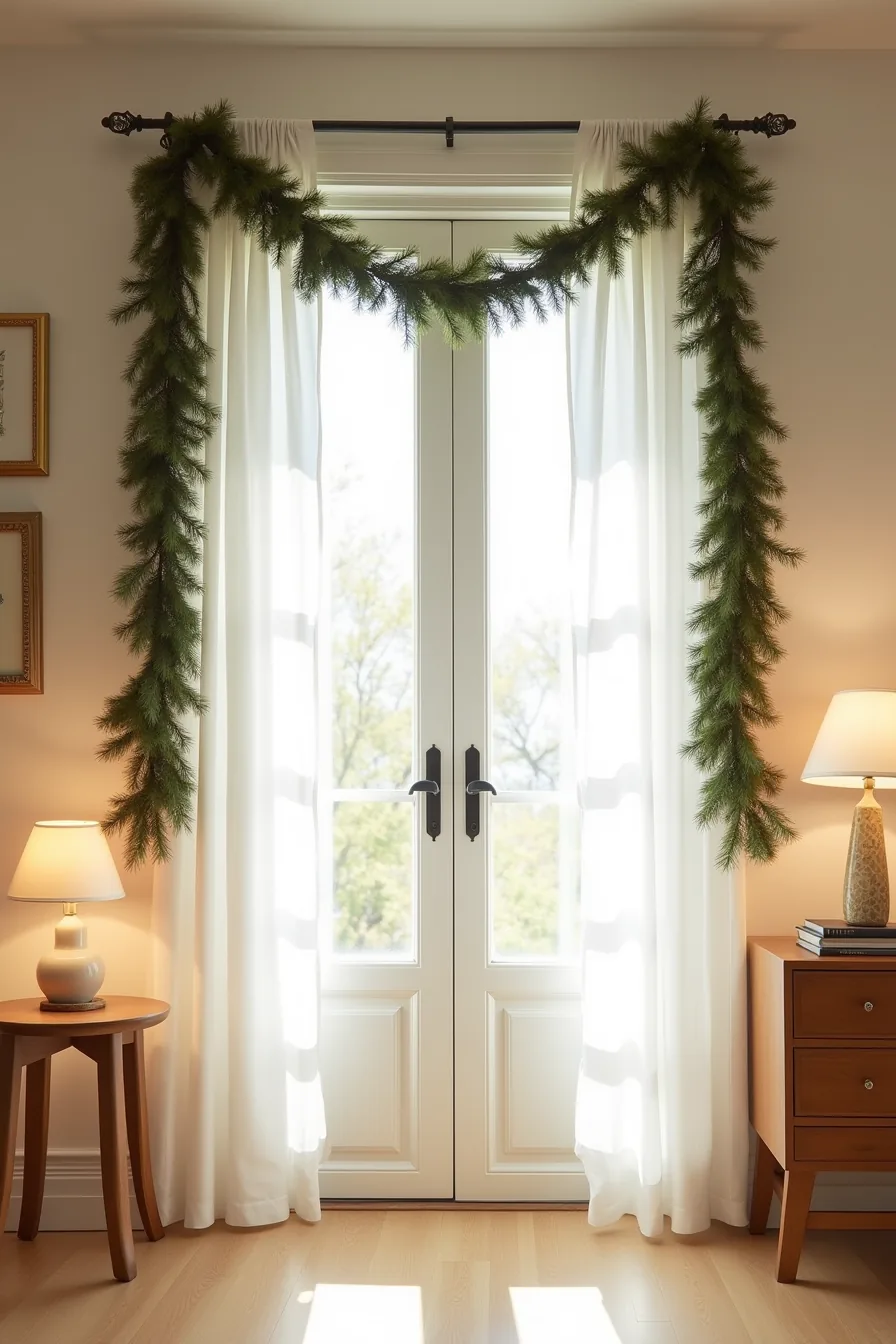
A garland swag frames your entry without requiring a single nail, which makes it one of the most practical front door Christmas decor ideas for renters. The setup you see here uses two attachment points: removable adhesive hooks on the door frame itself and zip ties securing the garland to the railing. Position the highest hook about 6–8 inches below the top corner of the frame so the drape arcs naturally rather than dipping flat.
Calculate length before you buy. Measure the vertical drop on one side, add the horizontal span across the top, and double it for the other side. A typical single-door frame needs 9–12 feet of garland for a graceful swag; double doors demand 15–18 feet. Buy one continuous piece, splicing two sections creates a visible gap that ruins the curve.
Know the weight limits. Standard adhesive hooks hold 3–5 pounds outdoors in mild weather, but cold reduces their grip. Heavy pine or cedar garland easily exceeds that per foot, so keep the hook count high: one every 2 feet along the frame. Zip ties are your friend on railings, they cost pennies, hold up to 50 pounds of tension, and come off with a snip without scratching the paint.
Never hang a swag over a hinged door you open regularly; the constant motion loosens every attachment point within a week. Instead, drape it across the frame above the door and down one static side, or focus on the railing alone.
Potted Arrangements: Grouping, Proportion, and Seasonal Longevity
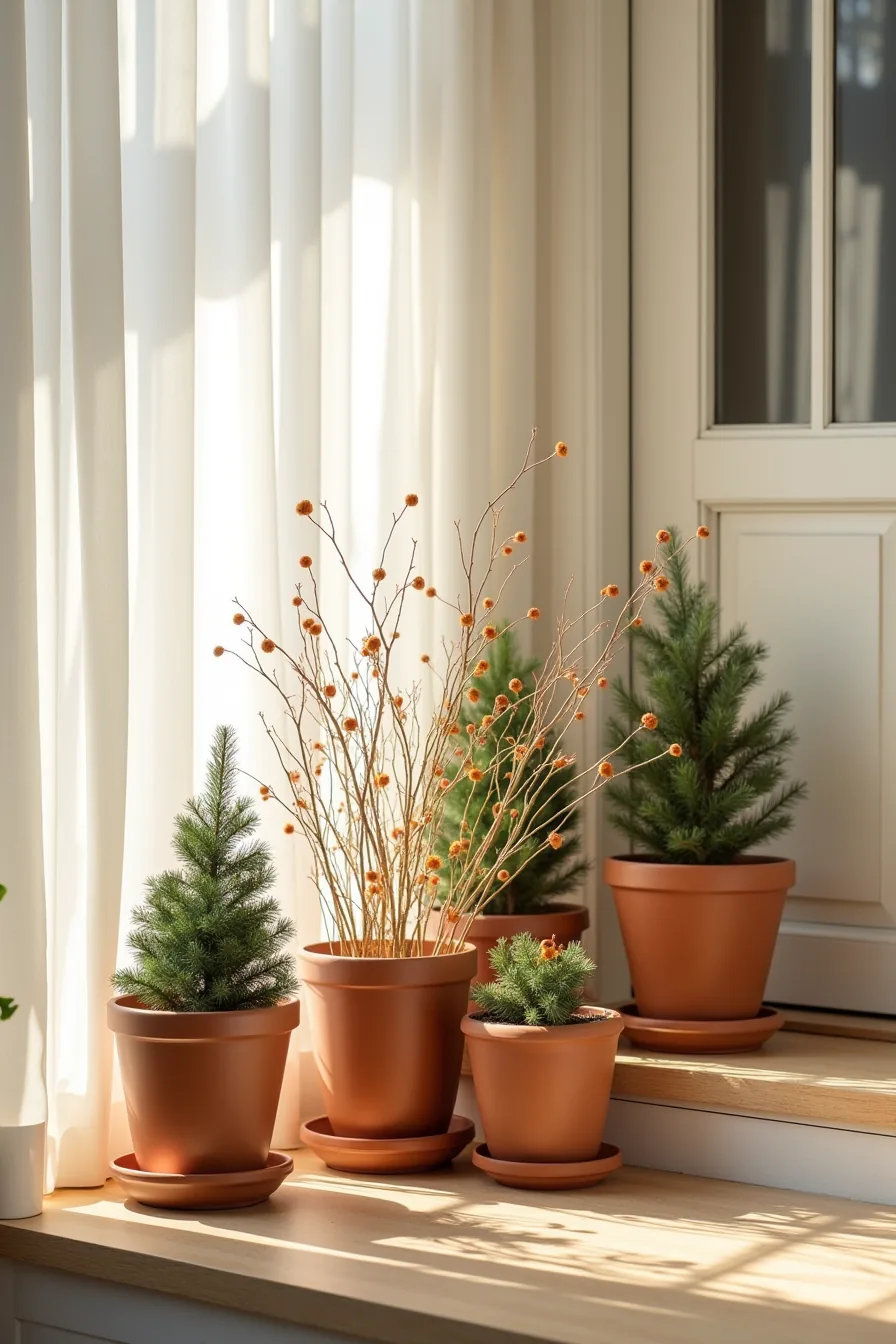
A cluster of three pots beats a single lonely urn every time. The visual rule is odd numbers and varied heights, place a 24-inch tall planter at the back, a 14-inch in the middle, and a 10-inch at the front for depth that reads well from the street.
Match the pot scale to your door’s width. A standard 36-inch entry pairs best with a combined arrangement width of 30 to 40 inches; anything smaller gets lost, anything wider obstructs the walkway. Leave at least 24 inches of clear path for deliveries and guests.
For cold-weather hardiness, choose evergreen boughs, faux stems, or cold-tolerant plants like ornamental kale and heuchera. If you use real greenery, water lightly every 3 to 4 days only when the soil thaws, overwatering in freezing temperatures rots the roots and turns the arrangement to mush by January.
The terracotta and ceramic pots you see in the classic look vary from 10 to 18 inches in height, planted with dense evergreen sprigs, cascading ornamental grasses, and clusters of winterberries. That mix gives you structure, movement, and a pop of red without needing daily attention.
For a small stoop, use two pots instead of three and keep the total height under 30 inches so you don’t block the door’s sightline. For a wide porch, extend the cluster horizontally by adding one pot per 18 inches of available floor space, but never let the arrangement narrow the entry to less than 30 inches wide.
Budget tip: buy nursery-grade pots and dress them with a single strong evergreen, then add berry picks from a craft store for under $15 total. Long-term investment: powder-coated steel planters (around $40 to $80 each) resist rust and last 10-plus seasons, unlike ceramic that cracks when moisture freezes and expands.
Lit Doorway Frames: Electrical Requirements, Safety, and Space Constraints
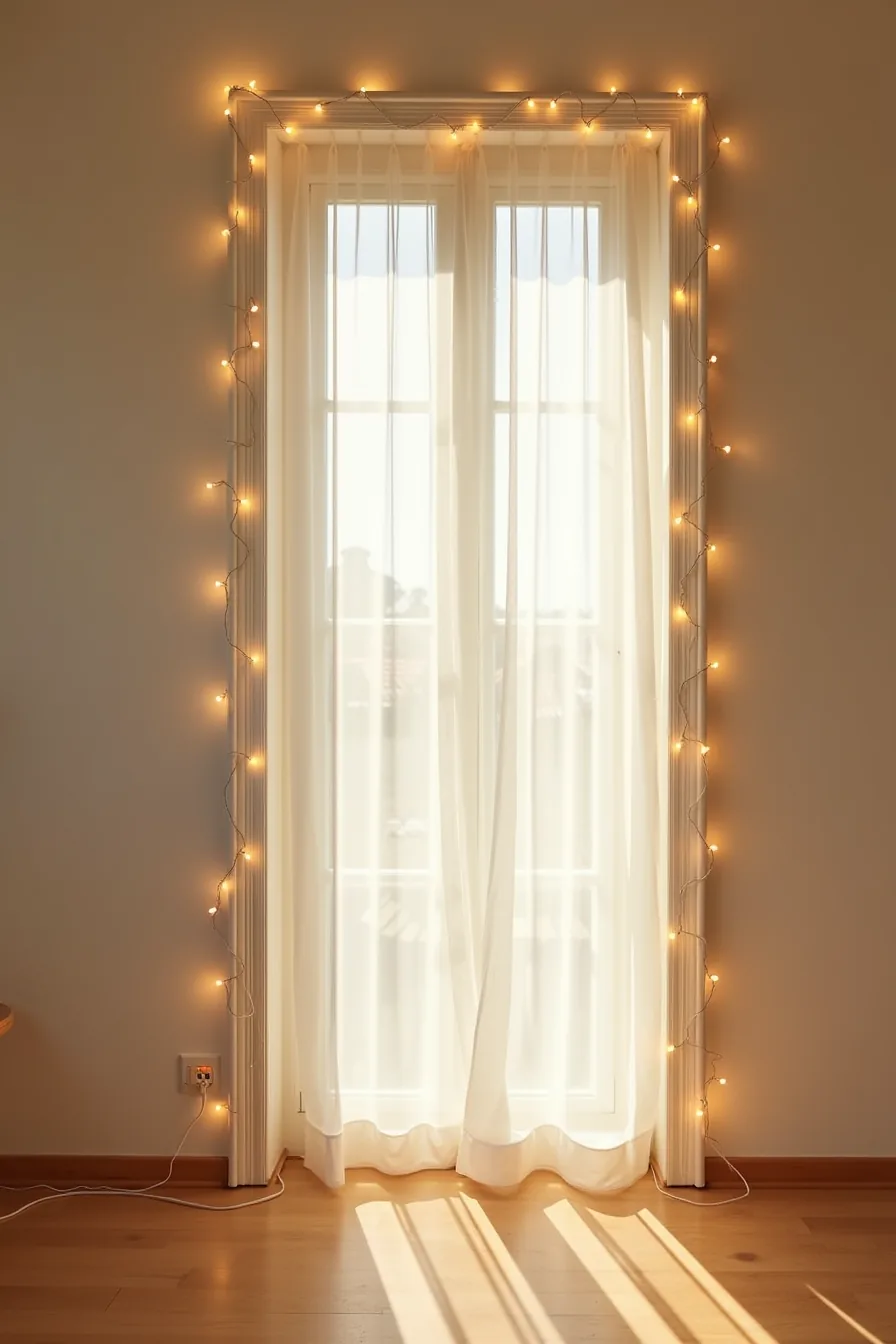
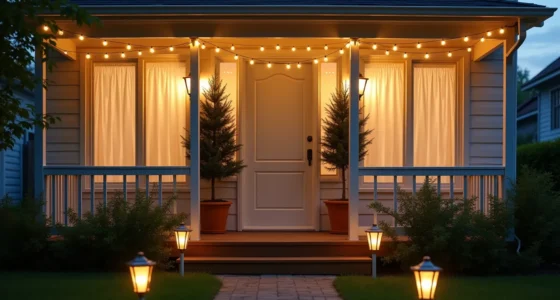
Rope light and string lights framing your door trim deliver maximum impact for minimal square footage, making them the strongest option for narrow stoops where potted arrangements would block the path. The setup shown uses a single run of rope light tracing the full trim perimeter, with string lights layered loosely across the top edge for texture, a combination that reads as cohesive rather than cluttered.
Before installing, confirm your nearest outdoor outlet sits within 6 feet of the door frame. Anything beyond that demands a heavy-duty extension cord rated for outdoor use, which you must route along the wall base, never across the walkway where someone could trip. Plug into a GFCI-protected outlet and keep all connections elevated off the ground to prevent snowmelt seepage.
For dusk visibility, 100 to 150 lumens per foot provides that crisp outline without the harsh glare of stadium lighting. Brightness matters less during daylight hours, so skip the timer and use a smart plug that switches on 30 minutes before sunset. On a small door, run the lights only around the outer trim edge, adding them to the inner frame crowds the visual and makes the entry feel narrower than it’s.
Ribbon and Bow Accents: Budget Efficiency and Layering Techniques
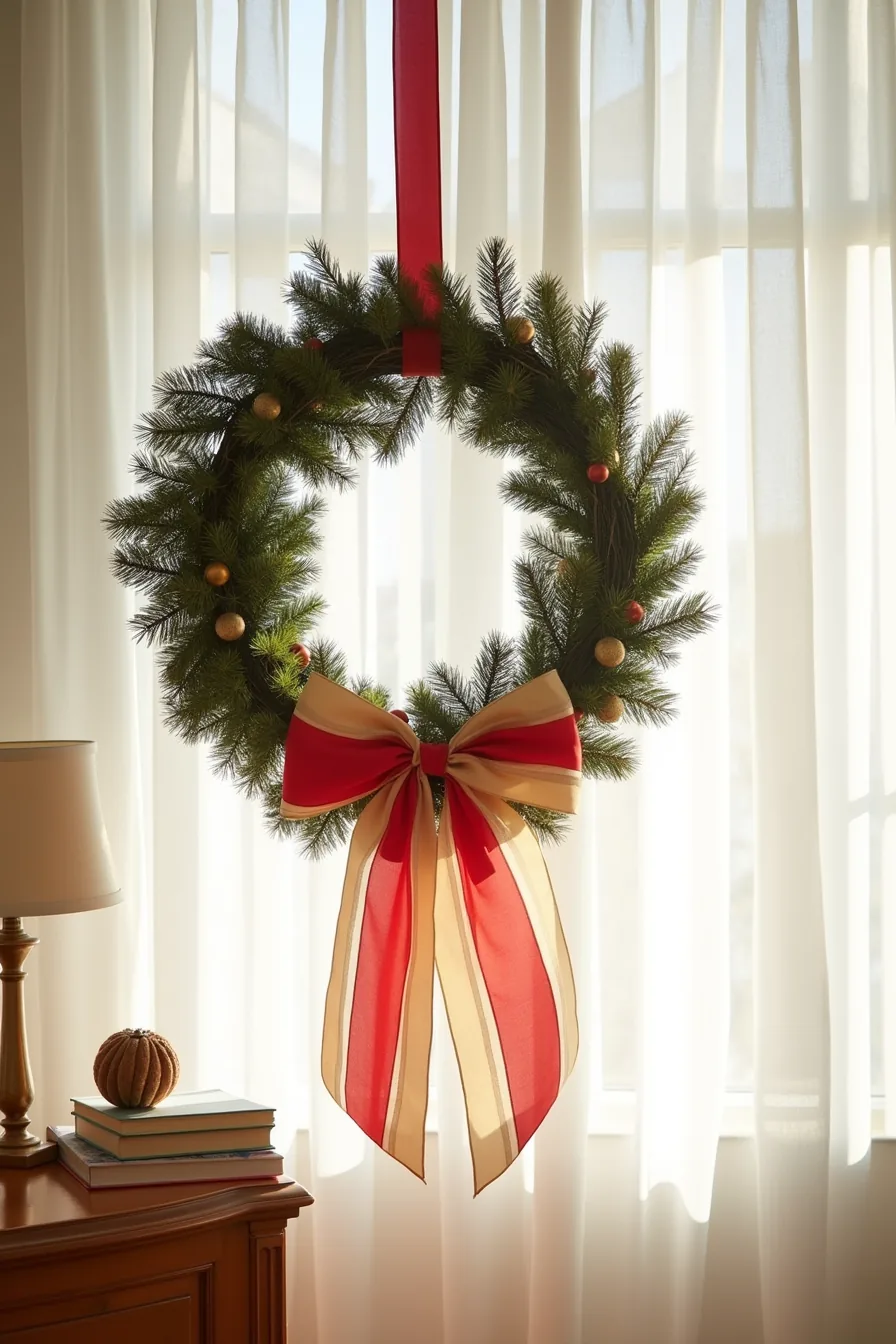
Ribbon delivers the highest visual return per dollar of any front door Christmas decor idea, and it’s the easiest element to swap between seasons. A single spool of 2.5-inch-wide wired ribbon costs roughly what you would spend on a small potted evergreen, yet it can tie together a wreath, garland, and flanking planters into one cohesive statement. On the setup shown, red, gold, and cream ribbons wrap the wreath’s stem base before cascading down to meet the garland swag, with a layered bow at the junction hiding the attachment point entirely.
For a budget vs. Splurge front door Christmas decor idea, start with basic satin ribbon from a craft store and save your spending for one high-quality wired ribbon, the wire lets you shape loops that hold their form through wind and repeated door use. Match your ribbon palette to the undertones of your existing exterior: warm brass hardware pairs with cream and gold, while cool gray stone suits silver and icy blue.
On a compact door, limit yourself to one bow on the wreath and one at the garland’s anchor point. More than that reads as fussy, and each additional bow competes for attention with the door’s hardware and house numbers. Wrap ribbon tightly enough to lie flat against the garland, leaving 4 to 6 inches between wraps so the greenery remains visible and the texture doesn’t flatten into a solid block of color.
Lanterns and Candles: Flame Safety, Wind Resistance, and Alternatives
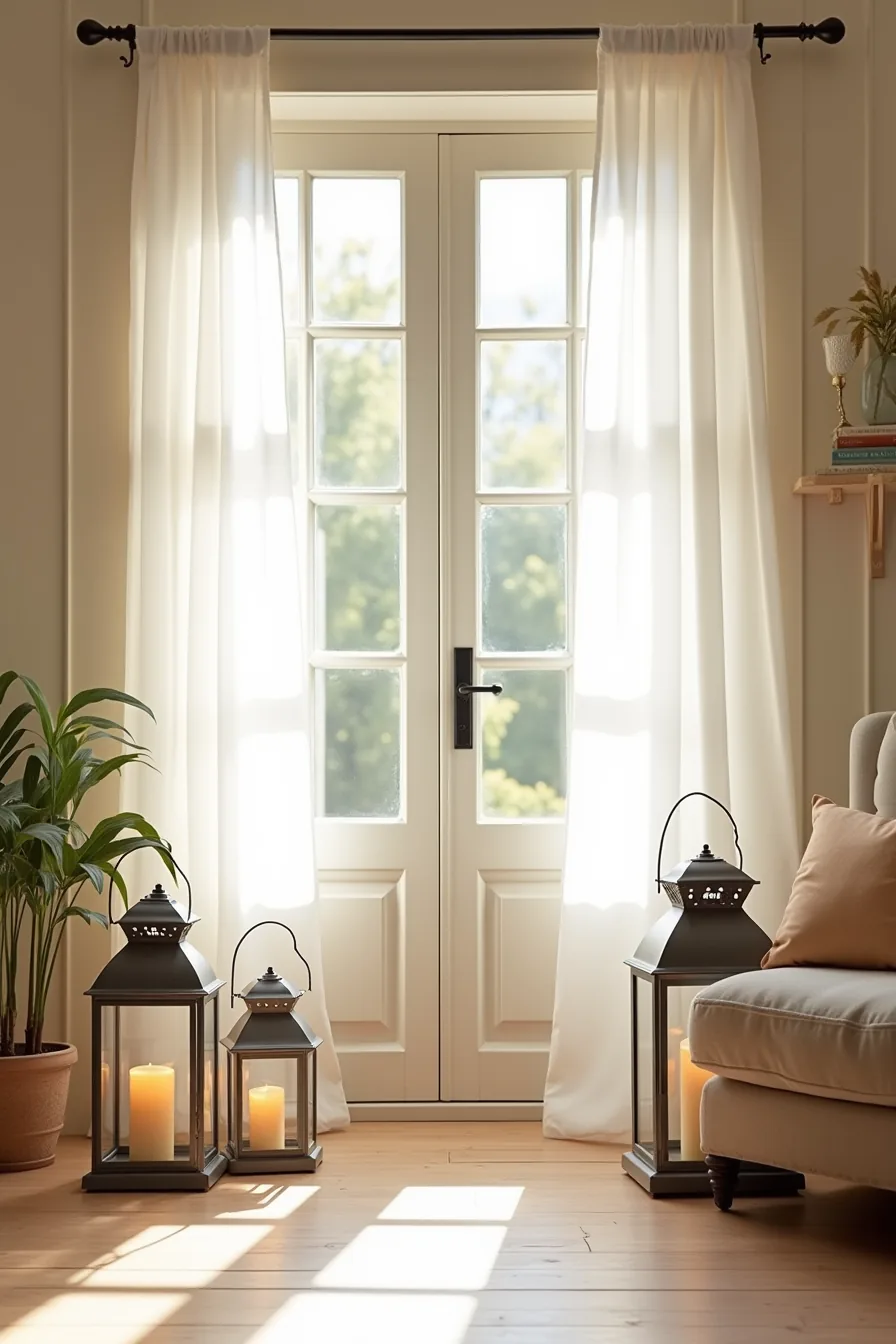
Positioning a pair of metal lanterns on the porch floor flanks your door with vertical light that draws the eye upward, making the entry feel taller without adding bulk to the door itself. The weighted base on one lantern keeps it stable against door-slam gusts, while the wire bracket anchoring the second is the better choice if you’ve children, pets, or a high-traffic walkway where tipping is a real risk. Check your HOA covenants or lease terms before placing any lantern, many restrict open flames within a certain distance of the door, and some ban them on porches outright.
LED candles inside the lanterns eliminate every flame-related concern: no ember risk from wind-blown curtains, no smoke residue on the glass, and no need to extinguish them when you leave the house. The battery-powered versions run anywhere from 100 to 500 hours on a single set of cells, so a 6-hour evening schedule lasts most of the season. If you prefer real candles, use a hurricane-style glass sleeve and position the lanterns at least 3 feet from the door’s sweep path, and never leave them burning unattended.
Your 6-Point Decision Checklist
Before you shop, measure your door and porch depth. A 30-inch wreath overwhelms a 36-inch door, while a 20-inch wreath disappears on a double door. Match your choice to your climate, fresh greenery needs weekly watering in warm zones, while faux options handle direct sun without fading.
Decide your maintenance budget first. If you’ve under 15 minutes weekly, choose a pre-lit faux wreath or a simple swag. If you enjoy seasonal upkeep, invest in a live garland with a water reservoir.
Take this step now: Photograph your entryway from across the street and at eye level. Print both images and sketch your decor placement to scale before buying anything, this 10-minute exercise prevents 90% of common sizing mistakes.
Frequently Asked Questions
How do I hang a wreath on a rental door without damaging the paint?
Use an over-the-door hanger with a U-shaped hook that slips over the top edge. Choose a padded or rubber-coated version to avoid scratches. Avoid adhesive strips; they can pull paint off in cold weather.
What size wreath should I use for a standard 36-inch entry door?
A 24- to 28-inch diameter wreath works best for a 36-inch door. It leaves a few inches of clearance on each side without overwhelming the door’s proportions. Go smaller if you’ve sidelights.
Can I leave Christmas garland up in freezing temperatures, or will it deteriorate?
Yes, you can leave it up. Fresh garland dries out faster in freezing, windy conditions, expect 3 to 4 weeks of good appearance. Artificial garland handles cold fine, but UV light fades it over multiple seasons.
What’s the safest way to run extension cords for outdoor door lighting?
Use a heavy-duty extension cord rated for outdoor use, plugged into a GFCI-protected outlet. Keep connections off the ground and sealed with a weatherproof cover. Never daisy-chain cords; run one continuous length instead.