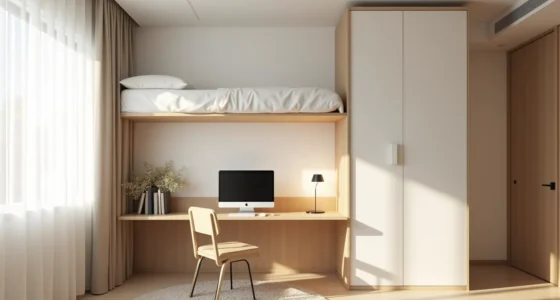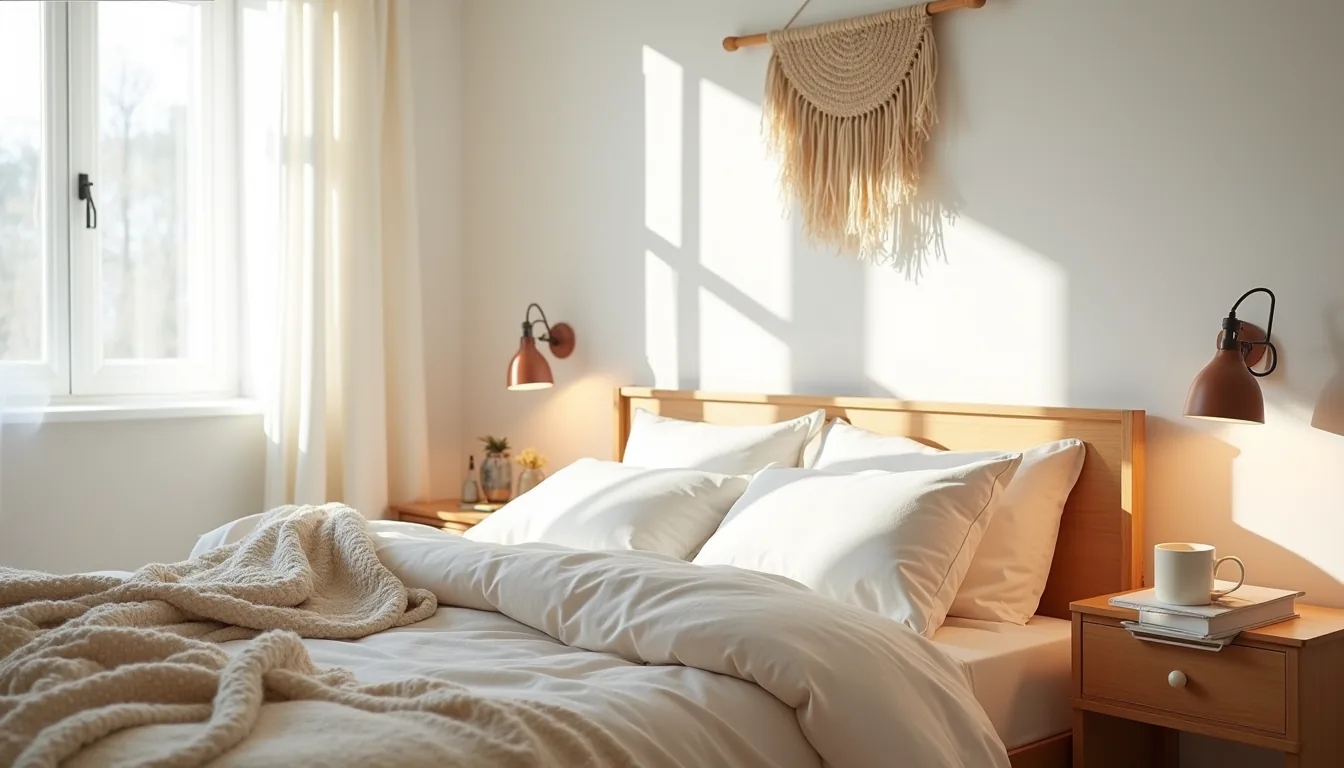

Guest bedroom decor works best when you treat it as a functional design problem, not a showcase, and the six approaches below give you a clear path to solve it regardless of your budget or square footage. Each option targets a specific constraint: tight square footage, rental restrictions, or a desire for a permanent, high-quality upgrade. You’ll find exact placement rules, material guidance, and the maintenance trade-offs for each, so you can pick the right strategy before buying a single piece.
Key takeaways
- Anchor with neutrals: Choose a warm off-white or greige paint and layer oatmeal, taupe, and ivory textiles to create a base that flatters both bold and minimalist accents without fighting your existing hallway or ensuite tones.
- Prioritize a clear floor ring: Keep a 3- to 4-foot path clear from the door to the bed, and place the nightstand within 8–12 inches of the mattress edge so you never stretch or bump the wall.
- Spec a dual-purpose nightstand: A 24- to 30-inch-wide piece with a lamp, a small tray, and one closed drawer covers phone charging, a water glass, and off-season clutter in a single footprint.
- Use a two-layer lighting plan: A dimmable overhead or wall sconce above task level (50–75% brightness) paired with a warm 60–100 watt equivalent bedside lamp gives guests either a low-glare read or a bright landing light without a harsh switch flip.
Neutral Base with Layered Textures
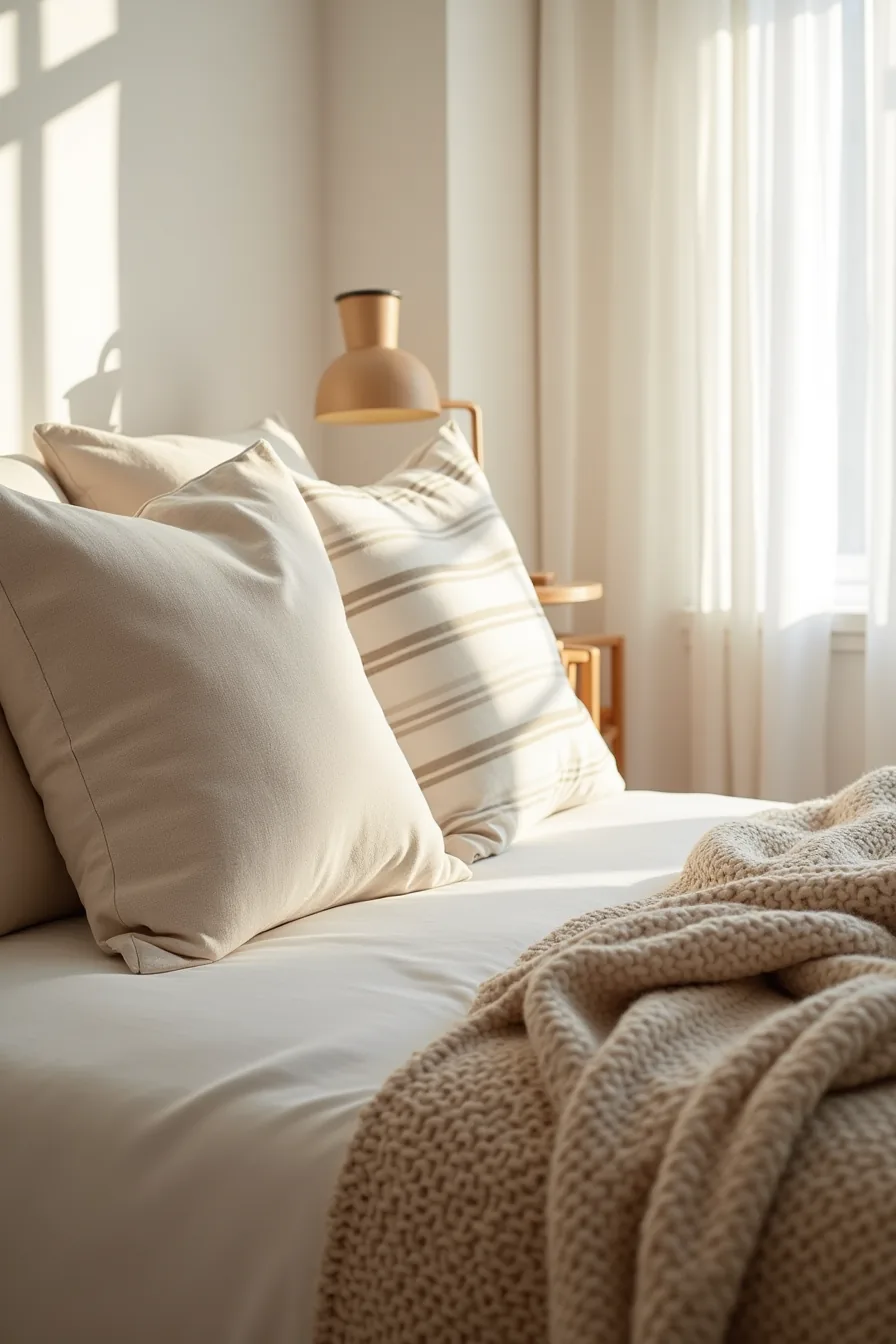
Start with walls and a bed frame in the same warm white or greige family, then build contrast through what you touch rather than what you see. A three-pillow arrangement, a plain linen sham, a linen sham with a subtle stripe, and a smaller wool accent, gives the bed depth without introducing a single loud color. The wool pillow reads as the deliberate focal point, so keep it in a muted oat or heather tone rather than something saturated.
Drape a chunky-knit or woven throw over the bottom bed rail, not the foot of the bed, where it would fight with the duvet. Let a jute rug extend at least 24 inches past the bed’s edge so your guest’s feet land on it when standing up, a 5×8 rug works for a queen, while a full requires a 6×9 to maintain that clearance. Jute feels warm but sheds for the first few weeks; vacuum it weekly and expect minor unraveling at the corners unless you tape the edges.
This setup suits anyone who wants the room to feel quiet and hotel-like, and it takes about 45 minutes to assemble from scratch.
Decor with Breathing Room
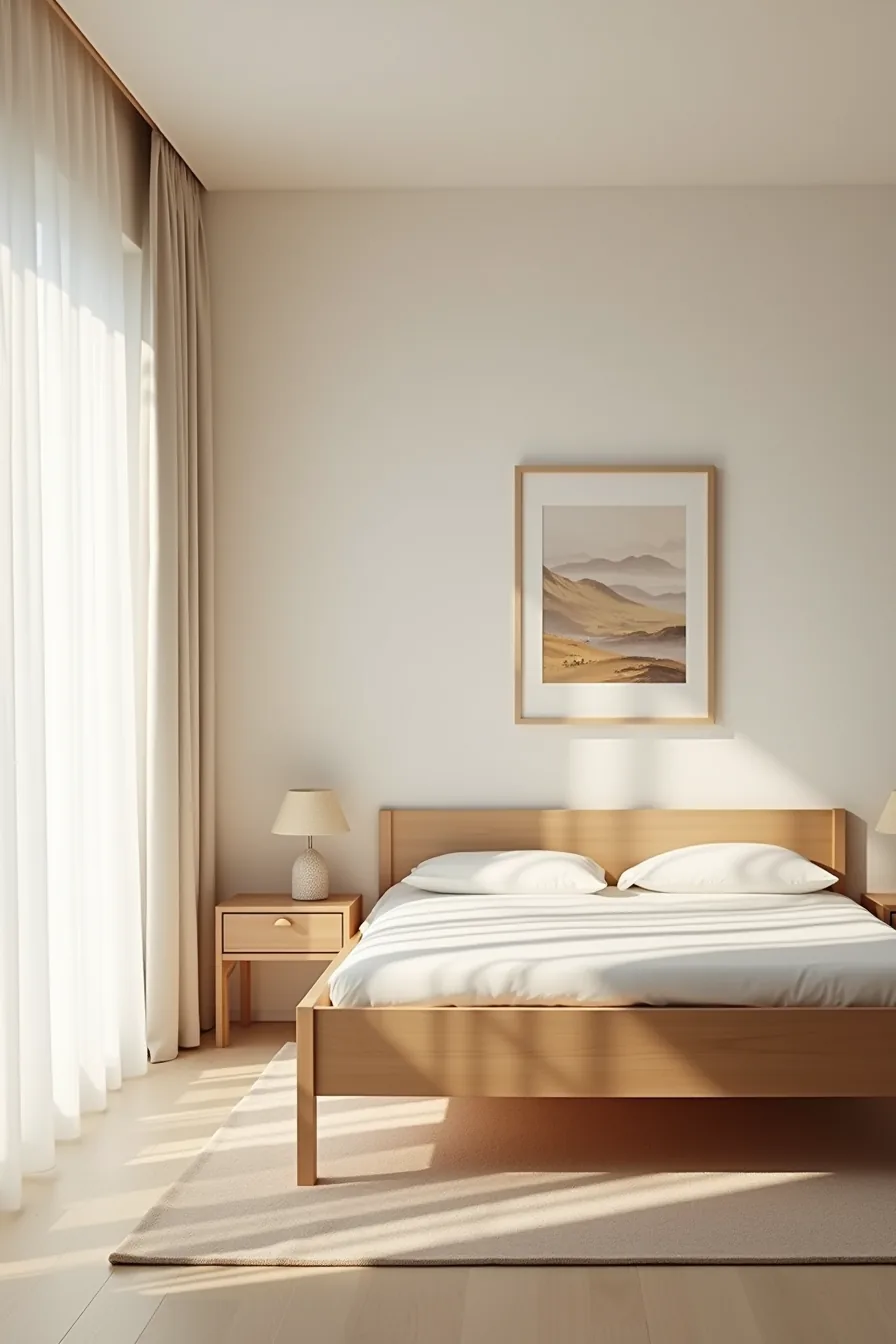
Negative space is the quiet luxury that separates a functional guest room from one that feels like a storage unit with a bed. The wide setup here, a single wooden bed centered on the wall, one wooden nightstand, a framed landscape artwork hung at eye level, and a small area rug, leaves the opposite wall completely clear. That emptiness is intentional: it gives your guest a place to set down an open suitcase, do a mid-trip stretch, or slip past the bed at night without grazing a shin.
The rule of thumb for this look is to keep access paths clear on at least one side of the bed, ideally 24–30 inches from edge to wall. When you place furniture, cluster it on one side of the room and let the other side breathe. Small rooms benefit most here, a compact 5×4 rug under the bed’s front legs and a single 16×20 artwork at eye level read as deliberate rather than bare.
For larger spaces, resist adding a second chair or dresser just to fill the floor; the discipline of the empty wall is what makes the room feel calm for a guest who didn’t pick the decor.
Welcoming Bedside Details
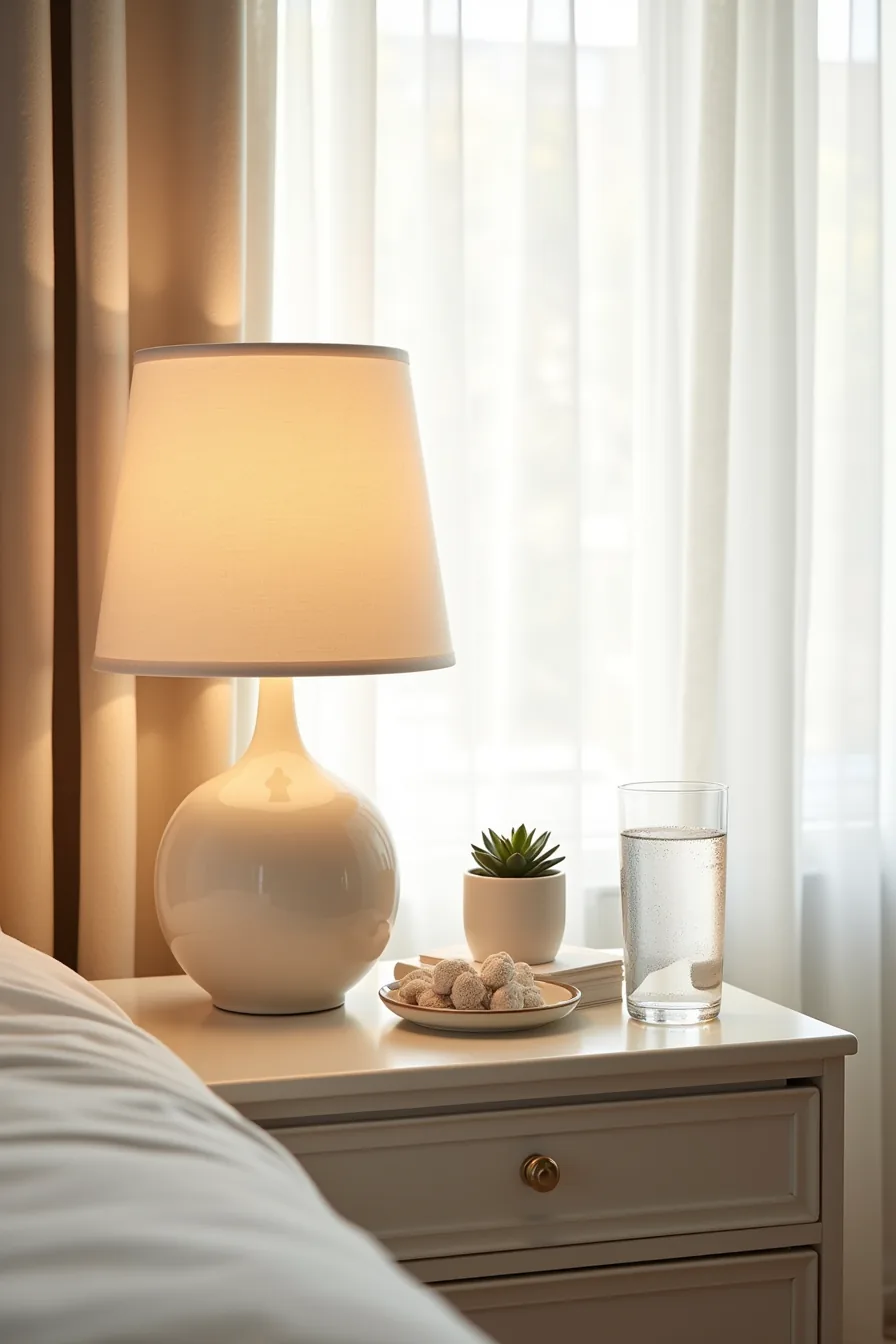
The most effective bedside arrangement reads as an apology for the room’s unfamiliarity: a ceramic water glass already filled, a small dish of mints, a folded guest towel, and a potted succulent beside a reading lamp with a linen shade. Arranged in a gentle arc, these items leave the center of the nightstand clear for a phone, watch, or book, a subtle invitation to make the space their own for the night.
This setup requires zero permanent installation, making it ideal for renters or anyone who swaps decor seasonally. The linen shade softens the light, the towel signals where to wipe hands after a midnight sip, and the succulent needs water only every 2–3 weeks. Skip anything scented, candles or diffusers trigger allergies, and keep the arc within a 10–12 inch radius so the lamp’s pull chain stays reachable.
For a twin bed, use just the glass and lamp; a king can carry all five without crowding the surface.
Seasonal Bedding Refresh
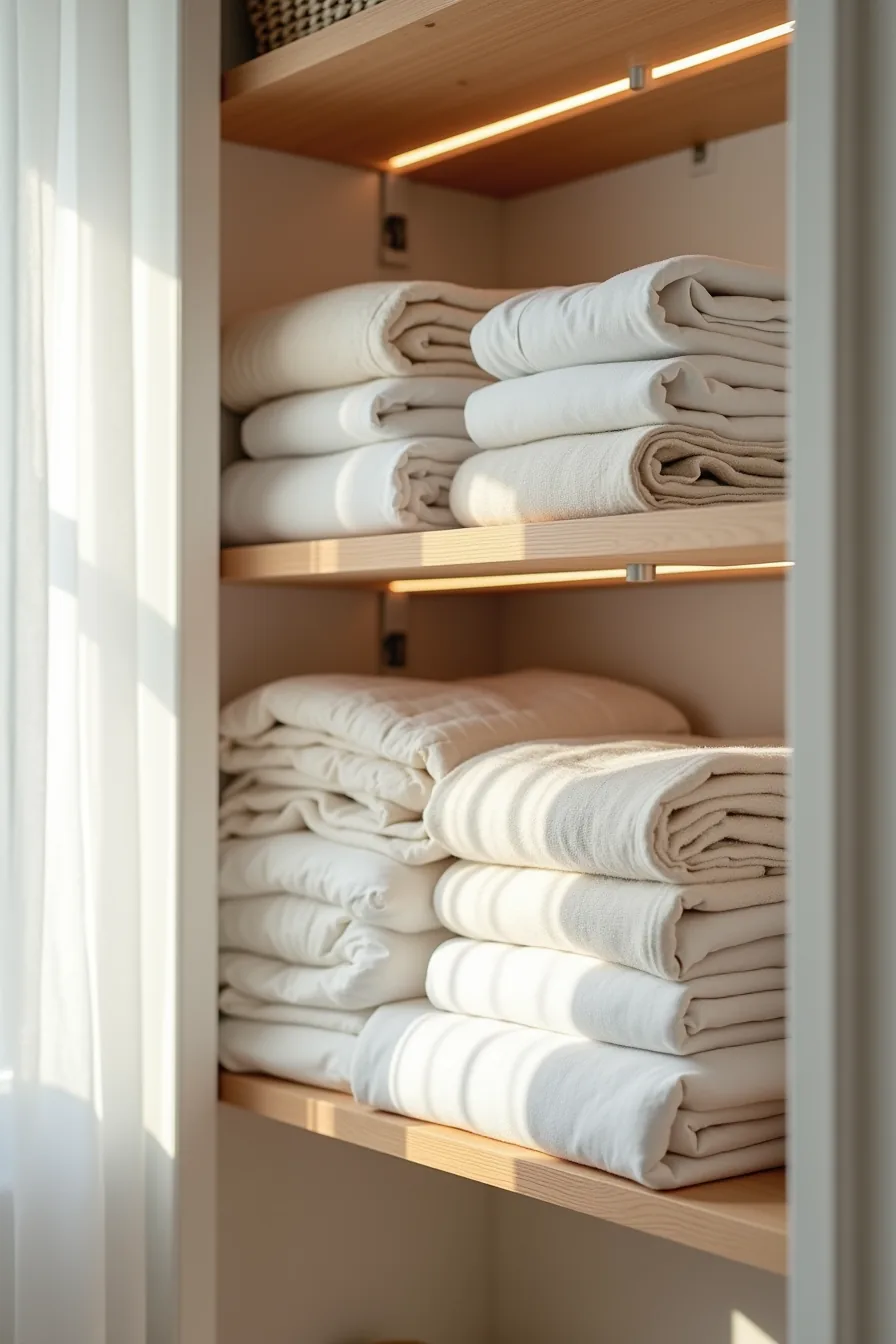
Rotating linens by season transforms guest bedroom decor from a static setup into a responsive one. Your storage system dictates how effortless this swap becomes: dedicate one open shelf per bedding set, lightweight cotton sheets for summer, heavyweight flannel for winter, a quilted coverlet for spring, and a linen duvet cover for transitional months. Stacking each set separately, rather than nesting them inside one another, lets a guest or you grab the correct weight without unfolding everything.
This refresh works best for homes with a dedicated guest room and at least one closet or shelving unit nearby. Expect to spend roughly 15–20 minutes per swap, including washing and airing the outgoing set. Cotton sheets suit warm nights but wrinkle quickly; flannel resists wrinkles but traps heat above 70°F (21°C); linen breathes year-round but requires ironing or a steamer for a crisp look.
Rotate at solstice boundaries, Memorial Day and Labor Day in most climates, and you keep the room functional without buying anything new.
Storage That Stays Hidden
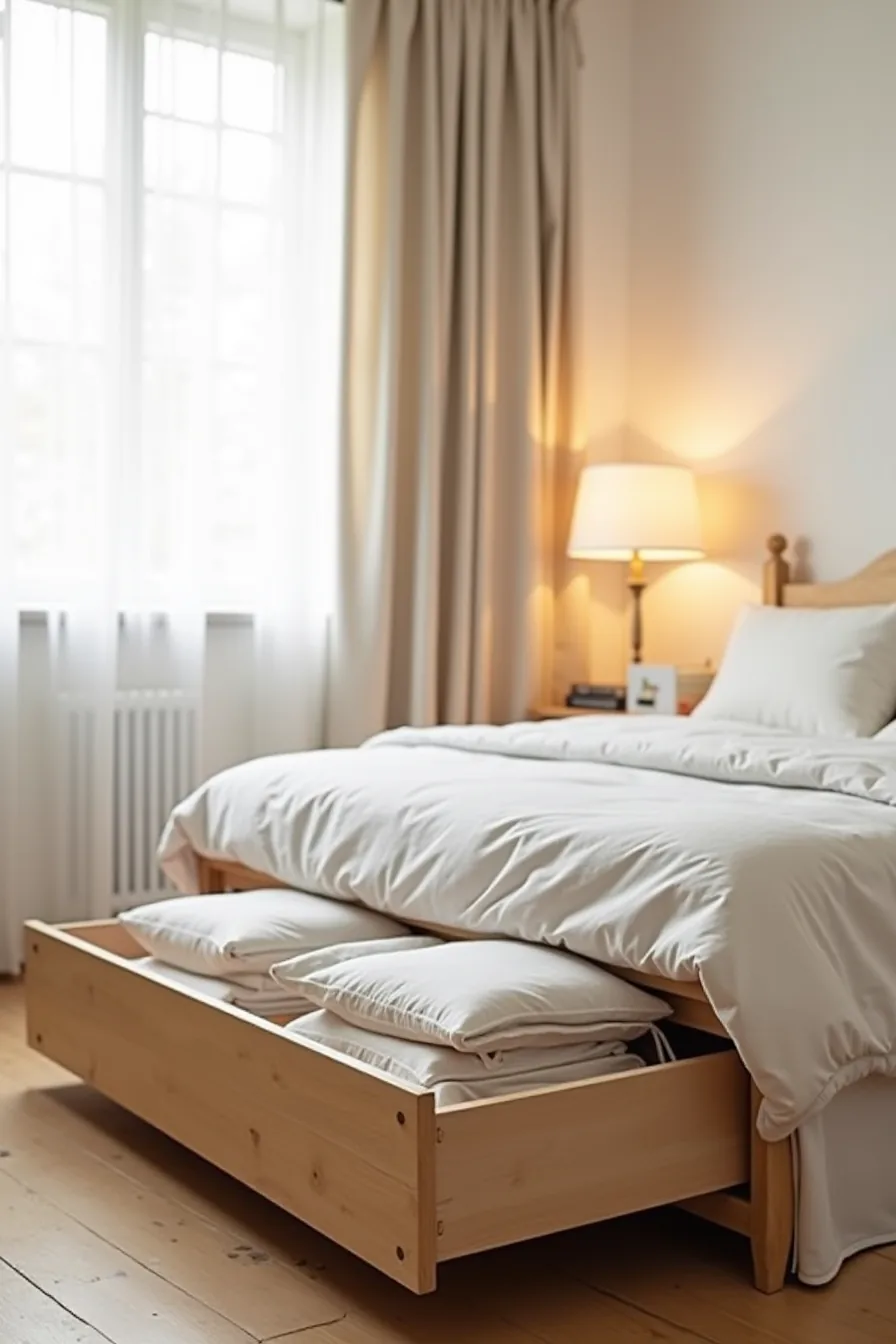
Under-bed drawers give guests a place to unpack without surrendering floor space, and the setup in this room proves the system works. A drawer pulled halfway out reveals folded blankets and spare pillows; a bed skirt hides the drawer edges when closed, so the room reads as calm even mid-stay. Pair that with a low wooden bench at the foot of the bed, its closed compartment swallows shoes, bags, or a guest’s out-of-season coat, and every surface stays clear.
This route suits medium-to-large guest rooms where a bed skirt won’t crowd a low platform frame. Drawers run roughly 18–24 inches deep, so measure the clearance under your bed frame before buying; most standard frames allow 8–12 inches of usable height. The bench’s seat should sit 16–18 inches high, matching typical bed height, and its lid needs a soft-close hinge to avoid slamming at 2 a.m.
Budget roughly $150–$400 for the bench and $50–$150 for two under-bed drawers in solid wood or MDF. Expect to vacuum drawer tracks monthly and wipe the bench seat weekly, fabric upholstery stains faster than wood in high-traffic spots. Renters can skip drilling entirely: both pieces stand alone and move with you.
Lighting for a Calm First Impression
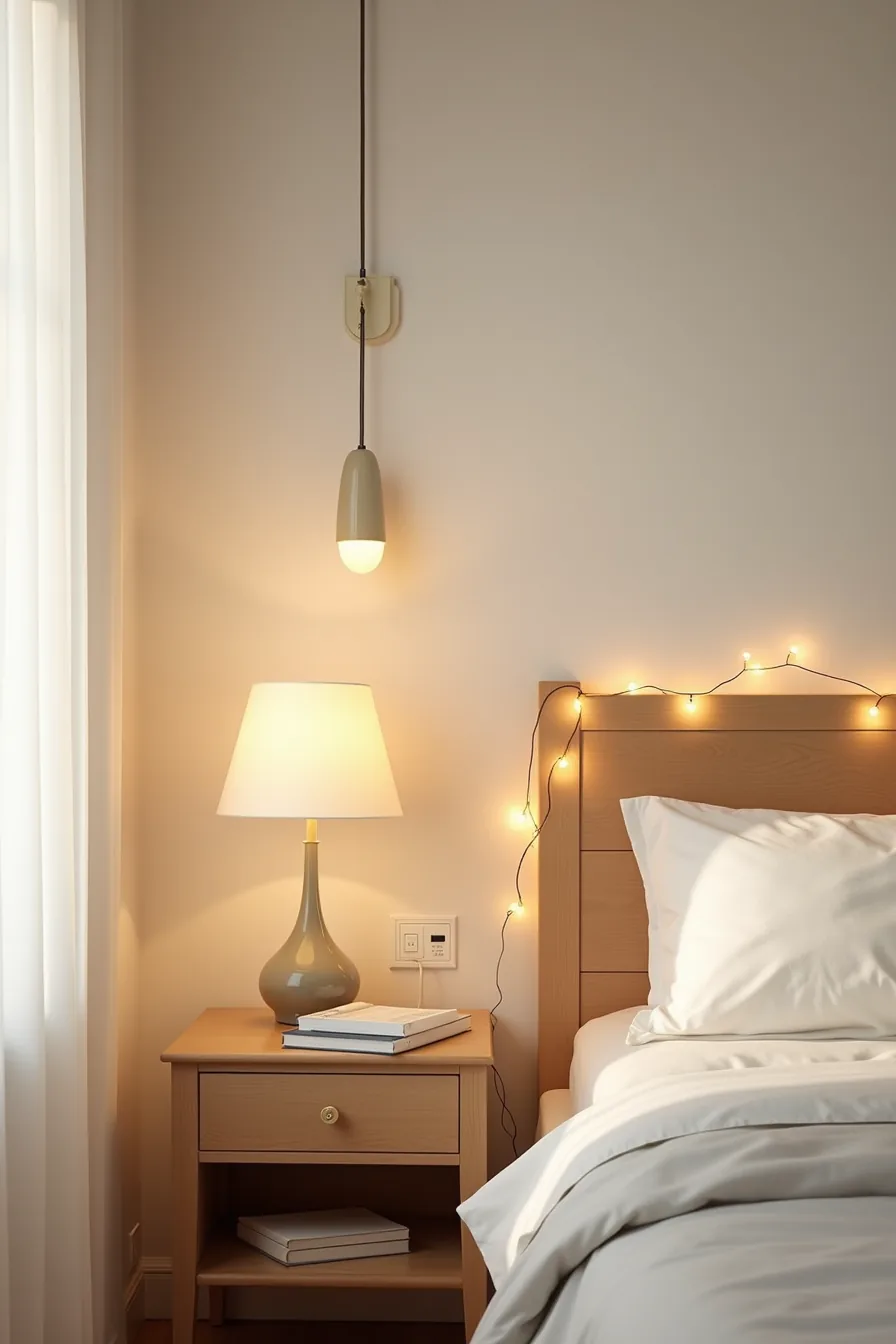
Guest Bedroom Decor for a Calm First Impression hinges on one rule: never force a guest to walk across a dark room to reach a light switch. The setup here solves that with three distinct sources. A warm table lamp with a fabric shade sits at the primary bedside position, the wall-mounted reading sconce hovers above it for focused light, and a string of warm LED lights draped along the headboard adds a soft halo that makes the bed feel like the room’s centerpiece.
The dimmer switch on the wall controls the sconce alone, so a guest can read without lighting the entire room or waking a partner.
Layer intensities, not just fixtures. Aim for three light levels: the sconce for reading (most run 8–12 inches from the wall), the lamp for ambient tasks, and the string lights for a dim, low-energy nightlight. Dimmer switches cost $15–$40 and take roughly 30 minutes to install if you’re comfortable with basic wiring; renters can skip that and use a plug-in dimmer instead.
A bulb wattage between 2700K and 3000K reads warm rather than clinical, brighter than a candle, softer than overhead surgical glare. Budget $60–$200 for the lamp, $50–$150 for the sconce, and $10–$30 for the LED string. The only maintenance is wiping dust from the fabric shade monthly, since it collects more than you’d expect.
What to Do First
Walk into your guest room and look at it as if you’re a visitor with a heavy suitcase. Is there a clear path from the door to the bed? Can you open the wardrobe without shifting furniture?
If not, that’s your first fix, and it costs nothing.
Then, strip the bed down to the mattress and assess what you see. A neutral duvet cover in cotton or linen will anchor any future updates, and it’s the single highest-return piece you’ll buy.
Your next step: measure the room, photograph it from the door, and set a budget of $200-500 for a full refresh before purchasing anything else.
Frequently Asked Questions
What’s the difference between guest bedroom decor and everyday bedroom decor?
Guest bedroom decor prioritizes universal comfort, intuitive storage, and easy maintenance over personal expression. You design for unfamiliar visitors, not yourself, so neutral palettes, clear surfaces, and durable materials matter more than sentimental pieces.
How do I make a small guest room feel spacious without looking empty?
Use a low-profile bed frame, mount wall sconces instead of nightstands, and choose one oversized mirror. Keep furniture to three pieces maximum, bed, chair, dresser, and let negative space breathe. Avoid bulky headboards and layered rugs.
Should guest bedroom decor match the rest of my home’s style?
Match the architectural bones, flooring, trim, wall color, but allow the guest room to feel calmer and more neutral. A cohesive transition works best: similar finishes, simpler patterns. Don’t replicate your primary bedroom’s personality; aim for a quiet complement.
What’s the minimum investment needed to create functional guest bedroom decor?
Plan for $300–$600 total: a quality mattress topper, four pillows, bedding set, blackout curtains, and a bedside lamp. Skip decorative extras initially. Prioritize sleep quality and light control, those deliver the most guest satisfaction per dollar spent.