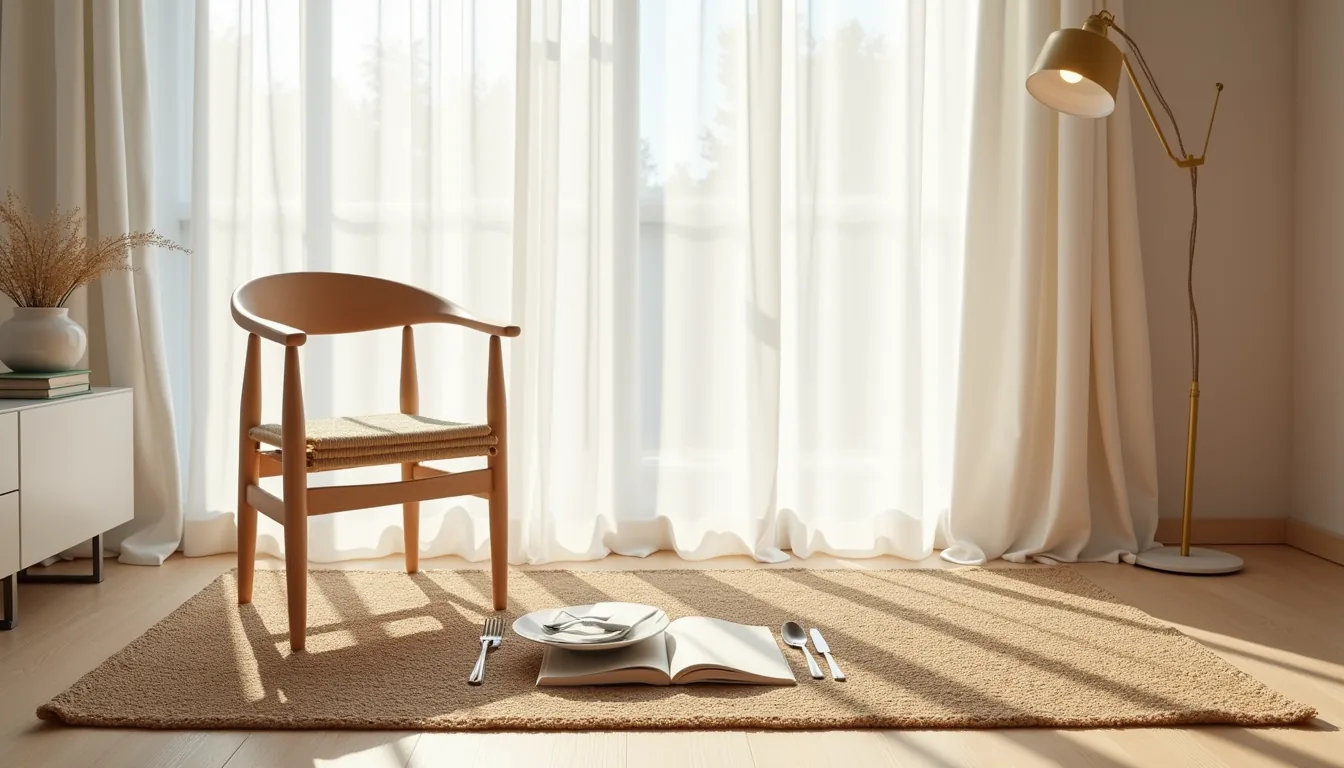

A jute rug is the rare flooring choice that delivers both natural texture and serious durability, but its success in your home depends entirely on where you place it, how you size it, and what you expect it to withstand. The fiber’s coarse, woven structure brings warmth to bare floors, yet it reacts differently to high-traffic hallways, sunlit living rooms, and dining areas with chairs that scrape. Before you commit, you need to match the weave density and backing to your specific space, or you’ll end up with shedding, staining, or a rug that slides underfoot.
The following six approaches show you how to position, protect, and maintain jute for every room type and budget.
Key takeaways
Jute rugs anchor dining areas best when they extend at least 24 inches beyond the table edge on all sides, allowing chairs to stay on the rug when pulled out. Layering works best with a flatweave jute base under a smaller patterned wool or cotton rug, which protects the jute from heavy foot traffic and adds visual contrast. For small spaces, choose a round jute rug that leaves 12–18 inches of bare floor around the perimeter; this visually expands the room without overwhelming it. Budget wisely by opting for a low-cost braided jute rug in a low-traffic bedroom, but invest in a higher-density, stain-treated flatweave for dining rooms where spills and chair movement are inevitable.
Jute Under Dining Table: Anchoring Your Eating Space
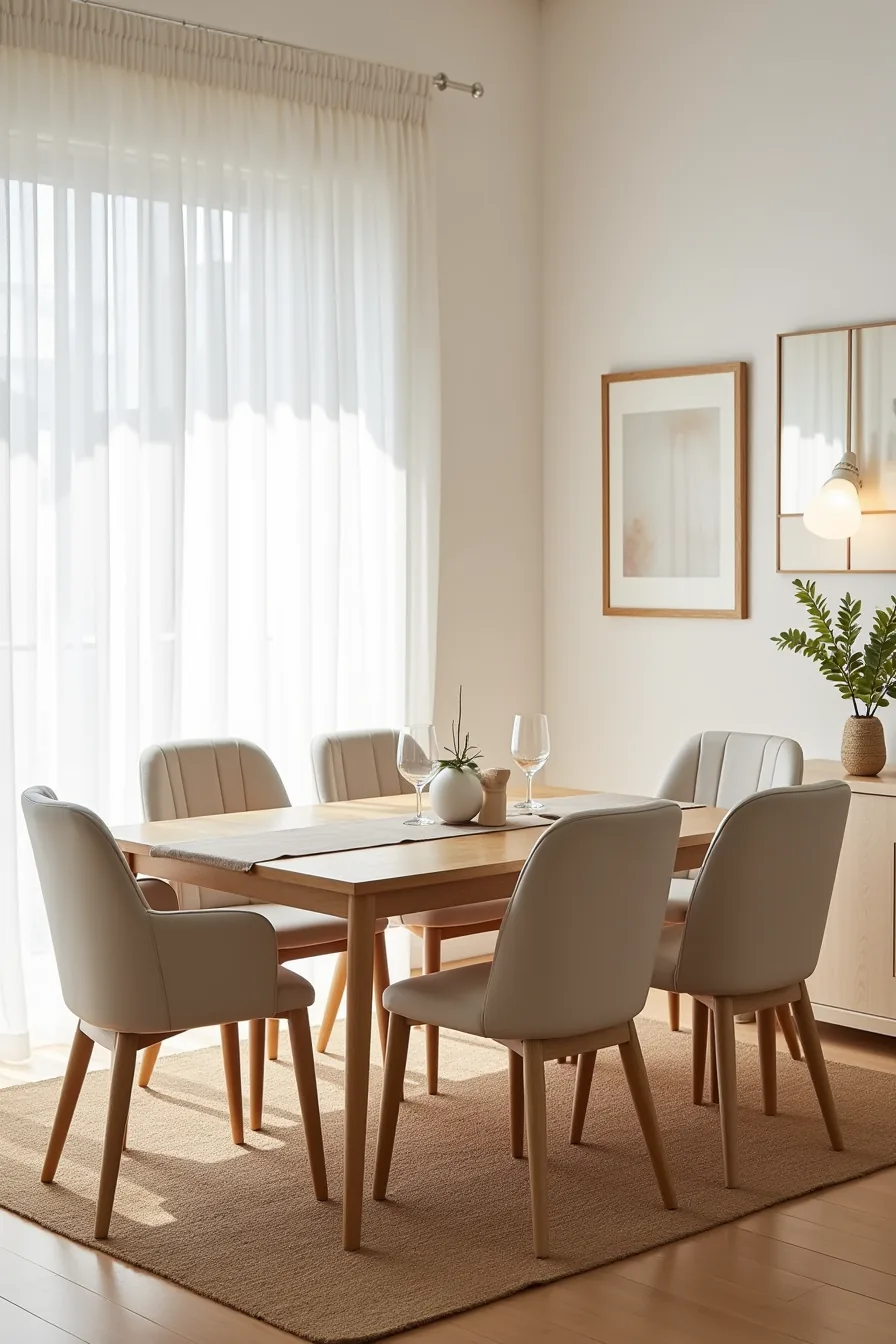
A jute under dining table setup works best when you size the rug to extend at least 24 inches beyond the table’s edge on every side, giving chairs room to slide out without catching the border. This rectangular table with four upholstered chairs sits comfortably on a natural jute weave, the one chair rolled back demonstrating the real-world clearance you need to reproduce the look at home. The table runner and glassware on the surface anchor the visual weight of the fibrous texture below.
This placement suits casual breakfast nooks and relaxed family dining rather than formal entertaining, because jute’s coarse surface grips chair legs firmly, rolling an upholstered chair across it requires a firm push. For everyday use, expect visible wear along the high-traffic perimeter within 12-18 months; rotating the rug twice yearly extends its life considerably. If you host dinner parties with frequent seating changes, choose a flat-weave jute blend with synthetic fibers for better resilience under casters and chair legs.
Layered Rug Look: Combining Jute with Pattern and Texture
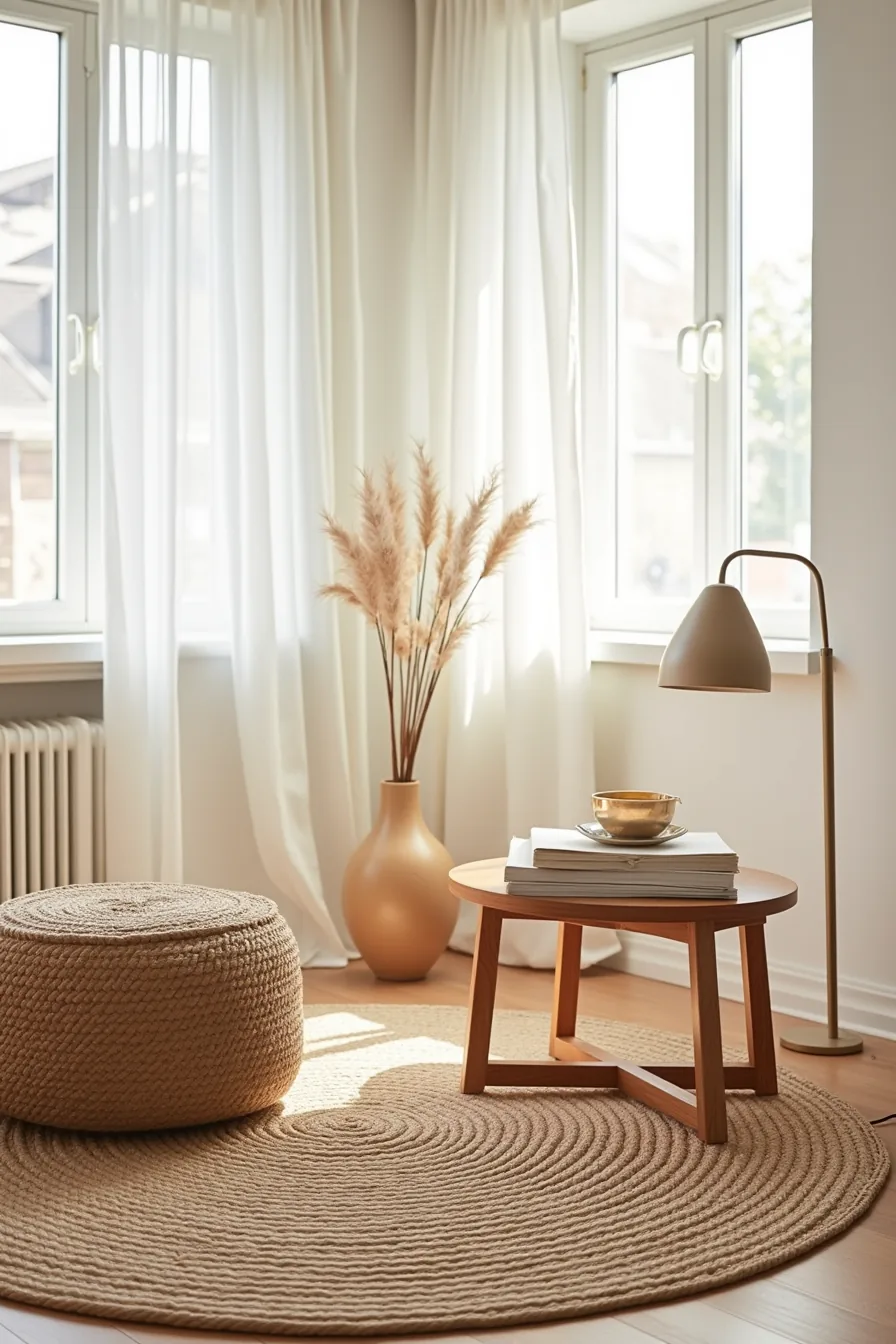
The layered rug look solves two problems at once: it grounds a space with natural texture while letting you introduce color, pattern, or softness through a smaller top layer. Layer a 5×7 patterned rug over an 8×10 jute base, offset toward one side so a full border of the jute, roughly 12–18 inches wide, remains visible on two edges. This visible frame is what creates the depth; without it, the layering reads as a mistake rather than an intentional design choice.
The setup pictured works because the wooden side table and woven pouf sit partly on the jute and partly on the patterned layer, visually stitching the two rugs together. A flat-weave jute (as opposed to a thick, braided one) is critical here, pile heights above 1/4 inch create a trip hazard where the rugs meet, and they also cause the top rug to buckle. This approach suits medium-sized living rooms, in-between renters who can’t change flooring, and anyone who wants to pivot their palette seasonally by swapping only the top rug, which is far cheaper than replacing the whole installation.
Natural Neutral Palette: Using Jute as Your Room’s Foundation
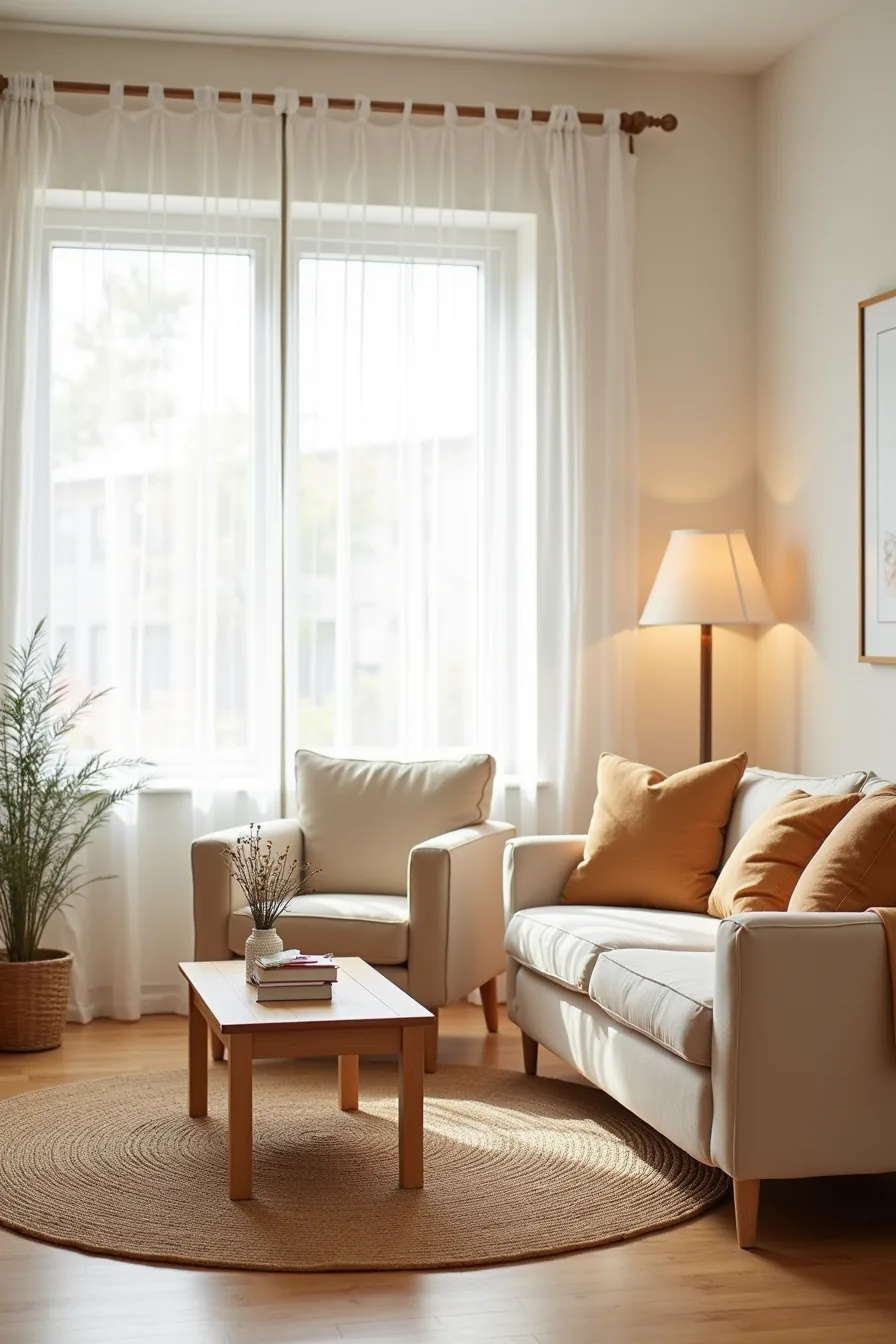
Jute’s un-dyed beige-and-tan striation functions as a silent anchor because it contains enough tonal variation to read as intentional texture rather than a flat expanse of sand. On that rug, place a cream sofa and a beige linen armchair; their solid upholstery lets the jute’s woven variations carry the visual interest across the full 8×10 footprint. A natural wood coffee table completes the triangle, and its grain echoes the rug’s organic fibers without replicating them.
The warm-toned throw pillows on the furniture introduce the only saturated color in the room, which works because jute’s muted base allows a single accent hue to feel deliberate rather than scattered. Keep your palette to whites, beiges, wood tones, and one chosen warm accent; adding a second bold color breaks the cohesive spell. This natural neutral palette suits north-facing rooms where sunlight, and therefore the rug’s natural coloration, is limited, so you aren’t fighting against low light with bright, saturated floor coverings.
Jute in Small Spaces: Proportion and Placement Strategies
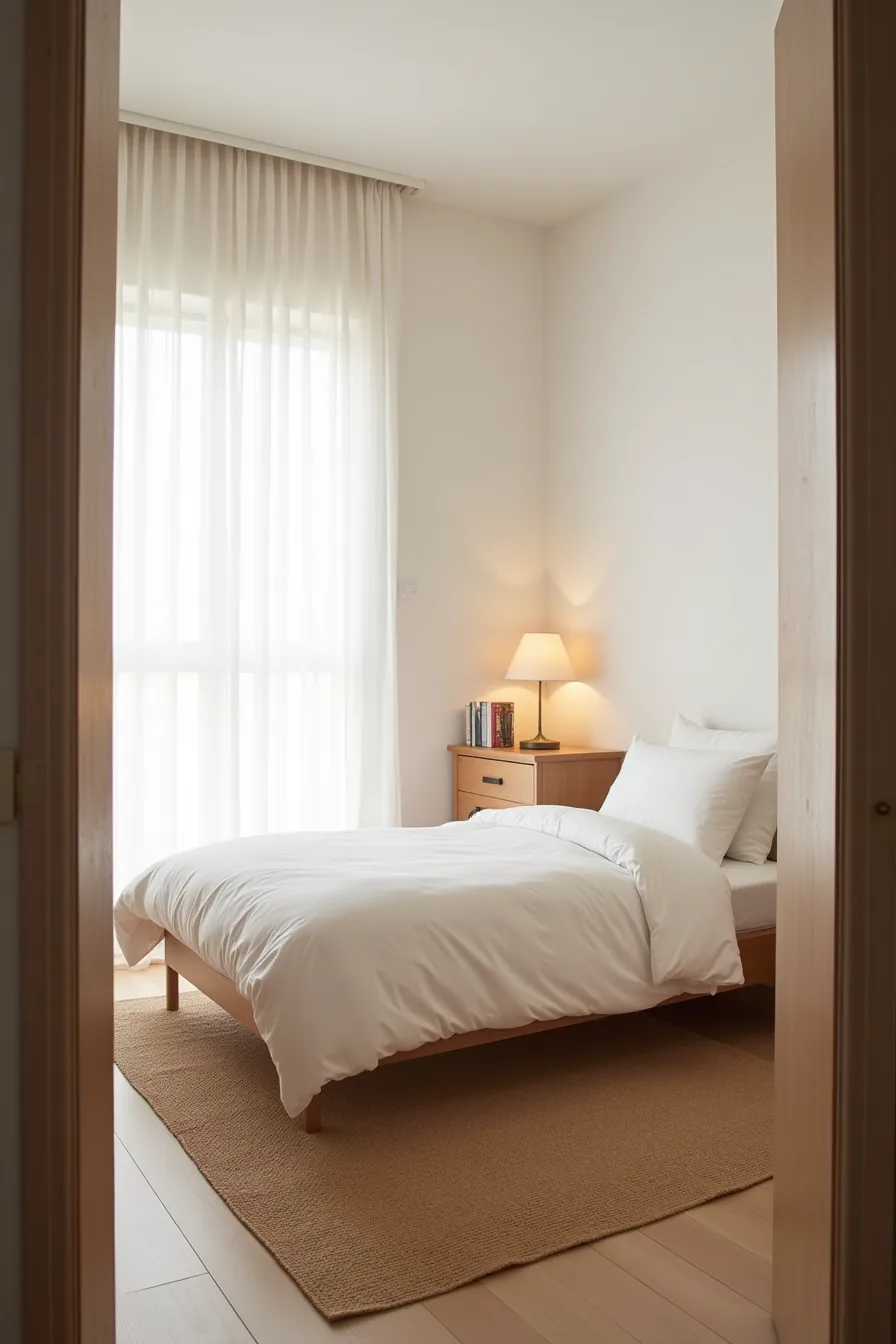
In an apartment, the common mistake is choosing a rug that barely peeks out from under the furniture, which visually shrinks the floor area. In a compact bedroom, the bed is the largest object, so your jute rug should extend at least 2 to 3 feet beyond the bed’s sides to define a clear sleeping zone without wall-to-wall coverage. The twin bed with crisp white bedding sits centered on the rug, while the nightstand and compact dresser flank the bed, keeping the furniture’s front legs off the rug preserves the floor’s visible perimeter, which makes the room read larger.
Because jute’s looped weave absorbs ambient light rather than reflecting it, you must balance its matte presence with pale walls and the white bedding to prevent the corner from feeling heavy. For a small room, choose a rug that leaves at least 6 to 12 inches of bare floor between its edge and the baseboards; this gap acts as a visual buffer that stops the space from feeling boxed-in. This placement strategy works best for narrow, rectangular rooms where a single large rug can unify an awkward layout, but avoid it in high-traffic doorways where the fiber’s rough texture will wear prematurely.
Summer Room Refreshes: Quick Swaps and Seasonal Updates
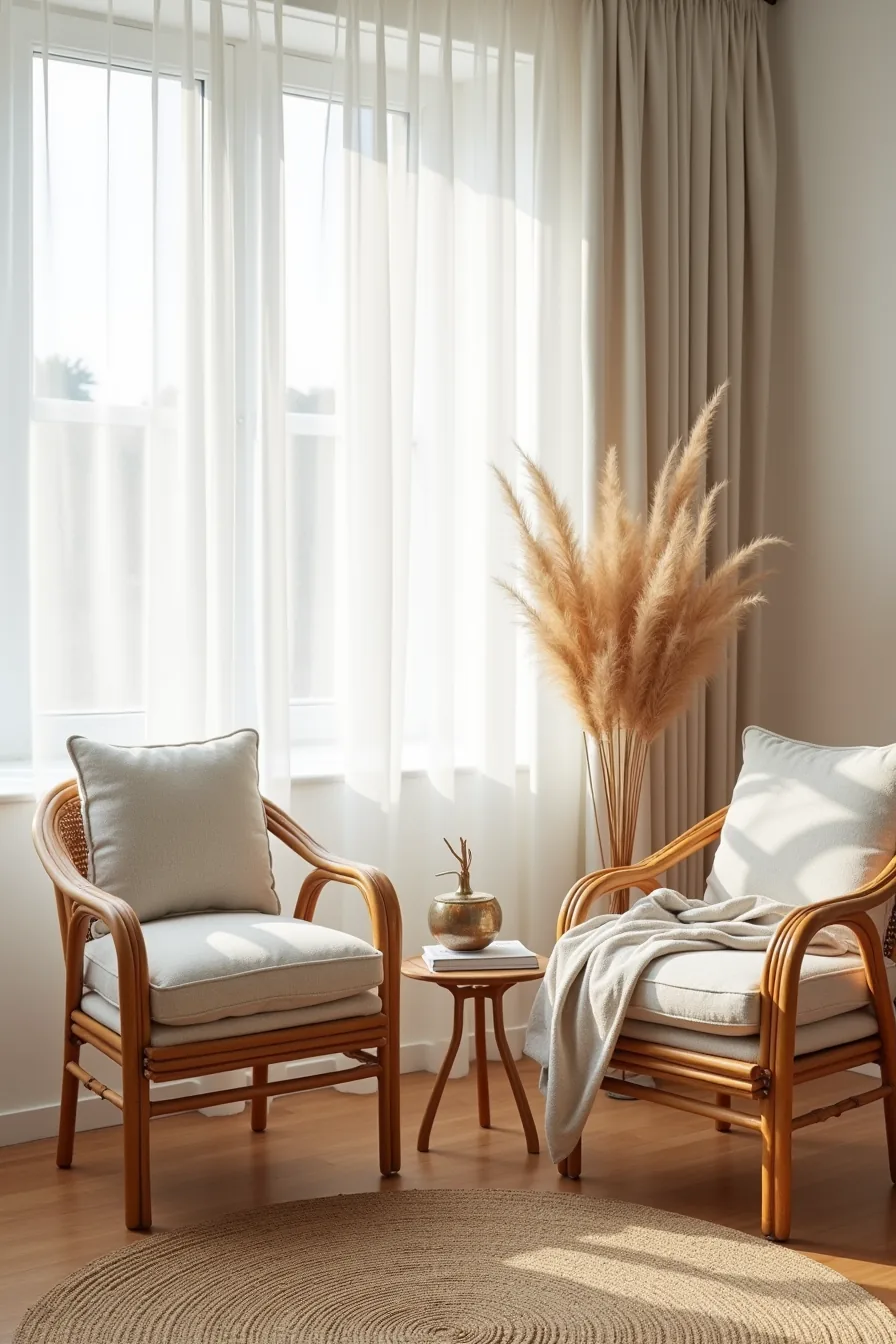
Jute rugs are the architectural backbone of a summer refresh because they set a neutral base that makes seasonal swaps feel deliberate rather than haphazard. A jute rug, rattan armchairs, and a rolled linen throw over one chair create a lightweight furniture arrangement you can shift on a weekend; each piece stays under 40 pounds, so moving them to chase afternoon light or open floor space is realistic. The natural fiber’s warm, tan tone pairs with a glass vase of dried grasses on the low side table, and that prop is easy to swap for fresh blooms or a bowl of lemons as the season evolves, keeping the cost of the update under $30.
This route works best for renters avoiding permanent décor changes, the rug rolls up and moves if you do. It also suits medium living rooms where you want seasonal variety without re-painting or swapping upholstery. Pair it with airy fabrics like lightweight cotton or slub linen; avoid velvets or wools that fight the fibrous texture visually.
For Jute Rug Ideas for Easy Summer Room Refreshes, pair it with a ceiling fan or open windows, as jute catches dust and needs airflow to stay fresh during hot months.
Maintenance, Durability, and Long-Term Investment Decisions
A jute rug rewards routine care, but it punishes neglect. Vacuum it weekly on a bare-floor setting, never a beater bar, which frays the fibers, and attend to spills within minutes; blot, don’t rub, because moisture works its way between the twisted strands and weakens the weave from the inside out.
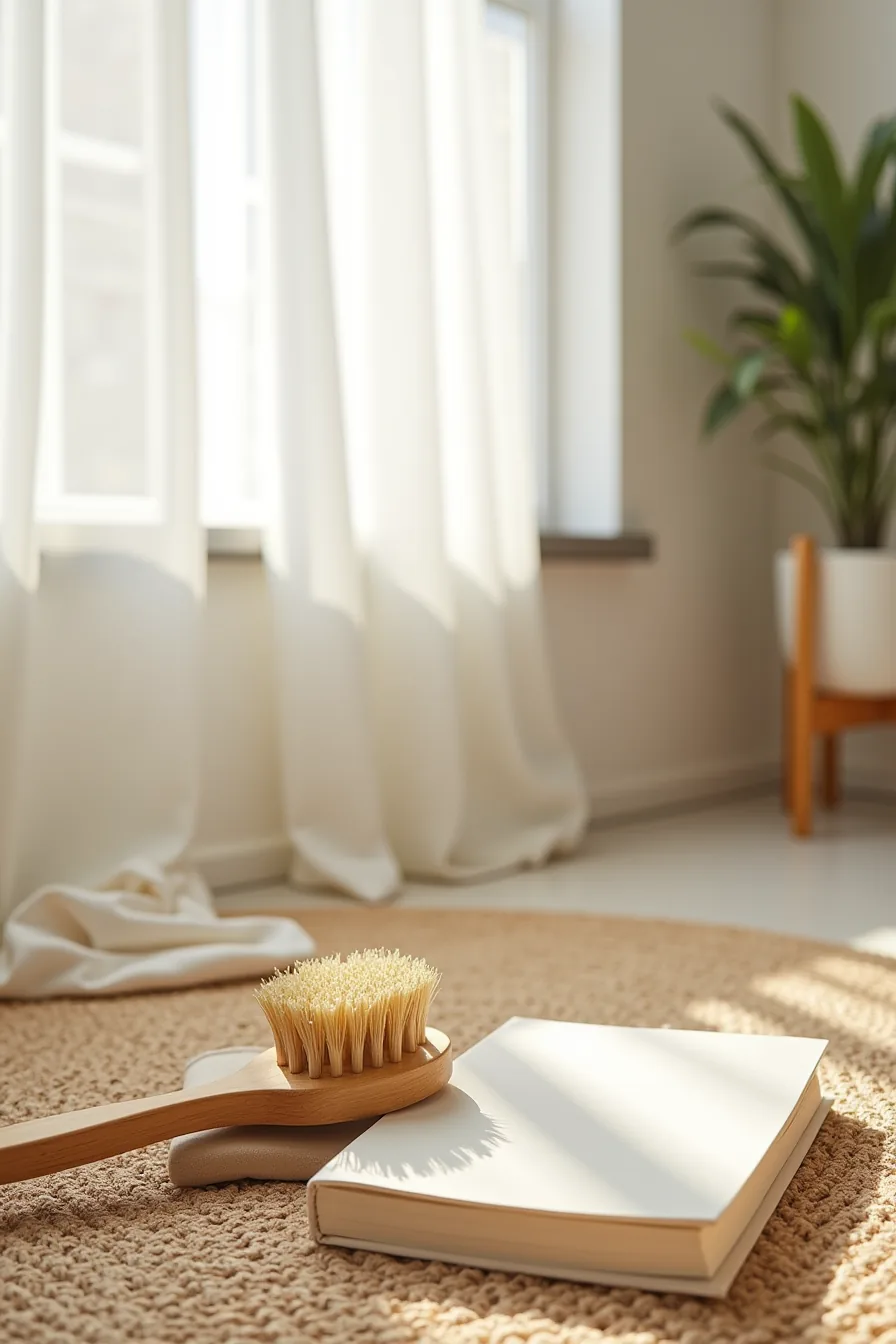
When you notice a soft brush and a small cloth resting on the surface alongside visible wear marks, that’s the signal to switch from cleaning to assessing. Minor fraying at the edges is repairable with carpet tape and a needle and thread, but if the backing splits or fibers shed persistently after two years, replacement beats repair, the cost of re-binding a large piece often approaches half the price of a new rug.
Budget jute rugs typically run $80–$150 for a 5×8, and they last two to three years with good care. Mid-range options in the $200–$350 range use tighter weaves and survive five to seven years, while premium hand-knotted pieces at $400–$700 for the same size can last a decade or more, making them the smarter long-term investment for high-traffic living rooms. For a 5×8 jute rug in a dining area with regular chair movement, skip the budget tier entirely, the constant friction will break those loose, low-cost weaves within a year.
Where to Start
Start by measuring your room and mapping your traffic paths, this single step eliminates half your options before you browse. Then decide your maintenance ceiling: high-traffic households should prioritize flatweave sisal or poly-blend jute, while low-traffic spaces can handle looser weaves.
Commit to one room, not the whole house. A 5×7 or 6×9 jute rug under a coffee table or dining set gives you the texture and warmth without committing to wall-to-wall maintenance. Vacuum weekly without a beater bar, blot spills immediately, and rotate the rug every six months to equalize wear.
Your next step: measure your primary living area, sketch your furniture layout, and order a swatch from at least two different weaves before committing to a full rug.
Frequently Asked Questions
Can you put a jute rug under a dining table if you have rolling chairs?
Yes, but only if you place a clear plastic chair mat over the jute. Rolling casters will fray jute fibers quickly. Skip jute entirely if you need constant chair movement.
How do you layer a jute rug with another rug without it sliding?
Use a rug gripper pad cut to the size of the bottom jute layer. Place the top rug over it, then add a second thin pad between the two rugs. This sandwich method prevents both shifting.
What size jute rug do you need for a small bedroom or studio apartment?
Choose a 5×7 or 6×9 jute rug for a small bedroom. Ensure at least 18 inches of exposed floor on all sides. For a studio, use a 4×6 under a coffee area, not under the bed.
How often do you need to clean a jute rug, and what cleaning method is safe?
Vacuum weekly with a suction-only head, no beater bar. Spot-clean spills immediately with a dry cloth and mild soap. Deep-clean with a dry powder cleaner every 6–12 months; never steam or wet-shampoo jute.