Kitchen window curtains are less about fabric and more about function: the right treatment controls light, frames the view, and manages moisture, while the wrong one traps grease and blocks your reach to the sink. That trade-off explains why no single style fits every kitchen. You need to weigh steam exposure, window size, and how close the curtain hangs to the stove before you pick a hem, a heading, and a material.
The six approaches below break down exactly what to measure, what to wash, and what to spend.
Key takeaways
Café curtains suit sink windows under 36 inches wide, covering only the lower half to keep privacy while preserving daylight. Linen panels filter morning glare effectively, but expect gentle wrinkling unless you choose a linen-cotton blend at 10-12 ounces per square yard. Roman shades outperform tiered curtains in tight corners, requiring just 4-6 inches of clearance above the frame for smooth operation. Custom motorized shades cost 3-5 times more than standard curtains, yet they eliminate cord hazards and suit hard-to-reach windows above deep counters.
Café Curtains: Privacy Without Blocking Light
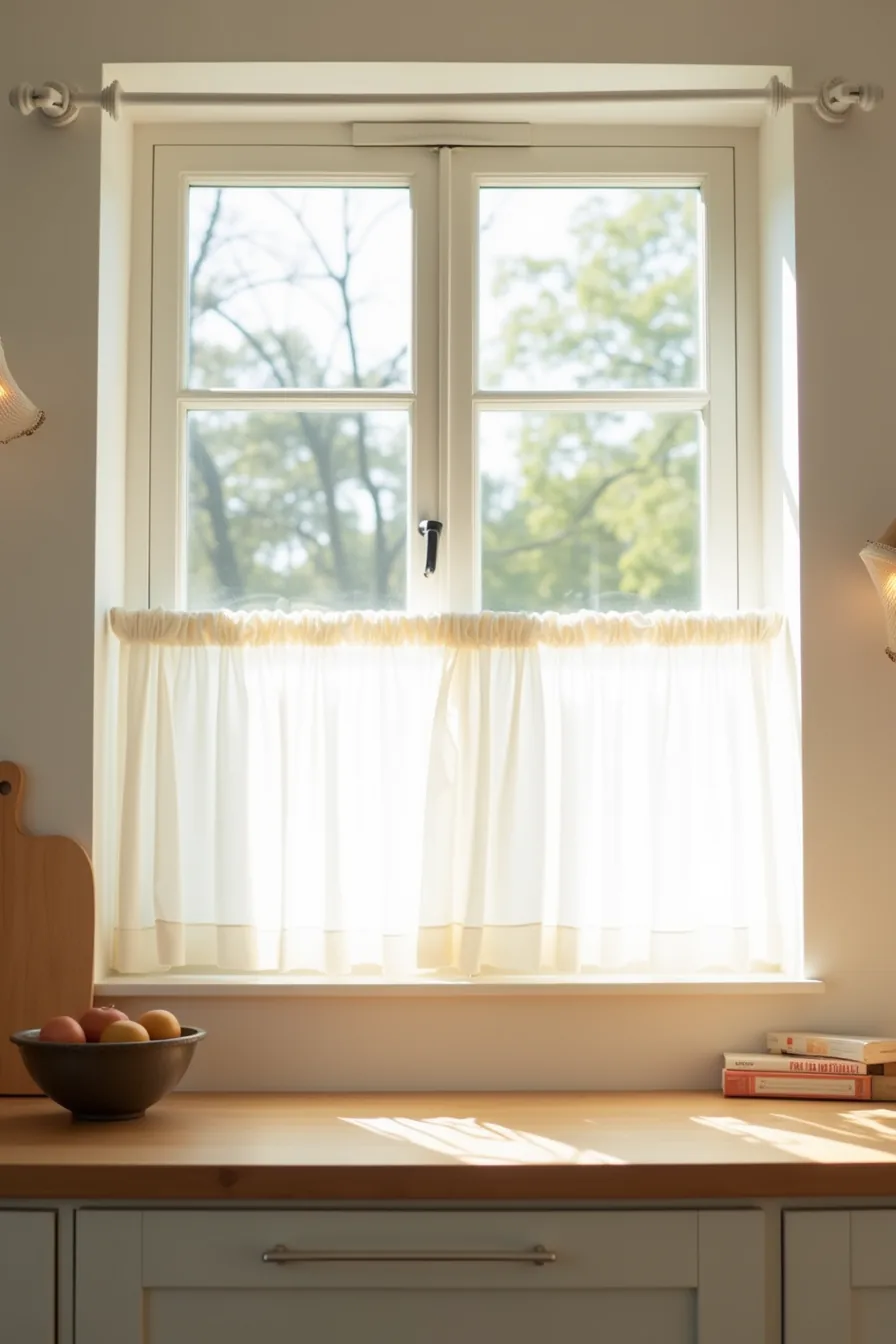
Café curtains hang from a rod mounted at the window’s midpoint, covering only the lower half of the glass. This half-window coverage is the definitive kitchen solution when you want passersby kept out without sacrificing daylight or your view of the garden. The upper panes stay completely clear, which also visually raises the ceiling line, a trick that pays off most in galley kitchens or any space under 10 feet wide.
In your setup, a white rod sits flush against the frame at the halfway point, with the café curtain charm coming from simple gathered panels in a light, opaque cotton. The cutting board and mixing bowl on the countertop below remain fully visible, reinforcing that this style prioritizes workflow over window dressing. Measure the window width and divide by two for each panel; typical café curtains run 24–36 inches in length, so order or sew to your exact midpoint.
Use a tension rod if you can’t drill, but a fixed rod with finials holds heavier fabric without sagging. For maintenance, cotton café curtains handle monthly machine washing at warm temperatures, though expect slight shrinkage, buy 2–3 inches longer than needed.
Linen Fabric for Soft, Diffused Mornings
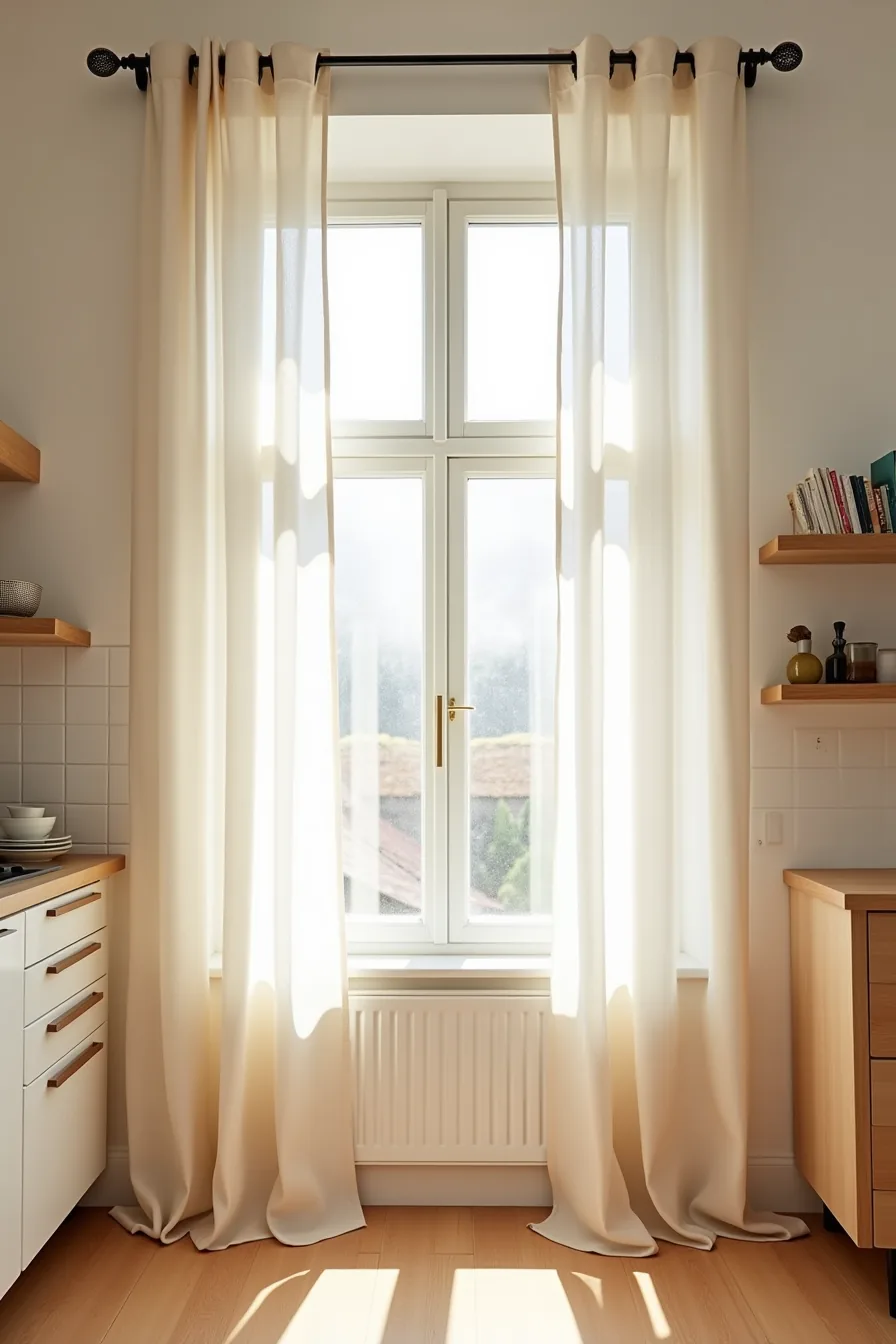
Linen transforms a bright east-facing window into a gentle light source. The natural weave scatters sunlight rather than blocking it, casting soft shadows across your tile backsplash instead of harsh glare across your countertops. For those early hours when you’re brewing coffee, this diffusion keeps the room bright without the squint.
You’ll pay for that effect: quality linen kitchen window curtains typically run $30–$80 per panel. The trade-off is breathability, linen resists mildew better than cotton in humid kitchens, but it wrinkles easily, so embrace the rumpled hang rather than fighting it with an iron. For the floor-to-sill panels in this setup, mount the rod 4–6 inches above the frame and let the fabric puddle slightly if your sill depth allows.
A floating shelf beside the window keeps the visual weight balanced; skip it in kitchens narrower than 8 feet where the panels already add bulk. Machine wash cold on gentle, then hang-dry to avoid excessive shrinkage. Linen outperforms patterned fabric here because pattern competes with the tile texture; solid linen lets both surfaces breathe.
Patterned Fabrics: Adding Visual Interest Above the Sink
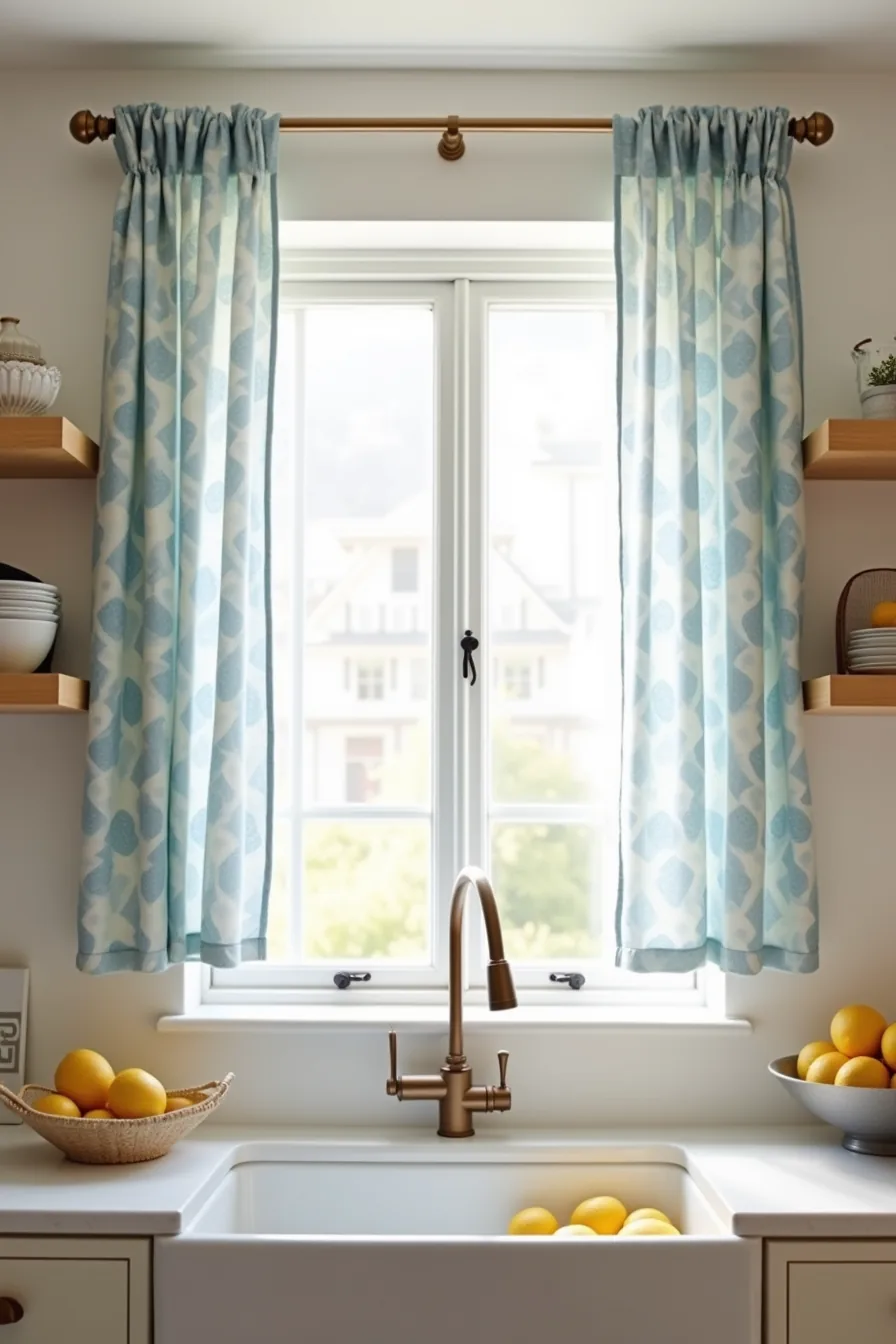
Patterned curtains turn the sink zone from a purely functional work area into a focal point. The blue-and-white geometric print here works because the scale of the motif matches the window’s proportions: larger repeats suit windows 36 inches or wider, while tight, small-scale prints get lost on anything above 30 inches. The pattern also draws the eye upward, balancing the visual weight of the farmhouse sink basin filled with fresh lemons below.
Choose patterns with a 60/40 ratio of background to print, enough contrast to read from across the room, but not so busy that it competes with the white dishware and glassware stacked on the flanking wooden shelving. Cotton-polyester blends are your practical choice for this position; they dry faster than pure cotton and withstand steam and splashes from the sink without sagging. Coordinate the dominant color in the pattern with your cabinetry or wall tone, but let the secondary shade introduce an accent you haven’t used elsewhere.
Wash these every 3–4 weeks since food splatter lands higher than you expect. If your kitchen lacks the open shelving a pattern demands, install a tension rod inside the frame and use a single panel, the print carries the decor on its own.
Roman Shades as a Compact Alternative
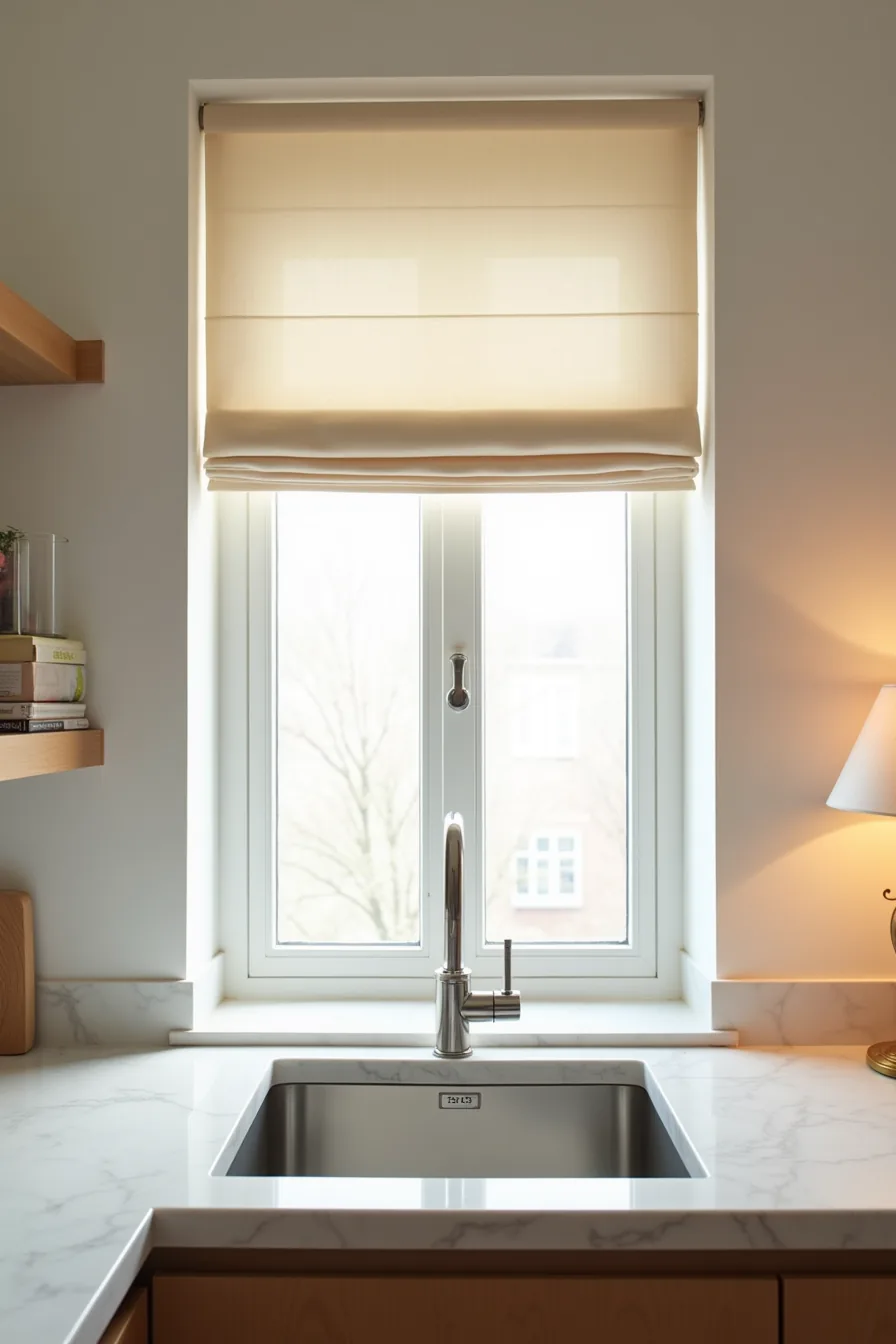
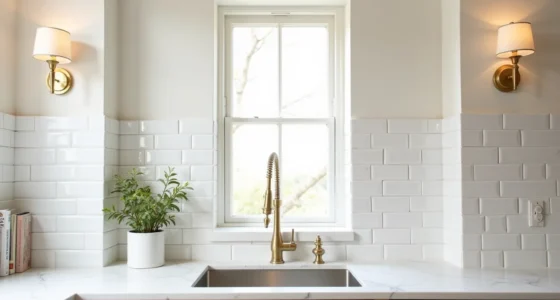
A roman shade is the most space-efficient window treatment you can install in a kitchen. Unlike a curtain that needs rod overhang on both sides, a shade mounts directly on the frame or inside the reveal, so you reclaim about 12 to 18 inches of usable wall space per window. When paired with a narrow stainless steel sink and a marble countertop, the shade’s clean horizontal folds echo the counter line rather than compete with it, the neutral fabric does the visual work without adding clutter.
This setup favors small kitchens where swing clearance matters. A raised shade sitting three-quarters up leaves the sill fully exposed for ventilation and natural light, while the stacked folds stay compact against the header. Tension-rod versions for renters eliminate drilling entirely, though you’ll trade some light-blocking ability for the convenience, expect a small gap at the top if you skip mounting brackets.
Cordless lift mechanisms cost 20 to 40 percent more than manual pull cords but remove the dangling-loop hazard near a stove. For upkeep, wipe the fabric monthly with a dry microfiber cloth; steam and grease accumulate in the folds faster than on flat panels, so plan a professional cleaning every 12 to 18 months.
Layering Sheer and Opaque Panels
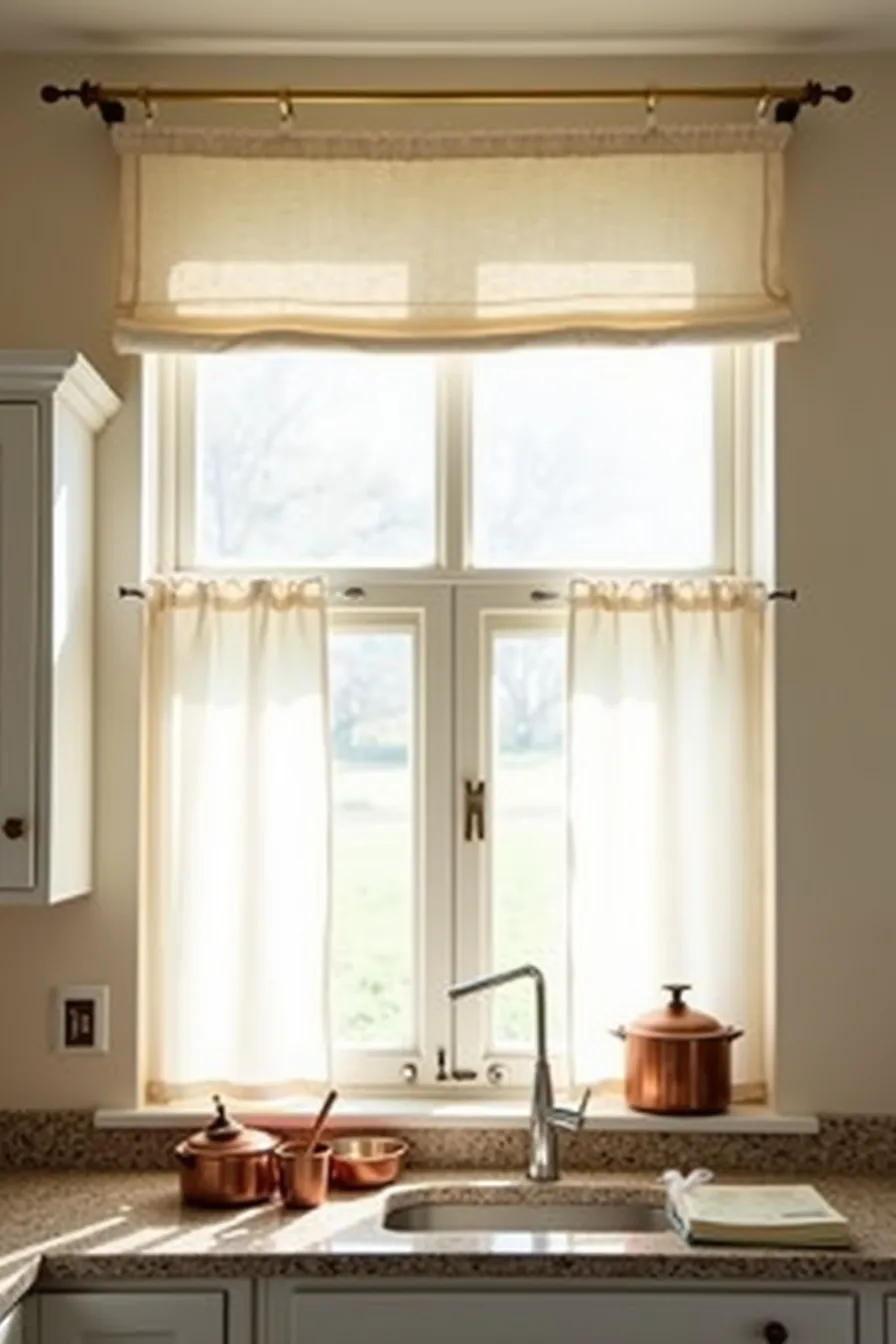
A dual-rod setup gives you two distinct light modes without touching the hardware. Mount a sheer linen panel closest to the glass and a heavier cream panel in front, each on its own rod spaced 3 to 4 inches apart. The sheer diffuses harsh midday sun while preserving the view; the opaque layer blocks glare and adds privacy for evening hours.
This pairing suits south-facing kitchens where direct light shifts dramatically through the day.
The brass rods carry the visual weight here, keep them 4 to 6 inches wider than the window frame on each side so both panels stack clear of the glass when open. For a granite countertop with copper pots, the warm metallic tones tie the treatment to the space’s existing finishes. You’ll need a 3-inch clearance between rods for the panels to move independently without catching.
Wash the sheers monthly on a delicate cycle; the cream panel will require dry cleaning, so budget that recurring cost. For windows wider than 60 inches, split each layer into two panels per rod to avoid excessive stacking bulk.
Long-Term Investment: Custom Motorized Solutions
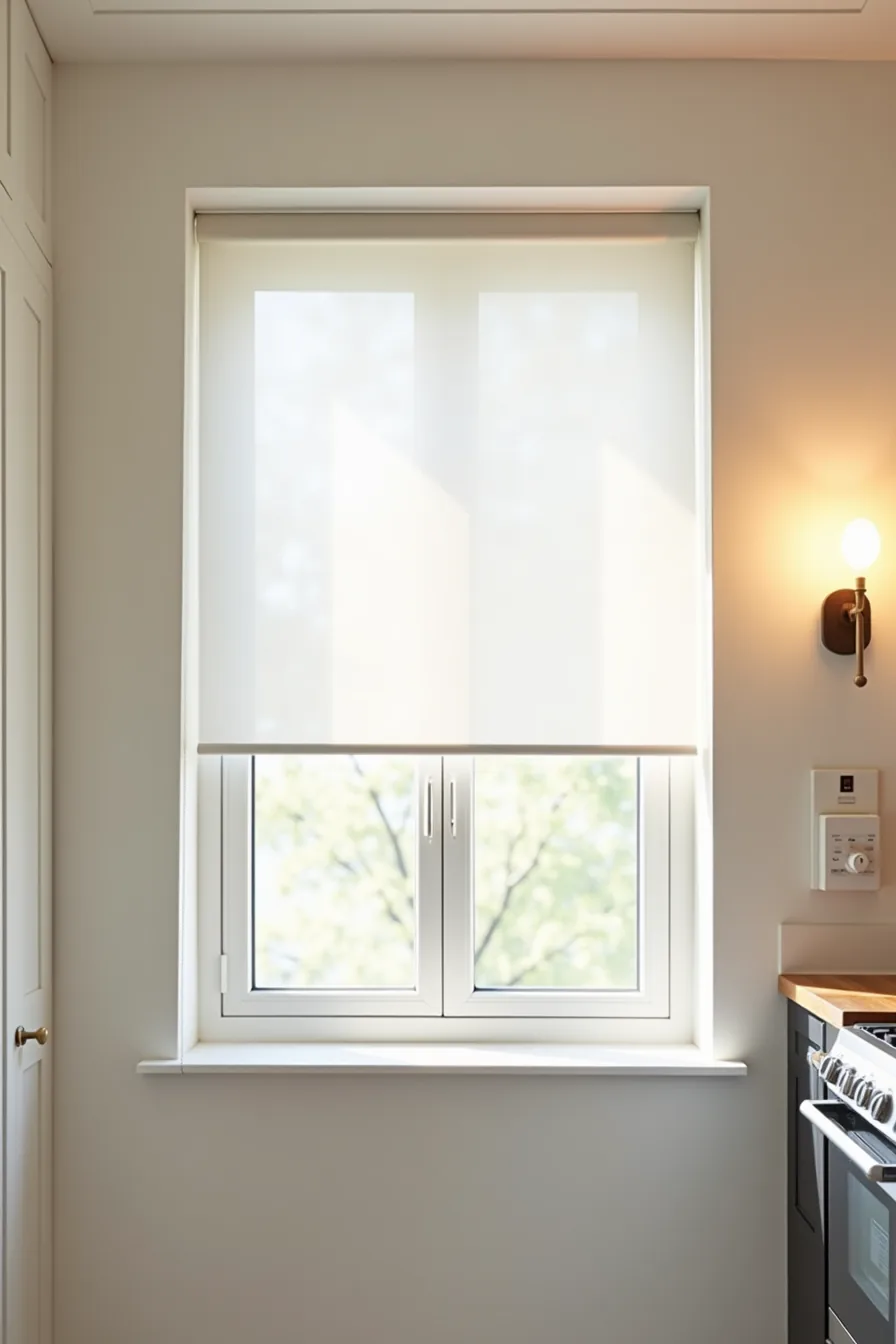
When you want precise light control without lifting a finger, a motorized roller shade on a wall-mounted control panel justifies its higher price point. This setup works best in kitchens with tall, hard-to-reach windows or in open-plan spaces where you want to adjust the light while seated at an island. The electric motor operates silently, and you can program it to lower the shade during peak afternoon sun and raise it again at dusk.
The motorized roller shade pairs naturally with stainless steel appliances and minimalist white cabinetry because its clean, flat profile adds no visual clutter. Installation requires a licensed electrician unless you choose a battery-powered motor, which eliminates wiring but needs recharging every 6 to 12 months depending on use. Expect to pay 2 to 3 times more than a manual roller shade of the same fabric, and factor in that motor units typically last 10 to 15 years before replacement.
For a window wider than 72 inches, you may need a dual-motor system, which doubles the cost but ensures smooth, even operation.
Where to start
Before you buy anything, measure your window and note how far the rod extends past the frame. That single number determines whether you need 45-inch panels or 63-inch tiers, and it prevents the most common mistake: curtains that are too narrow to stack back fully.
Decide your priority first, light control, privacy, or style, then match it to one of the six ideas above. If you’re still torn, buy a single panel in a neutral linen and hang it for three days. Living with it beats guessing.
Order your rod and panels today, and install them before your next grocery run.
Frequently Asked Questions
Question
Can you use regular curtains in a kitchen with a sink directly below the window?
Yes, but choose a length that clears the sink edge by 2–4 inches. Use a tension rod mounted inside the frame to keep fabric away from water splashes, and select a washable, quick-dry polyester blend.
Question
What fabric weight works best for kitchen window curtains that get morning sun?
Light-to-medium weight fabrics, cotton, linen blends, or polyester, block glare without darkening the room. Avoid heavy velvet or thick thermal materials; they trap heat and fade faster in direct morning light.
Question
Are café curtains suitable for small kitchen windows under 36 inches wide?
Yes, café curtains suit narrow windows well. Their half-height design keeps the top open for light, and a single panel on a tension rod suits widths from 24 to 36 inches without overwhelming the frame.
Question
How do you clean kitchen window curtains that collect cooking steam and grease?
Wash them every 4–6 weeks in warm water with a degreasing detergent, then tumble dry low. For lighter maintenance, vacuum with a brush attachment weekly. Avoid bleach on cotton; it weakens fibers over time.