Simple TV unit design comes down to one decision: whether you want the screen to disappear into the room or anchor it as the focal point. That choice dictates every subsequent move, from cabinet depth and finish to whether you need closed storage or open shelving. Get it right, and the unit handles clutter, sightlines, and scale without shouting for attention.
Get it wrong, and you’ll fight the layout daily. The six approaches ahead break down the trade-offs, so you can match the design to your space, budget, and viewing habits.
Key takeaways
Floating wall-mounted units save floor space but require solid studs and professional installation for TVs over 40 inches. Low-profile console bases under 18 inches tall keep sightlines clear and are the easiest renter-friendly option since they need no drilling. Built-in shelving with cable management demands drywall patching and painting, so budget for a 2-3 day installation window if you own your home. Modular storage systems let you reconfigure for a 55-inch TV today and a 75-inch later, but measure depth, most media components need at least 16 inches of clearance.
Floating Wall-Mounted Unit for Small Rooms
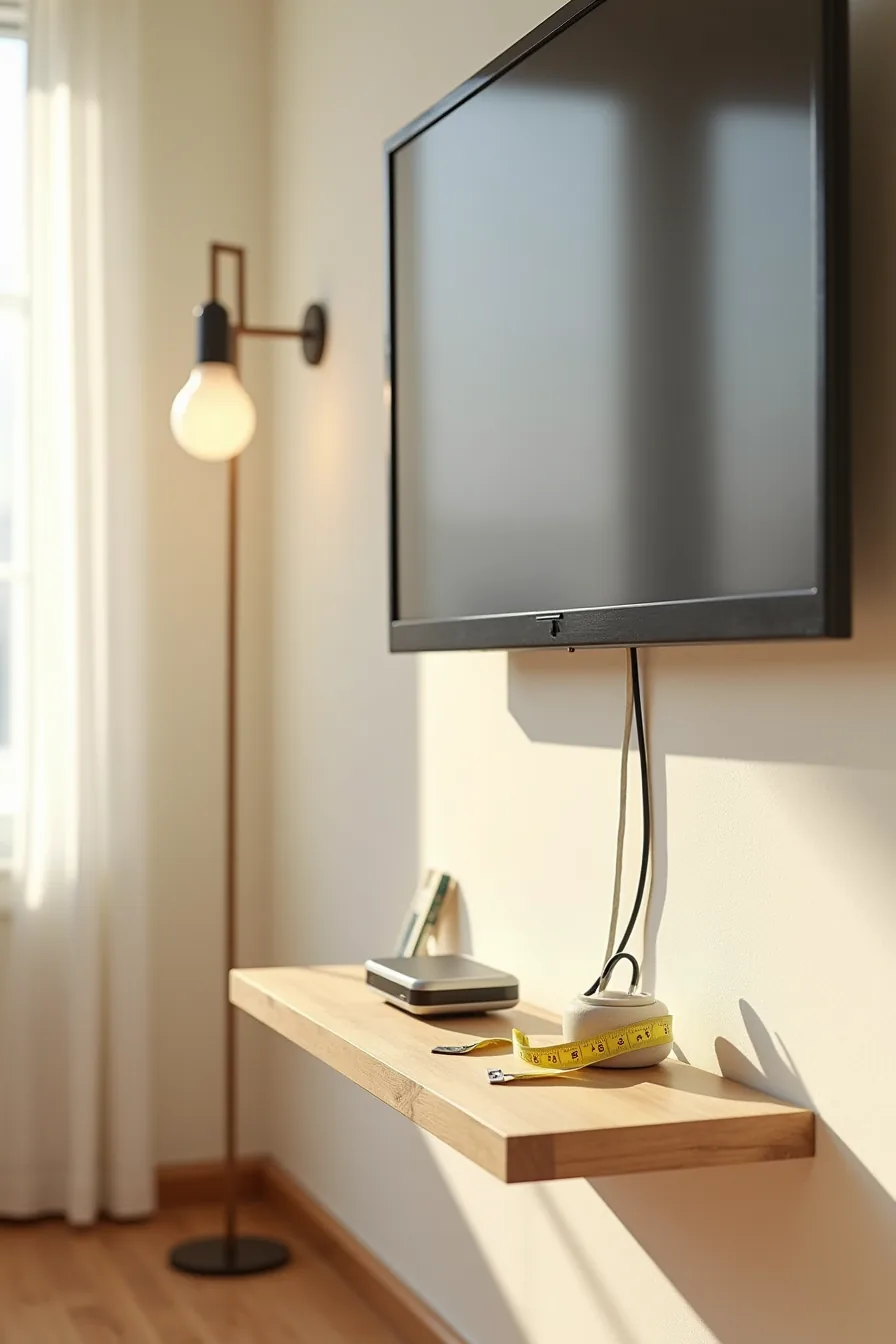
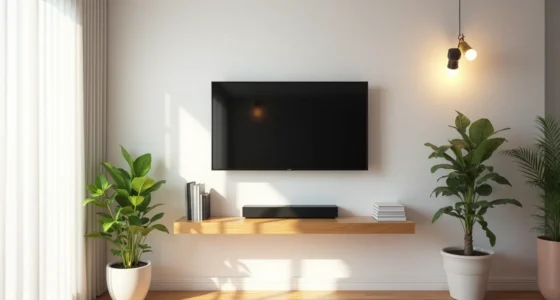
For rooms under 150 square feet, a floating unit removes floor-level bulk that makes tight spaces feel narrower. The key constraint is the wall itself: you need studs to support the TV bracket, while drywall anchors alone handle the shelf. A minimal media unit like the one with a cable box and small plant pot on a thin shelf works because it keeps the visual weight at eye level, leaving the floor clear for foot traffic or a low-profile seating piece.
Mount the shelf 6–8 inches below the TV, at a depth of 8–10 inches, enough for a streaming box but shallow enough to avoid protruding into walkways. The measuring tape on the shelf edge confirms this dimension matters: too deep, and the unit becomes a hazard in a narrow room. Expect a weight limit of 50–75 pounds for the shelf when anchored into studs; the TV bracket handles the screen separately.
Suitability: renters who can patch two screw holes, or anyone with a drywall-and-stud wall who wants a clean, floating finish without custom joinery.
Low-Profile Console Base for Renters

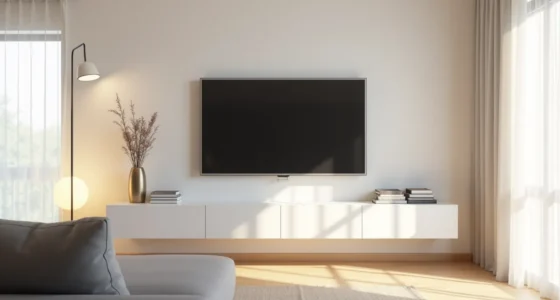
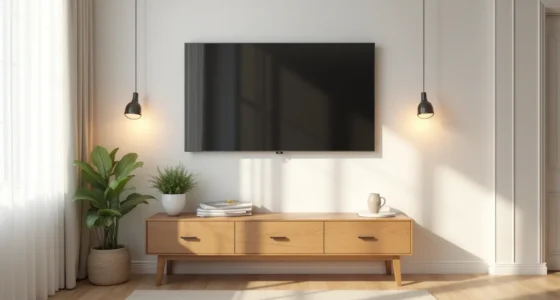
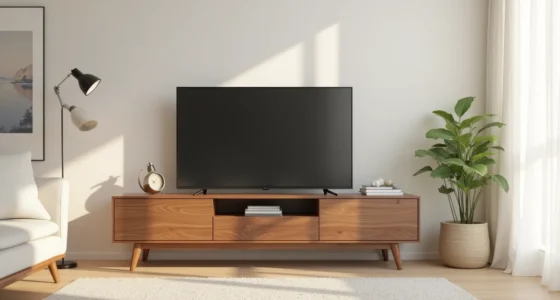
When you can’t drill into walls, a freestanding console solves the Simple Tv Unit Design problem without a single screw. This light oak stand at roughly 20 inches tall keeps the TV at comfortable seated eye level while the open shelving below gives the streaming device and a woven basket a designated home. The hardwood floor beneath needs no protection mat unless you drag the unit when rearranging, lift, never slide, to avoid scratches.
Choose a base 8–16 inches wider than your TV’s width to prevent tipping and create visual balance. The open-shelf configuration suits renters because it hides clutter in baskets while leaving no permanent trace. If you’ve young children or live in an earthquake zone, secure the console to the wall with furniture straps, most landlords allow small pilot holes that patch easily with spackle.
Expect to pay $150–$400 for a solid-wood console in this height range; veneered particleboard versions run $80–$150 but show edge wear within two years.
Built-In Shelving for Long-Term Spaces

For homeowners ready to commit, recessed built-ins deliver the cleanest expression of simple TV unit design: the wall itself becomes the unit. A central backing panel mounts the TV flush while five white-painted shelves frame it on both sides, turning the media setup into a permanent architectural feature rather than a piece of furniture. The turntable, stacked books, framed artwork, and small sculpture each get deliberate breathing room, no clutter, just curated staging.
Standard construction depth runs 12–16 inches, which accommodates a TV up to 6 inches thick plus cable management without protruding into the room. Recessed lighting above the shelves eliminates shadows and makes the clean wall treatment feel intentional at night. Budget $1,200–$3,500 for semi-custom systems in MDF with a painted finish; solid hardwood or full customization pushes toward $5,000+.
This route suits anyone planning to stay put for five-plus years, but it permanently reduces floor flexibility, removing the built-in later means drywall repair and refinishing.
Modular Storage with Clean Lines

Stackable modular cubes give you the flexibility built-ins can’t: reconfigure the layout when your TV size or room function changes, then take it with you when you move. In the setup pictured, three matte black modules sit horizontally, each 36 inches wide, spanning a total run of roughly 9 feet, a proportion that suits medium and large rooms with at least 10 feet of wall space. The center cube holds the flat-screen television flush against the backing, while the two side modules absorb the visual weight: a record player on one, potted plants and decorative boxes on the other.
The key to avoiding a cluttered look is restraint, limit each open cube to one functional item plus one accent, and choose modules with solid backs so cables stay hidden. Budget $150–$400 per cube in powder-coated steel or laminate; the matte black finish hides dust but shows fingerprints, so expect monthly wiping with a microfiber cloth. For visual balance, keep heavy objects in lower cubes and distribute heights unevenly across the top, a plant on one end, a stack of books on the other.
If you’re searching for Simple TV Unit Ideas for an Uncluttered Family Room, this system delivers because you can swap cube positions seasonally or add a fourth unit as your collection grows.
Minimalist Open Shelving Layout
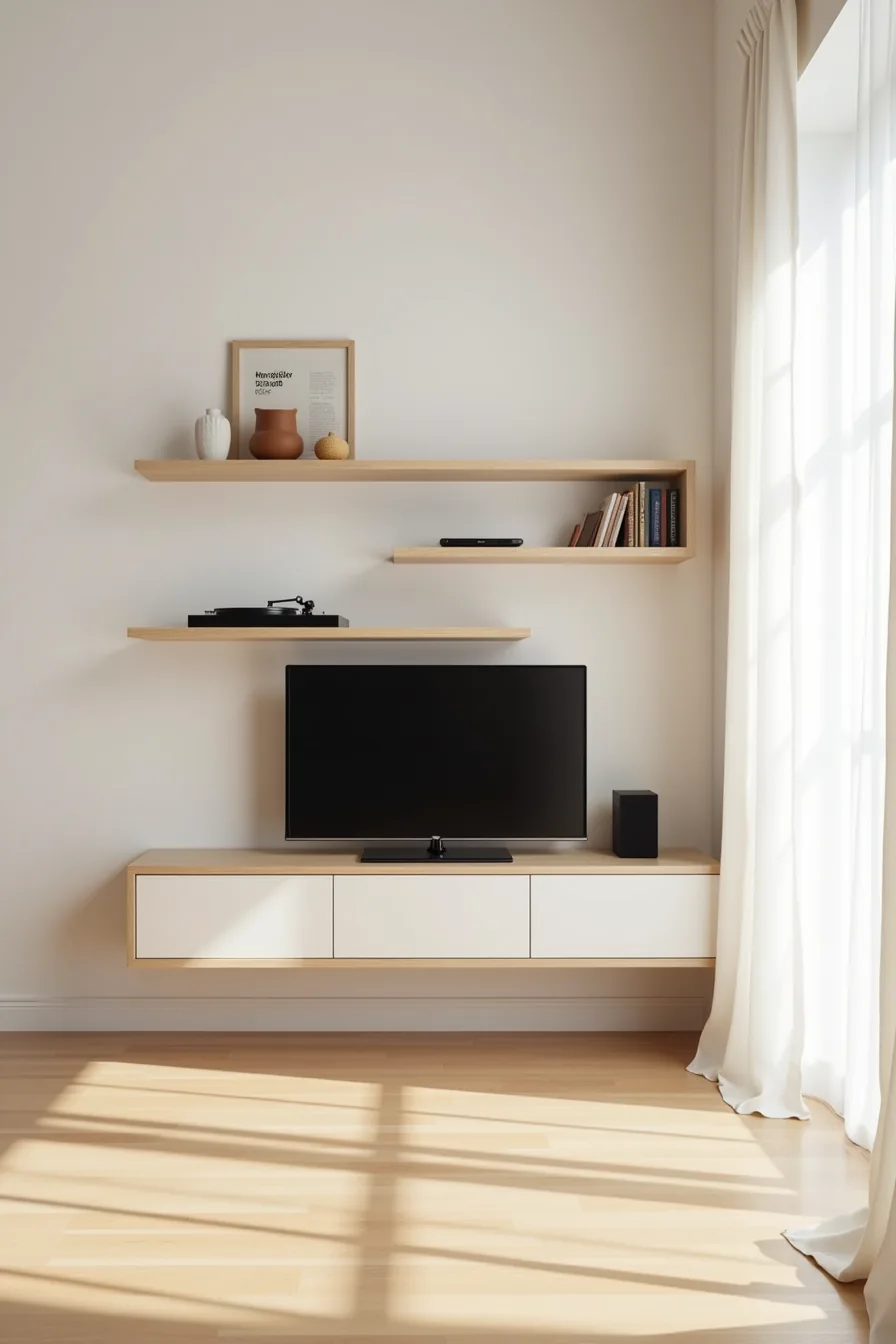
This approach removes the cabinet entirely, leaving three 48-inch wooden shelves mounted directly into the wall studs with no backing panel or side supports. The flat-screen TV sits on the middle shelf, and that placement forces a critical decision: mount the shelves so the TV’s center lands at seated eye level, typically 42–48 inches from the floor, rather than centering the TV between the shelves above and below. For a 55-inch TV, the middle shelf needs to sit about 20 inches above the floor to keep the viewing angle comfortable.
Open shelving suits renters and minimalists because you can patch four screw holes when you leave, and the total cost runs $80–$200 for three solid pine or birch shelves if you finish them yourself. Load capacity matters here: a 48-inch shelf in 3/4-inch solid wood with hidden brackets supports roughly 40–60 pounds distributed evenly, which handles most TVs under 50 inches plus a turntable. The spacing between shelves should run 16–20 inches, enough to slide a soundbar forward without blocking the screen, but tight enough that the turntable on the bottom shelf doesn’t look stranded.
Styling rules prevent visual chaos: keep the top shelf to one accent (a ceramic vase) plus one book spine-out, and never exceed two objects per shelf. This layout works best in small living rooms or open-plan spaces where a floor-standing cabinet would block circulation, but it fails in homes with young children or heavy vibration, a passing truck can knock a record needle mid-play. Dust collects on exposed gear within a week, so budget 10 minutes of wiping per shelf monthly.
Integrated Media Wall with Accent Paneling

This approach pairs a slim TV unit with a textured wall treatment, letting the backdrop do the visual work while the furniture stays minimal. Horizontal oak slats spanning 8 feet wide and 5 feet tall create a warm, rhythmic surface that visually anchors the screen, which is centered within that paneled zone. The panel depth typically runs 0.75–2 inches, enough to cast subtle shadows without eating into floor space or making the wall feel bulky.
A low floating shelf in matching wood below the TV holds a soundbar and a single decorative object, keeping the composition clean while maintaining a clear line from seating to screen. This layout suits medium-to-large living rooms where the TV wall is a focal point, and it works especially well for homeowners who want warmth without the visual weight of floor-to-ceiling cabinetry. Wood slats in oak or walnut run $15–$30 per square foot installed; painted MDF slats cost roughly half that but lack the same grain depth.
For renters, skip the permanent paneling and use peel-and-stick wood-look slats with a 3M-style adhesive, they remove cleanly from most flat painted walls. Maintenance is straightforward: dust slats with a microfiber cloth every two weeks, and avoid wet cleaners that can warp the wood.
Where to start
Walk into your living room with a tape measure and a notepad. Record the wall width, the distance from floor to ceiling, and the clearance between your seating and the TV wall. That last number dictates your maximum unit depth, anything deeper than your viewing distance will dominate the room and make the screen feel smaller.
Decide your budget range first, then match it to one of the three routes: a floating shelf under $200 for renters, a modular cube system in the mid-tier, or a custom-built unit for permanent homes. Sketch your chosen option at scale before buying anything. This five-minute exercise prevents the most common mistake, purchasing a unit that overwhelms a small wall or disappears on a large one.
Frequently Asked Questions
What is the ideal height to mount a TV on a simple unit for comfortable viewing?
The center of your screen should sit at seated eye level, typically 42–48 inches from the floor. For a standard sofa, that means the unit’s top surface lands around 24–30 inches high. Adjust for your own seating height.
How do I keep a minimal TV unit from looking cluttered with cables and devices?
Use a unit with a closed back panel or a cable management channel that runs behind the legs. Route all cords through a single grommet, then bundle them with Velcro ties. Limit visible devices to one streaming box or console; store the rest in a drawer.
Can I use a simple TV unit design in a large living room without it looking undersized?
Yes, if you scale the unit to the wall. For a 65-inch TV on a 10-foot wall, choose a unit 60–72 inches wide and at least 18 inches deep. Add flanking floor lamps or tall plants to visually anchor the composition.
What materials are easiest to maintain in a simple TV unit for a family with children?
Sealed matte laminate or powder-coated steel resists fingerprints and wipes clean with a damp cloth. Avoid open-grain oak and glossy lacquer, which show scratches and smudges. A matte finish hides minor wear far better than a high-sheen surface.