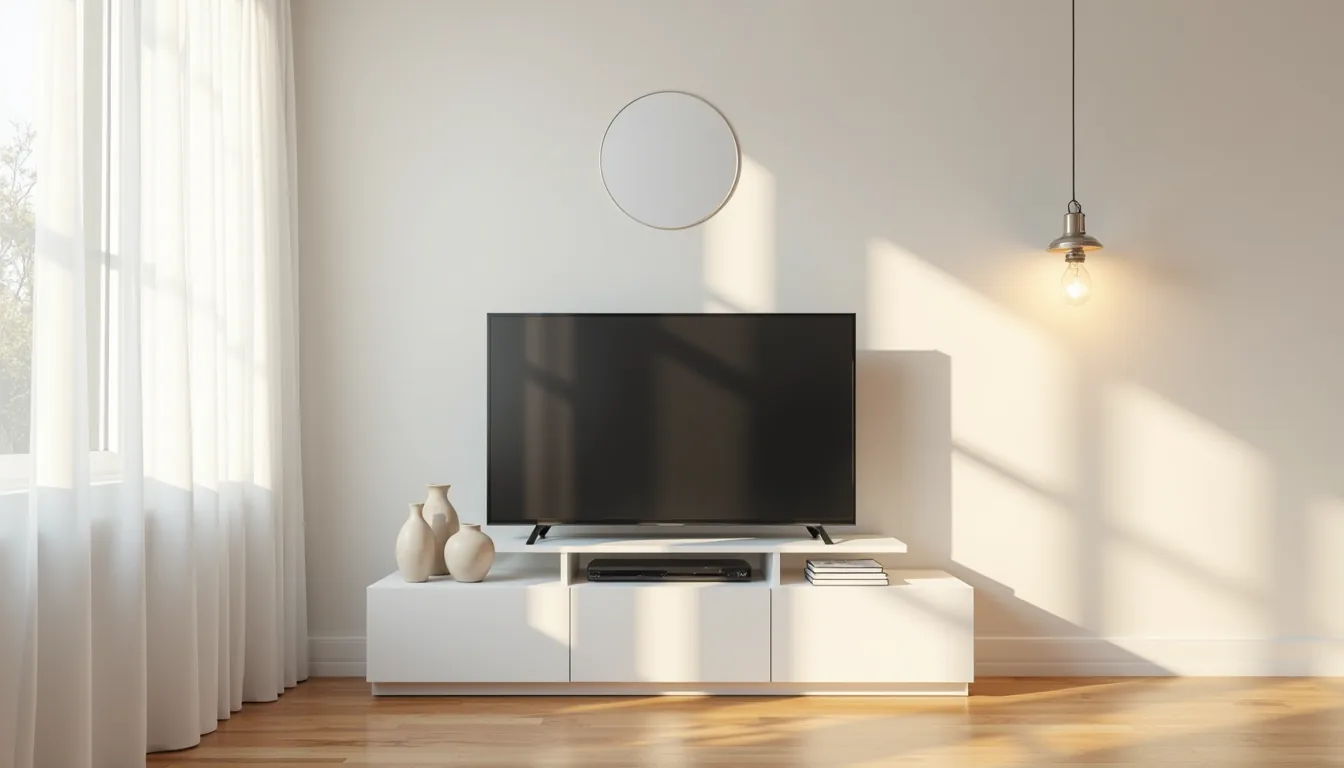
Your TV stand is the largest horizontal surface in your living room that you probably ignore, and styling it well is less about decoration and more about solving the practical problems of sightlines, storage, and daily clutter. Get it right, and you gain a functional command center; get it wrong, and you create a visual bottleneck that drags down the entire room. The six approaches ahead break down by room size, budget, and how much visual weight you want the setup to carry, so you can match a strategy to your actual habits, not a magazine spread.
Key takeaways
Symmetrical styling works best when you mirror objects on both sides of the TV, suiting formal or minimalist rooms where visual calm matters more than personal expression. The negative space method requires leaving at least one-third of the stand surface empty, which suits small living rooms where clutter visually shrinks the space. Layer in odd numbers, three objects of varying heights (like a tall lamp, mid-height plant, and low stack of books) create depth without blocking sightlines or airflow around electronics. Budget and rental routes rely on thrifted ceramic vases, peel-and-stick contact paper, and removable adhesive hooks, all of which cost under $30 and leave no wall damage when removed.
The Symmetrical Anchor: Why Balance Works for Most Rooms
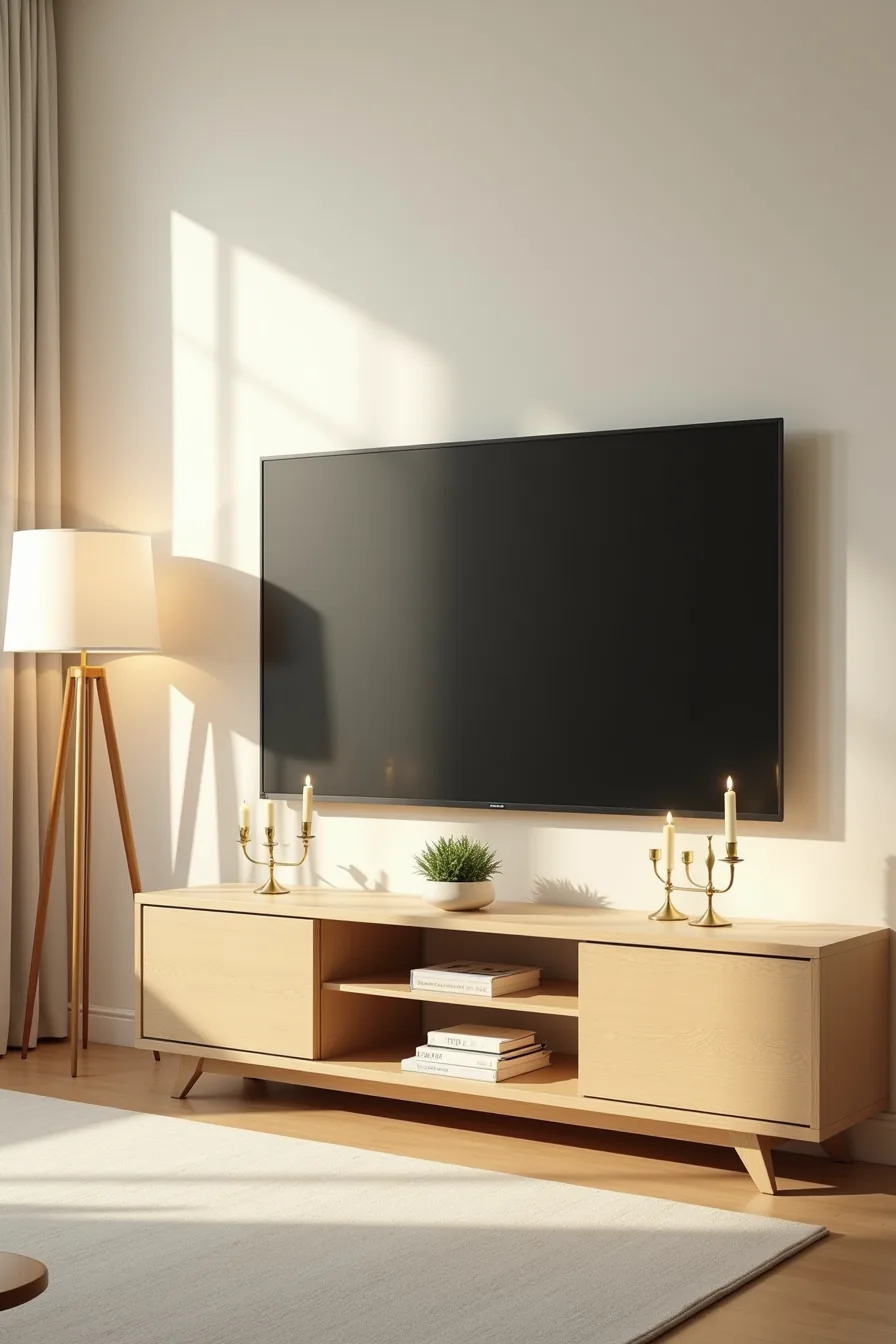
Matching brass candlesticks placed equidistant from your screen create a visual frame that tells the eye where the composition ends. This setup suits rooms where the TV stand is the dominant furniture piece, particularly living rooms between 12 and 16 feet wide where you want a sense of order without adding visual noise. Scale matters: candlesticks should reach roughly one-third of your TV’s height, for a 55-inch screen, that means 8 to 12 inches tall, so they complement rather than compete with the display.
Center a low, small potted succulent between the candlesticks, keeping it under 6 inches tall so it doesn’t block the screen’s bottom edge. The light oak stand provides enough warmth that you can skip additional color accents here. You’ll need a level surface and roughly 18 inches of clear space on either side of the TV for the candlesticks to read as intentional.
Clean the brass monthly with a microfiber cloth to prevent tarnish from dulling the reflective quality that makes this arrangement work.
Decor Without Distraction: The Negative Space Method
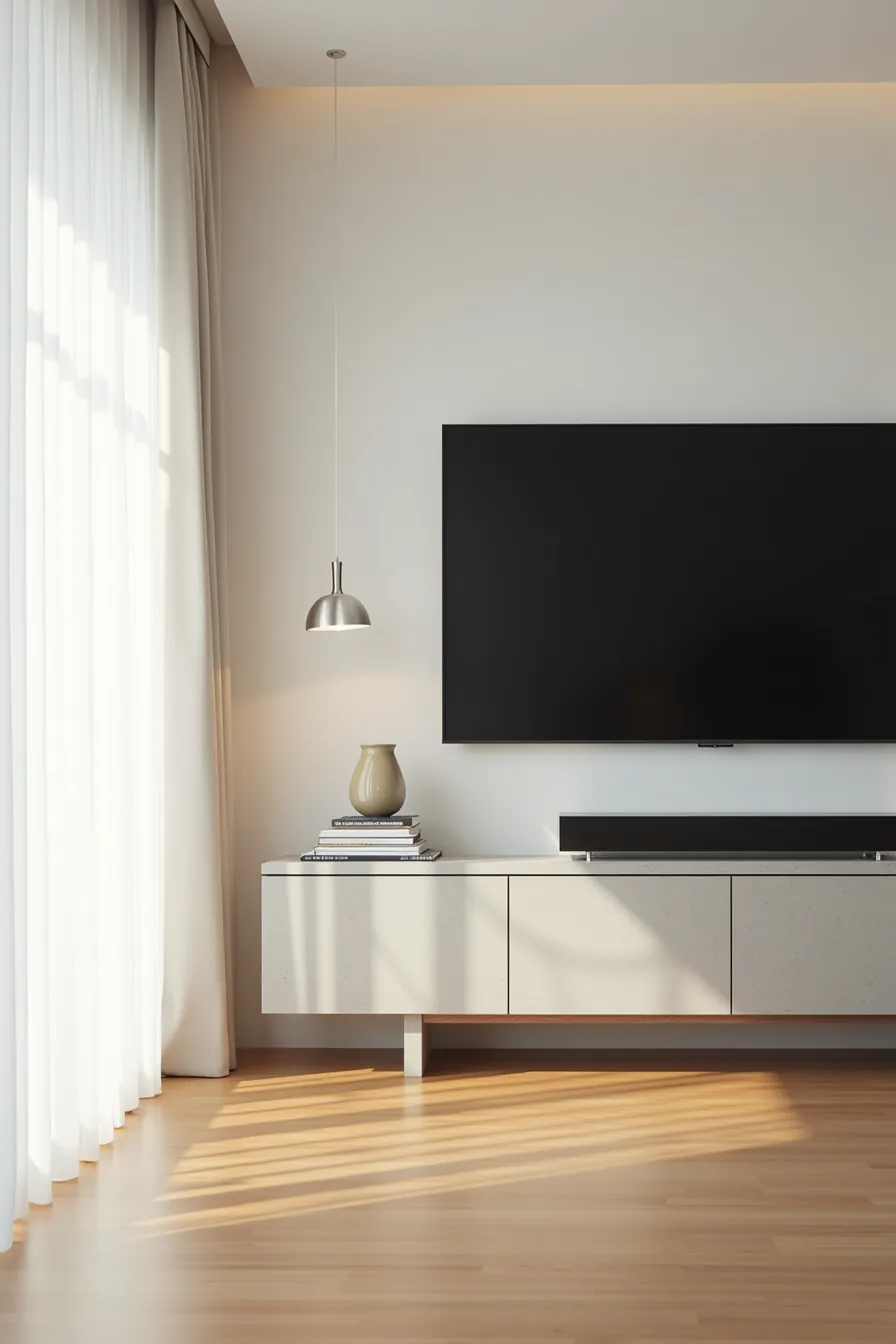
Leaving 80 to 90 percent of your TV stand surface bare is a deliberate choice, not a lazy one. The single glass vessel placed off-center, rather than centered, keeps the eye moving across the concrete stand instead of stopping at a fixed point. This approach works best for small living rooms under 200 square feet, where every visual element competes for attention, and for anyone who finds clutter mentally fatiguing after a long day.
The off-center placement matters more than the object itself. Position your vessel at roughly one-third of the stand’s width, which creates asymmetry that feels curated rather than accidental. The concrete stand and black TV already provide enough texture contrast that you don’t need additional decorative objects.
This setup suits renters too: a single vessel costs under $20, requires no wall mounting, and leaves zero marks when you move.
Height Balance Trick: Layering Objects for Visual Interest
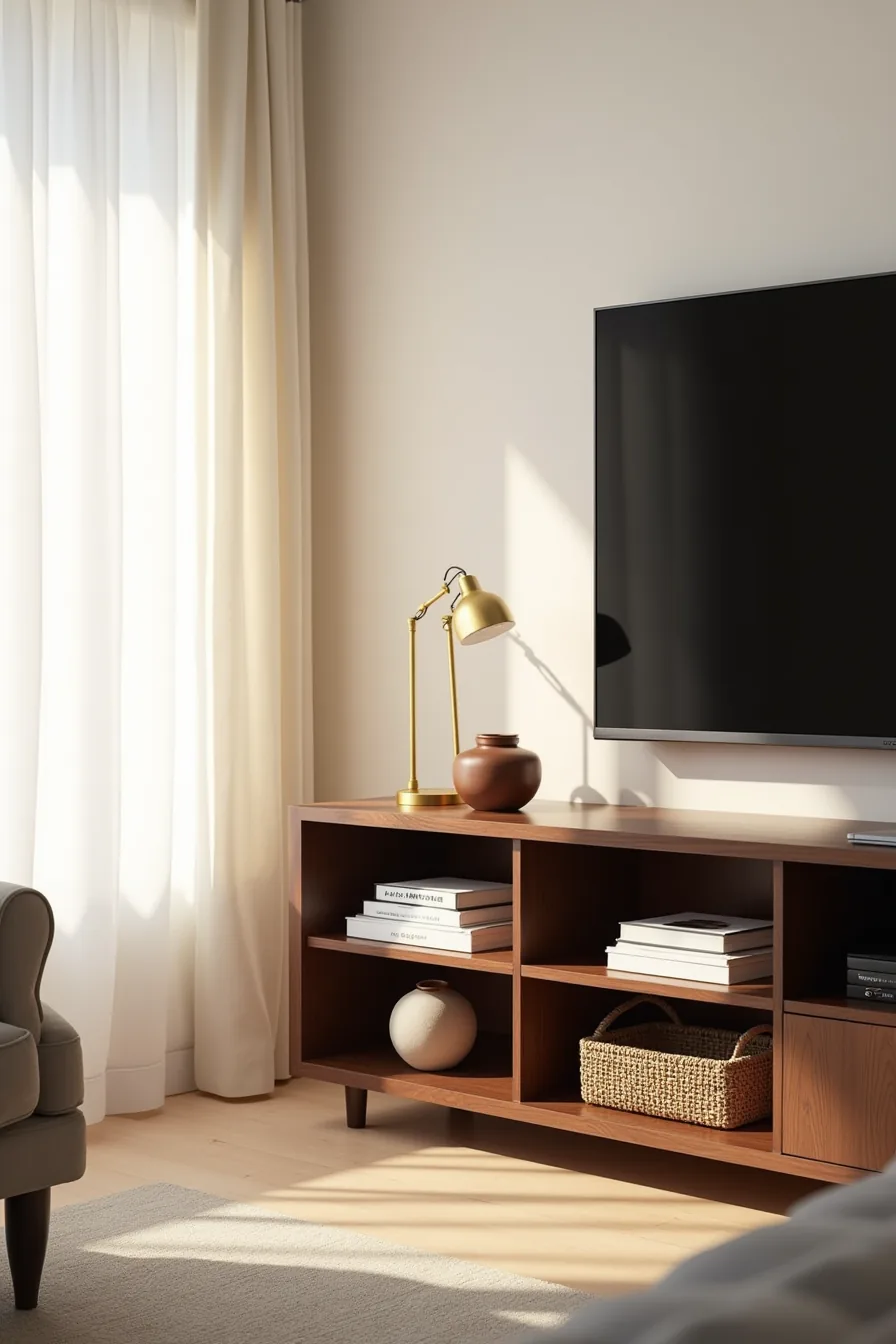
The height balance trick is straightforward: vary the vertical lines of your decor so your eye travels across the stand instead of landing on one flat row. On a dark walnut stand, try a tall brass candlestick on the left, a medium ceramic box center-right, and a short woven basket on the far right. This staggered sequence creates a diagonal rhythm, from high to low, back to mid, that anchors the space above a 50-inch TV.
For stands under 60 inches wide, cap your tallest piece at roughly two-thirds of the TV’s height and keep the shortest item at least 6 inches off the edge so it doesn’t crowd the screen. On wider stands, you can push the vertical spread further apart, tall left, medium right, low center, but always leave the middle 10 to 12 inches directly under the TV clear. This arrangement suits medium to large living rooms where a single focal point feels sparse, and it works with almost any material mix as long as you keep the color palette within two tones.
Plant vs Lamp Styling: Choosing Your Functional Accent
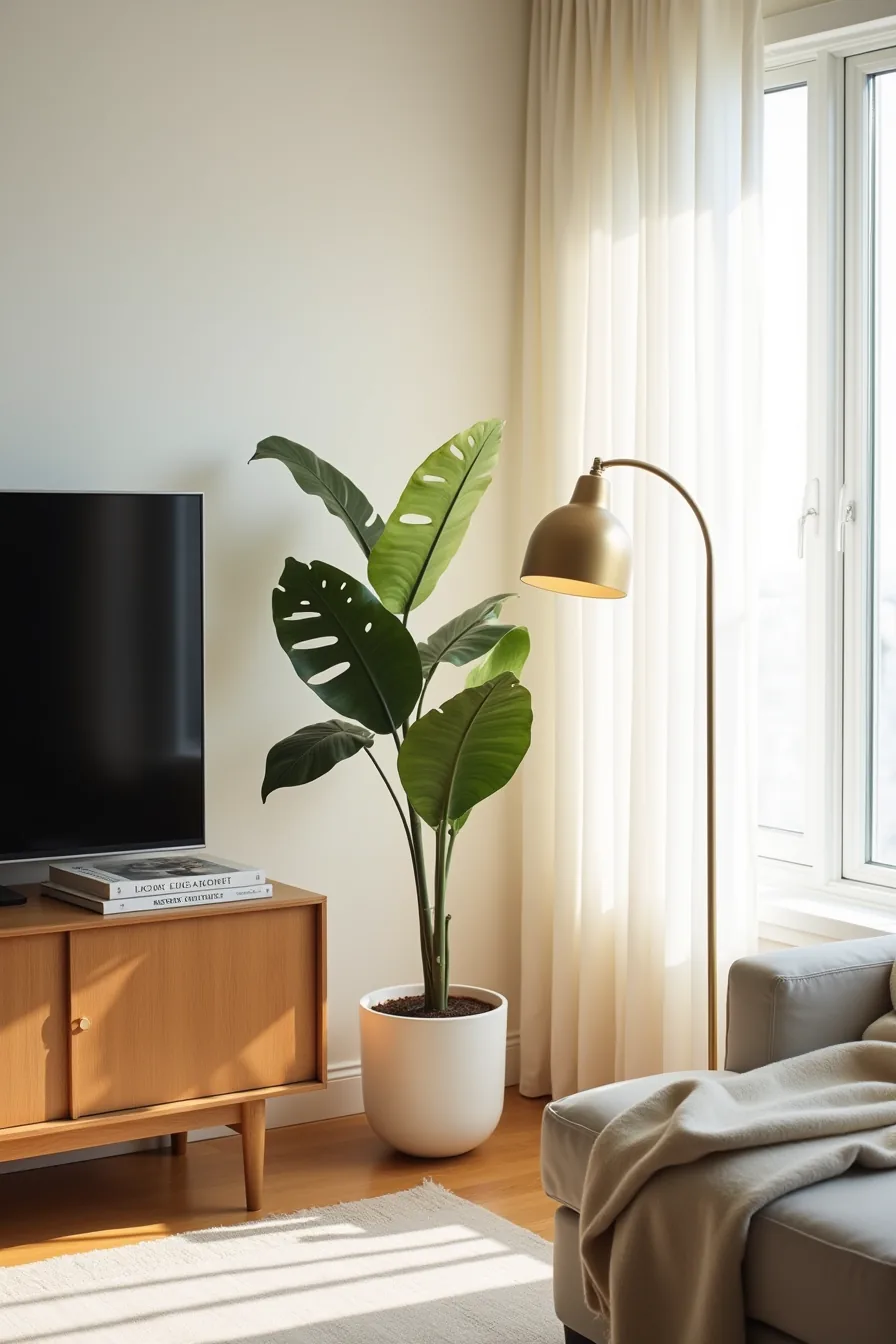
Your choice between a potted fiddle leaf fig and a brass arc lamp comes down to light, maintenance, and how you use the room. The fiddle leaf fig thrives in bright, indirect light, if your TV wall sits opposite a north-facing window, expect leaf drop within weeks. It also demands weekly watering and monthly leaf wiping, making it a better fit for plant owners who already maintain a watering schedule.
The brass arc lamp, by contrast, needs zero upkeep and delivers warm, adjustable task light for evening reading or movie nights, which suits renters who can’t alter ceiling fixtures.
Space determines the winner here. The fiddle leaf fig needs a floor footprint of roughly 18 to 24 inches and will grow toward the light source, so it works only in corners where it can’t block the TV screen. The brass arc lamp, with its curved arm reaching 6 to 8 feet across, projects light without occupying floor space directly beside the stand.
Choose the lamp for narrow living rooms or media-heavy spaces where the TV is the primary focus, and choose the plant for wider, brighter rooms where you want a living texture contrast against the screen’s flat surface.
Budget-Friendly Styling: Thrift and Rental-Safe Options
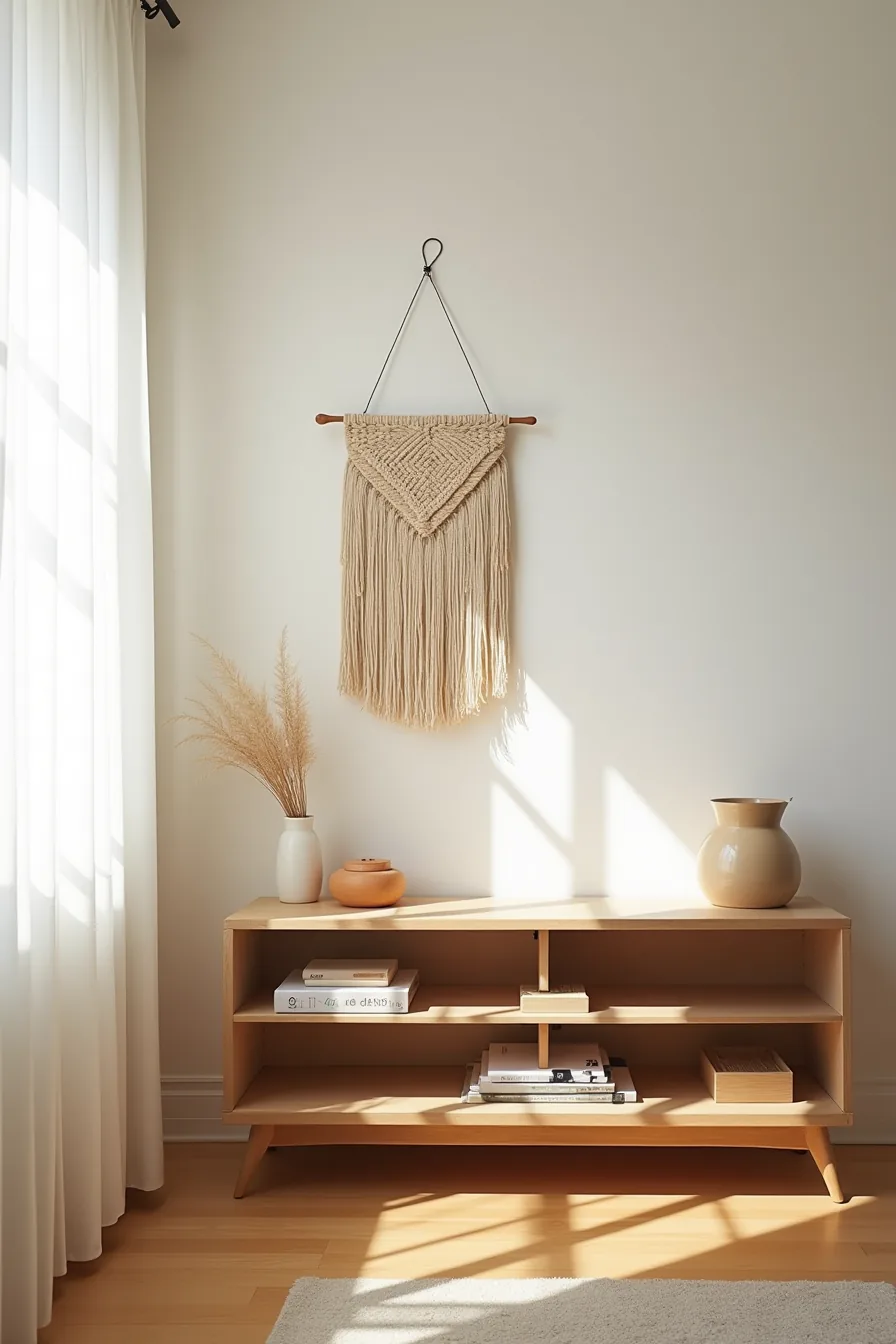
A particle-board stand doesn’t need a costly upgrade to look intentional. Start with removable adhesive hooks rated for 5 to 10 pounds to hang a woven wall hanging above the unit, this gives vertical presence without drilling into rental walls, and the hooks peel off cleanly when you move. On the surface, a thrifted ceramic pitcher and a small wooden box create asymmetry that breaks up the stand’s flat line; group them off-center rather than spreading them evenly across the top.
This setup suits renters who want zero security-deposit risk and budget decorators who prefer piece-by-piece collecting. The woven piece adds texture that softens the screen’s glare, while the pitcher and box require no maintenance beyond an occasional dust wipe. Expect to spend $15 to $40 total if you source the wall hanging secondhand and the accents from a thrift store.
Keep the arrangement within 6 to 8 inches of the stand’s edges so the TV remains the visual anchor, not the accessories.
TV Stand Decor for a Cozy Seasonal Refresh
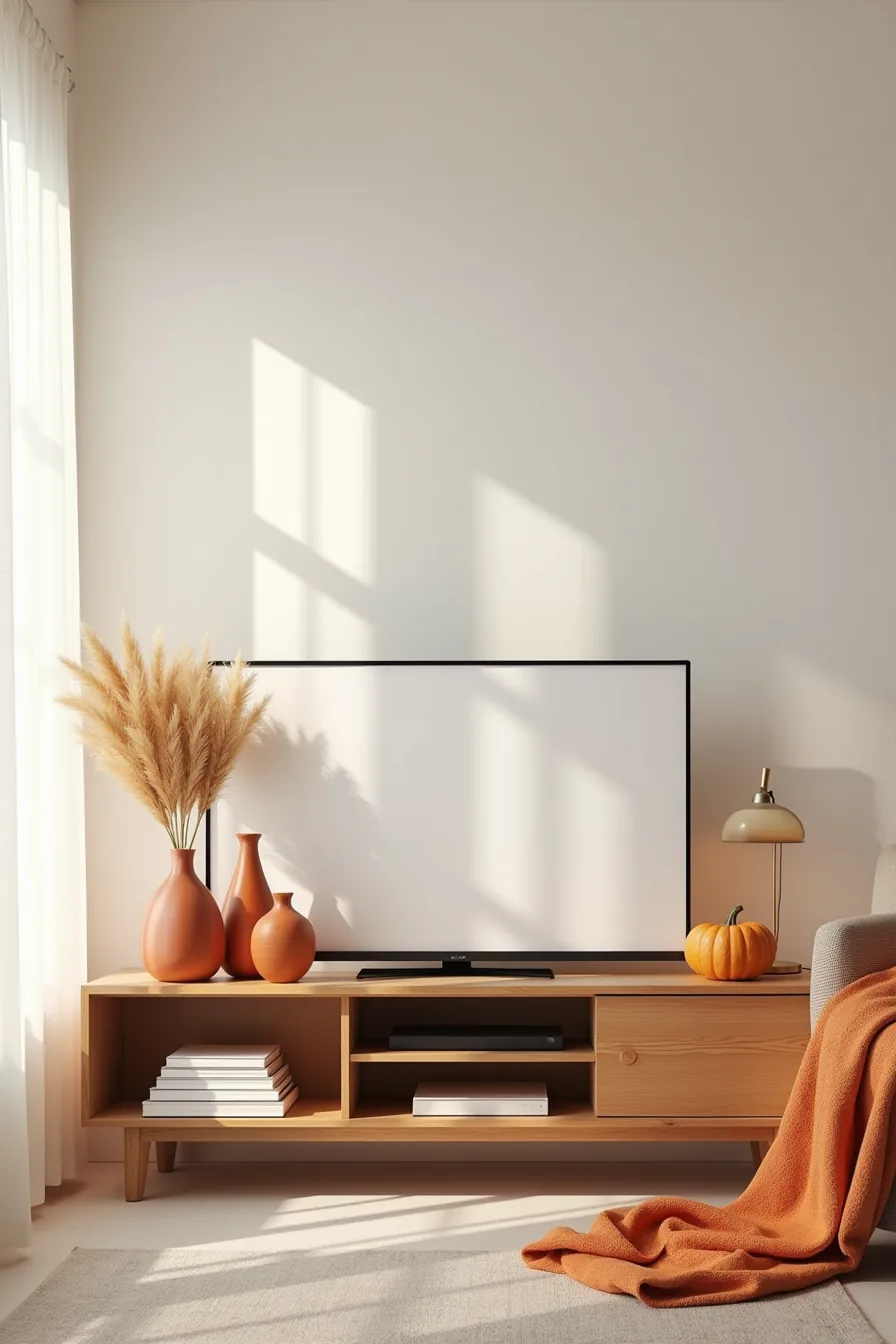
Seasonal styling works best when you swap three or four elements rather than redesigning the entire surface. For autumn, arrange orange and burgundy ceramic vessels in graduated heights on one side, then anchor the opposite end with a dried grass bundle and a small wooden pumpkin. Drape a warm-toned fabric, chunky knit or woven wool, behind the stand so it peaks out from the edges, instantly shifting the room’s temperature without touching the wall paint.
This refresh suits anyone who entertains through the holidays or simply craves novelty every few months. The total rotation takes about 10 minutes because the fabric hangs over the stand’s back edge and the vessels sit directly on the surface, no mounting hardware required. Store off-season pieces in a single lidded bin (16 to 20 quarts) tucked in a closet; label it by season so the swap stays a two-minute decision rather than a treasure hunt.
Choose vessels with a matte glaze, since glossy ceramic shows dust and fingerprints more readily during months when windows stay shut.
Your first move
Pick the one constraint you can’t ignore, budget, rental rules, or cable management, and let that filter the six options down to two. Measure your console’s width against your TV’s span before buying anything; a mismatch is the most common reason a styled stand looks unfinished.
Start tonight by clearing the surface completely. Remove everything, wipe it down, and place back only the items that serve a purpose or earn their visual weight. That single act costs nothing and gives you a blank canvas for whichever approach fits your space.
Frequently Asked Questions
How do I know if my TV stand decor is too cluttered?
You’re likely overdoing it if the TV screen isn’t the clear focal point, or if items crowd within 3–4 inches of the screen’s edge. If you must move something to adjust the remote, you’ve crossed the line.
Can I style a TV stand in a small living room without it looking cramped?
Yes, but keep heights under 12 inches and use a slim, floating console. Stick to one large art piece or mirror above and two small, symmetrical objects below. Leave at least 12 inches of clear floor space in front.
What’s the best way to secure decor on a TV stand so it doesn’t tip?
Use adhesive putty under lightweight items and a non-slip shelf liner for heavier objects >20 lbs. For tall decor, anchor it with a single museum-style gel strip or place it against the wall. Never stack two high items side by side.
How often should I change or refresh TV stand styling?
Refresh quarterly, or whenever you watch your TV with the sound off. A seasonal rotation of three to four objects takes 10 minutes and prevents objects from collecting dust into a permanent fixture. Buy no decor specifically for this; just swap from elsewhere.