Valentines Day room decor doesn’t require a complete bedroom overhaul, six distinct approaches, from a $15 tabletop vignette to a permanent velvet headboard investment, let you match the look to your space, budget, and how long you want the romance to last. Each option below targets a specific constraint: small apartments, rental clauses, or a master suite you plan to keep romantic year-round. You’ll also get exact placement rules, material trade-offs, and a decision checklist to avoid buying anything that ends up in a closet by February 15th.
Key takeaways
Romantic accent walls work best with peel-and-stick wallpaper or removable decals, which cost $30-$80 per roll and strip off cleanly for renters. Layered lighting transforms mood by mixing a warm 2700K bulb in your main fixture with a dimmable table lamp and a string light accent, avoiding harsh overhead glare. Swapping textiles seasonally takes under 30 minutes: replace your duvet cover, add two throw pillows, and drape a chunky knit throw over the footboard to anchor the Valentine look. Scent layering succeeds when you pair one soy candle (burn time 30-40 hours) with a reed diffuser in a complementary note like rose and vanilla, placing them 6-10 feet apart to prevent olfactory fatigue.
Romantic Accent Wall: Color and Pattern Without Full Commitment
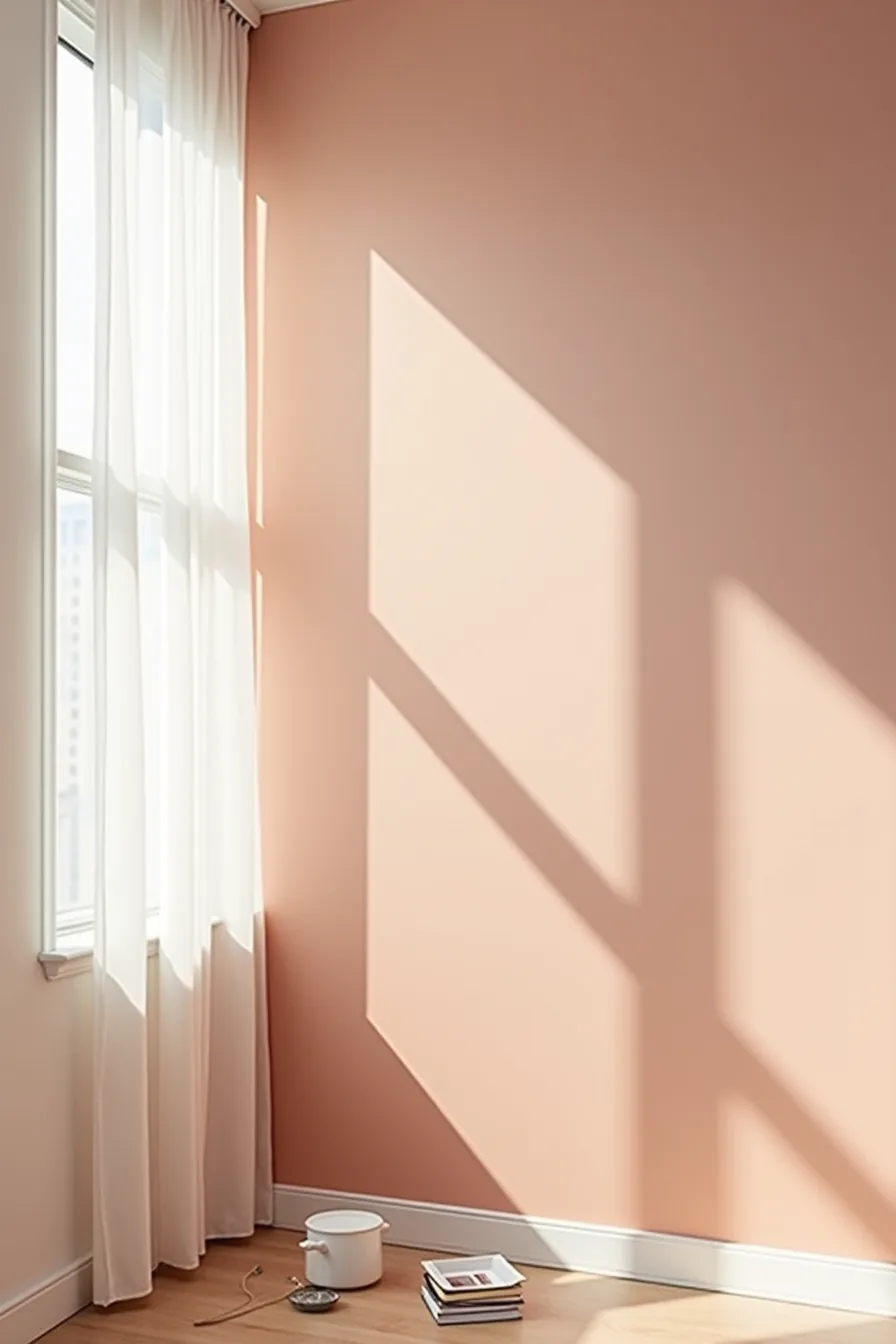
A single accent wall delivers the visual weight of a full Valentine’s makeover without the commitment, or the labor. The setup you see here uses dusty rose paint, a shade that reads romantic but stays sophisticated when it falls in the muted rose-to-blush range rather than hot pink. The paint roller and tray at the base signal a straightforward weekend job: expect roughly 3–4 hours total for prep, two coats, and cleanup on a standard 10–12 foot wall.
Primed drywall accepts most latex paints readily, so you can achieve this finish in one afternoon.
This route suits renters and owners alike, but with different trade-offs. Owners can commit to a true paint color; renters should choose removable wallpaper instead, which typically installs in 2–3 hours per wall and peels off without damaging standard flat or eggshell finishes. Scale your color choice to the room, deep berry tones work in large spaces, while pale pink reads better in small bedrooms where it won’t shrink the perceived square footage.
One wall near the bed, ideally the headboard wall, creates the strongest focal point without overwhelming the room.
Layered Lighting: Ambiance Through Warm Bulbs and Fixture Placement
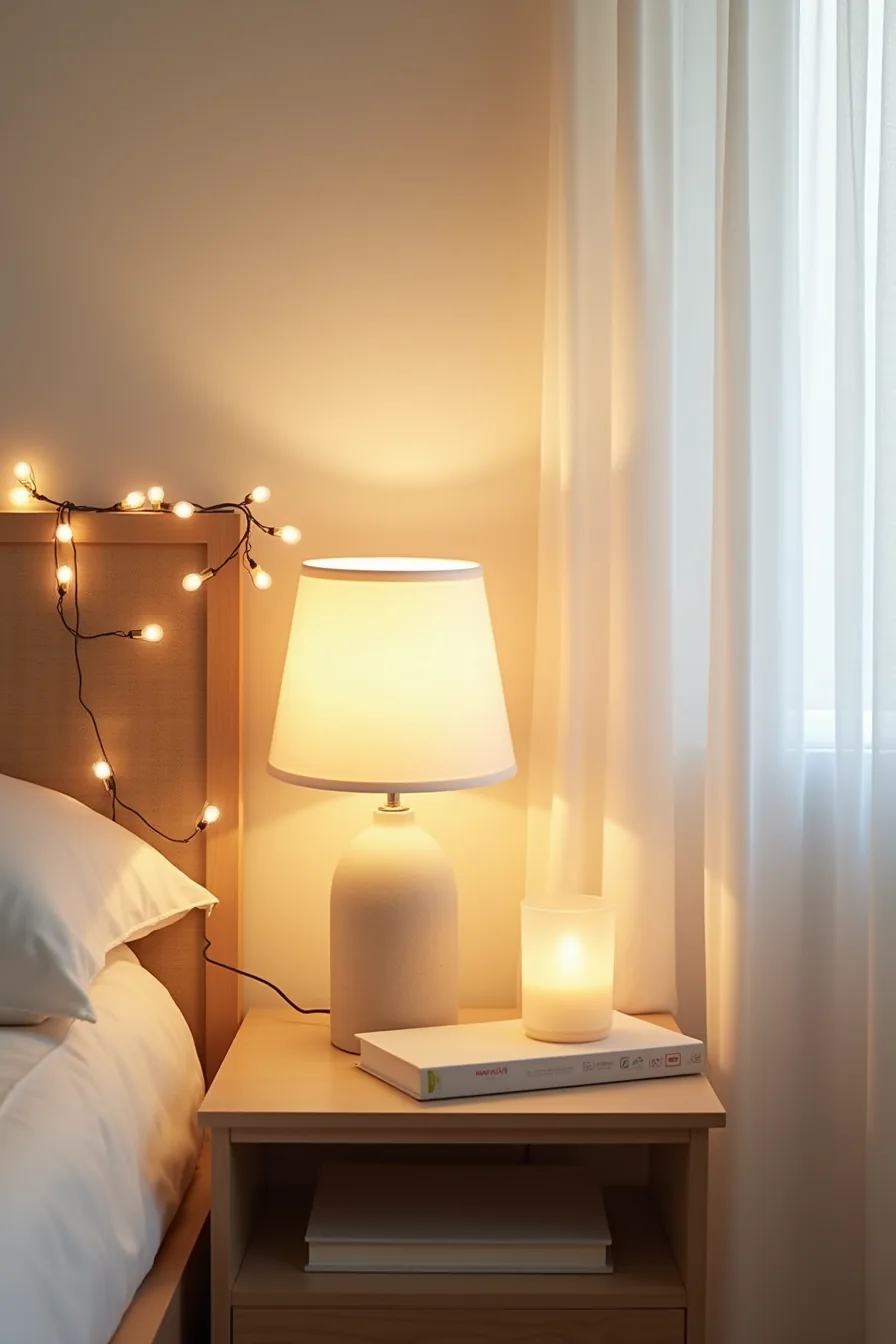
The nightstand arrangement you see here, a fabric-shaded table lamp, a loose strand of small warm-white string lights draped behind it, and a pillar candle in frosted glass, demonstrates the three-tier rule for Valentine’s lighting. Each source operates at a different height, which spreads illumination across the room rather than pooling it in one corner. The lamp provides task-level light for reading; the string lights add a diffuse glow that softens shadows; the candle introduces a flickering low-light accent that reads as intimate.
Warm bulbs make the difference. Look for 2700K–3000K LED bulbs, which cast a golden hue that flatters skin tones and makes deep reds and pinks appear richer. Avoid anything above 4000K, as cooler daylight tones will wash out the romantic palette.
For the string lights, choose low-voltage LED strands that stay cool to the touch, these are safe for overnight use in most bedrooms, unlike incandescent mini bulbs that heat up.
Scale the setup to your room size. In a small bedroom, one lamp, a short 5–6 foot string, and a single candle avoid visual clutter. In a larger space, add a second lamp on the opposite nightstand and extend the string lights to 10–12 feet, running them along a shelf or curtain rod rather than down the wall.
Keep the candle at least 12 inches from fabric and never leave it burning unattended. The dimmer switch on the lamp is a worthwhile upgrade, it lets you shift from bright and practical to moody in seconds, which is one of the most common Valentines Day Room Decor mistakes to avoid: relying on a single overhead light that leaves the space feeling stark.
Textile Swaps: Bedding, Throws, and Cushions as Seasonal Anchors
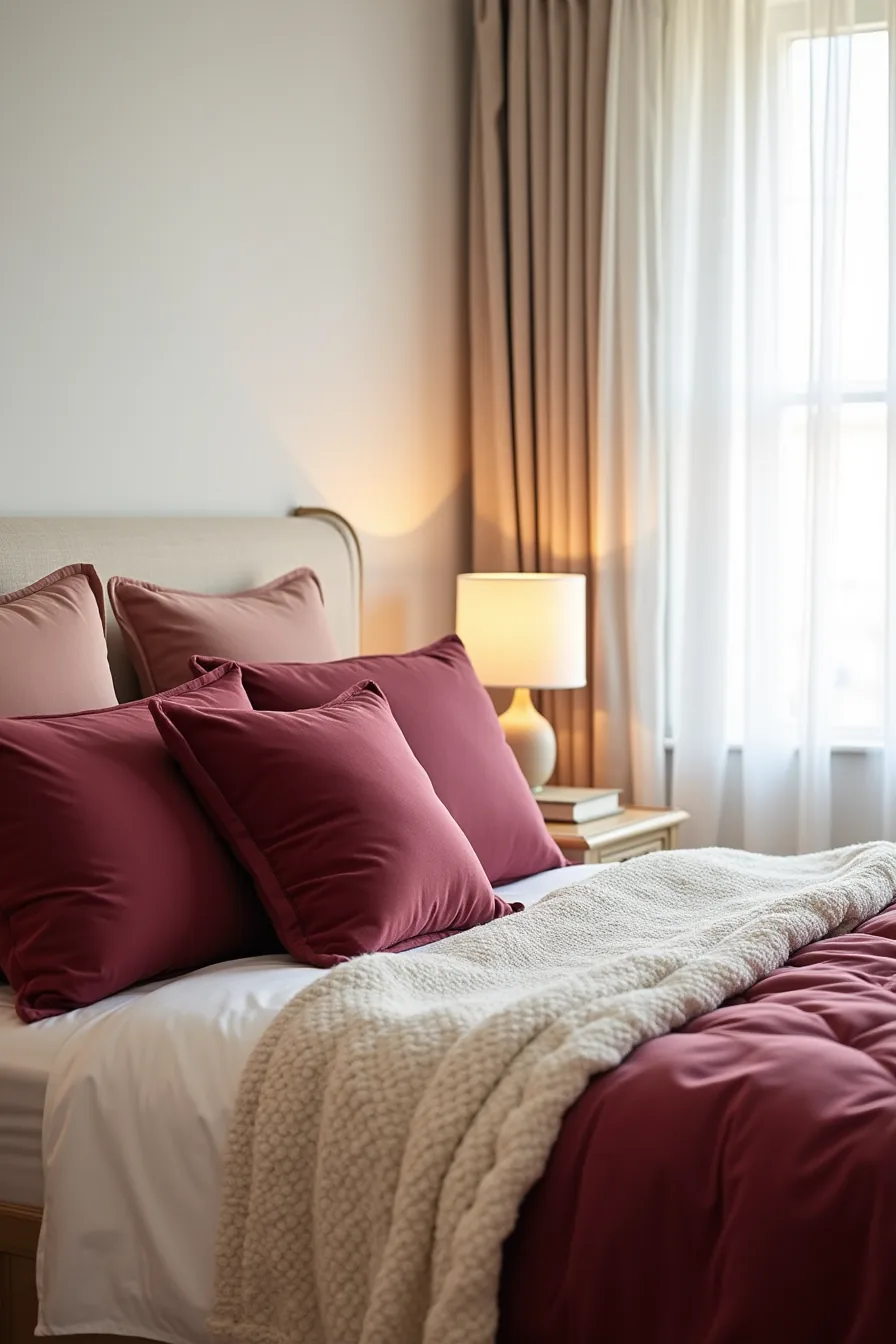
Swapping fabrics is the highest-impact, lowest-effort way to shift a bedroom’s mood. A burgundy sateen duvet instantly deepens the room’s warmth, while a cream cable-knit throw folded across the foot breaks up the color block and adds tactile contrast. Against the headboard, three velvet cushions, blush, wine, and champagne, create a gradient that guides the eye and makes the bed feel intentionally styled rather than decorated.
Quality matters more than quantity here. Look for sateen weaves in the 300–600 thread count range; anything below 250 tends to feel thin, while counts above 700 offer diminishing returns and can trap heat. Velvet cushions in synthetic blends (polyester or viscose) hold their color and resist crushing better than pure cotton velvet, which flattens within weeks.
A standard queen bed needs roughly two 20×20 inch cushions plus one lumbar pillow to fill the headboard line without crowding it.
Budget vs. Splurge Valentines Day Room Decor comes down to this: buy the duvet cover secondhand or from a fast-fashion home line, but invest in the throw. A cable-knit wool or cashmere blend lasts for years and works beyond Valentine’s Day, whereas a printed novelty duvet feels dated by March. In a studio, limit cushions to two and skip the lumbar pillow; in a master bedroom, you can layer a quilt between the duvet and throw for added depth.
Wash the duvet cover monthly at 40°C, but dry-clean the throw and spot-clean velvet cushions to preserve their pile.
Floral and Greenery Displays: Fresh, Dried, and Faux Options Compared
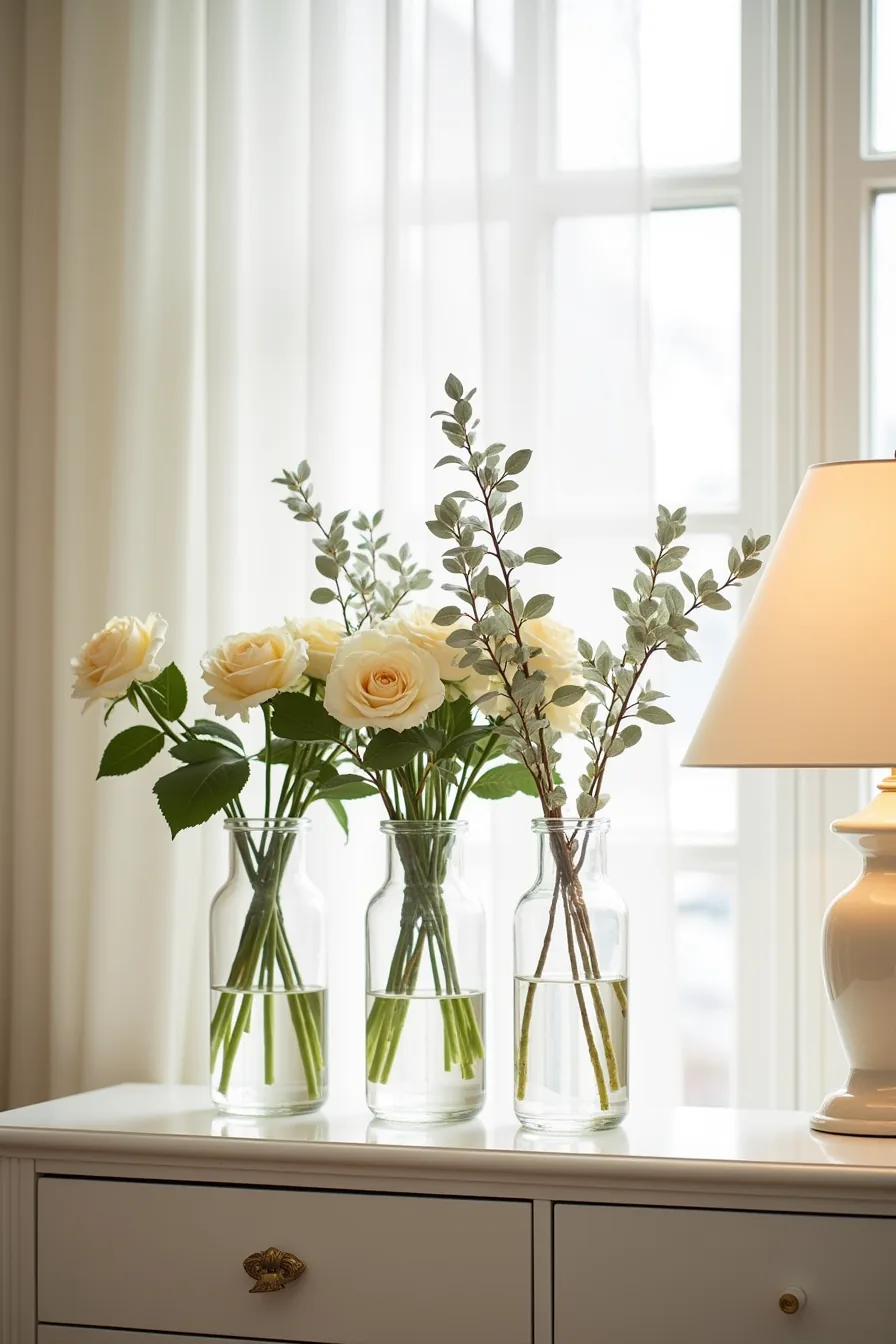
The trio of glass vases, fresh roses, dried eucalyptus, and faux ranunculus, demonstrates three distinct lifespans, and your choice should hinge on when you set the scene. Fresh garden roses peak for 5–7 days if you trim stems at a 45-degree angle and change water every other day; they suit a date-night reveal but demand attention you may not want during a work week. Dried eucalyptus lasts 6–12 months, costs less than a fresh bouquet over time, and requires zero water, just keep it out of direct sun to prevent fading and dust it monthly with a soft brush.
Faux silk ranunculus are the long-term play: quality stems run $4–$8 each and survive years if stored flat in a sealed bin with silica gel packets to prevent crushing and moisture damage. On a console table, keep the tallest vase under 24 inches to avoid blocking sightlines into the room, and cluster the three at staggered heights, tallest in back, shortest forward, to create depth without a wide footprint. For a small space, drop to two vases and use the third stem as a single accent in a bedside bud vase.
Wash glass vases with warm soapy water weekly when holding fresh stems; dried and faux arrangements only need a monthly wipe. After February, swap the ranunculus for seasonal stems and keep the eucalyptus year-round, it reads neutral, not holiday-specific.
Scent Layering: Candles, Diffusers, and Fragrance Combinations
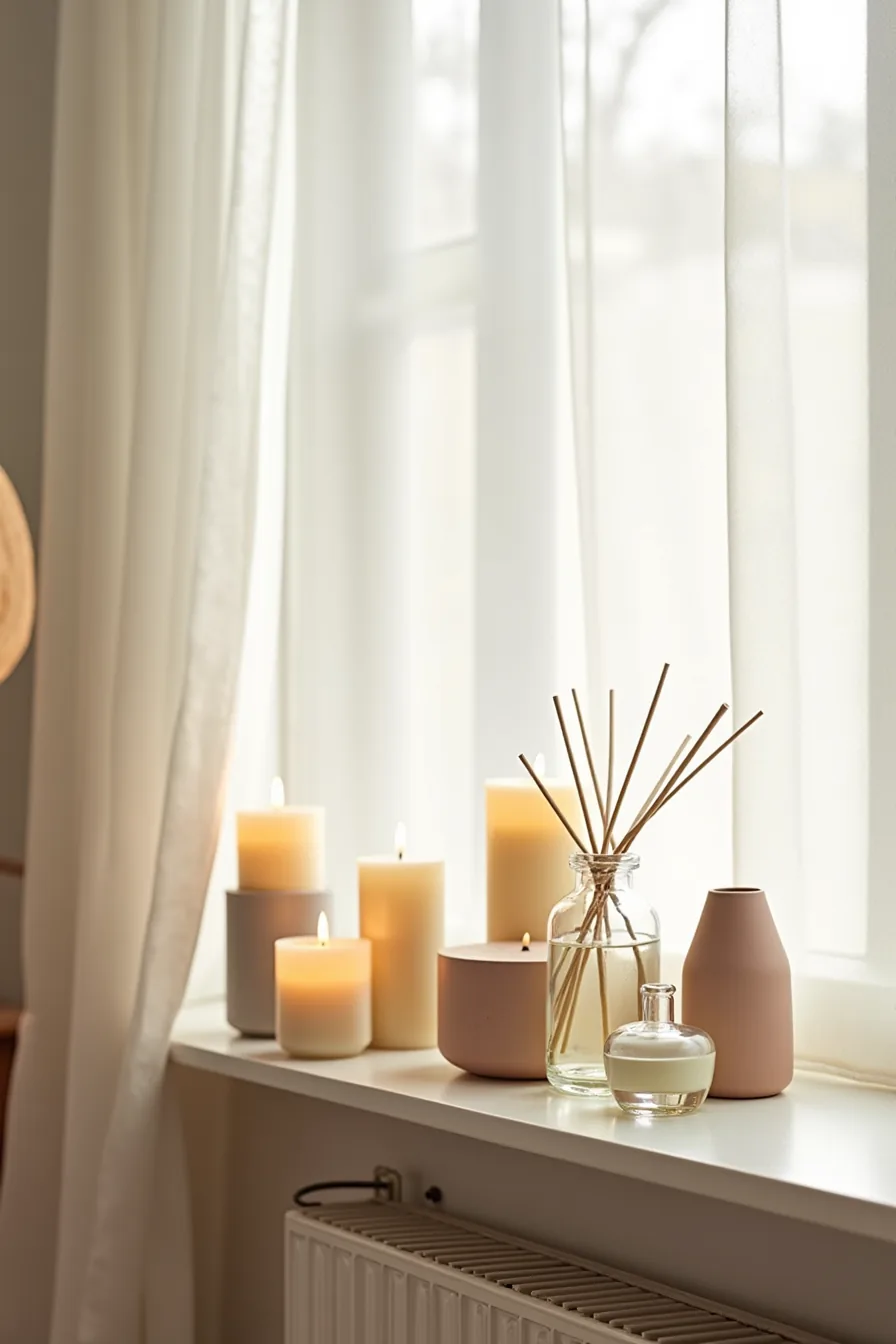
Scent anchors the visual mood of Valentine’s Day room decor, but it works only if you manage intensity and burn time deliberately. A ceramic candle with a 20–30 hour burn holds a room for roughly two weeks of evening use, while the glass candle beside it, likely a 10–15 hour option, works better for a single date night where you want the flame gone before you sleep. The reed diffuser provides the constant base layer; flip the sticks weekly to refresh output, and expect 2–3 months of fragrance before you need a refill.
The wax melter is your switchable accent: swap in a rose-scented cube for the holiday, then replace it with a neutral cedar after February without committing to a full candle.
Set the diffuser on a lower shelf so its scent rises through the space, and keep the candles at least 12 inches from any fabric, curtain, or bedding, the image shows a safe gap between the vessels and the shelf edge, which is your rule of thumb. For a budget route, skip the premium candle entirely; a $3–$5 wax melter with a 50-watt bulb delivers comparable fragrance for a fraction of the cost, though it lacks the visual flame. Match intensity to room size: one medium candle and one diffuser suit a typical 10×12 bedroom, while a large living area needs two candles or a diffuser plus a melter to avoid a faint, underwhelming throw.
Maintain the setup by trimming candle wicks to 1/4 inch before each burn and wiping diffuser sticks monthly to clear dust.
Furniture Rearrangement and Temporary Installations: Layout Strategies
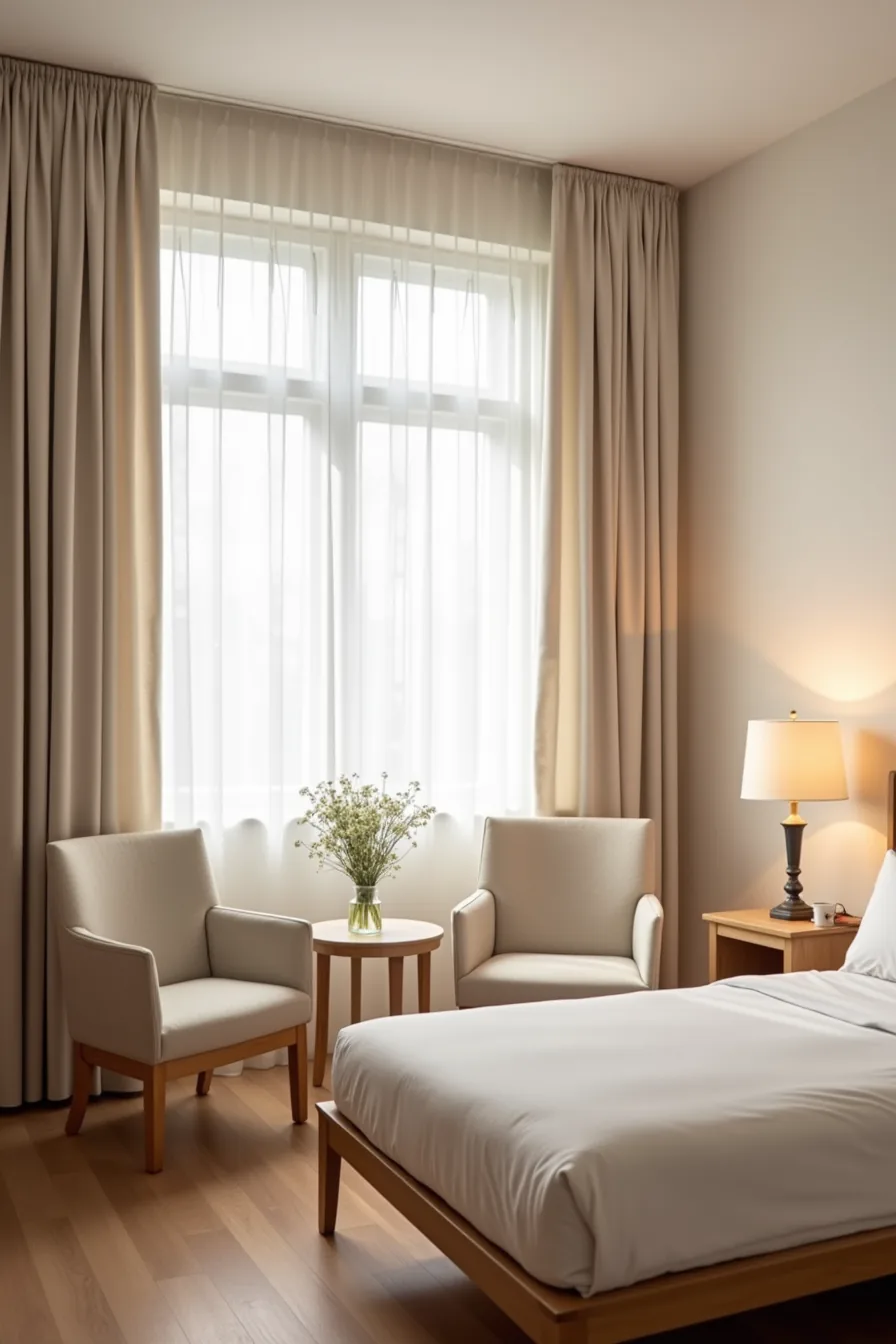
Before you buy anything, reposition what you already own. Angling the bed toward the window rather than keeping it flat against the wall creates a diagonal sightline that instantly makes the room feel more intentional. The two accent chairs facing each other across a small table carve out a conversation nook that suits a couple who wants to talk over coffee, not just watch TV; keep 18–24 inches between the chairs and table so no one is trapped.
For the fabric drape, adhesive hooks rated for 5–10 pounds hold lightweight panels in most finished drywall without leaving marks, but they’ll fail on textured or popcorn surfaces, test the strip on a hidden corner first. Run the drape along a wall that doesn’t sit behind a door swing, and leave a 24-inch clearance path from the door to the bed. This layout suits a small bedroom best; in a medium room, add a floor lamp beside one chair to anchor the nook, and for a large space, pull the chairs farther apart, up to 36 inches, to prevent the setup from feeling lost.
These are practical Valentines Day room decor planning tips that cost nothing and reverse in five minutes when February ends.
Your first move
Start with the single change that delivers the most visible impact for the least effort: swap your everyday throw pillows and bed linens for deep red or blush-toned alternatives. This takes under ten minutes, requires no tools, and transforms the visual center of the room immediately.
For renters, pair this with removable Command hooks and temporary garlands, nothing permanent, nothing that damages walls. For owners ready to invest, prioritize a quality duvet cover in a saturated hue you’ll use beyond February.
Write down your room’s dimensions and one problem area (cluttered corner, bare wall) before shopping. That note will keep every purchase purposeful and proportional.
Frequently Asked Questions
Can I do valentines day room decor in a rental without losing my security deposit?
Yes. Use command strips, removable wallpaper, and freestanding items. Avoid drilling, painting, or adhesive residue-prone tape.
Test removability on a small area first, and patch any marks before move-out.
How long should valentines day room decor stay up, and when should I start taking it down?
Put it up two weeks before February 14th and take it down within one week after. This keeps it festive without feeling stale. Store reusable pieces for next year.
What’s the realistic budget range for valentines day room decor in a bedroom?
Expect $30–$80 for a complete look using DIY and budget finds. Mid-range setups with new bedding, throws, and lighting run $80–$150. Premium options with custom art or high-end textiles exceed $200.
How do I prevent valentines day room decor from looking cluttered in a small bedroom?
Limit yourself to three focal points: one wall accent, one bed layer, and one lighting element. Keep all other surfaces clear. Choose items in a single color family, red, pink, or neutral, to avoid visual noise.