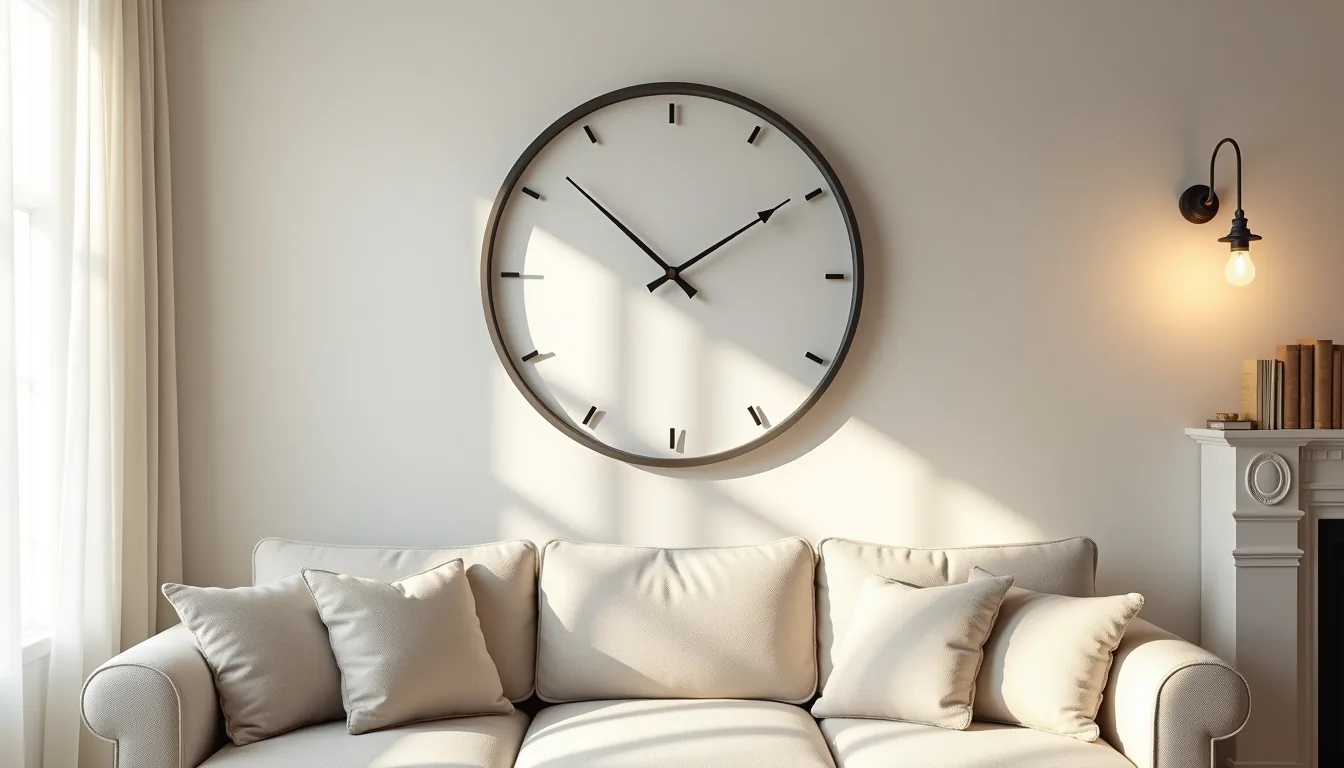
A wall clock can anchor your living room’s design, but only if you treat it as a deliberate architectural element rather than a leftover from a kitchen remodel. That shift in thinking changes everything: placement, scale, material, and even the timepiece’s secondary function as art. The six approaches that follow each solve a different spatial or stylistic problem, from renting constraints to long-term investment pieces.
By the end, you’ll know exactly which route fits your wall, your budget, and your daily habits, without guessing.
Key takeaways
- Scale dictates success: An oversized clock should span roughly 1/2 to 2/3 of your sofa or credenza width, while anything smaller gets visually lost above large furniture.
- Match the style to the room’s finish: A sleek metal clock suits modern, minimalist spaces, whereas a wood or brass vintage piece works best in rooms with warm, traditional textures.
- For rentals, skip the drill: Use heavy-duty adhesive hooks rated for 10–20 pounds to hang clocks up to 12 inches in diameter, and patch any holes with spackle before moving out.
- Choose materials by climate: Solid wood and powder-coated metal resist warping and rust in humid rooms, while thin MDF or untreated iron will degrade quickly near kitchens or coastal air.
Oversized Clock as a Focal Point Wall
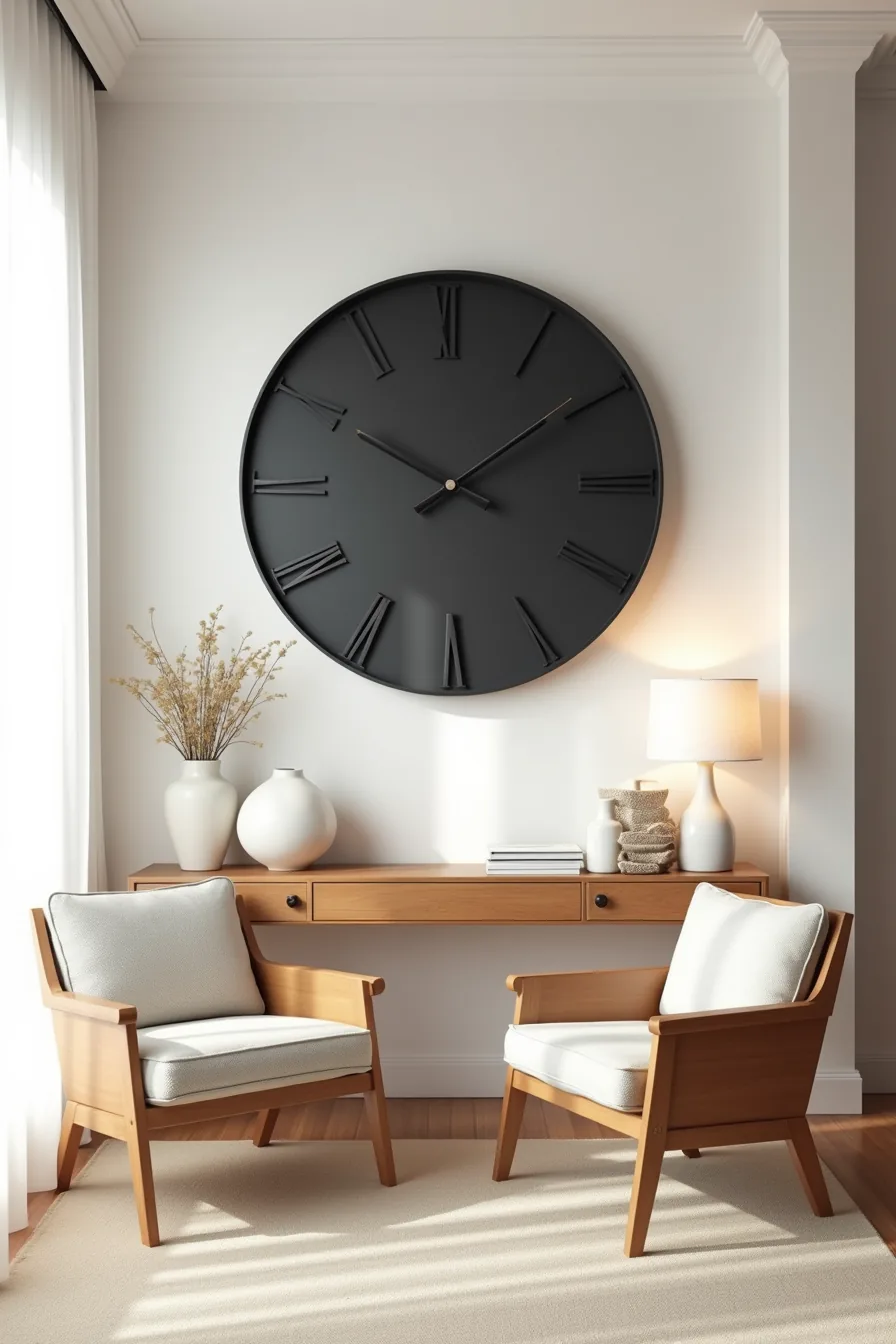
A clock in the 24–48 inch range transforms a living room wall from background to destination. This approach works best in medium to large spaces where the proportion feels intentional rather than overwhelming; in a room under 200 square feet, the same piece can dominate sightlines and crowd furniture. The setup described here, a matte black geometric clock mounted on a feature wall, with a console table and two accent chairs angled toward it, creates a natural conversation zone without requiring a full seating rearrangement.
Why it works: the clock anchors the eye at a single point, giving the room a clear hierarchy. The console table below grounds the vertical mass, while the chairs establish a viewing distance of roughly 6–10 feet, which lets the clock register as art rather than utility. For this to succeed, you need a wall that’s at least 70% wider than the clock’s diameter, and the clock’s center should sit 60–66 inches from the floor, eye level for most standing adults.
This is a long-term investment route; expect to pay more for a piece with a metal frame and quartz movement, and ensure the mounting hardware is rated for at least twice the clock’s weight.
Clock Above a Console or Credenza
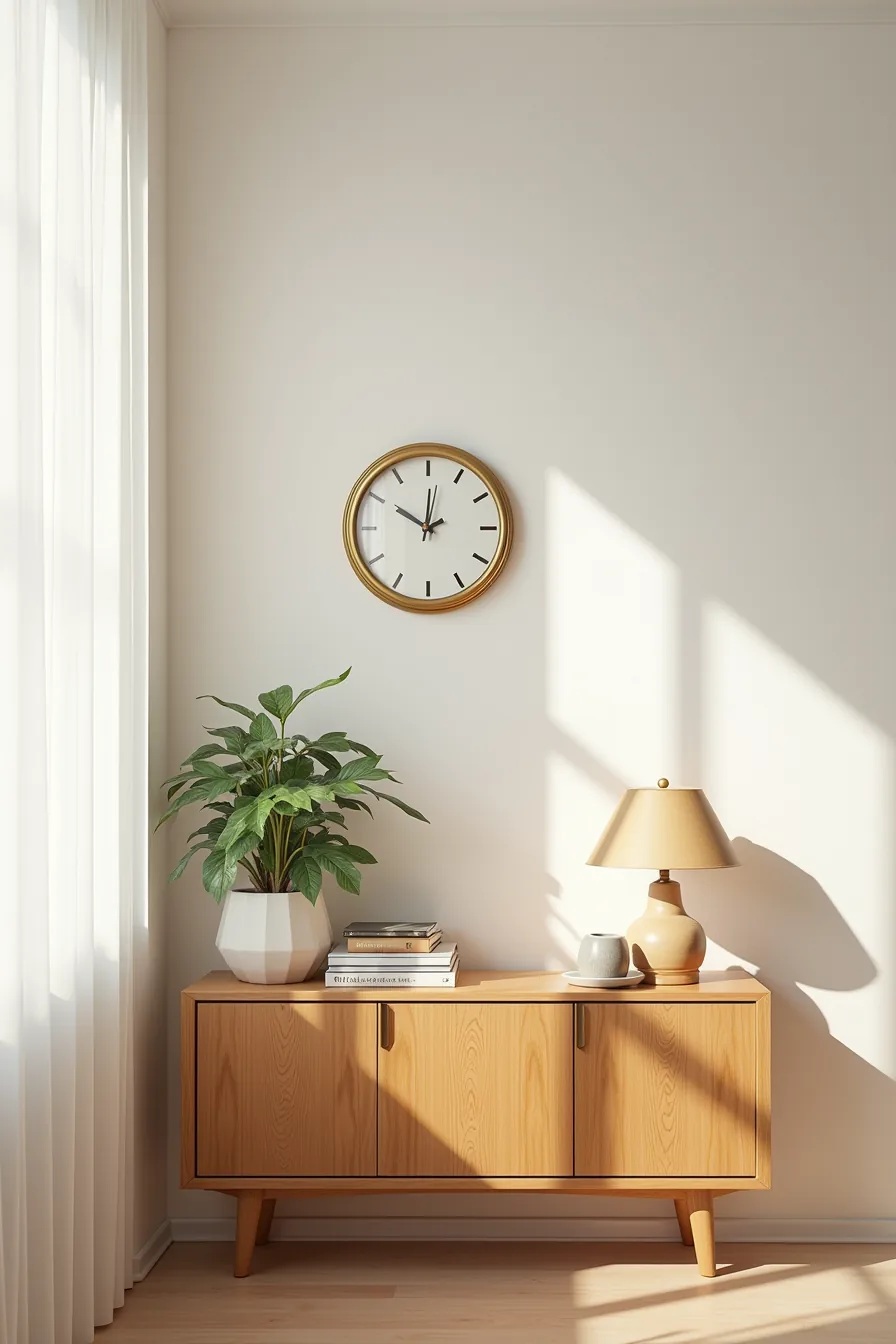
Pairing a clock above a low storage piece gives the wall a curated, gallery-like feel without requiring a full feature-wall treatment. A mid-sized round clock in a brass finish hung 12 inches above a wooden credenza creates a clear visual anchor; the credenza’s horizontal line balances the clock’s circular mass, and the gap between them keeps the arrangement from feeling cramped.
This setup suits living rooms with medium-to-large wall spans, typically 60 inches or wider, where the credenza already occupies the space. The potted plant and ceramic vessel placed on the credenza surface should sit asymmetrically, with the taller plant on one side of the clock’s center line and the vessel on the other; this offsets the symmetry of the clock and adds depth. Keep the clock’s center at 58–62 inches from the floor, which reads naturally when you’re seated or standing a few feet away.
For a budget route, a wood-framed clock with a quartz movement costs roughly a third of a brass or metal counterpart, and you can lift the arrangement’s polish by swapping the vessel for a thrifted stoneware piece.
Modern vs. Vintage Clock Styles and Room Fit
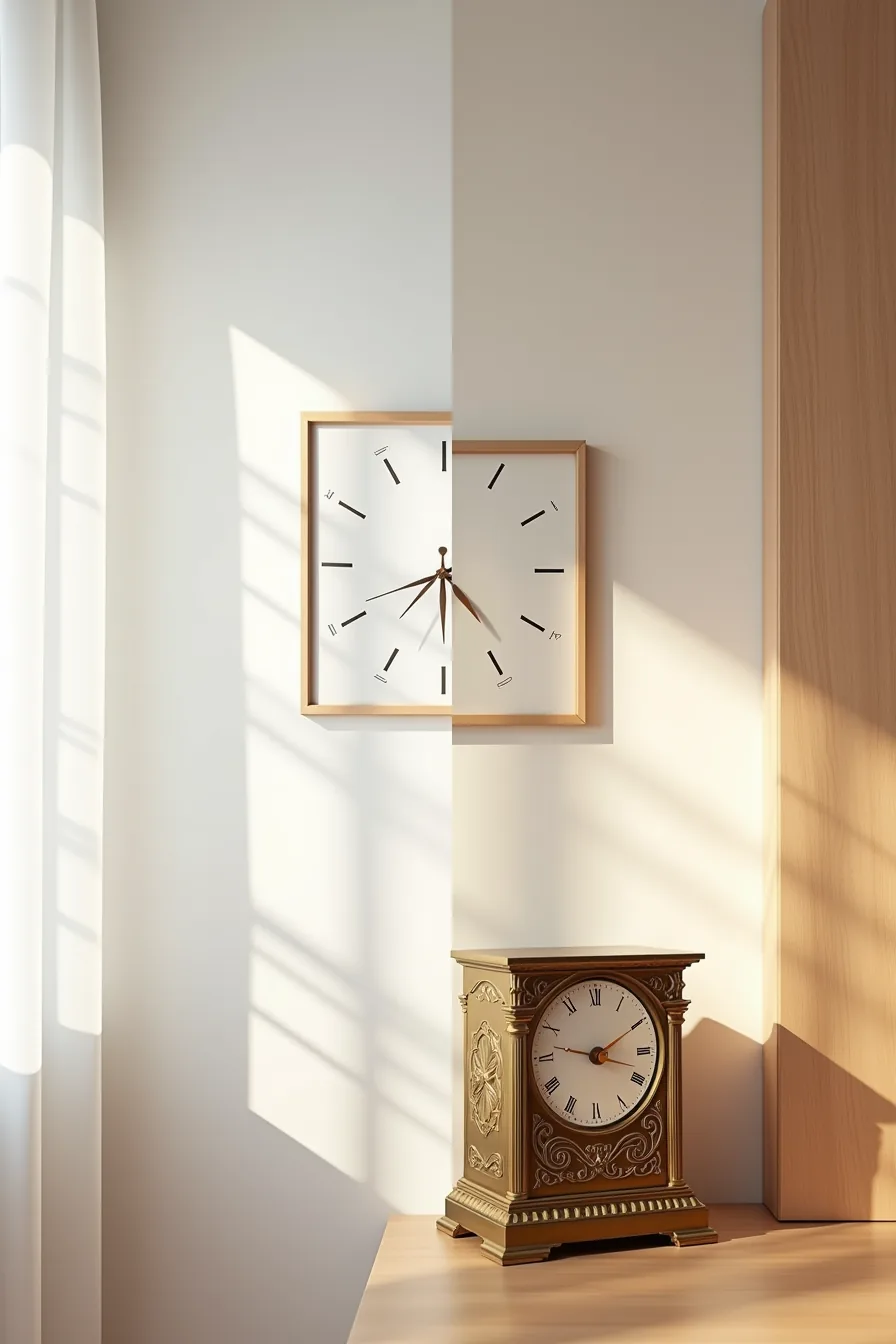
Your decor’s existing lines and finishes dictate which clock style will harmonize rather than fight for attention. A minimalist square clock with thin metal hands reads as an extension of contemporary furniture, think low-profile sofas, glass tables, and matte surfaces. It works best on a clean white wall where its geometry stands alone; pair it with a black or graphite metal frame to echo dark hardware on cabinetry or light fixtures.
An ornate vintage clock with a brass casing suits rooms already carrying traditional weight: tufted upholstery, wood paneling, or Persian rugs. The brass casing picks up warmth from antique side tables and oil-rubbed bronze accents, and its dimensional detailing holds its own against textured wallpaper or limewash. The split-vignette comparison above, minimalist square against ornate brass, represents the two poles; most rooms fall somewhere between, so match the clock’s finish to the dominant metal in the room, not the accent one.
A brushed nickel clock in a brass-heavy room will look accidental; the reverse reads as deliberate layering.
Scaling Wall Clock Decor for Small Spaces
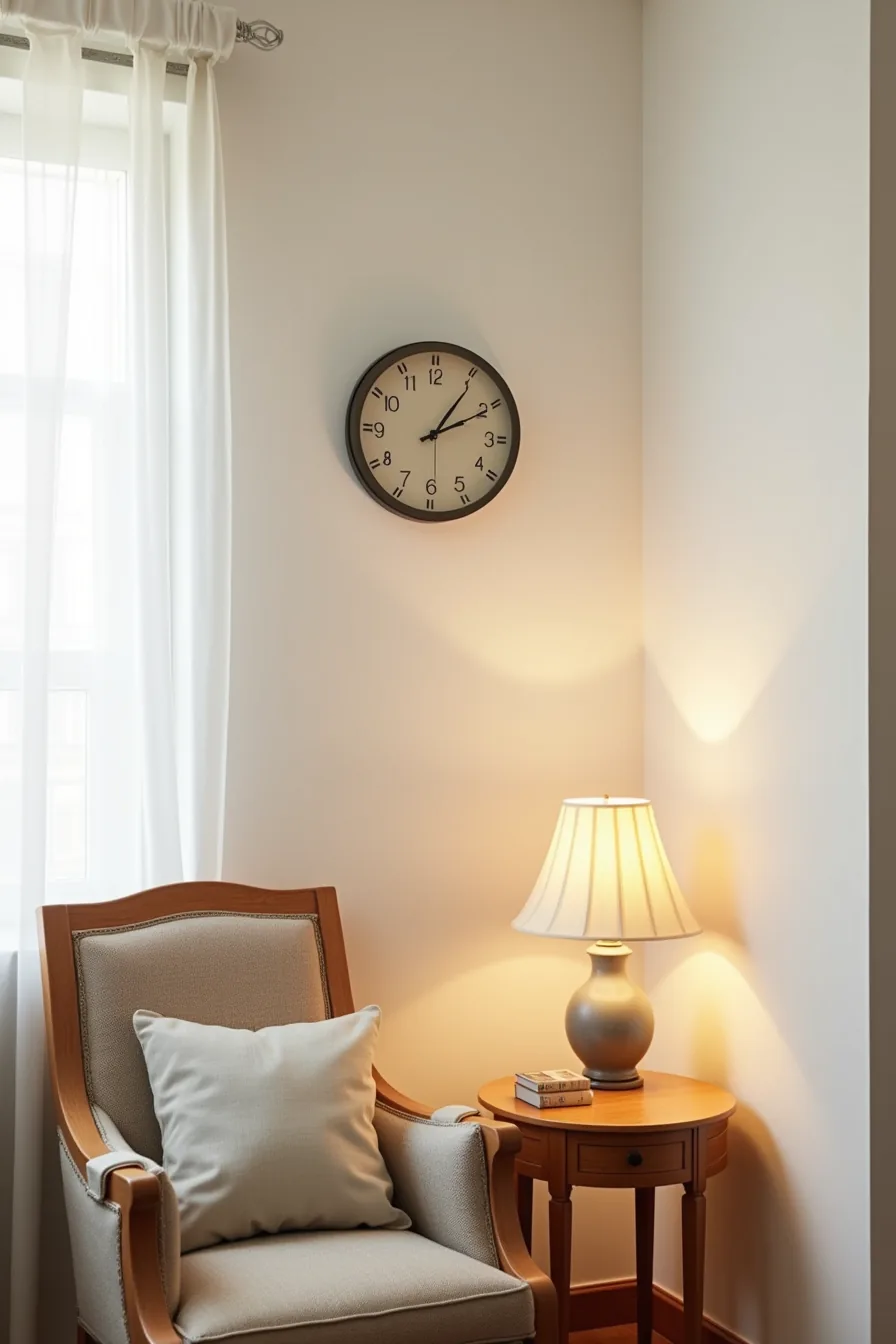
In a compact living room, the clock’s diameter matters more than its style. Stick to a 12–20 inch face; anything larger will dominate a short wall and make the seating area feel cramped. A 14-inch clock, like the one mounted above the armchair in this tight corner, occupies roughly the same visual weight as a medium framed print, enough presence to register, not enough to overwhelm.
Place the clock at eye level, about 60–65 inches from the floor, directly above the chair’s backrest. This anchors the seating zone without competing with the lamp on the narrow side table below; keep the lamp’s shade below the clock’s bottom edge to preserve a clear sightline. Avoid mounting it near a gallery wall, tall bookshelf, or large mirror, a single small clock needs empty wall around it to read as intentional.
If wall space is truly scarce, choose a clock with a slim profile (under 2 inches deep) so it sits close to the wall, leaving the room’s walking path and sightlines unobstructed.
Wall Clock Decor for a Quick Rental Refresh
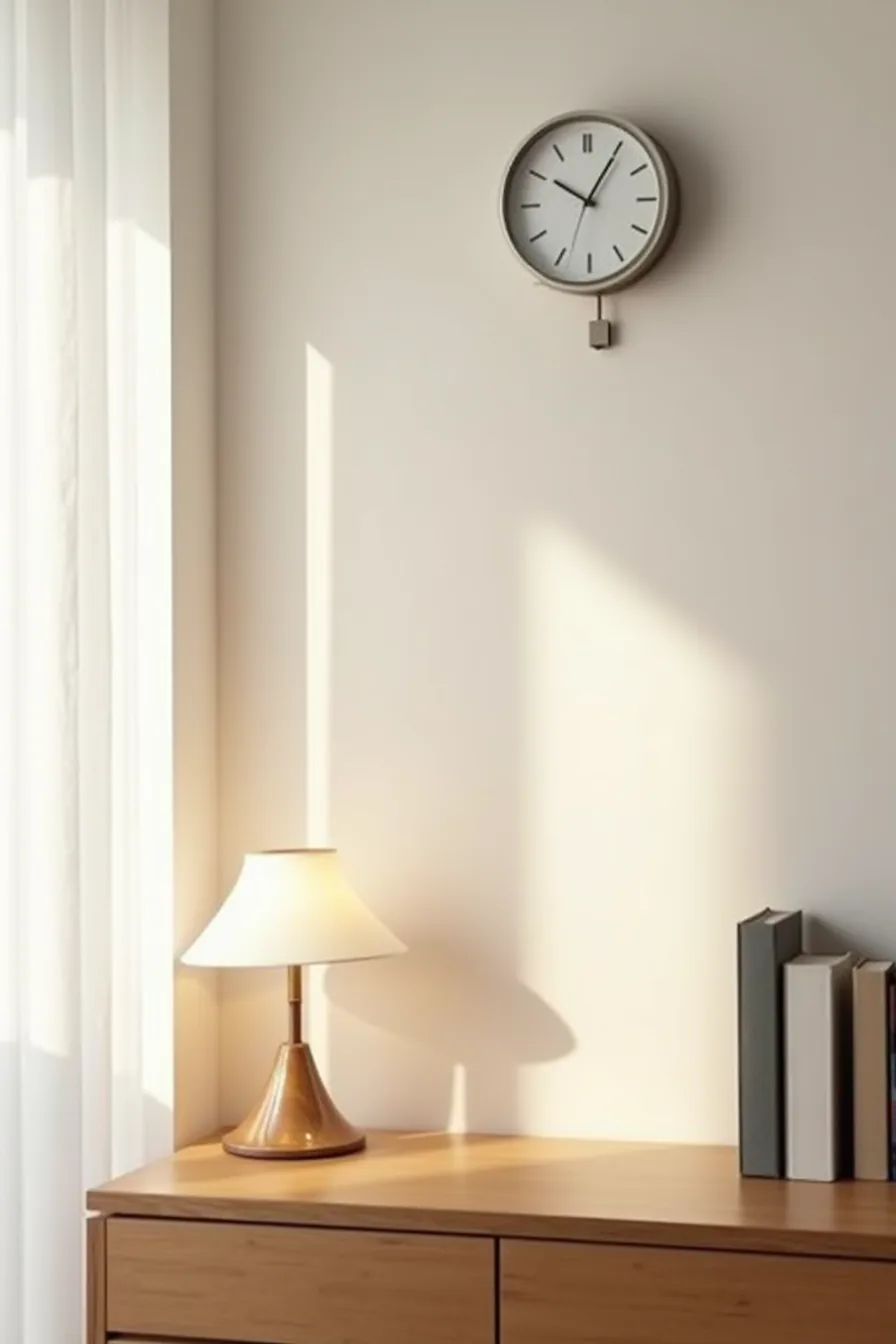
The adhesive hook route works best when you want the visual payoff of a statement clock without forfeiting your security deposit. Choose a battery-operated model with a visible command strip mount, the strip carries most clocks up to 10 pounds, though a 12-inch clock with a plastic frame keeps the weight safely under that limit. Press the strip firmly for 30 seconds, then wait a full hour before hanging the clock; this gives the adhesive its maximum hold on painted drywall.
You gain two practical advantages: the clock travels with you to the next apartment, and you can reposition it without patching holes. The battery compartment, accessible from the side, means you never need to lift the clock off the wall to replace a AA battery, a detail that matters when the mount sits at eye level in a high-traffic room. For renters with textured walls, skip the adhesive route and place the same clock on a console table or media stand instead; adhesion fails on popcorn and heavy orange-peel textures.
Material Durability and Maintenance Across Climates
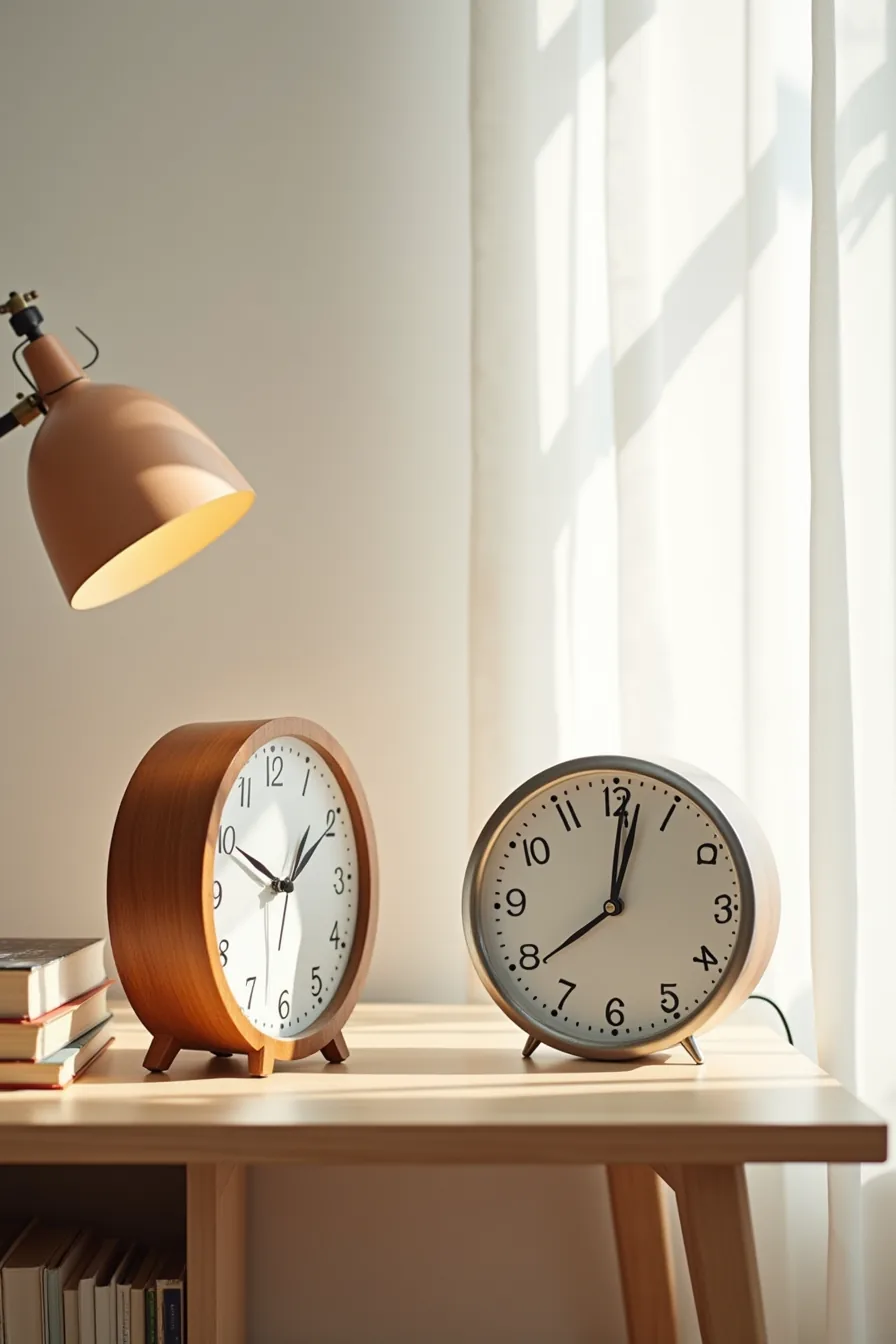
Material choice determines how often you’ll be cleaning, not just how the clock looks. A wood-frame clock, like the one in this shelf trio, swells and warps in rooms that regularly exceed 60% humidity, think kitchens with daily steaming, so it belongs in a dry living room or hallway, where a monthly wipe with a dry microfiber cloth keeps dust from settling into the grain. The brushed-steel clock beside it shrugs off humidity but shows every fingerprint, especially in coastal climates with salt air; clean it with a slightly damp cloth and dry immediately to prevent water spots.
Resin clocks, the third option here, handle both heat and moisture well, making them the lowest-maintenance pick, a quick dusting every two to three weeks suffices. Replace batteries once a year, ideally when you change clocks for daylight saving time, to prevent alkaline corrosion that permanently stains the interior mechanism.
Your 10-minute assessment
Before you buy anything, stand where you normally sit or stand in the room and look at the wall you’ve in mind. Hold a piece of cardboard cut to your estimated clock size at that spot for 10 minutes while you move around the room. If it feels intrusive from any seating position, size down by 4-6 inches.
If it disappears visually, size up.
Check sightlines: the clock shouldn’t block a window, doorway, or TV viewing angle from your primary seat. For rentals, confirm your mounting method works with your wall type, plaster, drywall, or concrete, before you commit to a heavy piece.
What to do first
Measure your wall width and identify your dominant seating position. Write down both numbers, then match them against the sizing ranges below:
- Wall under 6 feet wide: 12-18 inch clock
- Wall 6-10 feet: 20-30 inch
- Wall over 10 feet: 32 inches or larger
That single measurement eliminates half the options immediately and points you toward the style that fits your space, budget, and lease agreement.
Frequently Asked Questions
What size wall clock works best in a living room with standard 8-foot ceilings?
Choose a clock face 24–30 inches in diameter. That range anchors a standard 4–5 foot-wide sofa wall without overwhelming it. Smaller than 18 inches reads as an afterthought.
Can I hang a wall clock above a TV, or does it compete for attention?
Yes, but only if the clock is at least twice the TV’s height and mounted 6–10 inches above the frame. Otherwise, your eye will bounce between the two. Skip it if the TV is already busy with soundbar or shelves.
How do I prevent a wall clock from looking like a purely functional object rather than decor?
Pair it with a gallery arrangement or place it off-center over a console, not dead center on an empty wall. Choose a clock with visible texture, wood grain, metal patina, or sculpted numerals, so it reads as art first.
What’s the best way to secure a heavy oversized clock to drywall without damaging it?
Use a toggle bolt rated for at least 50 pounds, not a drywall anchor. Drill a pilot hole, insert the toggle, and tighten slowly. For clocks over 20 pounds, add a second toggle 12 inches below the first, then hang on both hooks.