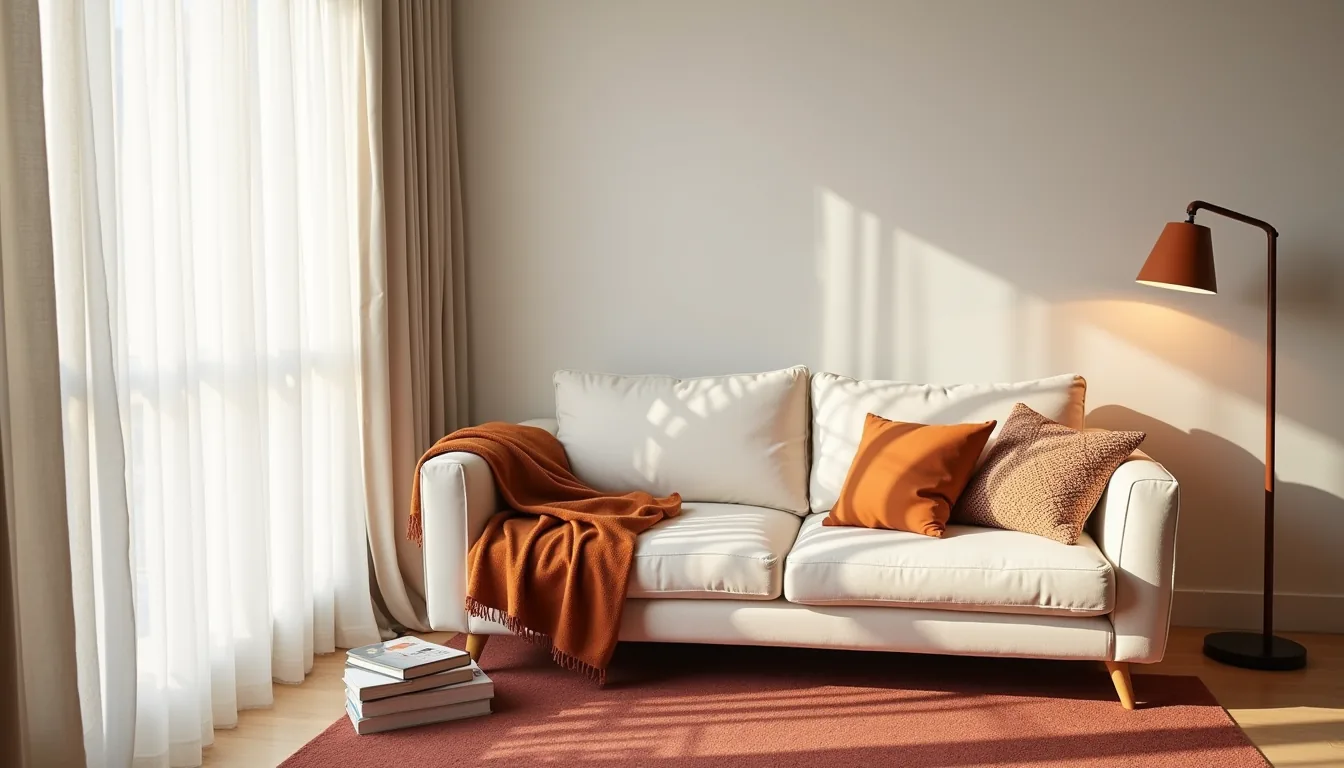

Fall home decor works best when it solves a practical problem, like warming up a room that feels too stark or adding texture to a bare corner, rather than when it merely stacks pumpkins on a shelf. That means choosing pieces that earn their square footage: a throw that adds warmth, a lamp that shifts the light, or a table runner that defines a dining zone. You’ll find six distinct approaches here, each matched to a specific room size, budget, and maintenance level, so you can skip the generic and pick what actually fits your life.
Key takeaways
- Layer textures first, swap in chunky knit throws, velvet cushions, and a wool rug before changing anything else, as this delivers the most visual impact for under $100.
- Swap your bulbs to warm 2700K LED fixtures and add two table lamps at 40-60 inches height to instantly deepen the room’s coziness without rewiring.
- Use dried branches and mini gourds in a ceramic vase, they last 3-4 months with zero watering, but keep them 12 inches away from heat vents to prevent brittleness.
- Rearrange for fall flow by pulling seating 6-8 inches closer to the fireplace or TV, and clear a 36-inch walkway in entryways to avoid blocking traffic with decor.
Layered Textiles: The Fastest Way to Shift Your Space
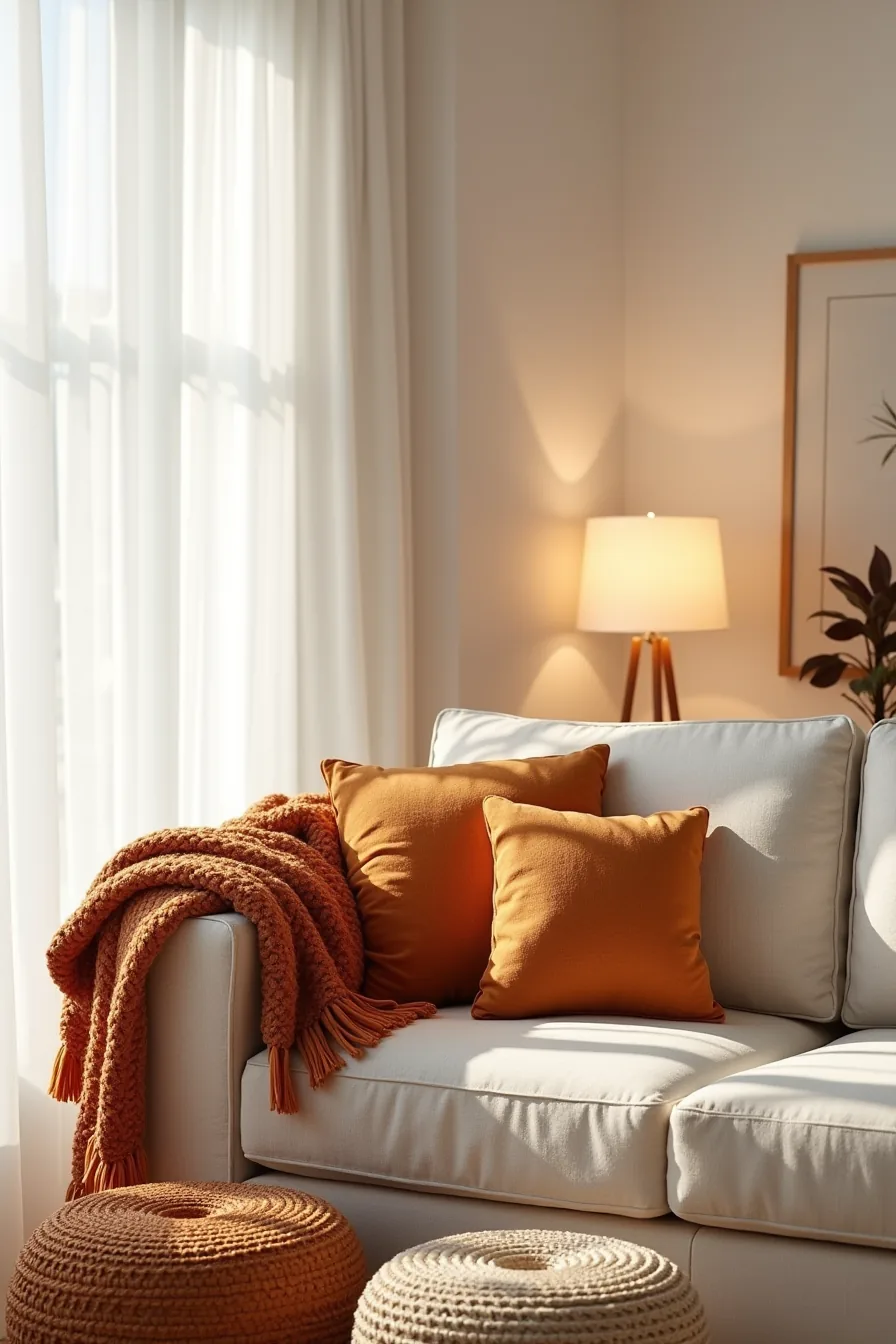
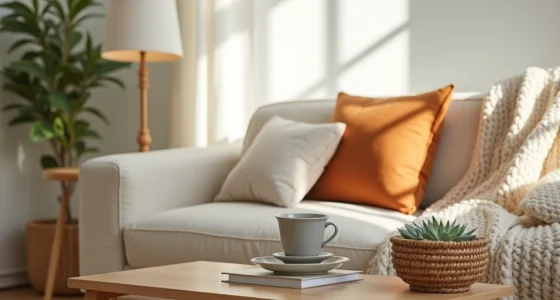
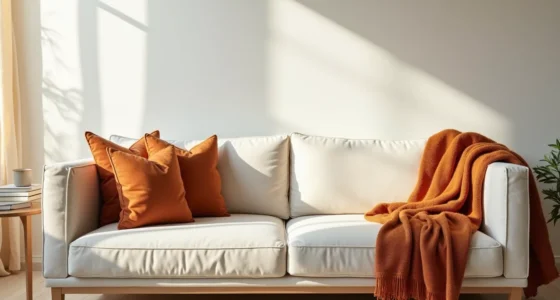
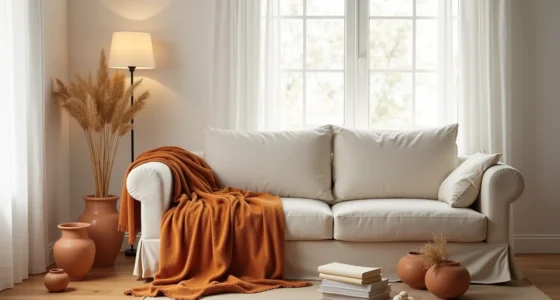
If you want immediate fall home decor impact without committing to paint or permanent fixtures, textiles are your strongest lever. Swapping out lightweight summer throws for a chunky knit blanket in burnt orange instantly signals the season’s shift. Drape it over the arm of a neutral sectional, letting the texture contrast against smooth fabric.
Then, stack three cushions in varying fall fabrics, think corduroy in rust, velvet in olive, and a subtle plaid in cream, leaning them against the backrest rather than arranging them symmetrically. This casual, layered approach reads as intentional and lived-in, not staged. Finally, place a woven pouf at the base of the seating area.
It adds a nubby, organic texture that grounds the arrangement and offers extra informal seating for guests.
Why this works: It suits renters because nothing is permanent, you can stash summer items and reverse the look in minutes. For large living rooms, scale up by using a larger blanket (even a 60×70 inch throw) and adding two pillows per corner; for small apartments, use fewer, smaller items to avoid visual clutter. Maintenance is low: machine-wash the blanket and cushion covers on a gentle cycle, and spot-clean the pouf.
Budget-wise, a good-quality knit throw runs $40–$100, while a set of three mixed pillows costs $60–$150; the pouf adds $50–$120. Choose wool or acrylic blends for durability, and opt for muted, earthy tones to keep the palette cohesive with your existing furniture.
Warm Lighting: Creating Depth and Coziness with Fixtures
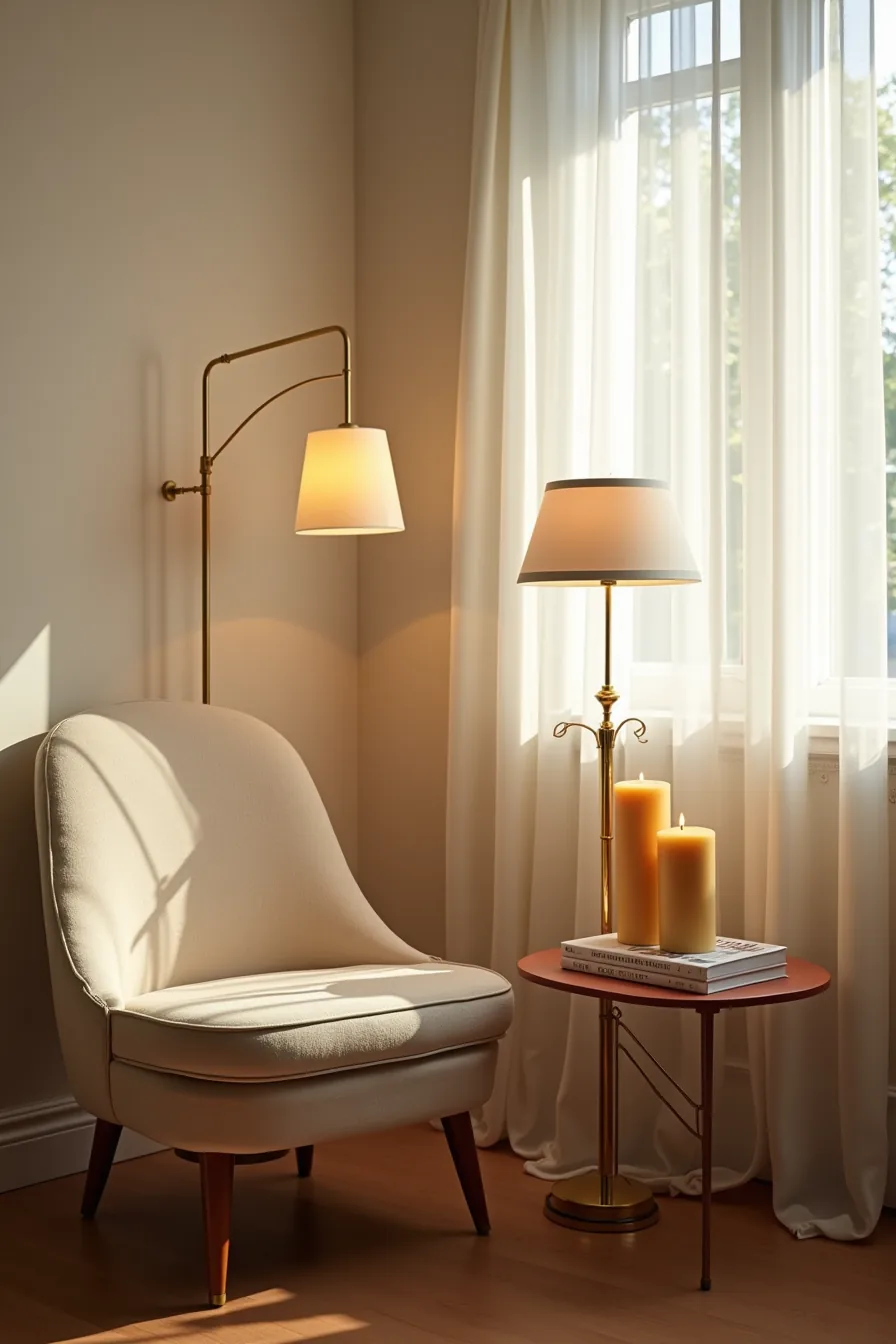
Light is the fastest way to change a room’s mood without moving a single piece of furniture. Swap your overhead brights for three distinct light sources: a brass arc floor lamp, a table lamp with a linen shade, and a cluster of pillar candles on a sideboard or mantel. The goal is to drop the color temperature to around 2700K, warm, amber-toned bulbs mimic sunset and make walls feel softer.
For a renter-friendly setup, choose plug-in sconces or freestanding lamps; you avoid wiring changes and can take them when you leave. A standard 60-watt equivalent LED in warm white works for most lamps, but use a dimmer switch (or smart bulb) to lower brightness to 20–30% for evenings. Position the arc lamp over a reading chair, place the table lamp at eye level on a console, and group three pillar candles of varying heights (8, 10, and 12 inches) on a heat-resistant tray, never near curtains or low-hanging fabrics.
Scale matters: in a small room, one arc lamp and two candles suffice; in a large open plan, add a second floor lamp in a dark corner to avoid pooling shadows. Maintenance is simple, dust lampshades monthly and trim candle wicks to ¼ inch before each burn to prevent smoking. This layered lighting approach costs roughly $150–$400 for quality pieces, but you can mix thrifted lamps with new bulbs to stay under $100.
Natural Elements: Branches, Gourds, and Seasonal Foliage
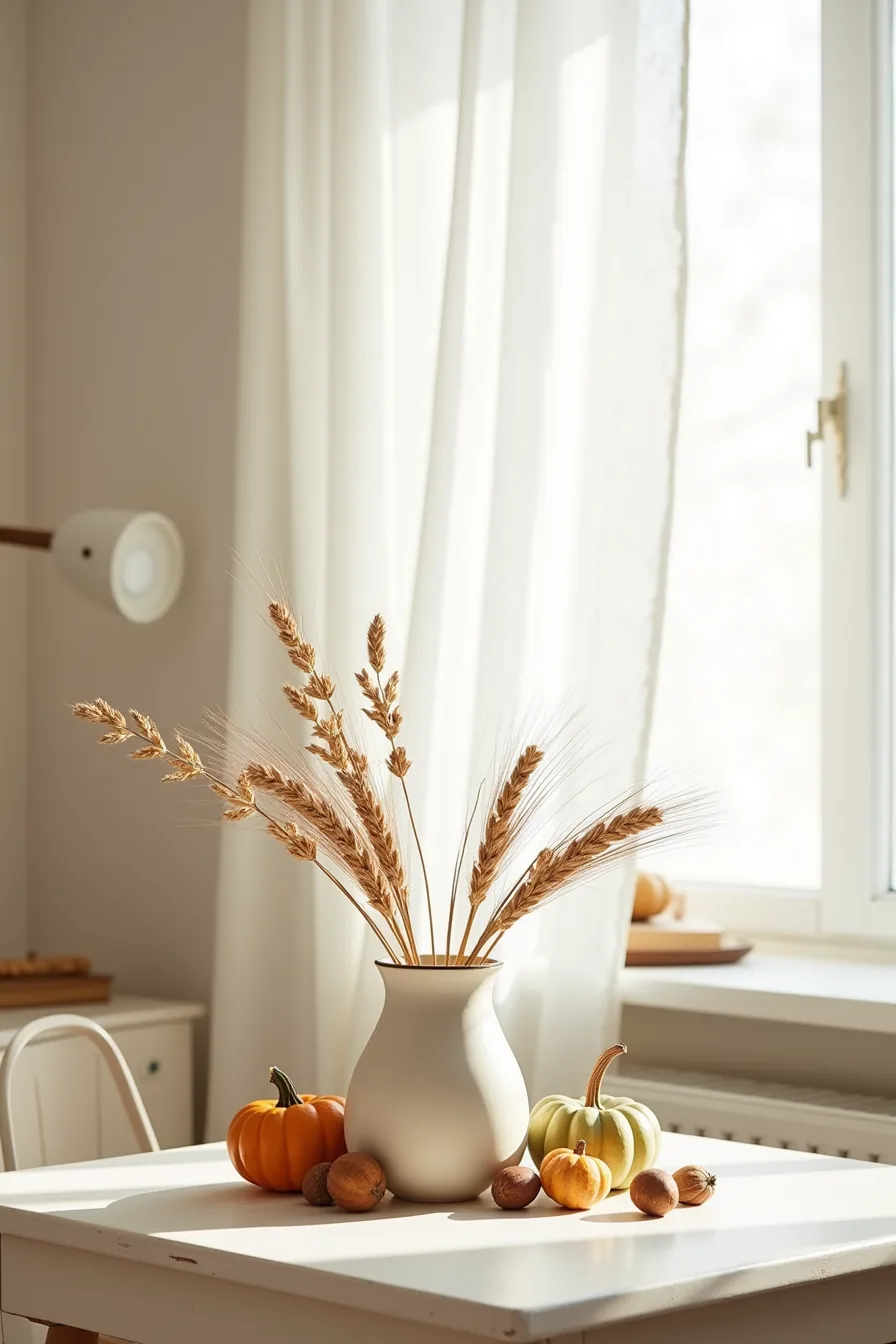
A low ceramic bowl with three dried wheat bundles and curly willow branches creates a centerpiece that reads instantly as autumn without a single pumpkin. Scatter small gourds and acorns loosely around the base rather than lining them in a row, the asymmetry mimics how they’d fall naturally and looks intentional for about two minutes of arranging effort. Dried wheat and willow last three to six months indoors, while gourds hold their color for two to four weeks before softening; swap them out before they decay to avoid fruit flies.
Choose a bowl no wider than one-third of your table’s length. On a 60-inch dining table, an 18- to 20-inch bowl leaves room for plates; on a coffee table, a 10- to 12-inch version works better. Source wheat bundles and curly willow from craft stores for $8–$15 total, or forage willow and acorns from a park, just inspect for insects before bringing them inside.
Dust the arrangement weekly with a soft brush, and keep it away from radiators; heat accelerates gourd rot and makes wheat brittle. This route suits renters and budget decorators since everything is movable and costs under $25.
Wall Color and Removable Finishes: Temporary and Permanent Options
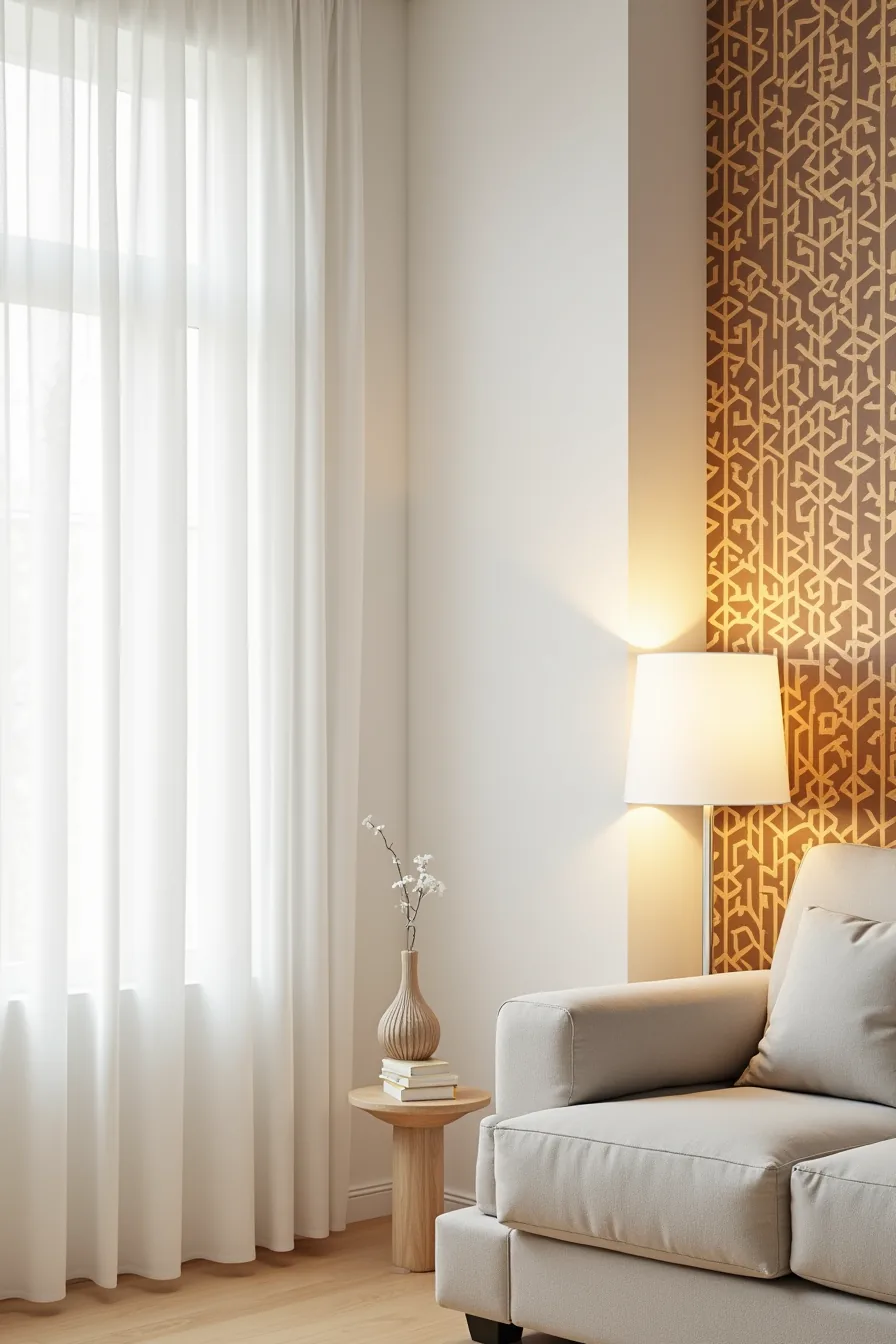
Peel-and-stick wallpaper in deep gold and chocolate brown delivers the richest color shift for the least commitment. A single 12-foot accent wall takes roughly two hours to apply if the wall is smooth and clean; textured walls require a liner first or the adhesive won’t grip evenly. Expect to pay $40–$70 per roll, with most geometric patterns covering about 28 square feet per roll, enough for a 9-foot wall with minor waste.
Renters get the full effect without patching or repainting, and the material peels off cleanly if you remove it within two years. Homeowners who want permanence should consider matte paint instead; a gallon covers 350–400 square feet and costs $30–$60, but prep work, taping, patching, priming, adds three to four hours. Fabric wall covering is a middle route: starch-based paste holds it in place, and it steam-peels off with rental-friendly results for roughly $2–$4 per square foot.
Wallpaper suits small rooms best, where the pattern creates depth without overwhelming; reserve paint for large open-plan areas where a single saturated tone anchors the whole space.
Functional Decor: Seasonal Furniture Rearrangement and Layering
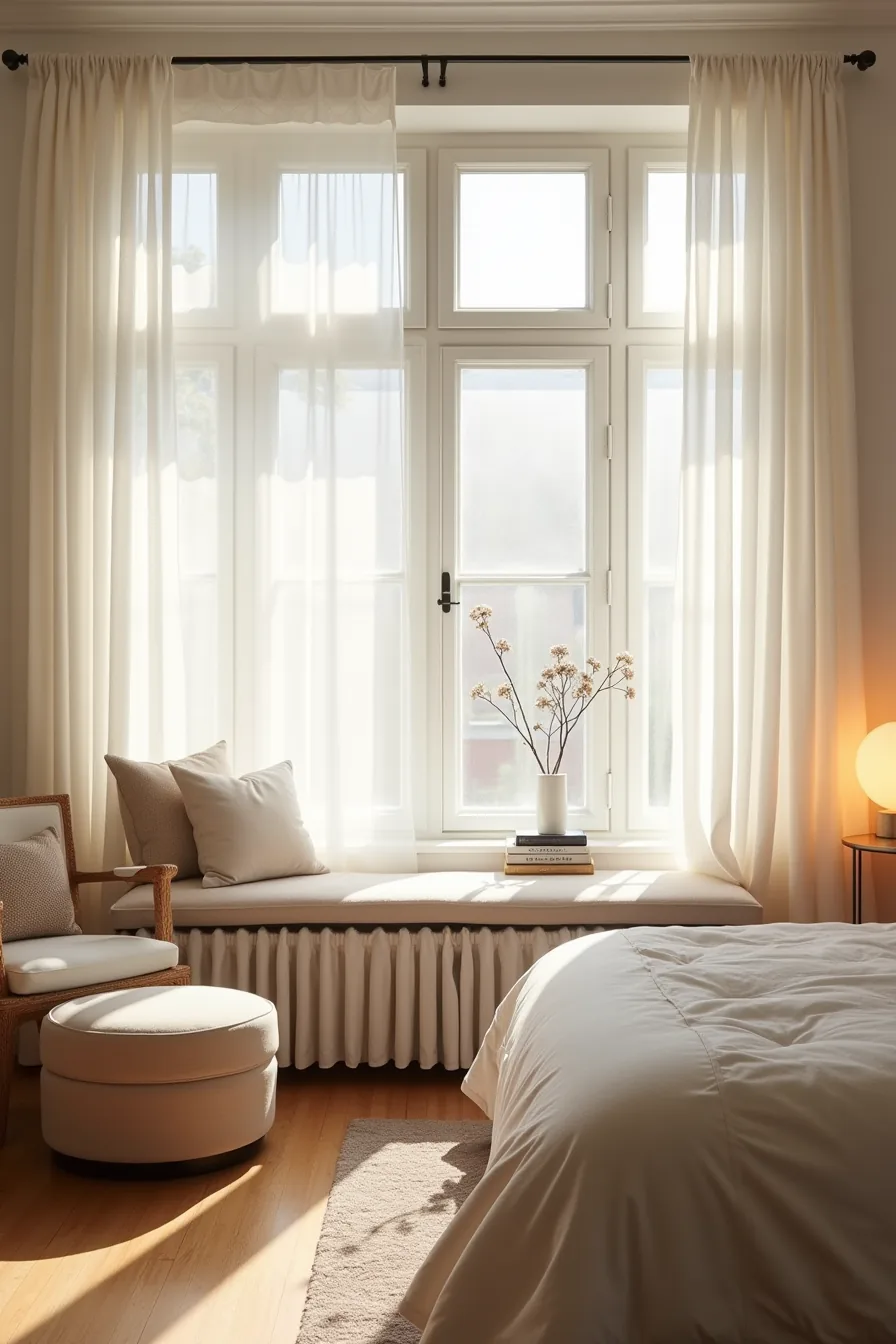
Repositioning what you already own costs nothing and changes how a room feels more than any new purchase. Move the bed against the opposite wall, then place a low upholstered storage ottoman perpendicular to the window, this creates a defined reading nook without adding a single piece of furniture. The ottoman pulls double duty: it stores heavy throws and wool blankets you’ll reach for nightly, while doubling as a perch for a side table and warm lamp.
This layout suits bedrooms with at least 10–12 feet across the shorter wall, since you need roughly 3 feet of clearance around the bed for easy access. In smaller rooms, substitute a storage bench for the ottoman and skip the side table entirely, hanging a swing-arm lamp instead. The layering effect, textiles, warm light, and a cozy corner, reads as intentional fall styling, but it’s pure function.
Your morning routine stays unobstructed, and the nook gives you a reason to sit by natural light before sunset arrives earlier.
Entryway and Outdoor Transitions: Setting the Seasonal Mood
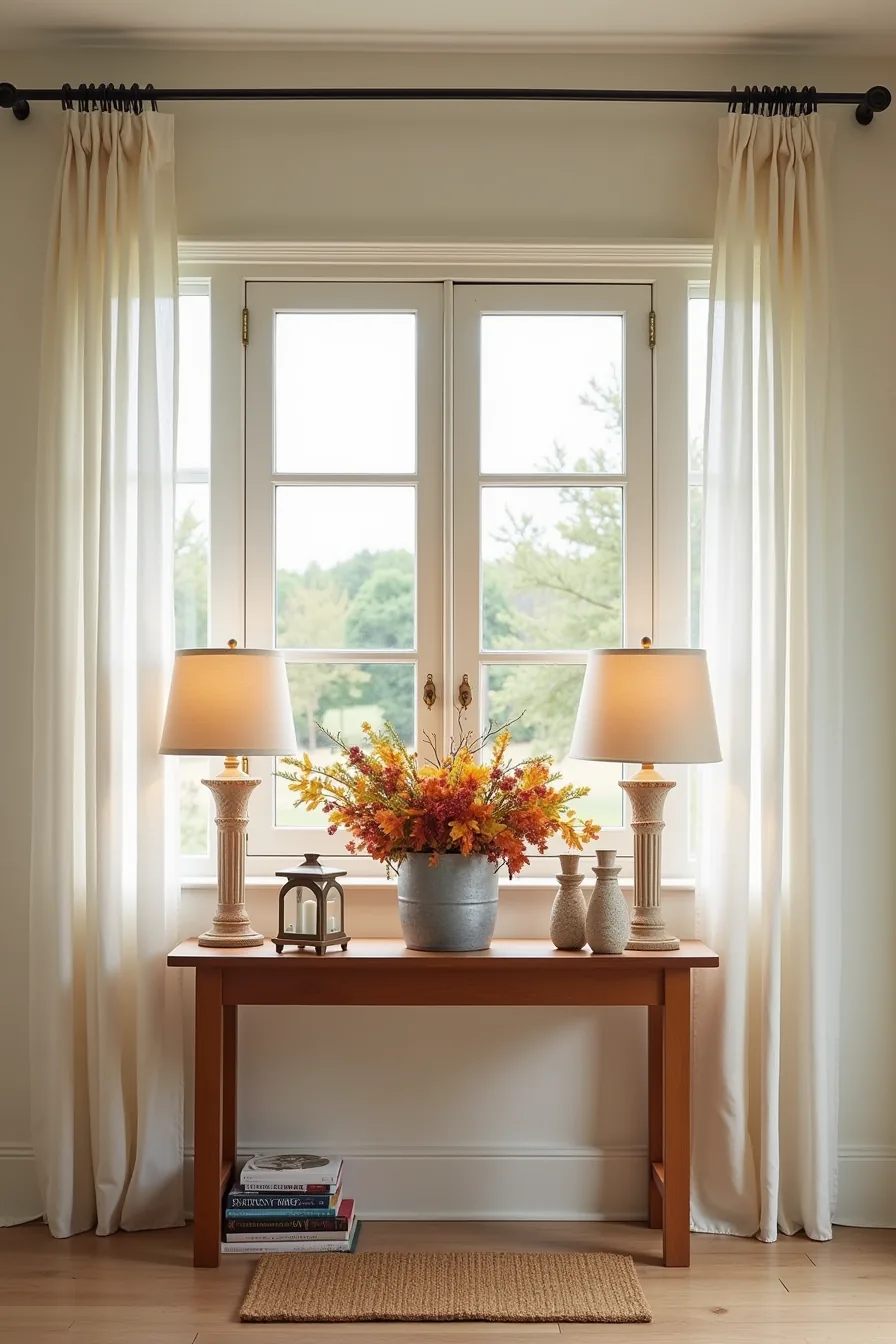
Your entryway is the first handshake of your home, so make it say “autumn” before anyone steps inside. Start with a solid wooden console table, it anchors the space and gives you a landing zone for keys and mail. On top, place a low galvanized metal urn filled with a tight cluster of seasonal foliage; think ornamental kale, dried hydrangeas, or curly willow branches.
Flank the urn with two matching lanterns, leaving the candles unlit during daylight hours to avoid a constant flame hazard near dry leaves. Swap in battery-operated LED candles with a timer for evening ambiance, which costs under $20 and removes the fire risk entirely. The doormat below should be coarse, like coir, to trap mud and moisture before it tracks inside, choose a pattern with dark fibers to hide inevitable staining.
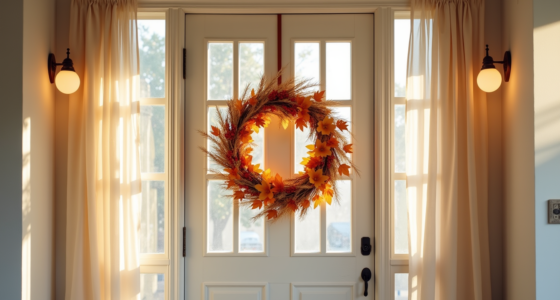
For renters, avoid permanent hooks or drilled brackets. Use over-the-door hooks for lightweight wreaths and adhesive-backed hooks rated for at least 5 pounds for seasonal garlands. On a budget, skip the urn and use a galvanized bucket from a garden store; fill it with branches foraged from your own yard, which costs nothing but delivers the same visual weight.
In rainy climates, opt for a synthetic foliage mix that won’t mildew, or bring natural pieces indoors after two weeks of exposure.
Where to Start
Begin with the single change that delivers the most visual impact for the least effort: swap your entryway or living room throw pillows and blankets for textured autumnal fabrics. This one swap takes under fifteen minutes and immediately signals the season.
From there, prioritize based on your space. Small rooms benefit most from a console-table vignette; large rooms need a fireplace mantel or dining table centerpiece to anchor the look.
Your next step: Pick one surface, your coffee table, entryway bench, or mantel, and style it tonight with three items: one warm-textured object, one candle or light source, and one natural element. Done is better than perfect.
Frequently Asked Questions
Question: How do I decorate for fall in a small apartment without overwhelming the space?
Choose one focal point, like a mantel or entry table, and limit decor to three items there. Use vertical elements, tall dried branches or a slim garland, to draw the eye up, avoiding bulky pumpkins or oversized throws that crowd walkways.
Question: What’s the cheapest way to refresh a room for autumn without buying new furniture?
Swap textiles you already own, pull out heavier blankets, flannel pillowcases, or a wool rug from storage. Then, add free natural accents like pinecones, acorns, or colorful leaves in a clear glass vase; this costs nothing and changes the room’s texture instantly.
Question: Can renters do fall home decor without losing their security deposit?
Yes, if you stick to non-damaging methods: use command hooks for lightweight wreaths, place pumpkins on trays or mats to prevent stains, and avoid candles on bare wood. Skip any adhesive that leaves residue, and always photograph your setup before removal for proof of original condition.
Question: How long do dried fall decorations typically last before they need replacing?
Dried corn husks, straw, and cut gourds last 2–4 weeks indoors before fading or molding. Preserved hydrangeas and eucalyptus can hold color for 2–3 months if kept dry and away from direct sunlight, while pinecones and cinnamon sticks stay viable for an entire season with occasional dusting.