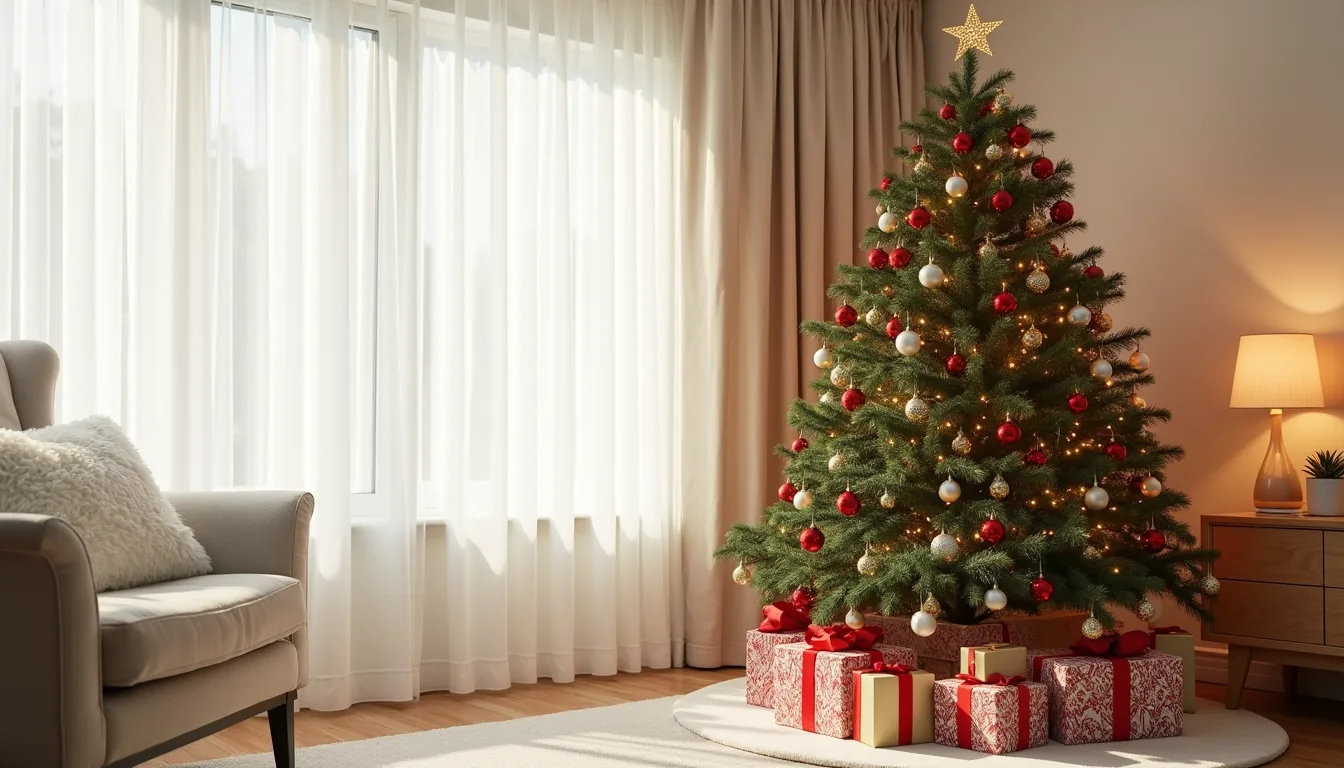

Traditional Christmas tree decor ideas rarely mean one specific look, so your first decision isn’t about ornaments, it’s about which version of “traditional” fits your room’s size, your budget, and how much maintenance you actually want to take on each December. The spectrum runs from cozy, rustic farmhouse charm to polished, symmetrical elegance, and each approach demands a different mix of materials, scale, and upkeep. Matching the right style to your space and routine is the difference between a tree that feels like a burden and one that feels like the centerpiece of your holiday.
Key takeaways
- Traditional tree decor spans six distinct styles, Victorian, farmhouse, classic red-and-gold, heirloom mixed metals, minimalist candlelit, and adaptive budget/rental/investment, so you can match a look to your space and lifestyle without compromising on festivity.
- For small rooms, choose a slim 6-foot tree and scale ornaments down to 2-3 inch pieces, while large open-plan areas can handle a 7-8 foot tree with oversized 4-6 inch baubles for visual balance.
- On a budget, repurpose fabric ribbon, pinecones, and thrifted glass ornaments for under $50 total, but if you’re investing, spend on a pre-lit artificial tree ($150-$300) and copper or silver heirloom pieces that last decades.
- Renters should use a freestanding tree skirt and command hooks for lights (no wall damage), and skip heavy garlands that can pull branches, opt for lightweight tinsel or paper chains instead.
Victorian Elegance: Layered Ornaments and Ribbon
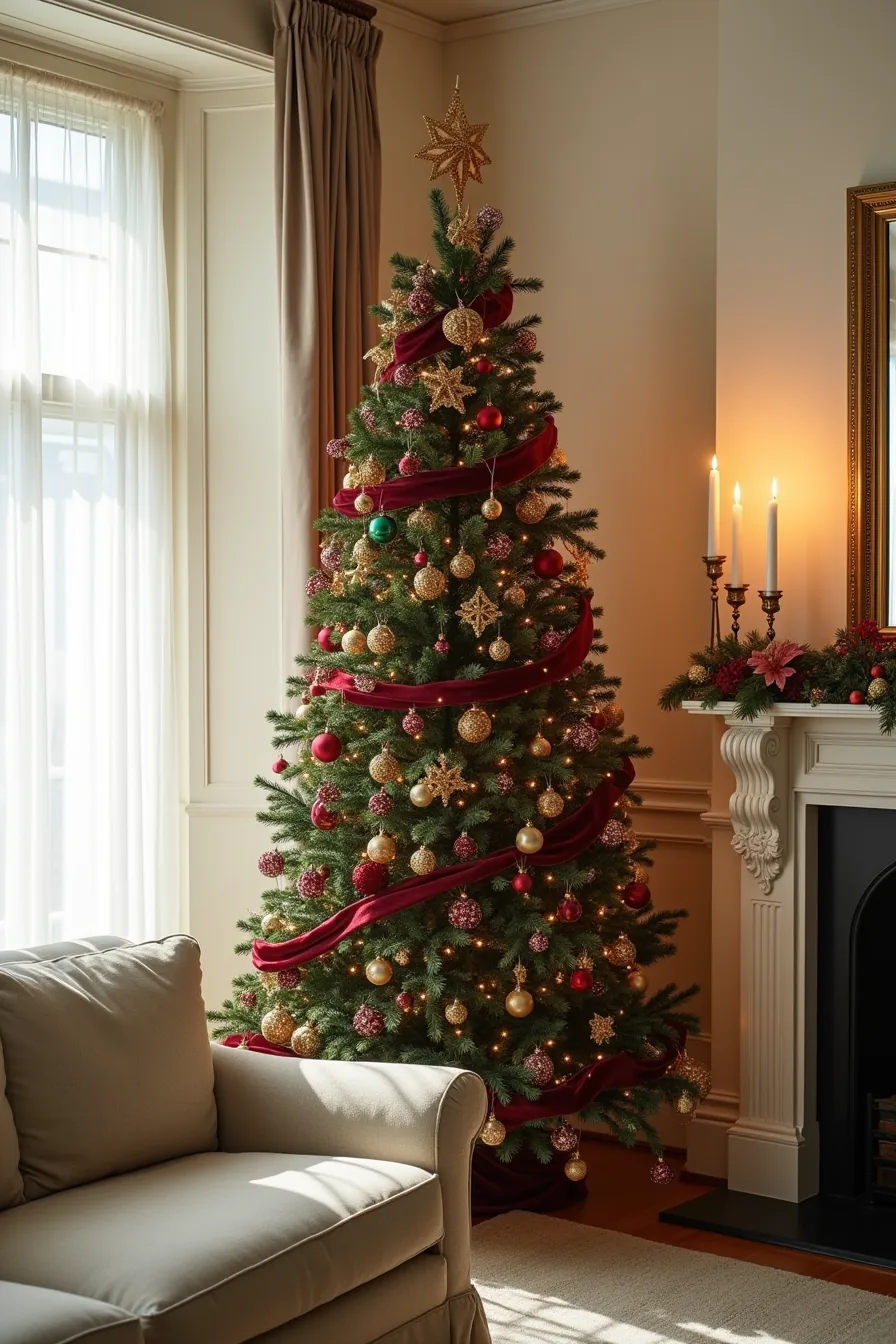
A Victorian-style tree prioritizes density and richness over minimalism. You’ll achieve this look by clustering jewel-tone ornaments, deep burgundy, emerald, and gold, in groups of three, rather than spacing them evenly. This approach creates visual weight and mimics the opulent, collected-over-time feel of a 19th-century parlor, making it ideal for formal living rooms with high ceilings and abundant natural light.
The signature element is the ribbon treatment. Use wide velvet and satin ribbons, cut into lengths, and loop them in deep, dramatic swags from branch to branch, securing them with discreet wire. This layering technique adds a soft, dimensional texture that garlands alone can’t provide; for the lower branches, weave a classic beaded or tinsel garland through the boughs to anchor the design visually.
This style suits medium-to-large trees, typically six to eight feet tall, as the substantial ornament size and ribbon volume would overwhelm a smaller tabletop tree. For a cohesive look, stick to a tight palette of three colors and use a mix of matte and glossy finishes. Expect to spend a few hours on installation, and remember that a tree stand with a large water reservoir is non-negotiable, the extra weight from ornaments and ribbons demands stability.
Rustic Farmhouse: Natural Materials and Muted Tones
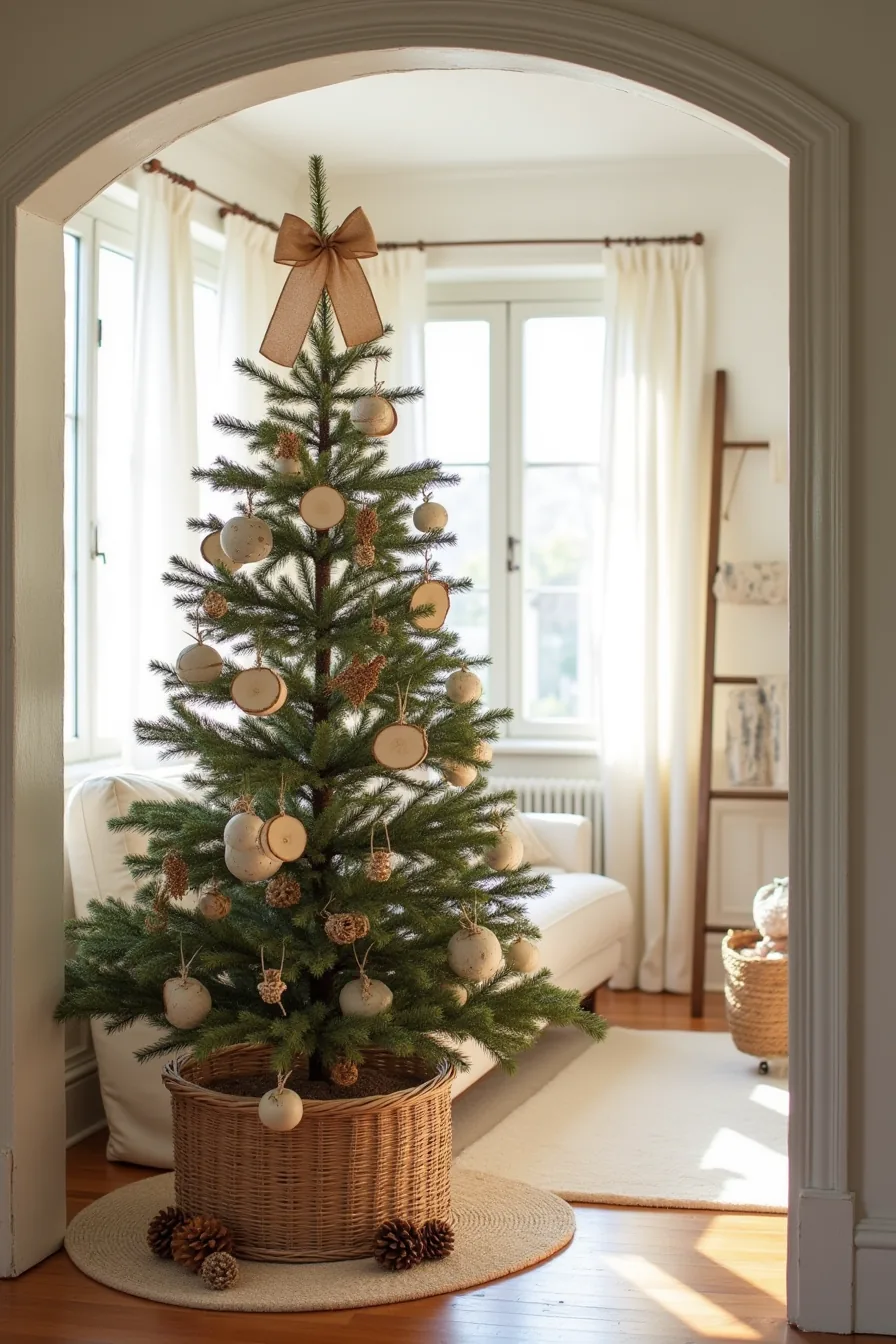
If Victorian density feels too formal, the rustic farmhouse approach gives your tree breathing room. Here, negative space is a design feature, not a flaw. The palette runs from cream to warm brown, and texture does the work that color usually does.
Start with a burlap bow at the top, then space wood slice ornaments evenly, roughly one per square foot of tree surface. Tuck dried wheat bundles into branch crotches at varying depths to create dimension without bulk. Cream-colored fabric strips, torn rather than cut, mimic the ribbon swags of Victorian styling but read as softer and more casual.
A woven basket of pinecones at the base anchors the look, with a wooden ladder leaning nearby to reinforce the cottage setting.
This style suits a 5-foot tree in an open-concept or kitchen-adjacent space where the muted tones won’t fight with existing wood finishes. Dried botanicals will shed over time, so skip the wheat if you’ve allergy concerns, pinecones alone achieve the same depth. Plan for 45–60 minutes of decorating, since even spacing requires more decision-making than clustered ornament placement.
Classic Red and Gold: Timeless Color Blocking
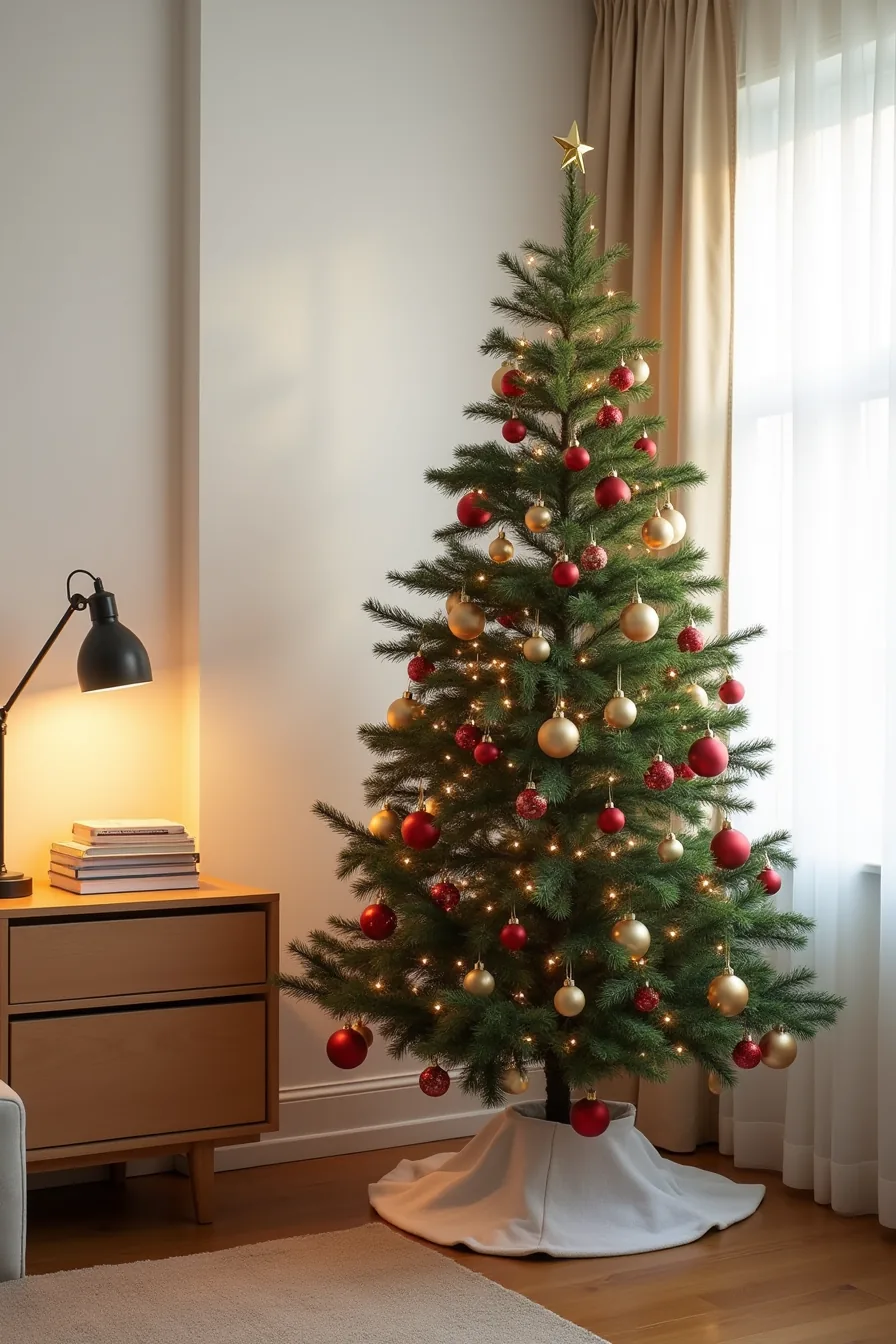
A red-and-gold tree works because it removes every decision except two: color and spacing. Restrict yourself to matte ornaments in just those two hues, and repeat them in alternating rows rather than scattering them. You get a graphic, deliberate pattern that reads as traditional without needing vintage heirlooms or hand-painted glass to pull it off.
This approach suits a 4-foot tree in a small apartment, where a busy mix of finishes would overwhelm the room. The red ornaments and gold ornaments should match in size, around 3 inches in diameter, so the row effect stays clean. A simple gold star topper completes the silhouette without competing for attentionaine.
Skip the tinsel and garland entirely; the negative space between ornaments is what makes the color blocking visible)Skip them, and you also avoid one of the common traditional Christmas tree decor ideas mistakes to avoid: overcrowding a small tree until it reads as a blob. Budget-wise, buy two boxes of identical ornaments in bulk, store-brand matte finishes cost roughly a third of what specialty glass runs, and you’re done. Plan 30–40 minutes, mostly for spacing math.
Heirloom Mixed Metals: Layering Silver, Gold, and Copper
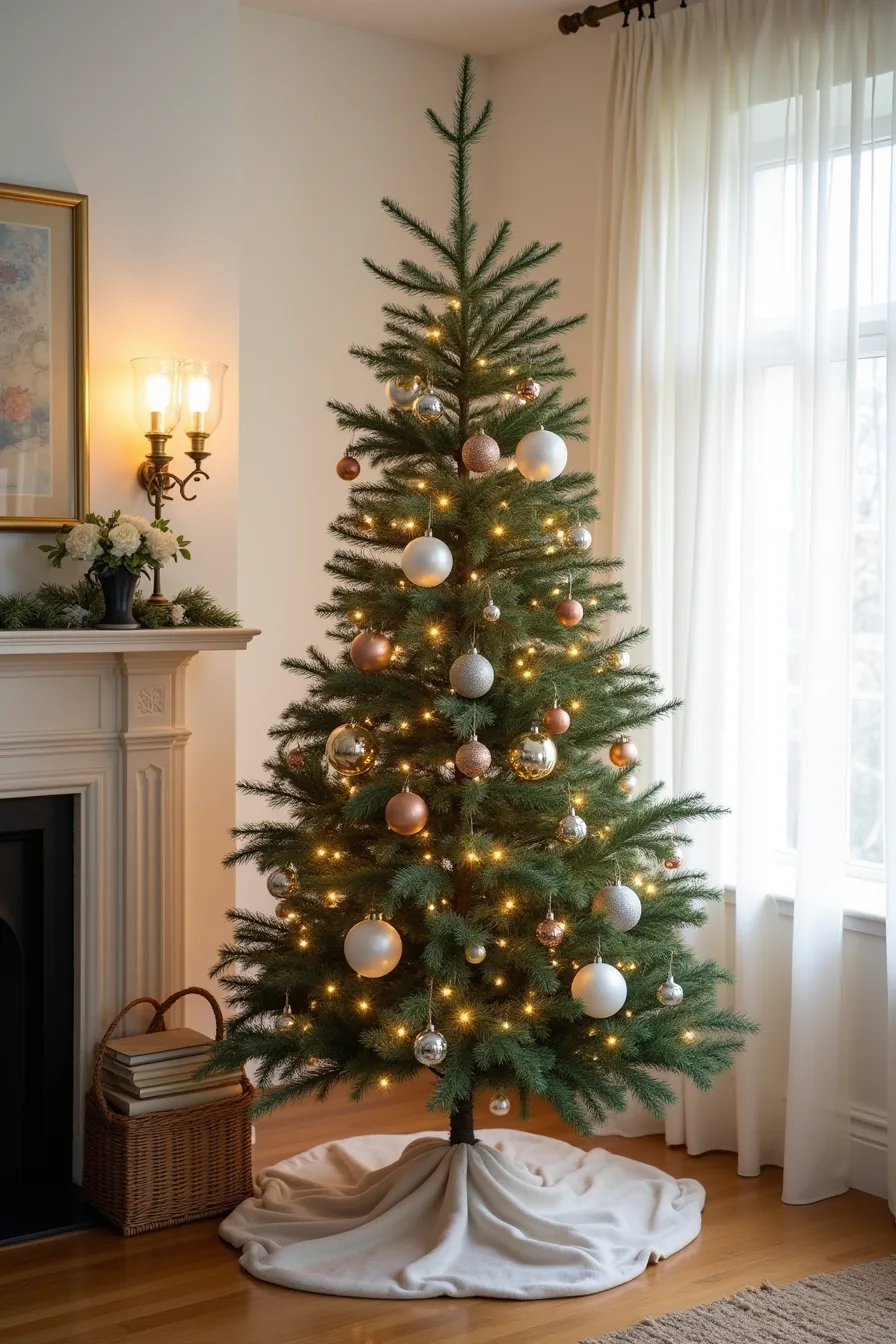
A mixed-metal tree trades strict color rules for a texture-and-placement system. The look depends on scattering silver, gold, copper, and bronze ornaments with visible gaps between them, roughly half the spacing you would use for color blocking, so each finish reads individually rather than blurring into a metallic haze. Antique mercury-glass balls catch the most light, so position them on the outer third of the branches where they’ll reflect the room’s ambient glow.
This interpretation requires a larger canvas. On a 5-foot or 6-foot tree, like the one flanking a dining room sideboard, the variety feels curated; on a 3-foot tabletop tree, the same assortment looks cluttered. The neutral background, bare walls, no garland or ribbon, is what lets the finishes breathe.
You’ll spend more on the mercury-glass pieces, but the vintage and contemporary ornaments can mix freely without matching, so you can accumulate them slowly across seasons. Expect to allocate 60–90 minutes, most of it spent rotating ornaments to avoid placing two identical finishes adjacent to each other.
Candlelit Minimalist: Fewer, Larger Pieces with Strategic Lighting
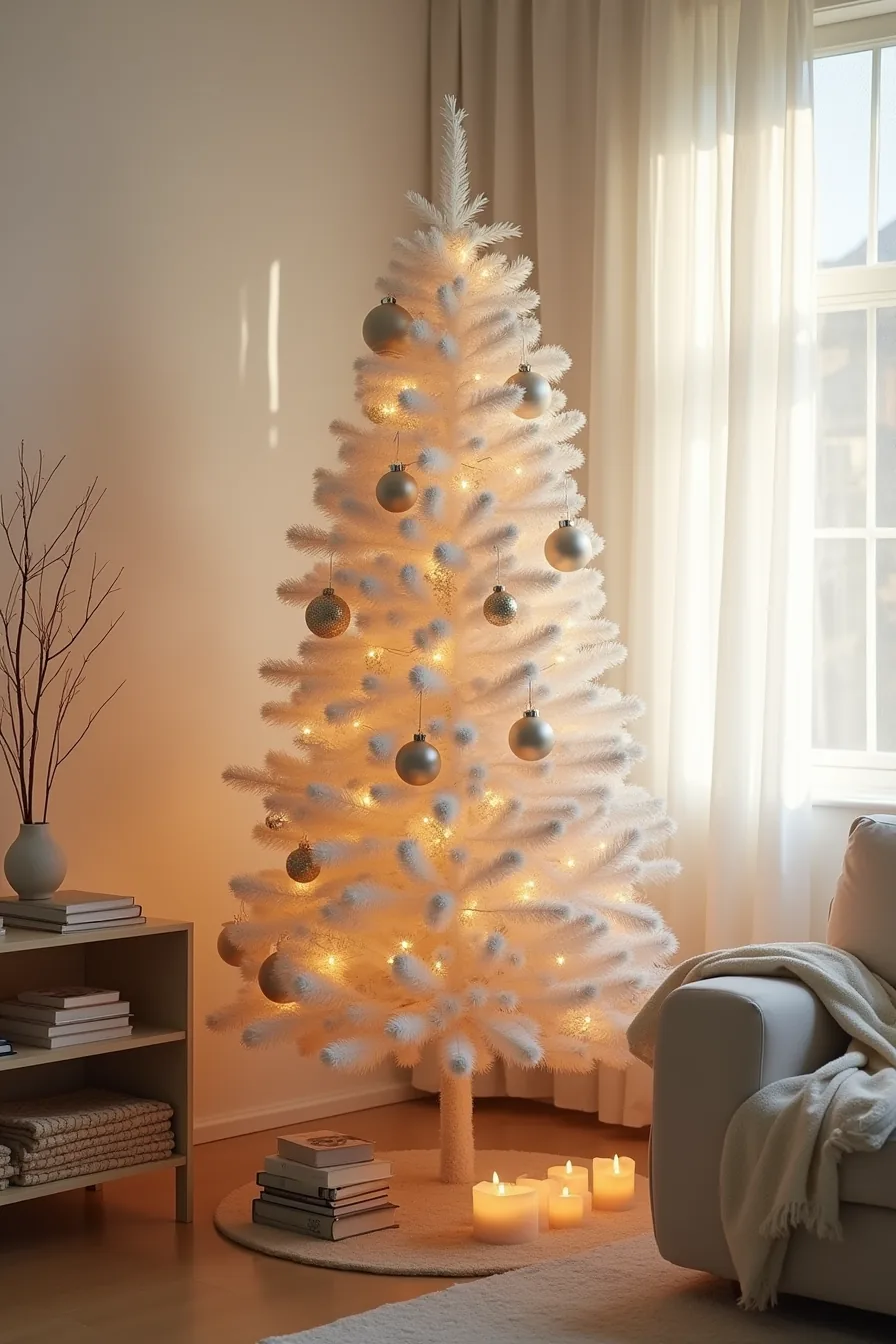
This interpretation strips the tree back to eight statement ornaments, cream, pearl, and frosted white, spaced roughly 12 inches apart at staggered heights. Large ornaments (3–4 inches across) read individually, so you need far fewer of them. The 4-foot tree holds just eight because crowded branches negate the quiet effect.
Warm string lights woven through the interior, not just draped on the surface, make bare branches glow from within.
The floor candles matter: three pillar candles at varying heights positioned a safe 3 feet from the tree cast upward light that fills the gaps between ornaments. This setup suits small spaces, studio apartments, reading nooks, corners behind furniture, where a dense tree would overwhelm the room. It also suits renters, because requiring only eight ornaments means you can pack them in one shoebox come January.
Budget-wise, you spend on the candles and lights rather than dozens of ornaments; quality string lights with a warm tone run $15–$30, and the candles $10–$20.
Budget, Rental, and Investment Routes: Adapting Traditional Decor to Your Situation
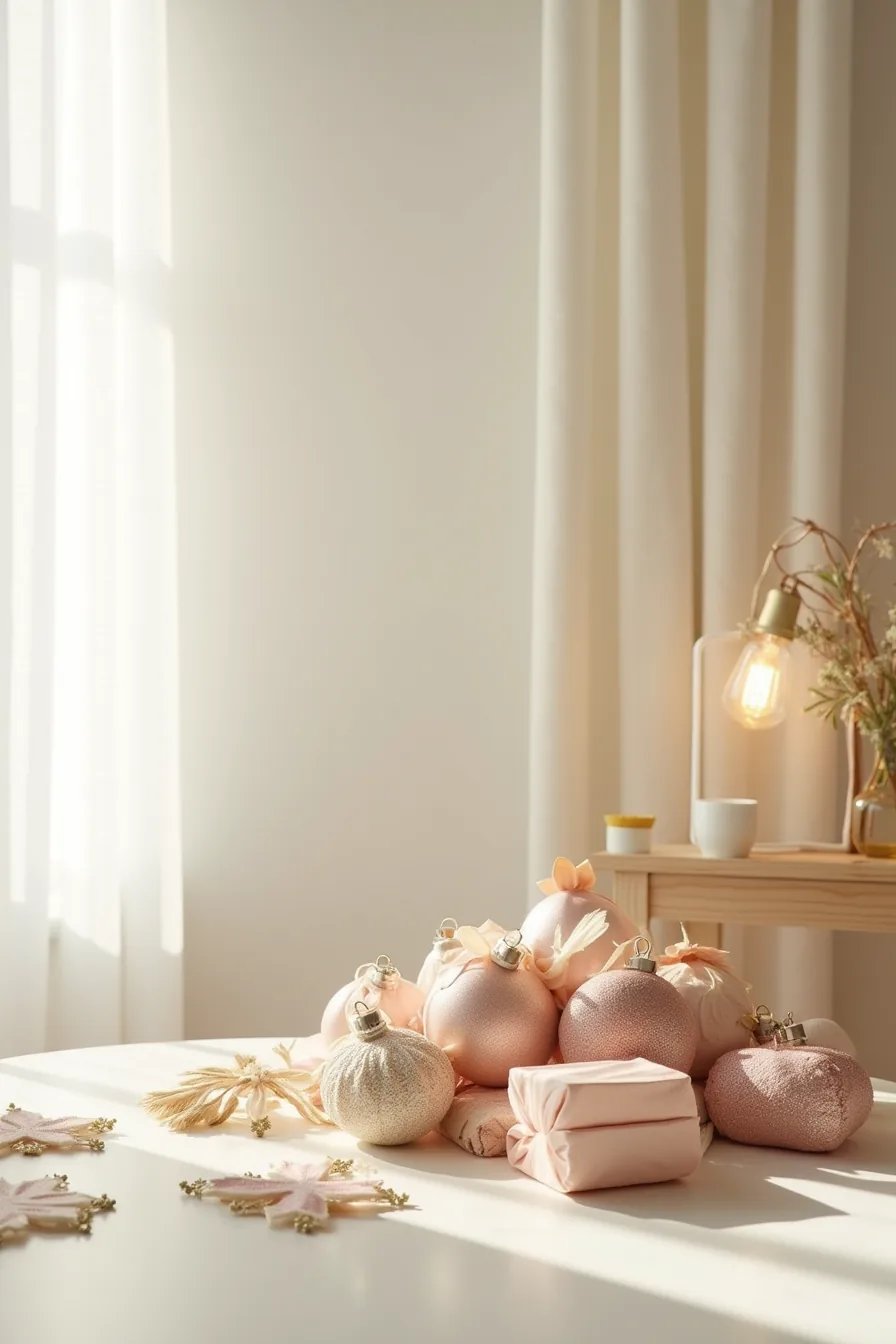
The $40–$60 budget route skips ornaments entirely. Buy plastic ornaments in a single color, paper ribbon for garlands, and reuse them for three to five seasons before the finish flakes. You lose the depth of mixed textures, but you gain the freedom to redecorate each year without guilt.
Renters benefit from magnetic hooks, rated for 10–15 pounds on metal doors and frames, paired with faux garland strips that tuck into corners without nails. The trade-off is visual: magnetic hardware and faux greenery look lighter and less grounded than the real thing, so keep the arrangement sparse to avoid a costume-shop effect.
The investment route costs $120–$200 upfront for hand-blown glass ornaments and silk ribbon. Glass breaks, so budget a replacement fund of $15 per year; silk ribbon outlasts paper by roughly five years if stored flat. Either path works on trees from 4 to 9 feet, scale the ornament count from 20 to 60, and all three piles fit in one storage bin when the season ends.
Your First Move
Start with your tree’s location and your daily routine, not the ornaments. Measure the floor space and ceiling height first, a 7-foot tree needs roughly 5 feet of clearance in front for safe access and a 6-foot diameter footprint for comfortable decorating.
Pick one anchor idea from the six above that matches your room’s size and your maintenance tolerance. If you rent, skip the drilled-in garland hooks and choose the ribbon-and-clip route instead.
Then buy one test ornament in your chosen palette before committing to a full set. Hang it, step back, and check it against your wall color and lighting for 24 hours. That single piece tells you whether the whole scheme will work before you spend another dollar.
Frequently Asked Questions
How many ornaments do I need for a traditional Christmas tree?
For a 6-foot tree, you’ll need roughly 60 to 90 ornaments. For a 7.5-foot tree, expect to use 100 to 150 ornaments. This range depends on branch density and whether you prefer a sparse or lush look.
Can I use traditional Christmas tree decor in a small apartment?
Absolutely. Scale down the tree height to 4-5 feet and use a slim or pencil silhouette. Decorate with smaller, lighter ornaments to avoid overwhelming the space, and place it in a corner to maximize floor space without blocking walkways.
What’s the best way to store traditional ornaments between seasons?
Use compartmentalized storage boxes or wrap each ornament in acid-free tissue paper. Store them in a cool, dry, climate-controlled area like a closet or under-bed bin. Avoid attics or garages where temperature swings cause condensation and damage.
How do I prevent ornaments from sliding down branches on a real tree?
Use floral wire or pipe cleaners to tie ornaments securely to the branches. For heavier ornaments, attach them closer to the trunk where branches are thickest and strongest. Alternatively, use purpose-made ornament hooks that grip the branch tightly.