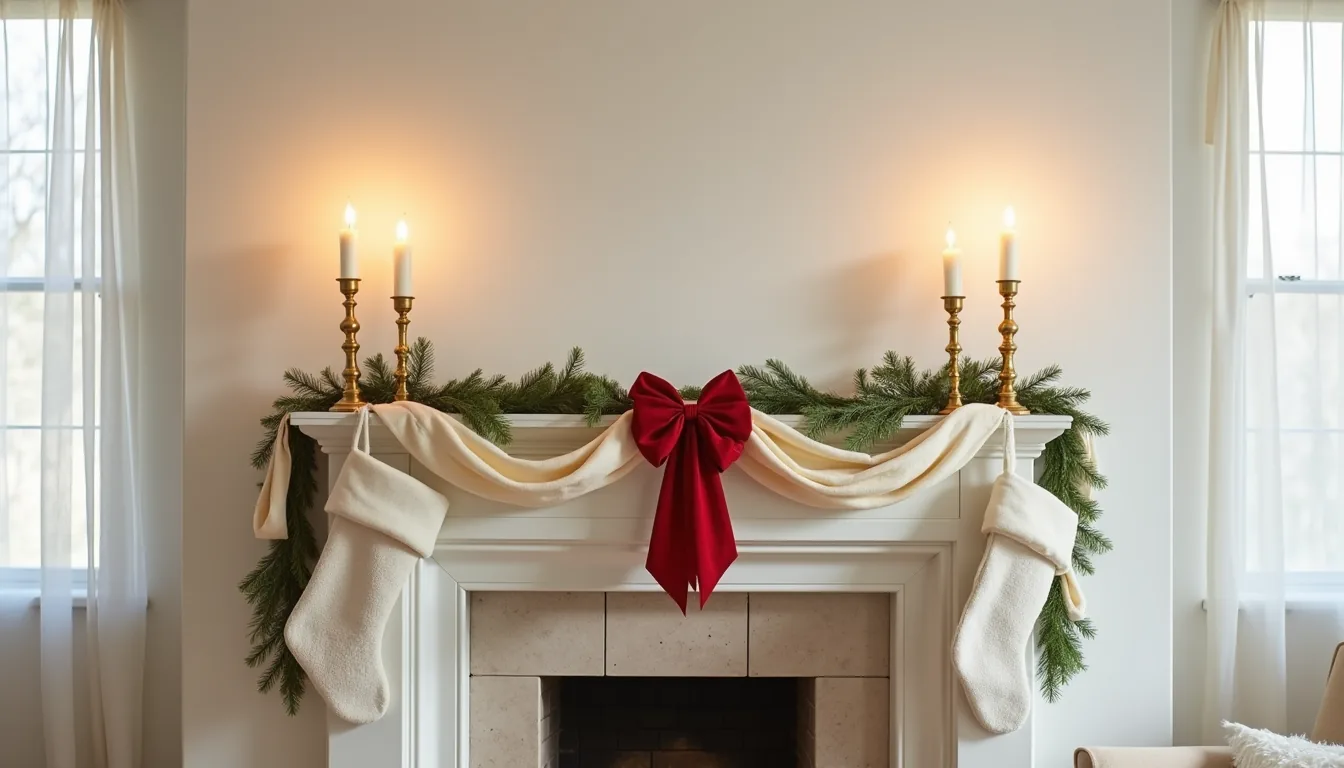
Your mantle is the one surface in your home that can carry a full Christmas statement without taking up floor space, and the six approaches below show you exactly how to style it for your room, budget, and living situation. Each option is matched to a specific constraint, rental walls, shallow depths, or high-traffic family rooms, so you can skip the guesswork. You’ll learn the exact proportions, mounting methods, and maintenance routines that separate a polished display from a cluttered shelf.
Key takeaways
Anchor the tallest garland focal point at the mantel’s center, then taper greenery outward so it stays clear of the fireplace opening and doesn’t block heat flow. Balance a vignette by placing the heaviest object (like a large urn or candlestick) at one end and the second-heaviest at the other, leaving the middle for low, wide items to avoid a top-heavy look. Choose a single-element design like a row of identical taper candles or one oversized wreath only when your mantel is at least 48 inches wide and you can keep the depth under 6 inches for narrow fireplaces. Use a modular system of clip-on hooks and lightweight shelves for renters, but verify the adhesive strips hold 5–10 pounds and remove them with a heat gun to avoid damaging paint.
The Symmetrical Garland with Focal Point
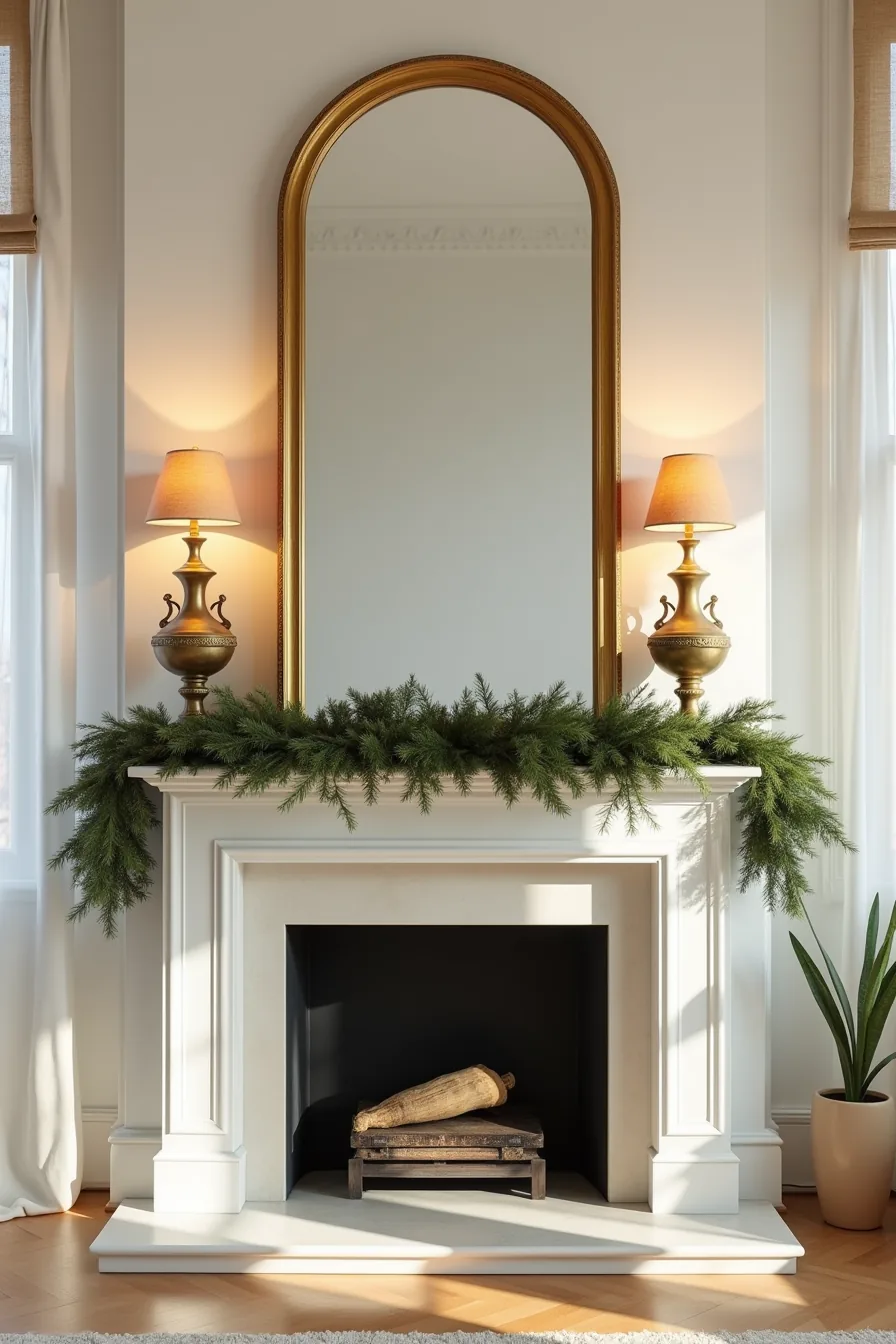
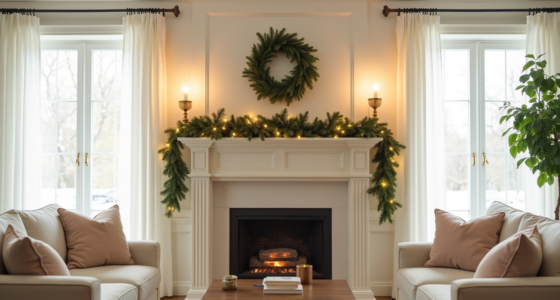
Start with a full-length evergreen garland draped along the mantle’s edge, letting it spill a few inches over each side to soften the hard line of the stone or wood. Anchor the arrangement with a single oversized, gold-framed mirror centered above the fireplace, this draws the eye upward and gives the mantel a deliberate backbone rather than a scattered look.
Flank the mirror with matching brass urns placed at each end of the garland, filled with simple pine picks or faux berries that echo the greenery without competing for attention. This setup works best in a living room with a symmetrical layout and a fireplace that’s the natural focal point; if your mantel runs longer than 60 inches, scale the urns up in height so they don’t get lost against the mirror’s width. Maintenance is minimal, faux garland requires a quick dusting before December, while real greenery needs a light misting every two days to prevent shedding onto the hearth.
The Layered Vignette Approach
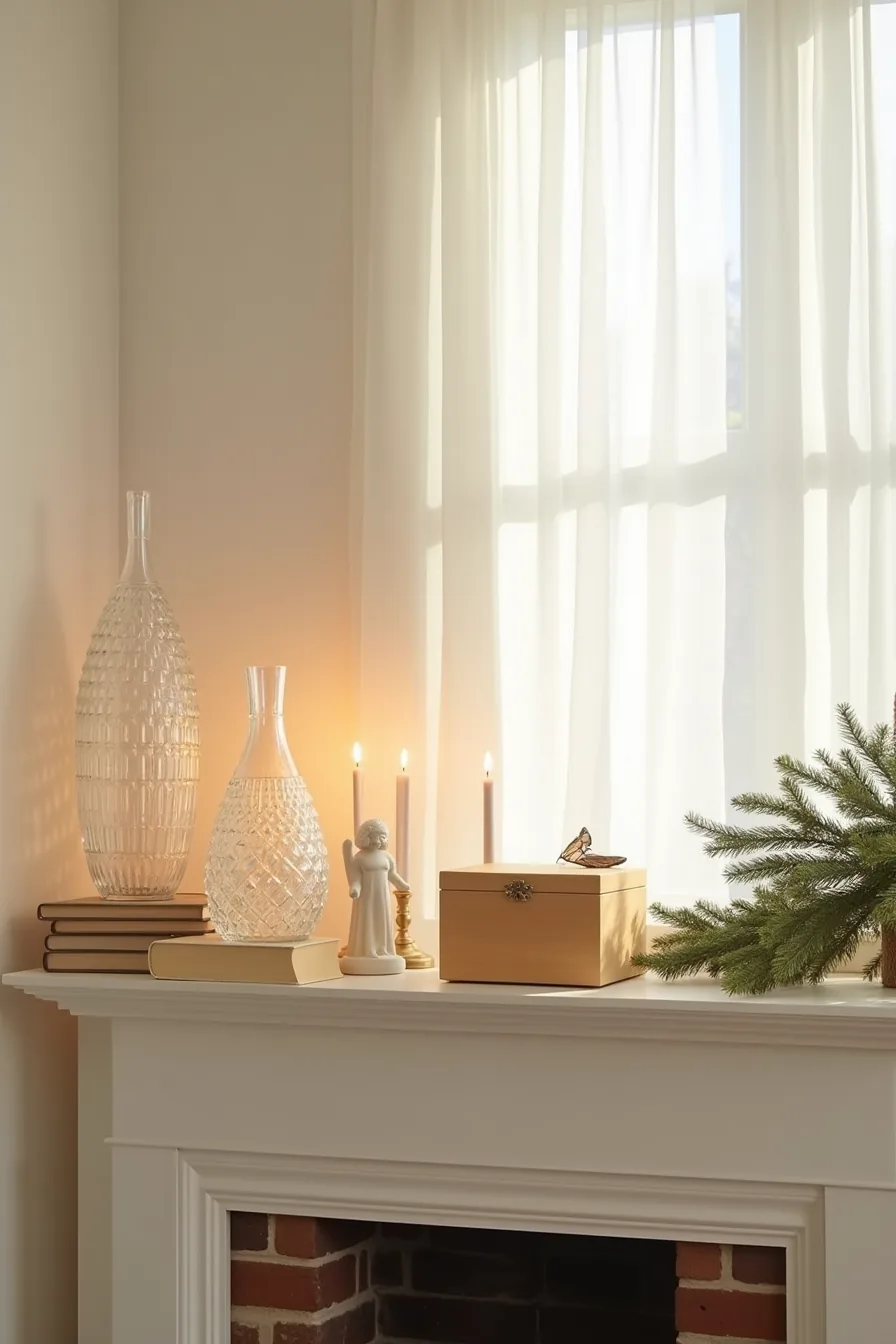
Forget a single line of decoration; this mantle relies on a series of small, distinct scenes. Position a tall mercury glass vase at the back left, placing a small wooden box front-and-center to add depth, with a ceramic figurine tucked mid-right to create a subtle triangular flow across the surface. Slip pine branches behind the arrangement to blur the line between the display and the room, scattering candles among the pieces to give the eye a place to rest.
This arrangement works best if you’ve a deep mantle, aim for at least 8 to 10 inches from front to back, as it allows the layers to stack without cramping the edge. The varying heights camouflage a cluttered collection, so you can stick to a neutral palette like whites and brass to keep it from feeling chaotic. If you’re planning gift purchases for this space, incorporate Practical Mantle Christmas Decor Ideas planning tips by choosing vessels you already own to save money, or treat this as the long-term investment route by slowly sourcing high-quality, decorative pieces you’ll use for decades.
Expect to spend a few minutes re-fluffing the branches every couple of days to maintain the effortless look.
The Minimalist Single-Element Design
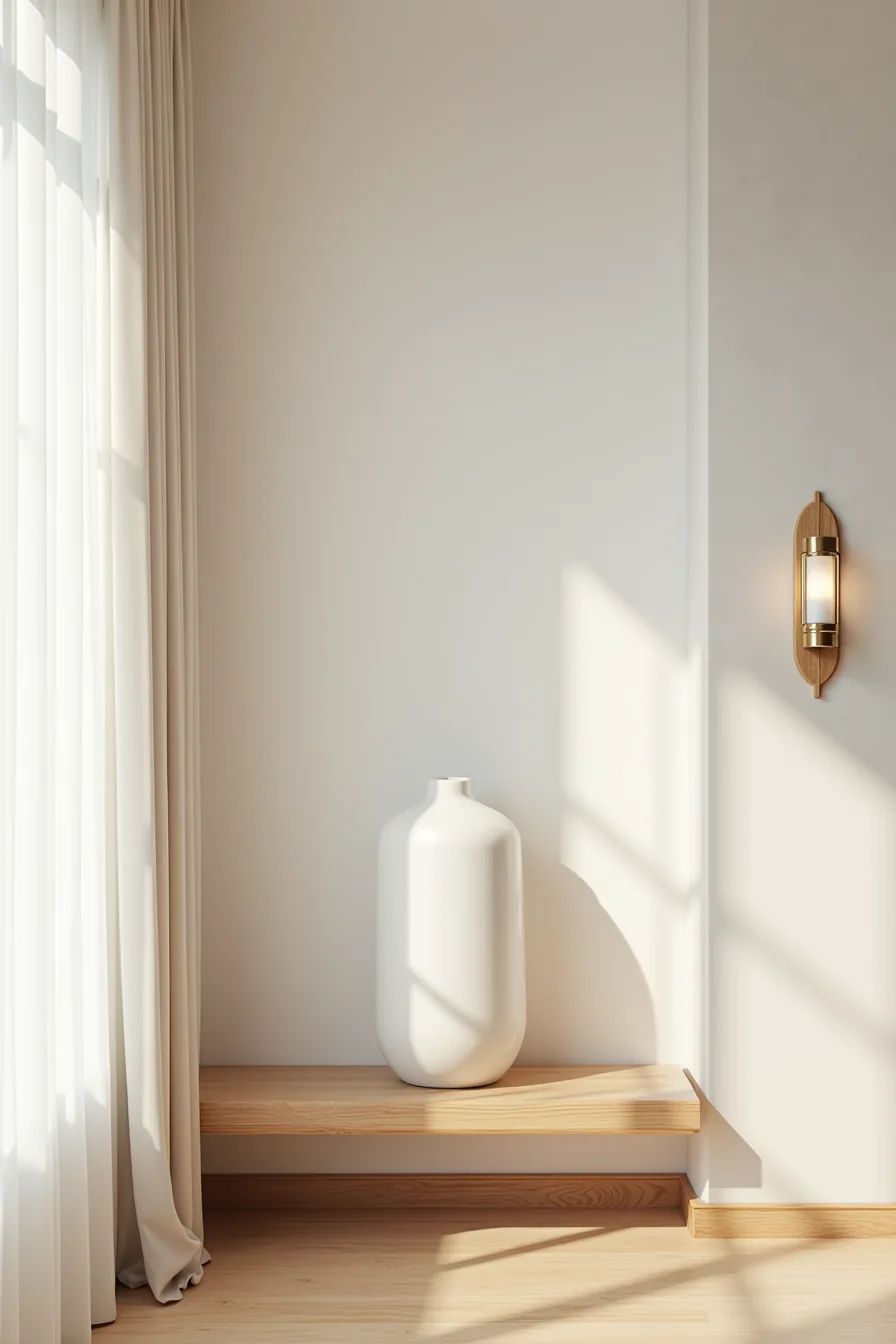
One oversized ceramic sculpture, think a matte white or cream organic form, roughly 12 to 18 inches tall, becomes the entire composition when placed dead center on the hearth. That single piece carries the visual weight, so you skip garlands, lights, and stockings entirely, letting the fireplace’s clean lines do the work. The concrete wall behind it provides the contrast; the sculptural silhouette reads clearly against that flat, gray surface.
This approach suits a narrow mantel (under 48 inches wide) or a modern, industrial loft where clutter feels like noise. It also works for renters who can’t drill into brick or tile, just set the piece on the shelf and walk away. The maintenance is near zero: wipe the ceramic monthly with a dry cloth, and keep it away from the edge if you run the fire, since heat cycles can stress some glazes.
Budget-wise, one good sculptural vase or bowl ranges from $40 to $150, making it cheaper than a full garland-and-ornament spread. If you want a subtle seasonal nod, swap in a small eucalyptus sprig or a single pine cone beside the base, nothing more, or the restraint collapses.
The Stockings-Forward Layout
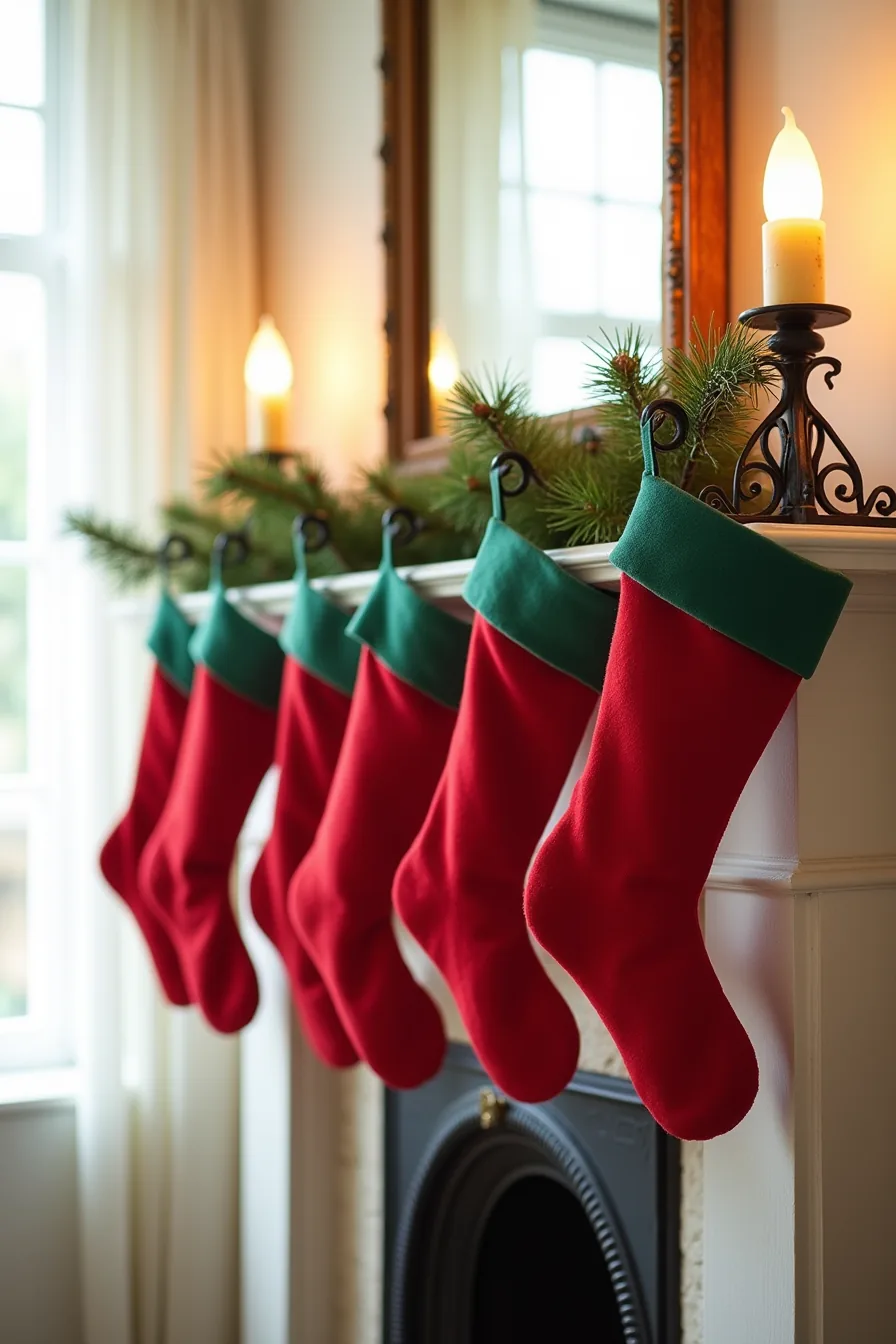
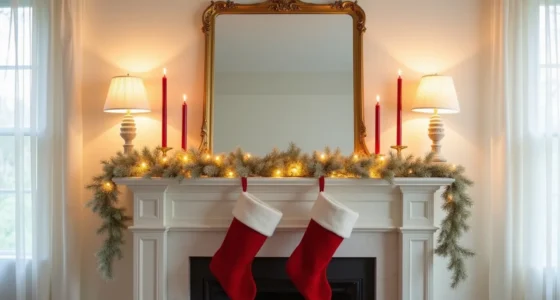
When stockings become the headline rather than the filler, you need to commit to spacing and hardware. Five stockings hung from wrought-iron holders require roughly 8 to 10 inches of clearance between each hook, which means your mantel needs to be at least 48 inches wide for this arrangement to breathe. Clip the greenery, small eucalyptus or boxwood sprigs, directly into the iron loops or tuck it behind the cuffs so it reads as connective tissue, not a competing layer.
This layout suits a traditional or farmhouse living room where the fireplace surround already carries architectural weight. The iron holders distribute the load evenly, so you avoid the sagging and slippage that adhesive hooks cause when weighted with knitted stockings. If you burn fires, check the holder bases monthly for heat-related loosening; most wrought-iron styles cost $25 to $60 per pair, making this a mid-budget option that you can reuse for decades.
For a cleaner look, match the greenery to the stockings’ hue, green with red, silver with white, rather than mixing patterns.
The Renter-Friendly Modular System
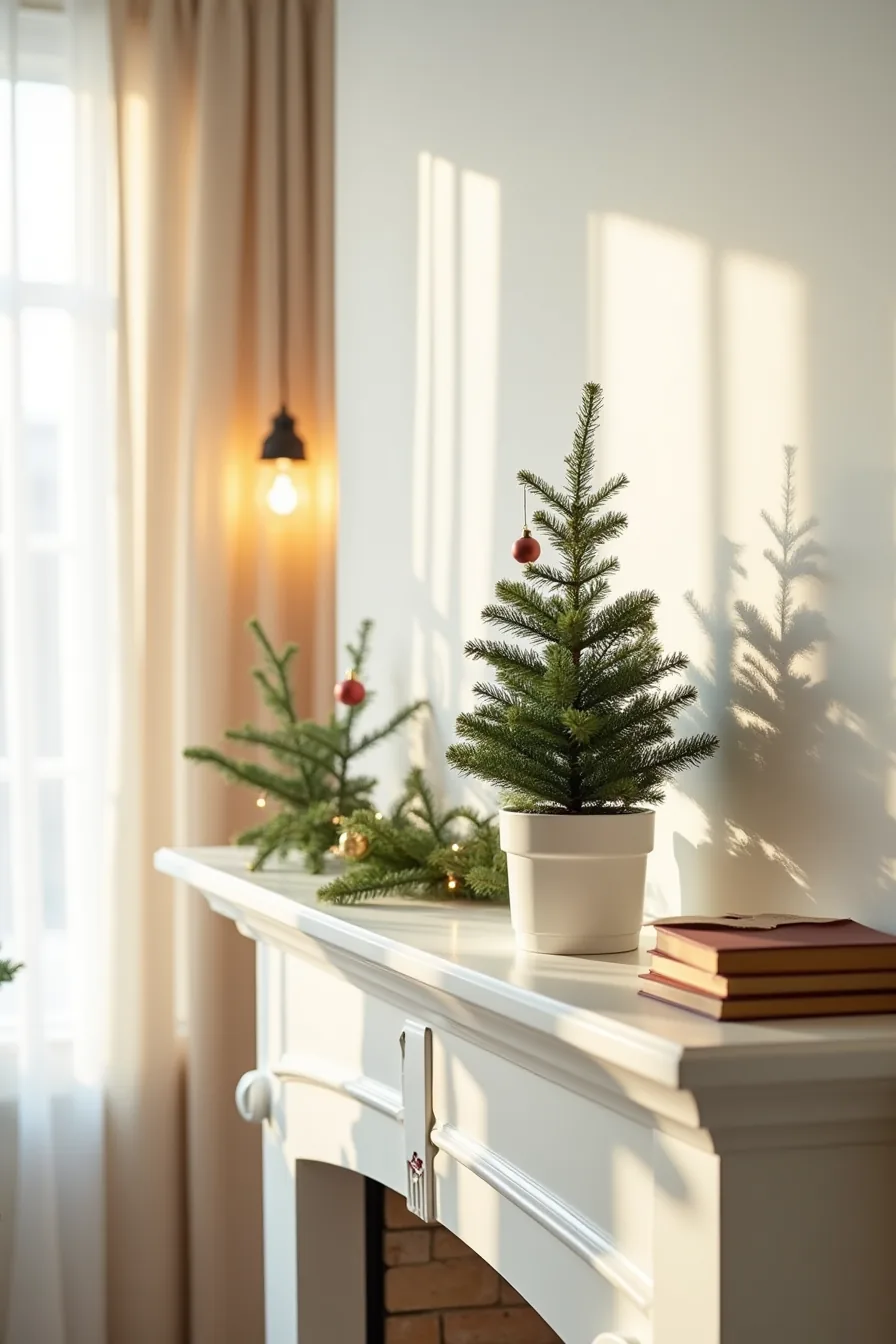
Adhesive hooks and command strips let you build a full mantel display without a single nail hole, which makes this the lowest-risk route for apartments and leased homes. The setup relies on lightweight materials: plastic or shatterproof ornaments, thin garland swags, and a standalone potted evergreen on the surface. Keep each hook’s load under 3 pounds, and press the strips firmly for 30 seconds before hanging anything.
This system suits anyone who redecorates seasonally or moves often, since the entire display packs flat into a storage bin. The trade-off is visual weight, adhesive hooks can’t support thick, heavy garlands or chunky knit stockings, so you’re limited to airy, minimal styling. Budget-wise, this is the cheapest route: a pack of 12 adhesive hooks runs $8 to $15, and you can reuse the same strips year after year if you remove them slowly at a 45-degree angle.
For a more polished look, cluster the hooks in odd numbers and vary the ornament sizes so the modular pieces feel intentional rather than sparse.
Scaling Your Mantle to Room Size and Fireplace Depth
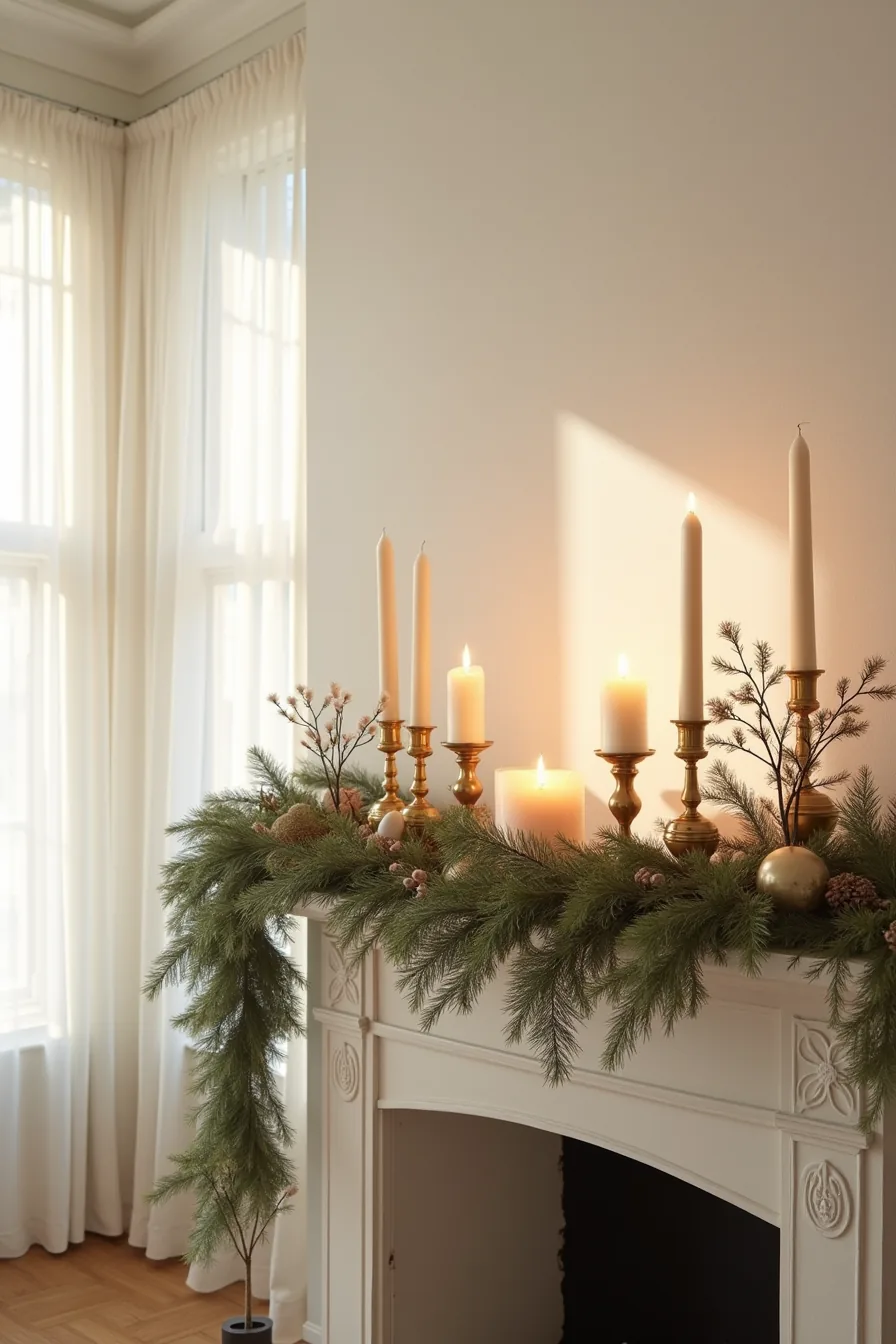
Proportion starts with the shelf itself. If your mantle extends less than 8 inches from the fireplace face, treat it as shallow: choose a single flat garland (no more than 6 inches thick), keep candelabras under 18 inches tall, and skip anything that projects more than 6 inches forward. A standard mantle at 8–12 inches deep handles a layered garland with two tiers and objects up to 10 inches deep.
Deep mantles of 12 inches or more allow the richest arrangement, push tall branches, like the eucalyptus stems in this setup, toward the back wall to reclaim hidden depth, and let candelabras sit at alternating depths so the eye moves horizontally and vertically instead of colliding in one flat row.
In a small room, cap the total height of any single item at two-thirds of the distance between the mantle and the ceiling. Large living rooms can accommodate taller branches, but only if the fireplace is the visual anchor. Match garland fullness to the mantle’s length: use 1.5 times the mantle width for standard rooms, up to 2 times for grand spaces.
Finally, leave 4–6 inches of clear surface between the front edge and your objects so the fireplace remains accessible for maintenance and airflow.
Your Decision Checklist
Before you buy anything, measure your mantle’s length and depth and note the hearth clearance. Choose one focal point first, greenery, a sign, or a single large object, then build around it. Match your material to your maintenance tolerance: fresh pine lasts 3–4 weeks but drops needles; faux greenery costs more upfront but stores for years.
Pick your route: a $30–50 budget look with thrifted candlesticks and dollar-store garlands, a renter-friendly no-drill setup using command hooks and removable wreaths, or a long-term investment in brass candelabras and quality faux stems. Skip anything that overhangs the firebox by more than 3–4 inches.
Your next step: take a photo of your bare mantle, print it, and sketch one arrangement from this guide before you shop. That ten-minute sketch will prevent every impulse purchase.
Frequently Asked Questions
How much garland do I need for a standard mantle?
For a typical 54–60 inch mantle, buy 9–12 feet of garland. Drape it loosely with a slight swag, allowing 6–8 inches of overhang on each end. Double that if you want dense layering.
Can I hang stockings on a mantle without a mantle hook?
Yes. Use heavy-duty Command hooks rated for 5–7 pounds, or drape stockings over weighted decorative bookends. For stone or brick, use masonry-safe adhesive strips.
Avoid nails on rented or fragile mantles.
What’s the safest distance between candles and garland on a mantle?
Keep lit candles at least 12 inches from any garland, greenery, or ribbon. Use flame-retardant faux garland for closer placement, and never leave candles unattended. Battery-operated candles allow zero clearance with full safety.
How do I keep mantle decorations from sliding off during installation?
Start with a dry, dust-free surface. Use non-slip shelf liner cut to size, or apply small dots of museum putty under heavy bases. For garland, secure ends with clear fishing line or wire wrapped around the mantle edges.