Minimalist Christmas decor isn’t about owning less, it’s about choosing fewer, better pieces that earn their place through scale, material, and placement rather than volume, and this guide breaks down six distinct approaches you can implement this season, regardless of your budget, living situation, or available square footage. Each approach targets a specific need: a renter-proof window display, a long-term brass investment, a sub-$50 table centerpiece, and three spatial strategies for tight corners, open plans, and oversized walls. You’ll also get exact placement rules, maintenance timelines, and a final checklist to match your constraints to the right look before you buy a single ornament.
Key takeaways
- Monochrome trees work best in rooms with existing neutral palettes, using 50-100 matte ornaments in a single hue to avoid visual noise.
- Negative space mantels suit small living areas by limiting decor to 3-5 pieces, leaving at least 6 inches of bare surface between each item for breathing room.
- Adhesive garlands with command hooks or magnetic strips cost under $30 and remove cleanly from walls, making them ideal for renters avoiding nail holes.
- Warm LED string lights (2700-3000K color temperature) alone can transform a space, requiring just 100-200 bulbs per average living room and zero other accessories.
Monochrome Trees: Single-Color Focal Points
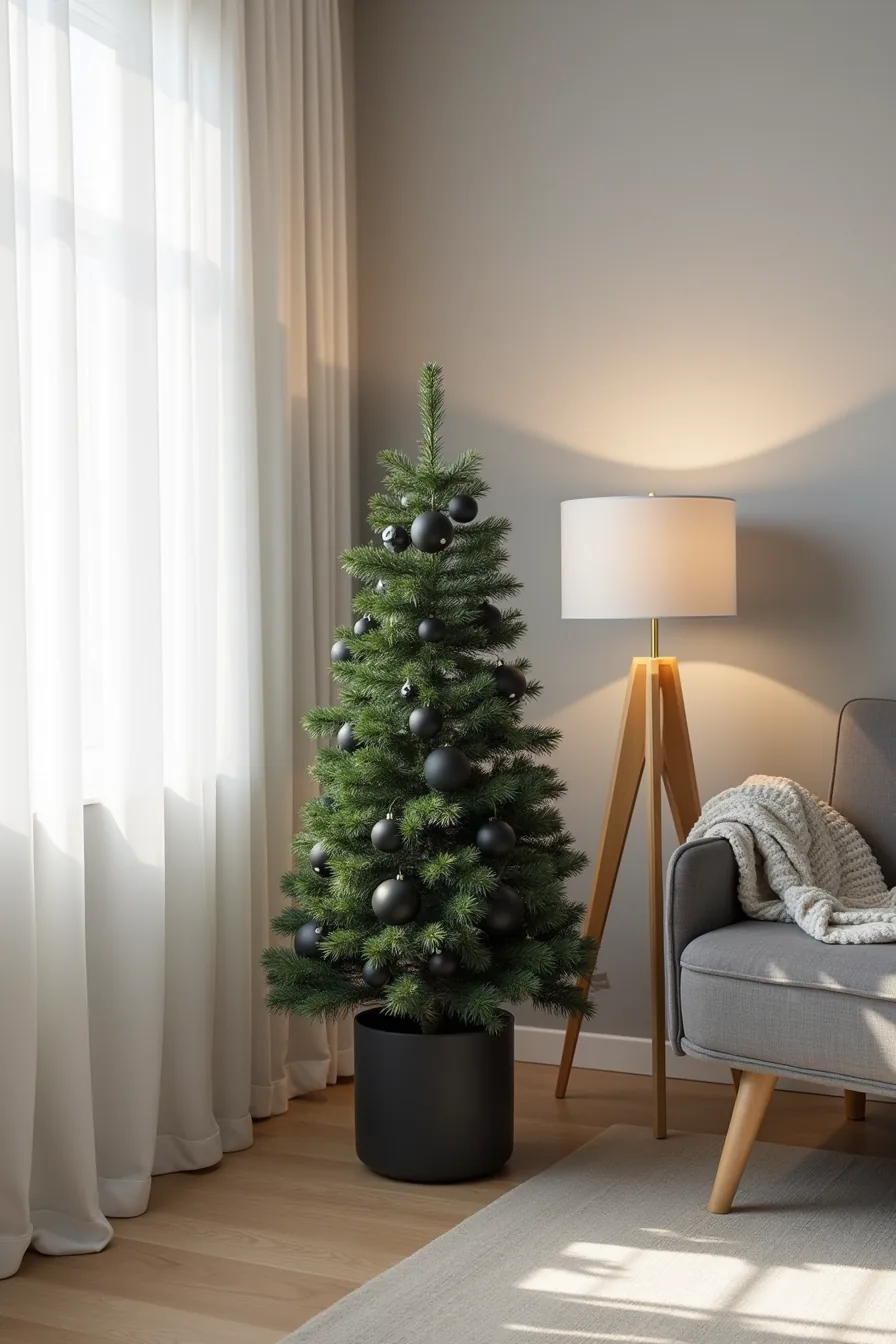
A monochrome tree strips holiday decoration down to one deliberate hue, making it the most direct expression of Christmas decor ideas minimalist. A compact 4-foot evergreen in matte black, set in a concrete planter and hung exclusively with matte black and charcoal ornaments, anchors a room without visual noise. The single-color approach reads as intentional design rather than sparse decoration, and it suits renters who can’t paint walls or homeowners working with small living areas.
This setup works because the tree’s silhouette carries the visual weight, not ornament variety. Vary ornament sizes, from 2-inch baubles to 6-inch statement spheres, to add depth without introducing a second color. For a budget route, spray-paint thrifted baubles with matte enamel (roughly $15 total) on a standard green tree.
A splurge option involves a pre-blackened artificial tree ($200–$400) that skips painting entirely. Keep the planter’s footprint under 14 inches in diameter to preserve walkway clearance in tight rooms. Dust the matte finish weekly with a microfiber cloth; black surfaces show every speck.
Is aitions. Target: B-6TRU which is…:
Renter-Friendly Garland Alternatives: Adhesive and Removable Options
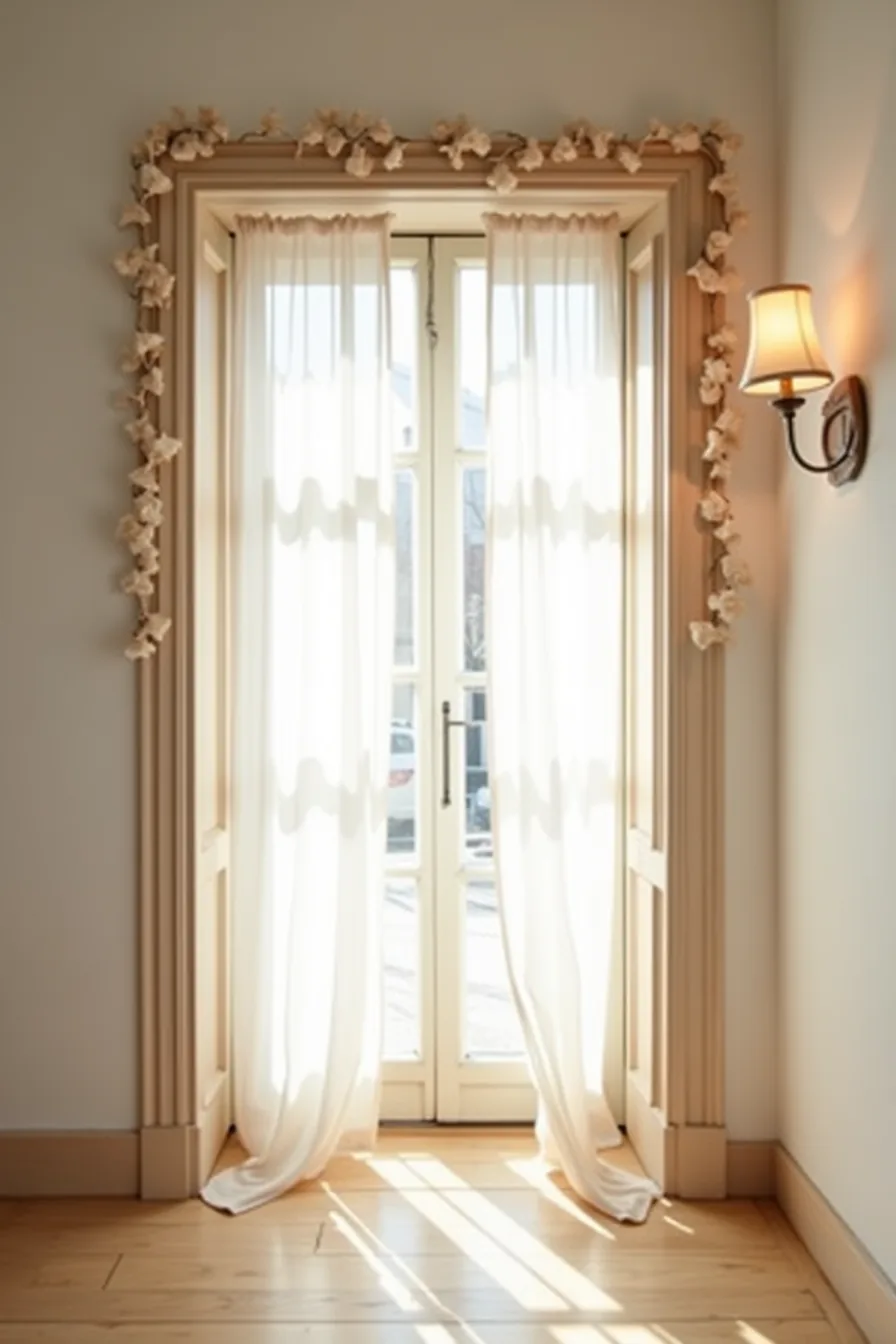
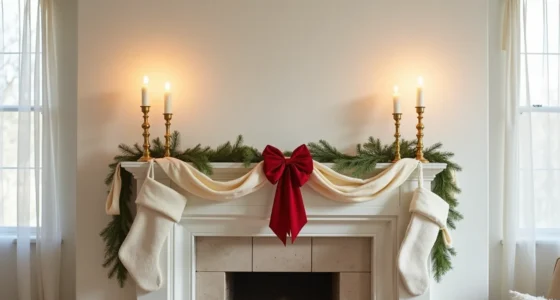
A thin linen garland draped loosely across a wooden doorframe, held only by removable adhesive strips at each contact point, gives you the seasonal texture you want without a single nail or screw. This setup works because linen is lightweight enough that two or three small strips, typically rated for 1-2 pounds each, will hold it securely through the season. You’ll need to press the strips firmly for 30 seconds per contact point and let them cure for at least an hour before hanging the garland.
This approach suits renters who want a visible holiday statement at eye level, especially in hallways or entryways where guests pass close enough to notice the natural fabric. Avoid adhesive on painted drywall that shows even minor damage; test a strip in an inconspicant spot first. For a damage-free removal, pull the strip’s tab straight down, never toward you, and the adhesive releases cleanly.
Expect the strips to hold for about one season; if you reposition the garland, replace the strips rather than reusing them.
Sculptural Ornaments: Fewer, Larger Pieces
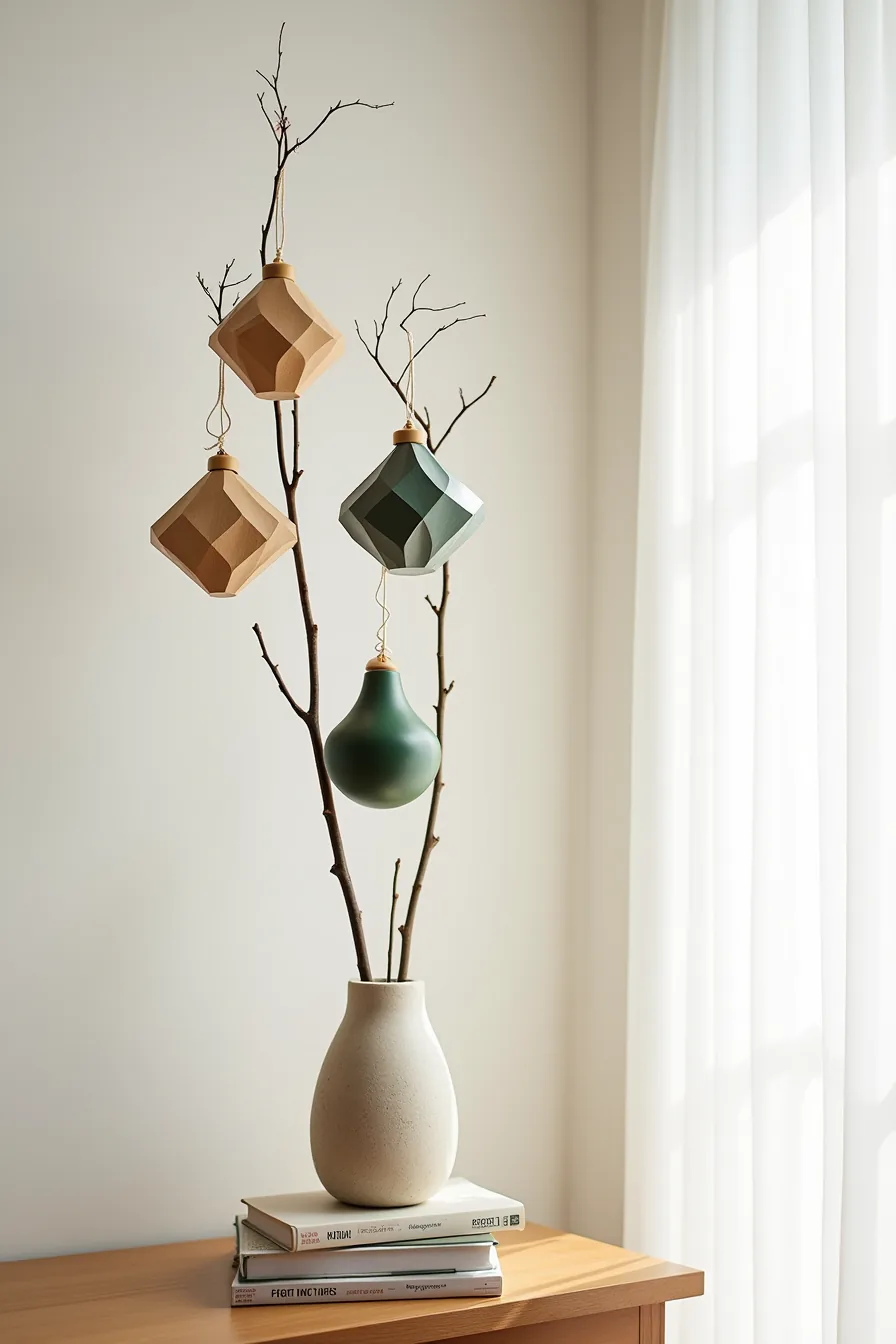
A bare branch set in a stone vase with exactly four oversized geometric wooden ornaments transforms a corner into a deliberate focal point. The spacing between each piece, roughly 6 to 8 inches, creates negative space that reads as curated rather than sparse. This works because the eye registers the branch’s natural line first, then travels to each ornament individually, giving every piece a moment of attention that a crowded tree never allows.
Scale follows your ceiling height. For an 8-foot ceiling, choose a branch that tops out around 5 feet and ornaments no smaller than 4 inches in diameter; in a room with 10-foot ceilings, push the branch toward 7 feet and select pieces closer to 6 inches. The proportions matter more than the count, if you can see the branch’s silhouette clearly between ornaments, you’ve the balance right.
This route suits those who prefer a long-term investment over annual purchases. Solid wood ornaments in oak, walnut, or beech cost more upfront but resist fading and chipping across multiple seasons, unlike painted plastic alternatives that degrade within two or three years. Store them wrapped individually in acid-free tissue to prevent surface scratches, and the branch itself can be swapped annually if you collect one from a local park or pruning cycle.
Lighting as Sole Decoration: Warm Bulbs and Minimal Accessories
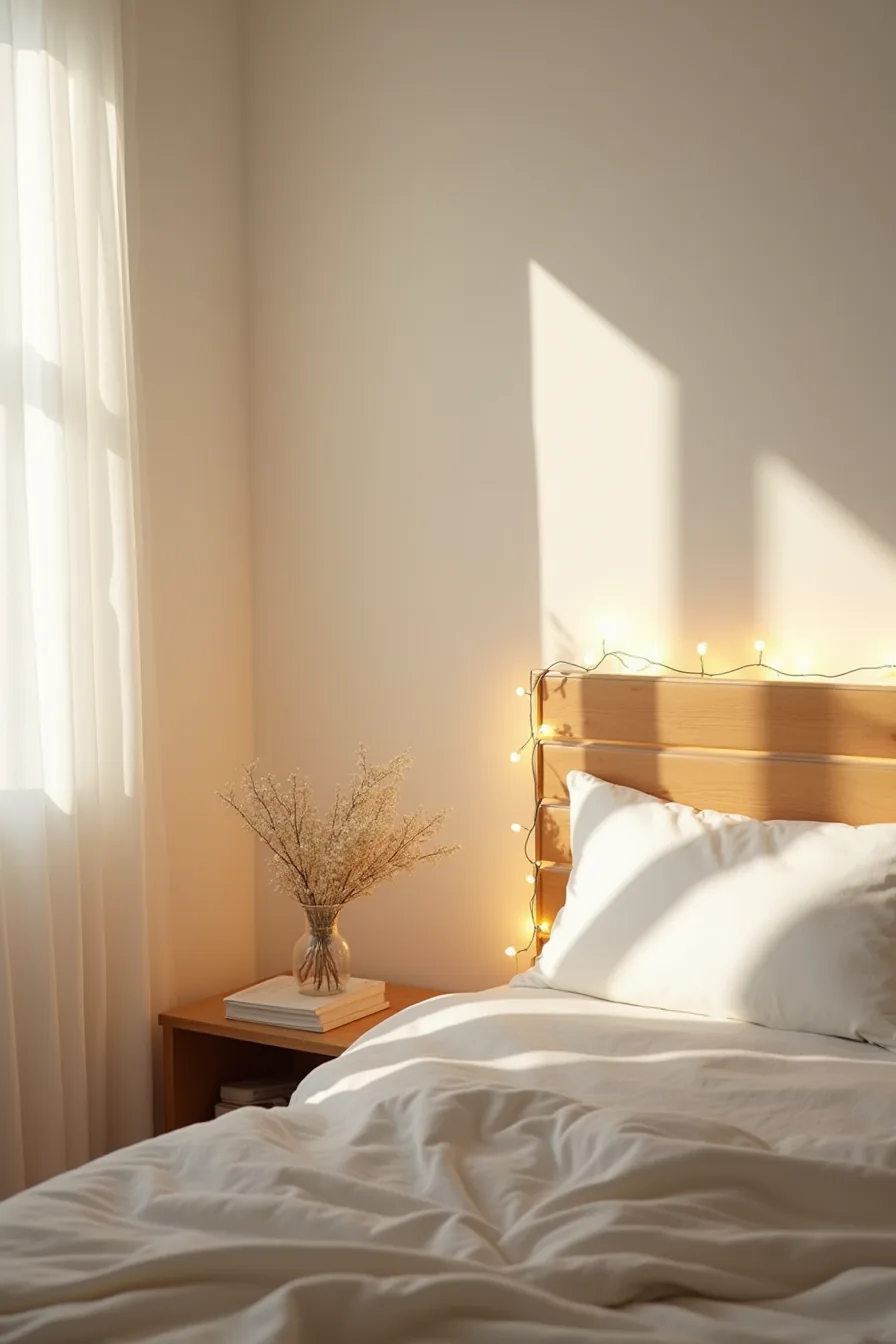
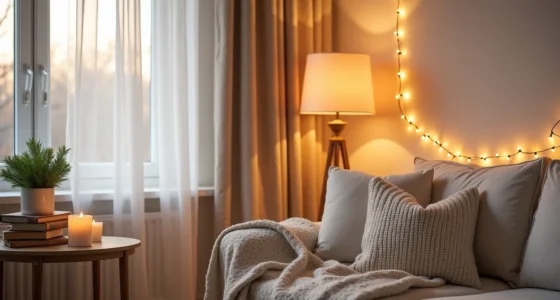
String lights wrapped horizontally around a wooden headboard turn a bare bedroom wall into the entire Christmas statement. You skip the tree, skip the ornaments, and let the bulbs carry the season’s mood. The horizontal lines draw the eye across the room rather than up, which suits low-ceilinged bedrooms where a vertical display would feel oppressive.
Choose warm white bulbs rated below 2700K; cool white or blue-toned options read as clinical and will wash out the wood’s natural color. LED sets with 50 to 100 bulbs draw only a few watts total, but you still need to check the package for indoor rating and plug them into a surge-protected strip if you run them overnight. For renters, this is the most forgiving approach, adhesive clips leave pin-sized holes at worst, and the lights come down in minutes with zero wall repair.
The setup works best in rooms 100 to 150 square feet. In a larger space, the single line of light gets lost; add a second strand along the baseboard or curtain rod to create depth without introducing any other decor. Replace the bulbs with plain glass candle-style fixtures in January and the same hardware becomes year-round ambient lighting.
Scandinavian Natural Elements: Wood, Linen, and Restraint
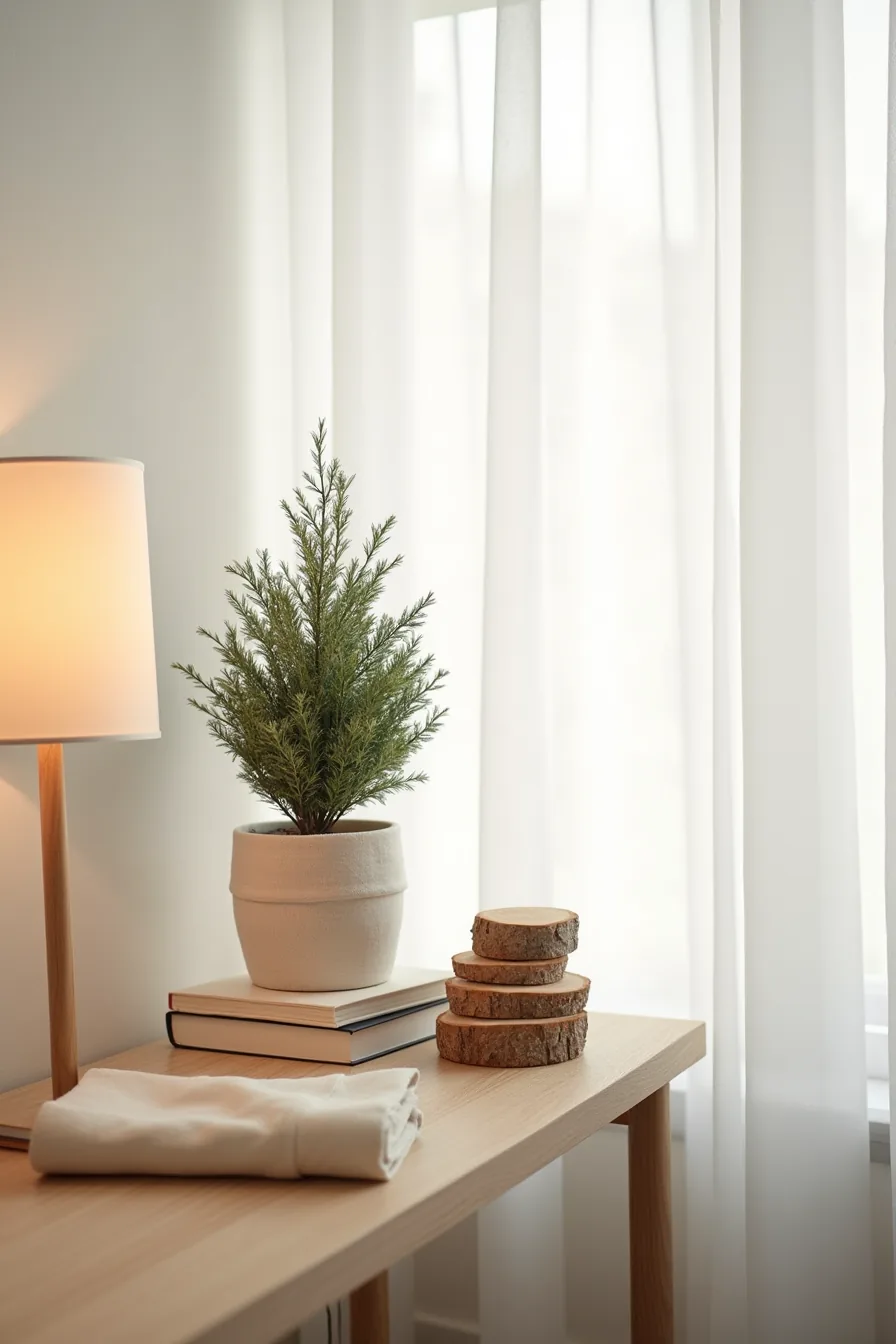
A console table holding just three objects, a small potted evergreen, three stacked natural wood rounds, and a folded cream linen cloth, carries the full weight of the season without a single ornament. The technique relies on material contrast: the rough bark of the potted evergreen against the smooth linen wrap, the pale table surface against the darker wood rounds. You aren’t decorating; you’re editing down to what already feels like winter.
For the evergreen, source a living dwarf variety like a hinoki cypress or boxwood rather than a cut tree. It will stay compact in a 6–8 inch pot for two to three seasons before needing a transplant, and it requires nothing more than weekly watering and indirect light. The wood rounds should be untreated, kiln-dried slices 4–6 inches in diameter; skip any with bark peeling or visible cracks if you plan to keep them indoors long-term.
The linen cloth works because it introduces softness, a cream or oat tone, never white, which reads clinical against the bark.
The total cost sits between $35 and $70 depending on your pot and wood source, and everything but the evergreen lasts indefinitely. A fast route costs roughly the same but replaces the live plant with a faux evergreen from a craft store; you sacrifice the natural scent and gain the freedom to store it in a closet. This setup suits narrow entryways, bathroom counters, or sideboards in open-plan rooms where you want texture without visual noise.
In a small apartment, swap the three wood rounds for one larger slice to prevent the arrangement from swallowing a 30-inch tabletop; in a large living room, move the same trio to a mantel and add a single pillar candle in a brass holder, still three objects, but scaled to the sightline.
Start with one surface
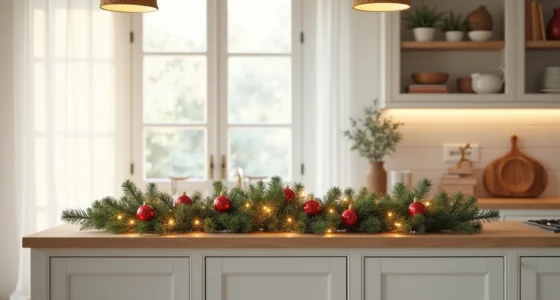
Choose a single surface you pass daily, a console table, entry shelf, or kitchen island. Style it with no more than three items: one organic element (bare branches, pine), one warm light source, and one textural bowl or vase. Live with it for 48 hours before touching another room.
That constraint forces genuine editing. Most minimalist setups fail not from excess but from adding one piece too many.
Walk to your chosen surface now and remove everything on it except one object. That’s your first decision made.
Frequently Asked Questions
Question
How do I make a minimalist Christmas tree look intentional rather than sparse?
Answer
Choose one material, wood, felt, or metal, and repeat it in ornaments. Limit to two colors, use oversized ornaments spaced widely, and add a substantial tree topper. The consistency signals design, not neglect.
Question
Can I use Christmas decor ideas minimalist in a small apartment without it feeling empty?
Answer
Yes. Scale down, don’t subtract. Use a tabletop tree, a single garland on a shelf, and one focal point like a wreath. Negative space works when each piece has visual weight and clear placement.
Question
What’s the difference between minimalist Christmas decor and just having less decoration?
Answer
Minimalism curates: each item earns its place through material quality, proportion, or function. Having less decoration is passive removal. Minimalist decor actively balances negative space, color, and texture to create a deliberate composition.
Question
How do I transition minimalist Christmas decor into other rooms beyond the living room?
Answer
Repeat one accent color and one material across rooms, e.g., matte black and pine. In bedrooms, use a single sprig on a nightstand. In kitchens, hang one small wreath. Consistency creates cohesion without clutter.