The kitchen is the hardest room in the house to decorate for Christmas because every surface you cover competes with food prep, heat, and daily traffic, so the six ideas below are chosen specifically to survive those conditions. Each option is matched to a different kitchen layout, from galley to open-plan, and priced for a spectrum of budgets. You’ll find one renter-friendly route, one long-term investment, and one under-$30 approach, all with exact placement and maintenance guidance.
By the end, you’ll know which look fits your counter space, your cooking habits, and your lease, without sacrificing a single square inch of prep area.
Key takeaways
- Garland placement works best along upper cabinet tops or a range hood, but skip it near stovetops where heat and grease create fire and cleaning hazards.
- Renter-friendly decor relies on removable hooks, tension rods, and adhesive strips, avoid anything that requires drilling or permanent wall anchors.
- Countertop vignettes should stay within 12–18 inches of the backsplash and leave at least 6 inches of clear work surface on either side of the stove and sink.
- Under-cabinet lighting with battery-operated puck lights (last 3–6 months on a set) delivers festive glow without rewiring, but check clearance for heat-sensitive bulbs near food prep.
Garland and Greenery Installations: Placement, Scale, and Renter Compatibility
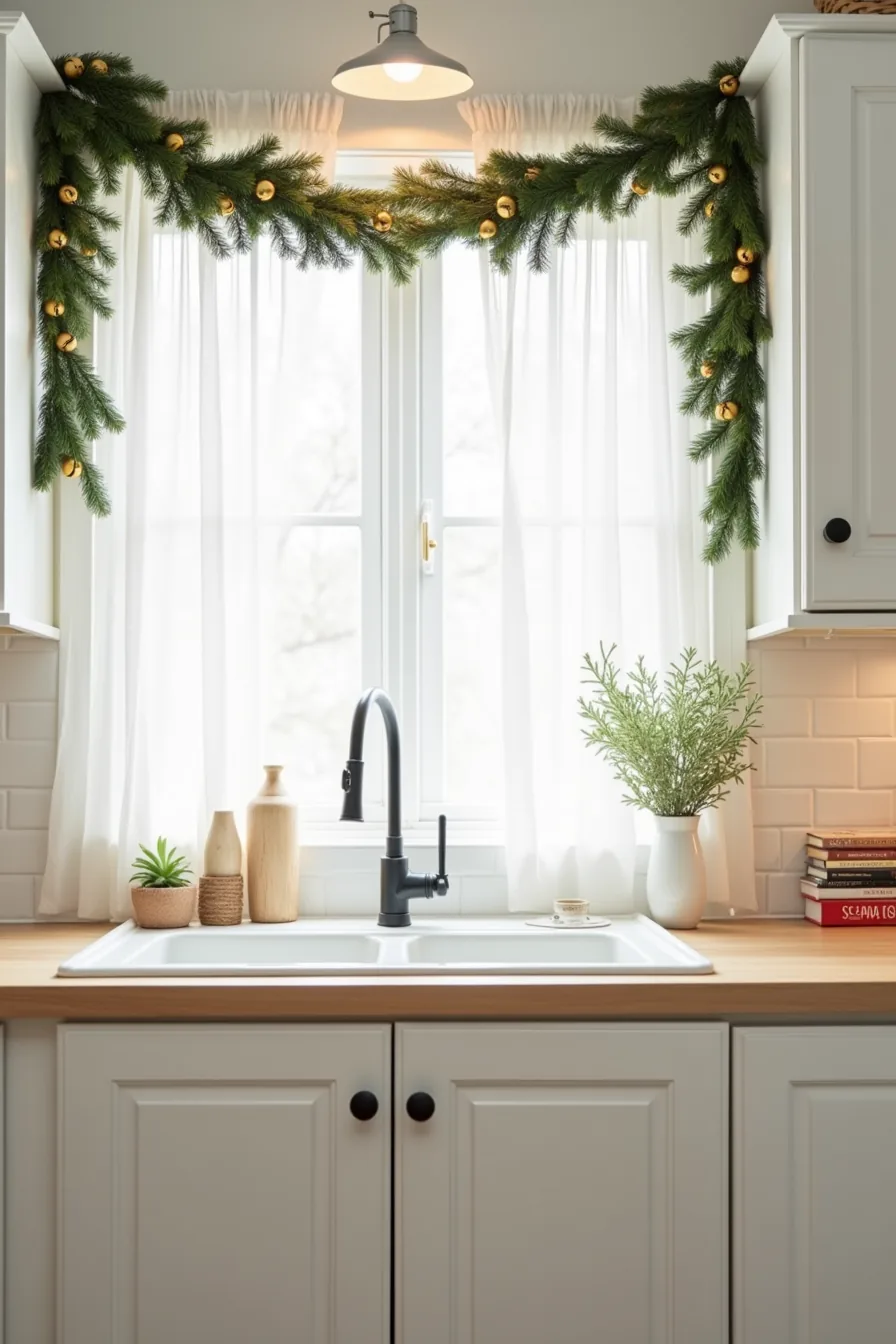
Garland offers the highest visual payoff per square foot of any Christmas Decor Ideas For Kitchen, but the installation method determines whether you love it or regret it by New Year’s. The overhead example, fir looped along the top edge of white cabinetry above a sink, punctuated with small gold bells, works because it tracks the sightline you use most while washing dishes. Secure it exclusively with removable adhesive hooks rated for 5–10 pounds; they release cleanly from painted wood and most laminate finishes without residue.
Scale this to your kitchen’s footprint: small kitchens (under 100 square feet) should limit garland to a single 6–9 foot run along one cabinet bank, while larger spaces can handle wrapping a window frame or the range hood perimeter. For renters, skip anything requiring nails or screws, adhesive hooks and tension rods for window frames cost under $20 total and leave zero trace. A budget route uses one 6-foot faux fir garland from a craft store ($15–25) with bells from a multi-pack; the splurge version opts for fresh cedar or noble fir, which lasts 3–4 weeks indoors but sheds needles daily and requires a plastic catch tray beneath.
Open Shelving Styling: Layering Ornaments, Candles, and Dishware
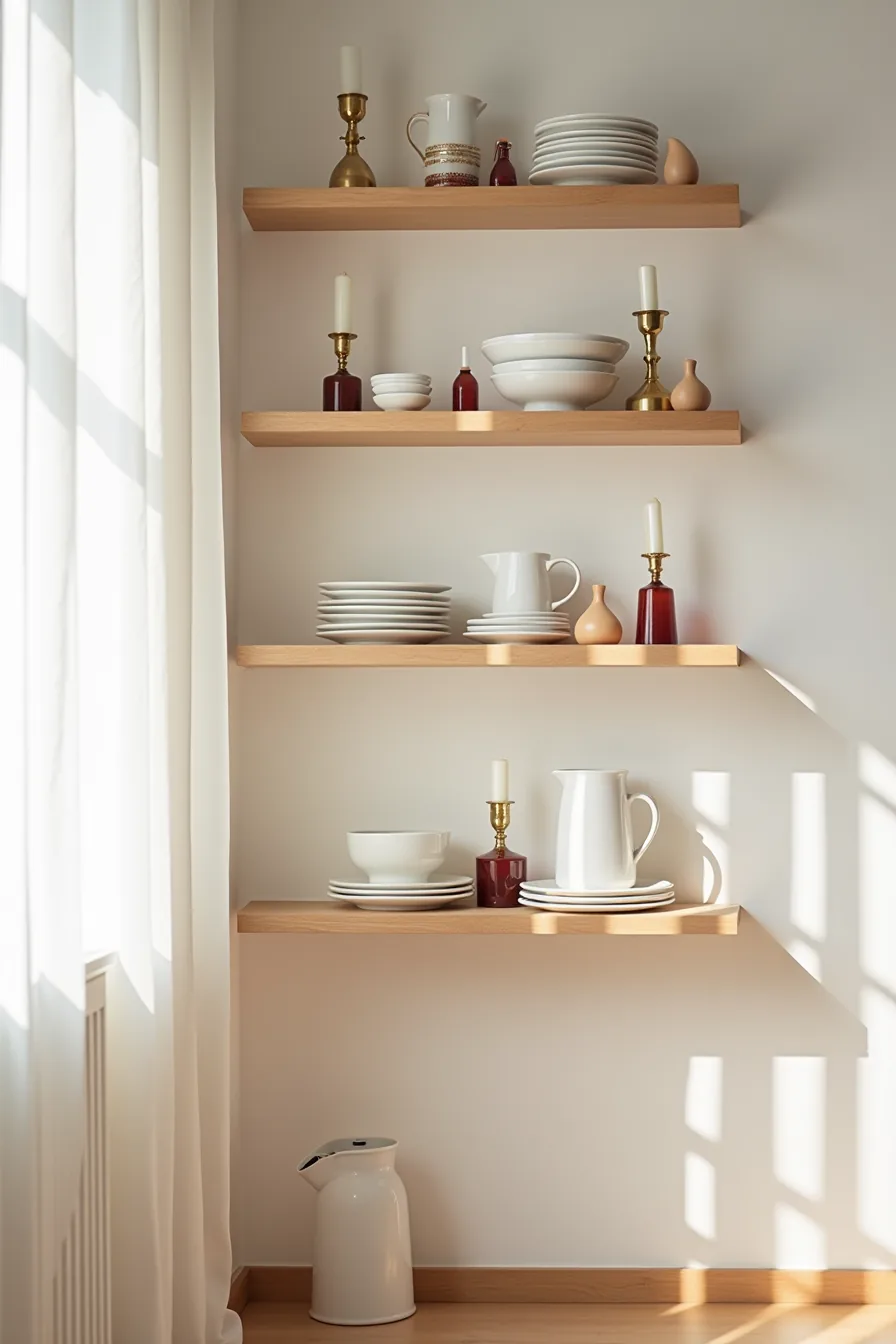
Open shelving turns everyday dishware into a Christmas display, but the key is layering in three distinct depths. Start by placing your largest items, stacked white plates or a ceramic pitcher, at the back of each shelf to anchor the composition. Then, add medium-height pieces like short tapered candles in brass holders or a small stack of linen napkins in the middle layer, leaving the front edge clear for functional items you still need daily.
For the front layer, cluster three to five glass ornaments in burgundy and cream directly on the shelf, resting them in shallow ceramic bowls or letting them sit loose for a casual feel. This arrangement keeps frequently used cups and mugs within easy reach, so you aren’t moving decor every time you need a coffee refill. Mixing matte and glossy finishes on the ornaments adds depth without introducing new colors, which keeps the palette cohesive with your existing dishware.
Scale the styling to your shelf dimensions and clearances. On shelves 12–18 inches deep, reserve the front 4–6 inches for functional items, placing decor pieces behind them. For narrow shelves 8–10 inches deep, use fewer layers and skip the back row entirely, relying on a single row of ornaments and a small candle instead.
Open shelving above a countertop also needs a 12–18 inch clearance for prep work, so keep tall decor pieces under 10 inches to avoid crowding the workspace below.
This approach suits kitchens with neutral or white cabinetry, where the burgundy and cream ornaments provide a festive pop without clashing. Renters can use adhesive hooks on the inside of the shelf lip to hang lightweight garland or small wreaths, leaving no marks when removed. For a long-term investment, replace disposable napkins with cloth versions in deep red or forest green, they cost more upfront but last for years and add a richer texture to the display.
Countertop Vignettes: Clustered Displays That Don’t Obstruct Work Zones
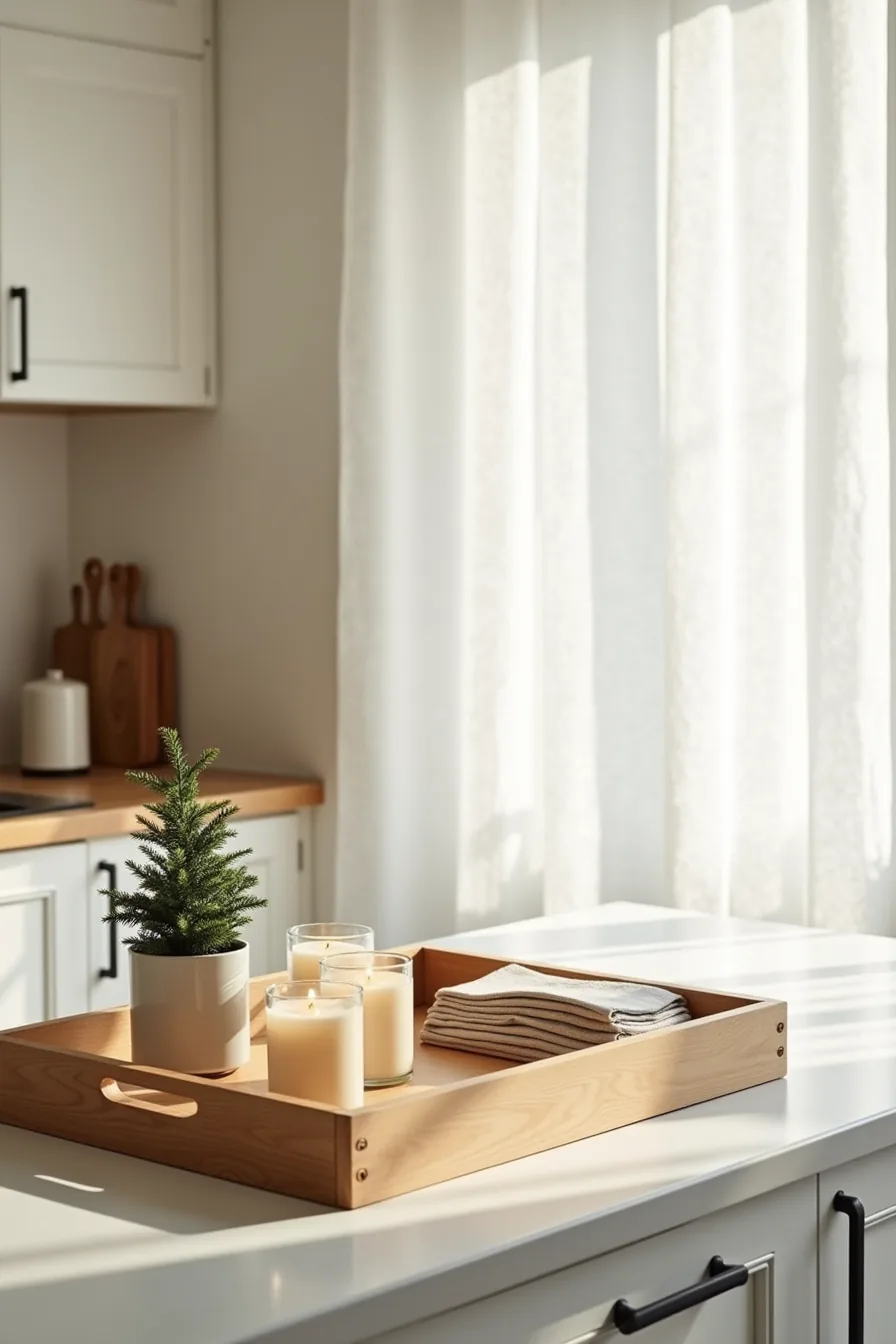
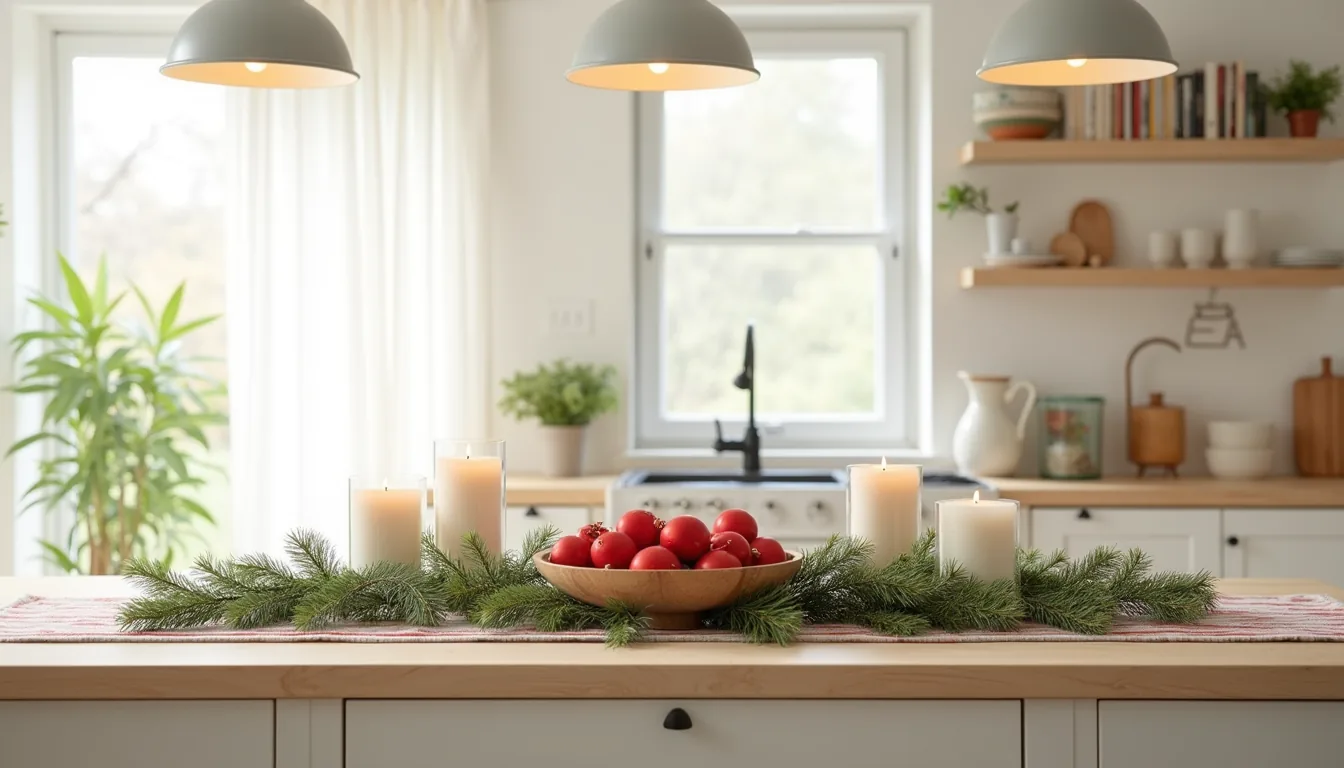
A single tray containing a potted evergreen, three glass votive holders, and a folded stack of linen napkins creates a complete holiday scene in under 18 inches of counter space. Position the tray flush against the backsplash on the side of the sink or near the coffee station, the two spots where you’ve the least active food prep. The tray itself defines the boundary, so the display reads as intentional rather than cluttered, and you can lift the entire arrangement to a sideboard or table in seconds if you need the full counter for baking.
Keep the tray footprint between 10 and 14 inches wide for standard 24–30 inch counters, which preserves 60–70 percent of the surface for active cooking. Choose a tray with a 1–2 inch lip so the candles and potted evergreen can’t slide off when you reach past them. This vignette works best in galley or L-shaped kitchens where counter space is scarce, because it consolidates decor into one removable zone rather than scattering pieces across multiple surfaces.
A real potted evergreen requires watering every 3–4 days and will drop needles after two weeks; a preserved or faux alternative eliminates that maintenance and lasts the entire season.
For a budget route, use a bamboo cutting board as the tray and cluster three pillar candles of varying heights (4, 6, and 8 inches) instead of votives. Renters should stick to the tray method rather than applying adhesive hooks or decals to counter backsplashes, since the display requires zero installation. A long-term investment option is a ceramic or metal tray with raised edges, expect to pay more, but it doubles as a serving piece for holiday gatherings and survives year-round use.
Window Treatments and Sill Décor: Light, View, and Ventilation Trade-offs
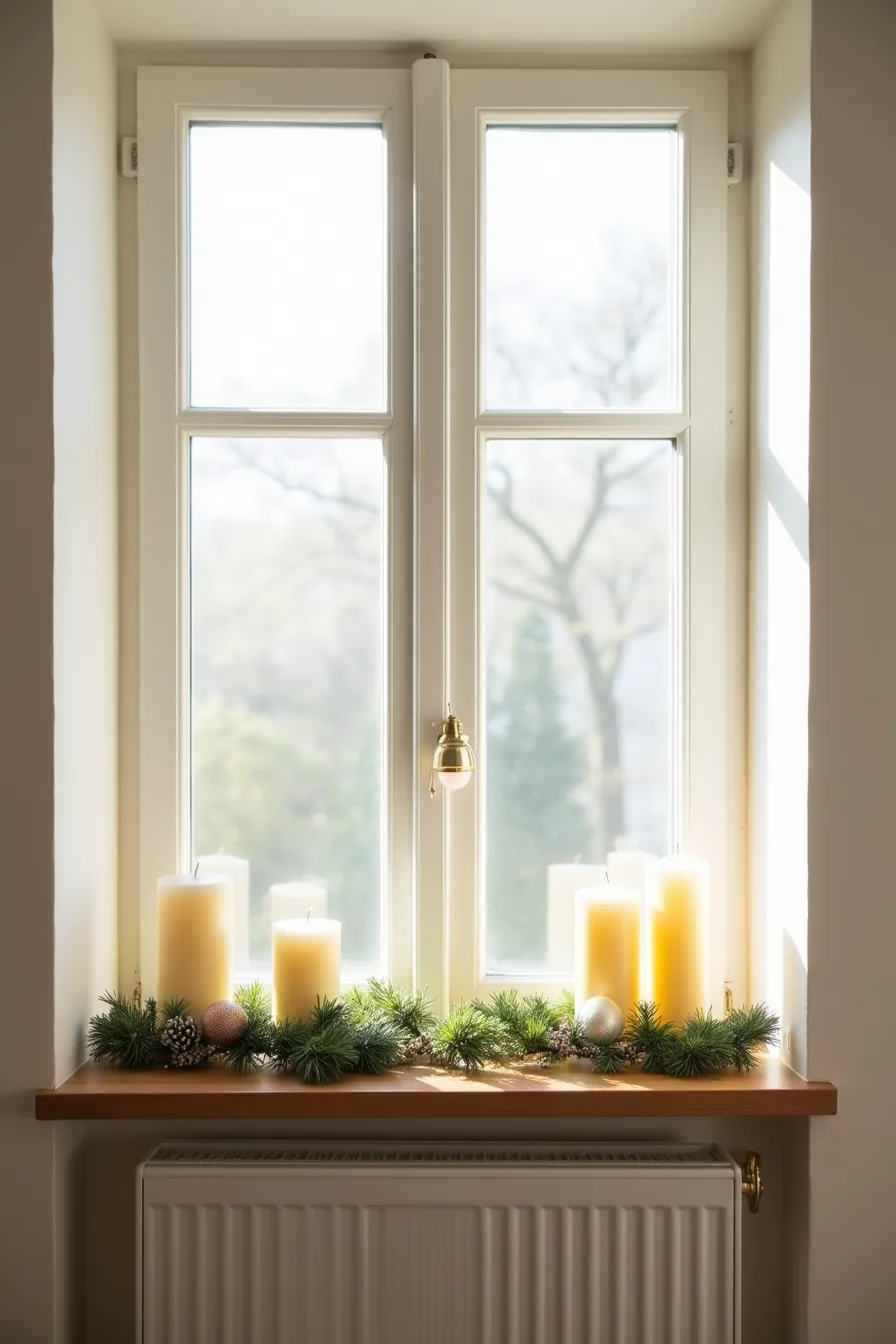
A sill arrangement of a low garland swag stretched along the base, three cream pillar candles spaced evenly, and a single frosted glass ornament keeps the window’s upper panes completely clear. That clearance matters: you preserve roughly 80 percent of incoming daylight and maintain an unobstructed sight line to the outdoors, which is the primary reason this setup suits kitchens with a view or a garden window. The swag should sit no higher than 2–3 inches above the sill so it never intrudes into the glass surface or the operable sash.
You must account for condensation and heat before committing to this look. Pillar candles on a sill near a steaming kettle or dishwasher vent will collect moisture, so opt for dripless wax or taper-free flameless versions if your kitchen runs humid. The garland should be faux or preserved, fresh greenery on a sill dries out unevenly and sheds needles onto the floor within five days.
For renters, this entire display requires nothing beyond a clean sill, making it the most reversible option in your kitchen; no hooks, nails, or adhesive residue involved. A budget version swaps the pillar candles for a single string of battery-operated fairy lights coiled flat behind the swag, adding glow without the fire risk near curtains. If you want a long-term investment, choose a silk garland with wired stems, expect to pay more, but it can be reshaped and stored flat for a decade of Decembers.
For small kitchens with narrow sills under 6 inches deep, use only the swag and skip the candles; for larger sills over 10 inches deep, add a second ornament on the opposite end to balance the visual weight without crowding the pane.
Lighting Layers: String Lights, Candles, and Under-Cabinet Options
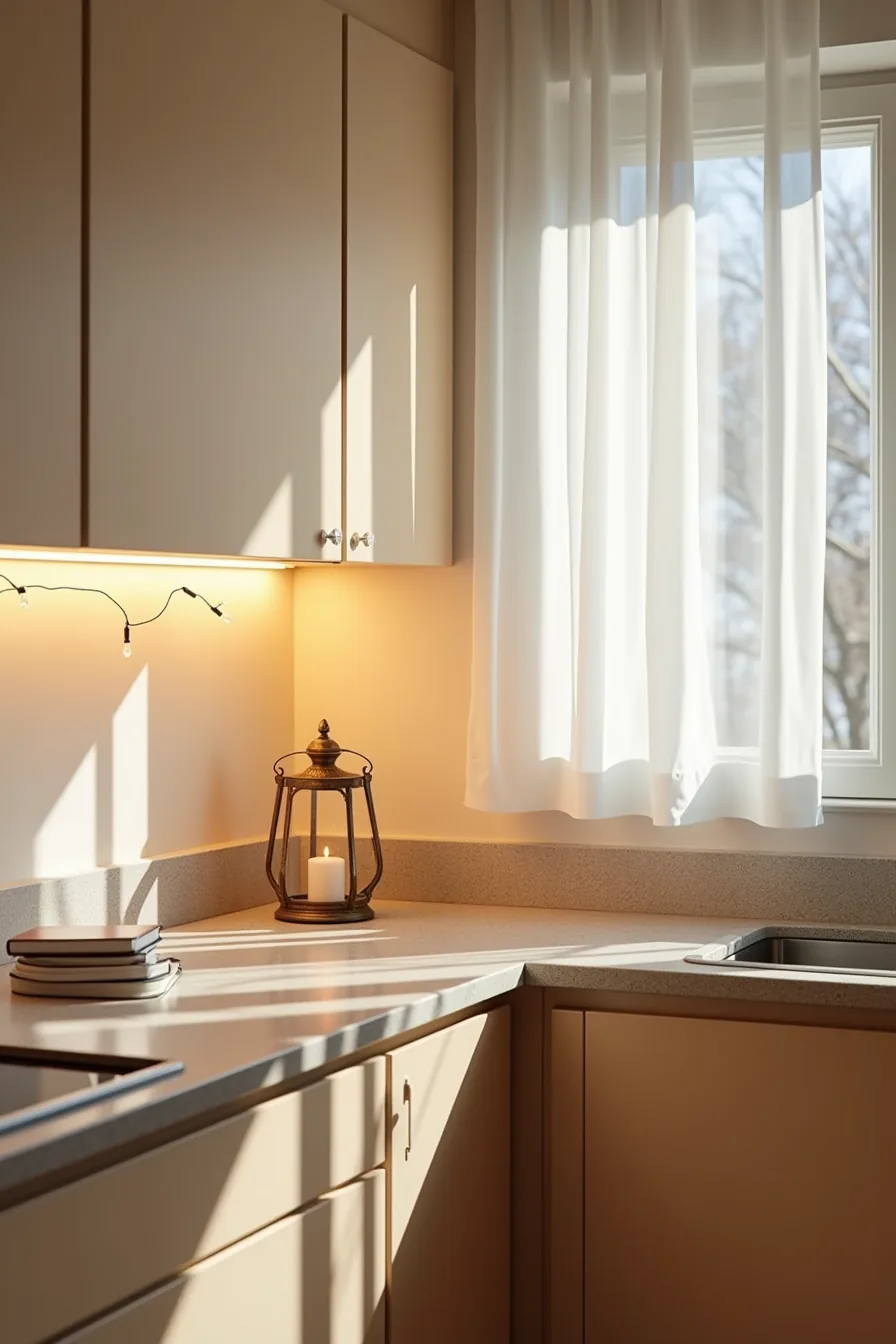
Layered lighting transforms a kitchen from functional to festive without a single ornament. The setup before you pairs warm white LED strip lights under the upper cabinets with a loose drape of string lights along the cabinet edge, plus a small brass lantern holding a battery candle on the granite countertop. Under-cabinet strips work best because they cast light downward onto the work surface, ideal for task lighting during holiday meal prep, while the string lights add ambient glow at eye level, creating depth without harsh shadows.
Safety dictates your placement choices. String lights should never touch the cabinet finish directly; use small adhesive clips to hold them a half-inch off the surface, preventing heat buildup and finish damage. Battery-operated options eliminate cord clutter entirely, which matters in galley kitchens where outlets are scarce.
For the lantern, keep it at least 12 inches from the stove and sink splash zone. The three-layer approach suits medium and large kitchens best; in a small kitchen, drop the string lights and rely on the under-cabinet strips alone to avoid visual clutter. Budget-wise, adhesive LED puck lights cost less than strip kits and mount in seconds.
A permanent installation, hardwired under-cabinet fixtures with a dimmer, runs higher but gives you year-round task lighting, making it the long-term investment that pays off beyond December.
Seasonal Tableware and Linens: Swaps That Require No Installation
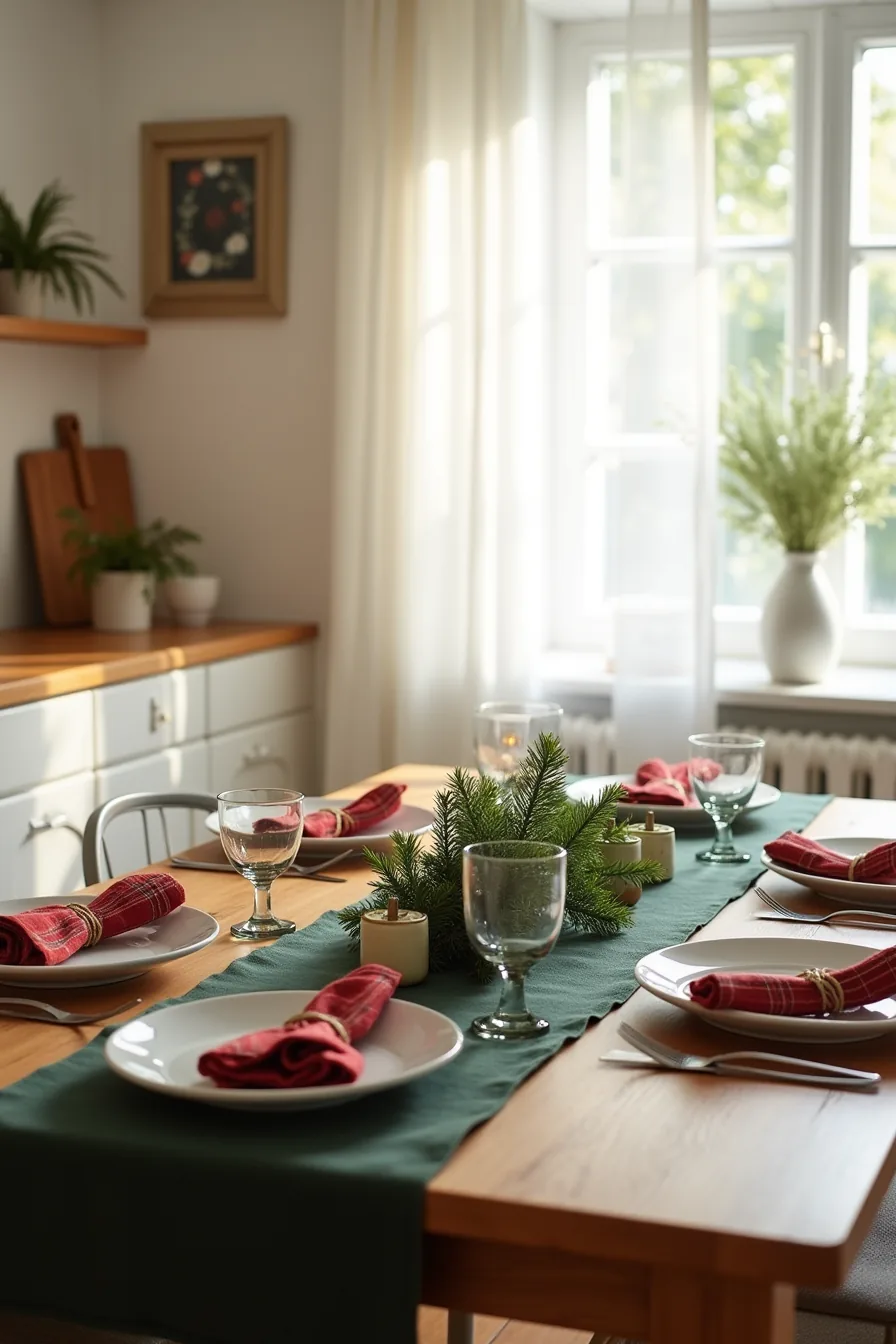
Textiles deliver the fastest kitchen transformation because they touch the surfaces you use daily. The setup pairs a dark green table runner with red plaid cloth napkins bundled in twine, stacked on white dinner plates, with a single evergreen sprig laid at each place setting. The runner defines the table’s length visually, while the napkins and sprigs create repeating rhythm, a pattern that reads as intentional from any angle.
This route suits renters and anyone avoiding wall damage, since nothing requires drilling, adhesive strips, or permanent fixtures. The full swap takes under ten minutes and reverses in one. Cotton and linen blends hold up to washing, but check care labels: plaid fabrics with metallic threads need hand-washing, so budget for dry-clean-only pieces if you choose those.
For small kitchens, skip the runner and confine the theme to napkins and dish towels, the same color story at a smaller scale. A medium or large table can carry the runner plus place settings without feeling crowded. Budget-minded shoppers can thrift solid-color linen napkins and dye them red or green for roughly the cost of one retail set, though dyeing requires an afternoon and a large pot.
Your 15-Minute Starting Point
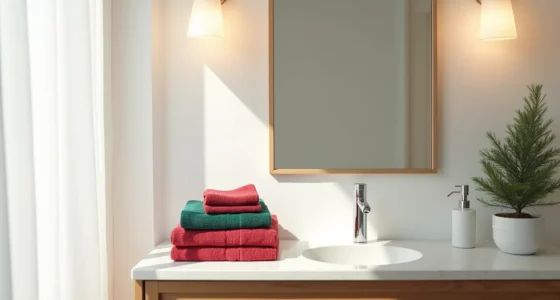
Begin with the single highest-impact change: swap your dish towels and oven mitts for red or green versions, then add a countertop bowl of cinnamon sticks, star anise, and orange slices. This costs under $20 and takes fifteen minutes, yet transforms the room’s focal points.
Before buying anything else, measure your countertop clearance and identify one empty wall or window. That determines whether you hang, perch, or cluster.
Your next step: gather three existing kitchen items, a wooden cutting board, a glass jar, and a tray, and style them with natural elements you already own. Done. You’ve a festive kitchen tonight.
Frequently Asked Questions
Can I hang garland on kitchen cabinets without damaging the finish?
Yes, use removable adhesive hooks rated for 5–10 pounds. Avoid nails, screws, or tape with strong adhesive. Test the hook on an inconspicuous area first and remove it slowly at the end of the season.
What’s the best way to decorate a small kitchen without making it feel cramped?
Focus on vertical space: hang a lightweight wreath on the window, place a small potted rosemary tree on the counter, and use magnetic hooks on the fridge. Limit tabletop items to two or three pieces per surface.
How do I keep Christmas decorations away from the stove and cooking heat?
Keep anything flammable, garland, fabric, paper, at least 3 feet from the stovetop, oven, and toaster. Use heat-resistant materials like metal, ceramic, or glass for countertop decor near cooking zones. Never hang garland above a range hood.
What Christmas decor works best for rental kitchens?
Use damage-free solutions: command hooks, tension rods, and removable window clings. A countertop vignette with a ceramic tree or a bowl of ornaments requires no installation. Skip anything that needs drilling, wallpaper, or permanent adhesive.