
Gingerbread Christmas decor ideas span far beyond cookie villages, the style breaks into at least six distinct approaches, each with its own budget, maintenance load, and spatial requirements. You can choose a whimsical gingerbread-boy garland for a child’s playroom, a muted spice-toned tablescape for a formal dining room, or a rustic wood-and-felt mantel display for a farmhouse living area. The key is matching the interpretation to your room’s scale and your willingness to refresh fragile pieces.
The next sections break down each option with exact placement tips, material lists, and cost trade-offs so you can pick a route that fits your home without overcommitting.
Key takeaways
- Edible gingerbread houses last only 1–3 weeks before stale or mold risks rise, so build them late in the season and place them away from heat vents and direct sunlight.
- Gingerbread-inspired palettes using warm browns, cream, and burnt orange work best as 60% wall or large-furniture color, 30% textiles, and 10% metallic or candy-red accents for balanced proportion.
- Faux gingerbread displays with painted wood or silicone resin pieces are the renter-friendly route, use command hooks or removable adhesive strips on mantels and walls to avoid patching holes.
- Scale your decor by room size: in small spaces, limit to one focal point under 24 inches wide; in large rooms, cluster three to five pieces at varying heights, spacing them 12–18 inches apart for visual rhythm.
Edible Gingerbread Houses and Structures
A gingerbread cottage with fondant windows and a gumdrop roof delivers the most literal take on gingerbread Christmas decor ideas, and it earns its place as the centerpiece of a coffee table or kitchen island. Set it on a ceramic plate beside your coffee mug and a slice of gingerbread cake, and you’ve a functional display that guests can actually eat after the holidays.
This route suits anyone who enjoys baking and wants decor that pulls double duty as dessert. For apartment dwellers, build a cottage that fits within a 6-8 inch footprint; for dining tables, scale up to 12-14 inches without blocking sightlines across the table. Use royal icing as your adhesive, it sets hard within 2-3 hours and holds structural weight better than melted sugar.
Store it in a cool, dry place (below 70°F) to prevent icing softening, and plan to consume it within 2-3 weeks before the gingerbread absorbs ambient moisture and turns stale. This is the budget-friendly option: a full build costs roughly $15-25 in ingredients, and you already own the baking tools.
Gingerbread-Inspired Color Palettes for Room Styling
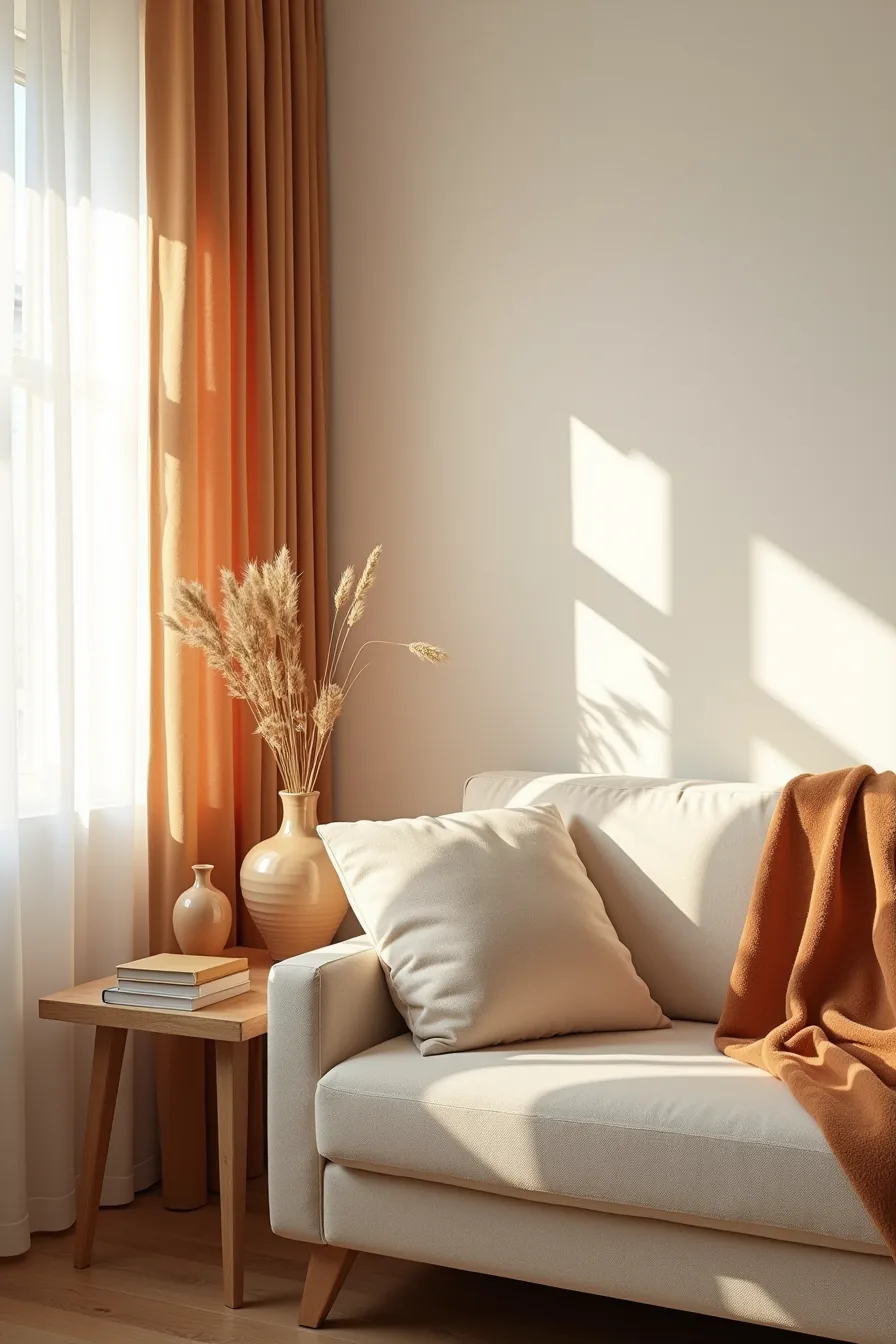
You don’t need a single new ornament to commit to gingerbread Christmas decor ideas, the palette alone can transform a space you already own. Anchor the look with a cream sofa as your blank canvas, then stack warm browns, cinnamon, and molasses tones in layers of increasing depth. Drape a rust-brown throw over one arm of the sofa and pull the cinnamon curtains partially closed; the filtered daylight will soften the contrast between the two browns, preventing the room from feeling muddy.
Style a side table with a molasses-toned ceramic vase filled with dried wheat stalks, which introduces a matte, organic texture that glossy holiday decor often lacks. The trick is proportion: in a small room, limit yourself to three accent items in these shades; in a larger space, repeat each tone at least twice across different surfaces to create visual rhythm rather than scattered spots. This approach suits renters and minimalists because it relies on items you likely already own, swap your regular throws and vases for seasonal ones, then return them to storage in January.
Maintenance is zero beyond standard dusting, and the palette works year-round if you eventually swap the wheat for eucalyptus or pampas grass.
Faux Gingerbread Wall and Mantel Displays
A large foam gingerbread structure on your fireplace mantel delivers the full festive silhouette without the crumbs, mold, or pest risk of real baked goods. Paint a cut-to-size foam panel with two coats of matte acrylic in a cocoa brown, then pipe white acrylic frosting lines from a squeeze bottle, this gives you the authentic piped detail at a fraction of the weight of resin. For a typical mantel, keep the structure between 18 and 24 inches tall and 24 to 30 inches wide, so it reads as a centerpiece rather than a wall obstruction.
Flank it with two unlit cream pillar candles of differing heights to balance the visual mass; the warm white contrasts the brown and prevents the display from feeling heavy against a faux brick wall. This route suits homeowners who want a reusable piece for 5–10 seasons, since foam holds up well in storage if wrapped in tissue paper. Measure your mantel depth before building, a piece deeper than the ledge will overhang and look accidental.
The most common gingerbread Christmas decor ideas mistakes to avoid here are over-scaling the structure and skipping a clear sealant, which lets the paint chip when you dust.
Gingerbread-Themed Textiles and Soft Furnishings
A cream linen table runner patterned with brown gingerbread men delivers the festive motif through texture rather than mass, making it ideal for dining rooms where bulky decor would crowd the table. Linen’s natural slub gives the print a handcrafted feel that screen-printed cotton lacks, and it resists pilling through repeated holiday washes, expect 3–5 seasons of use before the weave softens noticeably. Pair it with four matching cloth napkins rolled at each setting to create a symmetrical line that guides the eye down the table; this arrangement works best on surfaces 72–96 inches long, where the runner covers roughly two-thirds of the length.
Hang decorative stockings from chair backs to echo the pattern at seated eye level, a renter-friendly move that requires no hardware beyond the chair’s existing structure. For Practical Gingerbread Christmas Decor Ideas planning tips, store the set flat with acid-free tissue between folds to prevent crease-set lines, and machine-wash cold on a gentle cycle, skip the dryer, as heat shrinks linen up to 5%. This approach suits anyone wanting a soft, small-space option that packs away flat in a single drawer.
Lighting and Scent Layering for Gingerbread Ambiance
A 2700K table lamp with a cream shade casts the warm, buttery glow that makes gingerbread tones look baked rather than flat; cooler daylight bulbs will wash out the browns and make the spice palette feel muddy. Place a lit pillar candle in a glass holder beside it to add a flickering low-light layer that shifts shadows across the wall, this dual-source setup reads as cozy without requiring a single decoration. On the same side table, a ceramic diffuser with reeds carries the scent at a steady, low level, while a small spice jar of cinnamon sticks or cloves lets guests adjust intensity by simply opening the lid.
This combination suits renters perfectly: nothing mounts, plugs in, or damages surfaces, and you can pack the entire arrangement into a shoebox for storage. For small spaces, skip the diffuser and rely on the candle alone, burn it for 30–45 minutes before guests arrive, then extinguish it, and the spice aroma lingers for another two hours without overwhelming a compact room.
Scaling Gingerbread Decor Across Room Sizes and Budgets
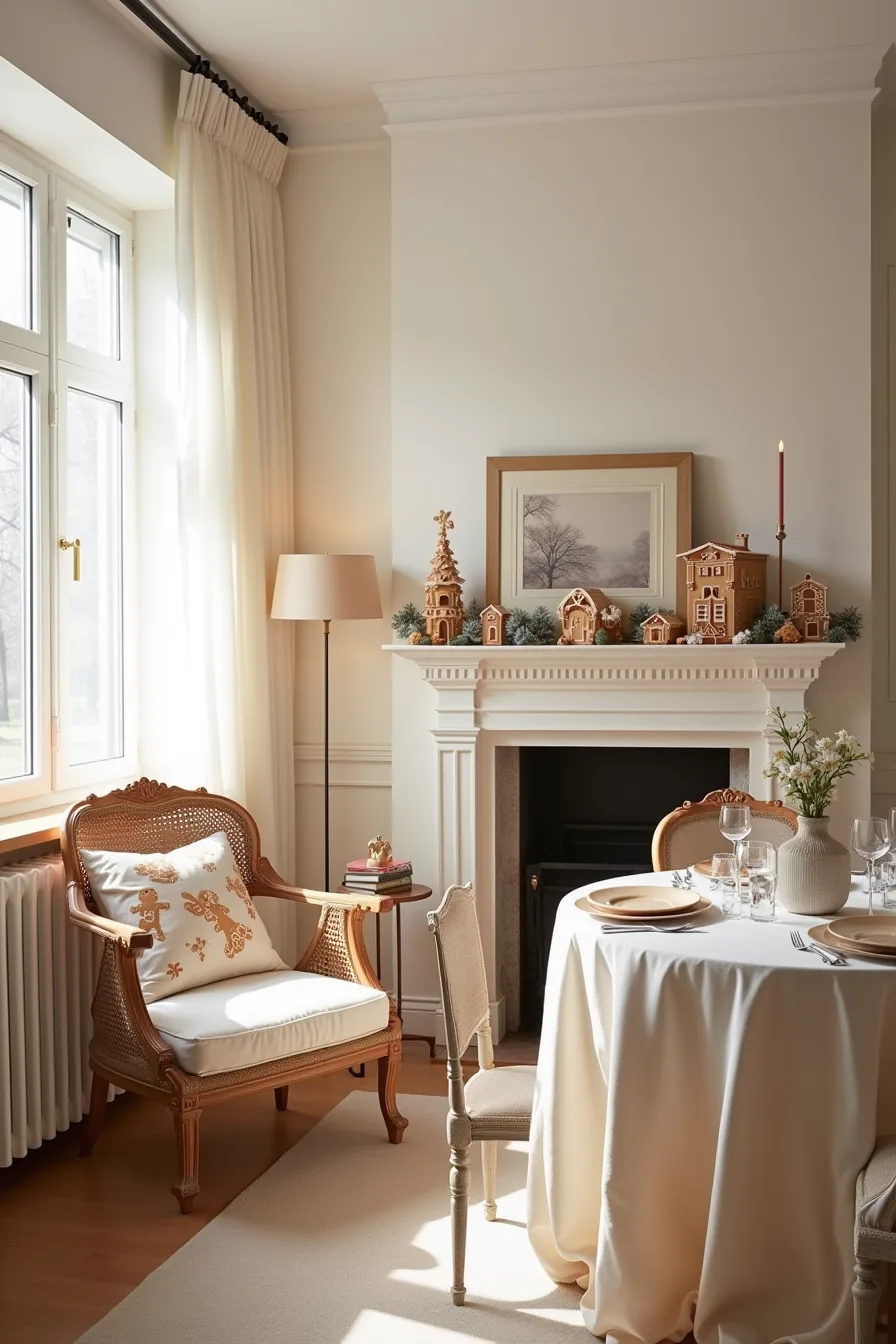
The same gingerbread palette scales across three distinct budgets if you separate permanent investments from seasonal accents. In a small apartment corner, one gingerbread-patterned pillow on a chair, typically $15–$30 and machine-washable, delivers the visual cue without sacrificing floor space; pair it with a thrifted throw in cream or cinnamon tones to avoid a costume-shop effect. Renter-friendly means nothing adheres to walls or requires hardware, so this single piece works whether you own a studio or lease a furnished unit.
A medium dining room justifies the mid-range route: a full table setting with gingerbread-motif runners and ceramic napkin rings, plus a mantel display of wooden gingerbread men and felt garlands. These pieces run $8–$25 per item, store flat, and last three to five seasons if you hand-wash them, making them the sweet spot for cost-per-use value. The large foyer represents the splurge tier, a floor-standing gingerbread structure (real or resin) between four and six feet tall, coordinated with a pre-lit garland along the stair rail.
Budget $250–$600 for both, and factor in 30–45 minutes of assembly and annual touch-up painting if you choose unfinished wood over resin. This setup suits homeowners with high traffic flow, but keep the structure at least 36 inches from entry doors so it never blocks the swing path.
Your First Move
Start with the approach that matches your living situation. Renters should grab the removable door decal; homeowners with storage space can commit to the ceramic village. The felt garland works everywhere and costs under $20 in supplies.
Pick exactly one idea, gather the materials this weekend, and set a 2-hour timer. When the timer ends, step back and evaluate the scale against your room. That single test tells you whether to expand the concept or try a different interpretation entirely.
Frequently Asked Questions
How long does a decorative gingerbread house last before it attracts pests or molds?
A real gingerbread house lasts 2–4 weeks indoors before moisture attracts mold or pests. Display it on a sealed plate, away from heat vents, and discard it by New Year’s.
Can I use gingerbread Christmas decor ideas in a rental without damaging walls or surfaces?
Yes. Use adhesive hooks, removable command strips, or freestanding pieces like tabletop villages and wreaths. Avoid wallpaper, textured paint, and sticky residue-prone surfaces.
Test any adhesive on a hidden spot first.
What’s the cheapest way to achieve a gingerbread-themed Christmas look?
Buy plain brown kraft paper, white paint pens, and faux icing trim. Cut gingerbread-man shapes, draw scalloped borders, and tape them to windows or doors. Total cost stays under $15 for a full room.
How do I prevent gingerbread-colored décor from looking too brown or dated?
Pair warm browns with crisp white, bright red, or forest green accents. Use glossy finishes and metallic gold details sparingly. Limit brown to 40% of the visual space, letting lighter colors dominate.