Your wall is the largest unused surface in your home during the holidays, and choosing the right Christmas wall decor ideas comes down to matching your lease terms, ceiling height, and how much drilling you’re willing to do. The six approaches below range from a $15 removable garland system to a built-in picture-rail investment, each with specific placement rules and load limits. You’ll also find a decision checklist at the end that pairs each idea with your room size, wall material, and post-holiday cleanup tolerance.
Key takeaways
Measure your wall first, then choose garlands for flexible coverage, they work on any surface but need 1-2 attachment points per 3-4 feet to avoid sagging. Commit to shiplap only if you own your home, since installation costs typically run $4-$8 per square foot and removal damages drywall. Use removable decals for renter-friendly cheer, but verify the adhesive is rated for your paint finish, matte walls can peel within 6 weeks of removal. Layer lighting decor last, placing fixtures at least 12 inches from flammable fabric and using LED bulbs to cut heat risk and energy use.
Garland Arrangements: Flexible Coverage for Any Wall Size
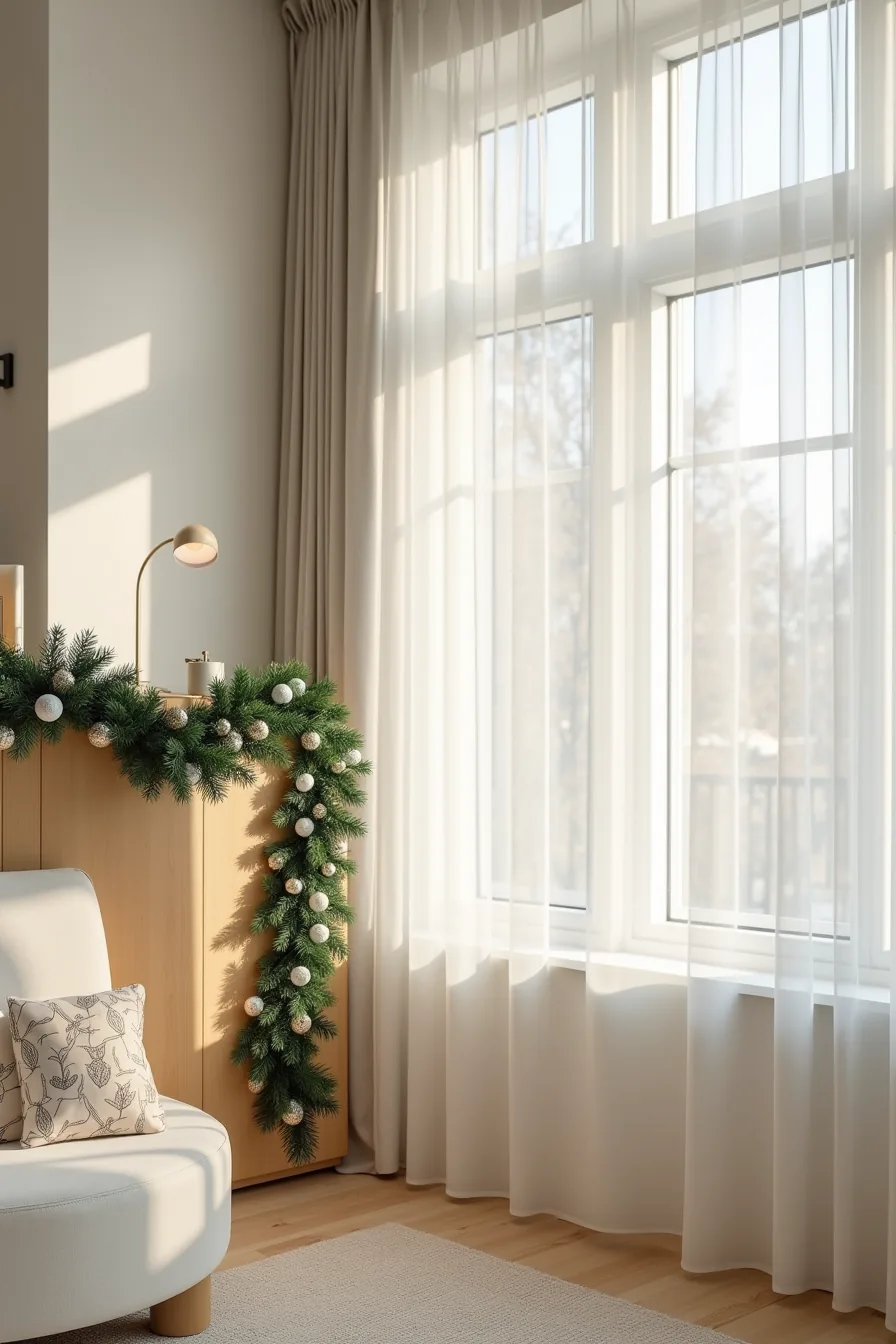
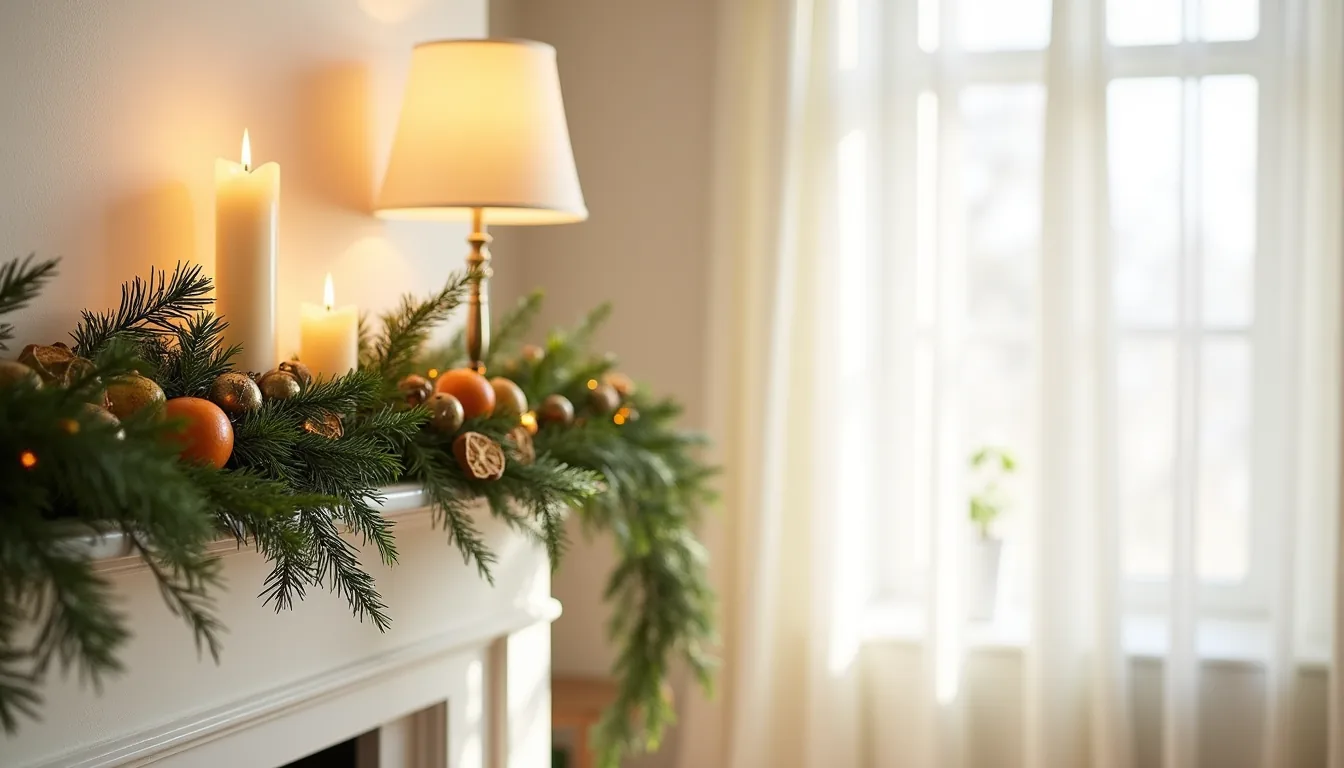
Garland is arguably the most adaptable tool in your Christmas wall decor ideas arsenal. Unlike rigid panels or framed art, it bends, drapes, and flows to fit virtually any footprint. The setup pictured here, a 4-foot-wide living room section, uses dense faux pine garland swaged in a shallow U-shape, anchored at two points near the top corners and allowed to dip naturally in the middle.
This single continuous line draws the eye horizontally, making a narrow wall feel wider without overwhelming it.
For small spaces, stick to a single swag with a 6- to 8-inch drop; this adds depth without eating into floor or furniture clearance. On medium walls, layer two parallel strands spaced 12 inches apart to create a subtle ladder effect. Large, open-plan walls can handle three or more swags, but keep the vertical spacing consistent (roughly 10–14 inches) to maintain rhythm.
Material choice matters for longevity and maintenance. Real pine looks and smells authentic but dries out and sheds within 2–3 weeks. High-quality faux pine costs more upfront but lasts for years and requires only a quick dusting with a microfiber cloth.
Avoid lightweight plastic garlands for wall use, they sag and look cheap. Instead, choose wired or pre-lit varieties with a sturdy central spine that you can shape and hold.
Installation and placement: Use removable command hooks rated for at least 2 pounds per anchor point; for heavy pre-lit garlands, add zip ties to secure the wire to the hook. Position the lowest point of the U-shape at least 12 inches above any furniture or door frame to prevent obstruction. Before committing, measure your wall width and mark the two anchor points, the swag should never dip below 50% of the wall’s height, or it will visually shorten the room.
Accents and color direction: The pictured setup uses gold ornaments and white berry clusters as the only accents, a restrained palette that reads as elegant rather than cluttered. Space ornaments evenly, about one per 18 inches of garland, and use wire twist ties to secure them. If you prefer a rustic or farmhouse feel, swap the gold for matte red or natural wood tones.
For a modern look, skip the ornaments entirely and use only white berry sprigs for a frosty, minimalist finish.
Budget vs. Long-term investment: A 12-foot length of quality faux pine with berries runs roughly $30–$60. This is a solid mid-range option. If you’re on a tight budget, buy unadorned faux garland (as low as $12 per 9 feet) and add DIY paper or felt ornaments.
For a long-term investment, choose a pre-lit garland with warm white LEDs, expect to pay $50–$90 for 12 feet, and you’ll avoid the hassle of separate string lights. Just note that pre-lit strands have a fixed bulb count; you can’t easily add more, so plan your spacing around them.
Maintenance and take-down: Faux garland stores flat in a bin, but don’t crush it; use tissue paper between layers to preserve the shape. When removing, unhook the anchor points first and gently coil the garland to avoid kinking the wire. For pre-lit versions, coil around a cardboard tube to protect the wiring.
Wipe down with a damp cloth before storing to remove dust and any residue from hanging.
\), metre for metre, this is the least risky way to bring Christmas wall decor ideas into a bedroom without committing to paint or heavy joinery.
Shiplap, horizontal planks with a small gap between boards, turns the entire wall into a permanent textured backdrop. In a bedroom, it softens reflective light and gives even a simple white wreath a sense of deliberate styling. The setup uses a 16-inch woven wreath at center height (roughly 60–66 inches from the floor), flanked by two wall-mounted candleholders.
These holders should be hardwired or surface-mounted with a 6-inch clearance from the wreath; battery-operated pillars in a 3×4-inch diameter avoid heat concerns entirely.
Installation costs run $4–$8 per square foot for MDF or PVC shiplap (real wood runs $9–$15). You need a stud finder, finish nailer, and 2–3 hours per 8-foot wall. Maintenance is minimal: dust planks with a dry Swiffer monthly, and wipe candleholders with a damp cloth.
This approach suits homeowners who want one holiday anchor and a year-round coastal or farmhouse base. If you rent or change style frequently, skip this and use the removable decal route instead, the installation is permanent, and removal risks drywall damage. For a genuine Budget vs. Splurge Christmas Wall Decor Ideas comparison, splurge here and save on garlands and ornaments elsewhere.
Removable Decals and Wallpaper: Renter-Friendly Solutions
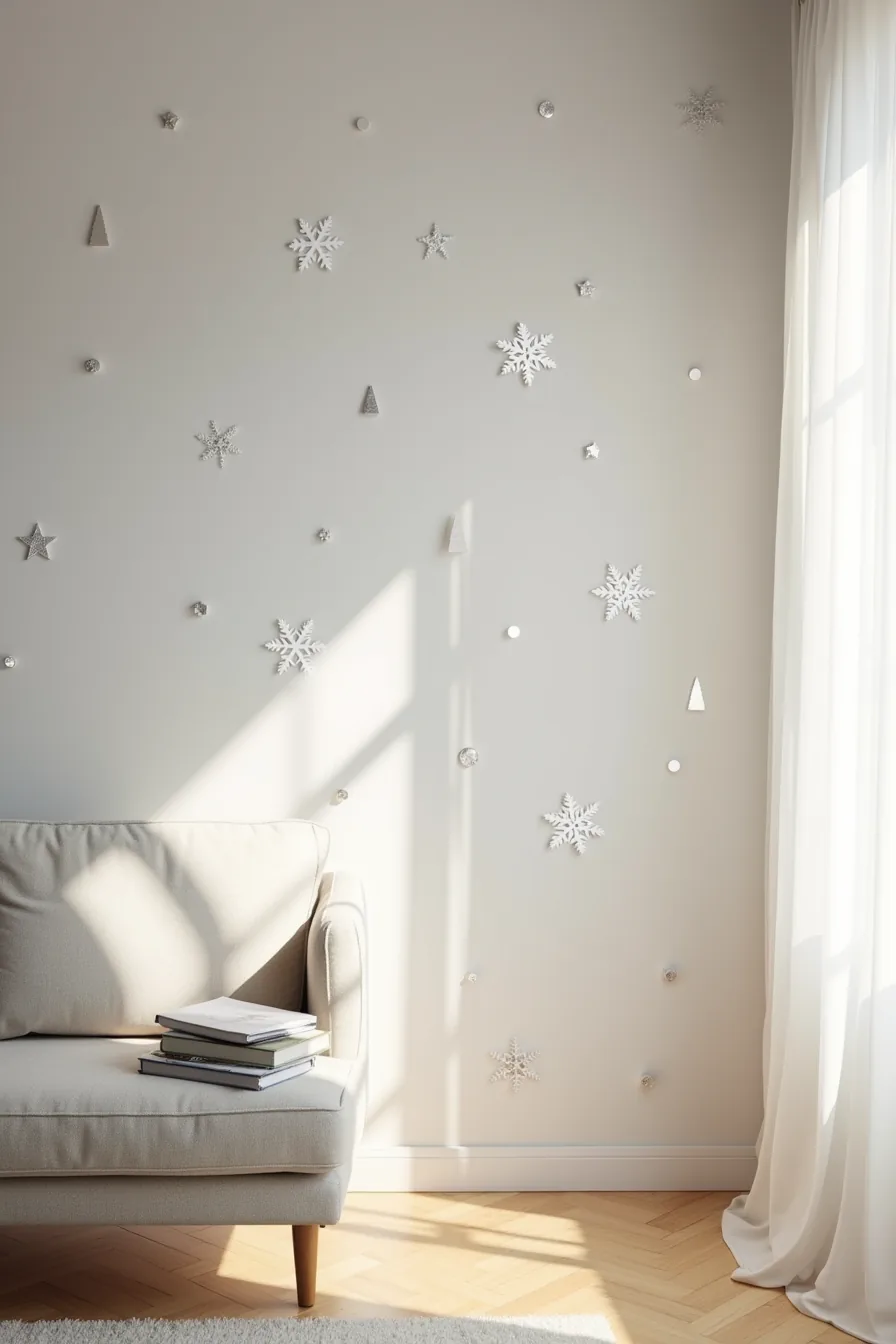
For renters or anyone who changes holiday themes annually, peel-and-stick decals deliver the visual impact of wall art with zero commitment. The setup shown here uses a scattered arrangement of snowflake shapes, stylized trees, and geometric patterns in white and silver against a pale gray wall. This random distribution works because it mimics natural snowfall, spacing them 8–12 inches apart prevents the cluttered look that evenly spaced decals risk.
Application takes roughly 30–45 minutes for a 6-foot span. Clean the wall with isopropyl alcohol first, then press from the center outward to avoid air bubbles. When removal day comes, peel at a 45-degree slow angle; quality vinyl leaves no residue for up to six months of use, though textured walls shorten that window to about two months.
Cost breaks the budget in your favor: a full decal set runs $15–$40, versus $200–$600 for permanent wallpaper installation. Durability is the trade-off, door edges and high-traffic hallways will show scratches, and most decals dull with direct sunlight. This suits renters, kids’ rooms, or anyone still discovering their preferred Best Christmas Wall Decor Ideas examples before investing permanently.
Framed Artwork and Gallery Walls: Curated Display Method
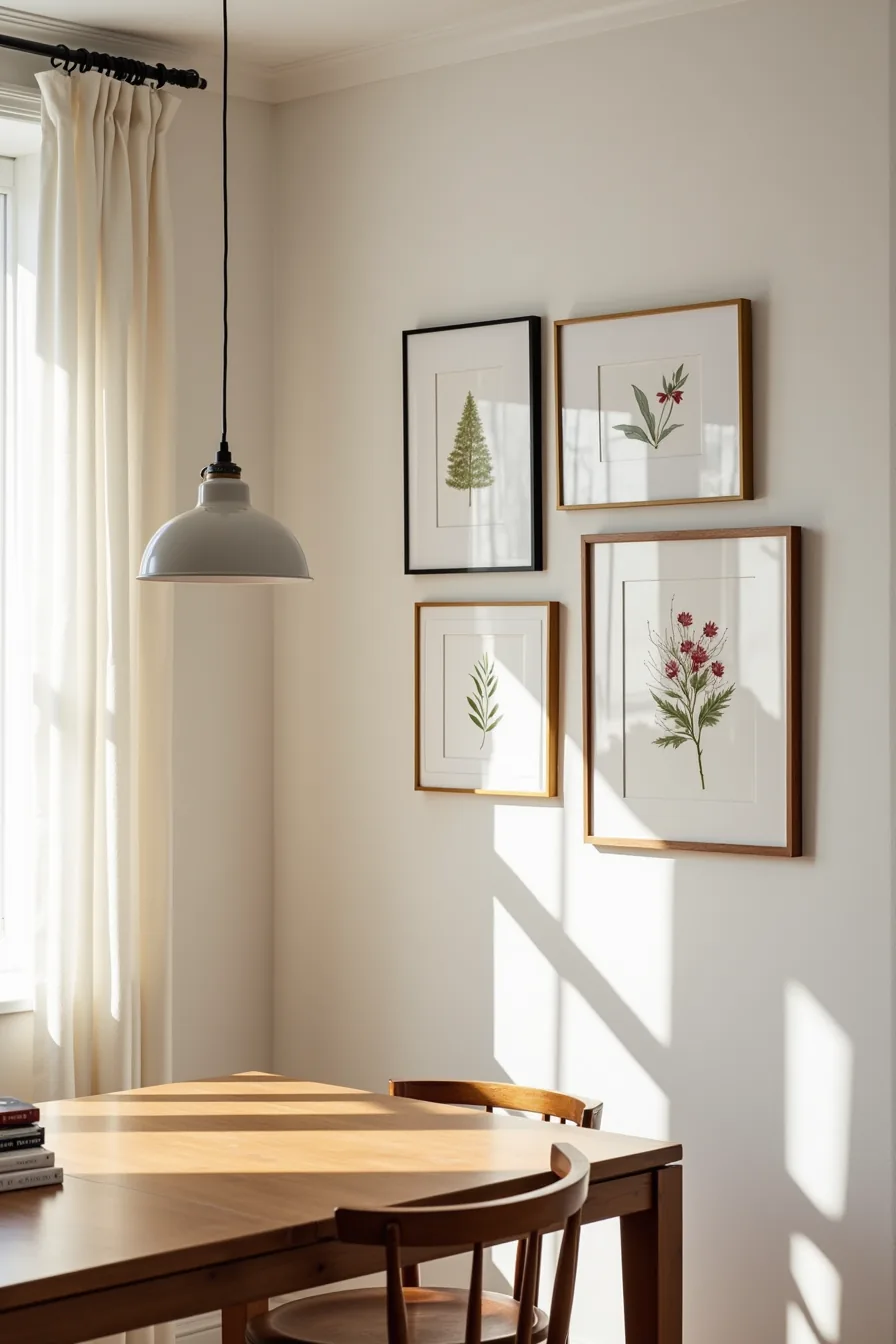
A seven-frame salon-style grid turns a dining room into a year-round gallery that merely shifts its subject matter for the holidays. The arrangement works because it pairs mixed finishes, gold, black, natural wood, to unify disparate prints: botanical illustrations alongside holiday-themed typography and winter landscapes. This contrast prevents the wall from reading as a Christmas-only display, so you can swap in four or five seasonal pieces and keep the rest permanent.
Frame sizing follows a simple rule: the largest frame should measure roughly one-third the width of your table or sofa below it. Hang the center frame at eye level (57–60 inches from floor to its midpoint), then work outward. For a standard 8-foot wall, keep 2–3 inches between frames; for a 12-foot wall, stretch that to 3–5 inches.
Use a laser level and painter’s tape to mock the layout on the wall first, this saves you from re-nailing drywall.
Budget runs $80–$250 depending on whether you source thrift frames (paint them to match) or buy new. The maintenance cost is real: dust frames monthly and check hanging wire tension yearly. This approach suits homeowners and long-term renters with nail permission, and it scales down to a three-frame cluster above a console table in small apartments.
Lighting-Based Decor: Functional Festive Focal Points
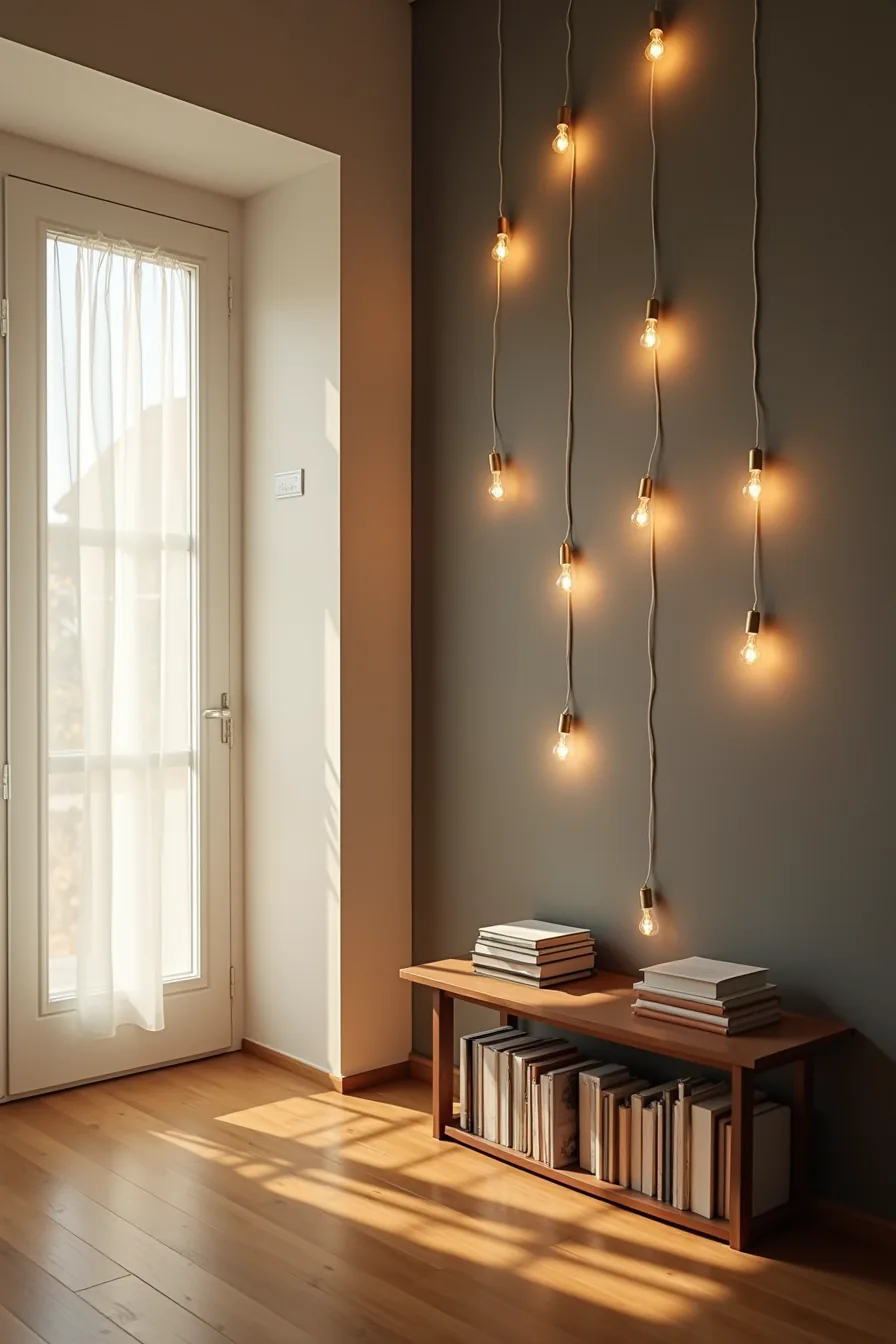
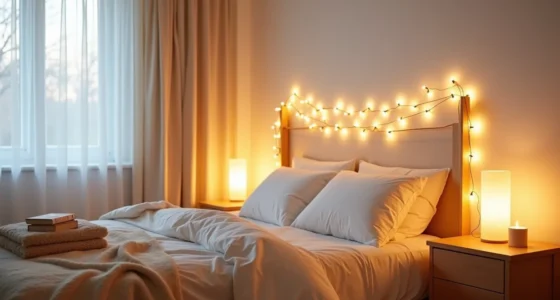
Warm white string lights arranged in a loose grid transform a dark entryway wall into the room’s primary light source without a single nail. The setup works because it layers function with decoration: the lights replace a table lamp, freeing floor space while casting enough glow to handle the hallway safely at night. A wooden side table below catches the spill light, giving you a spot for keys or a small tray of ornaments.
For a standard 8-foot wall, plan on 3–4 strands of 50–100 lights, spacing them 8–12 inches apart. Clip the strands to removable adhesive hooks rated for 2–3 pounds each, they release cleanly with a pull tab in January. Keep cords off the floor by routing them along the baseboard with cable clips, and verify your strand’s wattage stays under 72 watts per outlet to avoid tripping a breaker.
This approach suits renters and anyone who wants zero wall damage. It costs $20–$60 for lights and hooks, and it works best on dark or textured walls where the glow reads clearly. On small walls, tighten the grid to 6-inch spacing; on large walls, add a second cluster rather than stretching the same strands thinner, sparse spacing reads as an afterthought and is one of the common Christmas Wall Decor Ideas mistakes to avoid.
Three-Dimensional Elements: Texture and Depth Strategies
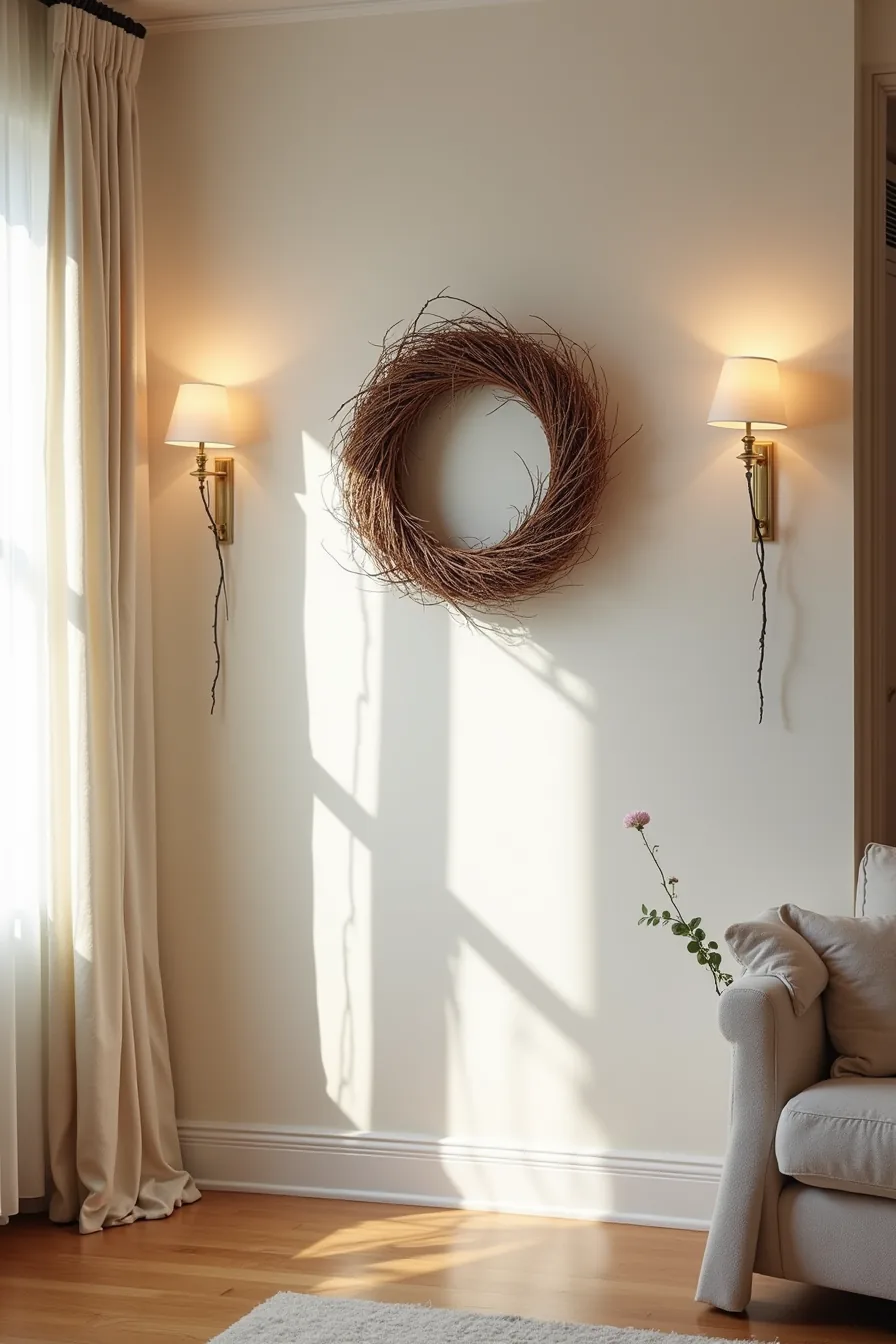
A large woven wreath centered at eye level anchors the composition, while two deep red velvet swags draped diagonally from its top corners pull the eye outward and downward, a triangle shape that feels balanced without requiring perfect symmetry. The branches extending beyond the swags break the wall’s hard edge, softening the transition into adjacent furniture. This setup works because it creates physical depth: the wreath sits 2–3 inches off the wall, the velvet adds a plush nap that catches light differently, and the branches cast subtle shadows.
You need a wall stud or a drywall anchor rated for 10–15 pounds to hold the wreath, but the swags and branches can hang from lightweight adhesive hooks, velvet drapes at 1–2 pounds per yard, so two 3-foot swags stay well under hook limits. Keep all elements at least 6 inches from nearby shelving or picture frames to avoid a cluttered silhouette. The velvet will collect dust; vacuum it monthly with a brush attachment or swap in washable faux velvet for high-traffic rooms.
This strategy suits medium-to-large living or dining walls, on a small wall, scale the wreath down to 14–16 inches diameter and use a single swag instead of two.
Your Next Step: Choosing What Fits
Start by measuring your available wall space and noting the room’s existing color palette. For a quick, renter-friendly refresh, pick a removable adhesive hook system and a lightweight fabric or paper garland, installation takes under 15 minutes.
If you’re investing for the long term, anchor your design with a single large metal or wood wreath, then layer in battery-operated LED candles on floating shelves. This approach costs more upfront but withstands years of seasonal storage.
Begin with one focal piece, hang it at eye level, and build outward. Commit to one material, wood, metal, or fabric, to keep the display cohesive.
Frequently Asked Questions
Question: What is the difference between Christmas wall decor ideas that work for renters versus homeowners?
Renters need damage-free, temporary solutions like adhesive hooks, Command strips, and removable vinyl. Homeowners can use permanent fixtures, screwed-in wreaths, mounted light clips, or painted murals, that add lasting value but require commitment and repair when removed.
Question: How do you choose Christmas wall decor ideas for a small bedroom versus a large living room?
For a small bedroom, pick one focal point, a slim garland above the headboard or a single wreath, using lightweight, flat items to avoid visual bulk. In a large living room, layer vertical and horizontal elements like tall branches, wide banners, and clustered frames to fill empty wall space proportionally.
Question: What are the most common mistakes people make when installing Christmas wall decor ideas?
Overcrowding walls with too many small pieces creates visual noise, and ignoring scale, tiny decor on a huge wall, looks lost. Another mistake is using heavy items without proper anchors, risking damage or falls. Always measure first and balance negative space.
Question: Can you combine multiple Christmas wall decor ideas in one room without it looking cluttered?
Yes, if you stick to a unified color palette and a consistent theme, like rustic wood with red berries or metallics with white lights. Group items into zones (e.g., one wall for garlands, another for framed art) and leave at least 12 inches of empty wall between clusters.