Scandinavian Christmas decor ideas are less about a single look and more about a set of principles, natural materials, muted color palettes, and functional lighting, that you can adapt to your space, budget, and tolerance for maintenance. The six approaches below range from a two-hour, under-$40 table arrangement to a permanent architectural investment in wood and stone. Each option specifies the exact room size it suits, the weekly upkeep required, and the trade-off you accept, whether that’s storage space, wall damage, or a commitment to seasonal pruning.
Before you buy a single candle, you’ll know which style fits your rental agreement, your floor plan, and your definition of “hygge” without the clutter.
Key takeaways
Choose evergreen and white for a low-maintenance palette that hides needle drop and needs no watering, using faux stems if you want zero upkeep. Wooden advent calendars work best hung at eye level on a blank wall, with 24 small doors that suit families but demand a 12-16 inch width clearance. Candle-based hygge lighting requires real flame supervision, so opt for LED tealights in lanterns for renter-safe glow without wax drips on sills. Scale garlands to 1.5-2 inches of greenery per foot of mantel or railing, and choose linen stockings with removable inserts for machine washing after the season.
Monochromatic Evergreen and White Displays

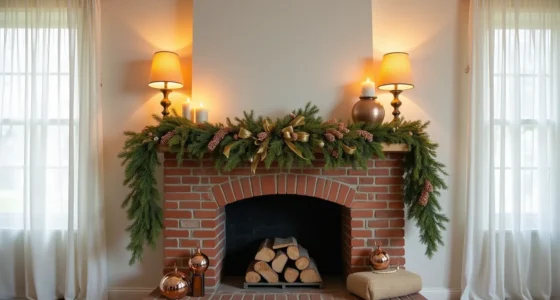
This approach strips Scandinavian Christmas decor ideas down to their essence: natural greens against cream and white, relying on texture rather than color contrast to carry the design. A layered mantel arrangement works because the varying heights of spruce, candles, and dried grasses create visual rhythm without competing hues.
To reproduce this look, drape fresh spruce garland in loose swags across the mantel, allowing it to dip naturally rather than pulling it taut. Space white pillar candles at staggered heights, placing 4-inch, 6-inch, and 8-inch candles in a cluster creates more interest than uniform rows. Tuck cream-colored dried pampas grass bundles between the swags; their feathery texture softens the rigid lines of the evergreens and adds airy volume.
Finish with pale linen bows tied at intervals, which introduce a soft, matte fabric element that prevents the arrangement from feeling overly botanical.
This suits medium to large mantels (most run 54–72 inches) and works best in rooms with neutral walls. The all-white palette means the greenery reads as structure rather than ornament, avoiding the busyness of multicolored decorations. Maintenance is the real trade-off: fresh spruce lasts roughly 2–3 weeks indoors before shedding, so plan to replace it if your season runs longer.
If you want a zero-maintenance version, opt for quality faux spruce with realistic needle variation, but expect to pay more upfront for pieces that don’t look plastic from across the room.
Wooden Advent Calendars and Carved Ornaments

A timber advent calendar with numbered drawers does double duty: it counts down the days while functioning as a permanent shelf display piece. The natural finish and carved detailing blend with year-round neutral decor, so you aren’t storing a Christmas-only item for eleven months. This works particularly well for renters, since it hangs on a wall or sits on a shelf without nails or permanent fixtures.
For a small space, position the calendar on a floating shelf above a desk or entryway console where it won’t compete with other holiday pieces. Stack small wood blocks beneath the calendar to improve it and create dimension; these also serve as risers for displaying hand-carved ornaments in natural finish. Tuck a single potted evergreen sapling beside the arrangement, its live green provides the only color contrast, keeping the palette disciplined.
You can find quality wooden advent calendars in the $40–$90 range, while hand-carved ornaments typically run $8–$20 each. Skip painted versions if you want maximum versatility; unfinished wood adapts to any future decor scheme and requires only occasional dusting with a dry cloth.
Hygge Lighting with Candles and Lanterns

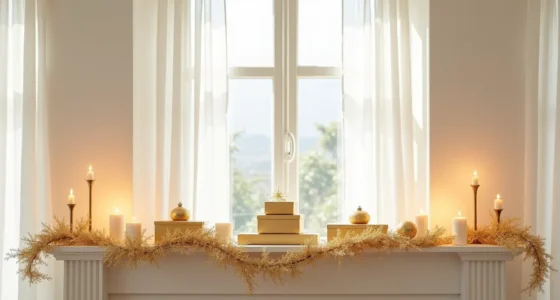
Hygge lighting relies on warm, low-level light sources placed where you actually sit, read, or eat, not overhead fixtures. For a cluster that delivers maximum coziness, group three metal lanterns of graduated sizes on a windowsill or a sideboard, with a tea light inside each one.
Set unlit pillar candles in cream and pale gray beside the lanterns to build a layered composition that looks intentional even when not in use. A simple wooden candleholder adds a natural texture that ties the arrangement back to the Scandinavian preference for organic materials.
This setup works best on a wide sill or a console table at least 36 inches long, letting the tallest lantern anchor one end and the shortest taper toward the other. For safety, keep all flames at least 12 inches from curtains or trailing plants, and never leave them burning unattended.
To maintain the look, wipe the glass monthly with a vinegar-water solution to prevent soot buildup, and replace tea lights after eight hours of burn time to avoid overheating the metal bases.
Linen Stockings and Textile-Based Accents

Linen stockings bring a quiet, tactile contrast to glossy ornaments and painted wood. The natural slub of the fabric catches light unevenly, which reads as depth rather than decoration, exactly the effect you want in a space that favors restraint. Hang four cream linen stockings from a stair railing with simple twine, spacing them evenly at roughly 12–14 inches apart so the rhythm feels deliberate without looking measured.
Drape a natural linen table runner over the railing itself, letting it cascade slightly between the stockings. This repurposing works because the runner’s long, unbroken line visually ties the separate stockings into one composition. Fold a wool throw blanket on the third stair below, not for warmth, but to anchor the vertical arrangement with a block of solid texture.
This approach suits narrow entryways or stairwells where floor space is too tight for a tree or large centerpiece. You get substantial holiday presence without sacrificing walking clearance. Linen wrinkles naturally, so embrace the creases; ironing defeats the material’s relaxed character.
Wash stockings cold and hang them to dry, or the fibers will shrink and distort their shape. For renters, use removable adhesive hooks rated for 5–10 pounds instead of nails, they hold the twine securely and peel off without marking the railing.
Scaled Garland and Wreath Sizing for Room Proportions

Before you buy, measure the wall where the garland will hang. A good rule of thumb: the garland should span roughly 60–70% of the wall’s width, so a 12-foot garland suits a wall that’s 16–20 feet long. For a smaller accent wall of 8–10 feet, a 6-foot garland keeps the scale from feeling cramped.
Hang the garland at eye level or slightly higher, about 54–60 inches from the floor to the top edge, so it reads as a deliberate architectural line rather than floating awkwardly. Use two hooks placed at the wall’s outer thirds, not the very corners, to create a gentle swag that mimics a natural drape.
Choose a wreath diameter based on the surface behind it: a 24–30-inch wreath balances a standard 36–42-inch console table, while a 36-inch wreath anchors a large window or double-door entry. If the wall is tall, position the wreath so its center sits at 57–60 inches from the floor, this aligns with the average sightline without competing with the garland overhead.
For narrow hallways under 5 feet wide, skip the horizontal garland entirely and opt for a single vertical swag or a slim 18-inch wreath. Oversizing a garland in a tight corridor makes the ceiling feel lower and the passage feel narrower, so err on the smaller side.
Budget, Renter, and Investment Routes for Each Idea

For a true budget route, start with foraged branches and dollar-store candles. Wrap the branches in plain paper twine and cluster them in a clear glass vase; the total cost stays under $20, and you can compost everything in January.
Renters should lean on removable adhesive hooks paired with lightweight garlands and battery-operated candles. These setups avoid wall damage entirely, take under an hour to install, and pack flat for next year, just check that the adhesive strips are rated for your wall finish before pressing them on.
If you want a long-term investment, choose a brass lantern, beeswax candles, and heirloom-quality wooden ornaments. Brass and beeswax develop a patina over time, and solid wood pieces survive decades of seasonal storage; expect to spend $80–$150 upfront, but these items won’t need replacing. For a mixed approach, combine a lower-cost garland with one statement investment piece, this balances durability with flexibility.
Your First Move: Choose One Anchor Piece
Before you buy anything, decide which single element will carry your entire scheme, a paper star, a wooden advent ladder, or a wool throw. That anchor dictates everything else: your color palette, your material choices, and your budget ceiling. A paper star costs under $30 and takes ten minutes to hang; a wool throw runs $80–$150 and needs zero installation.
Pick based on your lease terms and your willingness to maintain it.
Start by measuring your window frame or mantel width, then order that one piece today.
Frequently Asked Questions
What is the core difference between Scandinavian Christmas decor and minimalist Christmas decor?
Scandinavian decor prioritizes warmth and coziness (hygge) through natural textures, soft lighting, and organic materials like wood and wool. Minimalist decor focuses strictly on reduction, clean lines, and visual emptiness. Scandinavian style adds warmth to simplicity; minimalism strips warmth away.
Can you do Scandinavian Christmas decor in a small apartment without a mantel or staircase?
Yes. Use wall-mounted wooden garlands, a tabletop tree with felt ornaments, or hang a wreath on a window. Swap a mantel for a shelf or sideboard with candle clusters and small pine sprigs.
Vertical space and multi-functional pieces are your best tools.
How do you maintain fresh greenery in Scandinavian garlands and wreaths throughout December?
Mist greenery every 2–3 days with water and keep it away from direct heat sources like radiators or fireplaces. For garlands, soak the base in water overnight before hanging. Expect a lifespan of 3–4 weeks; replace individual sprigs as they dry out.
What is the typical budget range for a full Scandinavian Christmas decor refresh in a medium-sized home?
A full refresh typically costs $150–$400, depending on whether you buy new textiles, candles, and greenery. Budget route: $100–$150 using DIY pine branches, plain linen, and second-hand ceramics. Investment route: $400–$600 for quality wool throws, brass candleholders, and reusable felt ornaments.