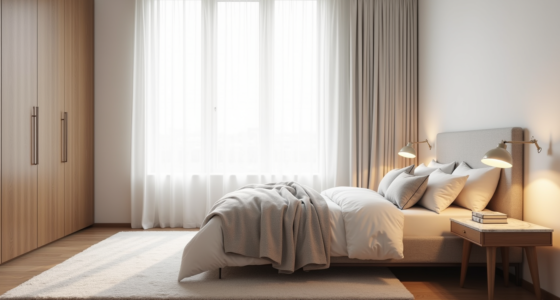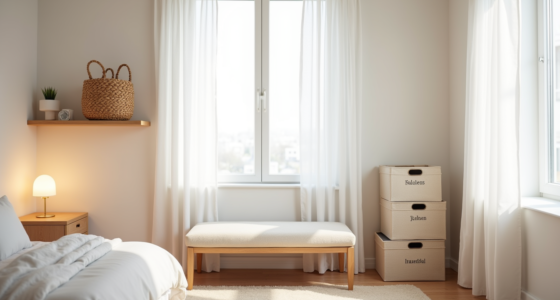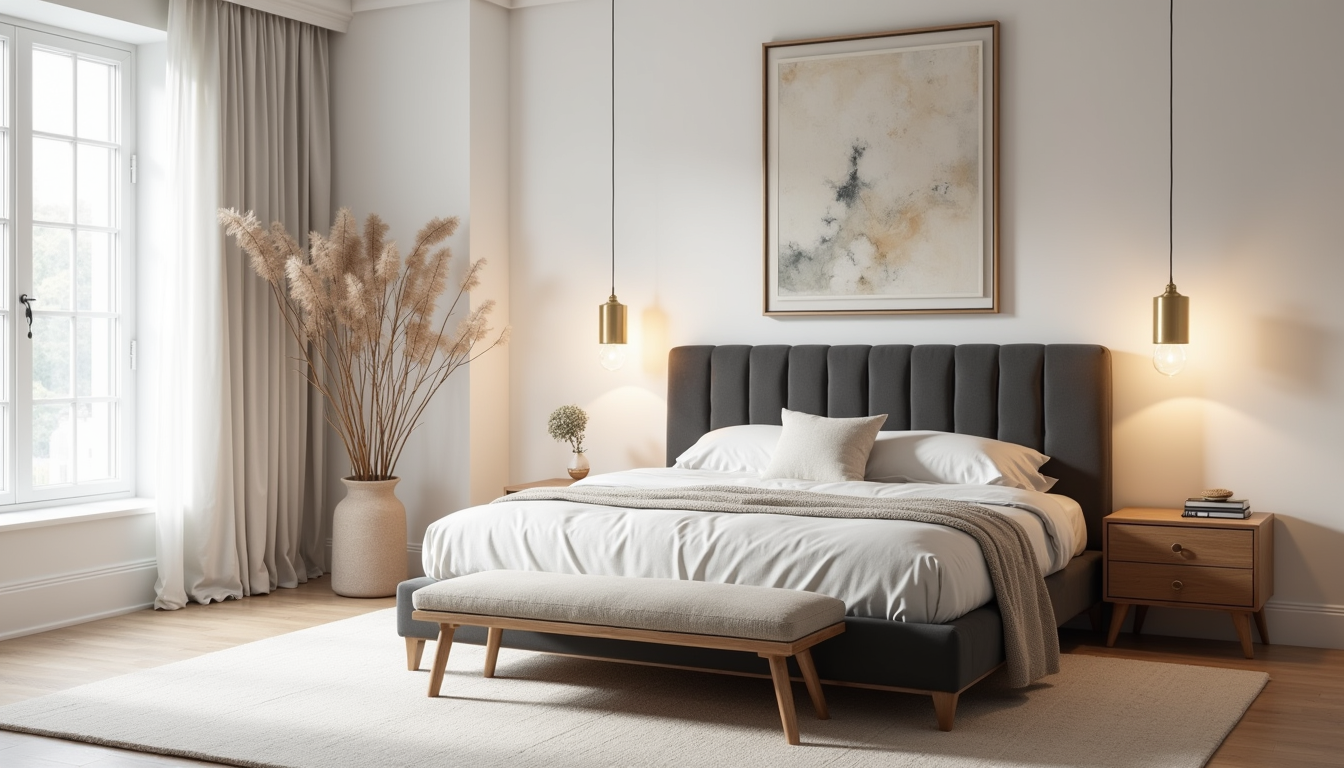

Rich bedroom luxury modern design balances high-end materials, clean lines, and intentional details to create a space that feels both opulent and uncluttered. This style works equally well in compact apartments and sprawling master suites, with key differences in scale and material choices. Whether you prefer muted monochrome palettes or bold metallic accents, the right combination of texture, lighting, and proportion elevates the space without sacrificing functionality.
Key takeaways
- Monochrome schemes work when balanced with one oversized upholstered headboard (60-72″ wide) and matte black hardware for contrast.
- Metallic accents demand restraint, limit to 2-3 reflective surfaces like bedside sconces or a framed mirror to avoid glare.
- Built-in storage solves space issues in rooms under 12×12 feet but requires professional installation for flush, high-end finishes.
- Jewel tones overwhelm small rooms unless used on a single focal wall or in textiles with neutral flooring.
What Rich Bedroom Luxury Modern Actually Means in Design Terms
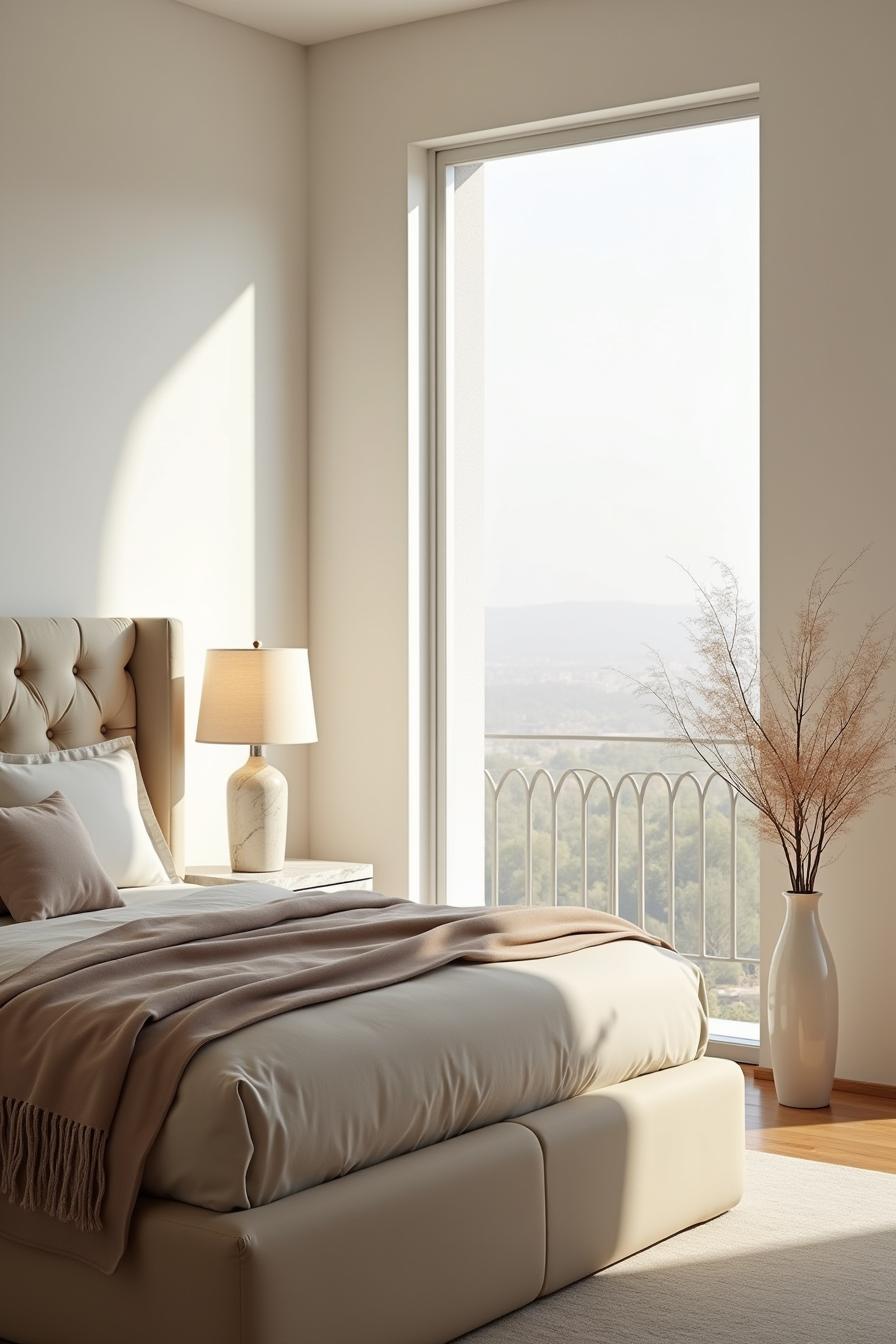
Rich Bedroom Luxury Modern isn’t about piling on ornate antiques or chasing stark minimalism. It balances high-end materials, tailored silhouettes, and restrained palettes to create a space that feels substantial yet uncluttered. You achieve this through deliberate contrasts: a cream linen channel-tufted headboard brings softness and vertical rhythm, while a marble-topped nightstand adds cool, polished weight.
The ceramic table lamp with a linen shade introduces handcrafted warmth without breaking the clean lines.
Color stays within a narrow tonal range, ivory, taupe, and warm greys, so the room reads as cohesive rather than decorated. Layered bedding in these same hues builds depth through texture, not pattern. Furniture profiles remain low and horizontal to preserve sightlines and make the room feel larger.
Lighting does the heavy lifting here. You need three distinct layers: ambient ceiling light, task light from the table lamp, and accent light to graze the headboard texture. A dimmer switch on the ambient circuit is non-negotable, you lose the modern richness without it.
This approach suits medium-to-large bedrooms (roughly 150–250 square feet) best; in smaller rooms, scale the headboard down to a queen size and swap the marble nightstand for a compact version to avoid overwhelming the footprint.
Monochrome Elegance with Statement Upholstery
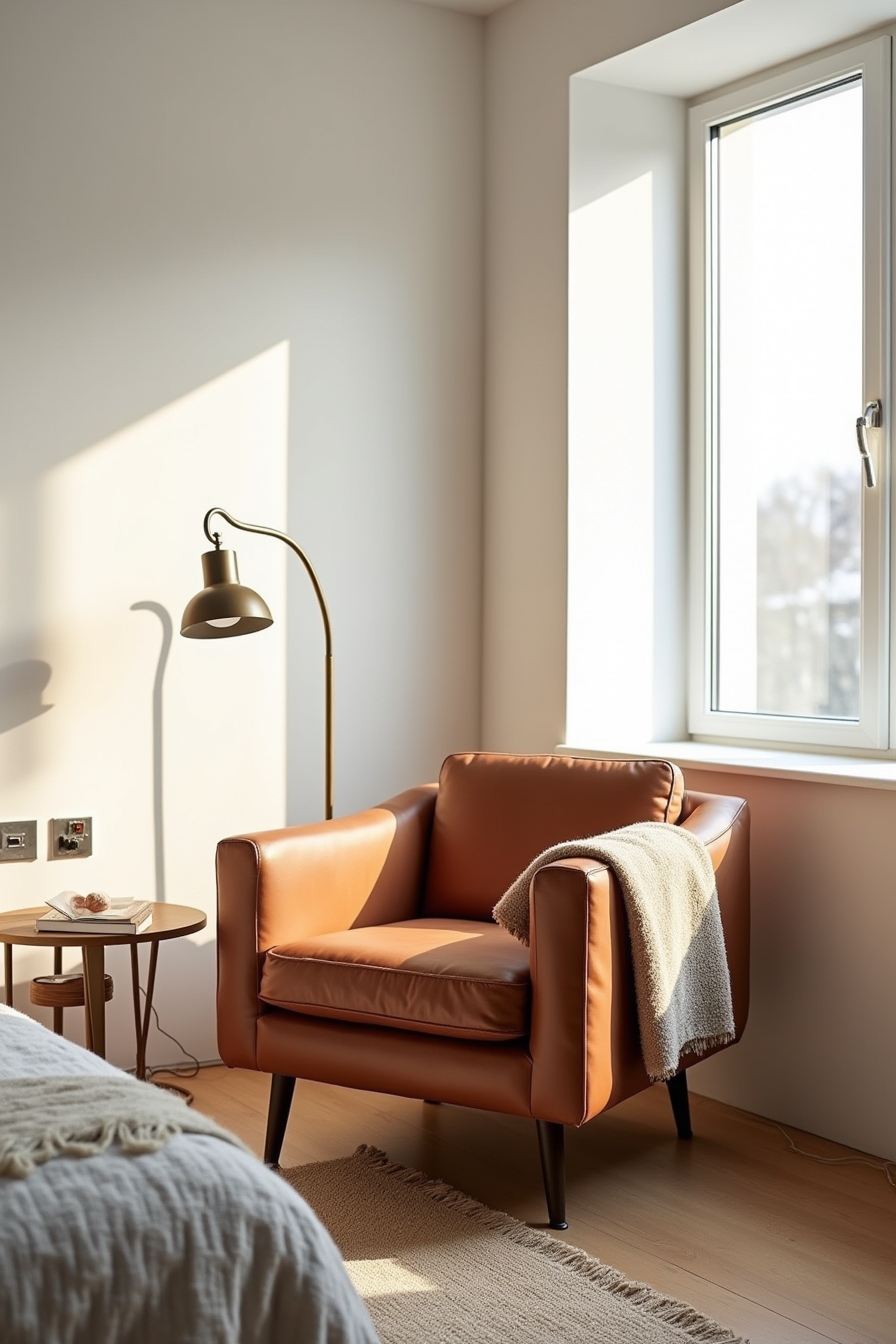
A single upholstered piece can anchor an entire neutral scheme. The cognac leather armchair in this setup carries the room because its warm tone stands alone against ivory and taupe walls. Leather works best here: it develops a patina over 5–10 years, making it a genuine long-term investment.
If you keep pets, choose a full-grain hide with a protective finish to resist scratches, expect to pay 20–30% more for that durability.
The brass arc floor lamp balances the chair’s horizontal bulk with vertical reach. Position the arc so its shade hovers at shoulder height when you’re seated, roughly 40–44 inches from the floor. This creates a proper reading light, not just aesthetics.
Proportions matter. In a room under 150 square feet, size the chair to a 28–32 inch seat width; anything larger restricts the path around the bed. For a 300-square-foot primary suite, you can push toward 36–40 inches without cluttering the circulation zone.
A budget route swaps the leather for a high-grade polyurethane (PU) upholstery at about one-third the cost. It lacks leather’s aging character, but it shrugs off spills in small bedrooms or kids’ zones. The bronze side table and textured wool rug are genuinely rentable, both move easily, and the rug anchors without needing a permanent fixture.
That bronze-leg table carries a small footprint; if you need more surface, accept a 20-inch diameter for tight corners, or step up to 24 inches for a medium room. This setup demonstrates one of the Best Rich Bedroom Luxury Modern examples because each piece performs a role while staying monochromatic.
Warm Metallics and Layered Textures
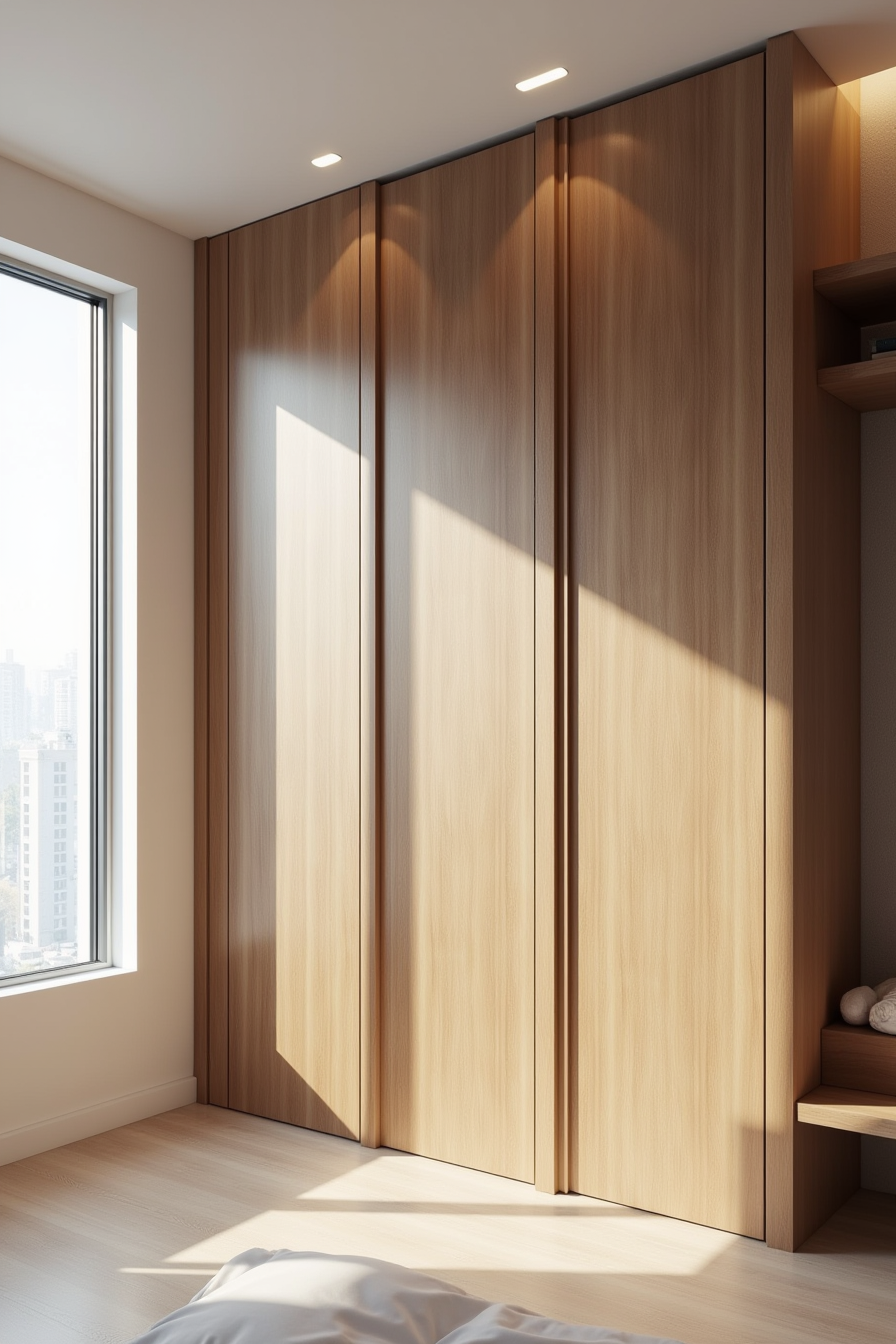
Brass, bronze, and gold read as luxury only when they occupy less than 20% of the visual surface. The recessed LED strips in the walnut paneling achieve this by emitting a warm glow rather than reflecting off polished fittings. Those strips run at 2700–3000K for a honeyed tone that flatters wood grain; anything cooler turns the walnut grey.
Plan for a 12-volt system with a dimmer, and expect installation to take a skilled electrician roughly two to three hours.
The built-in wardrobe with handleless push-open doors eliminates hardware entirely, letting the metallics in the room feel chosen rather than accumulated. Push-open mechanisms rely on precision hinges; test them in a showroom before committing, as cheaper versions lose tension within a few years. The floating nightstand integrated into the paneling saves floor space, critical in a 10-by-12-foot room where a traditional nightstand would push the bed off-center.
For renters, skip the permanent paneling. Achieve the layered warmth with a freestanding walnut-veneer wardrobe and clip-on brass picture lights above a linen headboard. They deliver the same glow and texture without a single hole in the wall.
For maintenance, wipe the paneling quarterly with a dry microfiber cloth; never use spray polish, which dulls the LED diffusion over time.
Architectural Paneling and Built-In Storage
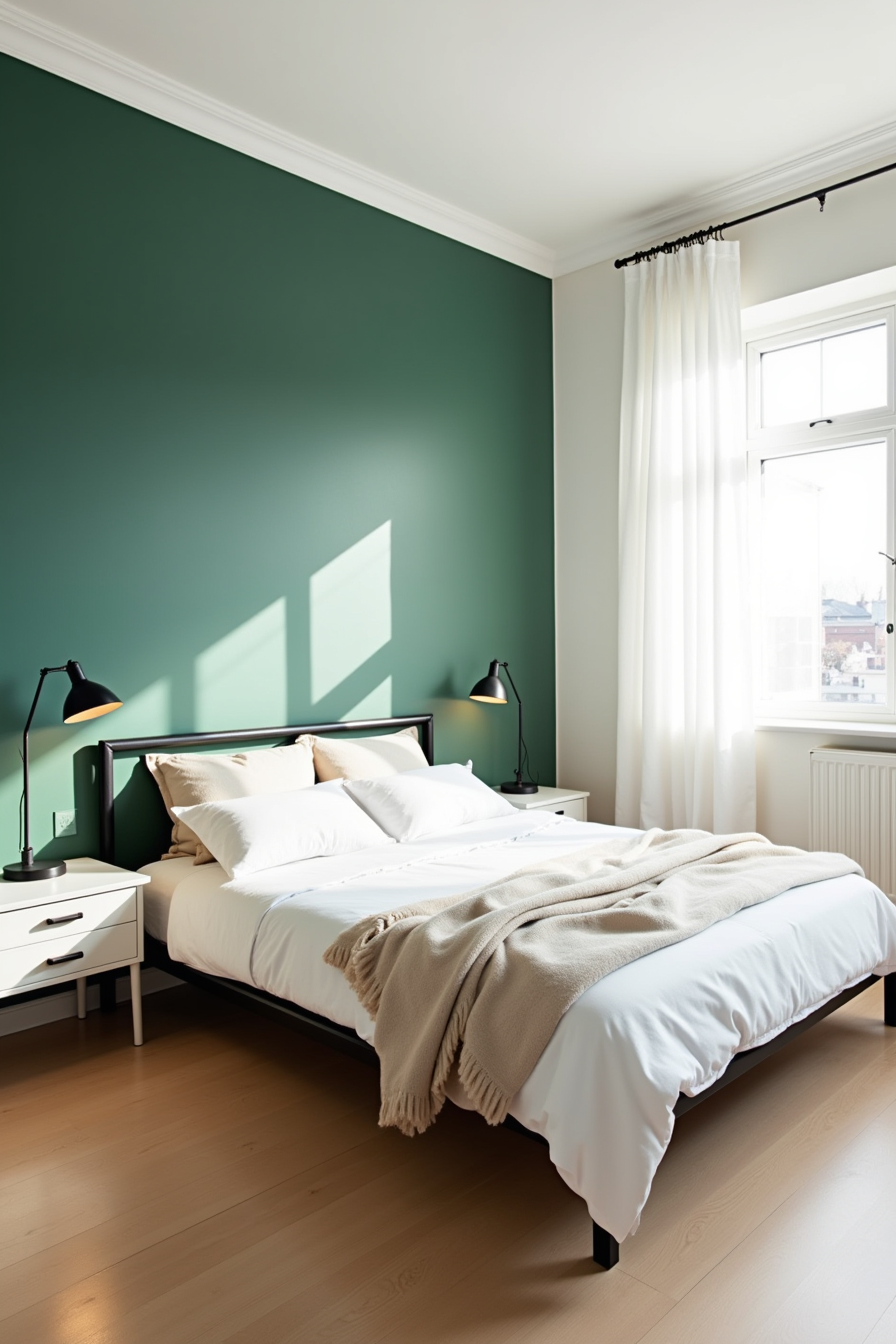
The emerald green accent wall behind this low platform bed works because it treats color as architecture rather than decoration. Paint alone costs $40–$80 per gallon and takes an afternoon to apply, but for that investment to read as luxury, the platform bed’s black metal frame must carry a slim profile, look for a rail height under 12 inches so it doesn’t compete with the wall’s vertical presence.
White oak nightstands with geometric drawer pulls bridge the contrast between the deep green and the matte black lamp. Choose drawers with soft-close slides rated for 75 pounds or more; the geometry of the pulls hides fingerprints better than round knobs. The sculptural lamp in matte black anchors the corner visually, but ensure its base is at least 10 inches wide so it won’t tip when you reach for it from bed.
Prefabricated MDF paneling with a wood-veneer finish costs roughly $3–$6 per square foot and installs over a weekend with construction adhesive and a nail gun. Solid wood paneling runs $8–$15 per square foot, requires acclimating to the room for 48 hours, and should be installed by a carpenter if the wall has outlets or uneven studs. For renters, use peel-and-stick wallpaper in a matching emerald tone and a freestanding storage bench at the foot of the bed, same saturation, zero permanent changes.
Jewel Tones with Clean Lines
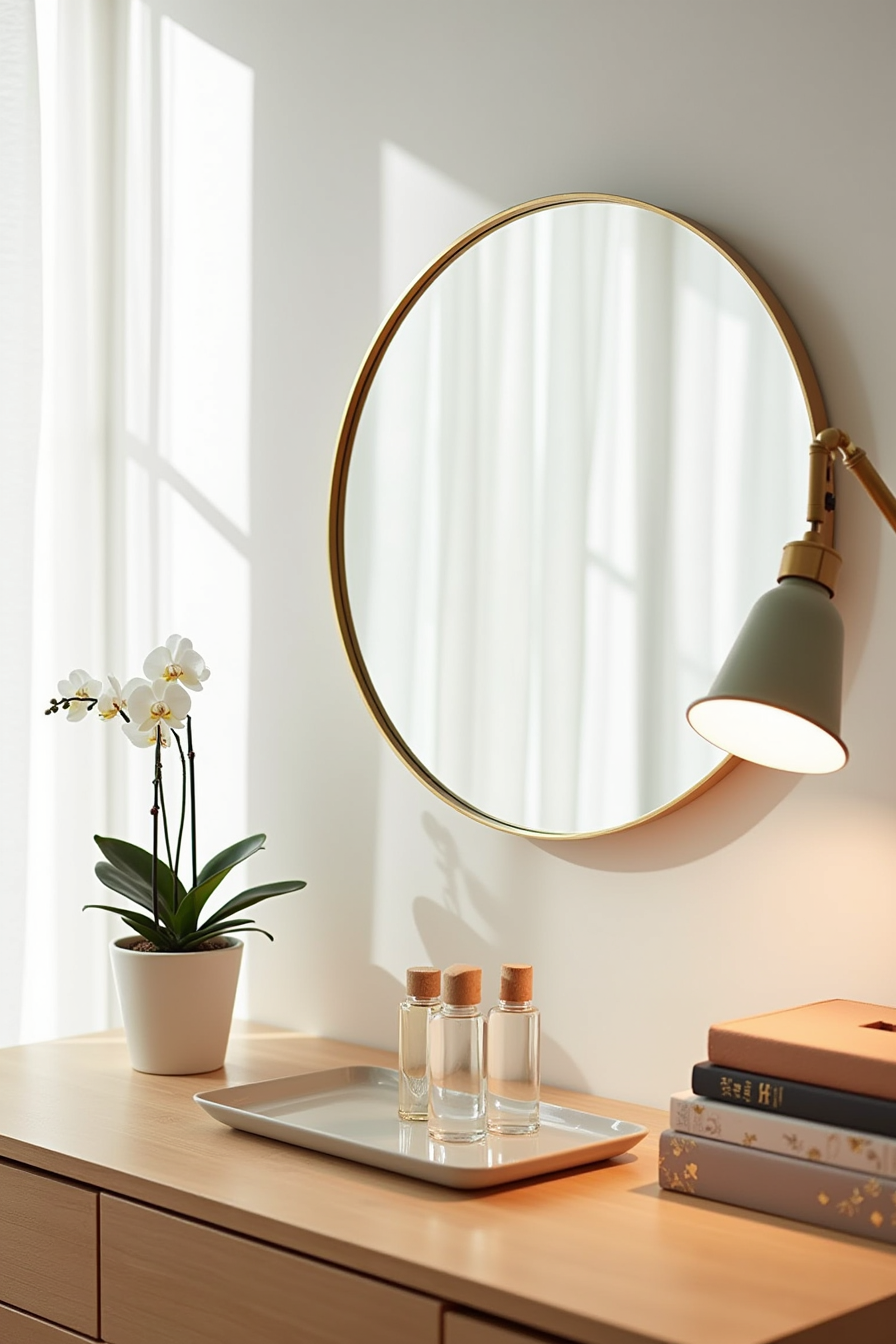
Jewel tones earn their “rich” label when they occupy 20–30% of the room’s visible surfaces, typically one wall, the bedding, and a single accent piece. The dresser setup with the round brass-framed mirror works because the thin frame keeps the metallic finish from competing with the deep wall color. A heavy frame would pull the eye down and make the room feel smaller; a 2-inch or narrower brass profile reads as modern, not traditional.
The ceramic tray holding perfume bottles and a small potted orchid introduces texture without adding pattern, which is the key to keeping jewel tones contemporary. Match the tray’s finish to your hardware, brass tray with brass pulls, for example, so the accessories feel intentional rather than scattered. The stack of hardcover books beside the jewelry box adds a lived-in layer; choose books with cloth or matte covers, since glossy dust jackets reflect light and draw attention away from the wall color.
For a medium bedroom (roughly 12 by 14 feet), use emerald or sapphire on the wall behind the bed only. Small rooms should limit jewel tones to textiles, a burgundy throw and matching curtains, while large rooms can handle a full accent wall plus a matching area rug. If you rent, apply a peel-and-stick wallpaper in your chosen jewel tone and swap out the mirror for a lightweight framed version you can hang with adhesive strips; both reverse without residue.
Common Rich Bedroom Luxury Modern Mistakes and How to Avoid Them
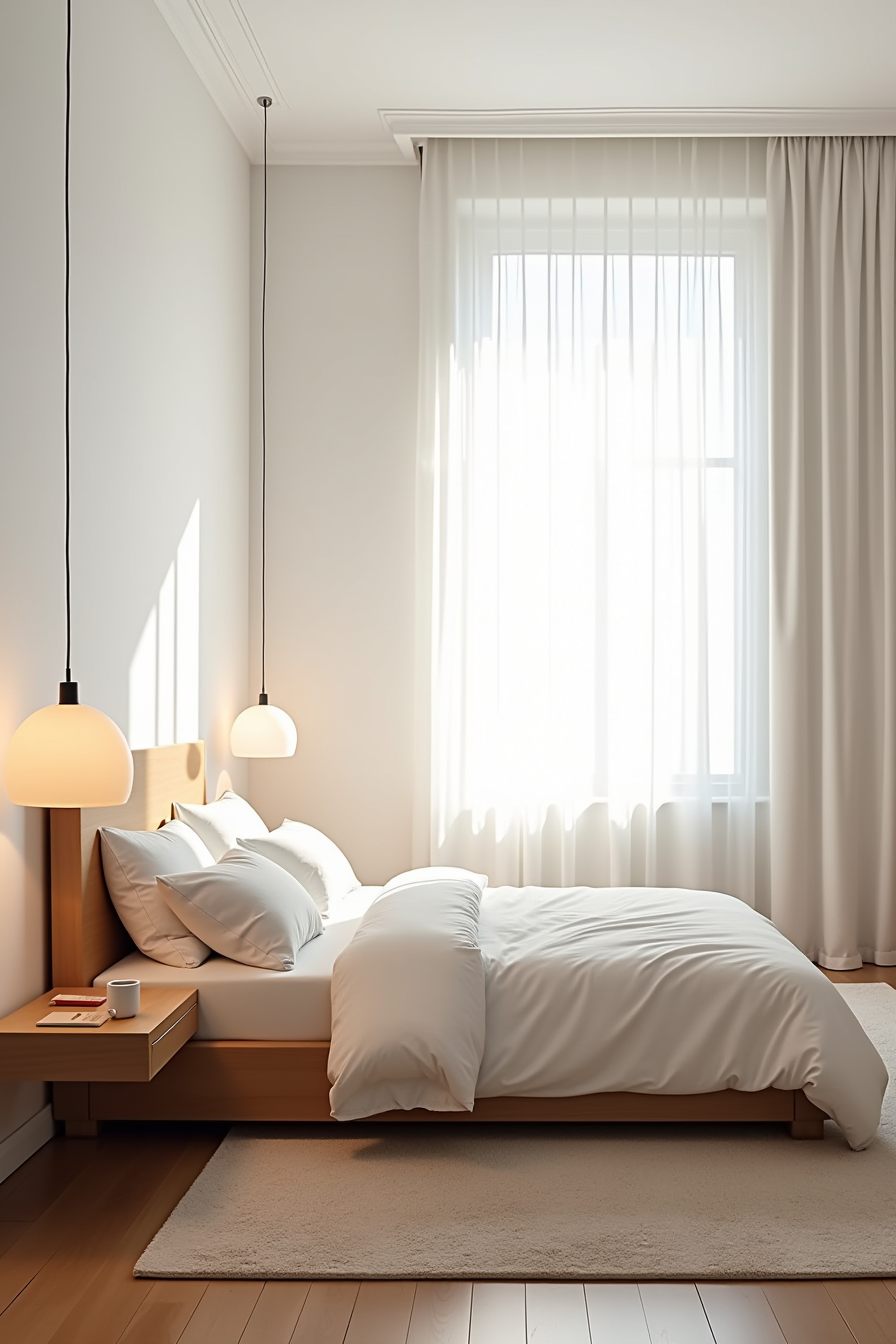
The most frequent planning errors in Rich Bedroom Luxury Modern come down to scale, not style. Hanging an oversized pendant light just 18 inches above your nightstand creates a visual bottleneck and casts harsh shadows across the surface where you need task lighting. Keep any pendant’s bottom edge at least 30 inches above the nightstand, or choose a flush mount for rooms with ceilings under 9 feet.
A rug placed entirely under the bed with no extension onto the floor is the second typical misstep. You want 18–24 inches of rug visible on all three exposed sides; otherwise, the bed visually floats and the room loses its grounding anchor. For a queen frame in a standard 12-by-14-foot room, an 8-by-10-foot rug achieves that extension without overwhelming the space.
A narrow gap between the bed frame and the wall, anything under 6 inches, reads as accidental and traps dust you can’t vacuum. You’ve two options: push the frame flush against the wall for a clean, tailored line, or commit to a 24-inch clearance that allows movement and makes the bed feel like a deliberate island. Half-measures betray indecision, and indecision is what undercuts the polished modern look you’re after.
Where to Start
Decide your anchor piece first, the bed frame, headboard, or upholstered wall that sets the room’s tone. Everything else follows its scale and finish. If you’re renting or testing the look, start with textiles and layered lighting; if you’re owning, invest in a solid wood frame and blackout curtains.
Match your interpretation to your space: small rooms benefit from low-profile frames with integrated storage, medium rooms can handle a tall headboard, and large rooms need a seating area or bench to balance proportions. Skip oversized nightstands if your room is under ten feet wide.
Before buying, measure your wall, doorway, and hallway clearance, most delivery failures happen at the turn, not the bedroom.
Your next step: pick one anchor element from this list, measure your room’s width, and order that piece within 48 hours while the design impulse is fresh.
Frequently Asked Questions
What is the difference between Rich Bedroom Luxury Modern and traditional luxury bedroom design?
Traditional luxury leans on ornate carving, heavy drapery, and antique finishes. Rich Bedroom Luxury Modern strips excess away, favoring clean lines, sculptural lighting, and layered textures like leather, brass, and wool for a quieter, more architectural opulence.
How much does it cost to create a Rich Bedroom Luxury Modern look?
A credible refresh typically runs $1,500–$4,000 for a standard room: a quality bed frame, two bedside lamps, layered bedding, and a textured rug. High-end custom joinery or designer pieces push that to $8,000–$15,000. Budget swaps like faux shearling and matte black metal keep costs near $800.
Can you achieve Rich Bedroom Luxury Modern style in a small bedroom?
Yes, if you edit ruthlessly. Use a low-profile platform bed, mount sconces instead of table lamps, and choose one oversized mirror to expand depth. Skip bulky nightstands, floating shelves work.
Keep the palette to two tones plus one metallic accent to avoid visual clutter.
What are the best materials for a Rich Bedroom Luxury Modern aesthetic?
Combine velvet or bouclé for upholstery, brushed brass or blackened steel for hardware, and natural stone or smoked oak for surfaces. Add wool or silk-blend rugs and linen bedding. Avoid glossy plastics and overly polished chrome, they read cheap and fight the warm, tactile richness.