Your bedroom closet organization ideas will only work if they match the space you actually have, the way you dress, and the budget you’re willing to commit, so here are six distinct approaches, each with the specific trade-offs you need to decide on before you buy a single bin or rod. The first three focus on maximizing what you already own, while the final three require structural changes or new furniture. By the end, you’ll know exactly which system fits your square footage, your hanging-to-folding ratio, and your tolerance for weekend assembly.
Key takeaways
- Double-rod systems nearly double hanging capacity in closets under 5 feet wide, but reserve the lower rod for shirts and folded pants to keep daily reach easy.
- Shelf dividers work best for stacks of jeans, sweaters, and handbags, preventing topple and saving you 5–10 minutes of re-folding per week.
- Door-mounted organizers add 10–20 pockets without structural changes, yet avoid overloading them beyond 10 pounds or the door hinge will sag.
- Under-bed storage with vacuum bags or flat bins holds off-season bedding and clothing, cutting closet clutter by up to one-third and costing under $50 for a queen-size setup.
Double-Rod Systems for Small Spaces
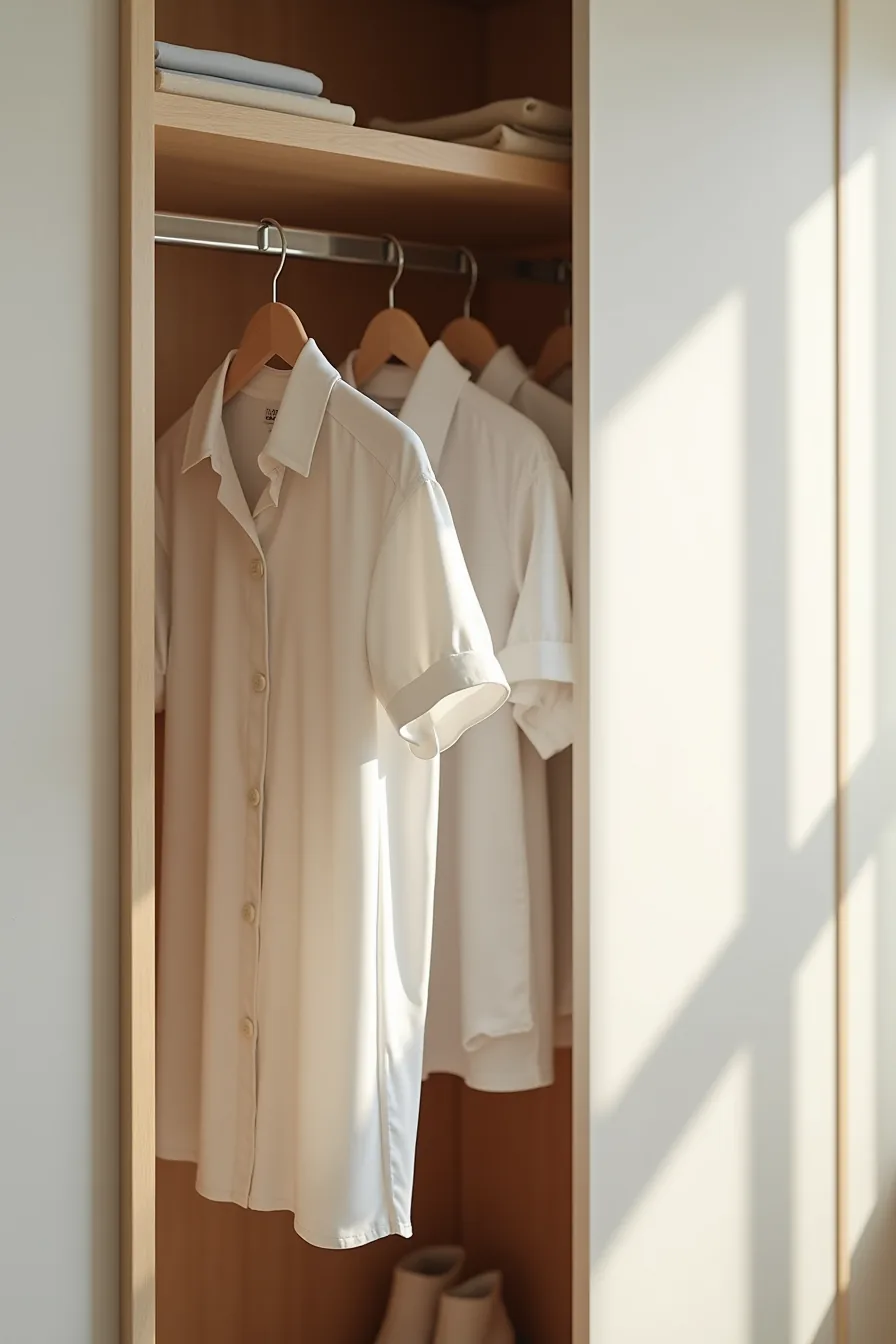
A double-rod system is the single most effective way to double your hanging capacity without adding a single inch of floor space. By installing an upper rod at roughly 72–80 inches and a lower rod at 36–42 inches, you convert dead vertical air into usable storage. This setup suits compact bedrooms, renters, and anyone with a wardrobe dominated by shirts, blouses, pants, and skirts rather than long coats or dresses.
The example here uses two horizontal metal rods secured by simple brackets into the closet frame. The upper rod holds dress shirts and blouses; the lower rod holds pants and skirts, folded over hangers to maximize depth. Because the lower rod sits high enough to clear folded trousers, you gain a full second layer of storage while keeping everything visible at a glance.
This is the budget route for bedroom closet organization ideas: two rods and brackets cost roughly $20–$40 total, install in under an hour with a drill, and remove cleanly with minimal wall repair. The trade-off is that you lose the ability to hang long garments, anything over 30 inches in length will drag on the lower rod. If you own coats or maxi dresses, reserve a separate section for them.
For renters, confirm the brackets mount into studs or solid framing; drywall anchors alone may sag under heavy winter wear.
Shelf Dividers and Vertical Stacking
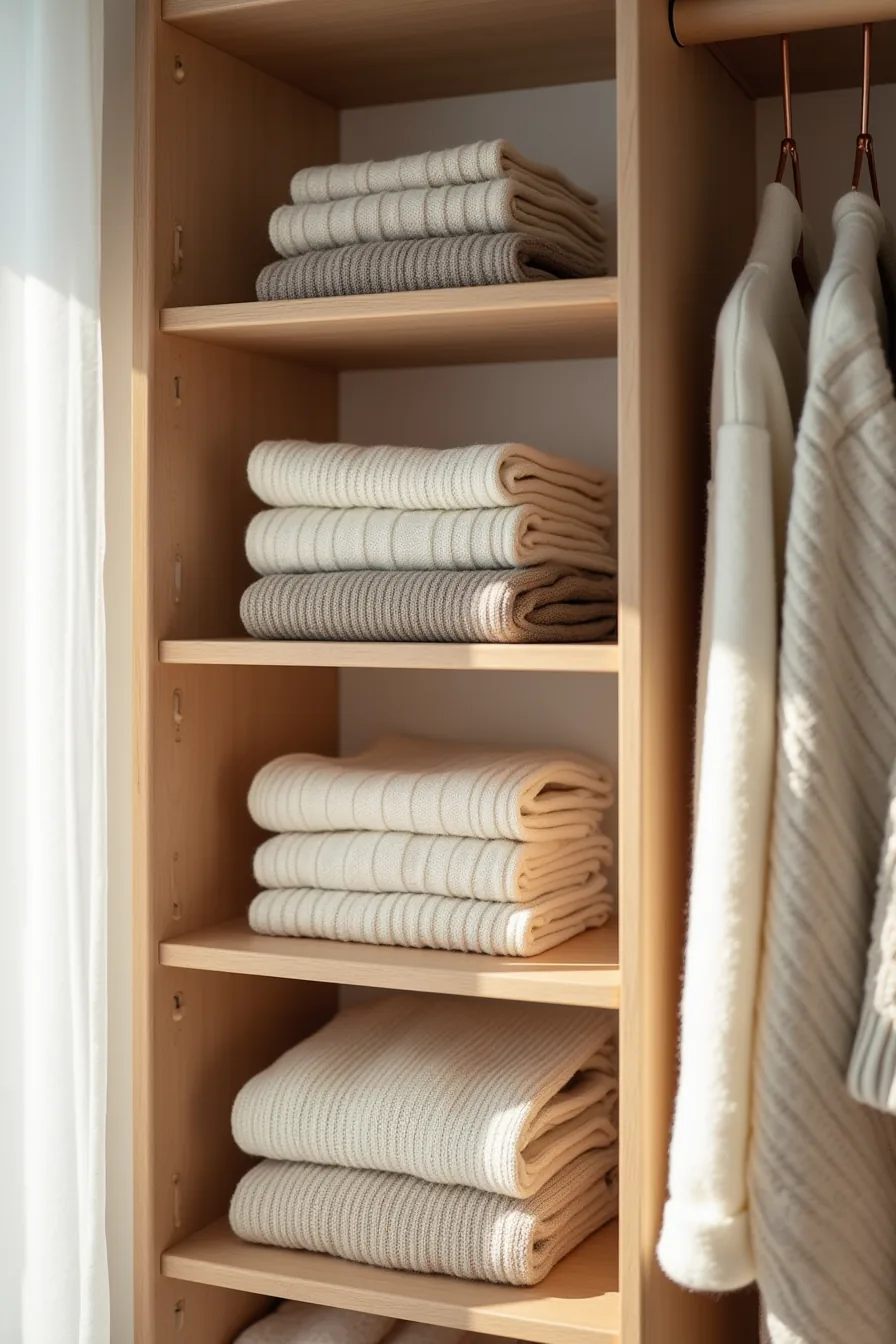
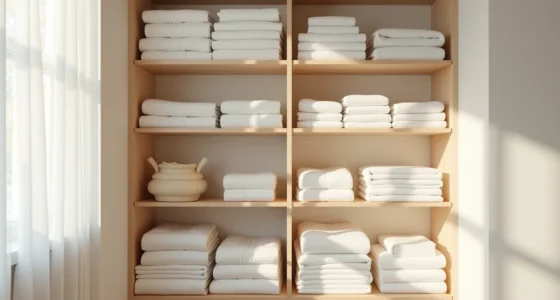
Shelf dividers solve the most common folded-storage failure: the toppling tower. When you stack sweaters and knits more than three or four high, the bottom pieces lose their shape and the whole pile collapses every time you pull one out. Upright wooden dividers create distinct columns so each stack stays supported on both sides, letting you fill the full shelf depth without the avalanche.
The setup pictured here uses three dividers on a standard 12-inch-deep shelf, creating four columns for sweaters and heavier knits. Fold each garment the same width, roughly 8–10 inches, and stack no more than five pieces high. This works in any closet size because it uses only existing shelf space, and it requires zero hardware: dividers sit in place by weight and friction alone, making them fully renter-friendly.
Expect to pay $15–30 for a set of wooden or acrylic dividers, and budget five minutes per shelf for installation. The trade-off: you sacrifice the ability to see items at the bottom of each stack. Rotate stacks seasonally so the pieces you wear most sit on top.
For larger closets, pair dividers with labeled bins on upper shelves to separate off-season knits from current rotation, a practical bedroom closet organization ideas planning tip that keeps everyday choices fast.
Drawer Inserts and Modular Bins
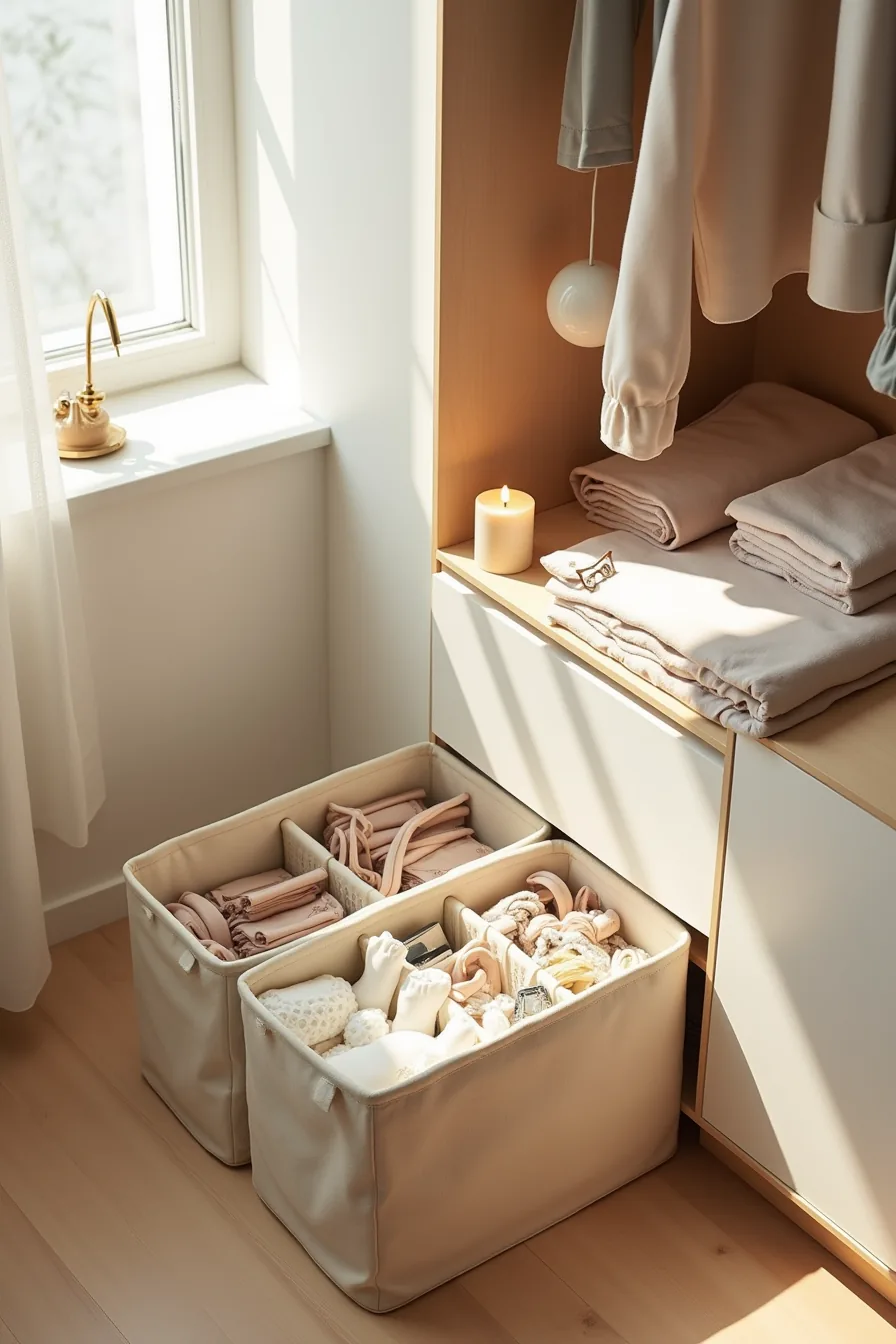
When floor space sits unused, modular fabric bins turn it into a low-cost sorting station. The setup here uses three open bins on the closet floor, each fitted with separate fabric inserts so socks, undergarments, and accessories stay in their own compartments. You see every item at a glance, which cuts morning decision time to seconds and eliminates the dig-and-search routine.
This approach suits renters and anyone avoiding permanent fixtures, since bins weigh nothing, install in under a minute, and relocate instantly. Expect to spend $20–45 for three bins plus inserts. The limitation: floor-level storage invites dust, so vacuum the surrounding area weekly and choose bins with reinforced bases to prevent sagging under daily use.
For deeper closets, stack a second bin layer using a sturdy shelf board rated for 50–100 pounds, keeping the bottom tier for the items you grab most. These are some of the best bedroom closet organization ideas examples for small spaces because they scale down to a 24-inch-wide footprint without losing visibility.
Hanging Organizers and Door-Mounted Storage
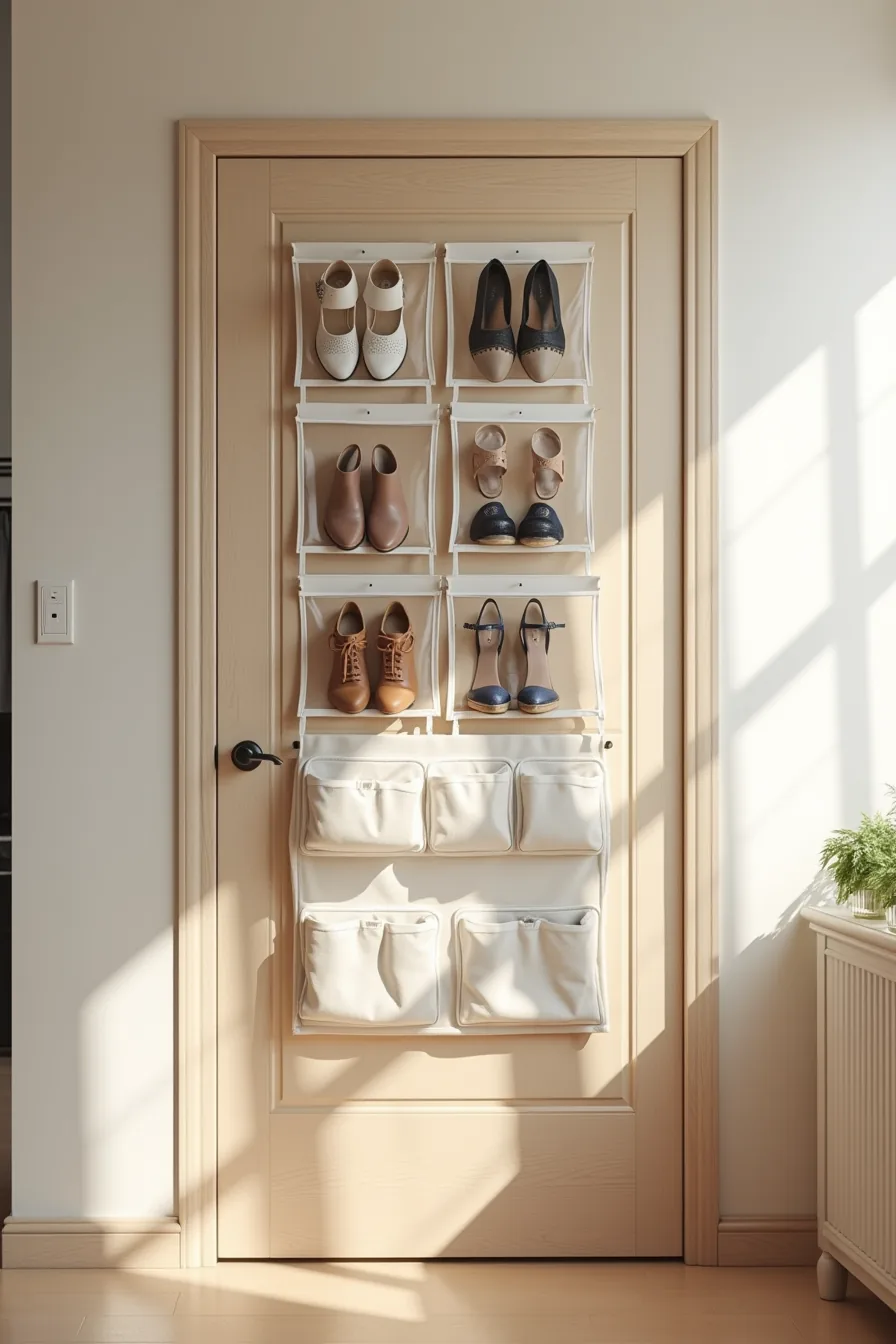
An over-the-door shoe organizer with clear pockets turns the inside of your closet door into a zero-footprint sorting wall. The transparent pockets let you identify each pair without pulling them out, while a separate hanging fabric organizer with multiple pockets below catches belts, scarves, and folded knitwear. Together, they exploit the 12–18 inches of dead space between the door and your hanging rods.
This setup suits renters and anyone barred from drilling into doors or walls, since both organizers hang from hooks or a slip-over frame and remove in seconds. You’ll spend $15–35 for the pair, and installation takes under five minutes. The trade-off: door-mounted weight stresses hinges, so cap the total load at 20–30 pounds and check the door swings freely without scraping the frame.
Clear pockets also expose contents to light, which can fade leather and suede over months, store seldom-worn shoes in opaque bins instead. For a 30-inch-wide standard door, choose an organizer with 24–36 pockets and hang the fabric unit on the opposite side to balance weight distribution.
Custom Built-In Shelving and Rods
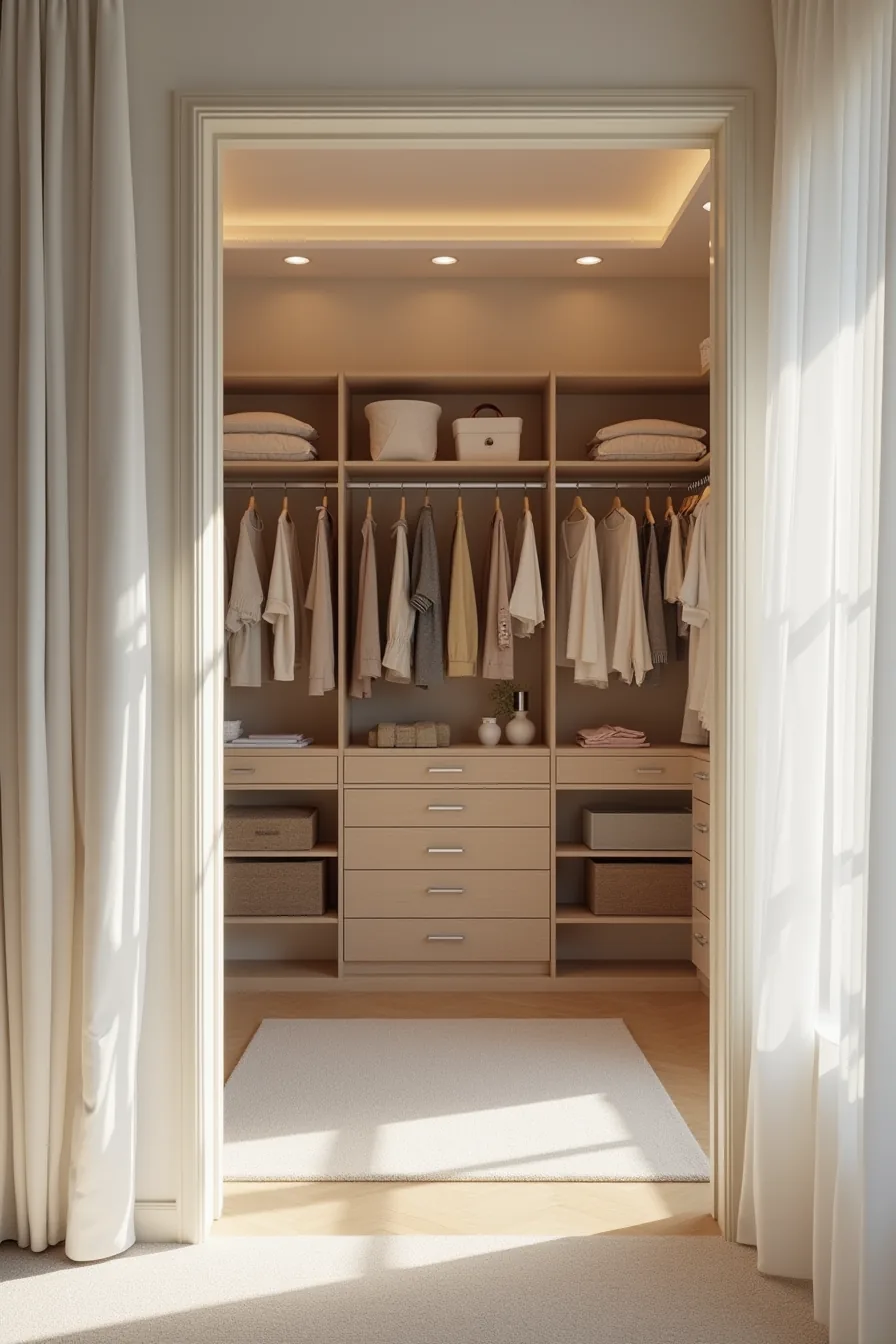
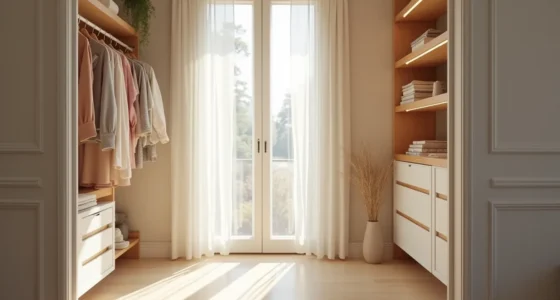
Built-ins transform a walking closet or a 6-foot-wide reach-in into a room of its own. You’ll need to measure your space and typically spend $500–$1,500 for a laminated shelving system, or $2,500–$6,000 for wood-paneled cabinetry, the price varies heavily with closet size and material grade. The work takes one to three days for a professional install, or a weekend if you assemble modular components from a big-box retailer.
The example here uses floor-to-ceiling custom shelving with adjustable brackets, letting you shift shelf heights without tools as your storage mix changes. Three horizontal rods at varying heights separate long coats, mid-length dresses, and short shirts, so you never stack garments that need hanging space. Fitted shelves with no gaps run flush to the walls, eliminating the dead corners that freestanding units leave behind.
Multiple garment categories display across levels, folded sweaters on upper shelves, shoes on lower racks, and hanging items in the middle zone.
Skip this route if you rent, since built-ins are permanent and you can’t take them with you. If you own, pair the investment with a closet design consultation (typically $75–$150) to verify your measurements before cutting any material. For medium to large closets, prioritize two rods at differing heights over one long rod; that single change doubles hanging capacity without adding an inch of floor space.
Seasonal Rotation and Under-Bed Storage
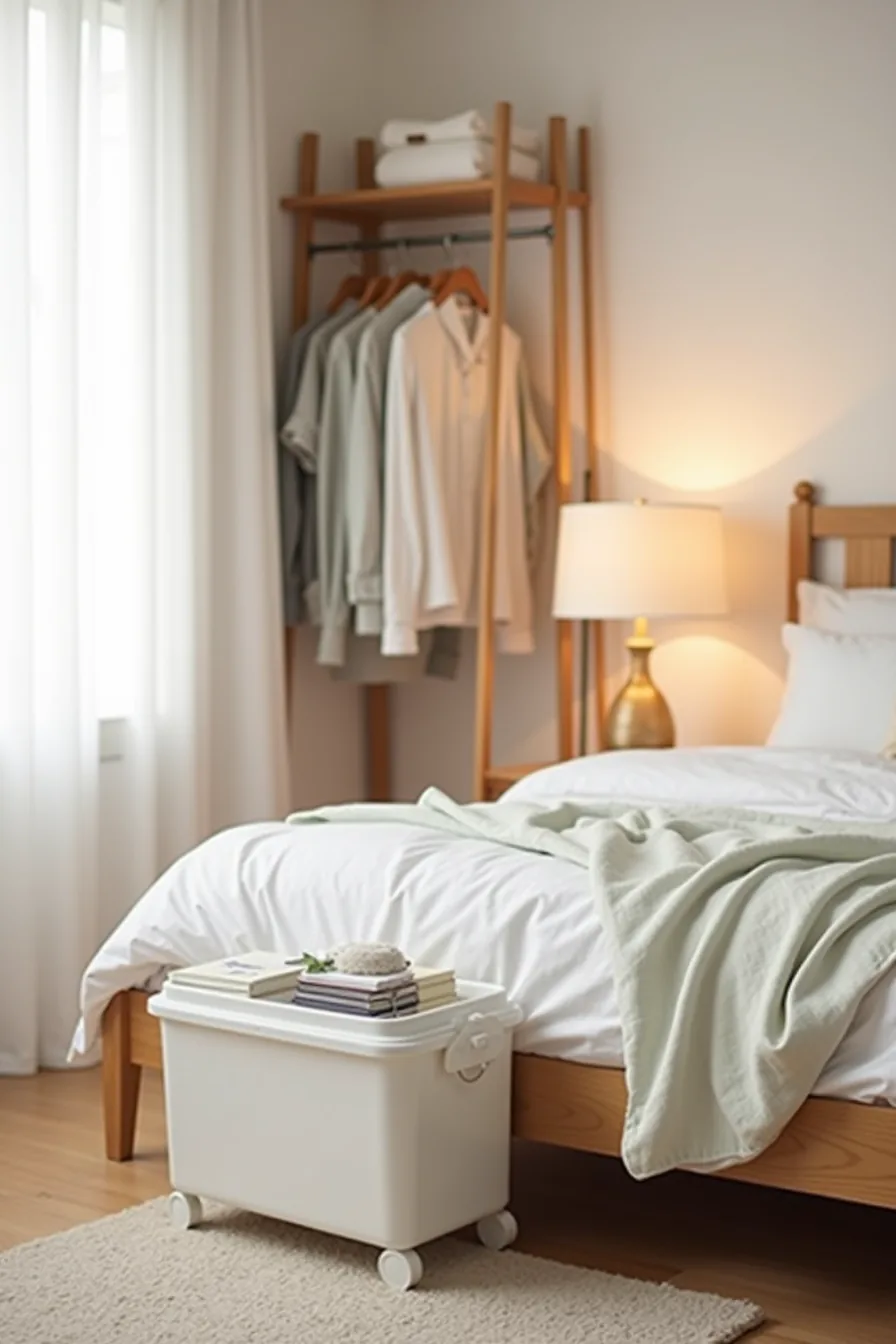
Rotating your wardrobe by season keeps active closet clutter to a practical minimum. The setup here quarters your hanging space needs: lightweight summer garments occupy the closet rod, while the bed frame’s low-profile rolling container beneath it holds off-season layers. That plastic container with handles slides out with a single pull, letting you swap two full seasons in under ten minutes on a Saturday afternoon.
This approach suits small to medium bedrooms where floor space is scarce, you reclaim four to six square feet without adding furniture. Mismatched containers work, but matching stackable units with clear lids and tape-secured handles read as more intentional. You’ll need to re-evaluate this system quarterly; moth prevention demands that wool and other natural fibers are laundered, dried, and bagged before storage, and you should assess whether last year’s coat still fits before it occupies the bed space.
One limitation: rolling containers under a standard bed height of 14–16 inches must be 6–8 inches tall, which excludes boots and bulky knitwear, vacuum bags are the workaround, but don’t compress down-rated garments you value.
Your 20-Minute Starting Point
Before you buy a single bin or shelf, measure your closet’s depth, width, and usable height. Most reach-in closets run 24 inches deep, while walk-ins often span 6–10 feet; jot these numbers down so every purchase fits your actual footprint.
Then clear the floor completely and sort everything into four piles: keep daily, keep seasonal, donate, and relocate. This takes 15–20 minutes and immediately reveals whether you need more hanging space, shelving, or drawer units.
Your one next step tonight: photograph your empty closet and tape the photo inside the door. Refer to it whenever you shop, you’ll avoid the single biggest mistake of buying organizers that look great but don’t fit your space.
Frequently Asked Questions
What is the cheapest way to organize a small bedroom closet?
Use tension rods, stackable bins, and over-door hooks. These cost under $50 total and require no tools. Prioritize vertical stacking over horizontal spreading to maximize limited square footage.
Can you organize a closet without drilling or permanent changes?
Yes. Tension rods, adhesive hooks, freestanding shelving units, and hanging organizers work without damaging walls. Ensure adhesive hooks support only light items, typically under 5 pounds, to avoid sudden falls.
How much does it cost to install custom closet shelving?
Professional custom shelving typically runs $300–$1,500 per linear foot, depending on materials and labor. DIY modular systems cost $100–$400. Expect higher prices for solid wood, soft-close drawers, and built-in lighting.
What is the best way to organize a closet with limited hanging space?
Install a second hanging rod lower down to double vertical capacity, then use cascading hangers for short items like shirts. Store folded sweaters on shelves or in bins, and keep only in-season clothing on the rod.