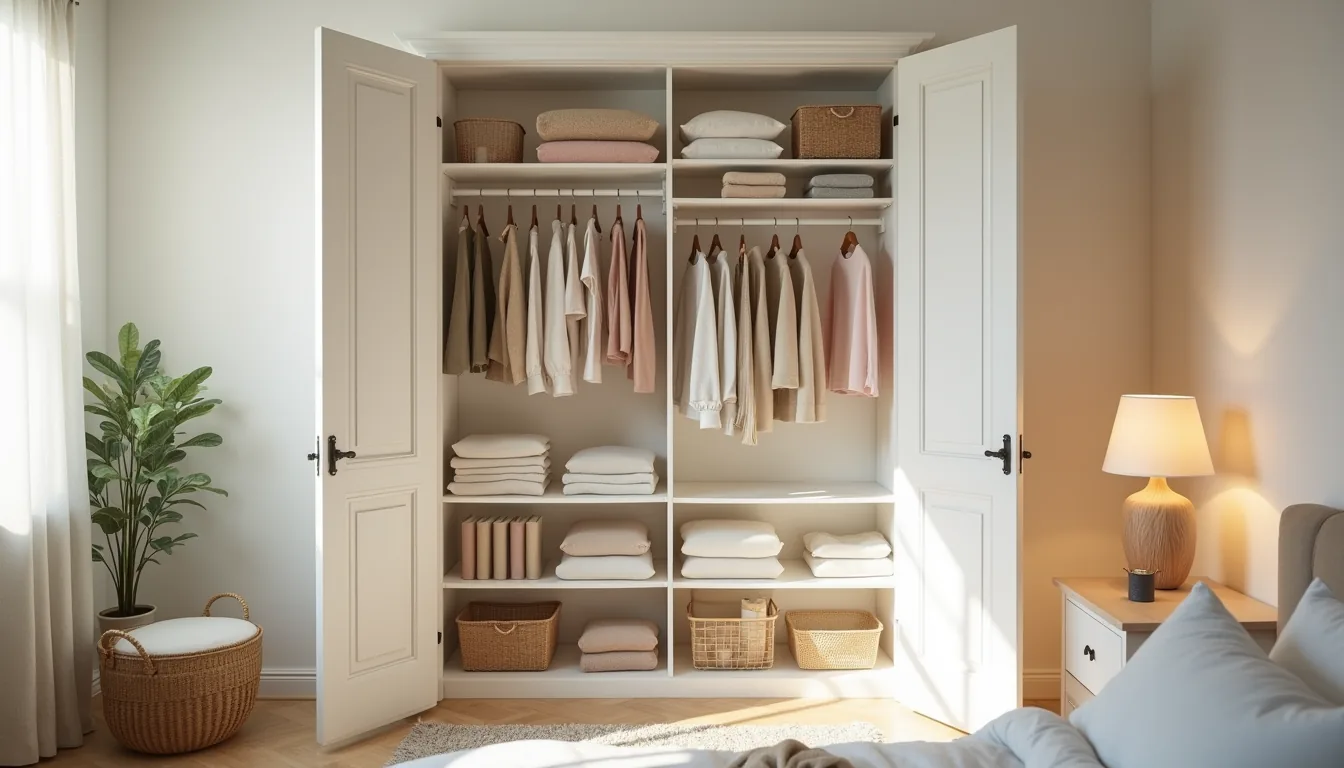

Your bedroom closet eats floor space you can’t spare, and the fix isn’t a bigger wardrobe, it’s a smarter system that works within the square footage you already have. In a small room, closet organization is less about cramming more in and more about rethinking vertical zones, door swing, and daily rotation. The six approaches below range from a $40 tension-rod overhaul to a built-in custom fit, each matched to a specific room shape, rental restriction, or budget ceiling.
By the end, you’ll know exactly which configuration suits your floor plan and how to install it without sacrificing circulation or access.
Key takeaways
- Vertical shelving multiplies usable space by stacking bins floor-to-ceiling, but leave 2-4 inches of clearance above each bin for easy lifting and label fronts for quick retrieval.
- Double hanging rods roughly double closet capacity for folded shirts and pants, yet require at least 60-70 inches of vertical clearance to fit two tiers comfortably without crumpling garments.
- Over-the-door organizers add 20-30 pounds of storage for shoes or accessories, but check door weight limits and hinge strength before loading, and use slim, shallow pockets (under 3 inches deep) to avoid blocking the doorway swing.
- Modular closet systems adapt to shifting needs, start with a single adjustable shelf unit (typically 12-16 inches deep) and expand with drawers or rods as your wardrobe grows, avoiding the cost of a full custom build upfront.
Vertical Shelving with Divided Bins
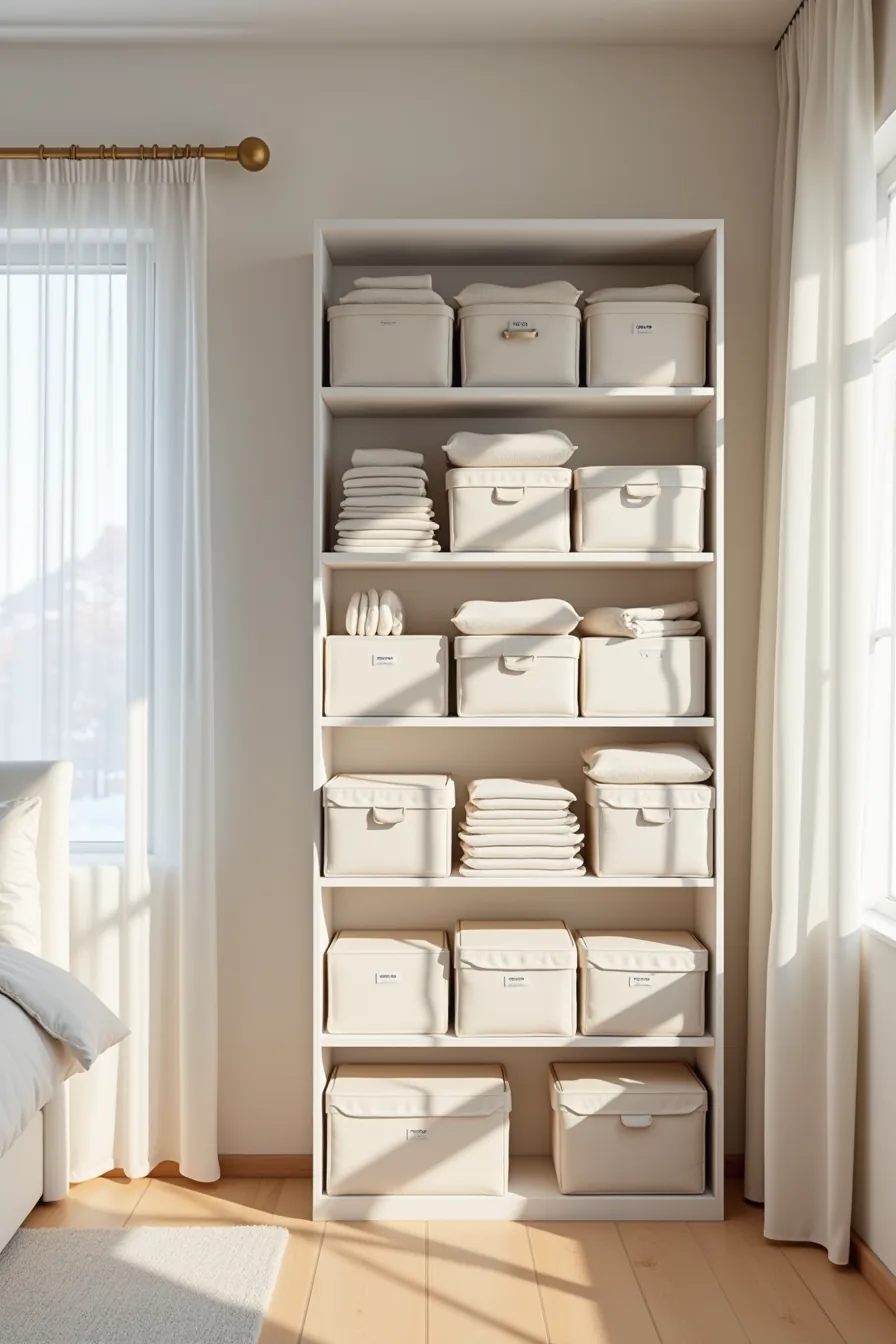
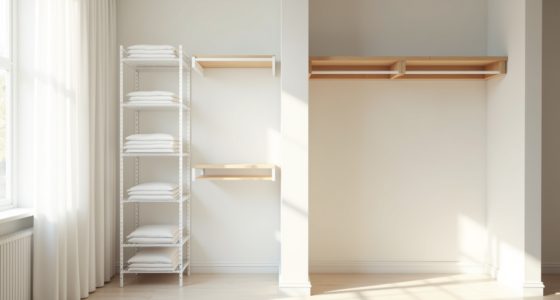
Floor-to-ceiling shelving turns the single most underused surface in a compact bedroom, the wall above your hanging clothes, into primary storage. A white unit with open cubbies works best when it runs the full height of the wall, typically stopping 6-12 inches short of the ceiling for easy access. The neutral-toned fabric storage bins stacked on each shelf keep items dust-free while their soft structure lets you pull them out with one hand.
Divided bins, with an internal partition, are the key detail: they force you to stand folded items on edge rather than stack them flat, so you can see every piece at a glance without digging.
This setup suits narrow closets with standard 8-foot ceilings, where the square footage is small but the vertical dimension is ample. The trade-off is cost, quality floor-to-ceiling units and bins run $150-$400, so it works best as a long-term investment for homeowners who plan to stay put. If you rent, skip the wall-anchored version (it leaves holes) and use a freestanding bookcase or an adjustable wardrobes instead.
For maintenance, vacuum or wipe the shelves monthly to prevent dust on open fabric, and relabel the bins each season to match what’s actually stored. For a small space, this approach converts dead wall height into roughly 30-50% more usable storage than a single top shelf alone.
Double Hanging Rods and Cascading Hangers
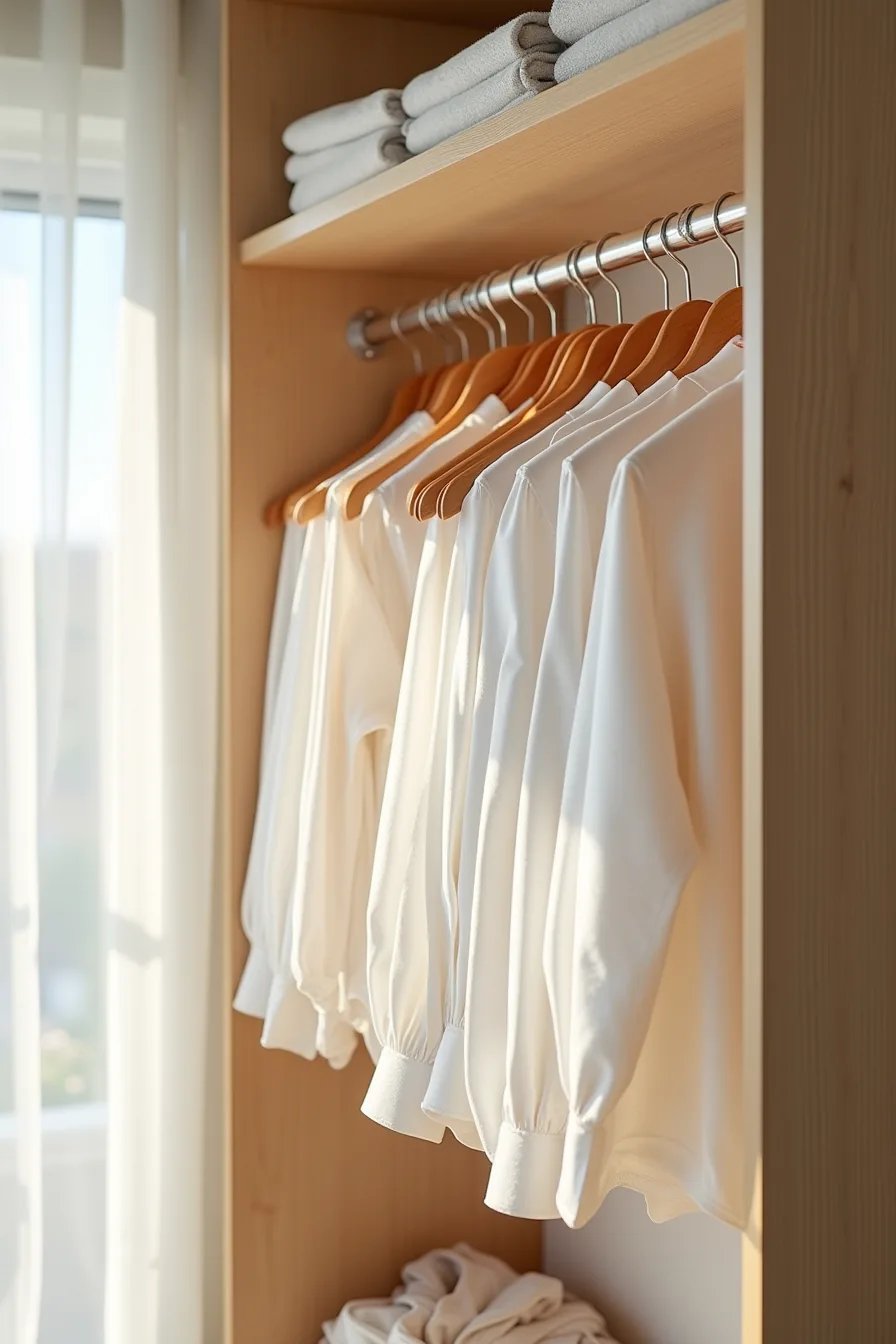
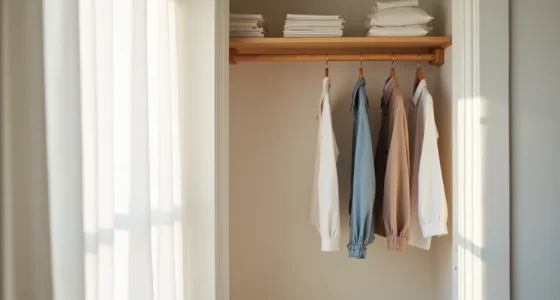
Install a second rod 32–40 inches below the primary one to split your closet’s vertical plane into two distinct zones. In a standard 8-foot closet, this creates roughly 60 inches of combined hanging space, enough for two rows of shirts, blouses, and folded trousers. The upper rod should sit at 80–84 inches for reachability, while the lower one lands at 40–48 inches, leaving clearance for longer garments like dresses on the ends.
Cascading hangers take this further by stacking 3–5 items vertically on a single hook, effectively tripling the capacity of each rod segment. You see this in the upper section with multiple shirts and blouses hanging nose-to-tail, which works because the tiered design staggers each garment’s shoulders, preventing wrinkles and allowing air circulation. This route costs $20–$60 for a set of 10–20 cascading hangers plus rod hardware, making it the budget-friendly option that renters can reverse in minutes with no wall damage.
Suit it to closets with at least 60 inches of rod length and a mix of lightweight tops, heavy coats will strain the lower tiers and cause sagging. For maintenance, check the hanger swivels quarterly and redistribute weight evenly to avoid bending the lower rod.
Over-the-Door and Wall-Mounted Organizers
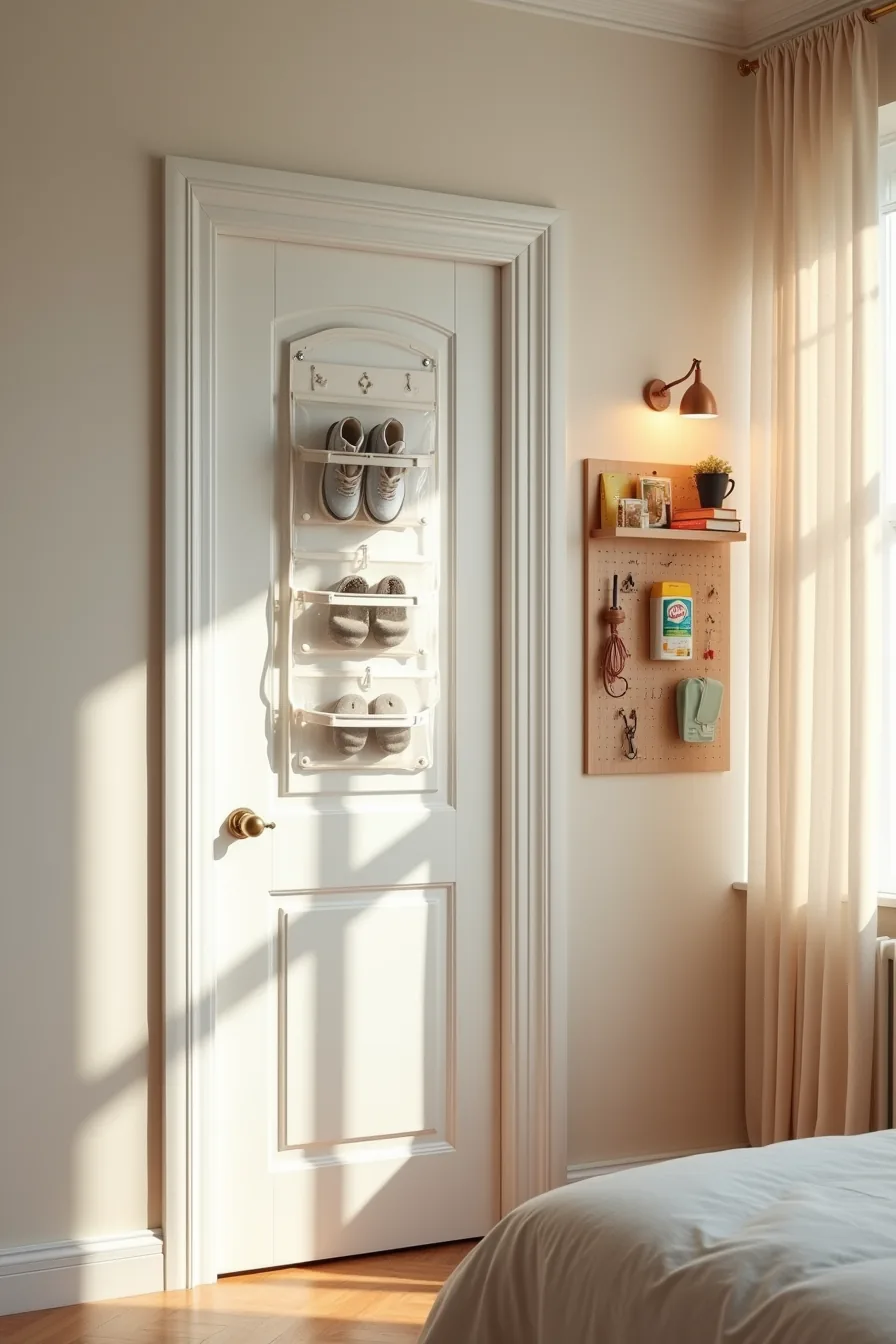
The most reliable renter-friendly route to stylish small-space storage is attaching organizers to surfaces you already have, not structure. An over-the-door shoe organizer with clear pockets, like the one you see on the bedroom door, converts roughly 24 inches of unused vertical door space into 12–24 pockets for shoes, scarves, and belts, no drilling, no patched walls when you move. Most units hook over a standard 1⅜-inch door slab and cost $15–$35, though you should confirm your door clears the floor by at least 1 inch or the bottom pockets will drag.
Along the adjacent wall segment, a pegboard with hooks and small shelves handles the overflow that pockets can’t: hats, bags, jewelry trays, and everyday accessories. Wall-mounted pegboards hold up to 20–30 pounds per square foot when anchored into studs, but if you can’t drill, adhesive mounting strips support only 5–10 pounds per board, enough for lightweight items, not stacked bins. Keep the pegboard within 12–18 inches of the door hinge so you can grab accessories without stepping into the closet.
This setup suits small bedrooms with tight floor plans because it uses zero floor square footage, and it costs $25–$70 total depending on whether you choose a pre-drilled board or a DIY version from a 2×4-foot hardboard panel.
Drawer Dividers and Vertical Folding Systems
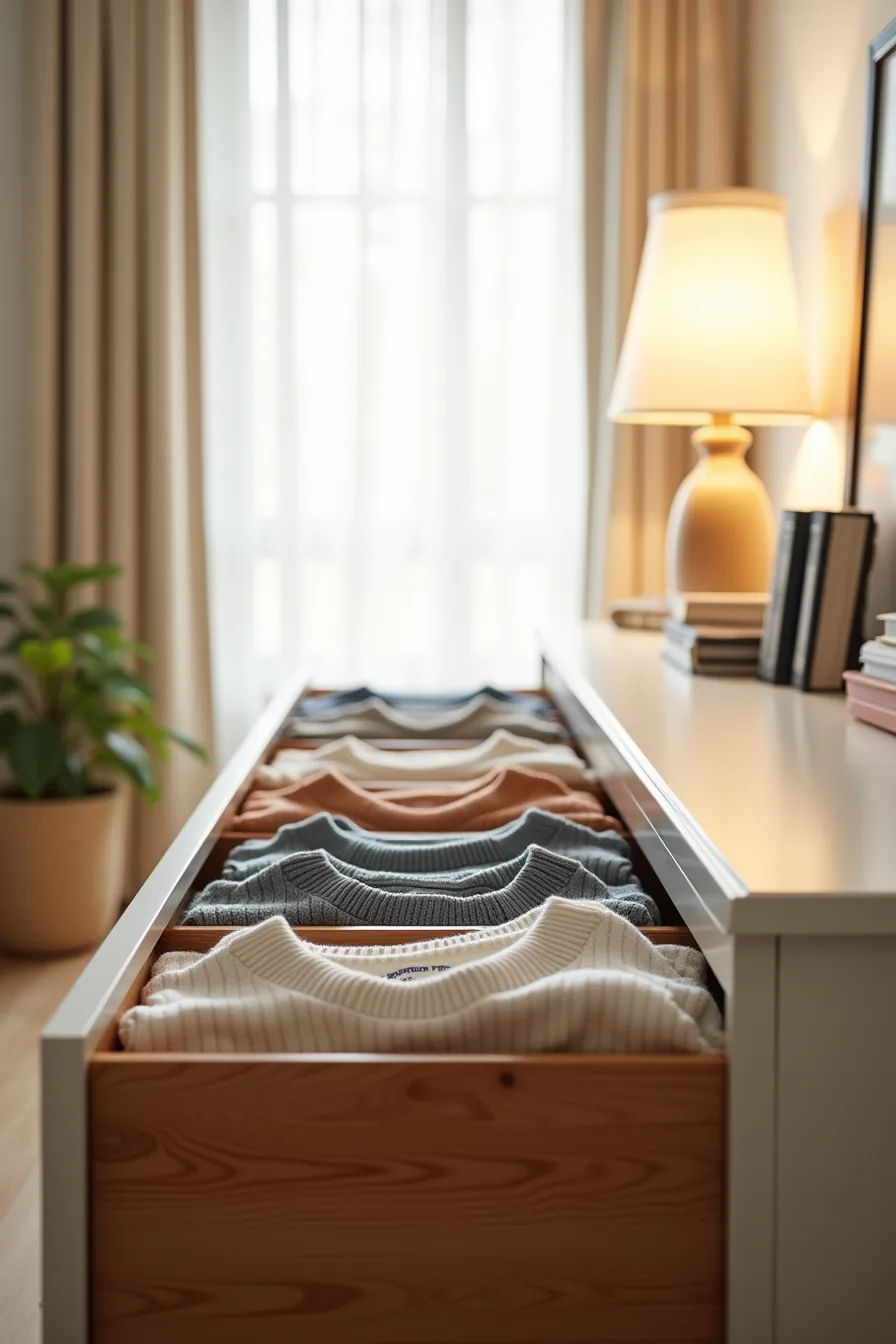
The open dresser drawer in front of you demonstrates the KonMari method applied to a shallow compartment: every sweater and shirt stands upright like a file folder, so each garment’s collar or hem is visible at a glance. Drawer dividers made from bamboo or coated wire cost $10–$30 per set and turn a 22–26-inch-wide drawer into four to six fixed slots. You never dig through a stack again, and you can see at a glance whether the charcoal crewneck is clean or in the hamper.
Vertical folding works best for knitwear, T-shirts, and casual trousers, anything that doesn’t wrinkle dramatically when creased. Delicate silk blouses and heavy denim should stay flat to avoid permanent fold lines. Measure drawer depth before buying dividers: most adjustable models fit drawers 12–20 inches deep, and if yours runs deeper, stack two tiers so the bottom layer remains reachable.
This system suits anyone with limited dresser space but more drawer volume than surface area, and it’s the lowest-cost upgrade in this guide at $15–$40 total## Drawer Dividers and Vertical Folding Systems
The open dresser drawer before you shows the payoff of compartmentalizing: sweaters and shirts stand upright in neat vertical rows, each garment visible by its collar or hem pattern, so you identify the charcoal crewneck instantly without disturbing its neighbors. Drawer dividers made from bamboo or coated wire cost $10–$30 per set and transform a standard 22–26-inch-wide drawer into four to six fixed slots that keep categories separate. You eliminate the dig-and-refold cycle entirely, and one glance tells you what’s clean and what needs laundering.
Vertical folding suits knitwear, T-shirts, and casual trousers, fabrics that tolerate a sharp crease without permanent damage. Reserve flat stacking for silk blouses, linen, and heavyweight denim where fold lines set in within hours. Measure interior drawer depth before buying dividers: most adjustable models fit 12–20-inch-deep drawers, and if yours runs deeper, install two tiers so the bottom layer stays reachable.
This method delivers the highest organizational return per dollar in this guide at $15–$40 total, and it suits anyone who owns more clothing than drawer surface area but has unused vertical volume inside each compartment.
Sliding Barn Doors and Pocket Doors
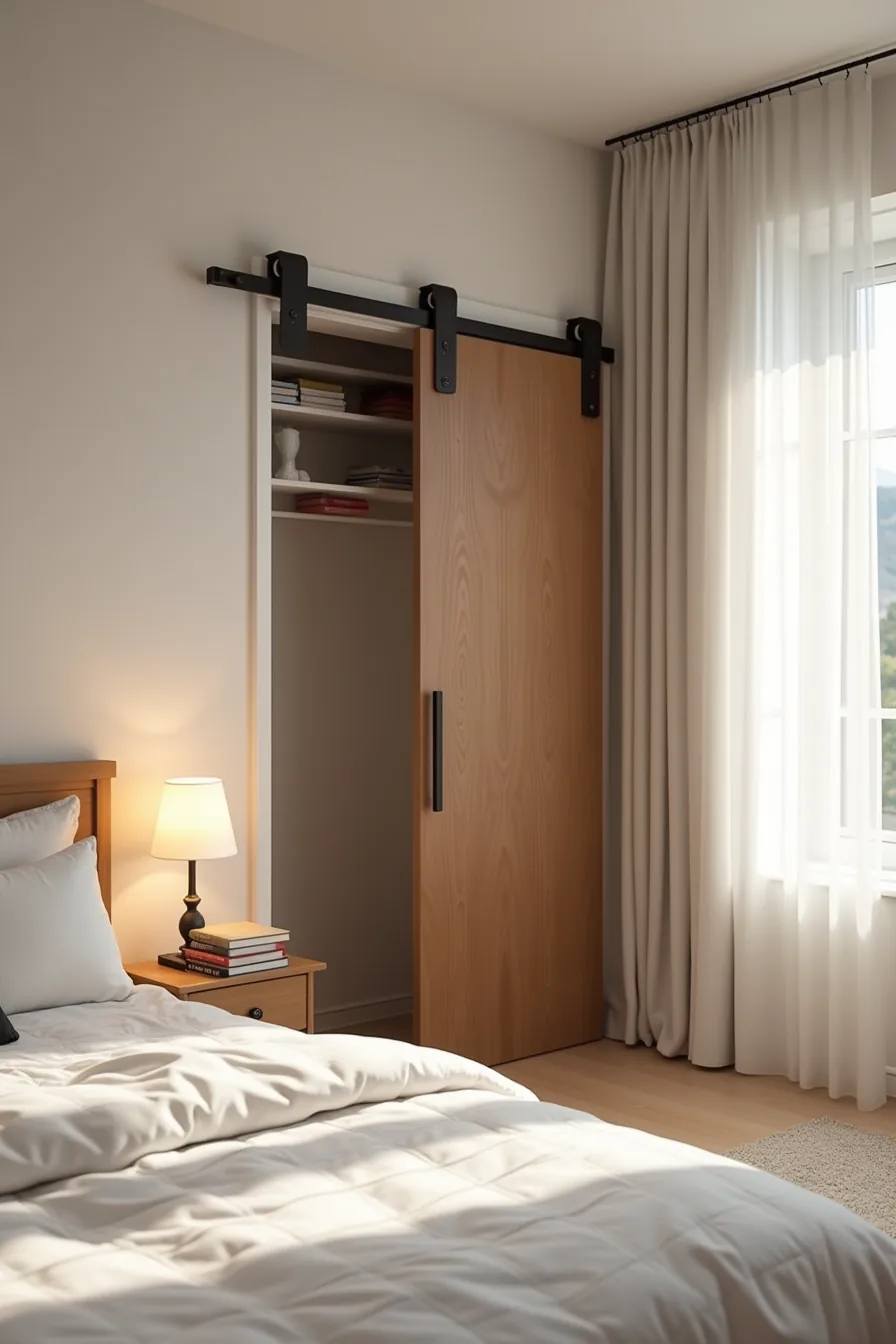
The dark sliding barn door in front of you solves the most common small-bedroom waste: the 36-inch arc a hinged door needs to swing open. Mounted on a metal track above the frame, this single panel glides sideways along the wall, clearing the full closet opening while leaving floor space untouched for a dresser, hamper, or reading chair. You gain roughly 9–12 square feet of usable circulation area in a 10×10-foot room, and you eliminate the bruised-knuckle problem of a door that blocks your path every morning.
This route suits bedrooms where the wall beside the closet is at least 24–30 inches wide and free of light switches or outlets you can’t move. A solid-wood barn door runs $150–$400 plus $50–$100 for the track kit; installation takes 2–3 hours with a stud finder and drill. Pocket doors, which disappear entirely into the wall cavity, require framing modifications that cost $500–$1,200 and typically demand a contractor, so they fit long-term homeowners rather than renters.
For a rental, choose a tension-mounted track that avoids drilling into the header, but expect it to support only lightweight hollow-core doors under 40 pounds.
Modular Closet Systems and Adjustable Shelving
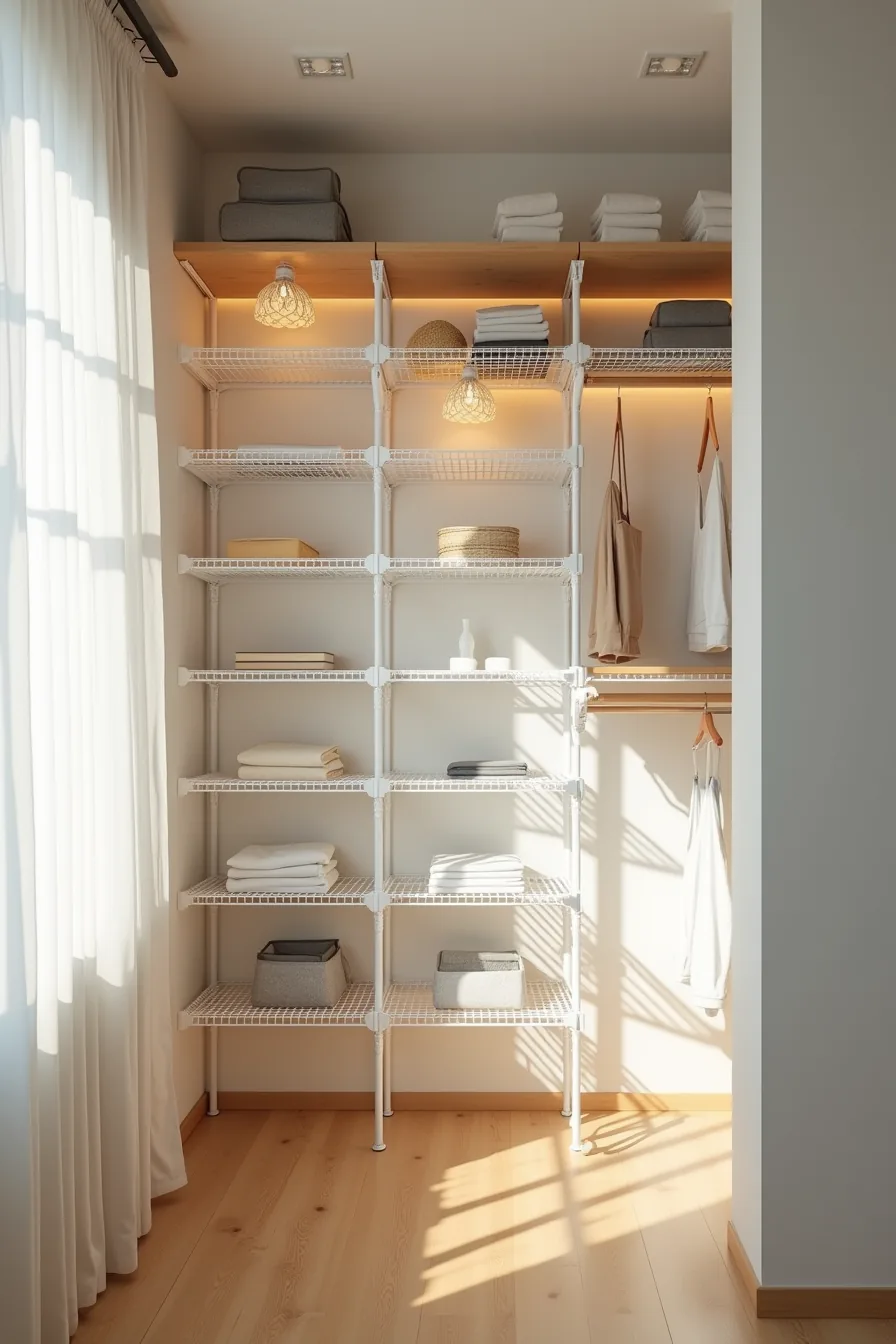
A modular wire system turns the entire closet into a grid of possibilities. The key difference from fixed shelving is that the vertical tracks mount once to the studs, then every shelf, rod, and basket clips into place and moves up or down in one-inch increments as your needs shift. In a small bedroom, this means you can reconfigure for bulky winter sweaters in December and hanging dresses in June without any tools beyond a screwdriver.
The installation shown here uses wire shelving, which costs $200–$500 for a typical 6-foot reach-in closet and takes a weekend to mount yourself. Wire baskets suit renters who want airflow for folded items, though they leave dust lines on fabrics. For a long-term investment, upgrade to solid wood or laminate components at $600–$1,200, which handle heavier loads and look built-in rather than utilitarian.
Place the adjustable hanging rod at 60–65 inches for double hanging on one side; drop it to 40 inches if you need shelf space above for bins. You lose about 2 inches of depth with wire versus wood, so measure your closet’s interior depth first, anything under 22 inches won’t fit standard hangers perpendicular to the rod.
Your first 30 minutes
Start with the shelf that causes the most daily friction, usually the one where you dump items after work. Empty it, sort into three piles (keep, relocate, toss), and measure the freed space before buying any organizer. That single measurement tells you whether you need vertical dividers, stackable bins, or nothing at all.
If you rent, confirm your wall-mounting rules before choosing between tension rods and permanent brackets. The cheapest win is often removing a closet door and installing a floor-to-ceiling curtain track, under $40 and fully reversible.
Your next step: Pick one shelf, empty it, and photograph the result. Then you can decide what solution matches the actual space you’ve.
Frequently Asked Questions
How much hanging space do I gain by adding a second rod?
You typically double your hanging capacity, but only for shorter items like shirts and folded pants. The lower rod steals about 30 inches of vertical space, so you lose the ability to hang dresses, long coats, or full-length garments.
Can I use closet organizers in a rental without losing my deposit?
Yes, if you choose freestanding units, tension rods, or over-door hooks. Avoid drilling into walls unless you’re prepared to patch and repaint. Adhesive strips can damage paint, so test them on a hidden spot first or use removable putty.
What is the minimum closet width needed for double rods?
Plan for at least 48 inches of clear interior width. This gives you roughly 24 inches per rod, enough for about 15-20 shirts. Anything narrower makes both rods awkward to access, and you’ll constantly fight with hangers.
How do I decide between shelving and hanging storage for a small closet?
Hang anything that wrinkles easily, dress shirts, blazers, trousers. Fold knits, sweaters, jeans, and accessories on shelves. If you own more foldable items than hanging ones, prioritize shelves. If you’re suit-heavy, skip shelves and add a second rod instead.