A small closet stops being a storage problem the moment you stop treating it like a miniature room and start treating it like a vertical puzzle. Your ceiling, door, and wall depth are unused real estate that can double capacity without a single renovation. What follows are six distinct strategies, each with specific material requirements, cost ranges, and maintenance trade-offs, so you can choose the one that matches your habits instead of your Pinterest feed.
Key takeaways
- Vertical shelving converts wasted wall space into 3–5 stacked tiers, ideal for shoes and folded knitwear, but requires a sturdy freestanding unit if you can’t drill into walls.
- Double-hanging rods effectively double your hanging capacity by splitting the closet vertically, yet they suit only users willing to sort garments by length, leaving short-item zones below.
- Over-the-door hooks capture 12–18 inches of dead depth for bags, belts, and scarves, but verify your door’s clearance and hinge strength before loading it with heavy items.
- Seasonal rotation paired with under-bed bins cuts active closet clutter by 40–60%, demanding a twice-yearly swap routine and airtight containers to prevent dust and moisture damage.
Vertical Shelving: Maximizing Wall Space Without Renovation
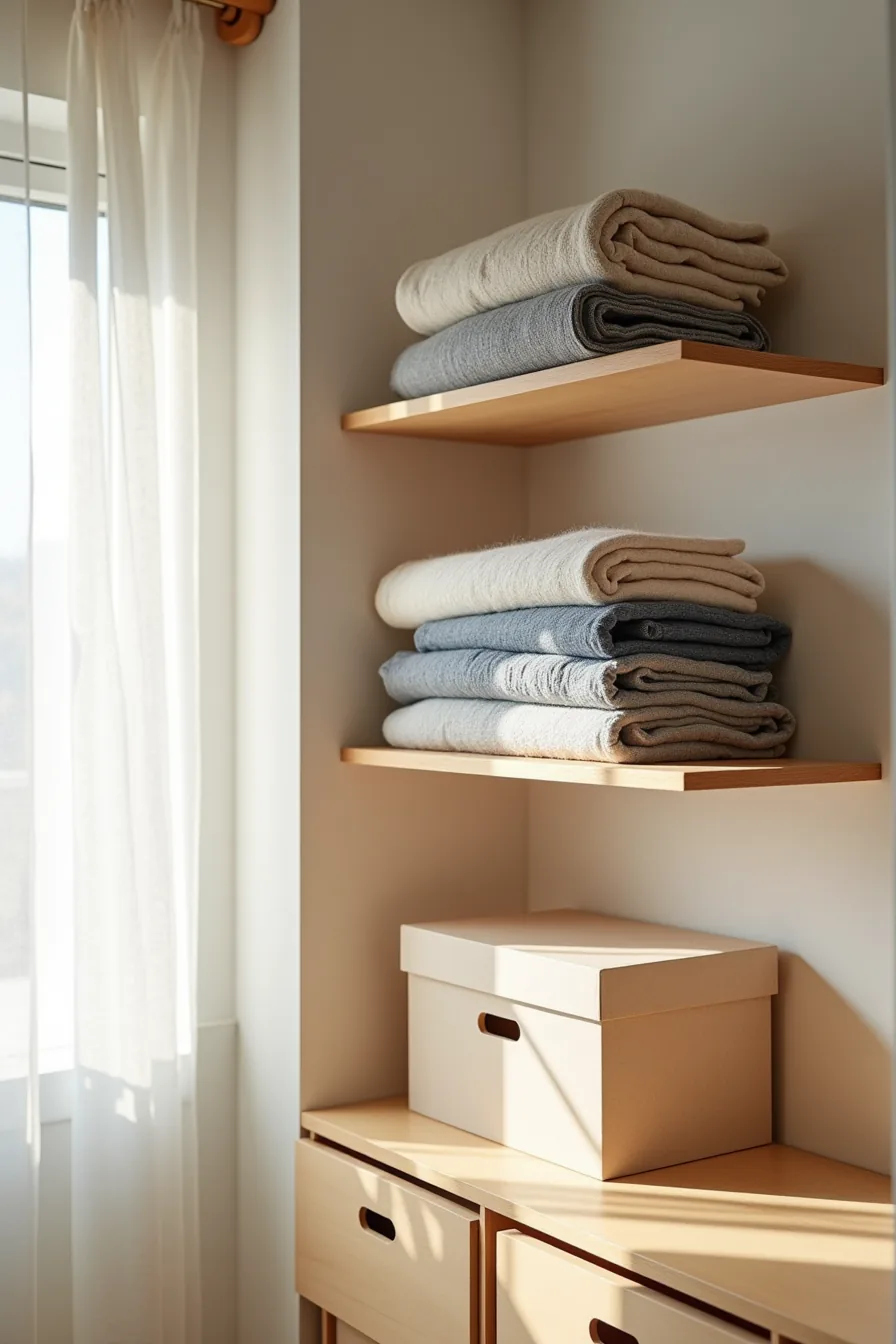
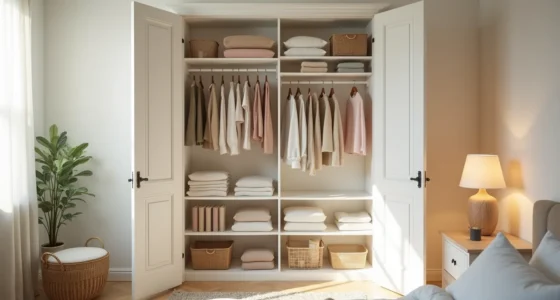
Three floating shelves mounted above the existing closet rod transform dead wall space into prime real estate for folded items. Each shelf runs the full width of the closet and sits roughly 12 inches apart, giving you enough clearance to stack sweaters two deep without crushing them. This arrangement suits anyone with more knitwear than hanging garments, think bulky sweaters, jeans, and lidded storage boxes that would otherwise consume rod space.
The setup costs surprisingly little: expect to pay between $15 and $40 per shelf for sturdy options rated for 30–50 pounds, though you’ll need a stud finder and a drill for installation. Renters can approximate the look with peel-and-stick floating shelves, but those typically cap out around 15 pounds and won’t survive heavy storage boxes. For a practical small closet organization ideas planning tip, measure your wall height first, you need at least 36 inches of clear wall above the rod to fit three useful shelves.
Position the lowest shelf high enough so hanging shirts don’t brush against it, and leave 2–3 inches of breathing room between the top of each stack and the shelf above for easy grabbing.
Double-Hanging Rods: Creating Two Levels of Hanging Storage
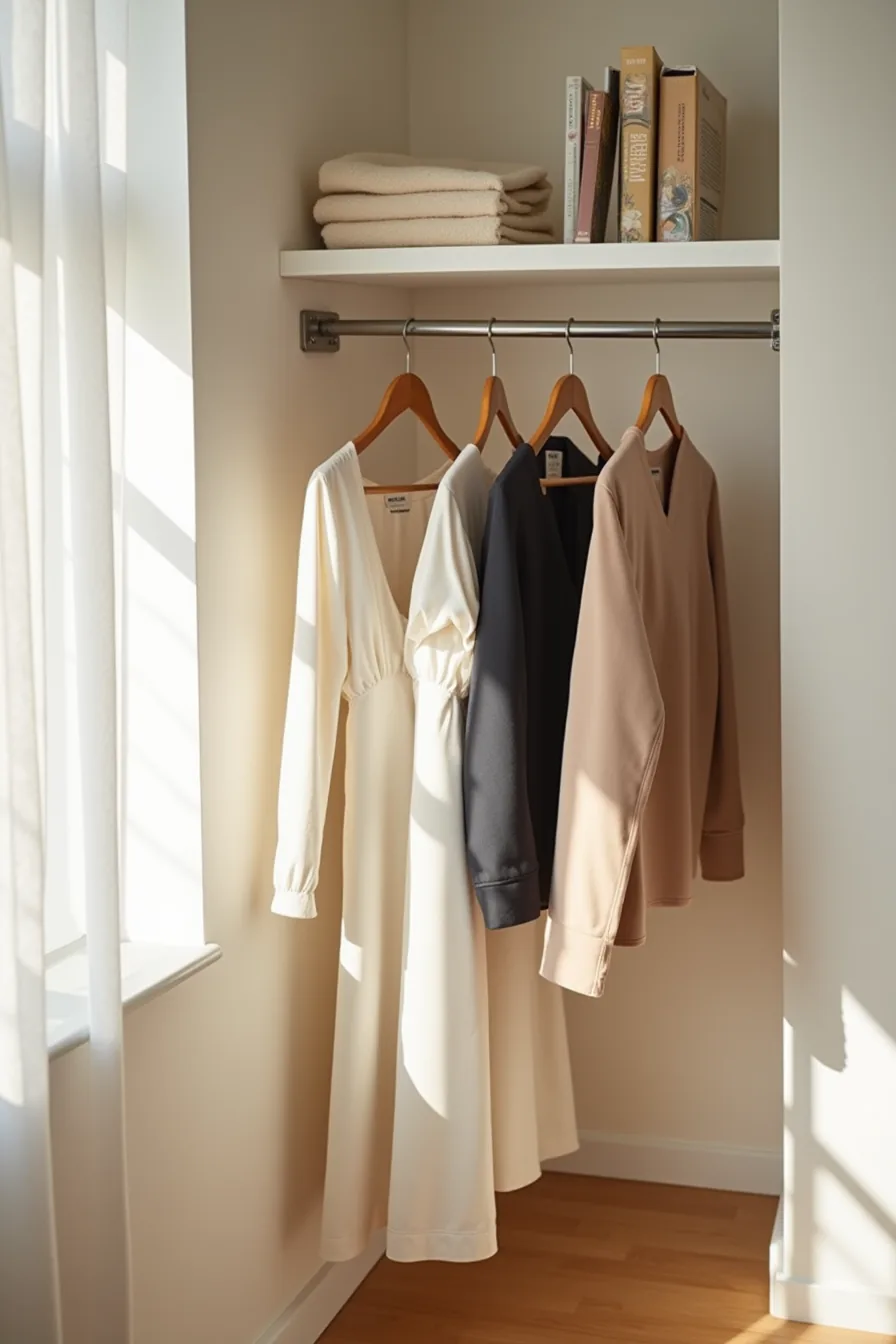
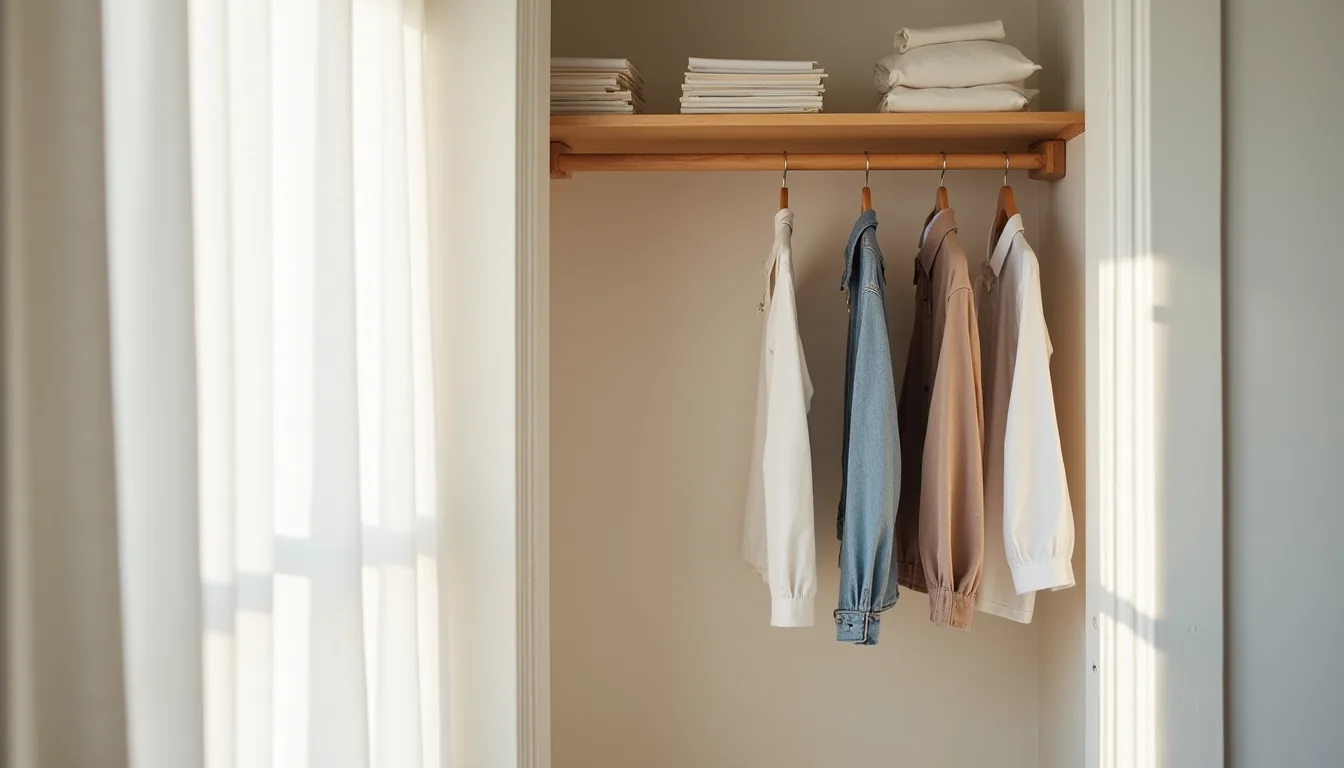
Installing a second rod transforms a single tall cavity into two functional zones. You’ll need a minimum of 60 inches of vertical space from floor to the underside of the upper rod, roughly the height of a standard closet, to make this work. The upper rod sits at your natural shoulder height, around 54–62 inches from the floor, holding longer garments like coats and dresses.
The lower rod mounts 36–42 inches beneath it, and the spacing between the two leaves just enough room for shirts and jackets on the lower level without brushing the garments above.
The trade-off is immediate: you lose the ability to hang floor-length gowns or long trench coats. Measure your longest hanging item first; if any piece exceeds 54 inches, it will drag or fold awkwardly on the upper rod. This system suits frequent dressers who rotate seasonal basics, think button-downs, blazers, and crop jackets, rather than formal-wear collectors.
For installation, you’ll need a second mounting bracket kit, typically $10–20 from a hardware store, and a drill with a level. The lower rod should sit at least 12 inches off the floor so shoes can slide beneath it, and both rods must anchor into wall studs or use heavy-duty toggle bolts rated for 50–75 pounds per bracket to avoid sagging under dense winter clothing.
Drawer Dividers and Shelf Bins: Compartmentalizing Folded Items
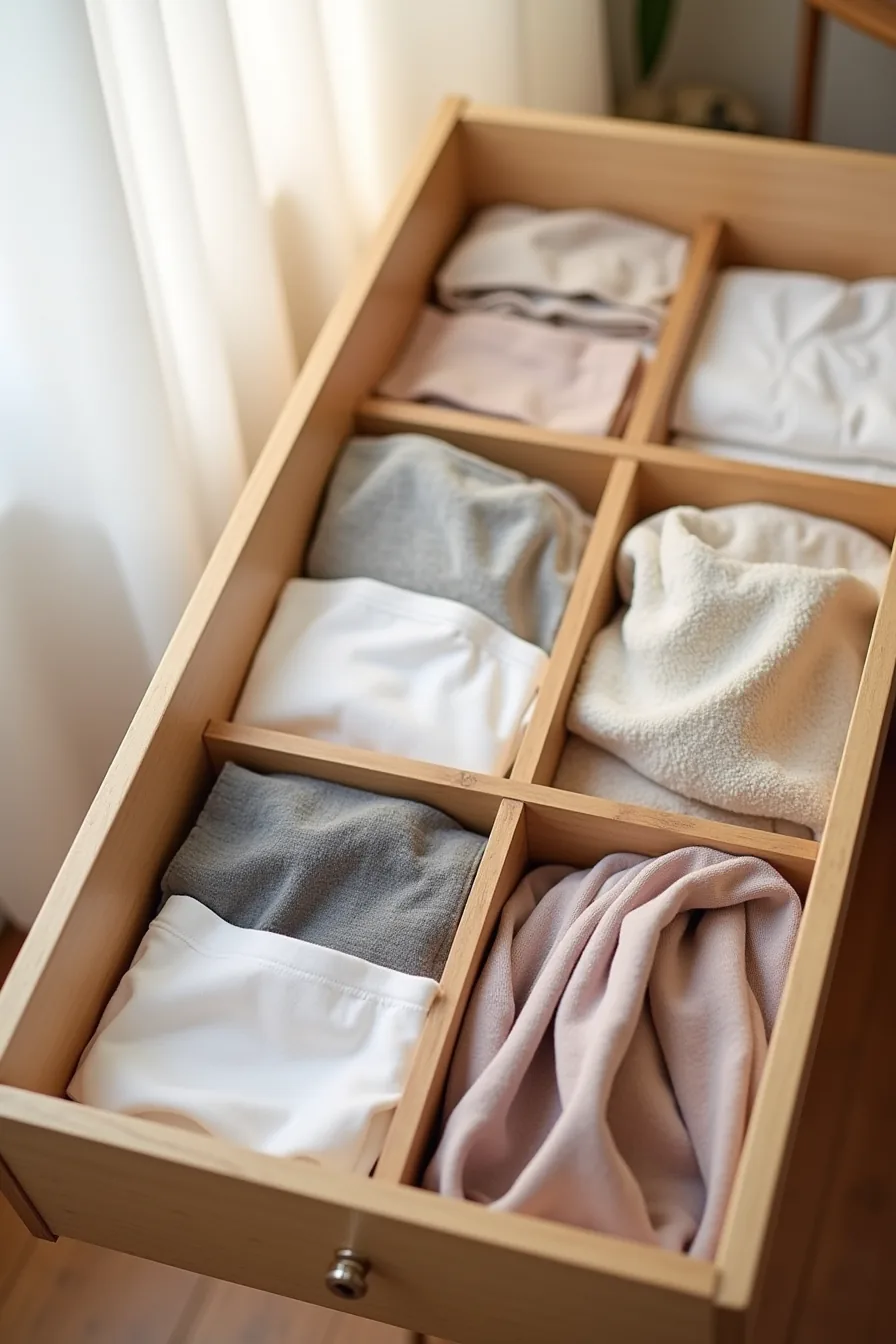
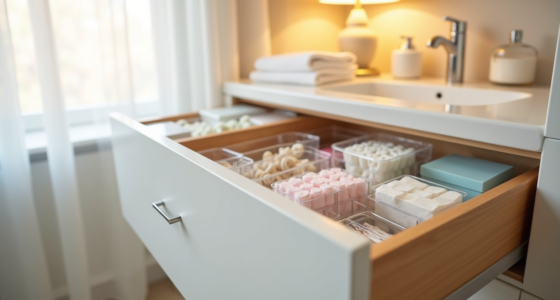
Segmentation stops the classic cascade failure where pulling one t-shirt triggers an avalanche of unfolded laundry. Rigid plastic dividers or adjustable shelf bins create fixed zones, so each category, socks, undergarments, t-shirts, leggings, scarves, accessories, has a boundary that survives daily rummaging. The payoff is retrieval speed: you grab from one compartment instead of excavating a pile.
For sizing, measure your drawer interior first. Dividers work best in drawers 3–6 inches deep; anything shallower and the dividers tip, anything deeper and you waste vertical space. Budget-conscious options run $10–25 for a set of expandable plastic dividers that fit drawers 12–18 inches wide.
Cardboard boxes cost less but collapse within 3–6 months of regular use; rigid plastic lasts years and wipes clean with a damp cloth. Fabric bins suit open shelving but collect dust and require washing every 2–3 months to avoid trapping odors in folded knitwear. Skip felt liners if you store wool, they trap moisture and slow drying.
Over-the-Door and Wall Hooks: Capturing Dead Space
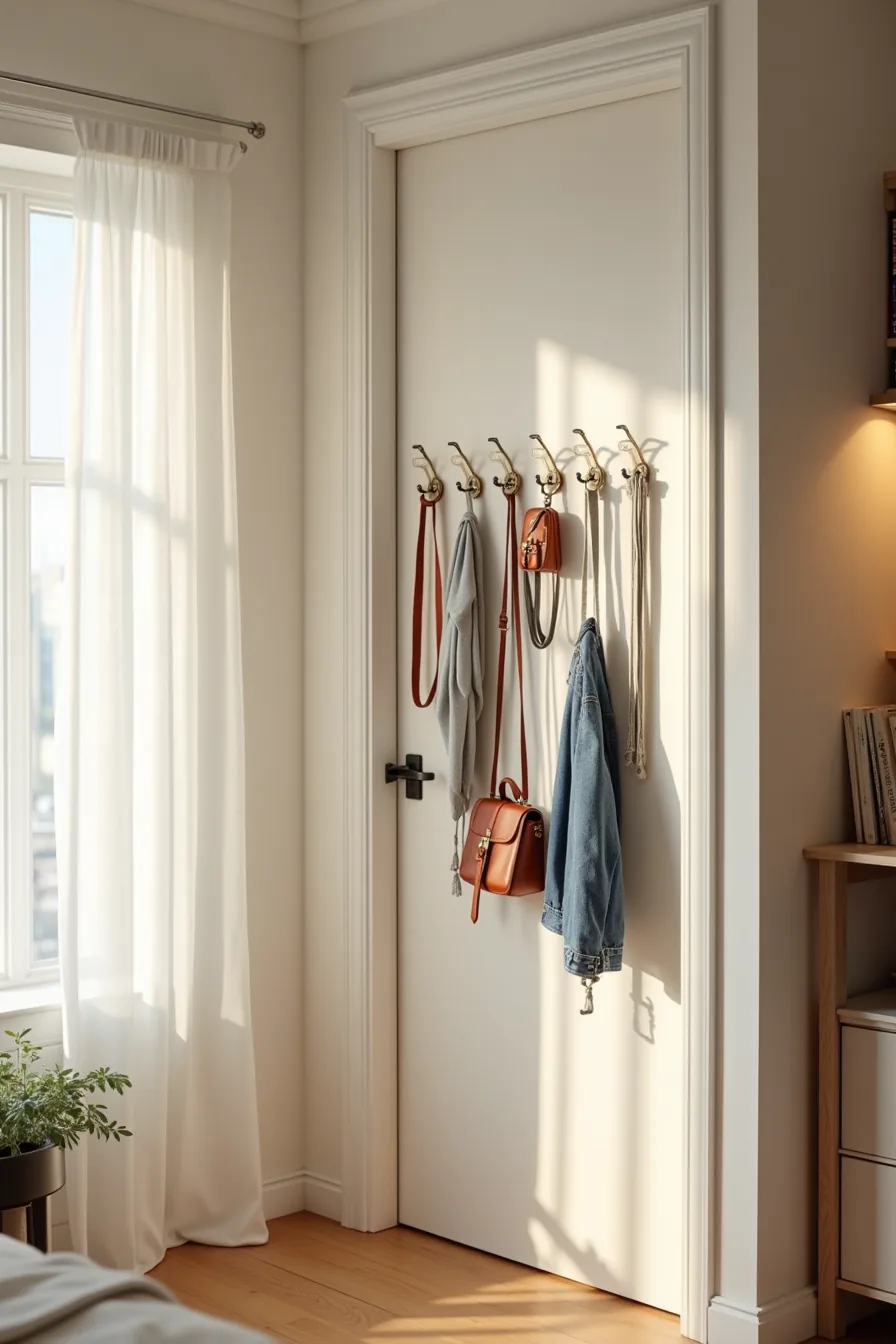
Mounting hooks on the door’s interior and the closet’s side wall transforms blank vertical planes into high-frequency storage for daily-use items. The setup shown here runs eight hooks in two vertical columns across the door, with three additional hooks on the side wall. That arrangement suits a narrow reach-in closet 24–36 inches wide, where rod space is already maxed out and floor space is untouchable.
Why it works: belts, scarves, and lightweight bags are low-weight, high-turnover items that you reach for daily. Hanging them at eye level (roughly 48–60 inches from the floor) eliminates the “unfold, hunt, refold” loop entirely. The key constraint is load.
Over-the-door hooks rated for 5–10 pounds hold a small crossbody, a hair accessory organizer, and scarves without issue. Wall hooks on drywall need anchors rated for 15–20 pounds if you plan to hold a denim jacket or tote daily, screw into studs where possible, and never hang anything heavier than a leather bag from adhesive strips.
Renter-friendly route: use removable adhesive hooks with a 30-day hold guarantee; they leave no residue on painted doors but will fail within 6–12 months under constant load. Budget route: a 12-pack of metal self-adhesive hooks runs $8–15 and covers the entire door. Skip magnetic hooks unless your door is steel, most interior doors are hollow wood and won’t hold them.
For maintenance, wipe hooks monthly to prevent rust on hardware and re-tighten screws every 3 months; a loose hook dropping a loaded bag is the most common failure mode.
Slim Hangers and Cascading Clips: Reducing Bulk on the Rod
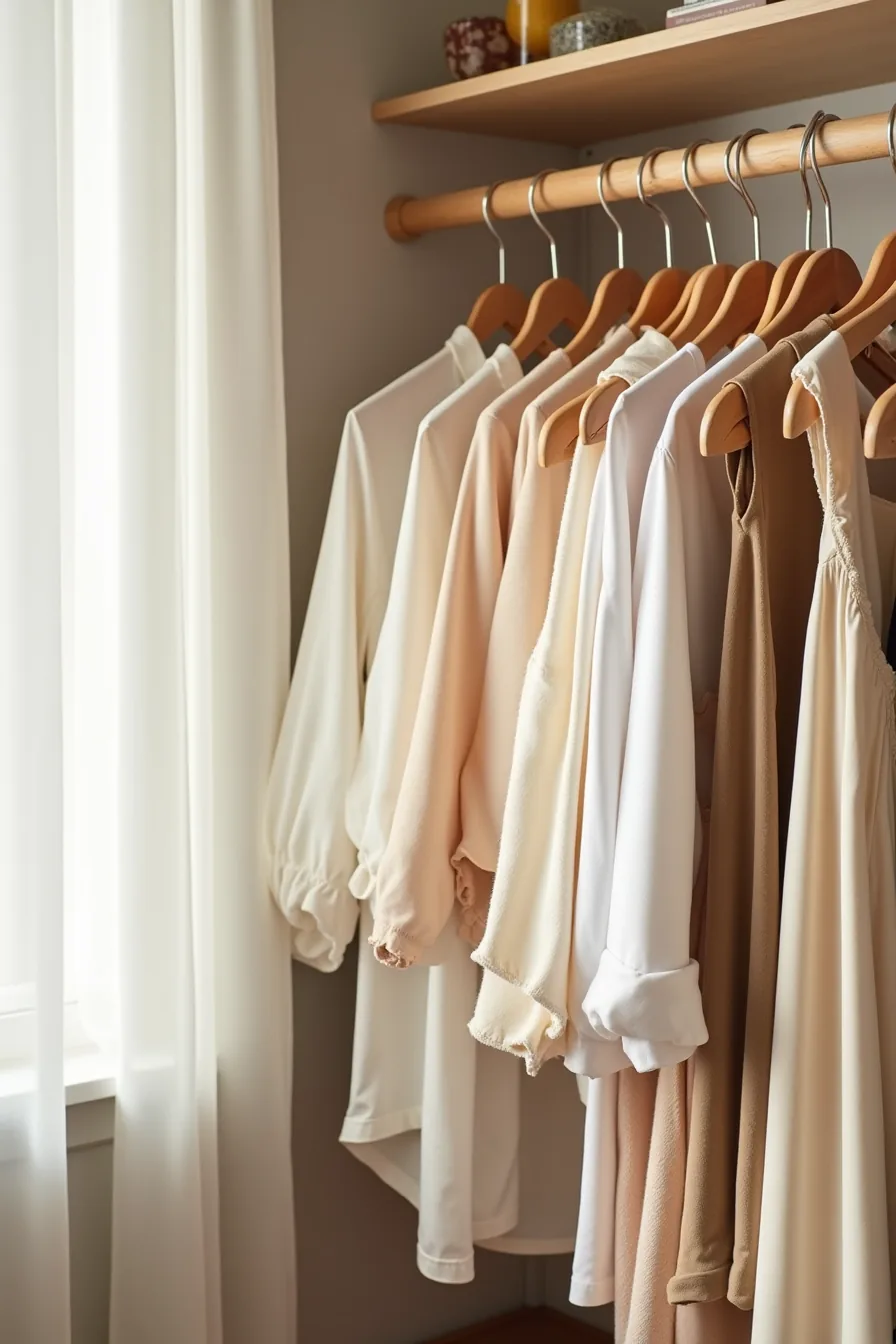
The simplest 30–40% space gain in a small closet comes from swapping standard plastic hangers for slim velvet versions. Standard hangers measure roughly 17–19 inches across the shoulder; slim alternatives run 12–14 inches, and the velvet coating prevents slippage for blouses and lightweight dresses. On a 36-inch rod, that swap alone moves you from nine garments to roughly fourteen per row.
Cascading clip hangers stack pants and skirts vertically, turning one rod position into three or four hanging levels. Each clip holds 2–3 pounds safely, so denim, chinos, and mid-weight skirts work well; heavy wool trousers will stress the plastic joints within 6–8 months. Use them only for items you rotate weekly, the stacked design makes pulling a single bottom from the middle slower than grabbing from a flat rod.
Material durability matters more than aesthetics. Velvet hangers with metal swivel hooks hold up for 5–7 years; all-plastic versions warp at the hook joint within 2 years under regular dress-shirt weight. A 50-pack of slim velvet hangers costs $25–40; cascading clips run $10–15 for six.
That’s the budget route to recover rod space without touching your wall layout. Splurge instead on wooden slim hangers ($3–5 each) if you hang heavy coats or suits, velvet compresses under sustained 5+ pound loads and loses its grip. Replace any hanger with a bent hook or cracked clip rather than repairing; the failure point costs you a garment when it snaps mid-lift.
Seasonal Rotation and Under-Bed Storage: Managing Off-Season Clothing
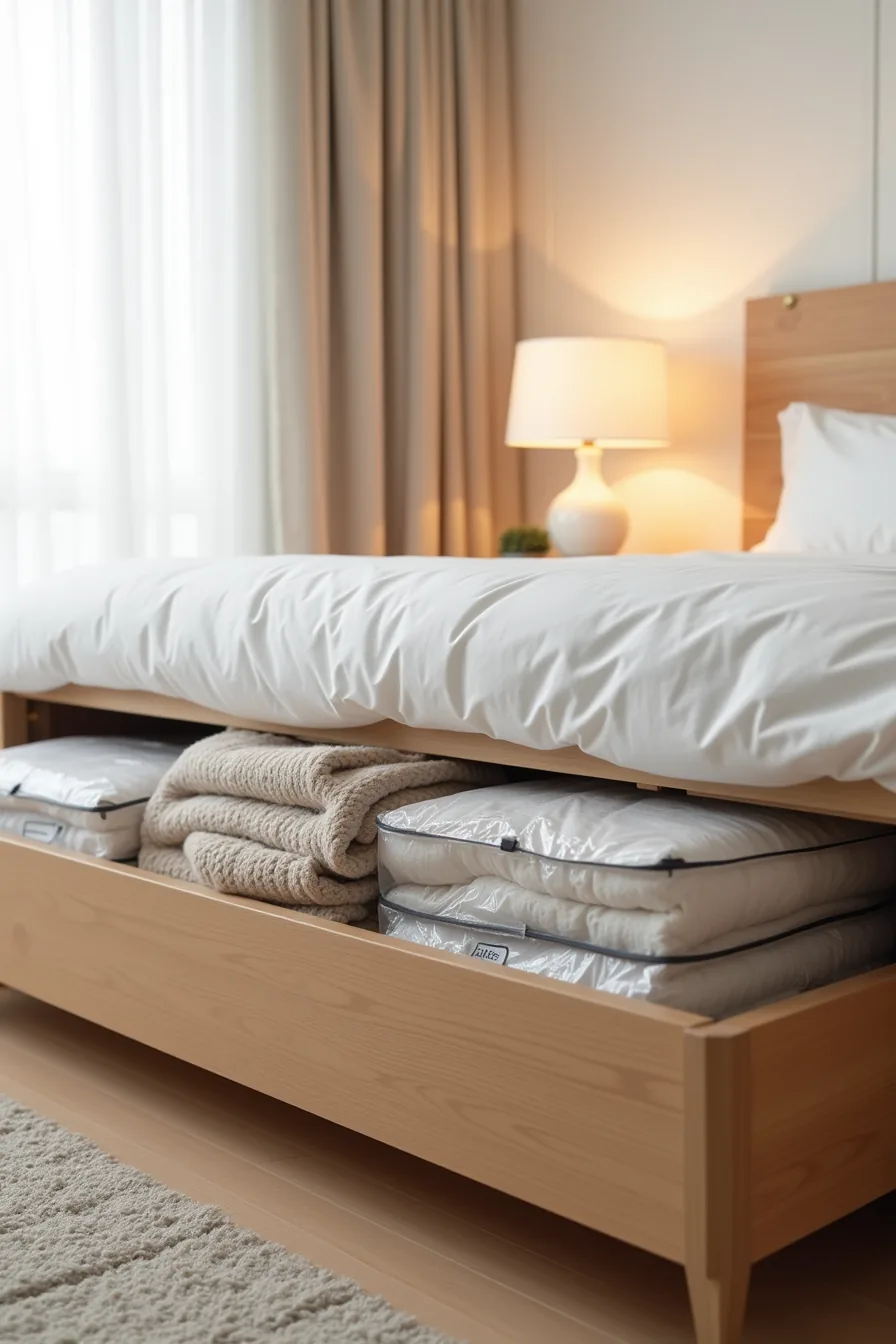
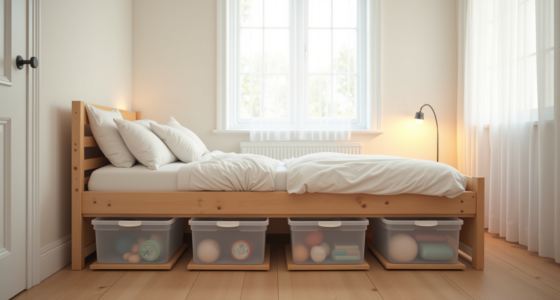
Rotating your inventory seasonally cuts daily closet clutter by roughly half without sacrificing wardrobe size. The visible setup, three clear vacuum-seal bags tucked under a bed platform, each holding folded winter coats and sweaters, works because the low-profile shape slides into spaces vertical shelving can’t reach. Measure your under-bed clearance first: most bed frames sit 10–14 inches off the floor, but platform beds run 6–12 inches, which limits bag thickness.
Vacuum-seal bags compress fabric by 50–75% but have a functional lifespan. The zipper seals and valve gaskets typically fail within 1–3 years of regular seasonal use, so inspect them before each rotation. Store only clean, fully dry garments, residual moisture or oils create mildew spots that are irreversible once compressed.
Handwritten tags on each bag are practical, but they smudge and tear; use a permanent marker on painter’s tape instead, which peels cleanly for reuse.
Climate dictates your approach. In humid regions, add a silica gel pack inside each bag; in dry climates, vacuum sealing is sufficient without extra moisture control. This route suits anyone with a bed frame that offers clearance anda willingness to swap inventory twice a year, roughly 30 minutes per rotation.
For a long-term upgrade, consider cedar-lined rolling under-bed bins ($40–80) that ventilate better, though they sacrifice the compression benefit.
Where to start
Pick the single most frustrating spot in your closet, the shelf that avalanches, the floor pile, the hanger tangle. Fix just that zone with one idea from this guide, then measure and shop accordingly. Renters, start with tension rods and adhesive hooks; owners, consider adjustable shelving for permanence.
Your next step: empty that one zone tonight, sort into keep/donate/relocate, and install your chosen solution within 48 hours. Small wins compound quickly.
Frequently Asked Questions
Question
What’s the minimum closet width needed to install a double-hanging rod system?
Answer
You need at least 24 inches of clear interior width. Most standard reach-in closets run 24–36 inches wide, so measure inside the frame before buying rods or brackets.
Question
Can I use small closet organization ideas in a walk-in closet, or do they only work in reach-in spaces?
Answer
Yes. The same principles, vertical stacking, zone separation, and slim storage, scale up. In a walk-in, apply them to one wall or corner rather than the whole footprint.
Question
How do I organize a small closet if I rent and can’t drill holes or install shelves?
Answer
Use tension rods, freestanding shelving units, over-door hooks, and hanging organizers that grip the rod. No hardware means zero wall damage, and everything removes in minutes.
Question
What’s the most cost-effective small closet organization idea for a tight budget?
Answer
Add a second tension rod for double hanging. It costs under $20, uses existing vertical space, and doubles capacity without tools or permanent changes.