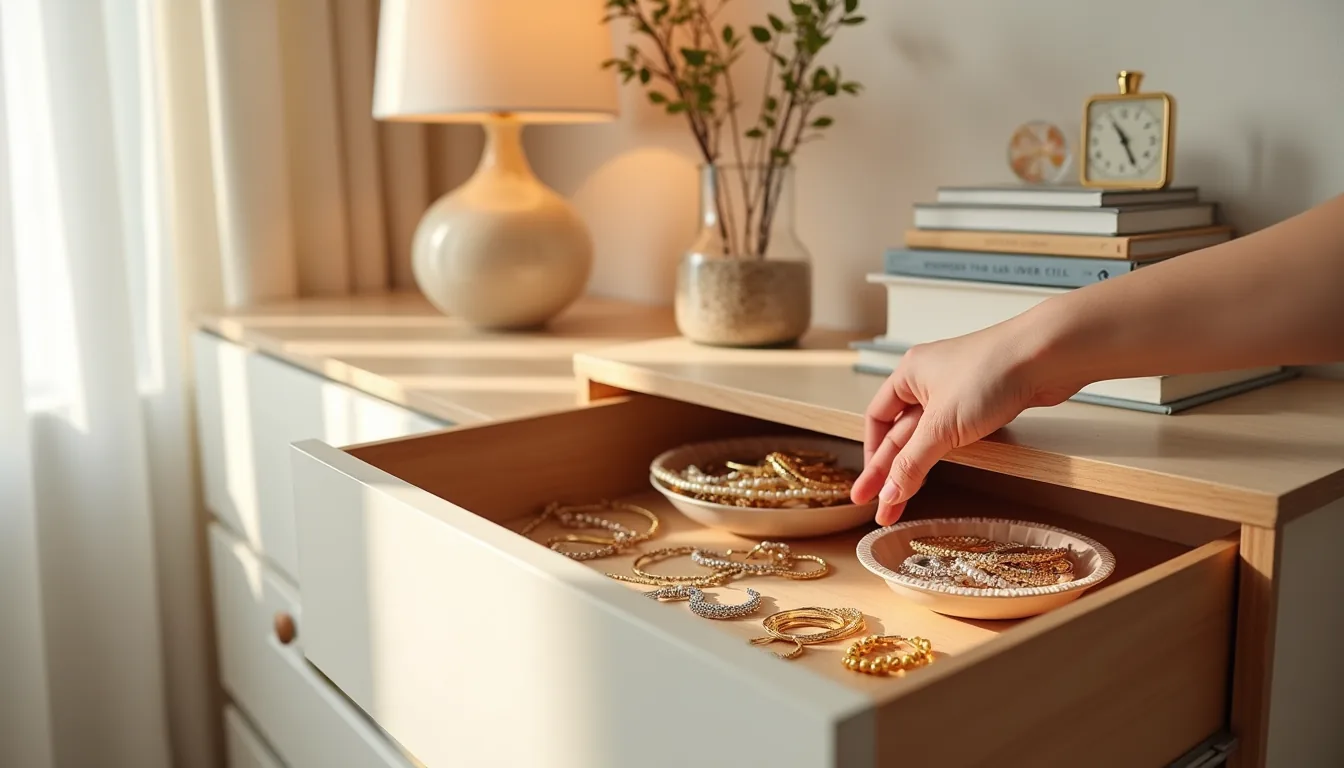

Your jewelry collection loses its luster the moment it becomes a tangled knot in a drawer, so the right organization system isn’t about aesthetics, it’s about protecting your investment and reclaiming your morning routine. But there’s no single “right” system; the best approach depends on your space, budget, and how often you actually wear what you own. The six strategies that follow range from a $20 drawer fix to a custom walk-in build, so you can match a solution to your reality rather than chase a picture-perfect ideal.
Key takeaways
Start renter-friendly with drawer dividers and stackable trays, they install in minutes, require no drilling, and move with you when you leave. Scale your setup to your space: pegboards suit small walls, closet rods work for medium closets, and built-ins only pay off in large, permanent rooms. Budget for the long haul, a quality armoire runs hundreds more than clear containers but adds lockable security and a furniture-grade finish that trays can’t match. Choose materials by maintenance, velvet-lined trays need dusting and spot-cleaning, while acrylic organizers wipe clean but show scratches; pick based on how often you actually wear the pieces.
Drawer Dividers and Stackable Trays: The Renter-Friendly Route
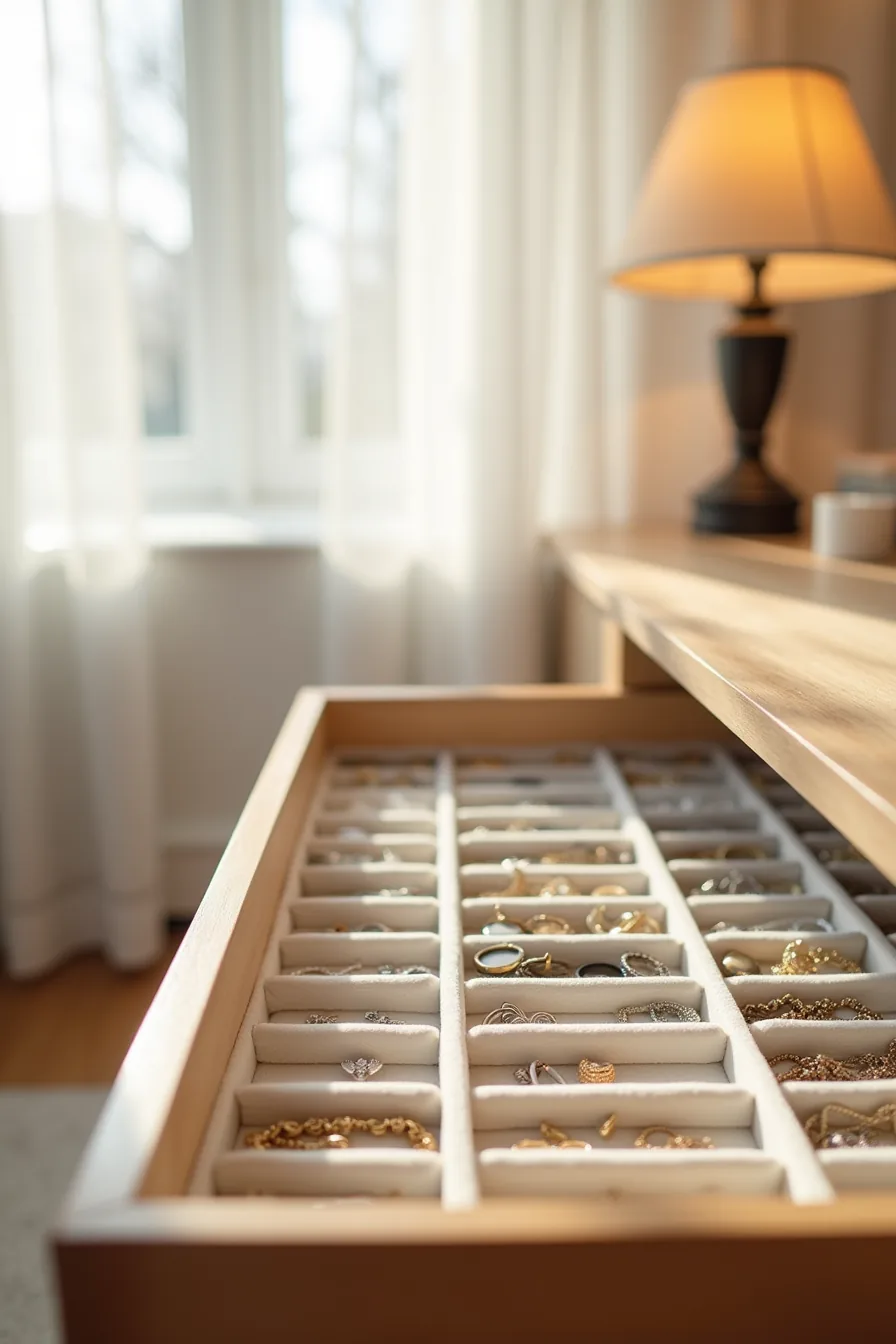
Modular plastic dividers convert an existing shallow drawer into a compartmentalized jewelry case without a single screw or adhesive. This setup suits anyone in temporary housing, since you can reconfigure the grid or lift it out entirely when you move. The straight-down view of neat rows, earrings in one slot, delicate chains in another, pendant necklaces separated by length, shows the core principle: one jewelry type per compartment prevents tangling and scratches.
The practicality here’s about visibility and speed. You open one drawer, see every option at a glance, and grab what you need in seconds. Stackable trays add a second layer for rings or cuffs above the primary layout, doubling capacity in the same footprint.
Expect to spend $15–$40 on a full set of adjustable dividers, or under $15 for foam sheets you cut to size. This is the most budget-friendly interpretation of jewelry closet organization ideas, though it doesn’t scale well, you’re limited to whatever drawer space already exists. It works best for a collection under 50 pieces or for keeping your daily-wear items separate from a larger storage solution elsewhere.
Wall-Mounted Pegboards with Hooks and Baskets
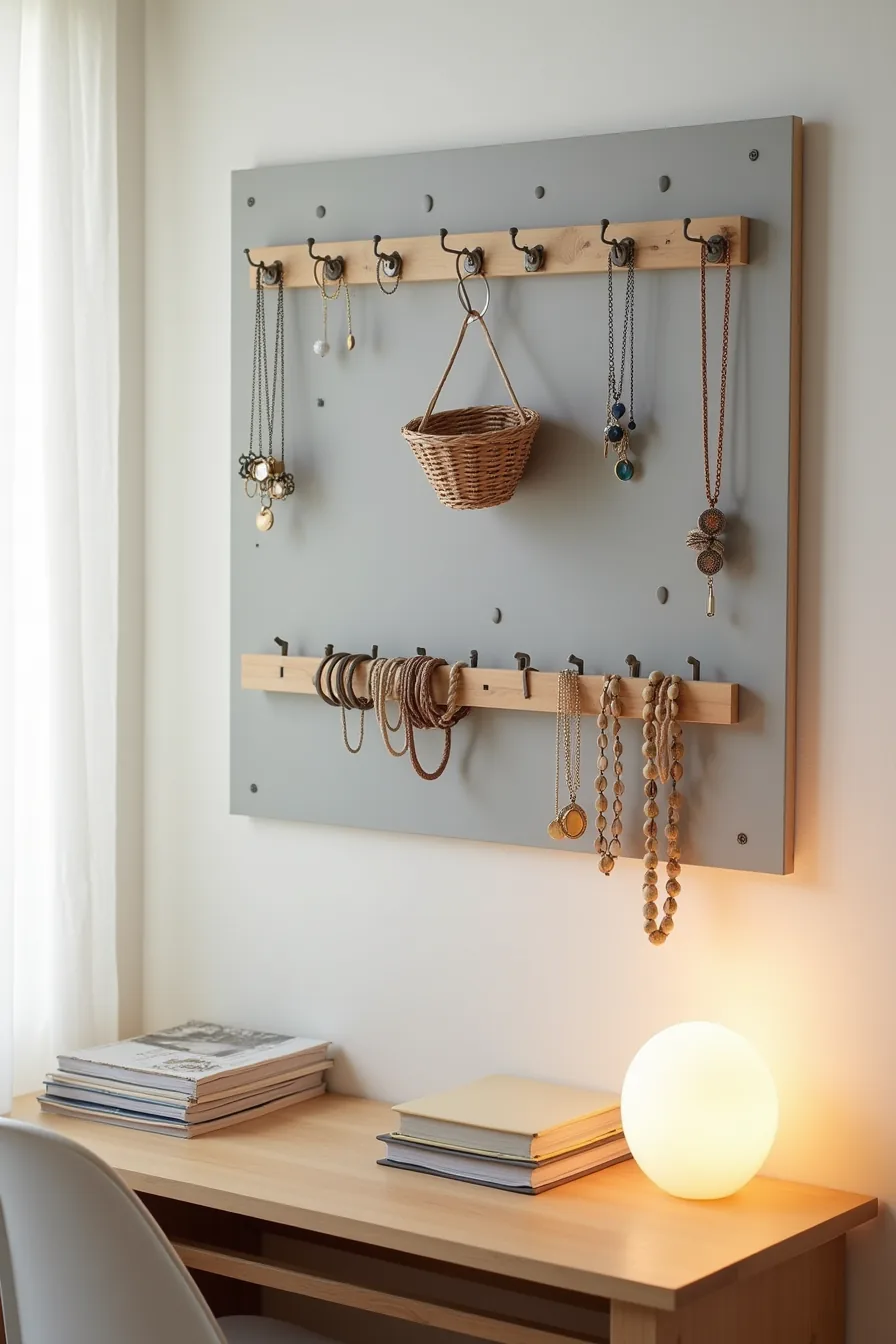
A soft-gray pegboard turns an empty wall into a display-and-storage hybrid that suits anyone who wants their collection visible, not buried. Metal S-hooks let you hang necklaces individually, no clasps touching, no chains knotting, while small woven baskets catch loose rings and stud earrings that would otherwise roll away. A wooden dowel rod mounted a few inches in front of the board gives you a second hanging plane for layered bracelets, effectively tripling capacity without extra wall space.
You need roughly 2–3 feet of clear wall width and a drill or strong adhesive strips, depending on your wall type. Standard pegboard panels run 2×4 feet and cost $10–$20; hardware adds another $15–$30. This route is a solid middle ground between drawer dividers and a full cabinet: fully removable for renters, yet sturdy enough for daily access.
It suits collections heavy on necklaces and bracelets, though tiny items like studs work only if you commit to the baskets, leave them loose and you’ll lose them. Dusting is the real maintenance cost, so budget five minutes weekly with a microfiber cloth.
Jewelry Armoires and Standalone Cabinets: The Long-Term Investment
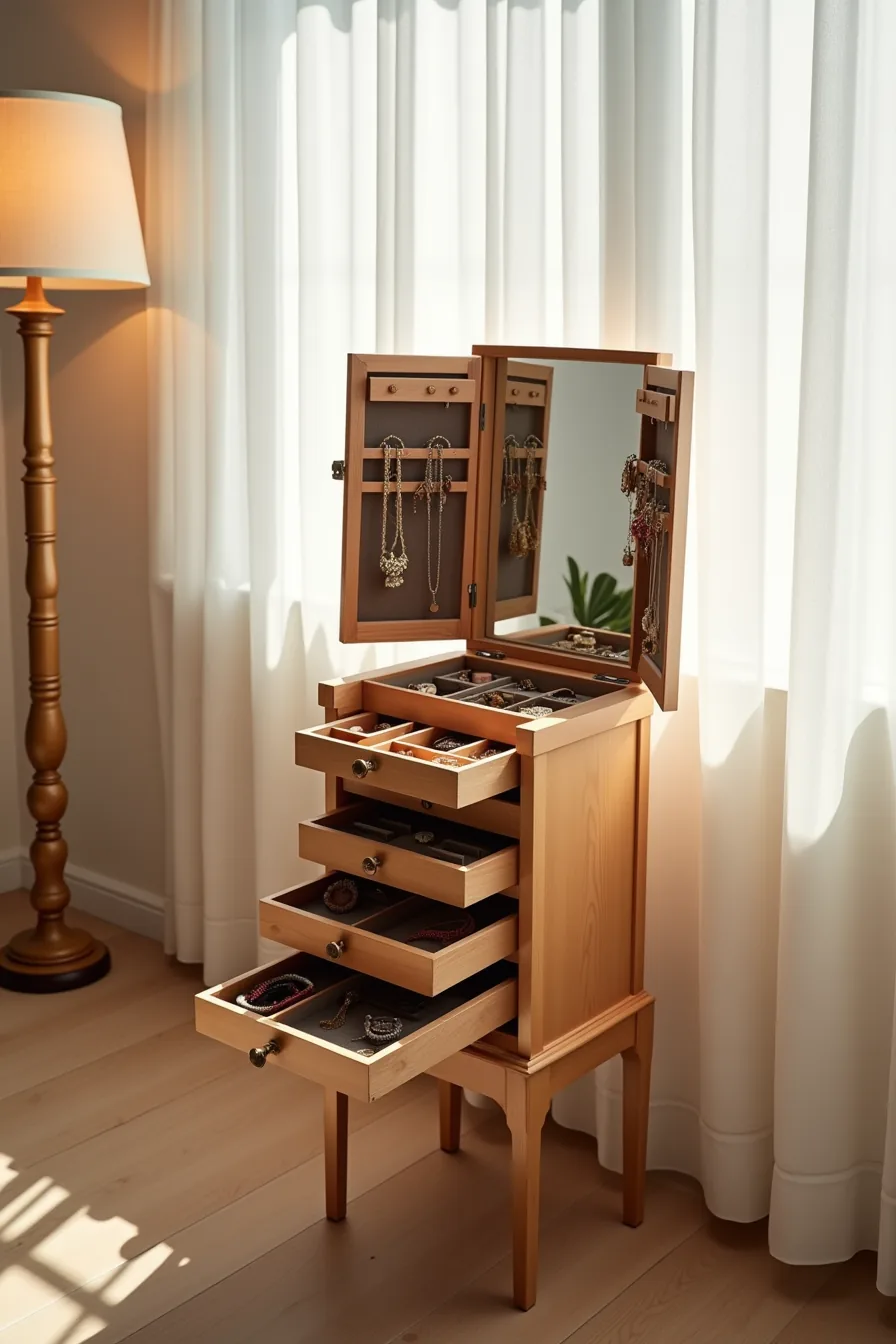
A tall wooden armoire with mirror-backed doors and velvet-lined pull-out trays offers the most complete solution for large collections that need protection from dust and light. This piece suits serious collectors with 50+ pieces who want everything accessible in one place, plus the security of a lockable design if you keep heirlooms or high-value items. Expect to pay $300–$1,200 for quality construction, with most freestanding units running 48–72 inches tall and 16–24 inches deep.
Open designs with glass doors display necklaces and bracelets attractively but require you to stay disciplined about untangling chains before storage. Lockable solid-door versions hide clutter and protect silver from tarnishing, though you sacrifice the visual appeal. Choose based on your room: open armoires work in walk-in closets where you’ll see them daily; lockable units fit shared bedrooms or kids-prone spaces.
Maintain velvet linings by vacuuming monthly with a brush attachment, compressed air pushes dust deeper into the fibers. This is the deliberate purchase for those who have already outgrown pegboards and drawer solutions, costing roughly 4–6 times more than a pegboard setup but lasting decades. Avoid the common Jewelry Closet Organization Ideas mistakes to avoid: buying an armoire with too few trays for your earring volume or one too tall for your ceiling clearance.
Measure your vertical space first and count your earring pairs before committing.
Closet Rod Organizers and Hanging Jewelry Holders
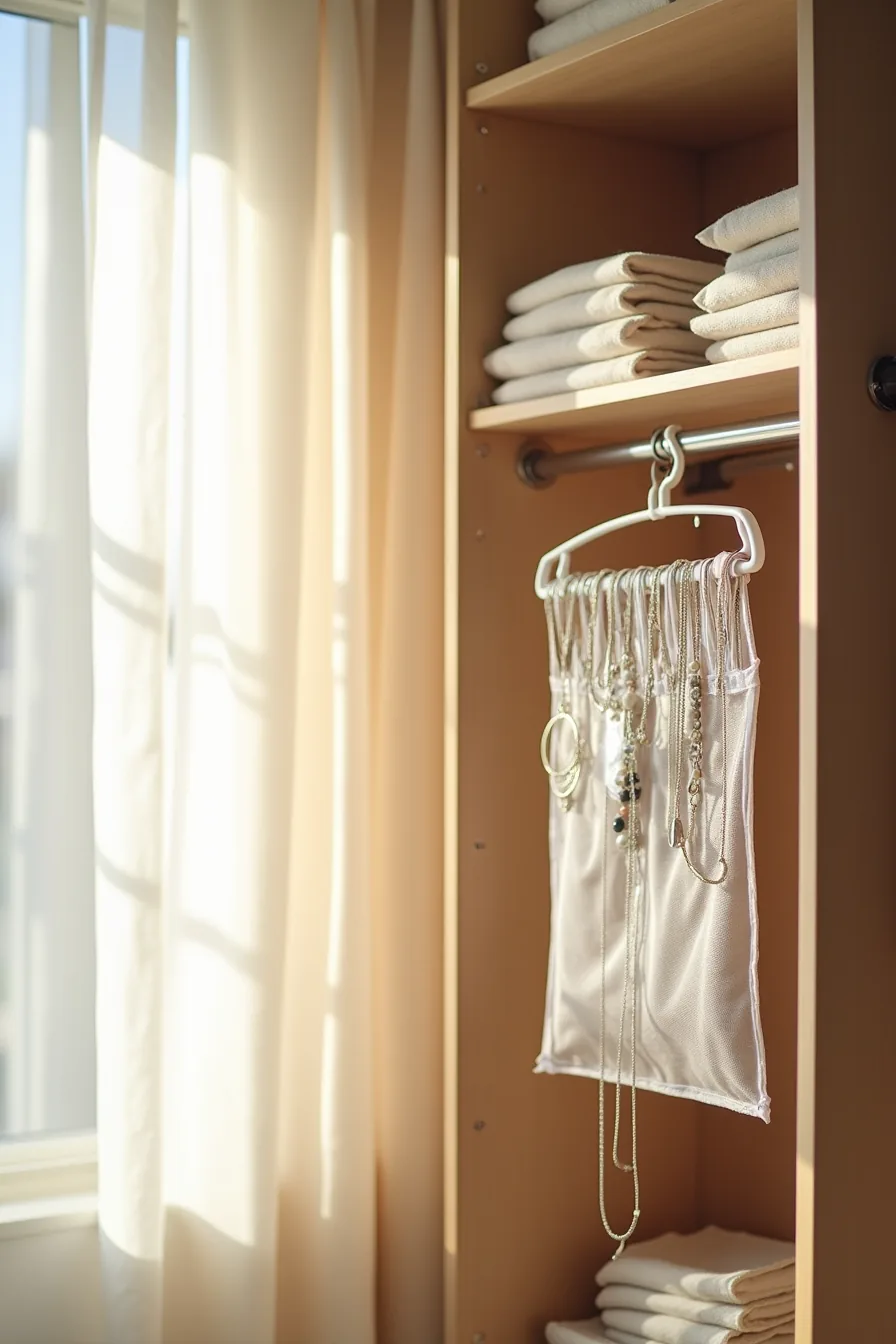
A metal hanging organizer with clear vinyl pockets turns dead vertical space beneath your existing closet rod into visible, touchable storage. Necklaces drape freely without knotting, while bracelets and scarves each claim a dedicated pocket, making your morning routine a matter of seconds rather than untangling sessions. This setup suits renters who can’t drill into walls, small closets with limited shelf depth, and anyone with 30–80 pieces who prefers seeing everything at a glance.
Most hanging organizers run 24–60 inches long and hold 20–50 pounds when properly supported, but always check your rod’s weight rating before loading scarves and metal chains together. Clear vinyl shows every piece instantly and costs $15–$45, though expect the material to yellow or crack after 12–18 months of direct sun exposure. Choose a unit with reinforced grommets and oversized hooks that grip the rod securely, and rotate heavy necklaces to the top pockets to prevent sagging.
Keep chains separated by clipping each one to a small binder ring before dropping it into its pocket, and wipe the vinyl monthly with a damp microfiber cloth to maintain clarity.
Custom Built-In Shelving and Display Cases
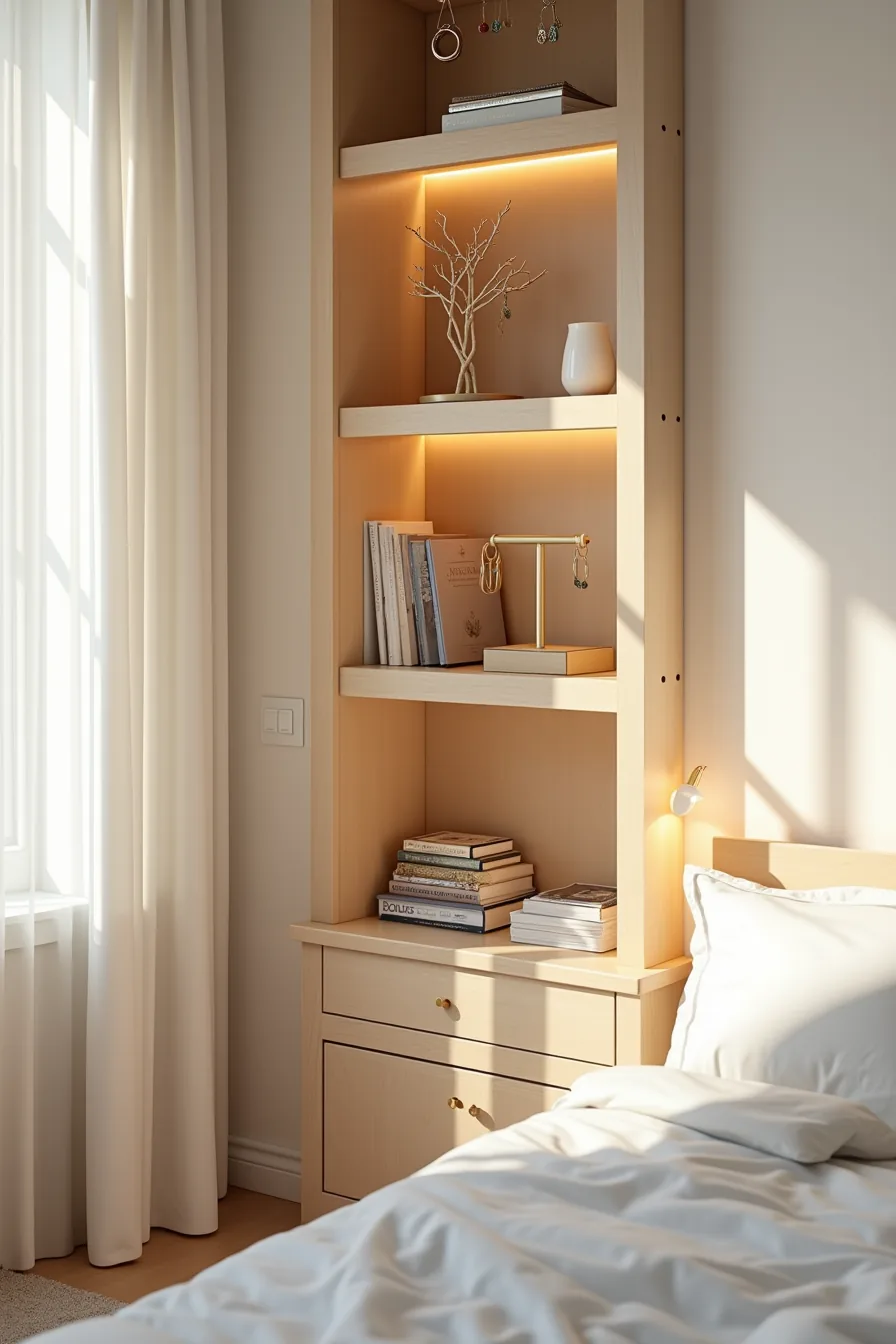
A glass-fronted built-in with three tiers transforms jewelry from a rummaged drawer into a curated collection you see daily. A rotating necklace tree on the top shelf keeps chains tangle-free and adds vertical interest, while earring cards on the middle shelf display pairs as decorative objects. Stacked bracelets on the bottom shelf create a color-blocked arrangement that reads as intentional design rather than clutter.
This route suits homeowners who plan to stay put for five-plus years, have deep closets (16–24 inches minimum), and want jewelry to double as wall art. Expect to pay $1,200–$4,000 for custom millwork, depending on wood grade and glass quality, roughly double what a comparable freestanding armoire costs.
Installation requires a stud finder, level, and either a licensed carpenter or confident DIY skills. Tempered glass doors keep dust off surfaces, cutting your cleaning routine to a monthly wipe-down of the shelves themselves. Position the unit away from direct sunlight to prevent fading on fabric-lined stands, and install small LED strip lights beneath each shelf to illuminate pieces without generating heat that could tarnish silver.
Jewelry Box Alternatives: Clear Containers and Drawer Organizers
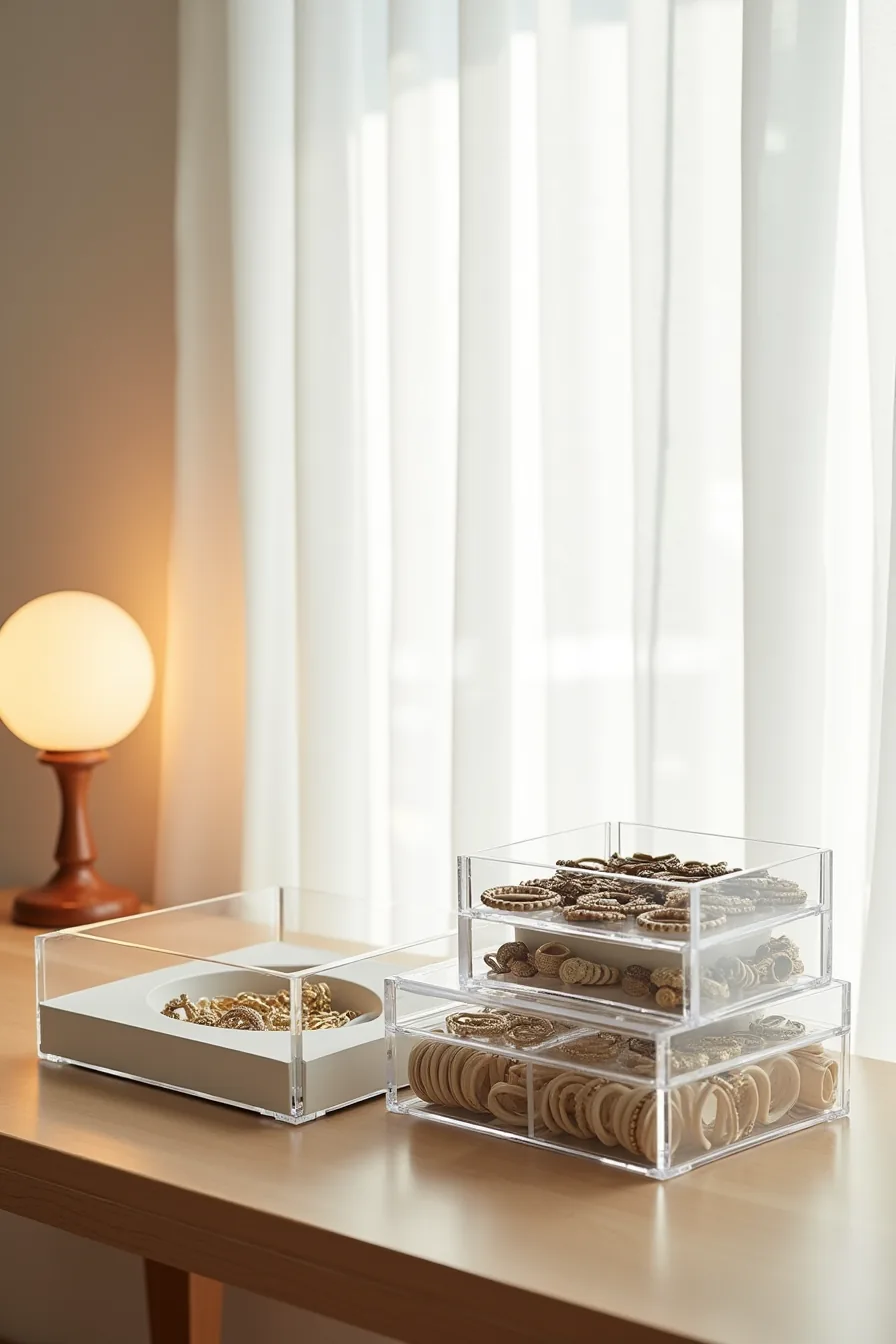
Stacked transparent acrylic boxes in varying heights, one holding coiled necklaces, another with sorted rings in compartments, a third with layered bracelets, turn a tabletop corner into a visual inventory. You see every piece at a glance, which cuts morning decision time to under a minute. The stacking also exploits vertical space on a dresser or vanity that a single flat tray would waste.
Clear acrylic works best for collections under 50 pieces or for pieces you wear weekly; anything larger quickly reads as visual noise. Look for containers with tight-fitting lids and anti-tarnish fabric inserts, since bare acrylic offers zero protection from humidity. Expect to pay $8–$30 per box, making this the cheapest route in this guide and fully renter-friendly, nothing mounts to walls.
This approach fails once you accumulate delicate chains or vermeil pieces that scratch against compartment dividers. When that happens, graduate those items to the built-in shelving route discussed earlier and keep acrylic solely for daily-wear rotation.
What to do first
Pick the single most frustrating jewelry habit you’ve, tangled chains, missing pairs, or empty mornings. That habit determines your starting point, not your space size. A wall-mounted pegboard fixes tangles for under $30; a drawer grid solves pair-matching for less than $15.
Choose one organizing action you can complete today. Measure your existing drawer or closet door, then buy exactly that component. An hour of work beats a week of inspiration.
Start there.
Frequently Asked Questions
How do I organize jewelry in a small closet without taking up floor space?
Mount a tension rod inside the closet and hang tiered velvet organizers or S-hooks with small pouches. This uses vertical airspace only, leaving the floor clear for shoes or bins.
What’s the best way to prevent jewelry from tarnishing during storage?
Store pieces in individually sealed anti-tarnish pouches or zip-close bags with silica gel packs. Keep them away from humidity sources and direct sunlight. Avoid open trays unless you polish regularly.
Can I organize jewelry in a rental apartment without damaging walls?
Yes. Use over-the-door hanging organizers with hooks that fit over the top edge, or adhesive-backed command hooks rated for your wall type. Both remove cleanly without leaving holes or residue.
How much should I spend on jewelry organization if I have a large collection?
Plan for $50–$150 for a functional setup using drawer inserts, stackable trays, and a wall-mounted mirror with hidden storage. Custom built-ins start around $500 and suit permanent homes, not rentals.