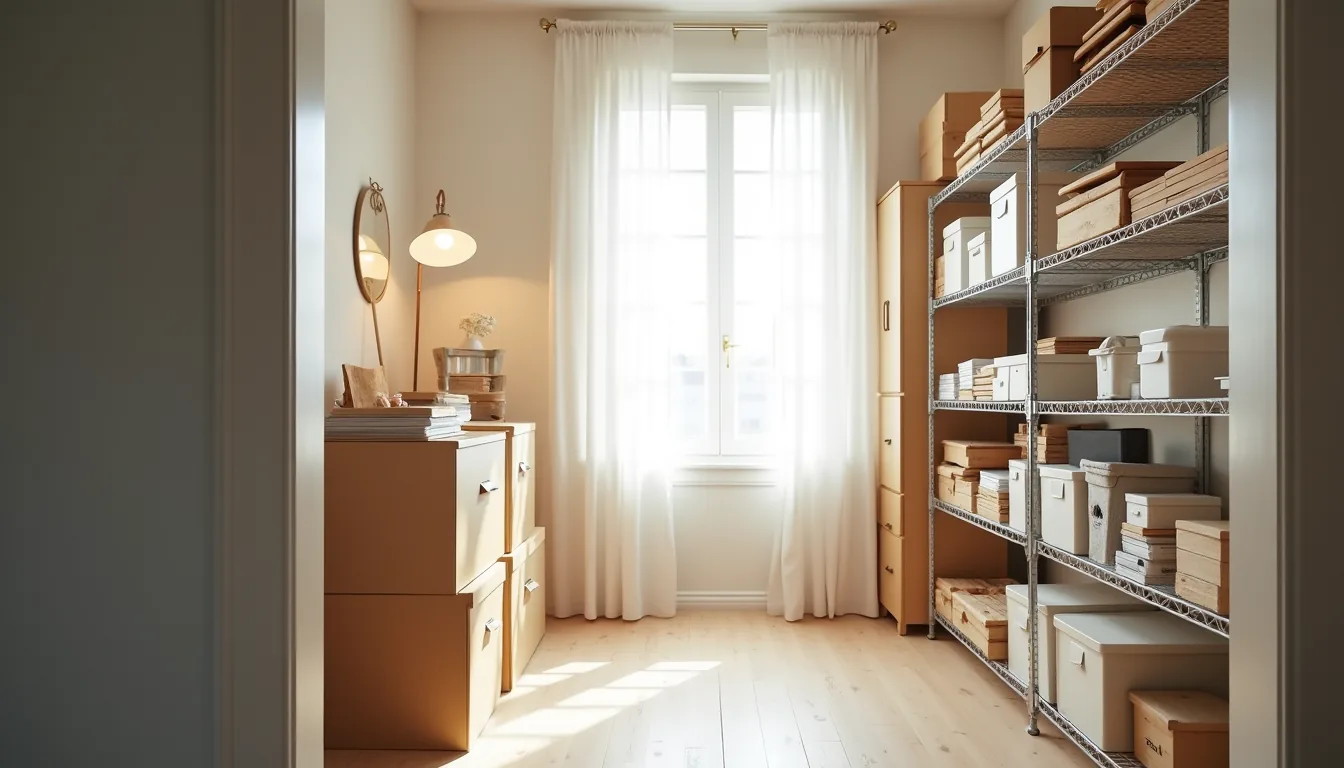
The closet in your home office is either the most wasted square footage in the house or the key to an organized workflow, and the difference comes down to choosing the right office closet organization ideas for your specific space, budget, and lease terms. You’ve six distinct routes to take, from a renter-friendly tension-rod system to a built-in plywood overhaul. Each requires different tools, time, and permanence, so the next few sections will help you match the right system to your walls, your workflow, and your landlord’s rules.
Key takeaways
- Vertical shelving nearly doubles usable storage in a typical 24-inch-deep closet, but you must anchor tall units to studs and keep heavy items below chest height.
- Modular cubbies adapt to changing office needs and cost roughly $30–$80 per unit, yet they require dusting weekly since open bins collect debris fast.
- Hanging rod systems suit renters because they install without drilling into walls, but they limit weight to around 30–50 pounds per rod, so store only lightweight supplies there.
- Door-mounted organizers add 10–15 square feet of storage without floor space, but they can block airflow and warp hollow-core doors if you overload them with bulky binders.
Vertical Shelving for Maximum Capacity
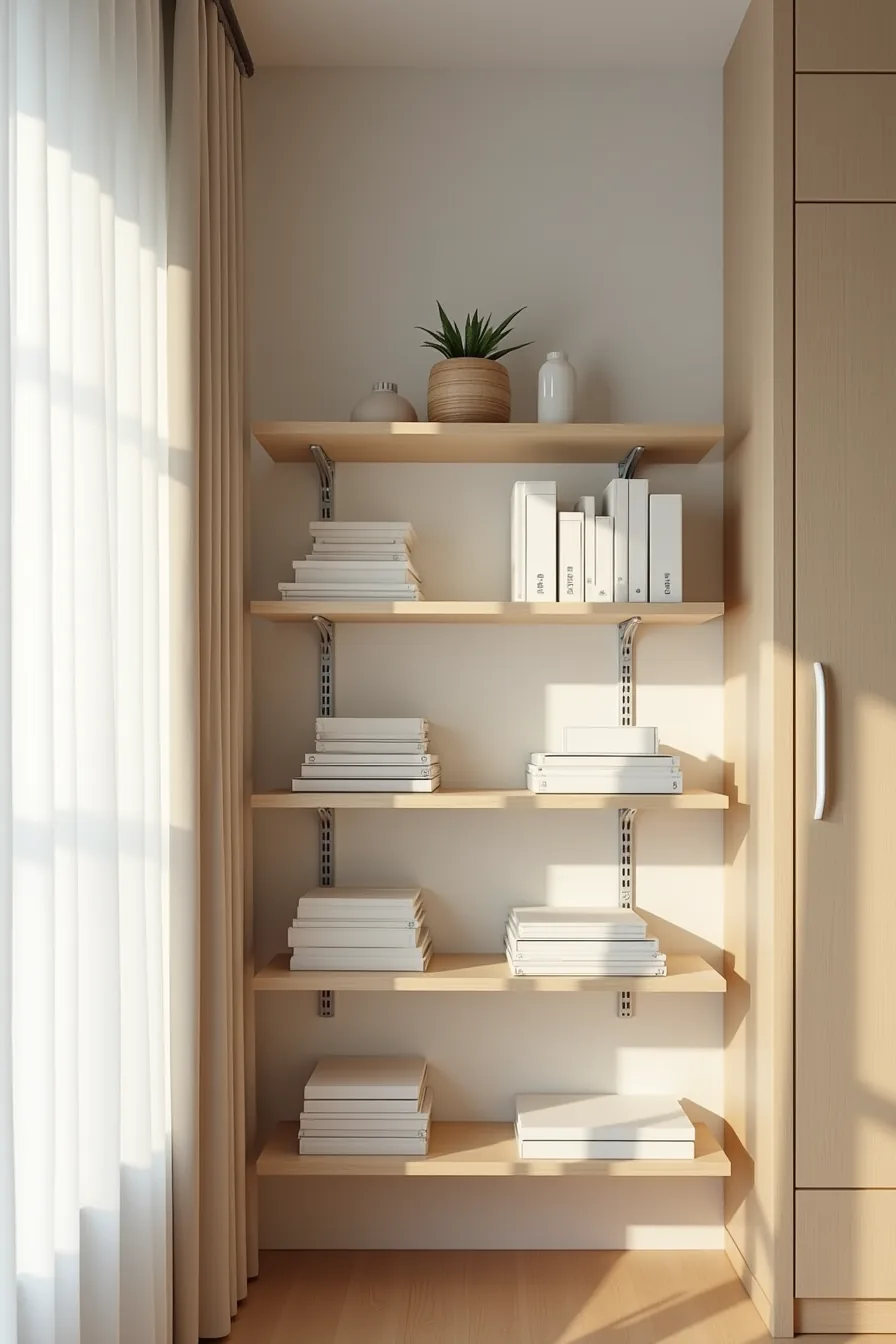
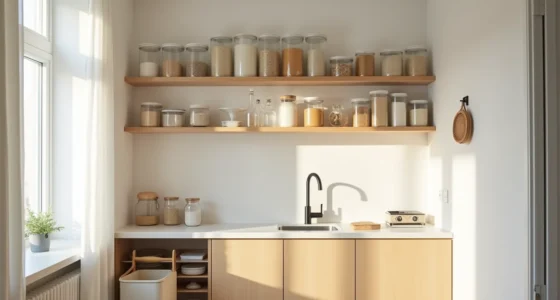
Floor-to-ceiling metal bracket shelving turns a single closet wall into a high-density storage system. In this setup, vertical standards mount directly to the wall studs, with adjustable shelves holding stacked binders, document trays, and office supplies from floor almost to ceiling. Because each shelf supports roughly 100–150 pounds when properly anchored, you can store heavy reference manuals and equipment without sagging.
This approach works best for closets under 3 feet wide and over 5 feet tall, where horizontal runs would waste valuable height. You gain roughly three times the usable capacity of freestanding shelving by exploiting the full vertical footprint. For narrow closets, keep shelf depths at 12 inches, deep enough for standard binders but shallow enough to leave clearance for opening the door.
Leave 2–3 inches between shelf fronts and the door swing to prevent pinch points.
Install brackets 16 inches apart to match stud spacing, and use a stud finder before drilling. Budget roughly $80–$150 per standard 6-foot-wide closet for brackets, standards, and MDF or pine shelves. Expect to spend an hour mounting the system, plus 15 minutes to adjust shelf heights as your storage needs shift.
Metal brackets resist the sagging that plagues plastic alternatives, making this a durable solution for paper-heavy home offices.
Modular Cubbies and Stackable Bins
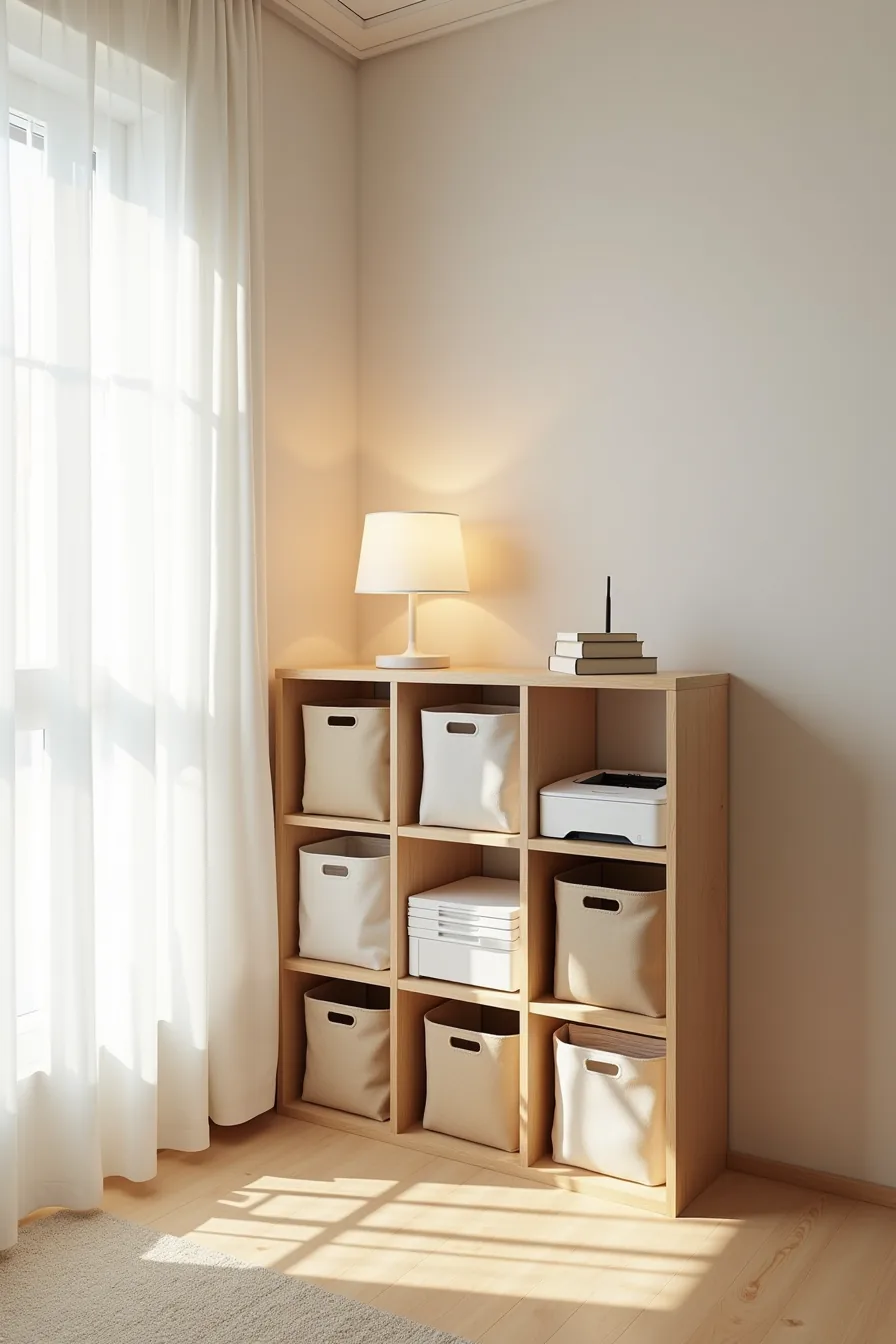
A freestanding 3×3 cube unit with fabric bins delivers the most renter-friendly office closet organization ideas because it requires zero wall anchors and disassembles in minutes. Each 13-inch cube holds roughly 30–50 pounds, making the structure ideal for lightweight supplies like paper rolls, cables, and packing materials rather than heavy equipment. Reserve the bottom row for the printer and router you see here, open cubbies allow ventilation that enclosed cabinets block, preventing overheating during long run sessions.
This setup suits small offices under 100 square feet where you need visible access without committing to permanent fixtures. Arrange bins by frequency of use: daily items at eye level, seasonal supplies on the top row, and bulky equipment at the base for stability. Fabric bins cost $8–$20 each, and a nine-cube unit runs $60–$120, keeping the total under $200.
Clean fabric bins monthly with a lint roller, and check the unit’s weight rating before stacking, most particleboard models sag past 50 pounds per shelf. If you own your space, swap fabric for rigid polypropylene bins ($12–$25) that withstand repeated pulling and sliding without tearing.
Hanging Rod Systems with Tiered Shelves
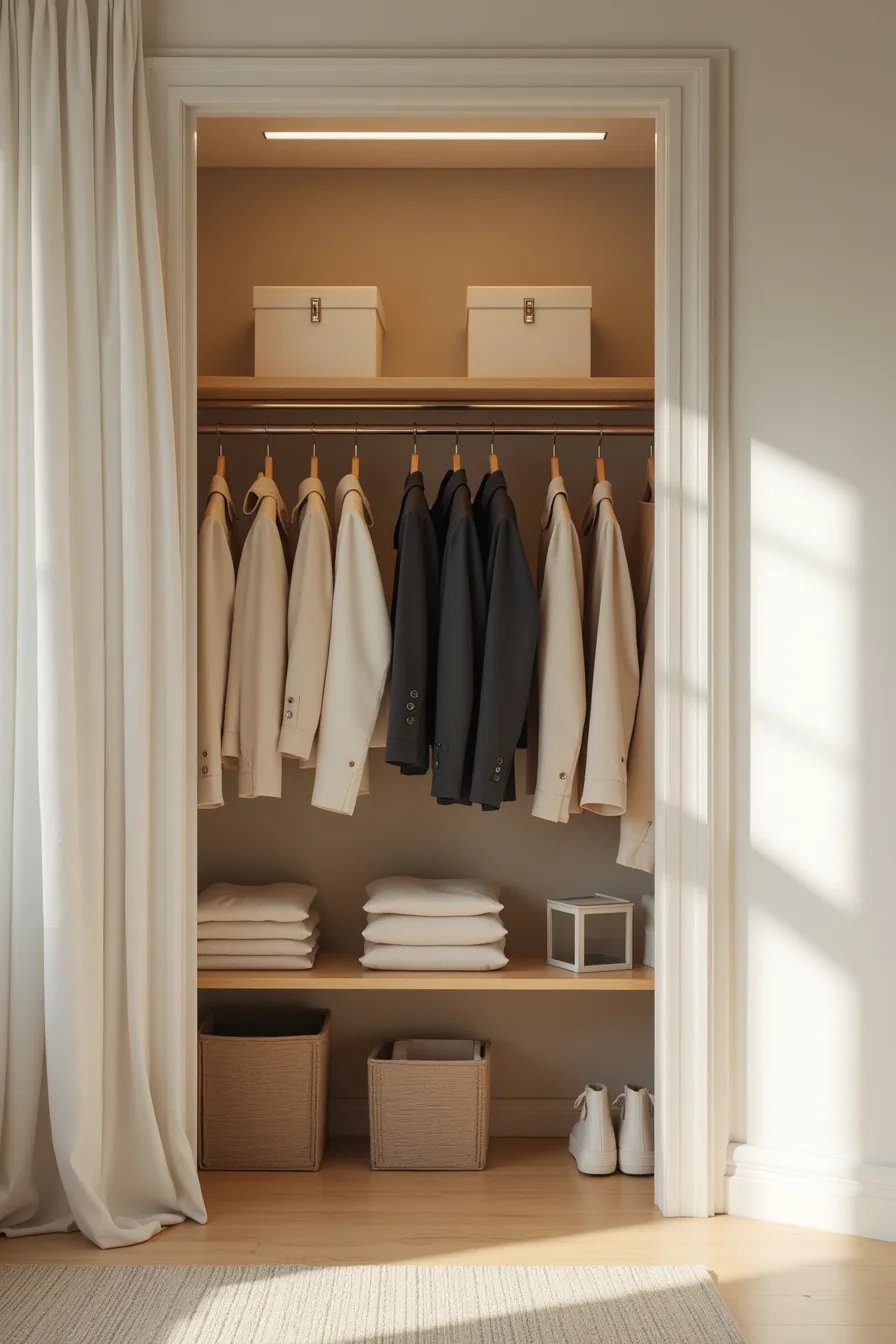
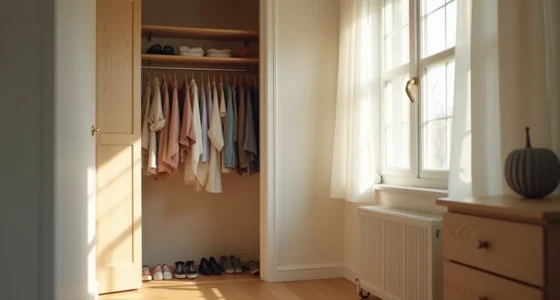
A single closet rod positioned at shoulder height, with fixed shelves above and below, turns a standard reach-in closet into a mixed-use workspace. The blazers and shirts hang on the rod, while file boxes and office accessories sit on the upper shelves and storage baskets rest on the lower tier. This arrangement works because it separates garments from supplies, preventing paper from absorbing moisture and odors from dry-cleaned clothing.
You need at least 42 inches of rod clearance for hanging garments and 12–14 inches of depth for standard hangers to swing freely. The upper shelf should sit 18–20 inches above the rod for tall file boxes, while the lower tier requires 10–12 inches of clearance for basket access without crouching. This system suits medium closets (30–60 square feet) where you split storage between work attire and office consumables.
Mount the rod into wall studs or use a adjustable steel rod rated for 50–80 pounds, copper or plastic rods bend under sustained hanging weight. Expect to spend $30–$60 for a steel rod with mounting brackets and $15–$40 per shelf; wire shelves cost less but allow dust to settle on stored items, so choose solid wood or laminate if you keep sensitive documents.
Custom Built-In Cabinetry and Drawers
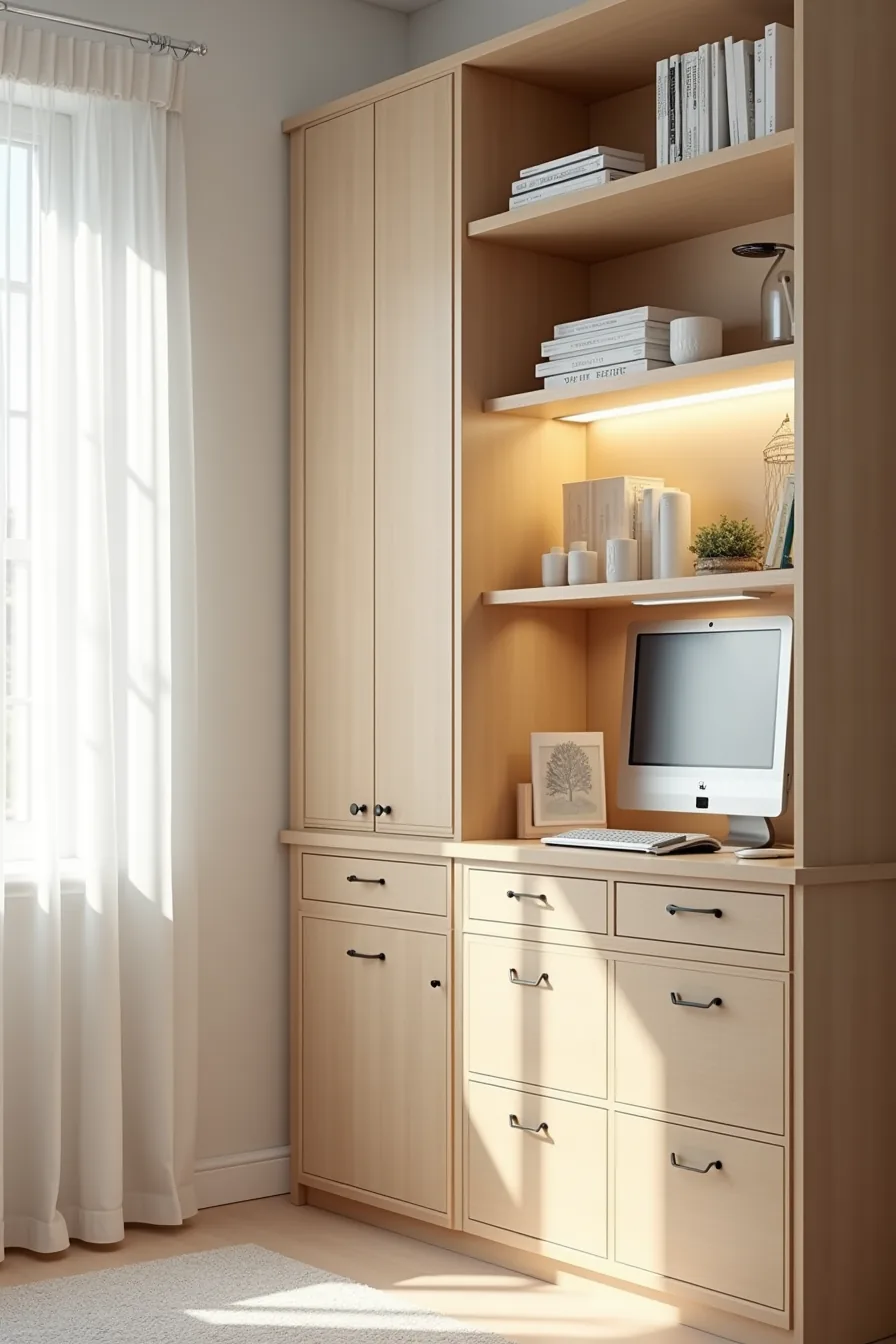
Fitted cabinetry represents the splurge end of budget vs. Splurge office closet organization ideas, transforming a closet into a permanent, smooth workspace. The setup visible here uses stacked drawers of varying depths, shallow 3–4 inch tiers for pens and cables, mid-depth 6–8 inch drawers for paper, and 12–15 inch drawers for a standing laptop or docking station. This graded-depth approach is essential because a single uniform drawer depth wastes vertical space or crushes taller equipment.
Budget $2,500–$6,000 for a custom-fitted reach-in closet with solid wood drawers, soft-close slides, and laminate or painted interiors. Installation takes 1–3 days, plus 3–5 weeks for measurement and fabrication. The upper cabinet doors conceal low-use supplies, while the open lower shelving keeps printers and monitors accessible without lifting.
You own the home or plan to stay 5+ years; cabinet construction can’t relocate. Plan drawer faces 4–6 inches tall for ergonomic pulls, and leave a 24-inch clearance zone in front of the lower drawers so you can kneel when retrieving equipment. Use full-extension slides rated for 75–100 pounds to support heavy devices without sagging.
Door-Mounted and Wall-Anchored Storage
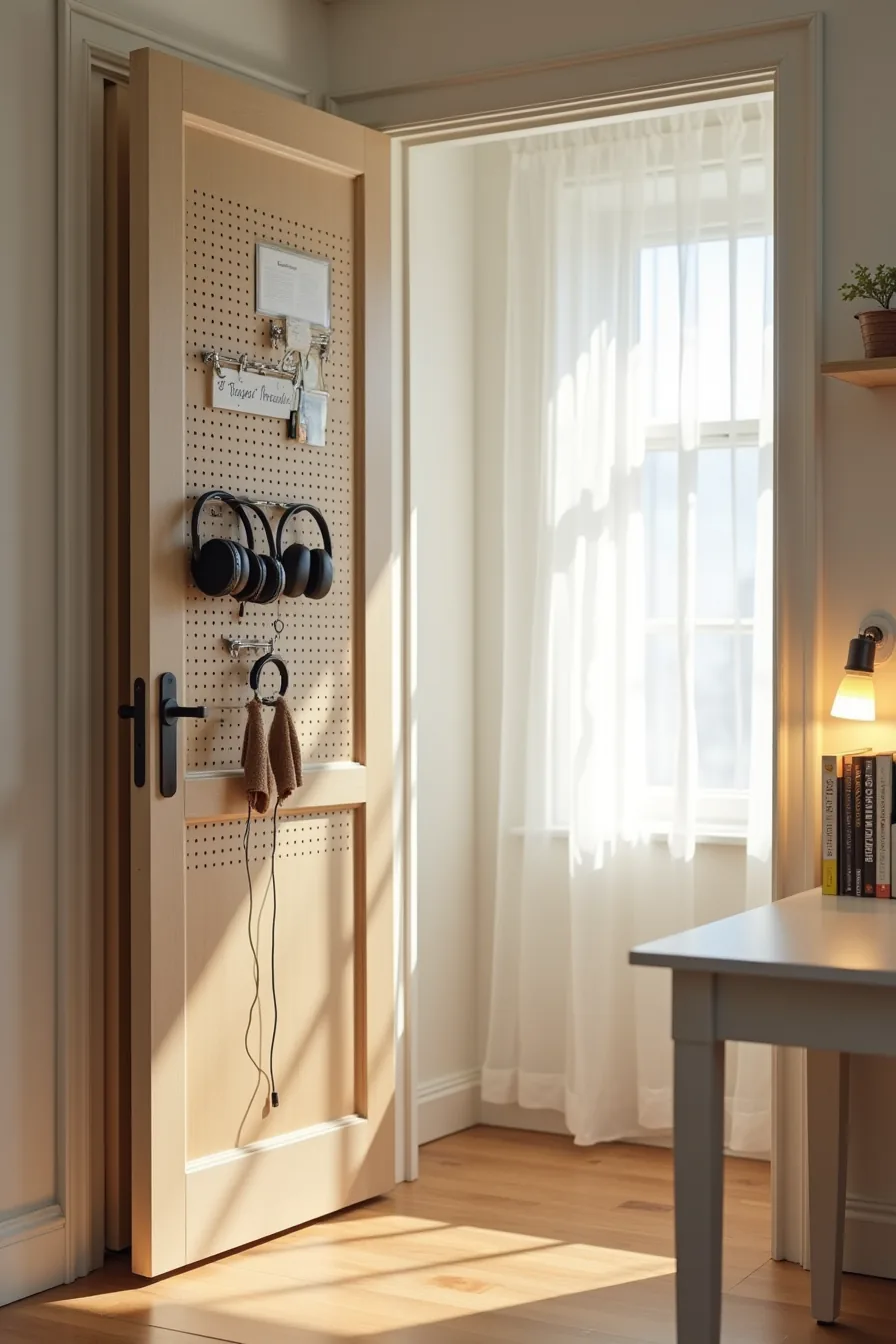
The over-door organizer here holds 24 clear pockets, each sized to fit a standard 8.5×11-inch legal pad flat or a box of 100 paperclips upright. This works because you’re exploiting a dead vertical surface without sacrificing floor space, ideal for a renter, since the unit hangs from the door frame with no drilling. Most over-door hooks support 20–35 pounds when evenly distributed, so keep heavy staplers or hole punches on lower shelves, not the top row.
The pegboard section uses ¼-inch perforated hardboard mounted with 1.5-inch screws into wall studs, no anchors, since drywall alone won’t hold repeated pull-and-replace motion from headphones and coiled cables. Metal hooks rated for 5–10 pounds each keep frequently used items visible at eye level. The wall-mounted wire basket, attached with two toggle bolts rated for 50 pounds, captures loose chargers you’d otherwise dig for.
Reproduction cost: roughly $45–$90 total for materials, and it takes 30–45 minutes with a stud finder and drill. Skip this route if your closet walls have plaster or metal studs, which complicate anchoring.
Common Mistakes and How to Avoid Them
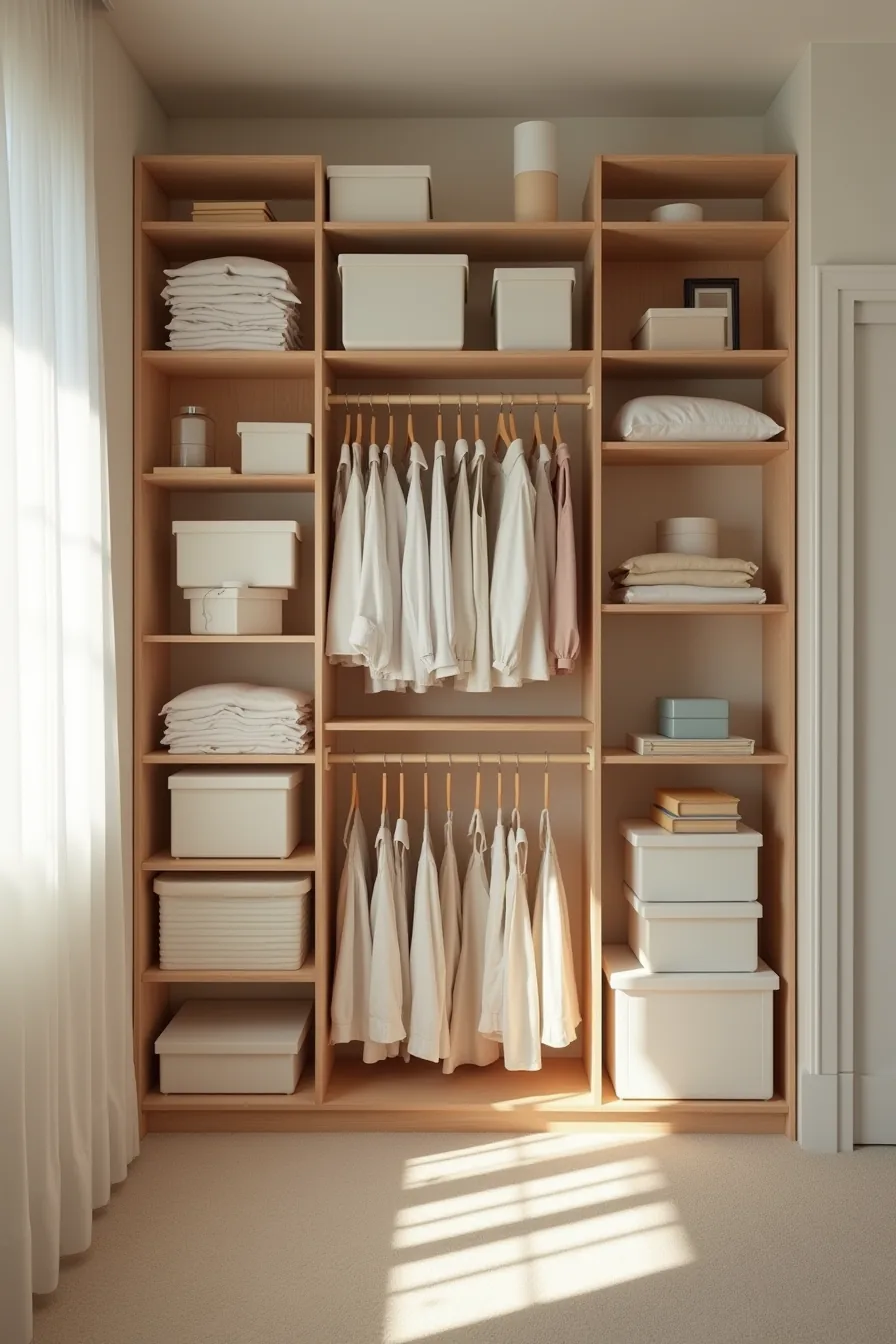
The most frequent errors surface when you prioritize appearance over function. Opaque boxes stacked unevenly hide inventory and force you to pull every container down to locate a single file. Choose clear bins or label each opaque box on two sides so you can identify contents from any angle.
Blocking the closet rod leaves hanging items inaccessible and causes creases where garments press against shelving. Measure your rod’s clearance before installing anything above it, you need at least 6 inches between the rod and the bottom of any shelf above. If you’re storing long coats or dresses, that clearance requirement jumps to 12–14 inches.
Items stored against a vent opening restrict airflow, which can overheat electronics and encourage mildew on paper goods. Keep a 4–6 inch clearance around any HVAC register. Overloaded shelves sag visibly when you exceed their rated capacity, most wire shelving holds 40–60 pounds per linear foot, while plastic units handle roughly half that.
Rotate heavy binders to lower shelves and leave the top tiers for lightweight supplies.
What to do first
Empty the closet completely before you buy a single bin or shelf. Sort everything into three piles: keep, relocate, and donate. This reveals your true storage needs and prevents you from purchasing containers that don’t fit your actual workflow.
Measure the interior width, depth, and height of the space while it’s empty. Write these numbers down and bring them with you when shopping. Most affordable closet systems assume at least 24 inches of depth, so verify your dimensions before committing to a layout.
Start with one shelf and one set of containers for your most-used items, then build outward as you confirm what works.
Frequently Asked Questions
What is the minimum closet width needed for office closet organization ideas to work?
A 24-inch-wide closet works for a compact desk setup. For a full workstation with chair clearance and shelving, plan on at least 36 inches. Narrower spaces suit standing desks or supply storage only.
Can I use office closet organization ideas in a rented apartment without damaging walls?
Yes. Use tension rods, freestanding shelving units, and adhesive hooks rated for your wall type. Avoid drilling by choosing furniture-based storage that stands independently. Command strips work for lightweight items but remove carefully to prevent paint damage.
How do I choose between shelving and drawers for office supplies in a small closet?
Choose drawers for small, frequently used items like pens and paper clips. Choose open shelving for bulky supplies, binders, and equipment you need to see at a glance. In tight spaces, combine both: one drawer unit plus two open shelves.
What is the typical cost difference between budget bins and custom built-in office closet organization?
Budget bins and freestanding shelving typically run $50–$200 total. Custom built-ins usually cost $1,500–$5,000 depending on materials, labor, and closet size. The gap narrows if you install prefabricated modular systems yourself, which typically land between $300 and $800.