The coat closet is the first thing you and your guests see when you walk through the front door, yet it’s usually the most chaotic square footage in the house. The fix isn’t buying more bins; it’s rethinking the layout to match how you actually enter and exit. Below are six distinct systems that range from a $15 tension-rod hack to a built-in overhaul, each with clear sizing rules, material choices, and the specific household type it serves best.
Key takeaways
- Match the system to your household size: hook-and-shelf suits 1-2 people who grab daily coats, while cubbies with labeled bins handle 4+ members by giving each person a dedicated drop zone.
- Tiered rods nearly double hanging capacity in a 24-30 inch deep closet, but measure your ceiling height first, you need at least 80 inches to fit two rods without crowding long coats.
- Sliding door conversions cost less than full built-ins (typically $200-600 in materials) and work best for renters since they require no permanent wall changes, just a track kit and interior dividers you can remove.
- Vacuum storage bags are the cheapest seasonal fix at $10-20 each, but only worth it if you’ve attic, basement, or high-shelf space, they compress wool and down items by about 50% but need 6-8 weeks of flat storage to hold the seal.
Hook-and-Shelf Systems for Quick Access
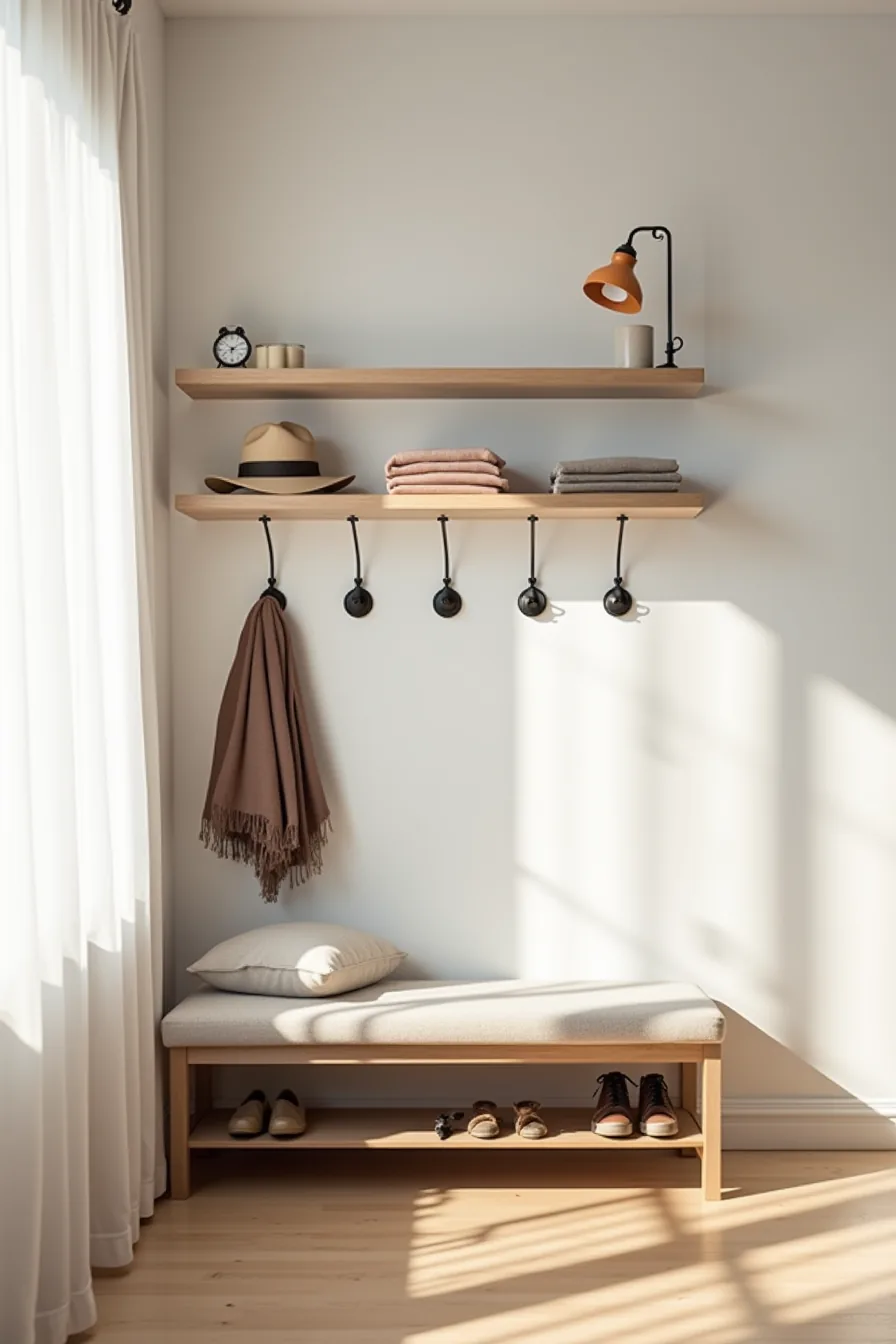
A wall-mounted hook-and-shelf system turns a narrow coat closet into a grab-and-go station. The setup pairs five black metal hooks in a horizontal line at shoulder height with three floating wooden shelves above them. Folded scarves and hats sit on the shelves, while a compact bench below the hooks keeps shoes off the floor.
This arrangement suits renters because it requires only a drill and a level, no permanent cabinetry or structural changes.
The hooks handle daily items like jackets and bags, while the shelves give you a spot for accessories you reach for less often. You need roughly 12–16 inches of clear depth for the bench, so measure your closet before committing. Opt for hooks rated for 10–20 pounds each; lightweight plastic hooks will sag under a heavy winter coat.
The wood shelves show dust quickly, so expect to wipe them down monthly. This is the budget route among coat closet organization ideas, expect to spend $50–$150 total depending on hook quality and shelf wood grade.
Tiered Hanging Rods for Layered Storage
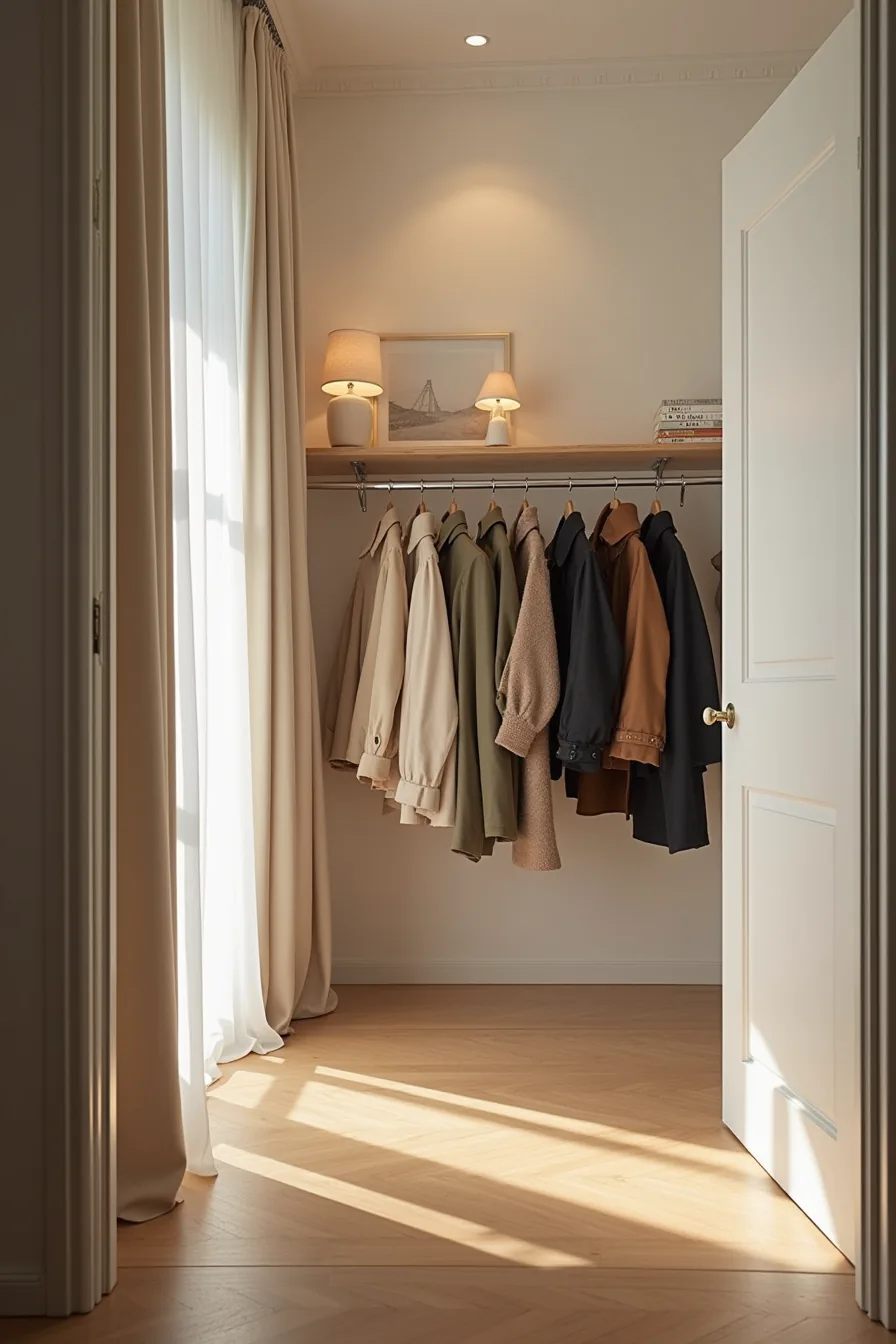
Stacking three horizontal rods at different heights converts vertical dead space into usable capacity without widening the closet’s footprint. The top rod holds off-season or rarely worn jackets, the middle one stores everyday coats, and the lower rod accommodates children’s outerwear or short blazers. Metal rail supports anchor each rod to the wall studs, so the system carries substantial weight without bowing.
This layout suits households with four or more people who each own multiple coats, or anyone with a deep but narrow closet where floor space is too tight for a wardrobe rack. You need at least 60 inches of interior height to fit three rods with 12–14 inches of clearance between them; shorter closets should stick to two tiers. Expect to spend $80–200 on rods, flanges, and mounting hardware, making this the long-term investment route among coat closet organization ideas because the metal components last decades.
Keep the bottom rod at 40–48 inches from the floor so long coats don’t drag. These Best Coat Closet Organization Ideas examples work best when you group garments by length, reserve the lowest tier for items under 30 inches long.
Cubbies and Labeled Bins for Family Households
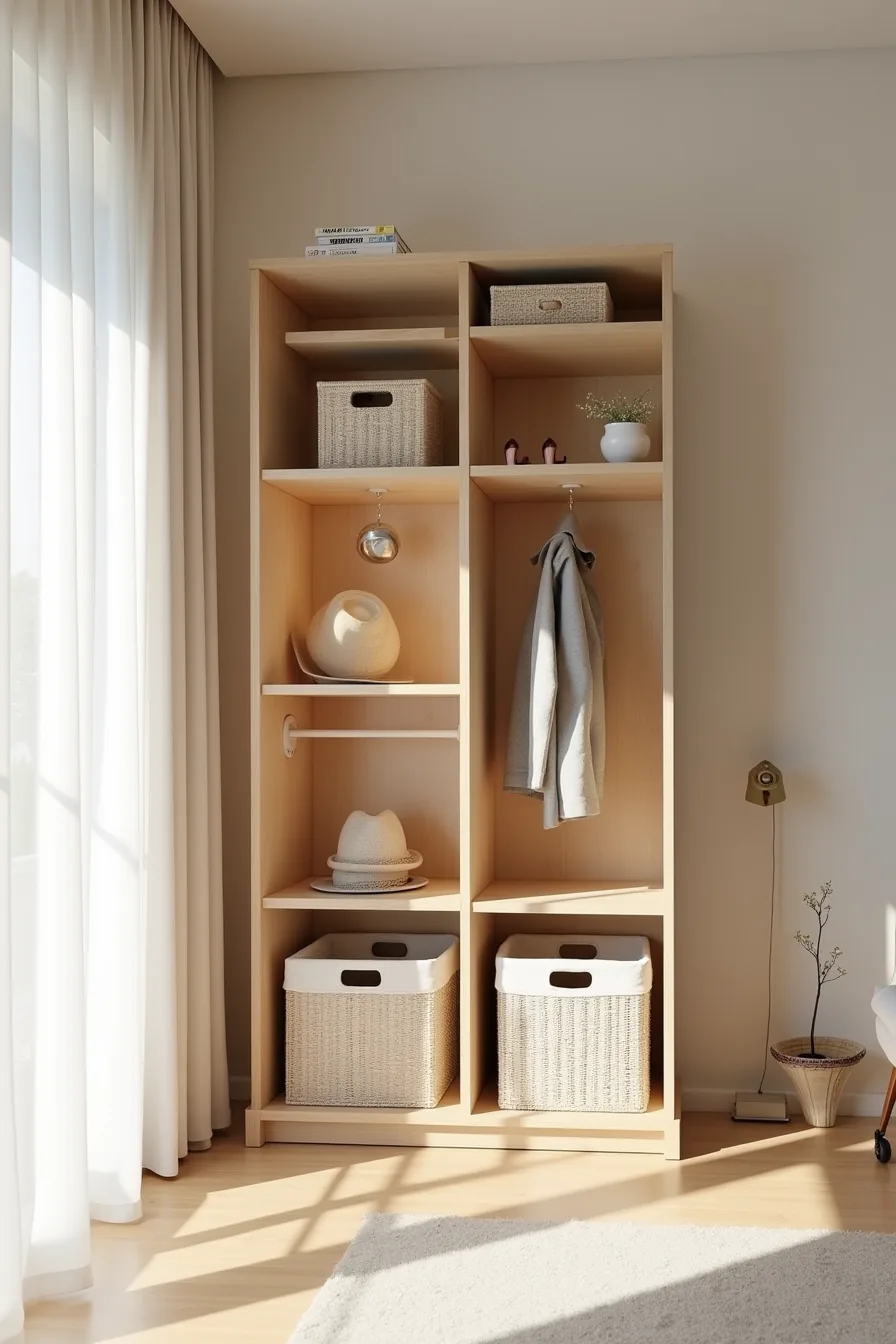
A wall-mounted wooden cubby unit with six square compartments gives each person a designated drop zone, which eliminates the morning scramble for misplaced scarves and gloves. The visible setup pairs woven baskets and fabric bins in neutral tones, while one open cubby holds a coat and another catches a hat, proof that you don’t need doors or drawers to keep things tidy. Assign one bin per family member and label it with a name or a simple icon; children as young as three can match their belongings to the correct slot.
This approach suits busy households with school-age kids, shared entryways, or anyone who struggles with “gateway clutter” spreading into the living room. Fabric bins cost $5–15 each, and a six-cubby wooden unit runs $60–150, making it the budget route among coat closet organization ideas. Keep bins shallow enough that items stay visible, deeper bins invite dumping and become black holes.
Wipe wooden frames monthly with a dry cloth; wash fabric liners seasonally to control dust and pet hair. This is one of the coat closet organization ideas mistakes to avoid: assigning too few cubbies per person, which forces overflow back onto hooks and the floor.
Sliding Door Closet Conversion with Interior Dividers
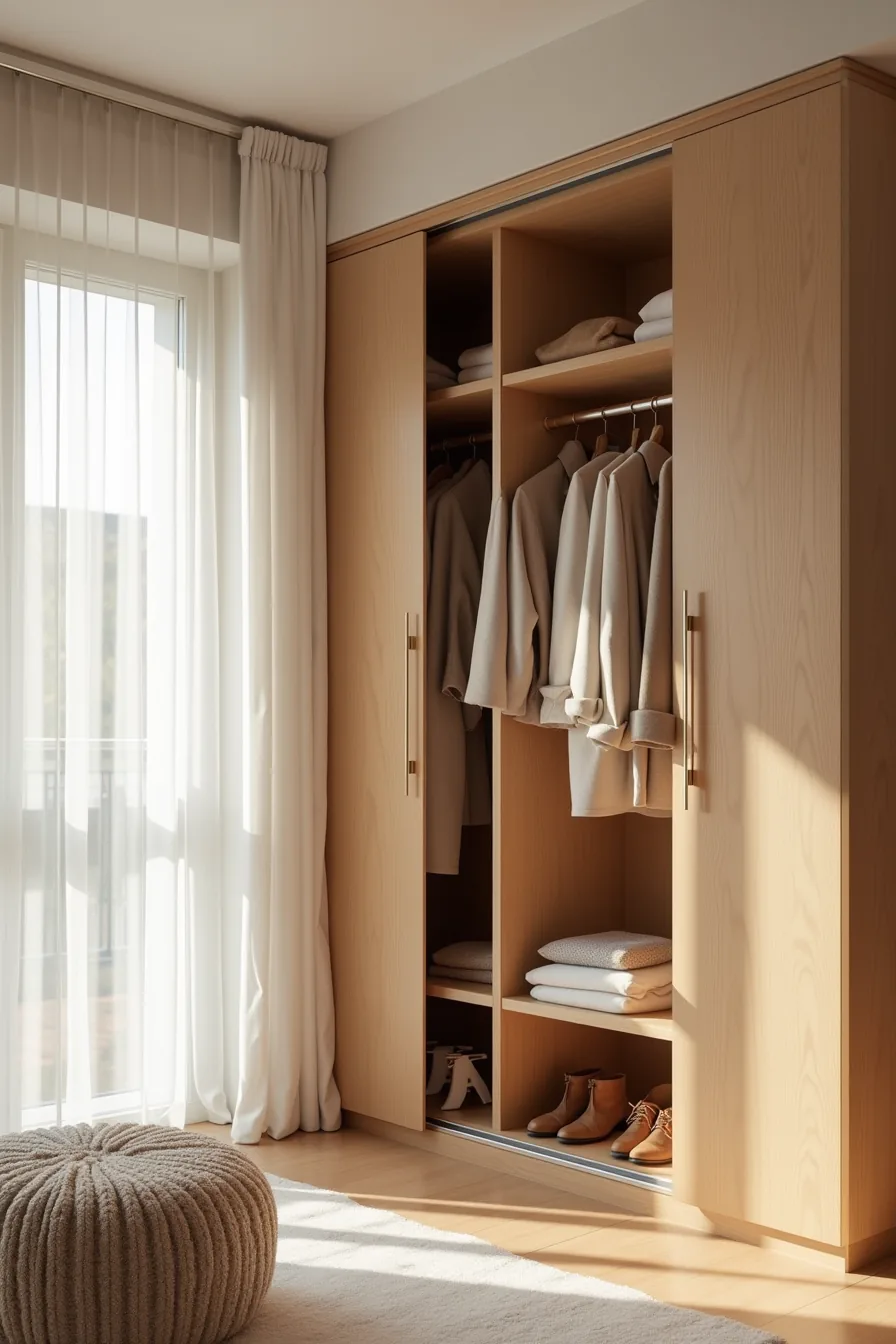
Replacing hinged doors with a sliding track system transforms a standard 24-inch-deep closet into a space you can actually see into, since both sides become reachable without a door swing eating into your hallway. The interior here uses vertical wooden dividers to split the run into three distinct sections, with a coat rod between each pair, so instead of one long rod where everyone’s jackets compress together, each family member gets a defined rail segment that keeps their outerwear visibly separated.
This setup suits medium-depth closets (22–28 inches) where double hanging isn’t feasible but a single rod still works, and it shines for couples who share one reach-in and want clear boundaries. A sliding glass door costs $200–400 and requires a ceiling track installation, making this a mid-range renter-friendly route if you keep the original hardware and store it, though you’ll need landlord approval for track mounting. Add a lower shelf for shoe storage and keep it at 6–8 inches off the floor to maintain airflow and ease of sweeping.
Adjustable dividers, priced $30–60 for a three-section kit, let you rebalance sections as seasons change; wipe glass monthly with a streak-free cleaner and check track rollers every six months for debris buildup.
Built-In Cabinetry with Coat Rods and Drawers
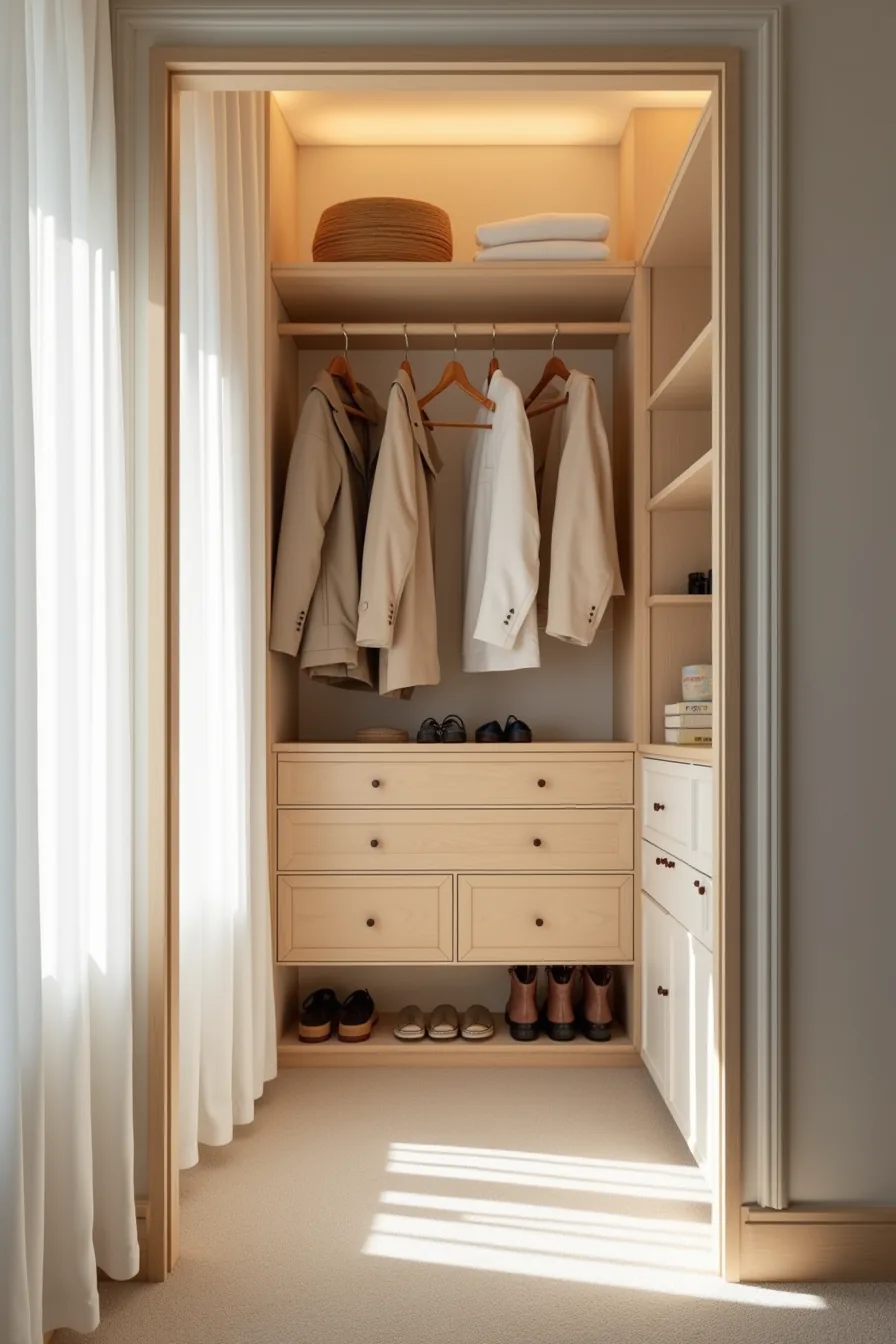
A custom cabinet system turns your coat closet into a permanent piece of furniture, with the upper rod holding your daily coats while closed wooden drawers below capture gloves, scarves, and hats that would otherwise become a shelf-clutter problem. The shoe rack at the base keeps footwear on the floor plane where it belongs, and the light wood or white cabinet frame visually recedes, so the unit doesn’t shrink a narrow hallway even at full depth.
This is the splurge route within budget vs. Splurge coat closet organization ideas, and it suits households where three or more people cycle through the same entry daily. Semi-custom systems run roughly $1,500–4,000 installed depending on footprint and drawer count, and they’re a permanent modification, you’re not taking this with you when you move. Plan drawer depths of 16–20 inches to accommodate bulky knitwear, and choose soft-close hardware rated for 75–100 pounds per drawer.
Wipe wood surfaces monthly with a damp cloth and re-tighten hinge screws every six months; the payoff is that your coats, shoes, and accessories all live in one fixed, predictable system that never needs seasonal reorganization.
Seasonal Rotation with Vacuum Storage Bags
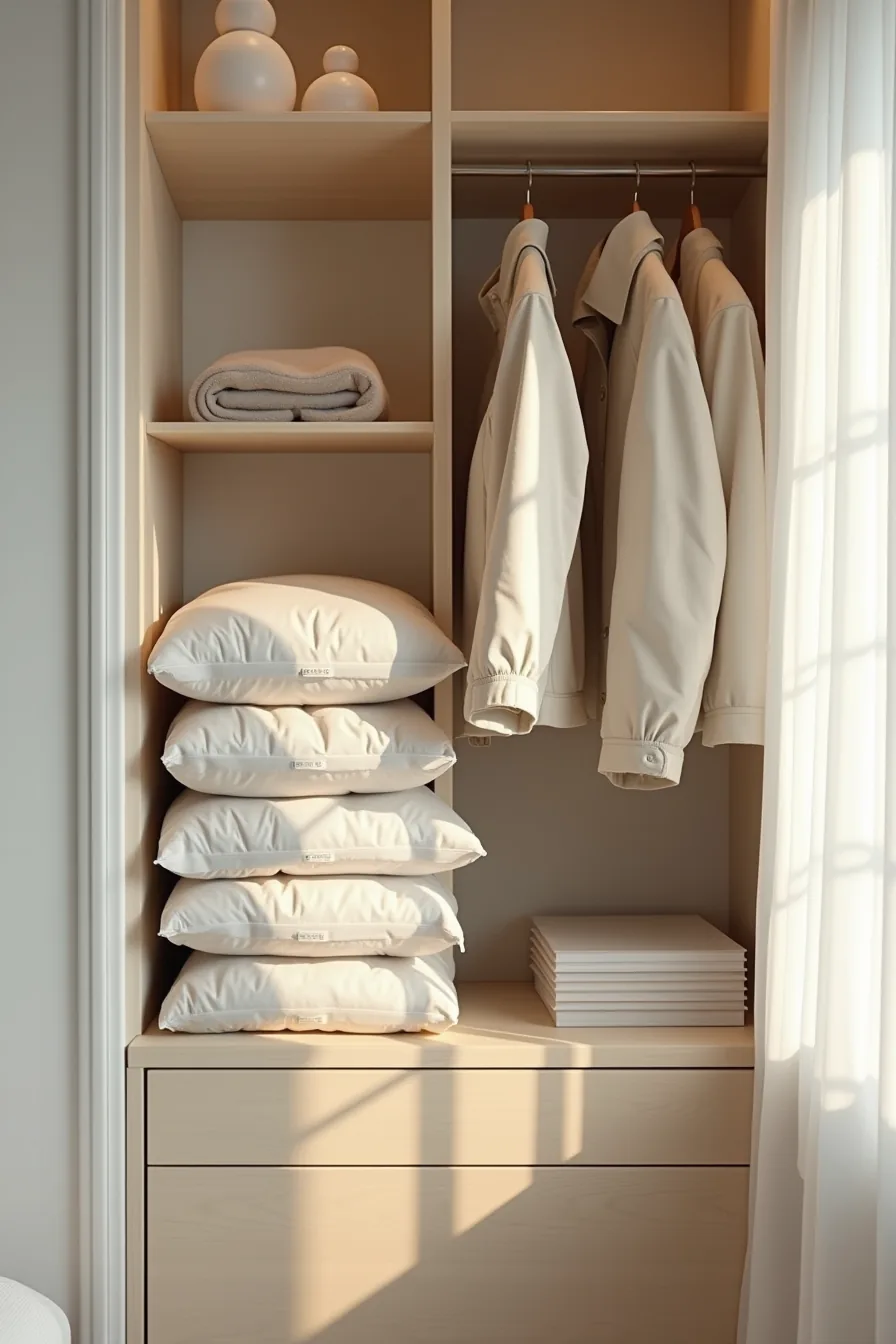
Compressed storage bags are the cheapest high-impact change you can make to a coat closet, typically running $20–40 for a set of five. The setup here shows the payoff: five flat bags stacked on the shelf, each holding folded winter coats, while the rod above carries only light jackets for the current season. That single swap cuts visible bulk by roughly 60–75% and opens up the lower shelf for boots or a small bin of daily-use accessories.
This approach suits anyone with limited closet depth or a single rod, since it doesn’t require new hardware or structural changes. You’ll need a vacuum with a hose attachment and about 15 minutes per bag to seal and flatten. Expect to re-compress bags every fall and spring when you rotate; a hand pump version takes longer but works if you lack a vacuum.
For renters, this is the ideal route, it’s fully reversible and leaves no marks.
Your Decision Checklist
Before you buy a single bin or hook, measure your closet’s width, depth, and usable height. That single number determines whether you need a double rod, an over-door rack, or a freestanding armoire.
Match your system to your habits. If you grab coats daily, prioritize open hooks at eye level over folded storage. If you’re renting, skip permanent fixtures and use tension rods, adhesive hooks, and freestanding units you can remove without patching holes.
For homeowners, built-in shelving and a bench with boot storage offer the best return on investment.
Your next step: take five minutes to empty the closet and sort items into three piles, keep, relocate, and donate. You’ll instantly see what storage gaps exist, and you can then choose the one solution that addresses your most frequent frustration first.
Frequently Asked Questions
How do I organize a coat closet in a small apartment?
Prioritize vertical space: install a single high rod for adult coats and a lower tier of hooks for bags and scarves. Keep the floor clear with a slim, over-door shoe rack, and store off-season items in a vacuum bag on the top shelf.
What is the best way to store winter coats to prevent wrinkles?
Hang heavy coats on wide, padded hangers that support the shoulders, leaving at least one inch of space between garments. For down or wool coats, use breathable fabric garment bags rather than plastic, which traps moisture and can cause mildew.
Can I install coat closet organization systems as a renter?
Yes, use tension rods, freestanding shelving units, and over-door hooks, all of which require no drilling. For a more permanent look, use removable adhesive hooks rated for at least 10 pounds, but test them on a small area first, as they can peel paint on older walls.
How many coats should fit in a standard coat closet?
A standard single-rod closet (24 inches wide by 24 inches deep) comfortably holds 6 to 8 adult coats on hangers. If you add a second rod above the first, you can double that capacity, but reserve the lower rod for shorter items like jackets and blazers to avoid dragging on the floor.