
Your hallway closet is the hardest-working storage in your home, yet most organization advice treats it as a miniature bedroom wardrobe, which is why it fails. A hallway closet must absorb daily drop-offs, seasonal overflow, and guest gear, all while staying accessible in a high-traffic zone. The six strategies that follow diverge sharply in cost, footprint, and renter-friendliness, so you can match one to your actual constraints rather than forcing a generic system into a space that demands its own logic.
Key takeaways
- Vertical shelving maximizes narrow hallways by using floor-to-ceiling columns, but measure your ceiling height first and keep bulky items on lower shelves to avoid strain.
- Double-hanging rods nearly double your closet’s hanging capacity, yet they suit only spaces at least 60 inches tall and work best for shirts, jackets, and folded pants.
- Clear bins with labels cut search time dramatically, but you must commit to a quarterly re-labeling routine or the system collapses into chaos.
- Door-mounted storage adds instant utility without floor space, but check door weight limits and hinge strength before loading it with heavy shoes or cleaning supplies.
Vertical Shelving for Narrow Spaces
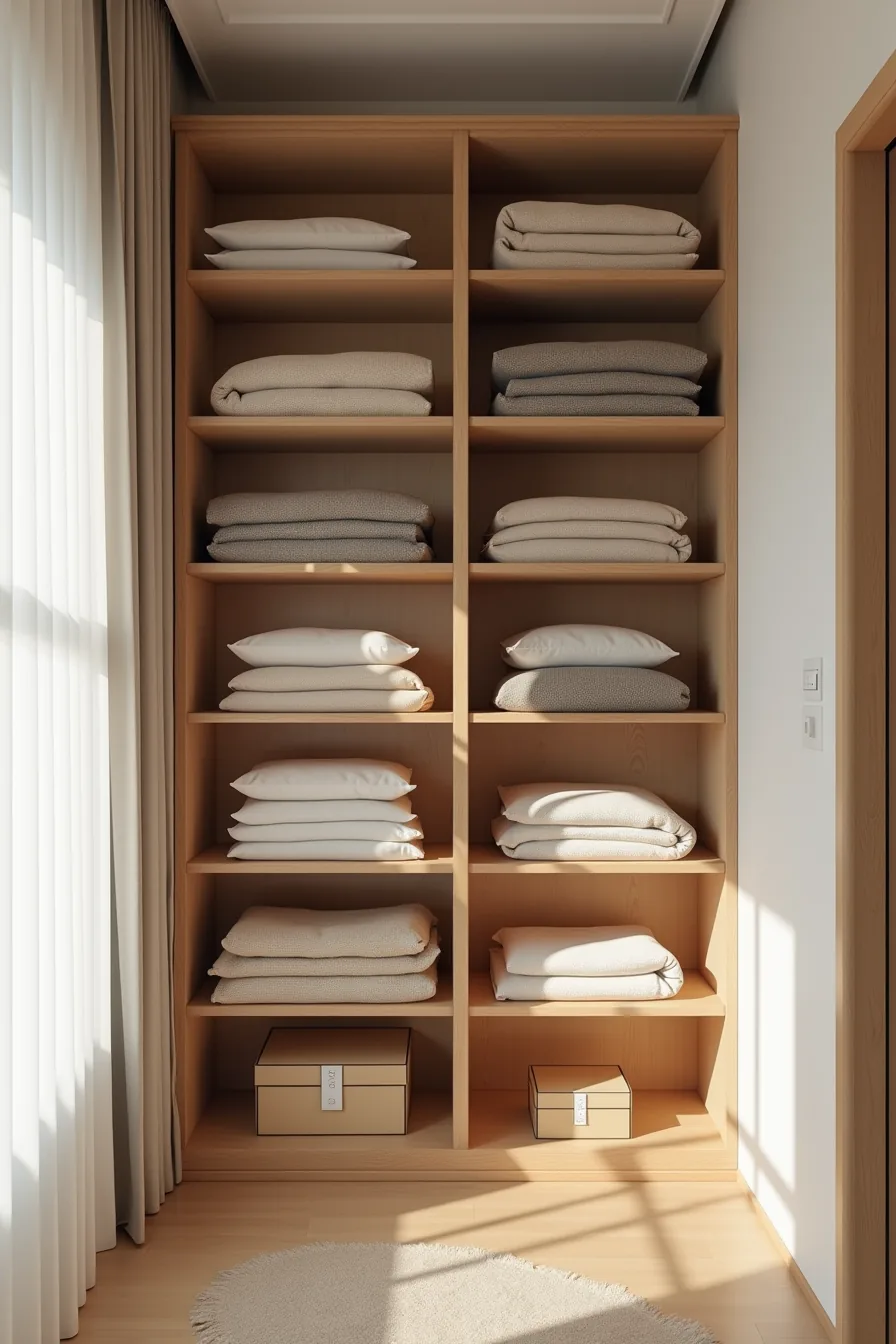
When your hallway closet is only 24–30 inches deep, floor-to-ceiling shelving transforms dead vertical air into your most valuable storage asset. This setup works because it distributes weight across wall studs rather than a single freestanding frame, so you can store heavy sweaters and boxes without sagging. You’ll need shelves cut to fit the closet’s interior width minus about 1 inch for clearance, mounted on adjustable brackets anchored into studs every 16 inches.
The example here uses solid wood shelves, pine or birch plywood at ¾-inch thickness handles typical loads up to 40–50 pounds per shelf when properly supported. Stacked sweaters belong on the top shelf where you reach least often; rolled textiles and small storage boxes sit mid-height for easy grab-and-go access. This arrangement suits renters only if you use tension rod shelving or freestanding units, since drilling into walls requires landlord approval.
For homeowners, it’s a low-cost, high-capacity upgrade that keeps coats, bags, and seasonal gear visible and within arm’s reach.
Double-Hanging Rod Systems
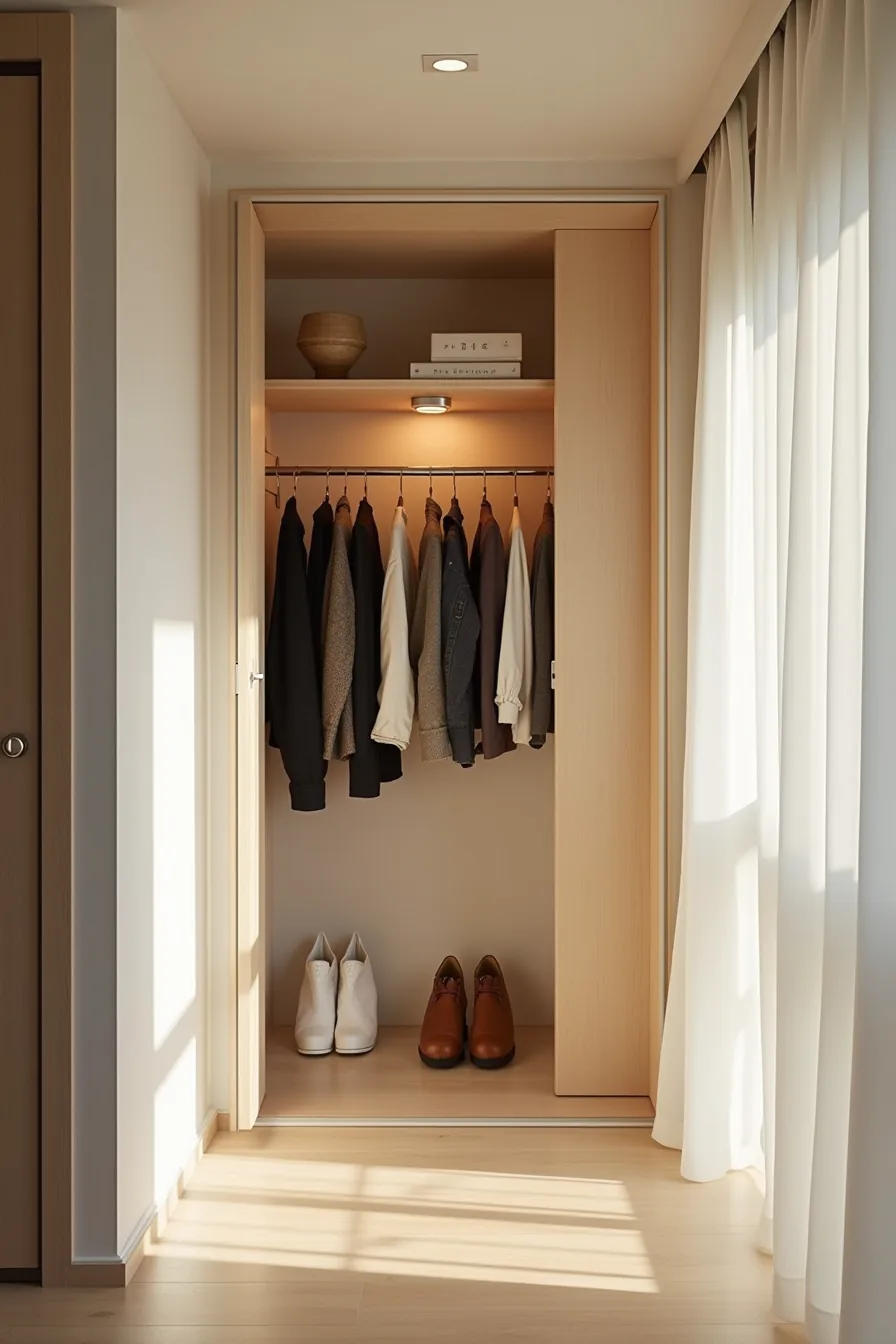
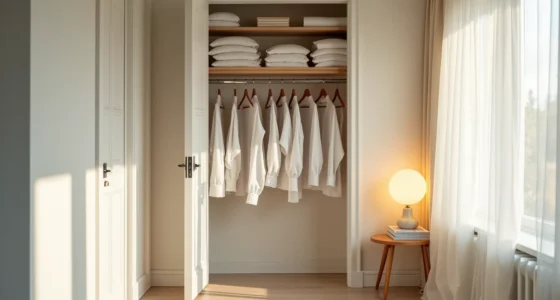
Stacking two rods vertically doubles your hanging capacity without adding an inch of floor space, making it one of the most effective Best Hallway Closet Organization Ideas examples for medium-depth closets. The upper rod mounts at the standard 60–66 inches from the floor, while the lower rod sits roughly 36–42 inches below it, the exact gap depends on what you hang. Jackets and coats on the upper rod need 30–36 inches of clearance below the rod; shorter garments like shirts and folded trousers need only 24–30 inches, so measure your longest hanging item before setting the lower rod height.
You’ll see this setup holding jackets on the upper rod and garments on the lower, which suits households that store off-season clothing or bulkier outerwear in a hallway closet. The lower rod’s reduced clearance means you’re limited to shorter items there, long coats or dresses simply won’t fit, so reserve this layout for shirts, blouses, and pants hung by cuffs. Install both rods into wall studs using flanged brackets rated for at least 50 pounds per rod, and verify your closet depth exceeds 24 inches so hangers don’t scrape the back wall.
This system costs roughly $40–$80 in materials and takes under an hour to install, but it’s a permanent fixture, renters should opt for a tension-mounted or freestanding double rod instead.
Pull-Out Drawers and Baskets
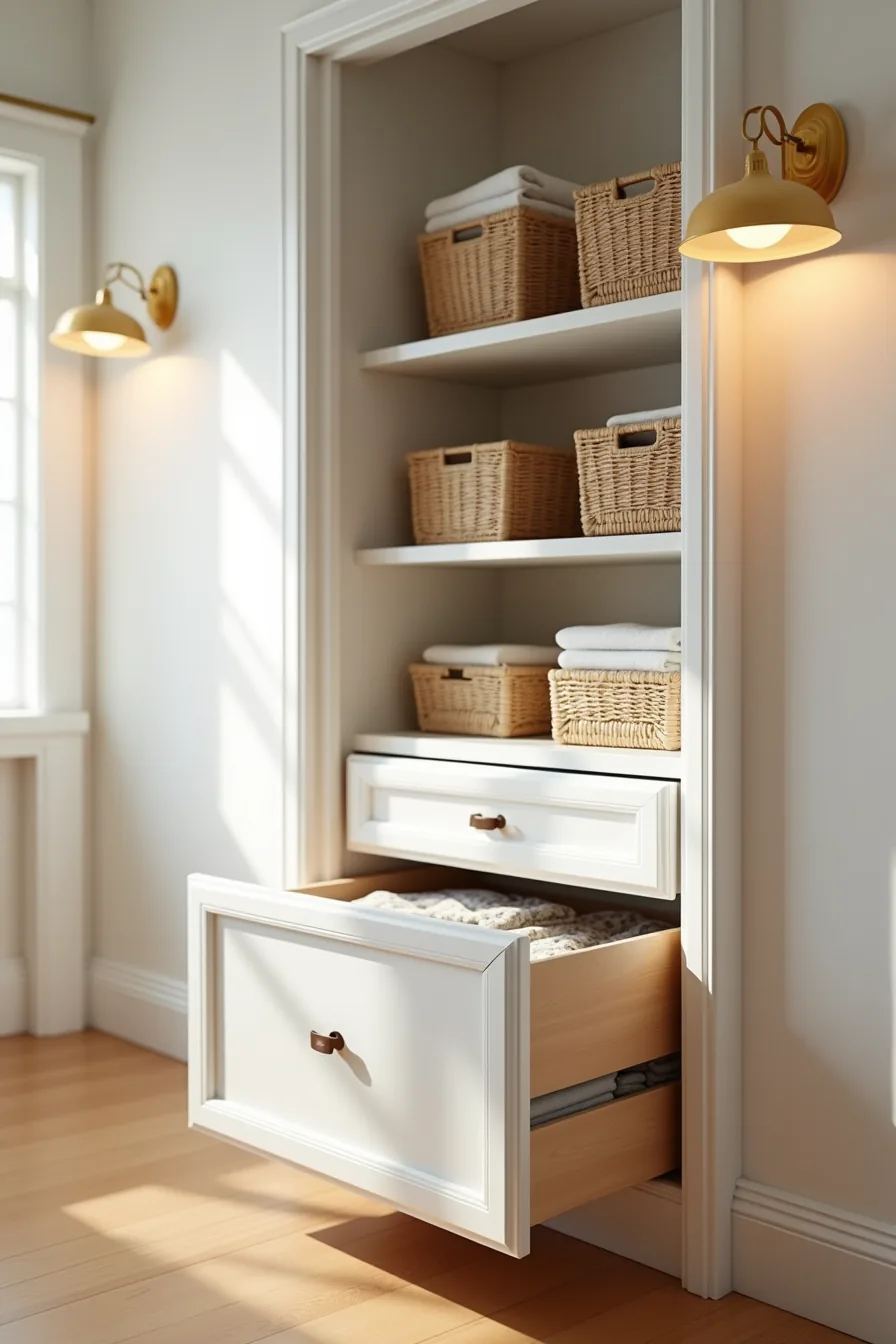
Sliding storage solves the classic hallway closet problem: deep shelves that swallow small items. A single pull-out drawer on full-extension metal slides brings folded sweaters, scarves, or hats into full view, no more kneeling down and groping behind stacked boxes. The woven baskets stacked on shelves above the drawer in this setup keep the lighter, everyday items like gloves or dog leashes within easy reach while the drawer handles bulkier folded goods.
This layout particularly suits households with young children or anyone with limited bending mobility, since the drawer glides out to waist height rather than requiring a deep squat. The key trade-off: quality slides cost real money. A contractor-installed plywood drawer with soft-close runners runs $150–$300, making it the splurge end of Hallway Closet Organization Ideas.
The budget vs. Splurge Hallway Closet Organization Ideas decision here hinges on permanence, renters should skip permanent drawer installation entirely and instead use wire or fabric pull-out baskets that sit on existing shelves and slide forward on their own. Those run $15–$40 each, require zero tools, and move with you when you leave. For either route, limit drawer depth to 18–22 inches so you never lose items against the back wall, and stick to one drawer per closet, multiple stacked drawers turn the hallway into a bottleneck when opened simultaneously.
Clear Bins with Labeling
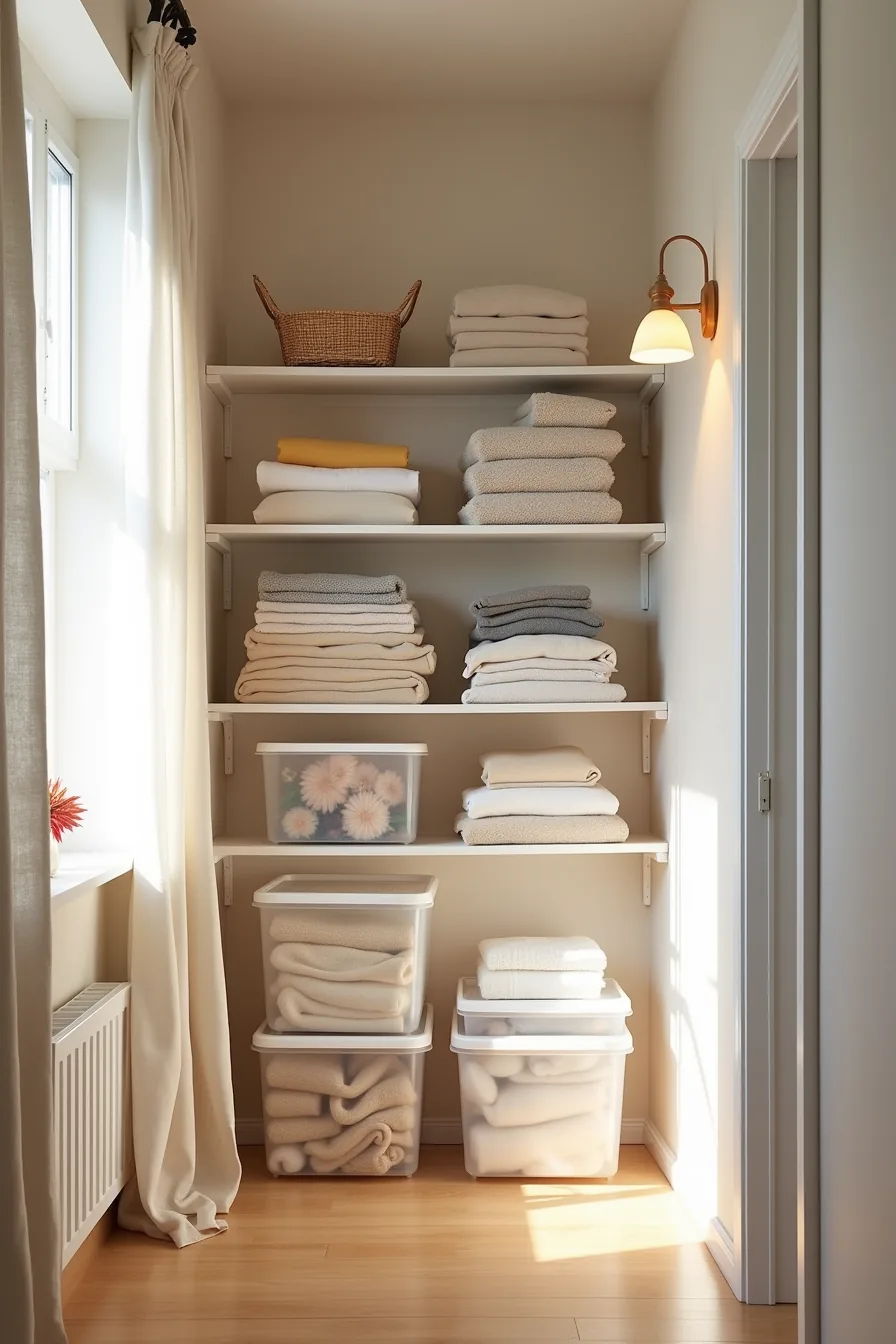
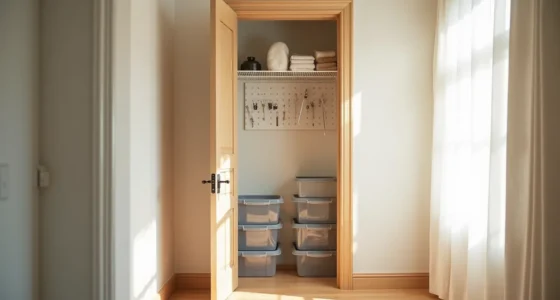
Transparent containers eliminate the guessing game entirely, you see the gray wool coat in the clear bin labeled “Winter Coats” before you even pull the shelf forward. Stack bins of varied sizes so the largest hold bulky seasonal linens and the smaller ones corral accessories like belts and scarves. Label each bin on the front face with a label maker or chalk tag, not on the lid, since stacked bins hide their tops.
This system suits budget-conscious households and renters alike: clear bins run $8–$20 apiece at big-box retailers, require no tools, and reconfigure as your storage needs shift. The catch is discipline, unlabeled or mixed-content bins undo the visibility advantage within weeks, so audit each container every season and re-label the moment contents change. Match bin depth to your shelf depth (most hallway closets have 16–20-inch shelves) so nothing overhangs the edge or blocks the door swing.
Avoid clear bins for items you rarely touch, like holiday décor, those belong in opaque totes that hide visual clutter, which is one of the common Hallway Closet Organization Ideas mistakes to avoid: labeling everything transparently when some contents simply look messy.
Door-Mounted Storage
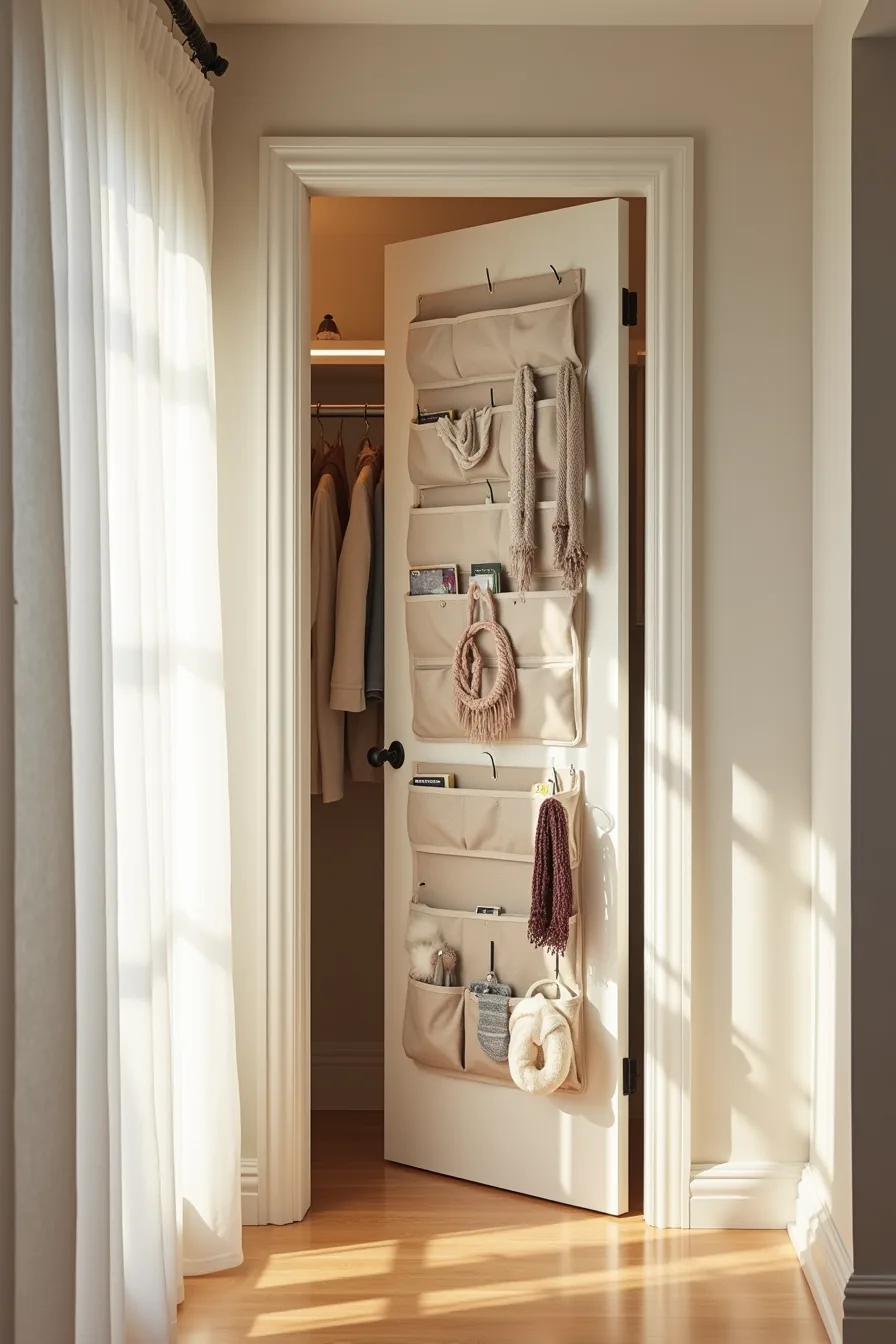
The inside of your closet door is prime real estate that most layouts waste. An over-the-door organizer with clear pockets keeps scarves and belts visible and grab-and-go accessible, while slim wire shelves bolted to the door hold folded sweaters or daily-use bags. Hooks at the top catch items you reach for weekly, umbrellas, a reusable tote, rather than daily, so the door doesn’t feel overloaded every time you open it.
This route suits renters because most over-the-door organizers hang without tools or damage, though heavy wire shelves require drilling and patching when you leave. The trade-off is visual clutter: everything on the door is on display, so limit it to items you use often and edit monthly. Check door clearance before buying, organizers add 2–4 inches of depth, which can block access to shelves behind it if your closet is narrower than 24 inches.
Match hook height to your tallest user so long coats don’t drag on the floor.
Custom Modular Units
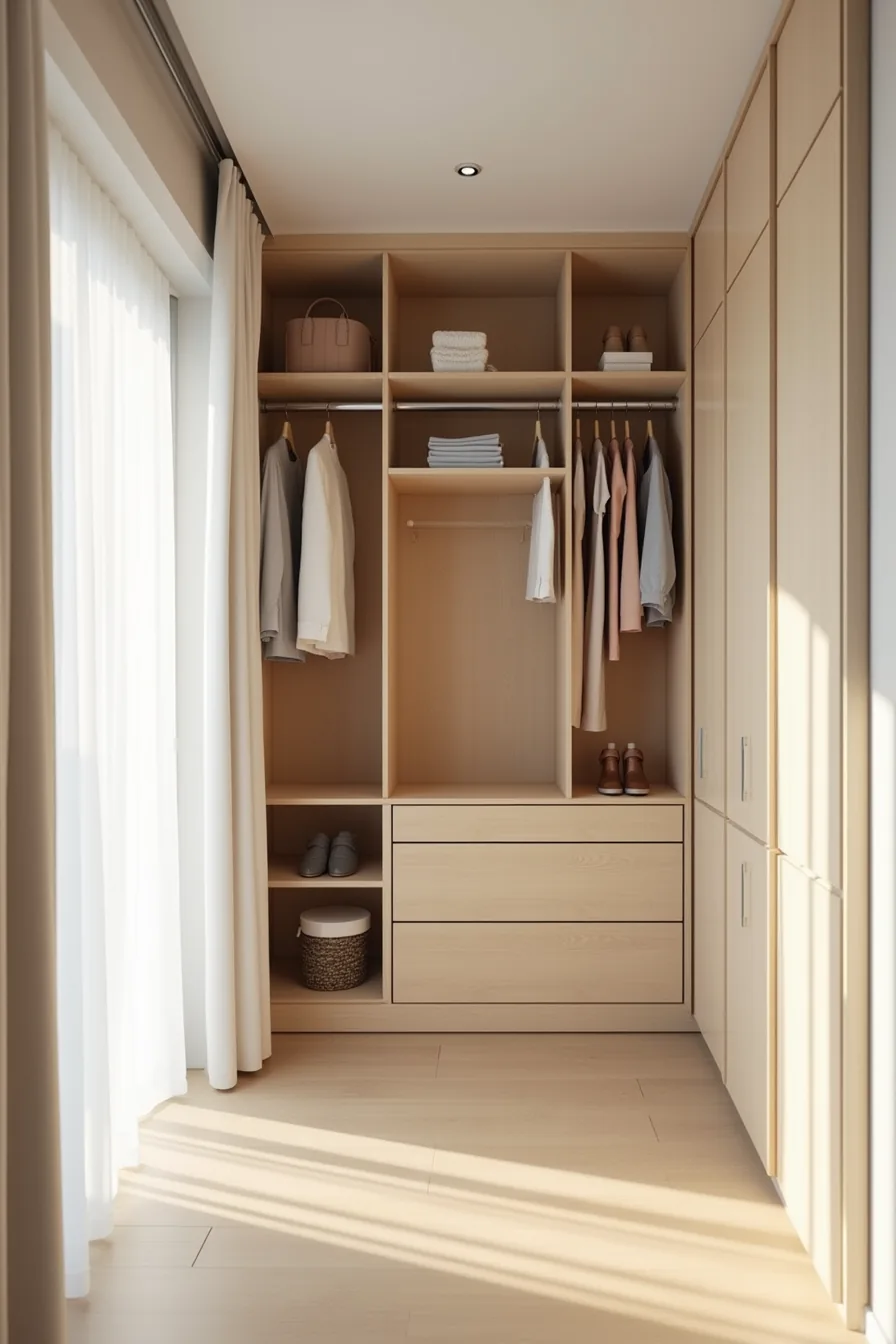
When your hallway closet needs to hold gear for the whole household and you plan to stay put for several years, a fitted modular system beats DIY shelving on nearly every measure. Professionally installed units with integrated drawers, hanging rods, and adjustable shelving components use every inch of vertical space, including awkward corners and sloped ceilings that standard shelving can’t address. Expect a lead time of 2–6 weeks from measurement to installation, with costs that typically run 3–10 times what you would spend on a wire shelving kit for the same footprint.
The payoff is durability and configurability. Components from most major systems (Elfa, California Closets, IKEA Pax) can be repositioned later, so the unit adapts as your storage needs shift. This suits homeowners who want a permanent solution and are willing to coordinate with an installer, and it works across all closet sizes, just scale the number of drawers and rods to the space.
Budget for professional installation unless you’re confident with a level and wall anchors, since misaligned tracks will compromise the whole system.
Your Decision Checklist
Before you buy a single bin or hook, measure your closet’s depth, width, and usable height. Compare those numbers against the zones you need, daily shoes, outerwear, or cleaning supplies, and pick one primary function first.
- Budget route: Repurpose sturdy cardboard boxes wrapped in kraft paper; expect to replace them within 12–18 months of heavy use.
- Renter-friendly route: Use freestanding shelving units and tension rods that leave walls untouched; confirm your lease allows removable adhesive hooks.
- Long-term route: Invest in modular drawer systems or custom cabinetry only if you plan to stay 5+ years and your floor is level.
Your next step: empty the closet completely, sort items into three piles (keep, relocate, discard), and measure the keep pile against your planned zones today.
Frequently Asked Questions
How do I organize a hallway closet that’s only 24 inches deep?
Use the back wall for slim wire shelving or over-door racks, then add shallow bins (6–10 inches deep) on upper shelves. Keep bulky items out, this depth suits linens, shoes, and coats, not luggage.
Can I install hallway closet organization systems as a renter without losing my deposit?
Yes, choose tension rods, freestanding shelving units, or adhesive hooks that don’t require drilling. For wall-mounted systems, use removable command strips rated for your shelf weight. Patch any holes before move-out to stay safe.
What’s the difference between wire shelving and solid wood shelves for hallway closets?
Wire shelves cost less, allow airflow, and prevent mildew on shoes, but they sag under heavy loads and leave marks on soft items. Solid wood is sturdier and looks premium, yet costs 2–3 times more and needs sealing against moisture.
How often should I reorganize a hallway closet to prevent clutter buildup?
Do a full reset every 3–4 months, but perform a quick 5-minute sweep monthly, remove items that don’t belong, and donate anything unused since last season. High-traffic households may need a biweekly touch-up.