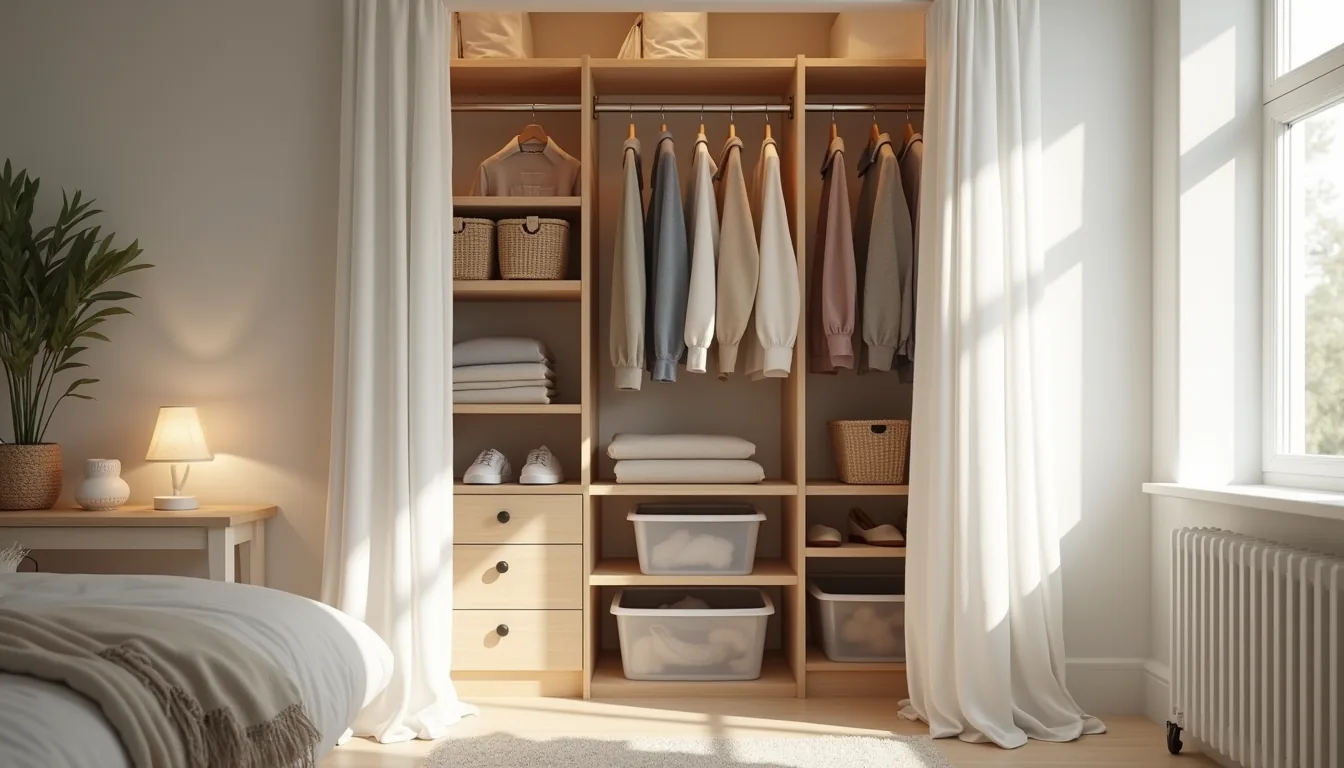

Your closet is the only room in your house you enter with your eyes closed, and organization ideas for the home closet should focus on what your hand finds first, not what the camera sees. That means the best systems prioritize retrieval speed, daily flow, and honest maintenance, not just a perfectly styled shelf. Before you buy another matching bin, you need to decide how much time you’ll actually spend keeping it that way.
The six approaches ahead range from a $30 weekend reset to a built-in renovation, each with the exact trade-offs you’ll live with afterward.
Key takeaways
- Vertical hanging systems double your closet capacity by using double rods or ceiling-mounted racks, but measure your ceiling height first, most standard closets need at least 80 inches for two stacked rods.
- Shelf dividers and stacking trays work best for folded sweaters and jeans, and a set of 4–6 dividers costs $15–$30, making them the cheapest fix for a collapsing pile.
- Drawer dividers and clear bins cut morning search time by segmenting socks, belts, and accessories, but measure drawer depth before buying, most dividers fit 2–4 inch deep drawers only.
- Color-coded zones and labels rely on a consistent system you can maintain in under 5 minutes weekly, so choose a 3-color palette (work, casual, formal) rather than a rainbow to avoid visual chaos.
Vertical Hanging Systems: Maximizing Wall Space
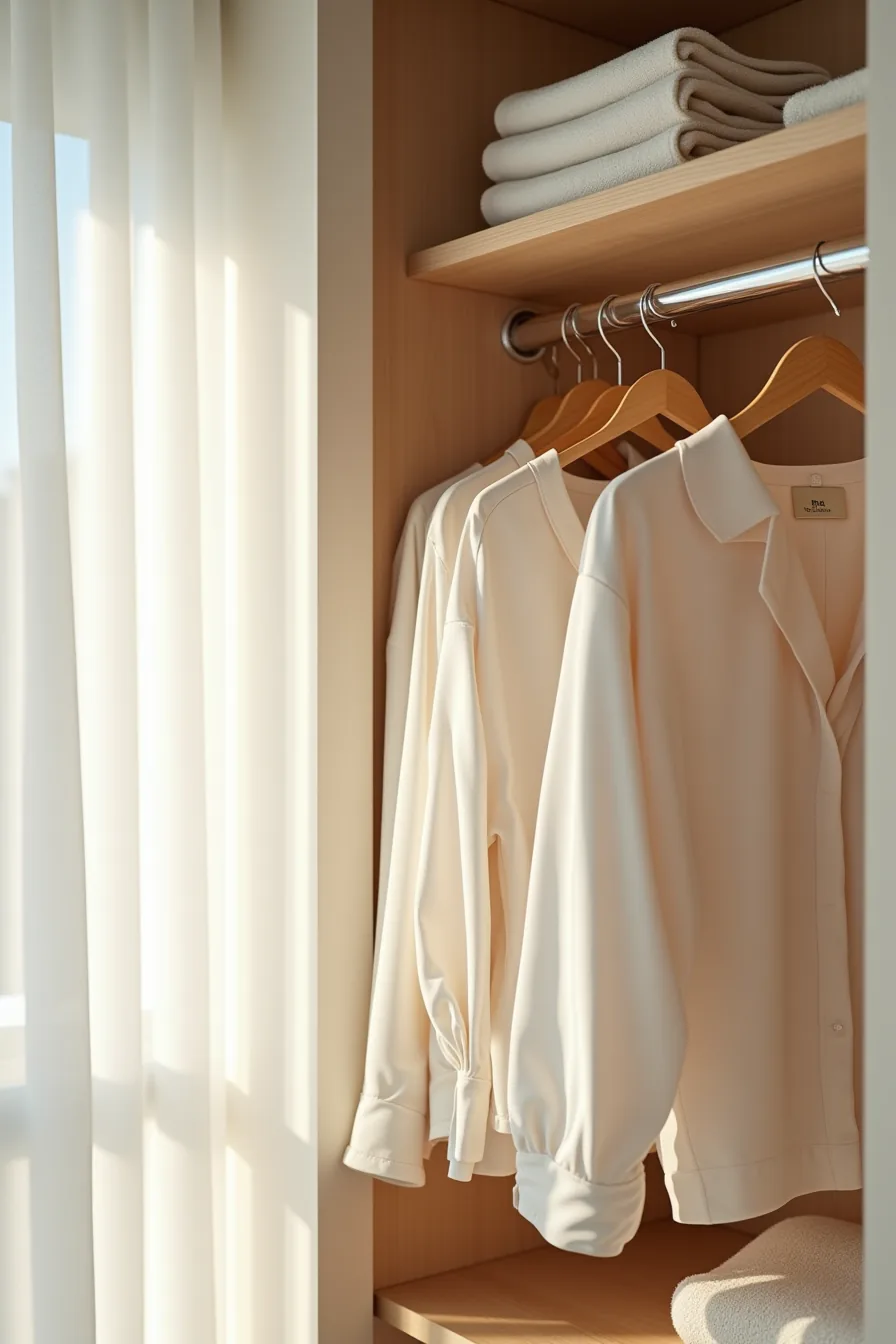
Your wall space is prime real estate, and a double-tier hanger rod is how you claim it. The setup here pairs a fixed wooden rod up top with a chrome double-tier rod mounted below, giving you two hanging levels in the footprint of one. This works because you can layer cascading hangers on the lower rod for blouses and lightweight jackets, while the upper rod holds longer garments that need the full drop.
This system suits medium-to-large closets where you’ve at least 60 inches of clear wall width and a floor-to-rod clearance of 48 inches or more. For a budget route, purchase a tension-mounted tiered rod that requires no drilling, though it will only support 30-40 pounds of clothing. For a permanent solution, a wall-mounted chrome rod costs more but holds 100+ pounds and stays level for years.
Measure your hanging space twice before installing, and leave at least 3 inches between the back wall and the front rod so hangers swing freely without snagging.
Shelf Dividers and Stacking Trays: Containing Folded Items
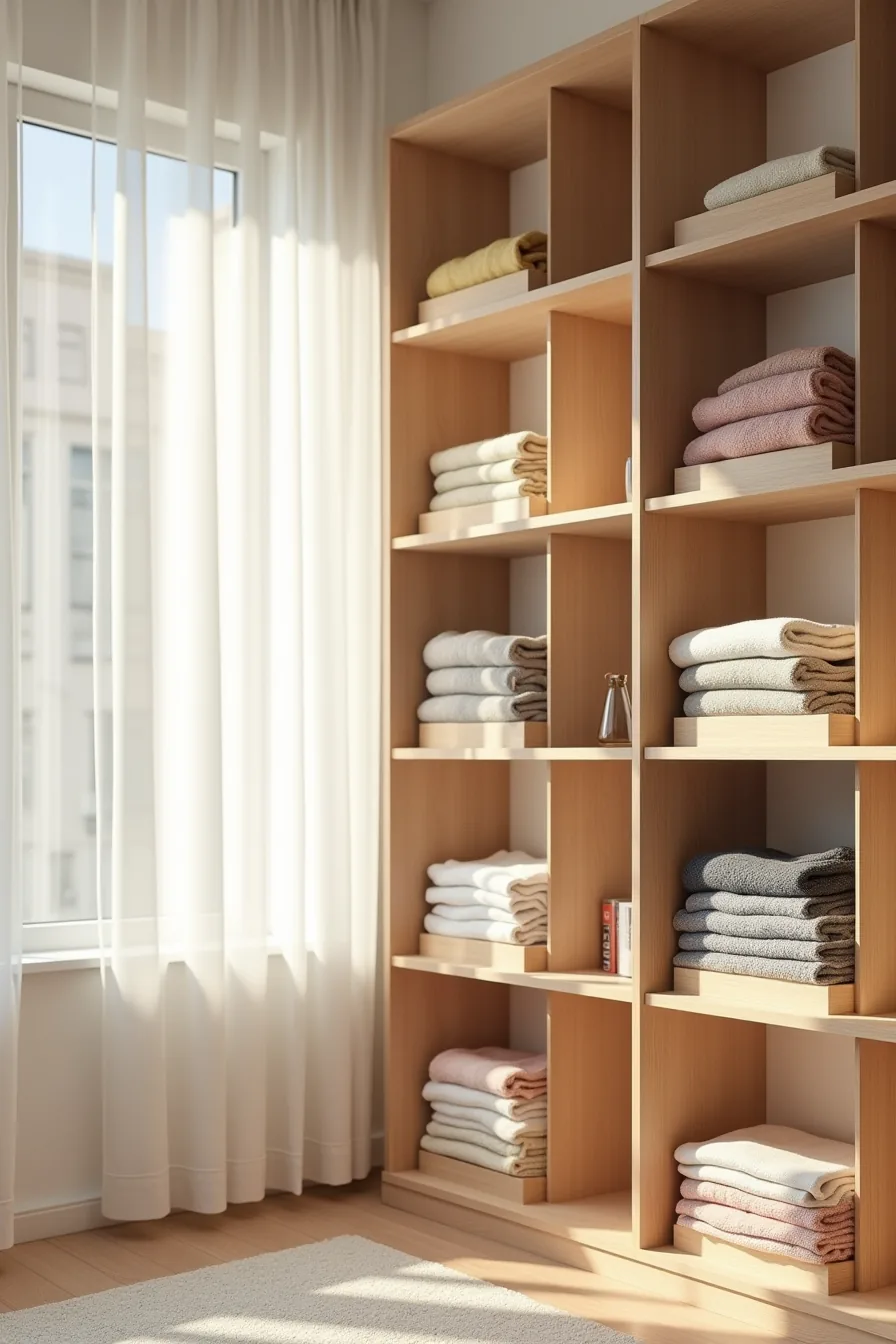
Folded stacks collapse the moment you pull a sweater from the middle, which is why compartmentalization matters more than shelf space itself. Three vertical acrylic dividers split a standard 30-inch wooden shelf into four 7-inch compartments, each holding a single category of folded knitwear. The stacking trays beneath each pile add a second layer, effectively doubling your vertical storage without making the upper stack unreachable.
This approach suits anyone with deep shelves (24 inches or more) who prefers visual separation over color-coding. Acrylic dividers cost $8-$15 per pair and require no installation, just slide them under the shelf above. The trade-off: they hold their grip only if your shelf is at least ⅝-inch thick.
For a renter-friendly route, use tension-mounted fabric cubes instead; they collapse flat for moving but won’t keep stacks as rigidly upright. Wipe acrylic dividers monthly with a microfiber cloth to prevent dust film from dulling the compartment contrast, a subtle but real maintenance cost. These compact setups are among the best organization ideas for the home closet examples because they scale down to a 24-inch shelf without losing function.
Drawer Dividers and Bins: Segmenting Small Storage
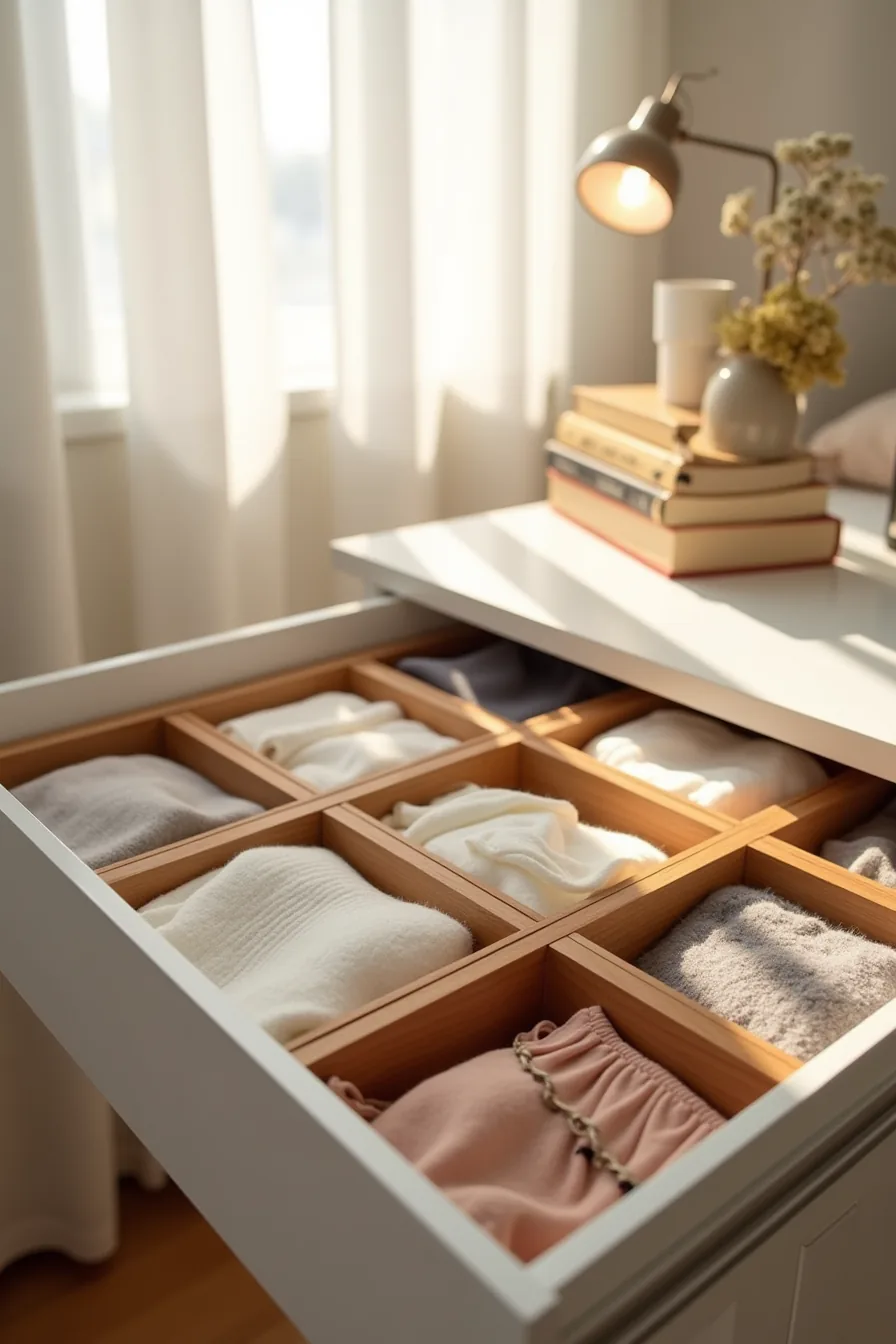
A shallow drawer with six wooden dividers turns a jumble of socks, scarves, and underwear into a decision-free zone. Each compartment holds one category, so you grab without sorting, the real payoff is the 10-15 seconds you save every morning, not the tidiness itself. Wooden dividers suit standard 18-22 inch dresser drawers; measure the interior depth first, because most adjustable sets need at least 2 inches of clearance to lock into place.
Fabric liners underneath protect delicate knits from snagging on raw wood edges, but they shift during heavy use, reposition them when you notice gaps forming. Solid pine dividers run $15-$30 per set and last a decade, while bamboo versions cost more but resist humidity better in bathrooms or coastal climates. For a renter-friendly route, skip permanent adhesive tracks and use spring-tension dividers that expand to fit; they hold lighter items like scarves well but buckle under dense denim stacks.
Wipe dividers quarterly with a dry cloth, moisture warps the wood and ruins the fit. These practical organization ideas for the home closet planning tips work best when you limit each drawer to six compartments; more than that and you waste space on half-empty sections.
Color-Coded Zones and Labeling: Visual Navigation
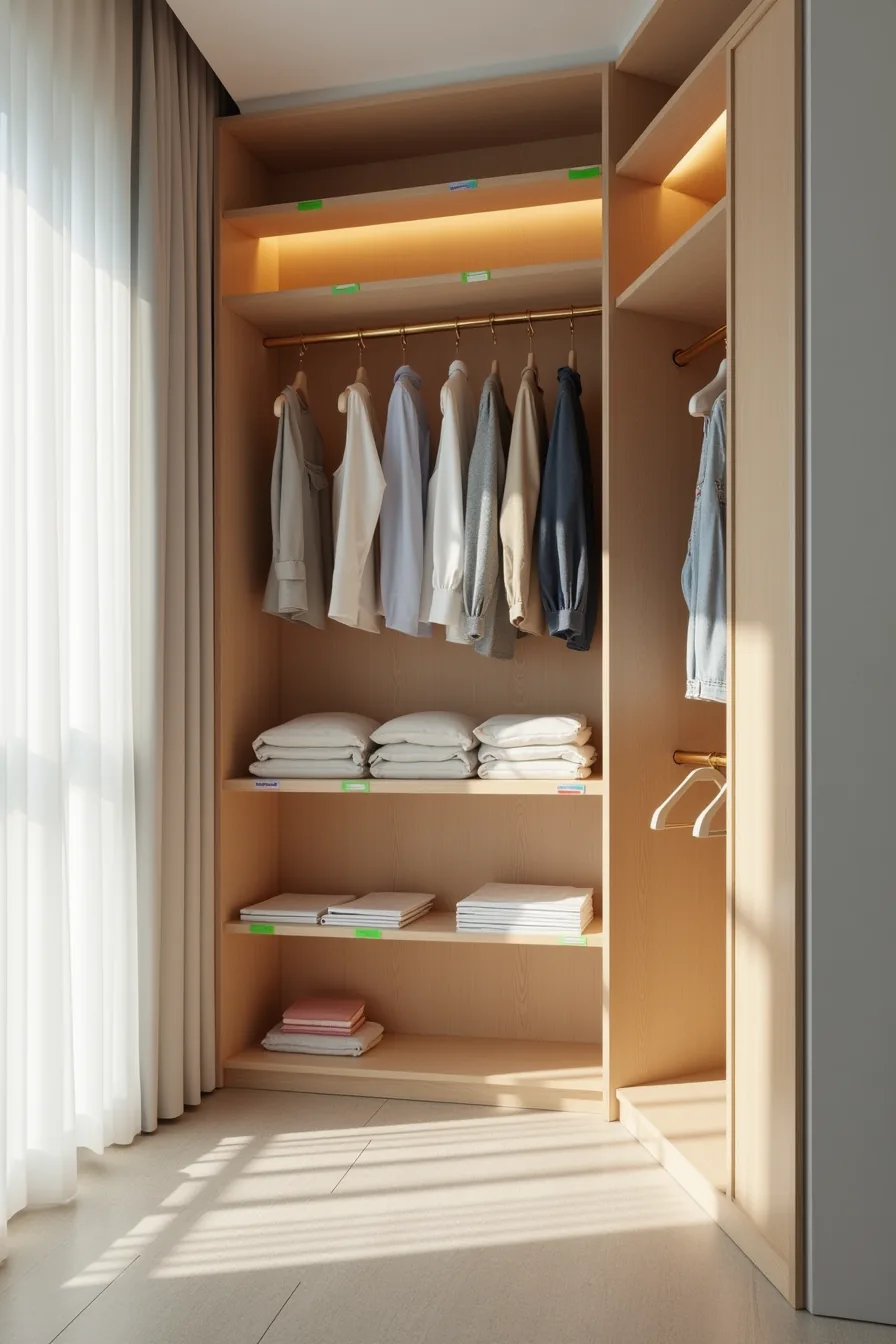
Color-coding transforms a closet wall into a map your eyes read before your brain catches up. Assign one sticker color per category, blue for denim, green for casual wear, a neutral tone for formal pieces, and place each label at the shelf edge where the category begins. You retrieve items by scanning color rather than reading text, which cuts decision time roughly in half for most users.
The system scales cleanly across closet sizes. Small reach-in closets need just three zones; walk-ins can support five or six before the color logic becomes noise. For renters, use removable vinyl labels that peel off without residue, adhesive-backed paper labels absorb humidity and curl within months in damp climates.
Laminated tags or plastic-coated stickers survive seasonal humidity swings far better. Reassess your zones quarterly, because clothing proportions shift with the season, and a label marking a sweater zone becomes useless when the shelf holds summer linens instead. The most common organization ideas for the home closet mistakes to avoid is labeling before you declutter, zones only work when the items beneath them actually match their category.
Shoe Racks and Accessory Hooks: Dedicated Zones for Small Items
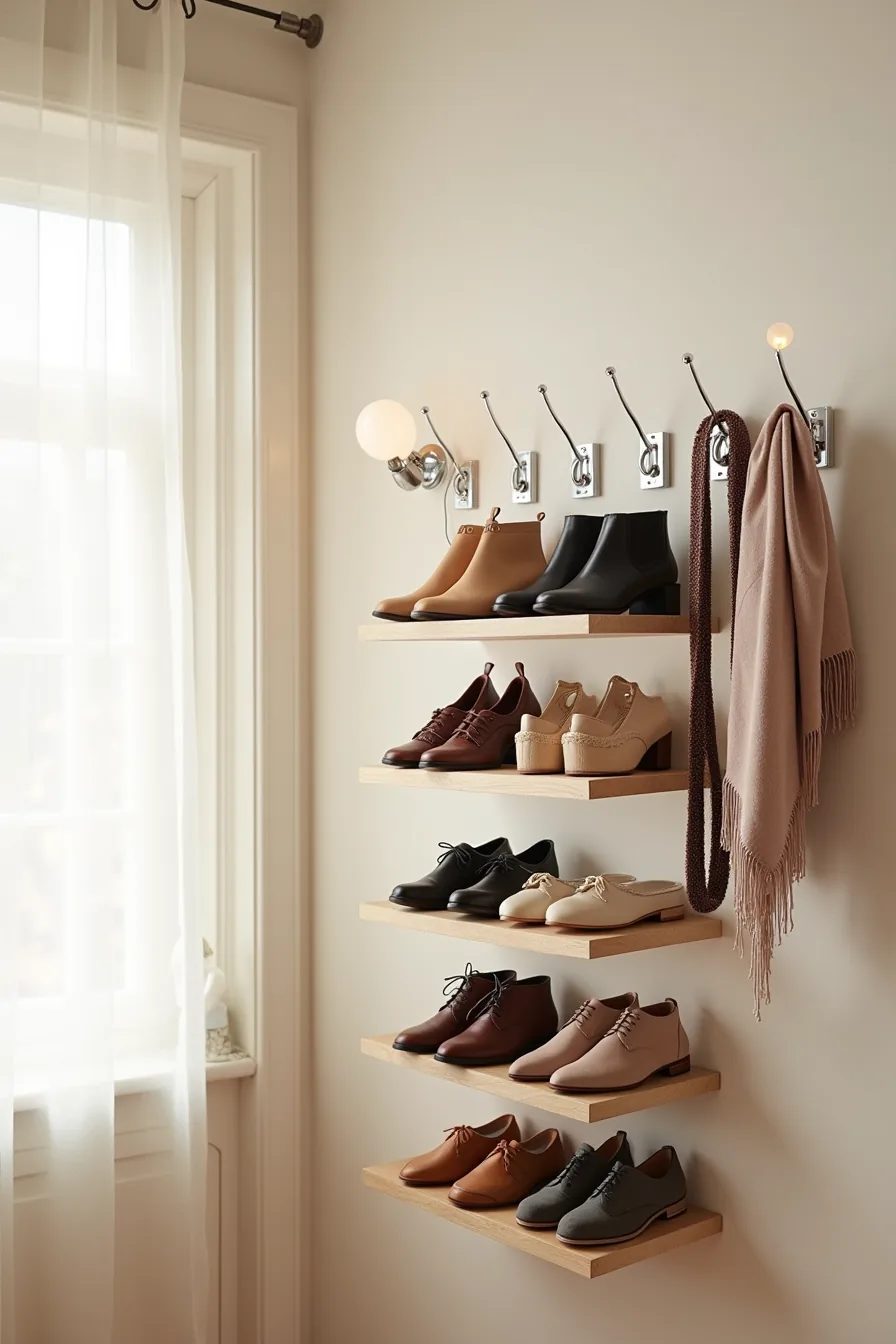
A wall-mounted metal rack with angled slots doubles your shoe storage without stealing floor space. The ten-slot configuration you see here requires roughly 24–30 inches of wall width and holds pairs at a 30-degree tilt, which shortens the rack’s depth to about 12 inches, narrow enough for a hallway or the back of a reach-in closet door. Mount it at waist height so you can identify each pair by profile rather than bending down.
Weight is the limiting factor: most wall-mounted racks tolerate 20–40 pounds total, meaning ten to fifteen pairs of average shoes, but heavy boots will strain the mounting screws over time.
Chrome hooks on the adjacent wall section handle the overflow that typically buries drawer contents. Use one hook per belt or scarf, spacing them 2–3 inches apart so items slide on and off without tangling. Estimate hook capacity at roughly 5–8 pounds each, enough for a loaded handbag but not a winter coat collection.
For renters, choose adhesive hook strips rated for 10–15 pounds; they release cleanly with dental floss when your lease ends. Screw-mounted hooks suit homeowners but require patching on departure. Keep the shoe rack and hooks within arm’s reach of each other; the pairing works best in medium closets (roughly 4–5 feet wide) where a dedicated wall section can be spared without squeezing the hanging rod.
Seasonal Rotation and Under-Bed Storage: Managing Capacity
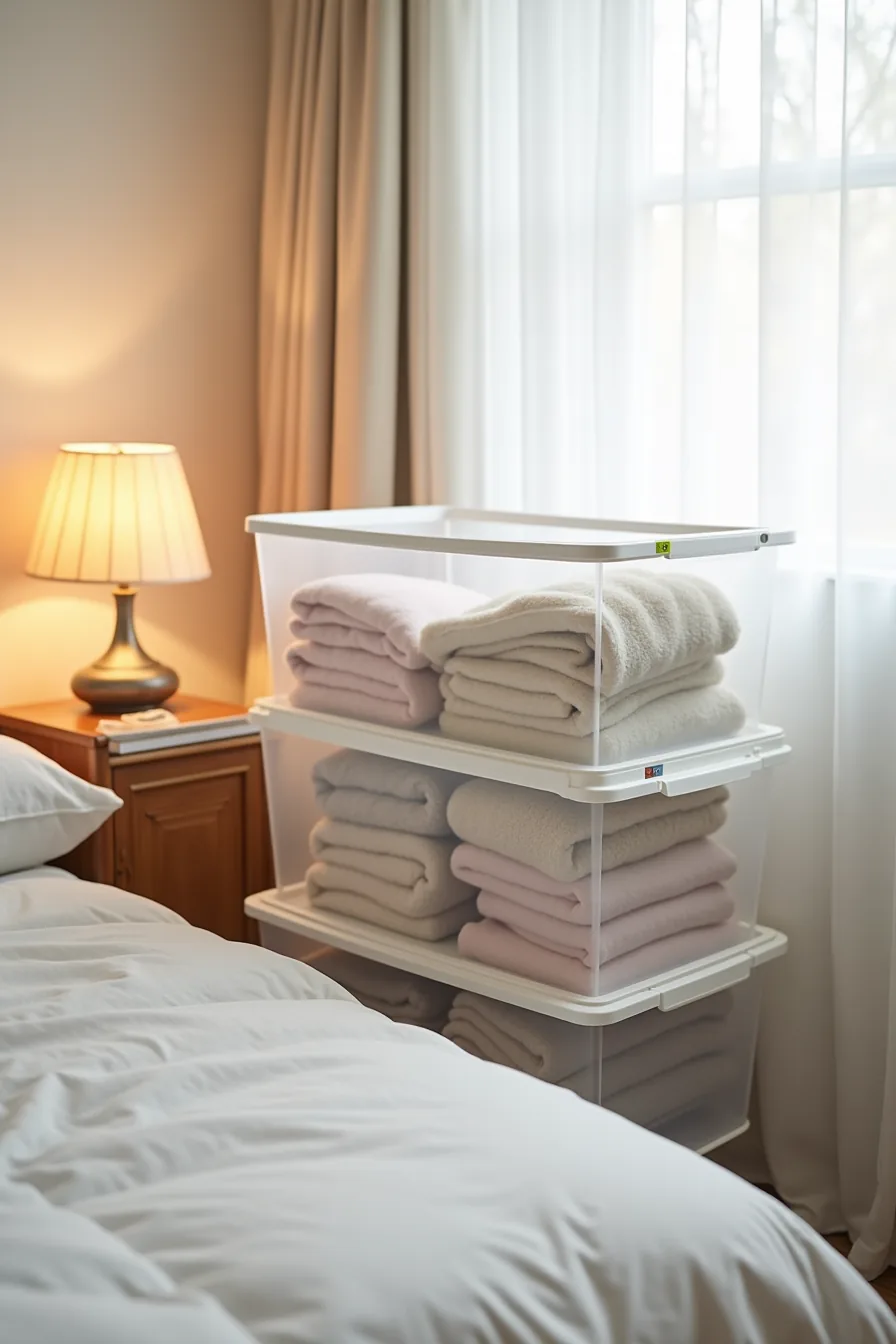
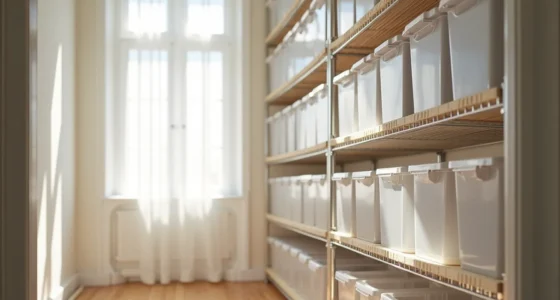
Semi-transparent plastic containers stacked two-high under the bed give you a second closet without touching floor space. These stackable bins typically measure 6–8 inches tall, which fits the average 12–13 inch bed clearance; confirm your frame height before buying, or the top bin will scrape the slats. The transparency lets you spot the folded winter coat or chunky sweaters inside without pulling every bin out, while colored tape on the spine turns a vague stack into a labeled filing system.
You need roughly 6–8 bins to rotate a full season of outerwear and knitwear; expect to pay $15–$30 per container for ones that survive repeated drags across carpet.
Climate dictates your rotation schedule. Humid regions demand breathable fabric bins over sealed plastic for wool and down, as trapped moisture breeds mildew within two months. In dry climates, plastic wins on pest resistance.
The payoff is concrete: cutting your active closet load by 30–40 percent frees hanging rod space and reduces the daily visual noise that makes a tidy closet feel chaotic. This route costs less than $200 for a complete system and requires no tools, making it the most budget-friendly way to manage capacity.
Where to start
You don’t need to overhaul the entire closet in one weekend. Pick the single category that causes the most daily friction, shoes, outerwear, or folded basics, and apply only the solution that matches your space and lease terms.
Measure your rod height and shelf depth before buying anything. A tension rod system suits renters in under an hour for under $50; a modular wire system runs $150–$400 and needs a drill but survives multiple moves.
Your next step: Empty one shelf, photograph it, and order the exact components for that zone only. Install, live with it for two weeks, then repeat.
Frequently Asked Questions
How do I organize a small closet with limited hanging space?
Install a double rod, upper rod for shirts, lower for pants, to double vertical capacity. Use slim, non-slip hangers to save up to 2 inches per garment. Add shelf risers for folded items above and below the rods.
What’s the best way to organize a closet on a tight budget?
Start with clear, stackable plastic bins (under $10 each) and repurpose shoeboxes for small accessories. Use tension rods for extra hanging without drilling. Skip custom shelving; instead, buy peel-and-stick shelf liner and affordable fabric drawers.
Can I organize a rental closet without damaging the walls?
Yes, use tension rods, freestanding shelving units, and over-the-door hooks, all require zero drilling. For vertical storage, lean a lightweight wardrobe rack against the wall. Avoid adhesive strips for heavy loads; they can peel paint.
Always patch and repaint before moving out.
How often should I reorganize my closet to maintain the system?
Do a full seasonal reset twice a year, spring and fall, rotating out-of-season items. Then, do a 10-minute weekly tidy to return misplaced items. If you notice items falling off hangers or bins overflowing, adjust immediately rather than waiting for the next season.