
Curtains are the single most impactful soft furnishing in a bedroom, shifting both the light quality and the room’s perceived proportions, yet most homeowners default to a single white panel. You’re leaving comfort, privacy, and your room’s resale value on the table by ignoring the hardware, the stack-back width, and the lining. The six distinct routes that follow—from a $40 DIY fix to a custom blackout investment—require specific planning for ceiling height, fabric weight, and daily maintenance.
Before you buy a single rod, you need to understand what your room actually requires.
Key takeaways
Start with sheer-to-blackout layering to control light across the day without losing privacy, pairing a lightweight white sheer with a heavier blackout panel on a double rod. Mount rods 4–6 inches above the frame and extend them 6–12 inches past the window sides to make a standard 8-foot ceiling feel taller and the window appear wider. Choose textured neutral fabrics like linen or cotton-blend weaves in greige or warm gray to hide dust and soften sound, but expect to vacuum or steam them monthly to keep creases out. For rentals, use tension rods and clip-on rings with no-drill brackets to hang curtains that hold up to 10–15 pounds, and switch to motorized systems only if you own the home and can wire them into existing smart hubs.
Sheer Layering for Soft Light Control
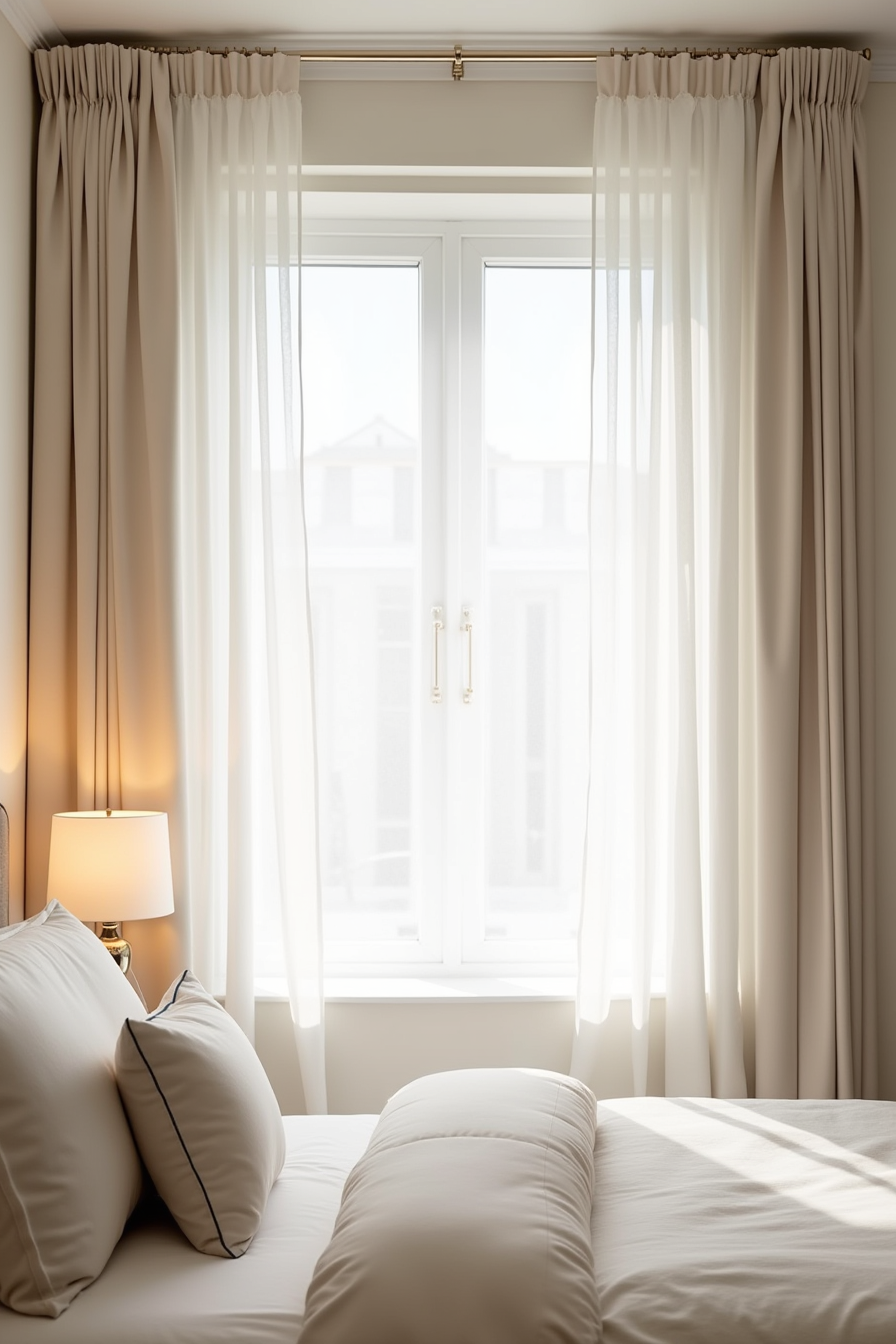
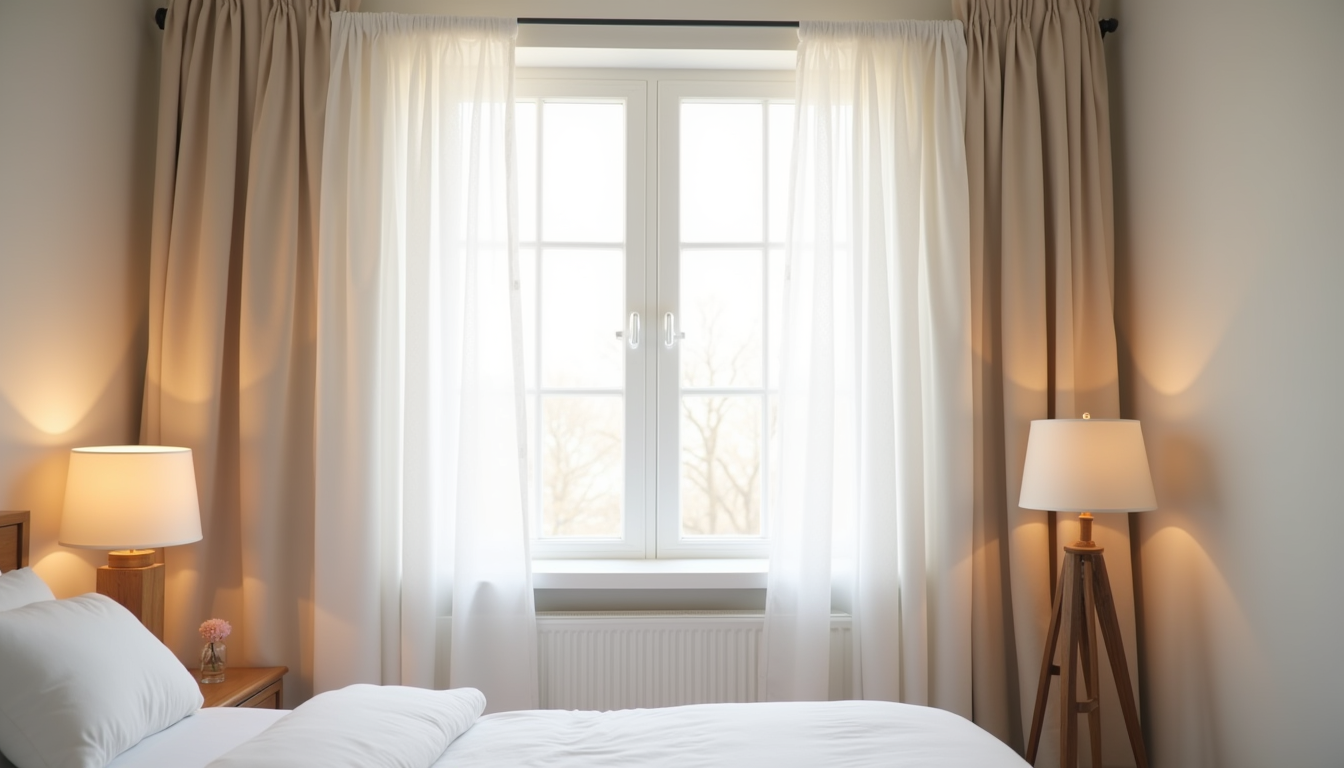
Layering a sheer voile panel with a separate linen blackout panel on a single rod is the most effective way to control light without committing to hard window treatments. The setup shown here uses a single curtain rod with the voile pulled to one side and the linen stacked behind it, so you can slide either layer across depending on the time of day. This approach suits medium bedrooms where you want privacy during the day but full darkness at night, and it keeps visual bulk low since both panels share one rod.
For a small bedroom, choose a rod that extends 4 to 6 inches beyond the window frame on each side so the stacked panels don’t block glass. The linen blackout panel should be 1.5 to 2 times the window width for proper gathers, while the voile can be slightly narrower to reduce bunching. Expect to spend 10 to 15 minutes adjusting both panels as the light changes through the day, because the sheer alone won’t block morning glare.
This setup works best for those who want adjustable privacy without the cost of custom double rods, and the linen layer remains machine-washable if you check the care label first.
Floor-to-Ceiling Drama in Large Bedrooms
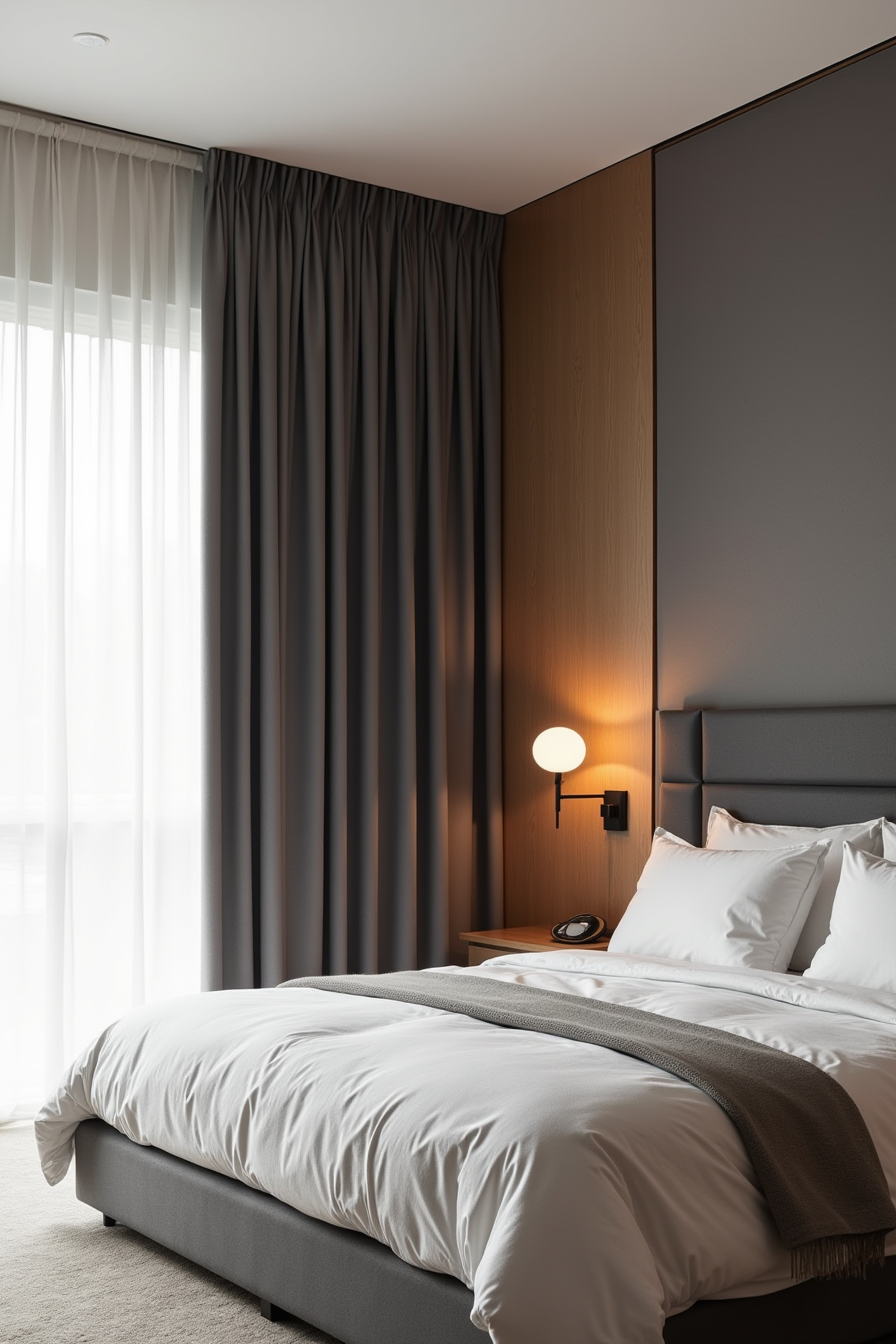
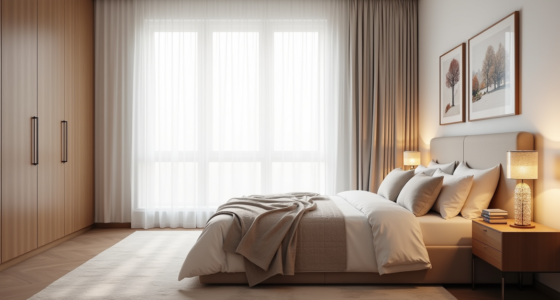
In a spacious room, mount the rod 4 to 6 inches below the ceiling and extend it 8 to 12 inches beyond the window’s outer frame on each side. This draws the eye upward and frames the full wall, making the window feel like part of the architecture. Heavy charcoal fabric in a floor-to-ceiling length adds weight and sound-dampening benefits that work well in echo-prone, high-ceilinged rooms.
Choose a substantial headboard and furniture with enough visual mass to anchor the lower half of the wall, so the tall panels don’t overwhelm the space. Attach the ceiling-mounted rod into the wall studs or use heavy-duty drywall anchors rated for at least twice the combined panel weight. For a 96-inch ceiling, plan on panels that measure 102 to 108 inches long so the fabric pools slightly at the floor.
This look suits a large bedroom with at least 10 feet of unbroken wall space; in a smaller room, the stacked fabric eats up valuable floor area and makes the ceiling feel lower.
Neutral Tones with Textured Fabrics
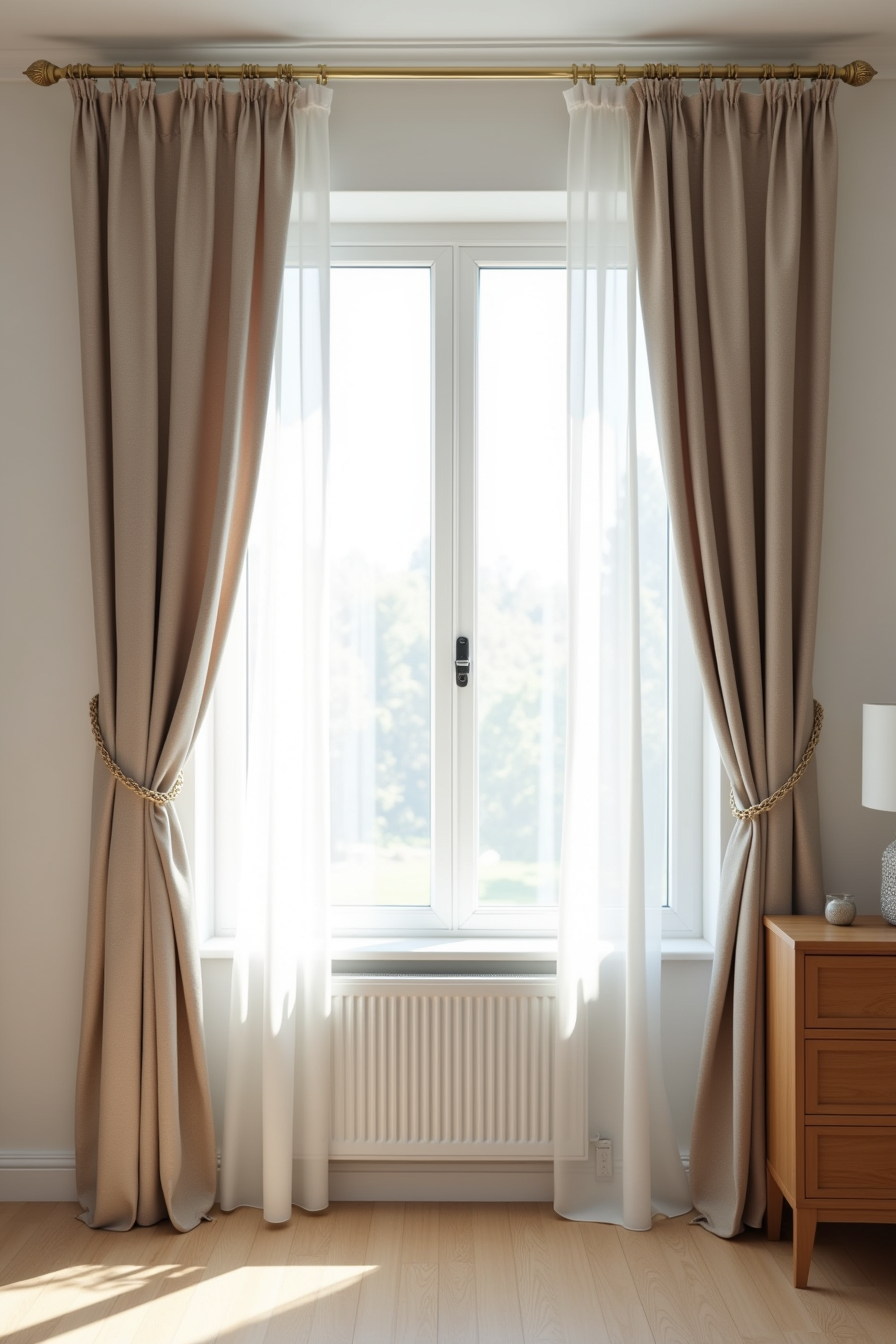
A pair of linen panels in warm taupe on a brass rod delivers the quiet sophistication this look promises without relying on color for impact. The visible weave texture becomes the star, catching light differently throughout the day and preventing the neutral palette from reading as flat or sterile. Linen’s natural slub and irregular drape soften the window’s edges, which suits bedrooms with hard surfaces like tile floors or minimalist wood furniture that need a tactile counterpoint.
This approach works best if you prefer a calm, spa-like atmosphere but find solid white curtains too stark or plain. Look for a linen-cotton blend at 60 to 80 percent linen if you want the texture without the heavy wrinkling and maintenance of pure flax. Budget buyers can approximate the effect with a textured polyester weave that mimics slub linen at roughly half the cost, though it will lack the same breathability and light-filtering softness.
For the wooden dresser beneath the sill, keep the panels’ hem one inch above the surface to avoid trapping dust or blocking drawer access. Brass rods develop a patina over time; if you want the warm finish to stay bright, choose a lacquered version rather than raw metal.
Renter-Friendly Temporary Solutions
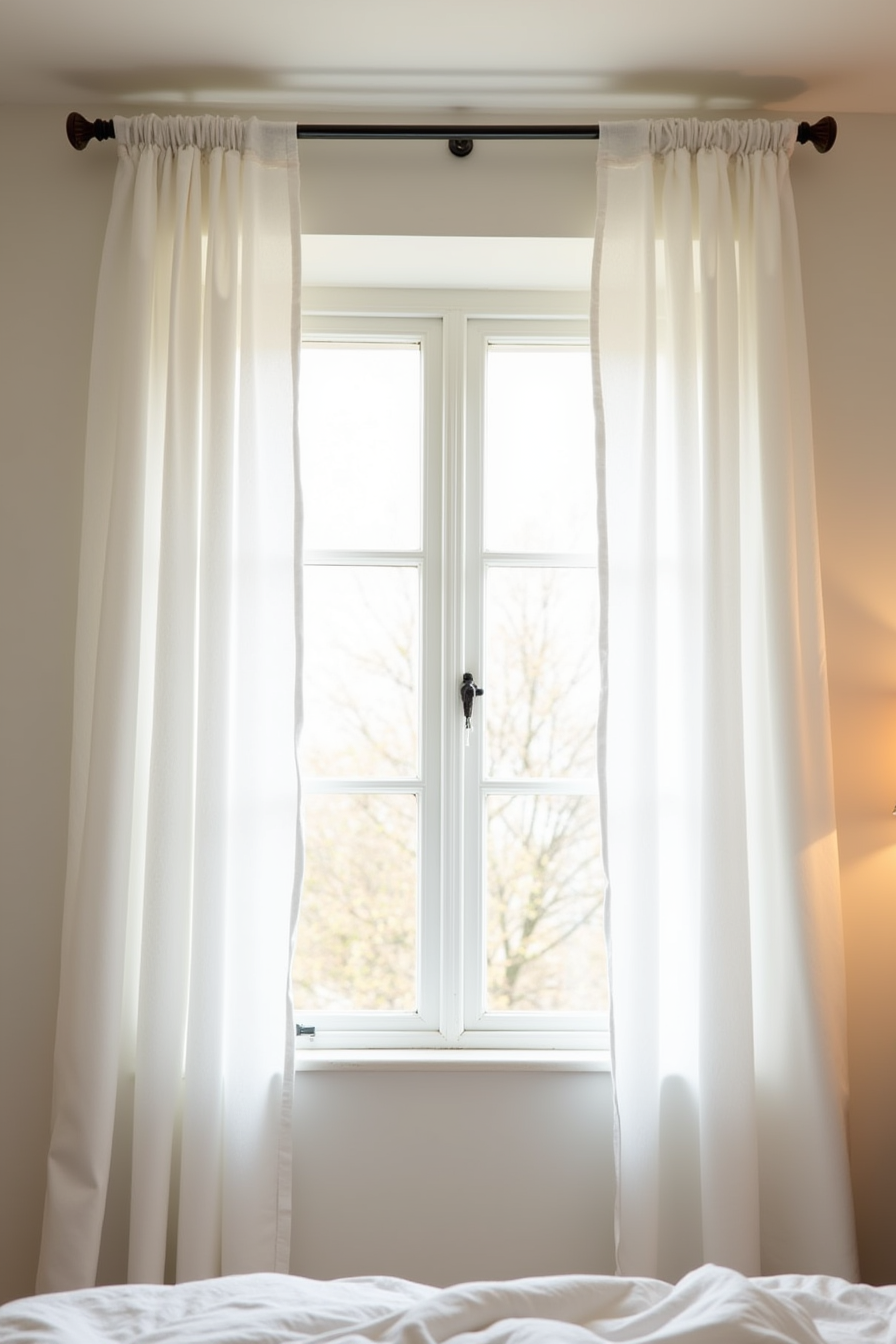
Tension rods support your curtain panels without a single screw hole, making them the fastest route to a finished look when you can’t touch the walls. The key is matching the rod’s diameter to your hardware: clip rings with a 1.5-inch opening glide smoothly over a standard 1-inch tension rod, while narrower clips struggle on the rod’s raised ends. White cotton panels at 50 to 60 inches wide each side read as substantial without weighing down the spring mechanism.
Mount the rod inside the window frame’s top corners so the tension pushes against the drywall, not the trim, which can flex under pressure. On the frame itself, place a small adhesive hook at mid-height to hold a tie-back and keep the fabric from billowing into an air conditioner. Remember that tension rods hold weight poorly when fully extended, so keep panels lightweight and wash them monthly to prevent dust buildup that adds strain.
These are the Curtain Inspo Bedroom mistakes to avoid: overloading the rod or hanging heavy blackout liners that will send it crashing down at 2 a.m.
Statement Color and Pattern Placement
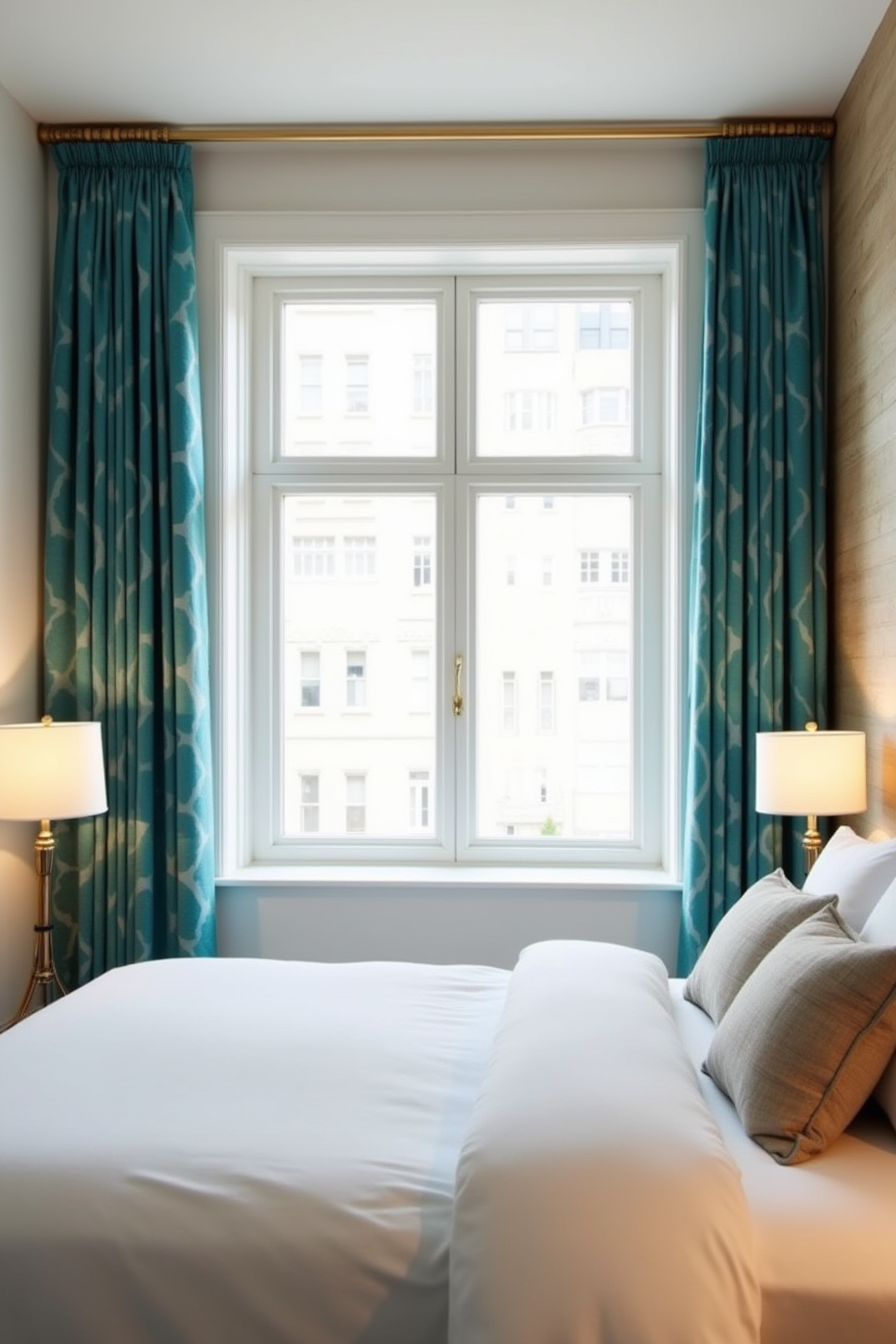
The image setup works because it confines visual drama to one surface: the accent wall behind your bed. Two teal jewel-tone panels with a large-scale geometric print frame the window on that wall, while the other walls stay neutral, and the white bedding keeps the room from feeling heavy. This placement trusts the eye to settle on the pattern as the single focal point, which is what makes bold curtains feasible in a space meant for rest.
This suits bedrooms with at least nine feet of wall behind the bed, where the two panels can each span 45 to 55 inches wide when drawn aside. On a standard curtain rod mounted eight to ten inches above the window frame, the patterned fabric shouldn’t extend more than four inches past the window’s outer edges, or the accent wall starts to feel crowded. Budget route: swap the custom rod for a fixed steel one at $25 to $40, and buy ready-made polyester panels with a tight geometric repeat—they read as deliberate but cost half of what cotton does.
Skip the blackout lining here; it adds bulk that pulls the pattern out of shape, and opt for machine-washable fabric since the patterned panels will need a cold-water cycle every four to six weeks to keep the jewel tones from fading.
Motorized and Smart Curtain Systems
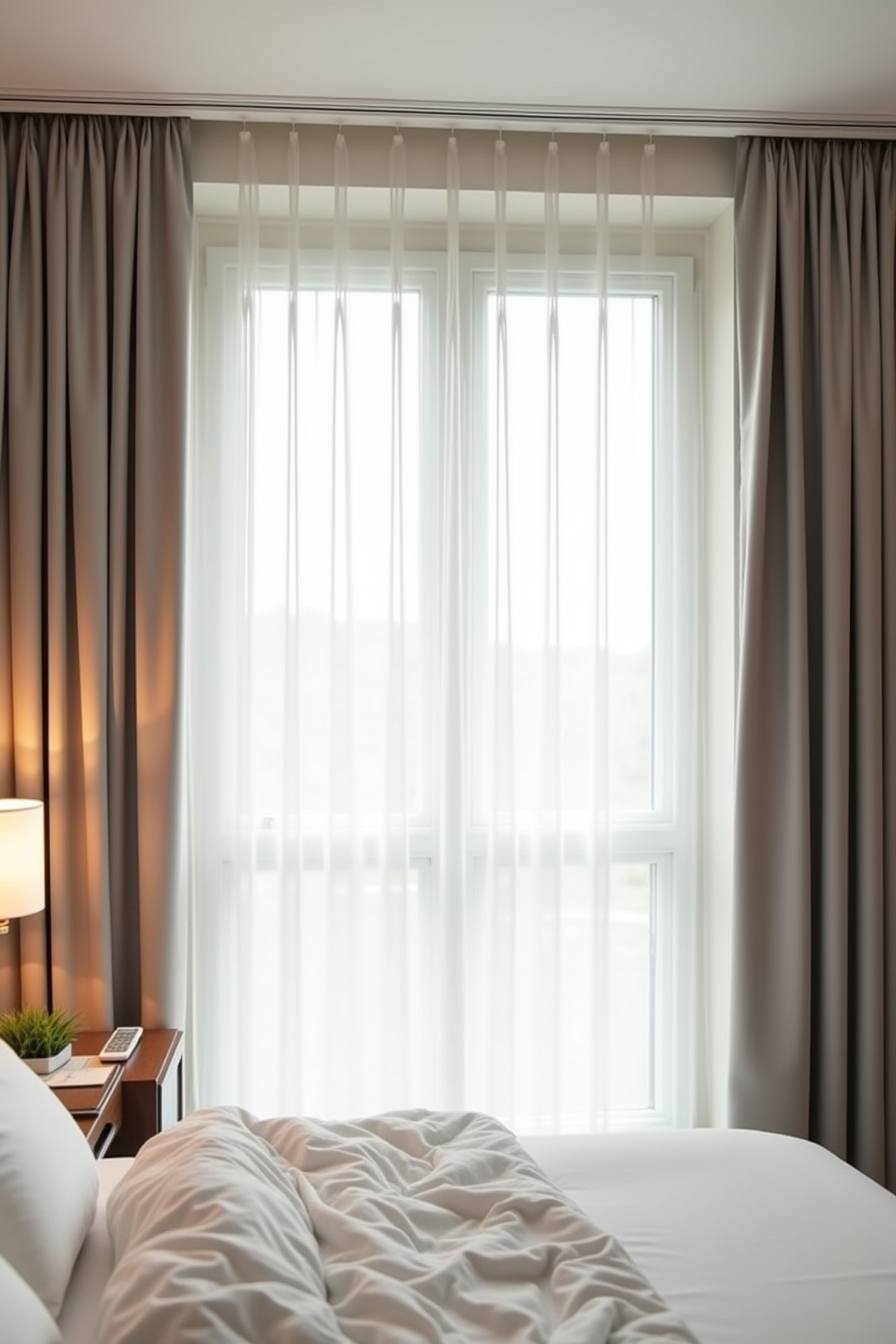
A ceiling-mounted motorized track with neutral gray panels gives you timed light control without a single pull cord. The wireless remote on your nightstand lets you adjust the panels from bed, which matters most in bedrooms where the window sits behind a tall headboard or above furniture that blocks manual access. This setup suits anyone who wants consistent morning light or privacy on a schedule, or who has mobility constraints that make reaching a standard rod difficult.
Installation requires a power source near the track—either a hardwired outlet or a rechargeable battery pack that needs a top-up every three to six months depending on usage. Most motorized tracks run $200 to $600 for a single window, plus professional installation if you aren’t comfortable wiring a ceiling fixture. The panels themselves stay standard, so you can swap fabric seasonally without touching the motor.
Choose a track rated for your curtain weight; heavy blackout lining will strain a lightweight plastic rail and cause the motor to stall.
What to do first
You now have six distinct curtain strategies, from budget-friendly panels to layered luxury. The fastest way to decide? Measure your window width and ceiling height first, then match that against the scale guidance above.
Pick one room to start with—not three. Choose the look that solves your biggest problem, whether that’s light control, privacy, or a focal point. Then order fabric samples before committing to full panels.
Your next step: grab a tape measure and note your window dimensions right now. That single number will eliminate half your options and make the final choice obvious.
Frequently Asked Questions
What length should bedroom curtains be—floor-length or sill-length?
Floor-length is the standard choice. It creates a vertical line that adds height and feels intentional. Sill-length suits casual, small, or radiator-adjacent rooms, but it reads as informal and can visually shorten the wall.
How do I choose between blackout and room-darkening curtains for better sleep?
Choose blackout if you sleep in a city, work nights, or need total darkness. Room-darkening blocks 85-95% of light and suits most bedrooms. Blackout uses thicker, heavier fabrics and costs 20-40% more, but it also muffles street noise better.
Can I use the same curtain inspo bedroom style in a small bedroom as a large one?
Yes, but scale changes matter. In a small room, use lighter fabrics and a single panel per side. Large rooms can handle double panels, heavier textures, and wider rods.
The style transfers; the proportions must adapt to the wall width and ceiling height.
What is the best way to hang curtains to make a bedroom look larger?
Mount the rod 6-12 inches above the window frame and extend it 4-8 inches past each side. Use floor-length panels in a light, solid color. This trick draws the eye upward and widens the perceived window, making the wall feel taller and the room more spacious.