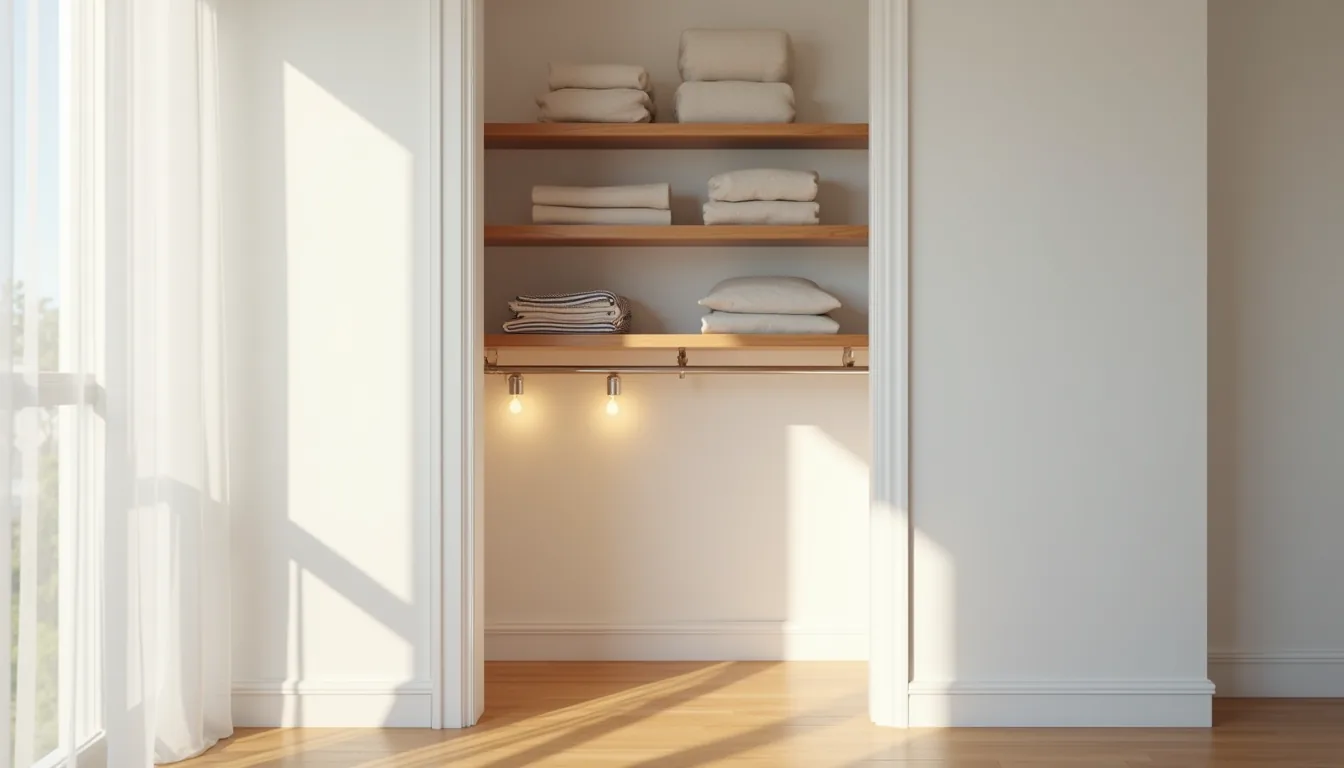
Your apartment closet is the difference between a calm morning routine and a daily treasure hunt, but the right organization system depends on your square footage, lease terms, and how much you’re willing to spend. No single layout works for every rental, so the practical move is to match each solution to your actual constraints, ceiling height, rod length, and whether you can drill into drywall. The six approaches that follow range from under-$30 tension rods to permanent modular builds, so you can pick the one that fits your space without guesswork or wasted purchases.
Key takeaways
Vertical shelving doubles usable storage in a 5-foot-wide closet by stacking bins to the ceiling, but keep frequently used items between waist and eye height. Double-hanging rods suit most apartment closets with 60–70 inches of vertical space, splitting it into two 30–35-inch zones for shirts and folded pants. Door-mounted hooks add 10–15 pounds of capacity for bags and robes without drilling, but check the door’s weight limit and clearance before loading. Seasonal rotation cuts active closet clutter by 40–50%, so store off-season gear in labeled bins on the top shelf or under the bed.
Vertical Shelving for Small Spaces
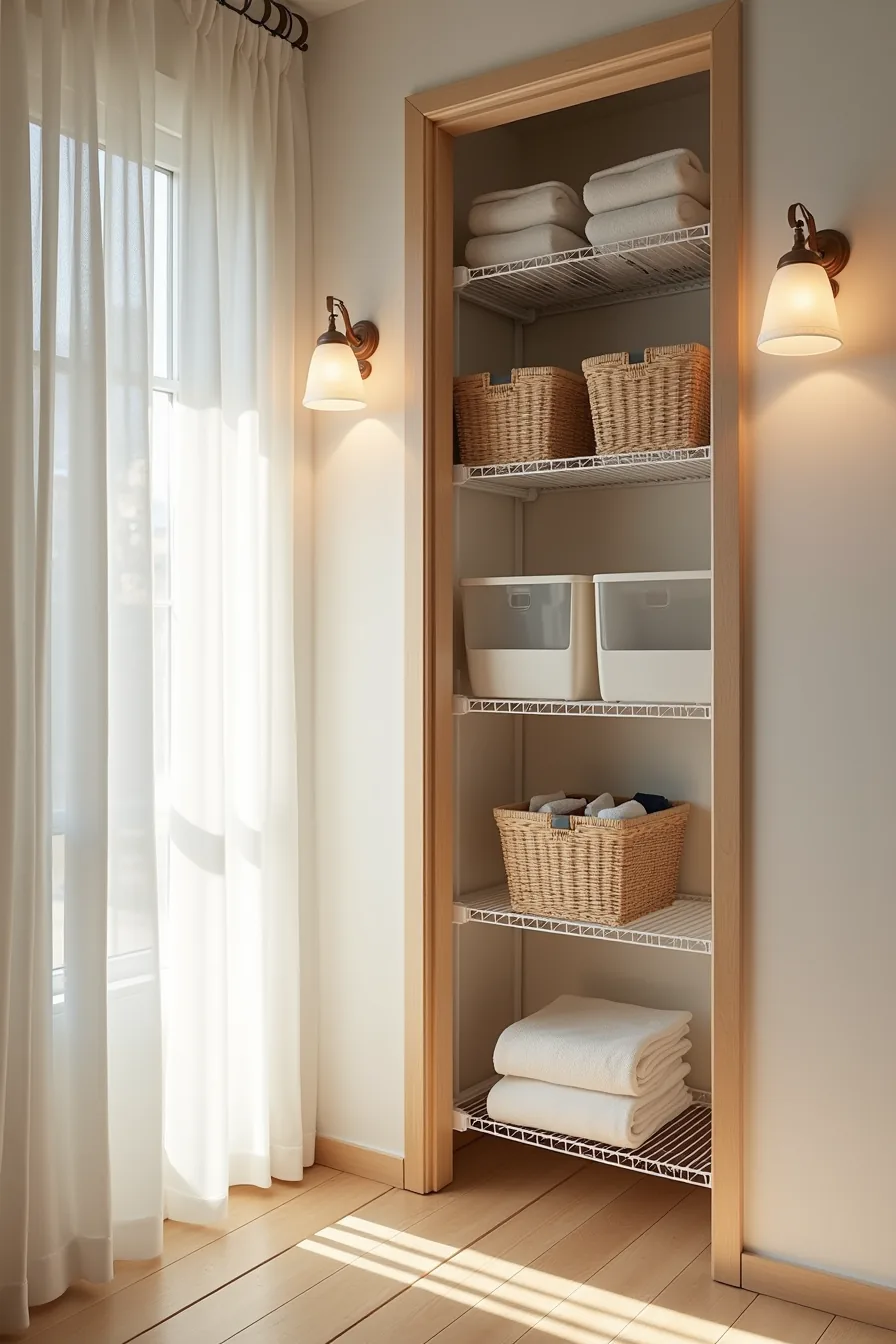
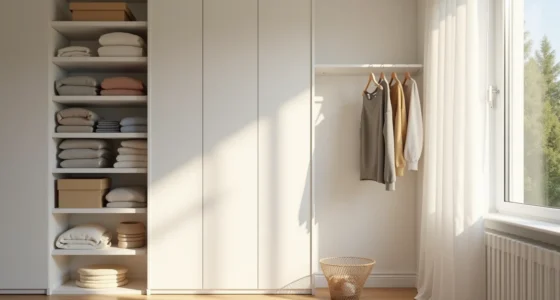
If your closet runs under 3 feet wide, floor-level storage alone wastes roughly half your available cubic footage. Stacked wire shelving, five units running floor to ceiling, captures that vertical airspace without consuming precious floor depth. This specific setup works weil because wire grids let air circulate freely, preventing mustiness in rolled linens and closed baskets.
The budget case is strong: basic wire shelving units cost far less than custom built-ins, install without brackets or wall anchors, and dismantle in minutes when you move. Clear bins make upper shelves practical, you see contents without pulling everything down. Rolled linens, not folded stacks, let you extract one item without toppling the column.
Suits renters who avoid drilling and anyone with ceiling heights over 8 feet. If your ceiling tops out shorter, stop at four shelves and use a step stool, the top shelf becomes dead weight otherwise.
Double-Hanging Rods and Cascading Hangers
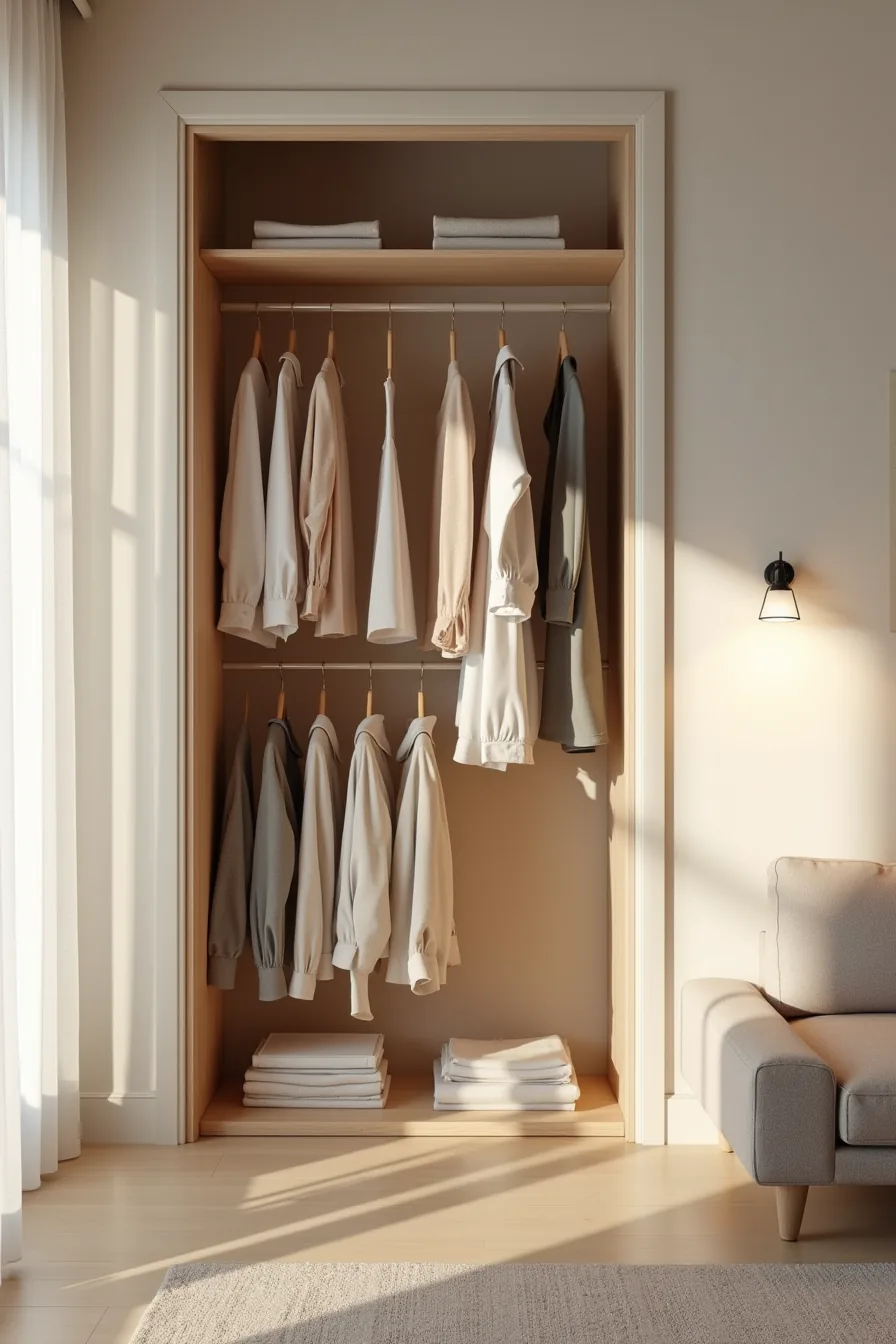
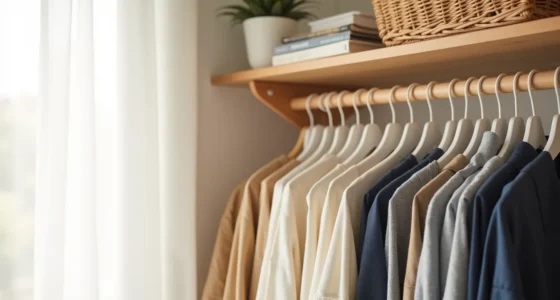
Splitting your vertical space into two hanging zones is the single highest-yield change for a standard apartment closet with a 5–6 foot ceiling. Install an upper rod near 5.5 feet for long items and a lower rod at roughly 2.5 feet; this doubles your hanging capacity without adding an inch of floor footprint. In the setup pictured, the upper rod holds coats and dresses at full length, while the lower rod carries folded pants and shirts on cascading velvet hangers, the staggered hook design lets each garment sit slightly lower than the next, so you can slide items side-to-side without snagging.
This configuration suits anyone with a mix of long and short garments, outerwear, dresses, trousers, and button-downs, rather than a uniform collection of one length. Velvet hangers add grip, so slippery fabrics like silk or satin stay put on the cascade. The trade-off: you lose the ability to hang floor-length gowns or full-length robes, which need the entire 5–6 foot clearance.
Reproducing this requires only a second rod kit (around $15–$30) and a drill or tension-mounted rod for renter-friendly installation, no permanent alteration needed. For a 4-foot-wide closet, this setup comfortably holds 40–60 garments depending on fabric weight, making it the best closet organization ideas apartment example for maximizing a narrow footprint without custom carpentry.
Pull-Out Drawers and Modular Bins
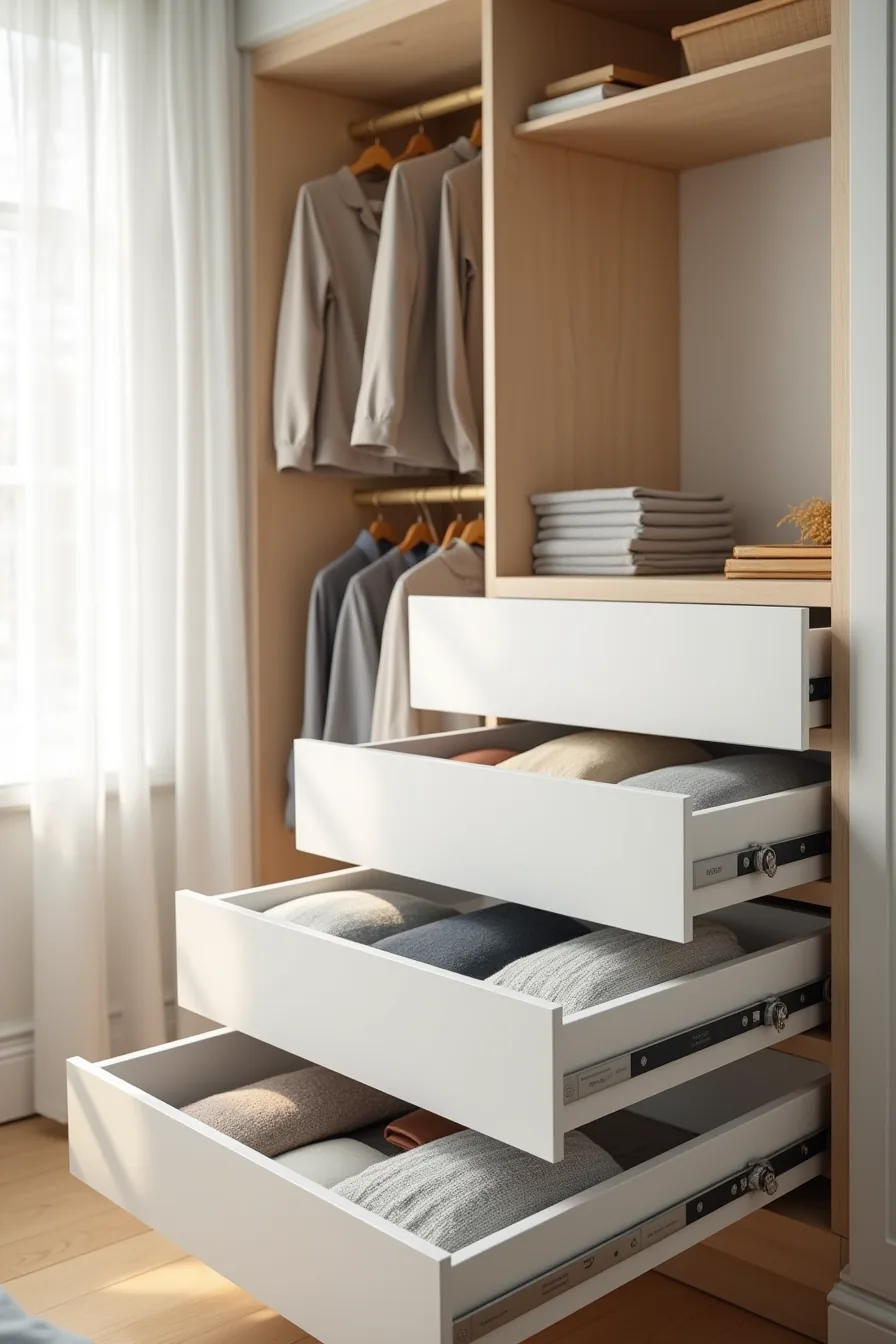
Deep closets, anything over 24 inches of interior depth, create a black hole where folded stacks disappear behind one another. Pull-out drawers on metal slides solve this by bringing the back row to you; the three white units here each extend roughly 18–20 inches on full-extension slides, so you can reach the folded shirts and sweaters in the rear without kneeling or excavating.
You need a minimum of 16–18 inches of clear floor space in front of the closet for the drawers to open fully. Assembly takes one to two hours per unit using a screwdriver and included cam locks; no power tools required. These modular bins suit renters because they sit freestanding on the closet floor and stack up to four units high, no wall anchoring needed unless you exceed that height or have small children.
Weigh the trade-off: each drawer sacrifices roughly 10–12 inches of lower-rod hanging space, so pair them with the double-rod setup if you need both folded and hanging storage. For practical closet organization ideas apartment planning tips, measure drawer width against your existing shelf brackets, standard units run 14–22 inches wide and should match your closet’s interior width tolerances to avoid wasted side gaps.
Door-Mounted Storage and Hooks
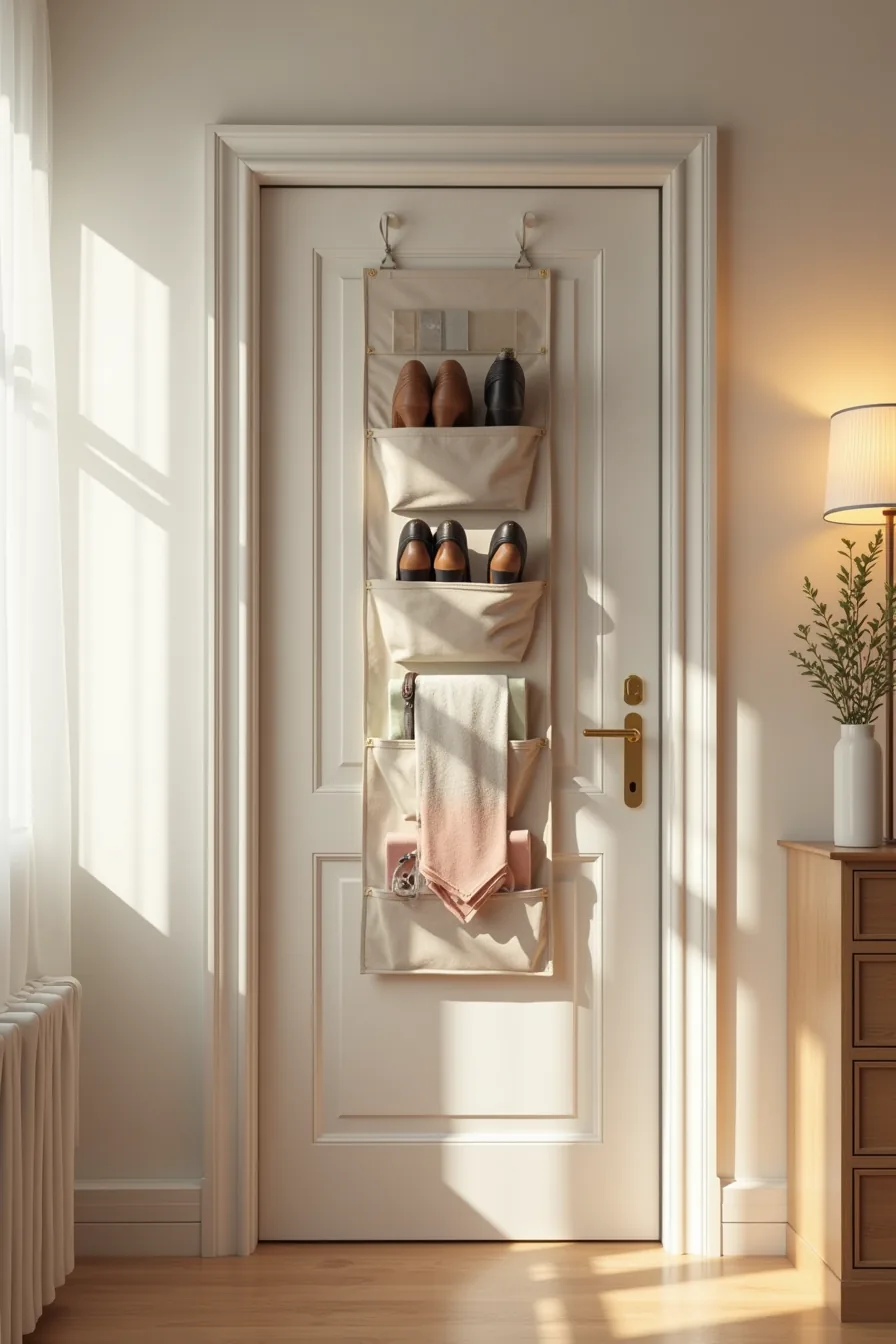
The back of a closet door is prime vertical real estate that most apartment dwellers ignore. An over-the-door shoe organizer with clear pockets turns that flat surface into 24–36 individual compartments without consuming a single inch of floor space, ideal for studios where every square foot counts. The clear pockets let you see your shoes, belts, and scarves at a glance, which eliminates the rifling-through-piles habit that undoes most organization systems within a week.
Adhesive hooks along the door edge catch the overflow: belts looped through, scarves draped, and lightweight bags hung by their straps. Load limits matter here, standard over-the-door organizers hold 20–30 pounds total, and adhesive hooks rated for 5–10 pounds each will fail on textured or painted surfaces, so stick to smooth doors and keep heavy items off them. The renter-friendly payoff is real: both solutions install in under ten minutes with zero drilling, and they remove cleanly with a hair dryer to soften the adhesive.
This setup suits narrow closets with shallow depth, anything under 24 inches, where even slim drawers would block access. One trade-off to weigh: the organizer adds roughly 1–2 inches of door thickness, so confirm the door still closes fully against adjacent furniture. For closet organization ideas apartment mistakes to avoid, the biggest one is overloading those hooks beyond their rating and watching your entire accessory wall peel off the door.
Custom Built-In Cabinetry and Long-Term Investment
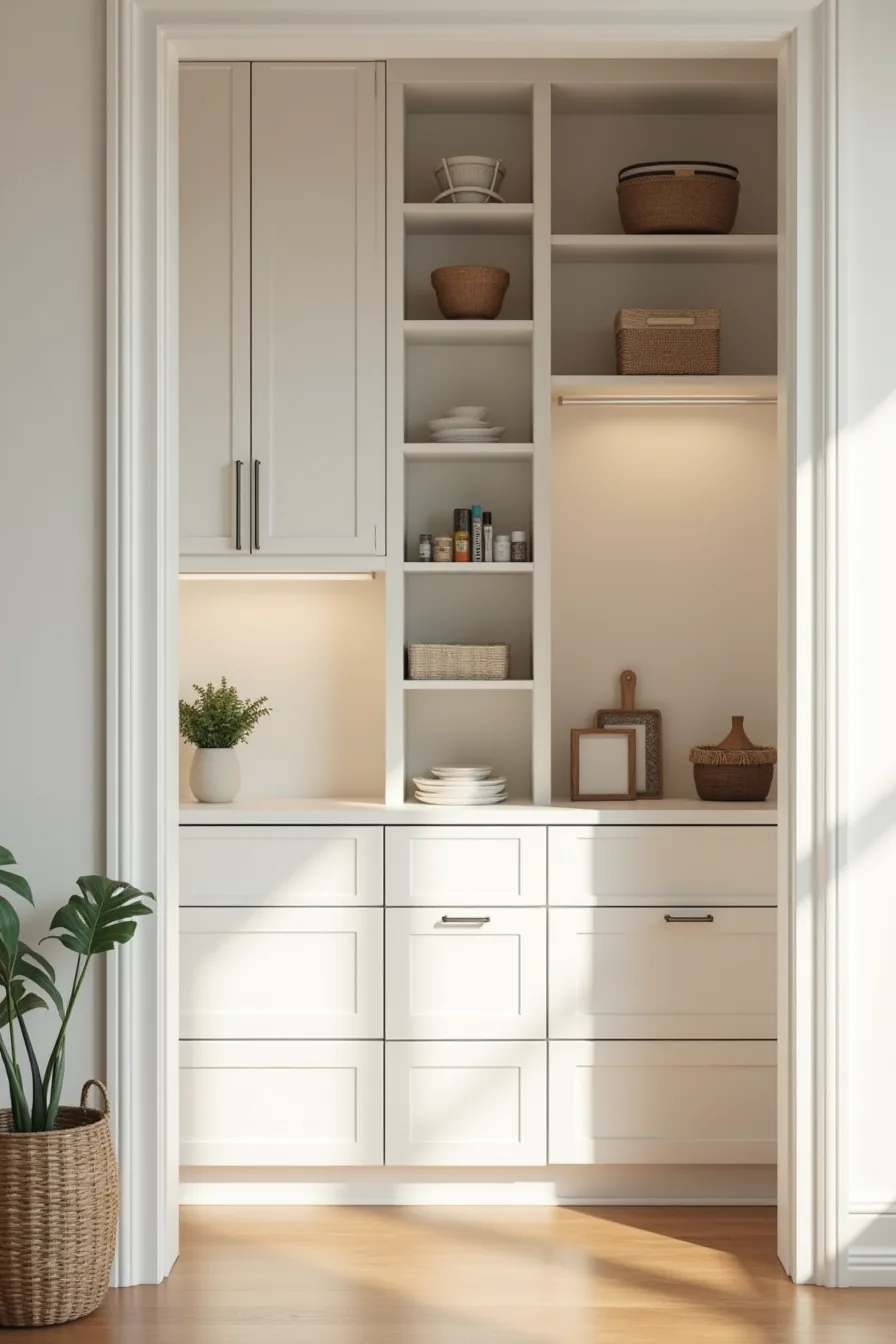
Floor-to-ceiling custom cabinetry turns a cramped apartment closet into a permanent, high-capacity storage system. The closed upper cabinets hide off-season luggage and bulky bedding, while the open middle shelves display stacked jeans, folded sweaters, and clear bins of accessories at eye level, the spot you reach for daily. Deep lower drawers handle the heavy stuff: tools, chargers, and items you’d otherwise shove on a top shelf and forget.
This setup works best in owned apartments where you plan to stay five years or more, since typical custom installations run $2,000–$6,000 depending on linear footage and finish quality.
The trade-offs are real: installation takes one to three days, involves dust and power tools, and requires a professional to confirm your walls can bear the load. In a rental, skip this entirely, landlords rarely approve permanent modifications, and you’ll forfeit your deposit when you move. A middle-ground compromise is modular freestanding wardrobes with adjustable shelving, which deliver 70–80% of the custom look for a fraction of the cost and move with you.
For the budget vs. Splurge Closet Organization Ideas Apartment debate, this is the clear splurge: skip it if you’re month-to-month, invest if you’re putting down roots.
Zoning by Category and Seasonal Rotation
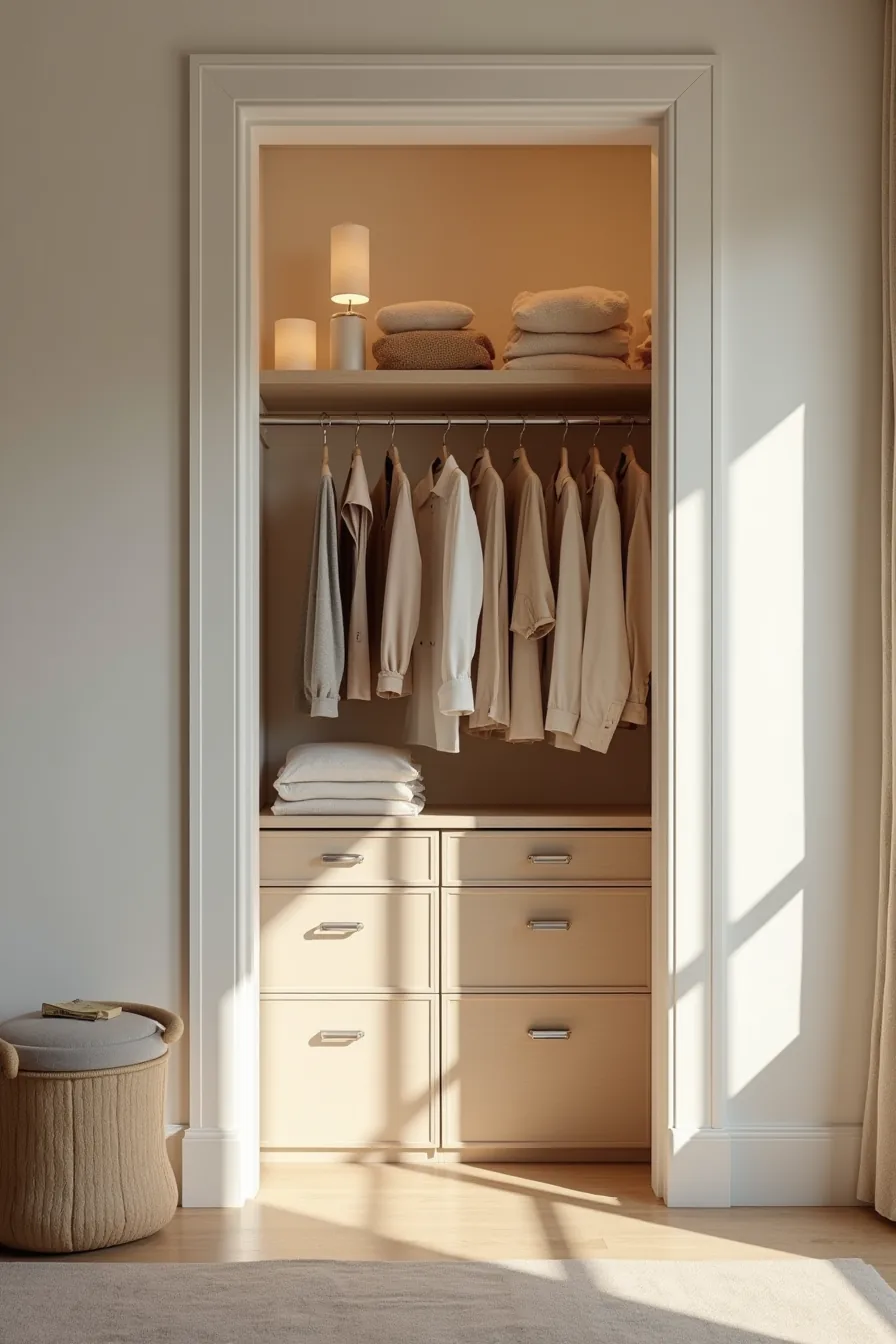
Divide your closet into zones by how often you wear each item, not by color or fabric. Your setup starts with hanging work clothes on the left rod and casual wear on the right rod, creating a visual split that cuts five minutes off your morning decision-making. Below, labeled storage boxes hold off-season pieces, heavy knits and jackets in summer, T-shirts and linen in winter, stacked at floor level where they stay out of sight but remain reachable twice a year.
The storage math is simple: for every six months of items you don’t wear, you need roughly 15–20% of your closet’s total volume in boxes. Swap the seasonal boxes twice a year, ideally at daylight-saving time changes when you’re already adjusting routines. Maintenance is minimal, just re-fold and vacuum-seal anything that attracts moths or dust.
This system suits anyone whose closet holds more than they can wear in two weeks, and it directly addresses common Closet Organization Ideas Apartment mistakes to avoid, like stacking off-season items on high shelves where they compress and become inaccessible.
Where to start
Pick the one idea that solves your biggest pain point first, whether that’s visible clutter, wasted vertical space, or a floor pile. Apply it to a single section of your closet, not the whole room, and live with it for a week before expanding.
Your next step: measure your closet’s usable width, depth, and height from floor to rod, then choose the option that fits those numbers. That measurement takes ten minutes and prevents every costly mistake later.
Frequently Asked Questions
How do I organize a closet in an apartment if I cannot drill or install shelves?
Use tension rods, freestanding shelving units, and over-the-door organizers. These require zero wall damage and hold 20–40 pounds per rod when properly secured. Choose adjustable options that fit your closet’s exact width.
What is the minimum closet width needed for a double-hanging rod system?
You need at least 48 inches of clear width for a comfortable double-hanging setup. This allows two rods, one upper, one lower, with adequate spacing for hangers to slide freely without tangling. Narrower spaces work better with single rods.
How much does professional closet organization cost for a small apartment bedroom?
Expect to pay $300–$800 for a basic custom installation in a typical 4–6 foot reach-in closet. This includes design consultation, materials, and labor. DIY systems from big-box stores run $150–$400 and take 3–5 hours to assemble.
Should I use clear bins or opaque containers for apartment closet storage?
Choose clear bins for frequently accessed items like accessories and seasonal shoes, you see contents instantly. Use opaque containers for off-season clothing or sentimental items you rarely touch. Clear bins require tidier stacking; opaque hides visual clutter but needs labels.