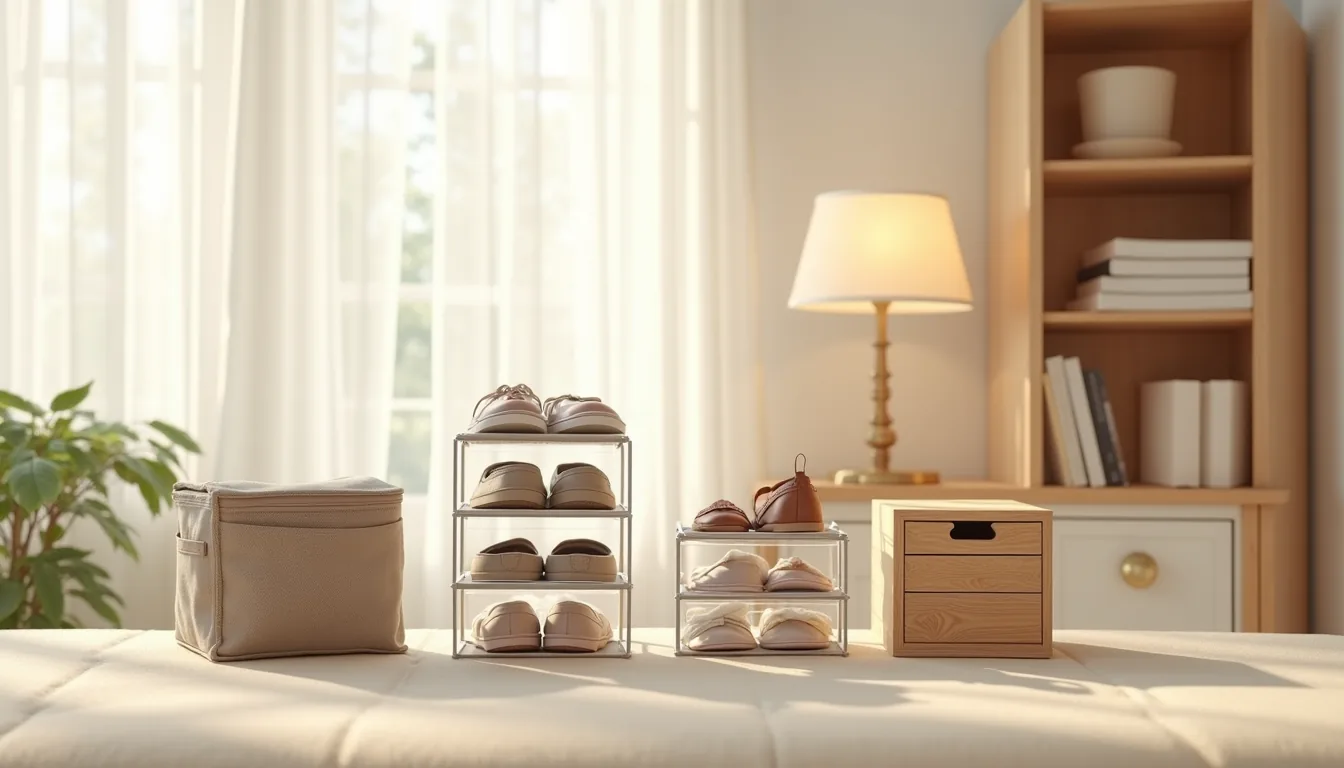

Shoes are the single most common source of closet clutter, yet most storage guides treat them as an afterthought, so here are six distinct organization methods, each with the space requirements, cost range, and maintenance needs you need to choose correctly. From a $15 over-door rack to a built-in cabinetry upgrade, you’ll find a system that matches your floor plan, your shoe count, and your tolerance for dusting. The right choice depends on three variables: how many pairs you own, how often you rotate seasonal footwear, and whether you rent or own your home.
Key takeaways
- Over-the-door racks hold 12–24 pairs and install without drilling, making them ideal for rentals where wall damage costs you your security deposit.
- Tiered shelving at 12–14 inches per shelf triples usable space in a 6-foot-tall closet by stacking shoes vertically, but reserve it for lightweight pairs to avoid shelf sag.
- Clear, stackable shoe boxes with front openings cut dusting time and let you photograph labels for quick ID, though each box adds 2–3 inches of depth, so measure your depth before bulk-buying.
- Rotating carousels and lazy Susans suit daily-wear collections of 8–20 pairs, but they demand a clear 24-inch turning radius and a stable, level base, skip them if your closet floor is uneven.
Over-the-Door Shoe Racks for Renters and Small Spaces
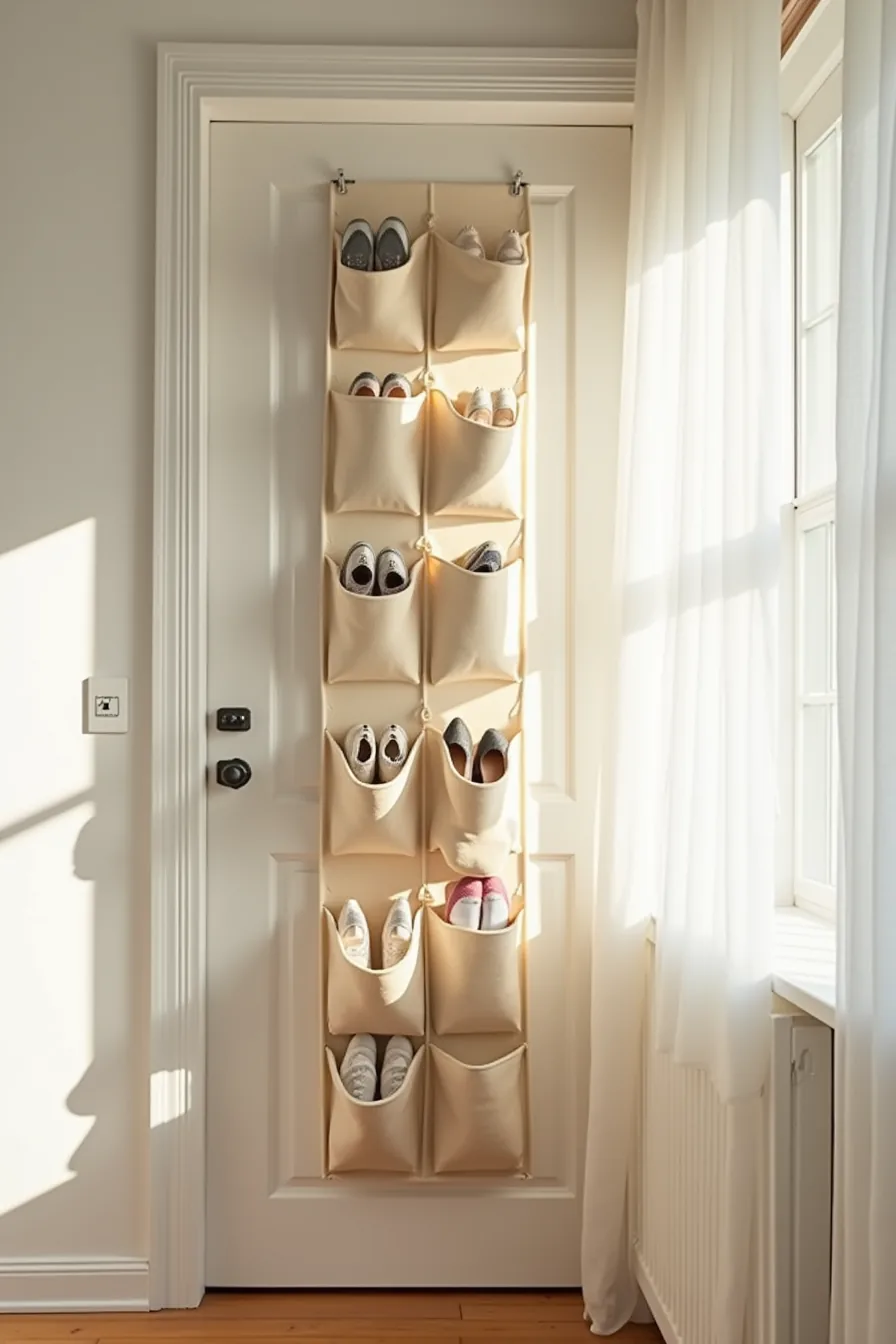
The fabric over-the-door organizer with twelve pockets is the default answer for cramped entryways and rental closets, and for good reason. It hangs on a standard door hinge or over the top edge, requiring zero drilling, a critical detail if your security deposit is on the line. You slide shoes into each pocket by silhouette, with flats and sandals in the shallow top rows and sneakers or low boots in the deeper bottom slots, exactly like the white-painted door setup you see here.
This system works because it exploits dead air space, the few inches between the door and the back wall, without stealing any floor footprint. It suits a renter, a student in a dorm, or anyone whose door opens fully without hitting shelving. Most fabric units carry 12 to 24 pockets and hold roughly 20 to 40 pounds total, so stick to lightweight footwear and never overload one row, or the pockets will stretch and sag.
Installation takes under five minutes: drape the hooks over the top edge and let gravity do the work, but check that the door clears the floor by at least half an inch when you close it.
As a budget vs. Splurge Closet Organization Ideas Shoes choice, this is firmly the budget route. Expect to pay $15 to $35 for a sturdy canvas or non-woven polypropylene version, and accept the trade-off: the material is breathable but not dust-proof, so shoes will collect film over time. Wipe the pockets monthly with a damp cloth and rotate seasonal pairs out to keep the load light.
If your door is hollow-core, skip the over-the-top hooks and use adhesive-backed hooks instead, they hold up to five pounds each and still leave no holes when you move out.
Tiered Shelving: Maximizing Vertical Space in Medium Closets
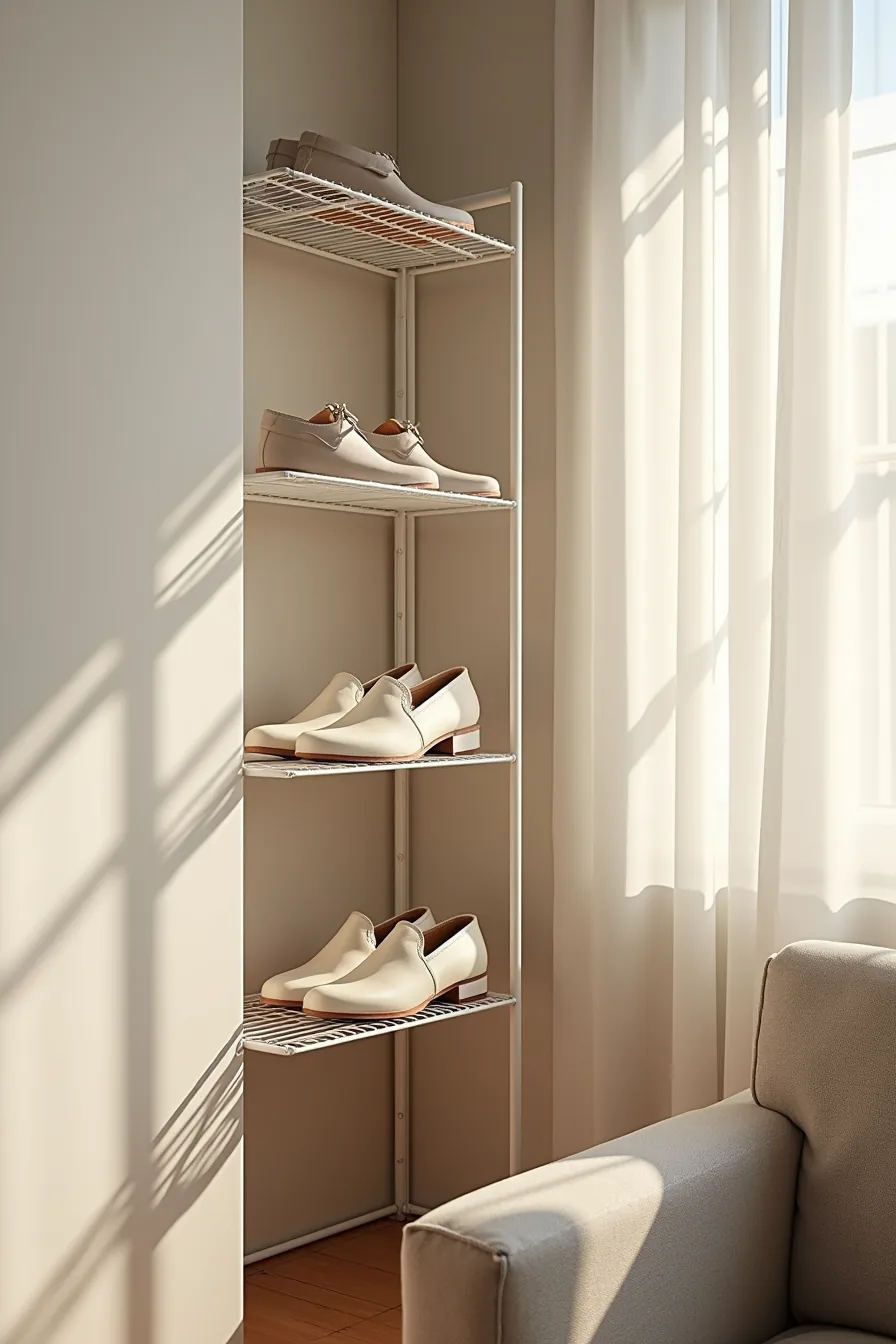
A three-tier metal wire shelving unit turns an unused closet wall into a shoe display that holds 12 to 18 pairs in roughly two square feet of floor space. The open wire construction lets you see every pair at a glance, no digging through stacked boxes to find your black loafers. You arrange shoes in pairs with their full profile facing outward, leaving two to three inches between groups so you can slide a pair out without disturbing its neighbors.
This setup suits a medium closet (roughly 5 to 8 feet wide) where floor space is already claimed by hanging garments but wall depth is underused. The 45-degree sightline from the door means you identify shoes by color and silhouette instantly, which makes morning choices faster than any closed storage. Assembly runs 15 to 30 minutes with no tools beyond a rubber mallet; most units snap together with friction-fit joints.
The trade-off is dust exposure, wire shelves offer zero protection, so expect weekly wiping. Depth matters: confirm the unit sits 12 to 14 inches deep so sneaker toes don’t overhang and catch on the closet door. For the best closet organization ideas shoes examples, pair this with a bottom-tier boot rack if your collection includes tall footwear that would otherwise waste the upper shelf’s clearance.
Shoe Boxes and Clear Containers for Dust Protection and Inventory
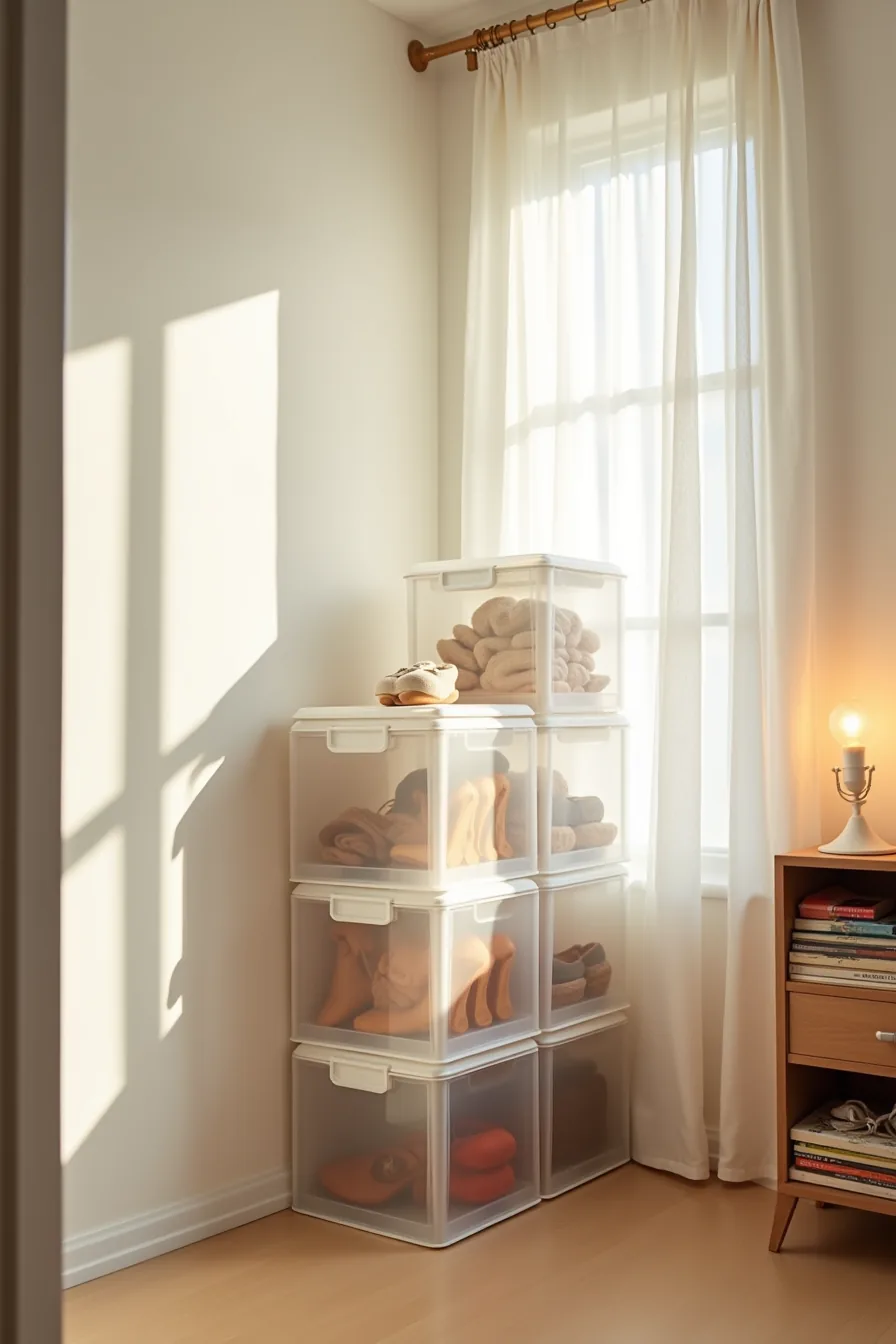
Clear plastic storage boxes give you the dust protection of closed storage without sacrificing the visual scan that wire shelving provides. A 2×3 grid of stackable containers, each holding one pair with the shoe silhouettes visible through the transparent walls, turns an ordinary shelf into an inventory system. The slightly offset stacking shows you the full depth of each box, so you confirm which pair occupies the back row without pulling anything forward.
This approach suits collectors and seasonal rotators who need to preserve condition on rarely worn pieces. Handwritten labels on the front panel (a small white sticker with a permanent marker, or a chalk label you can rewrite) let you locate specific pairs by event type, wedding, hiking, running, rather than by color alone. Keep labels on the near edge where the image shows them; that placement stays readable when the stack is pulled out to a 45-degree angle.
Stacking limits matter: most clear shoe boxes handle three to five units in a single column before the bottom container risks cracking. A 12-inch-deep shelf accommodates two columns of boxes facing forward, which holds 12 pairs per shelf in a medium closet. For practical closet organization ideas shoes planning tips, measure your shelf depth before buying, boxes sized for boots run 14 to 16 inches deep and will overhang standard wire shelving.
This is also the renter-friendly route: the boxes are free-standing, require no mounting, and move with you when you relocate. Expect to replace a box every couple of years if you stack near the limit; the plastic hinges wear out before the walls crack.
Rotating Shoe Carousels and Lazy Susans for Frequent Wearers
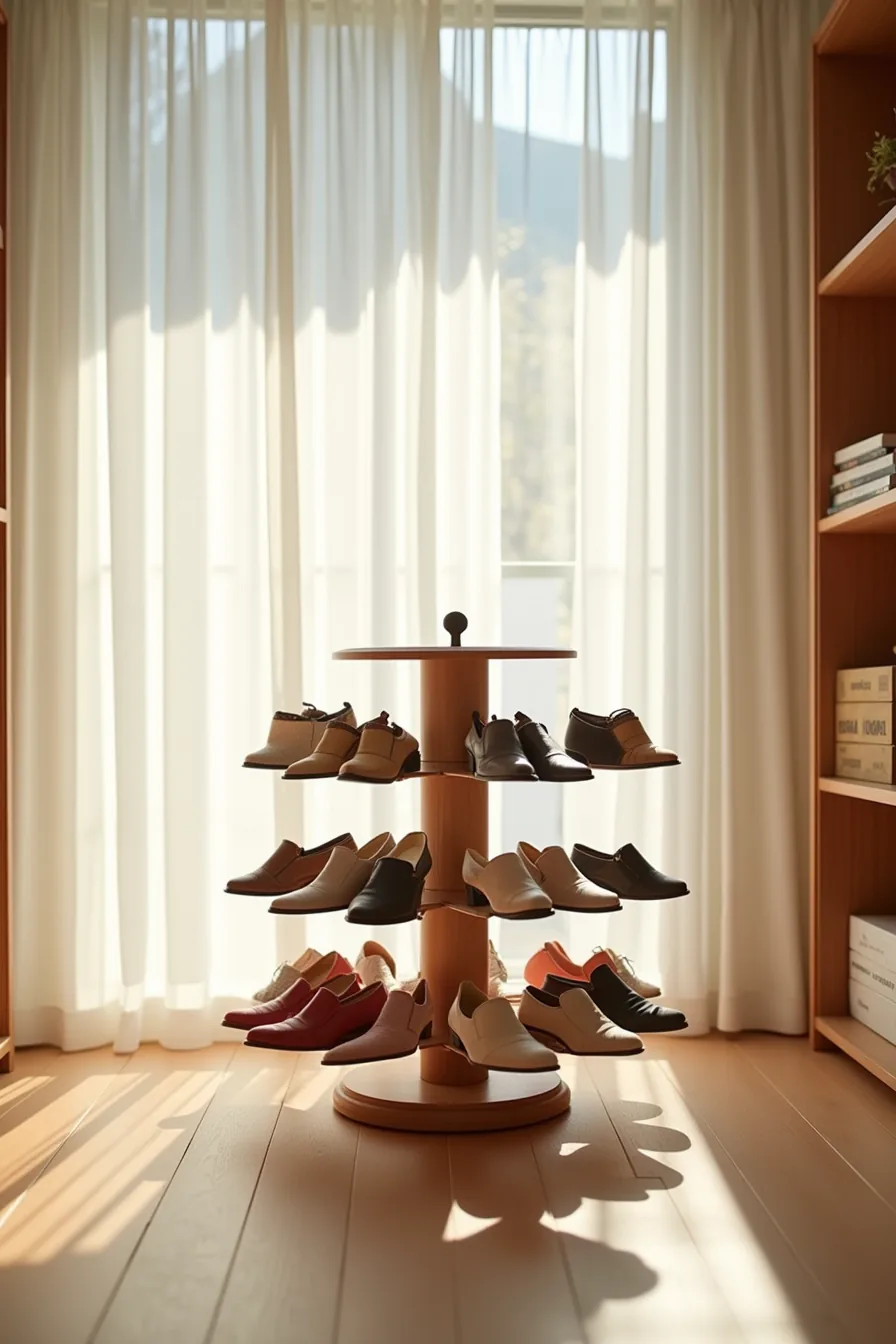
A circular rotating carousel positions your daily rotation within arm’s reach, eliminating the crouch-and-dig cycle that wears out both your knees and your patience. The center spindle anchors a radial arrangement of shoe types, sneakers at the near edge, loafers mid-circle, dress shoes toward the back, so a single spin brings the target pair to the front. Most floor-standing carousels run 24 to 30 inches in diameter and support 25 to 40 pounds, which translates to roughly 8 to 12 pairs depending on boot height and weight.
This setup suits active wardrobes in larger closets where floor space is available; you need a clear circle at least 4 feet across to spin comfortably without clipping adjacent shelving. Keep the carousel on a hard floor surface, carpet drag increases resistance and strains the turntable bearing over time. For practical closet organization ideas shoes, pair the carousel with a weekly reset: return worn pairs to the same radial position each day so the visual pattern stays predictable.
Expect to tighten the spindle nut every few months; the torque of daily rotation loosens it faster than you’d think.
Built-In Shoe Cubbies: A Long-Term Investment for Permanent Homes
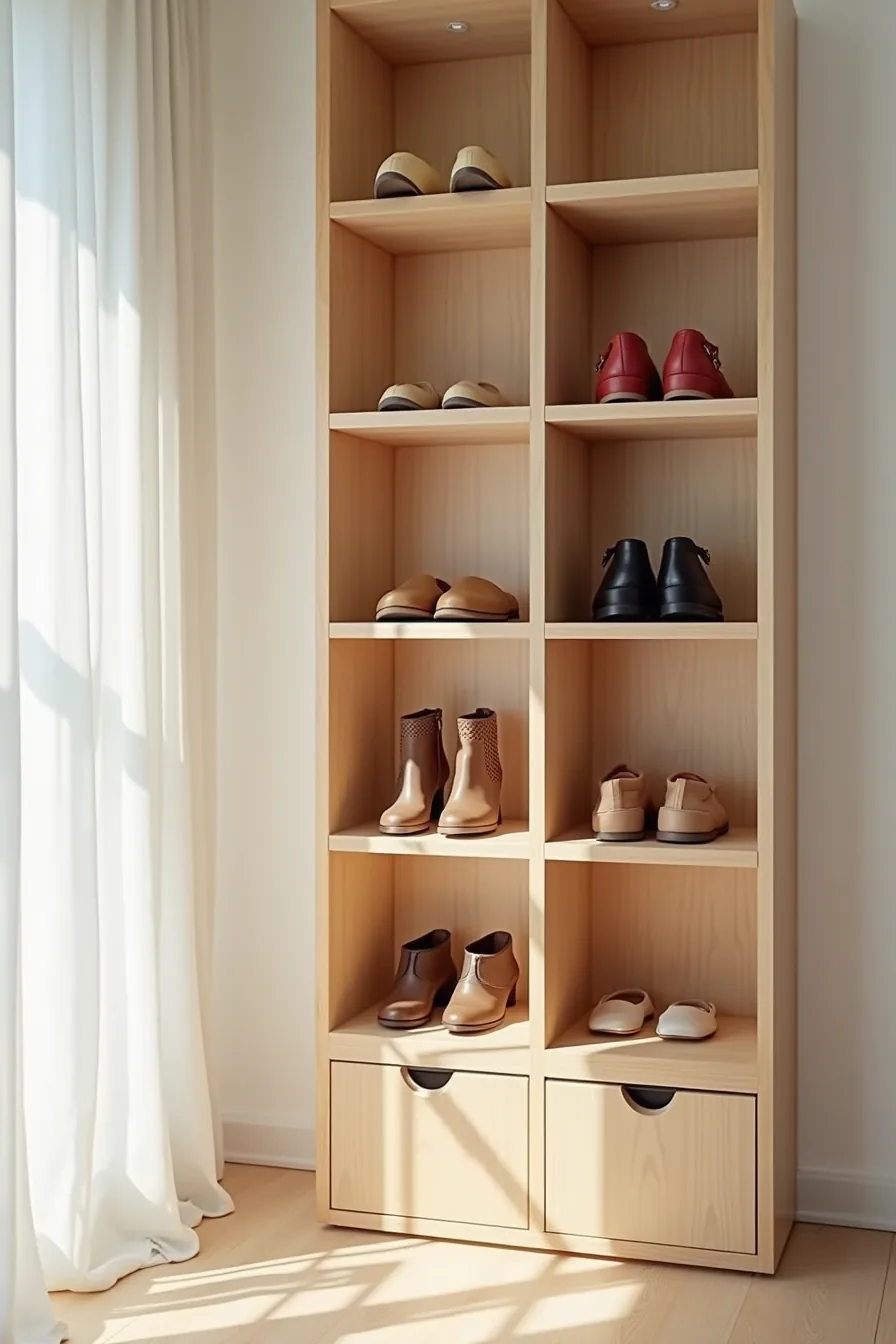
A wall-mounted wooden cubby system with nine individual compartments transforms a blank wall into a permanent storage asset, provided you own the walls you’re drilling into. Each compartment holds one or two shoes displayed facing forward, showing toe and heel, a grid that turns your collection into a visual inventory you can scan at a glance. This orientation also prevents the heel-to-toe stacking that crushes soft loafers and distorts sneaker collars.
Custom or semi-custom systems run $800 to $3,000 depending on wood grade, compartment depth, and whether you hire a carpenter or assemble flat-pack units. The investment pays off only when compartment height matches your actual collection, measure your tallest boot shaft before committing, because a 6-inch cubby gap renders ankle boots useless. If you’re weighing budget vs. Splurge closet organization ideas shoes, this is the splurge: it anchors your closet’s architecture, adds resale value, and needs refinishing only every 8 to 10 years.
Slotted Dividers and Drawer Inserts for Flat Organization
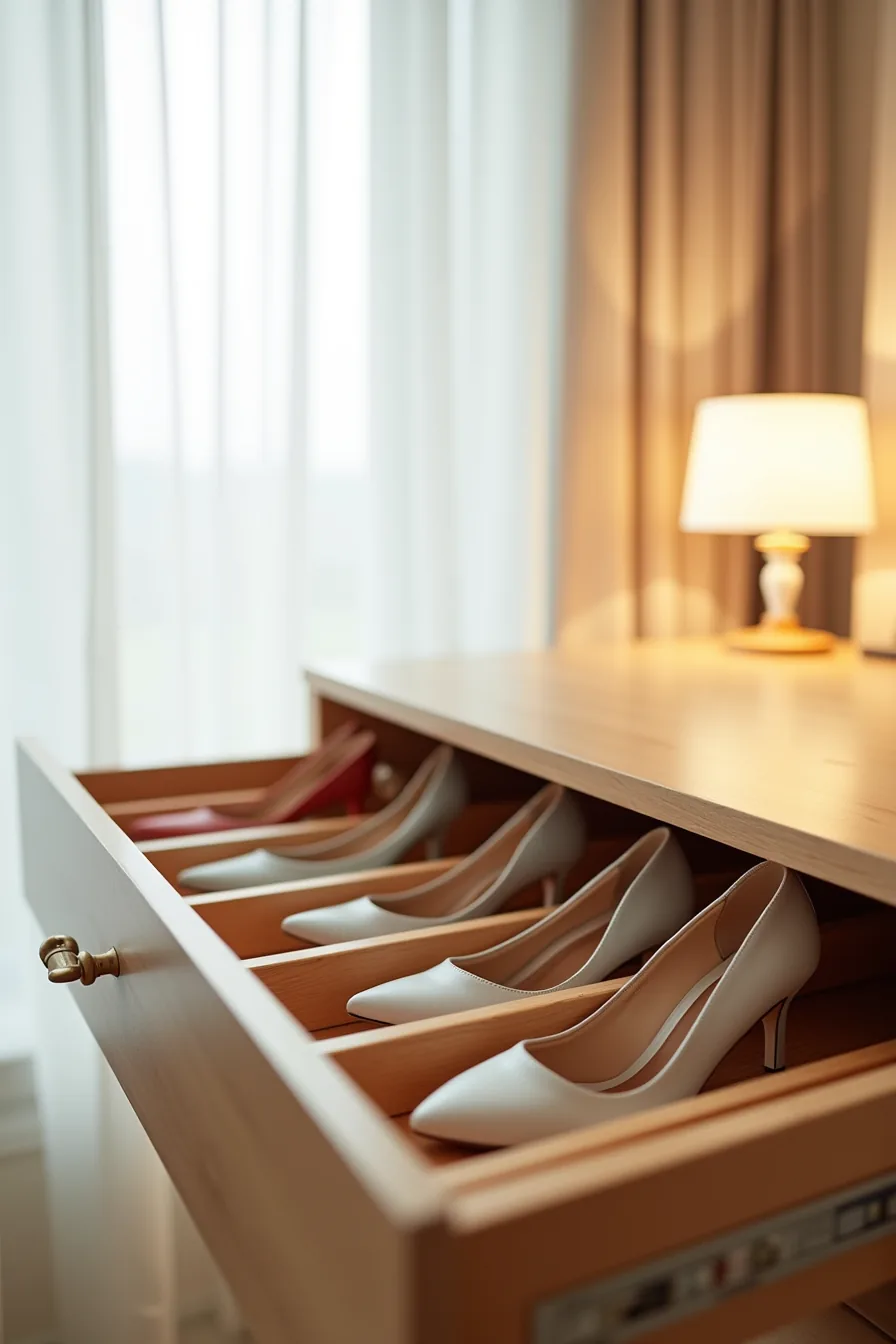
An open drawer fitted with five vertical slotted dividers holds your shoes upright on their soles, each slot angled slightly so you see the profile and sole at a glance. This setup completely eliminates the heel-to-toe stacking that crushes soft loafers and distorts sneaker collars, the most common closet organization ideas shoes mistakes to avoid when you’re short on floor space.
The dividers work best in deep drawers (18 to 24 inches inside) where shoes would otherwise pile into an unsearchable heap. You can buy adjustable bamboo or acrylic inserts for $15 to $40 per drawer, or cut your own from 1/4-inch plywood if you need custom slot widths for boots. Position the tallest shoes at the back and low-profile flats up front so the drawer closes without resistance.
This route suits renters and anyone with existing furniture, no drilling, no mounting, and the inserts lift out when you move. Dust collects on exposed soles, so vacuum the drawer bottom monthly and wipe leather uppers with a dry cloth to maintain shape.
Where to Start
Pick the one shoe category that frustrates you most, daily sneakers, seasonal boots, or rarely-worn heels, and solve that single zone first. Measure the depth of your current shelving or floor space against the storage type you’ve chosen as your primary solution. Budget routes like stackable wire racks run roughly $20–$60 per unit, while a custom built-in for a 6-foot reach-in closet typically lands in the $300–$900 range depending on materials and labor.
Your next step today: pull every pair out, count them, and discard any you haven’t worn in the past 12 months. That number becomes your target capacity, and it tells you exactly which solution from this guide, tiered shelves, tilt-out bins, or a clear-front cabinet, deserves your first purchase.
Frequently Asked Questions
How many shoes can a typical over-the-door organizer hold before it becomes unsafe?
Most over-the-door organizers safely hold 12–20 pairs of lightweight shoes. Exceeding 25 pairs risks damaging the door hinges and the organizer’s hooks. Reinforce with additional hooks or transfer heavy boots to floor storage.
What’s the difference between storing shoes in boxes versus on open shelves in terms of dust and fading?
Boxes block dust and UV light, preventing fading, but trap moisture if shoes are damp. Open shelves expose shoes to dust and direct sunlight, causing gradual color loss and requiring frequent wiping. Use breathable boxes for leather.
Can you use a shoe carousel in a closet smaller than 4 feet wide?
A standard carousel needs at least 3 feet of floor-to-ceiling clearance and 4 feet of depth. In a narrower closet, choose a wall-mounted tilting carousel or skip it, rotation requires adequate side space for comfortable access.
How do I prevent mold and odor when storing shoes in sealed containers?
Always air-dry shoes for 24 hours before sealing, then add silica gel packets or cedar blocks. Leave the container slightly unsealed or drill tiny ventilation holes. Check monthly and replace desiccants every 2–3 months.