Valentines Day decorations for home are less about a single look and more about choosing a strategy that fits your space, budget, and tolerance for seasonal upkeep. You can spend under $30 on a tabletop vignette or invest in a permanent piece you’ll rotate annually. The key is matching the effort to your lifestyle, not the calendar.
What follows are six distinct approaches, each with clear costs, time commitments, and room suitability, so you can pick one and execute it this weekend.
Key takeaways
- Scale your garland to the entryway width: use 6–8 feet for a standard 36-inch door frame, and secure it with command hooks rather than nails to avoid wall damage.
- Anchor tabletop centerpieces with a single low vase (under 10 inches tall) so sightlines stay clear across the dining table, and swap in blush napkins for a cost-free accent.
- Wrap a headboard with removable velvet fabric strips or a tension rod curtain for a renter-friendly bedroom accent that takes under 30 minutes to install and zero paint.
- Cap string light wattage at 7–10 watts per strand for mantel or shelf placement, and use a timer plug to limit daily burn time to 6 hours for safer, longer-lasting bulbs.
Entryway Focal Point: Red and Blush Garland Installation
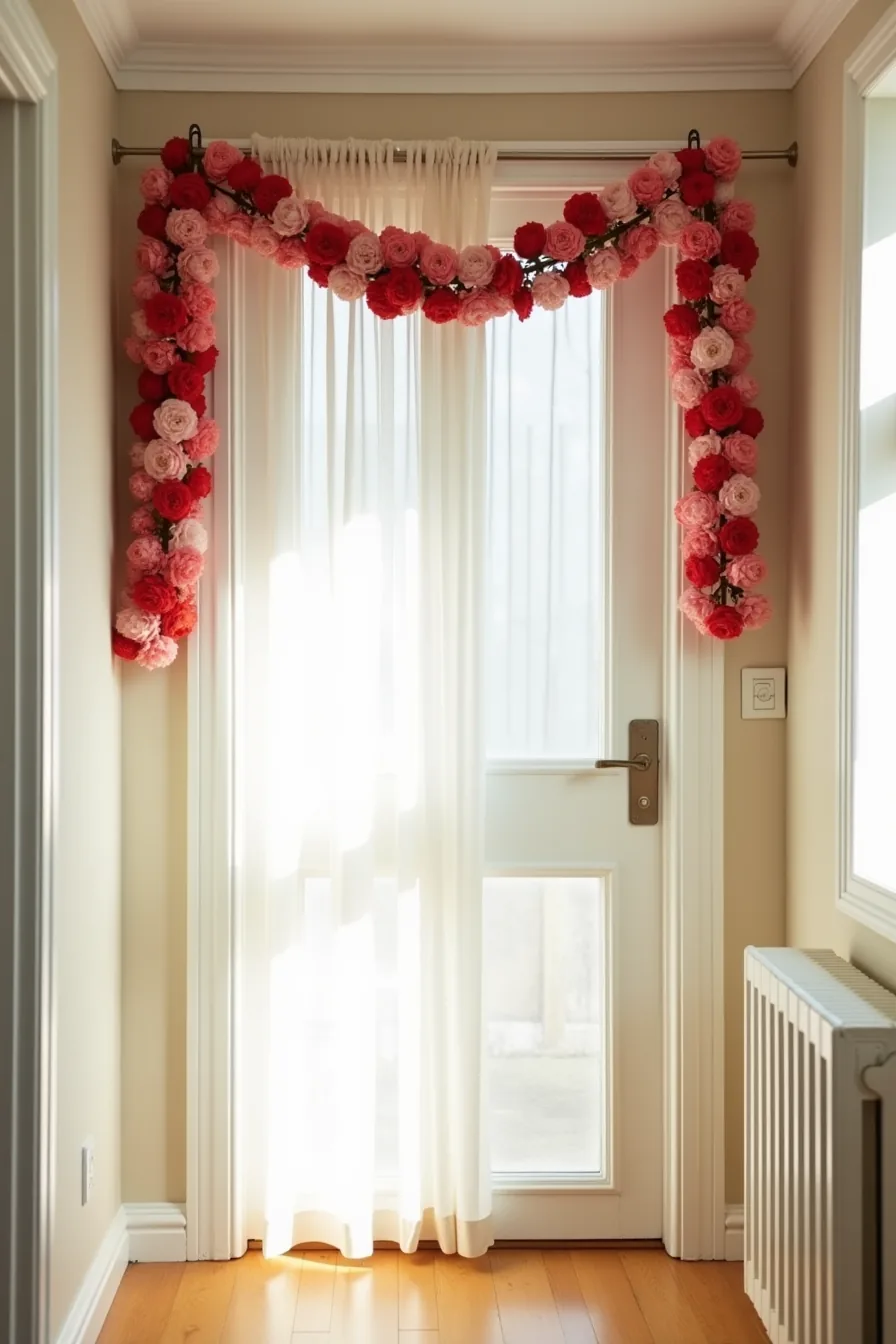
Draping a silk flower garland across your doorframe creates an immediate visual anchor without touching wall paint. This installation works best in entryways with at least 8 feet of ceiling height, so the looped fabric and blooms hang 6-8 inches below the frame without brushing the heads of most visitors. The contrast of red and blush silk flowers against a white painted door and light wood trim draws the eye upward, making narrow hallways feel taller.
Secure the garland with adhesive hooks rated for 5-10 pounds, placing them at the top corners and center of the frame. Test each hook with steady downward pressure before hanging the full arrangement, and remove the hooks by stretching the tab sideways rather than pulling straight down to avoid peeling the door finish. Expect to spend 30-45 minutes on installation, and budget 40-80 dollars for a pre-made 6-9 foot silk garland plus hooks.
This approach suits renters because it leaves zero permanent marks, and the garland can be re-draped on a mantel or staircase railing for a second life after Valentine’s Day.
Tabletop Centerpiece Styling for Dining and Console Spaces
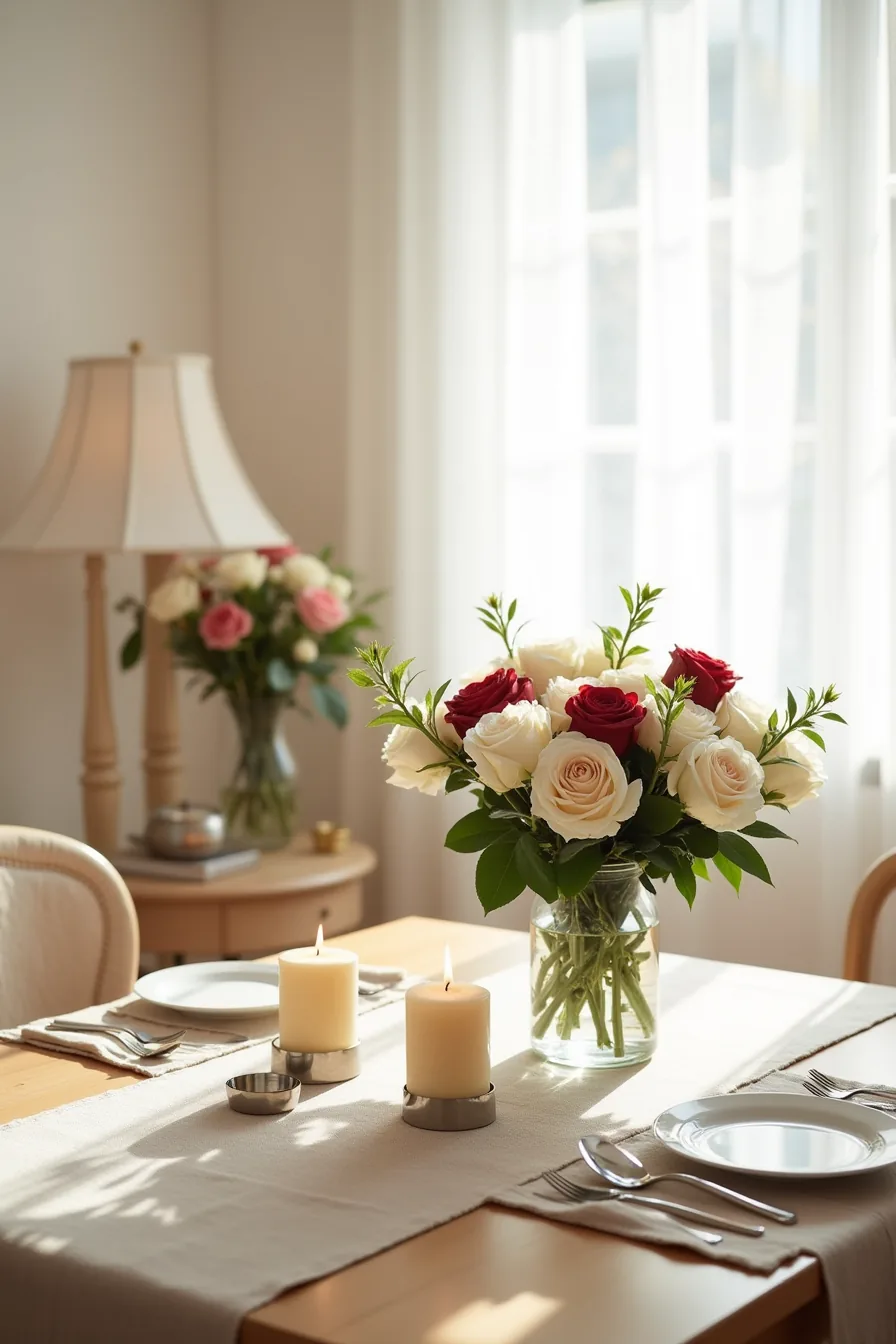
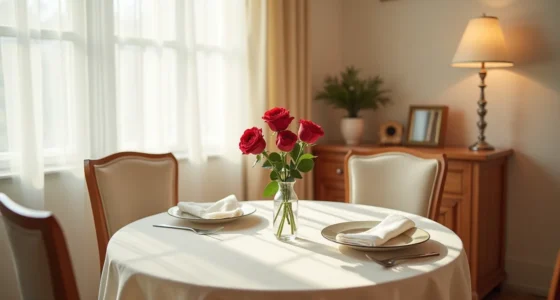
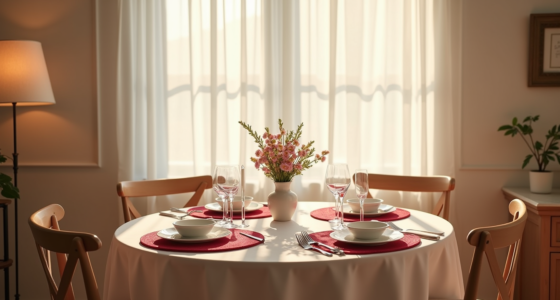
The most forgiving Valentine’s setup is a low, layered centerpiece: a glass vase with white and red roses flanked by two unlit cream pillar candles and small metallic votives on a neutral table runner. Keeping the vase under 10 inches tall preserves sightlines across the table, so conversation flows uninterrupted. This composition suits both a 4-seat apartment table and a 12-person dining room, scale the rose count from a 5-stem bunch to 20 stems, and widen the candle spacing proportionally.
For a budget route, use grocery-store roses (20-30 dollars) and 3-inch votives from a dollar store; the arrangement lasts 5-7 days with daily water changes. A splurge version swaps in garden roses and beeswax pillars, doubling the cost but extending freshness to 10 days. On a console table, halve the height to 6 inches and use a single pillar to avoid crowding the entry surface.
Place the runner 2-3 inches from the table edge, and always blow out candles before leaving the room, metallic holders conduct heat.
Bedroom Accent Wall or Headboard Wrapping Without Paint
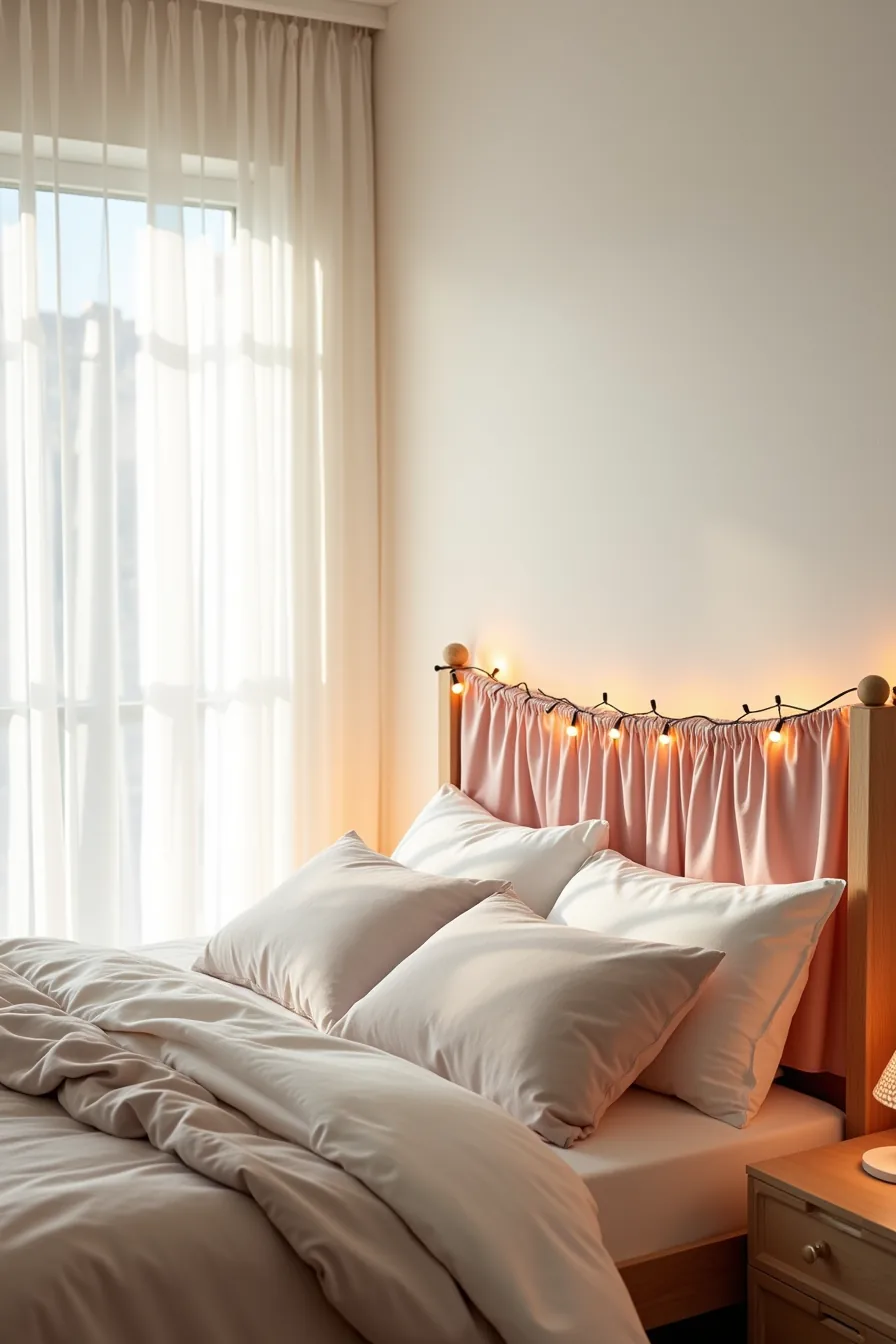
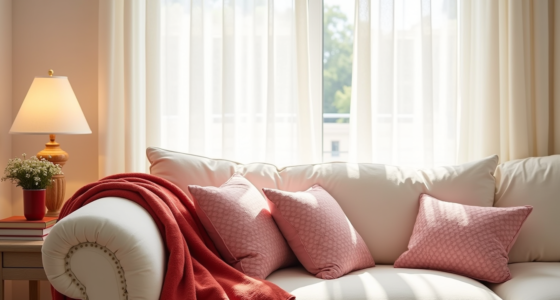
A blush fabric drape pinned at the top corners of a queen headboard transforms the entire sleeping area with minimal effort. You need 5-6 yards of lightweight muslin or polyester sheer, two command hooks mounted above the headboard corners, and binder clips to gather the fabric into soft swags. For a queen bed, hang the hooks 54-60 inches apart and let the fabric fall to just above the mattress, this creates a vertical frame that visually raises the ceiling without touching any wall surface.
Weave warm string lights horizontally across the fabric in three parallel rows, securing them with small safety pins every 12 inches to prevent sagging. This setup suits renters because removal takes under ten minutes and leaves only two pinholes per hook. The full or twin bed version uses 3-4 yards of fabric with hooks spaced 39-45 inches apart; for a king, increase to 7-8 yards and add a third center clip to distribute weight.
Choose LED string lights rated for indoor use, and keep the power cord routed along the nightstand base to avoid a trip hazard. Dust the fabric monthly with a lint roller; wash it on a gentle cycle at season’s end, then store it folded with the lights coiled separately.
Living Room Mantel or Shelf Arrangement Strategy
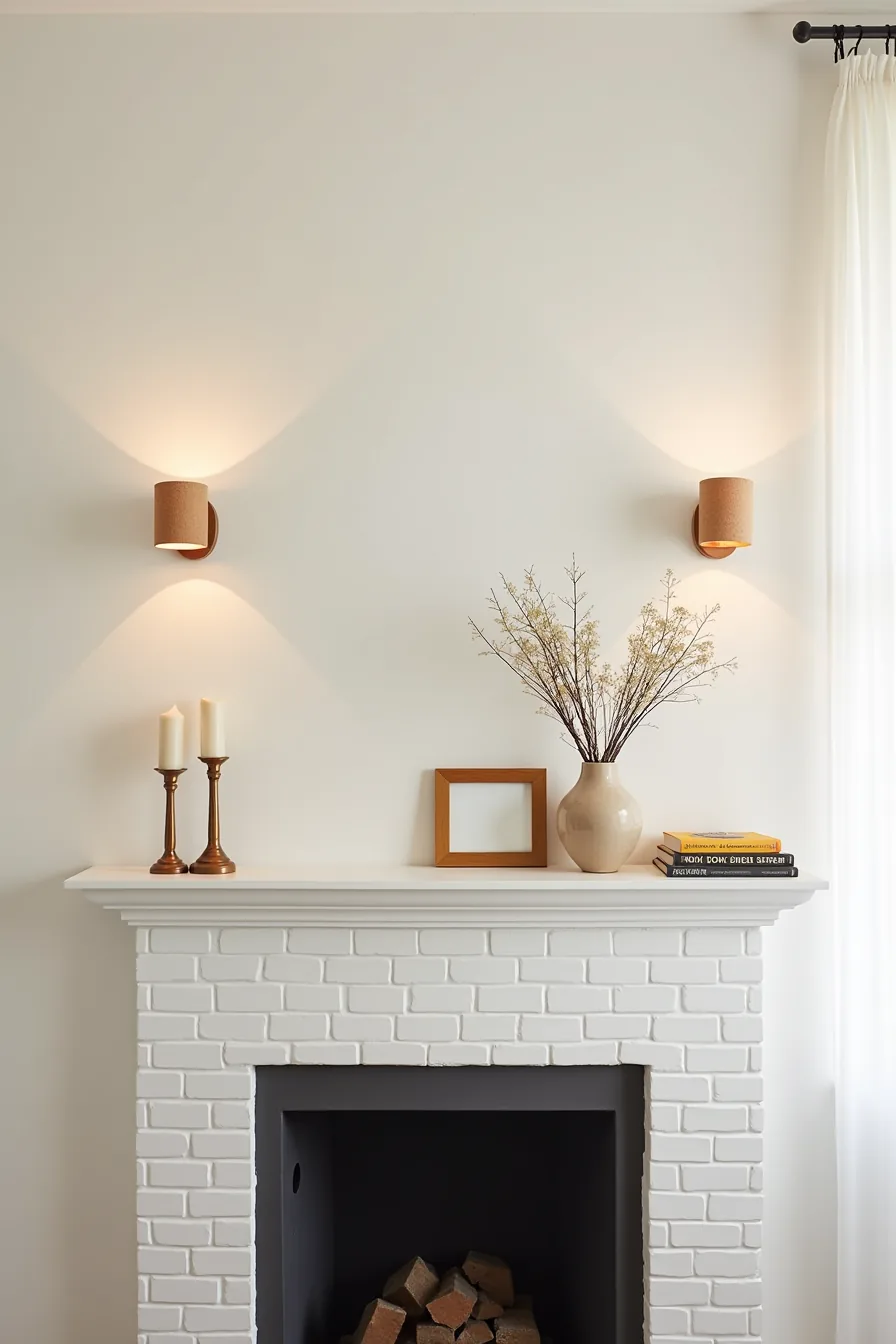
The mantel setup that reads as intentional rather than cluttered follows a simple rule: three distinct heights, uneven spacing, and one unifying color story. On a standard 54-inch mantel, place a tall candlestick on the left, a medium ceramic vessel holding branches in the center, and a small framed object on the right, this staggered rhythm draws the eye across the fireplace without demanding equal attention from each piece. For floating shelves, repeat the same logic vertically: heavier vessels sit at the base, lighter frames and candlesticks rise toward the top, and you leave at least 3-4 inches of breathing room between objects.
Proportion is the difference between a styled vignette and a crowded shelf. On a 48-60 inch mantel, your tallest piece should reach 20-24 inches; anything taller visually competes with the fireplace opening. In small living rooms, scale down to a 12-inch candlestick and a 6-inch vessel; in large spaces, double the heights but keep the same three-object logic.
The ceramic vessel acts as the anchor because its matte finish absorbs the visual weight of the branches, while the framed object adds a personal note, choose a piece with a blush or deep red mat to tie the arrangement to the holiday without committing to themed decor. Dust the branches weekly and wipe the vessel with a dry cloth; avoid watering real branches on the mantel, as dripping can stain the tile. This setup suits anyone who wants a low-maintenance focal point that works from January through February, and it’s one of the most common Valentines Day Decorations For Home mistakes to avoid, overloading the surface with five or more items, which instantly reads as clutter rather than curation.
Lighting as Decoration: Placement and Wattage Considerations
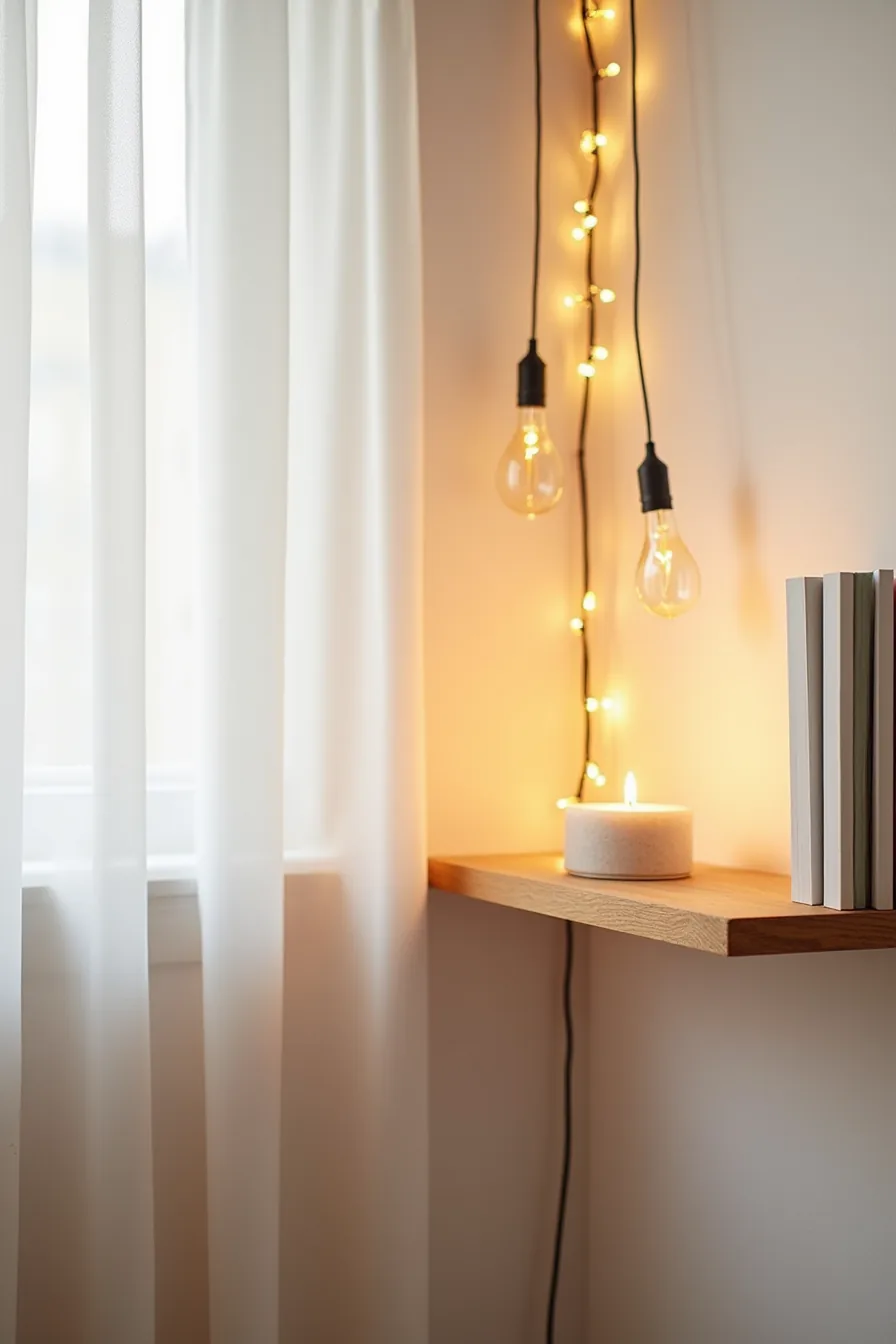
Lighting does the heavy lifting in a Valentine’s Day scheme because it sets the mood without adding clutter. Drape warm Edison-style string lights along a floating shelf, letting the bulbs hang slightly over the edge to cast a visible glow on the white wall behind, this creates a soft halo effect that flatters any room. Pair them with a flameless LED candle on the same shelf; the flicker mimics a real flame, so you get the romantic ambiance without the fire hazard near books or fabric.
For placement, keep string lights at least 6-8 inches away from curtains and never route cords under rugs or across doorways. Use a 5-10 watt warm white bulb for a cozy glow; anything brighter reads as task lighting rather than decoration. In a small apartment, one 6-foot strand on a single shelf suffices; in a large living room, extend to two strands along separate walls to balance the light.
Flameless candles with a 3-6 hour timer are the renter-friendly choice, they require no outlet, no smoke, and no cleanup. Budget route: a $10-15 LED string set with a clip-on timer; long-term investment: a dimmable LED lamp with a warm filter that pulls double duty year-round.
Seasonal Storage and Year-Round Maintenance Planning
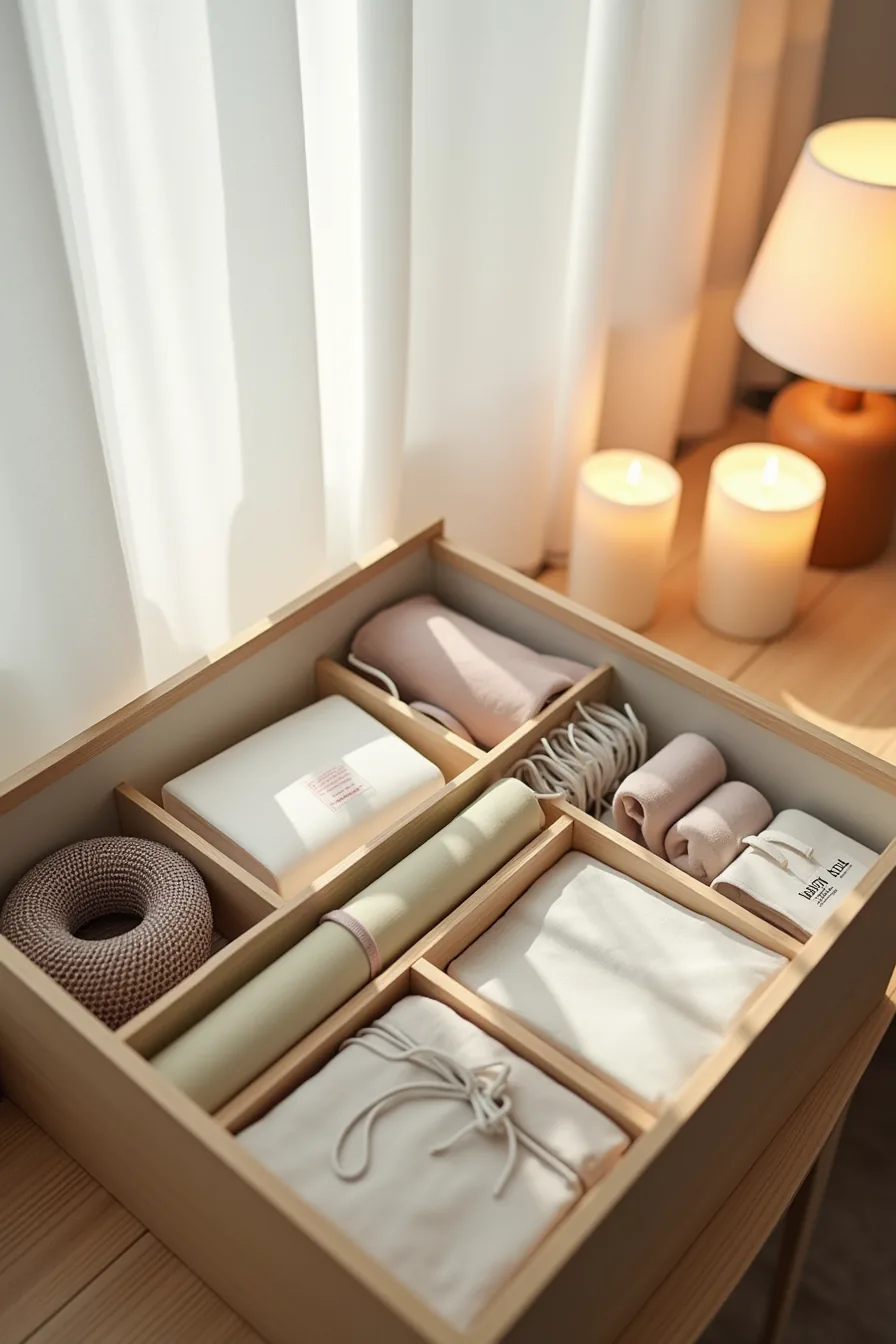
Your Valentine’s Day decorations will last multiple seasons if you store them with the same care you used to hang them. Coil garlands loosely, never wrapped tight, to prevent kinks in the wire, and separate them from candles by at least one compartment so wax residue doesn’t transfer to fabric. Fold cloth items flat rather than rolling them; creases from tight rolls set permanently after a few months in storage.
Choose an open bin with dividers so you can see what’s inside without digging. Place wrapped garland in one section, candles upright in another (they crack and lean if stored on their sides), folded fabric in a third, and small hooks in a labeled pouch so you don’t hunt for hardware next February. Keep the bin in a closet or under a bed, avoid attics and garages, where temperature swings cause candle sweating and fabric yellowing within one season.
Before packing, wipe down surfaces with a dry microfiber cloth; moisture invites mildew on both fabric and electronics. Check string light cords for fraying and test each strand before storage, not after retrieval. Estimate a three-year lifespan for budget-grade decorations and five-plus for higher-quality pieces; replace anything showing rust, cracking, or discoloration rather than storing it for another year.
A 20-minute pack-away routine now saves you an hour of untangling and sorting when the season returns.
Your Next Step
You now have six distinct directions, each with clear trade-offs in cost, effort, and longevity. The right choice depends on your space constraintshols and how long you want the decorations to last.
Start by measuring one wall or surface where you want the impact to land. Then pick exactly one idea from this list, the paper garlands if you’re on a budget, the fabric draping if you rent, or the framed botanical art if you want something permanent.
Commit to that single piece first. Once it’s in place, you’ll see what the room actually needs next. Buy or make that one element today, and you’re already ahead of the February rush.
Frequently Asked Questions
How do I decorate for Valentine’s Day in a rental without damaging walls or losing my security deposit?
Use command strips, removable adhesive hooks, or freestanding decor like mantle garlands and tabletop vignettes. Avoid nails, screws, or heavy wreaths on doors. Test adhesives on a small area first, and remove them slowly at a 45-degree angle.
What’s the difference between budget Valentine’s decorations and investment pieces, and which lasts longer?
Budget items, paper garlands, plastic hearts, cost under $20 but fade or tear within one season. Investment pieces like ceramic vases, linen throws, or brass candleholders last 5–10 years and can be reused year-round. Choose investments for neutral, timeless shapes.
How much space do Valentine’s decorations actually need in a small apartment or studio?
A 30-inch console or shelf can hold a 12-inch vase, two candles, and a small heart garland without crowding. Skip floor decor; use vertical space like door frames or window ledges. Keep walkways clear with items under 6 inches deep.
Can I use Valentine’s decorations in a room with kids or pets without safety concerns?
Choose shatterproof ornaments, fabric hearts, and flameless LED candles with secure bases. Avoid small choking hazards like beads or glitter that pets can ingest. Place anything breakable above 4 feet, and anchor tall vases or sculptures with museum putty.