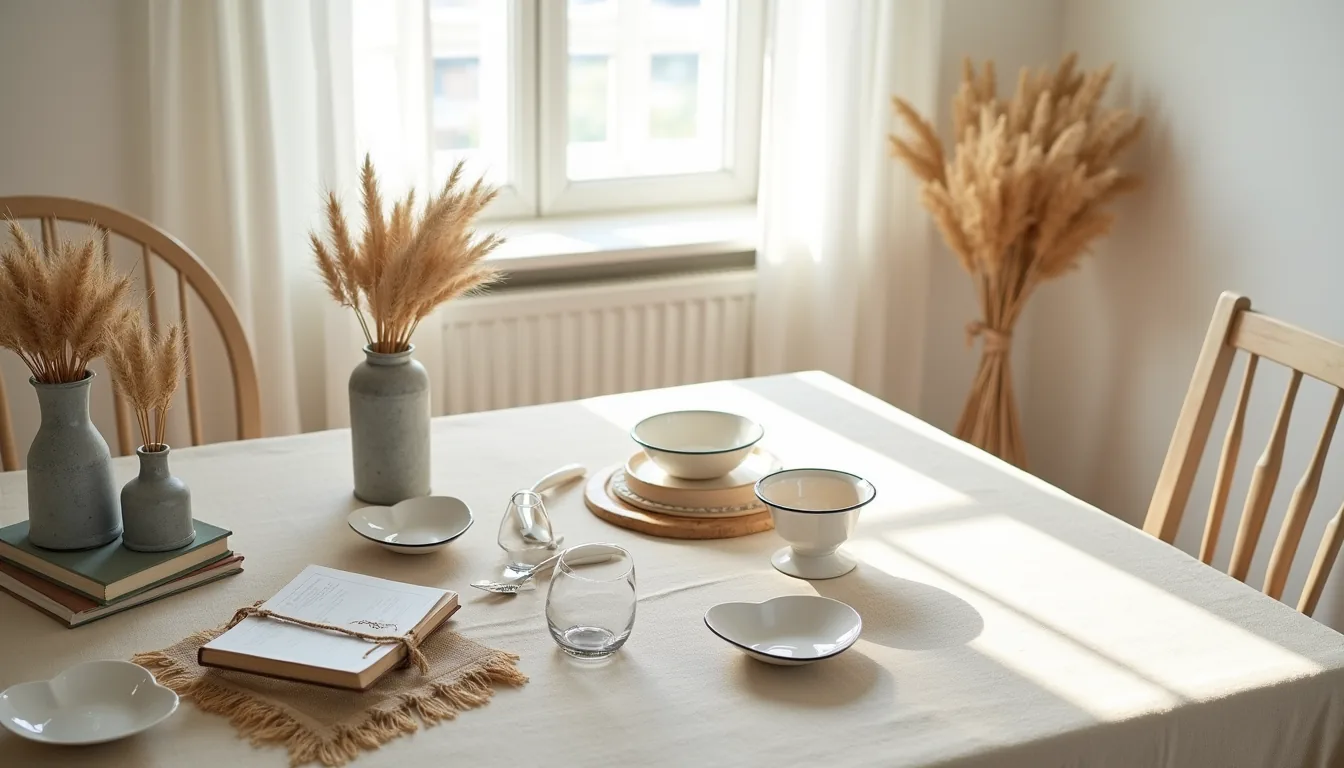
Farmhouse valentines day decor succeeds when it leans into the same principles that make the style work year-round, raw wood, galvanized metal, and a restrained palette of red, white, and cream, but swaps rustic neutrality for a measured dose of romantic warmth. The result is a look that feels intentional, not kitschy, and it adapts cleanly to everything from a 400-square-foot apartment to a sprawling farmhouse kitchen. Below are six distinct approaches, each with the exact materials, scale, and maintenance trade-offs you need to decide which one fits your space, and your budget, before you buy a single burlap heart.
Key takeaways
- Skip the clichés: Mix at least two textures, reclaimed wood with galvanized metal or burlap with linen, so the look reads farmhouse, not just red-and-pink clutter.
- Scale to your wall: Hang a heart display 24–36 inches wide on a 60-inch console, but scale down to 12–18 inches for a small entryway to avoid overpowering the space.
- Renter-proof your decor: Use command hooks for garlands and adhesive putty for enamelware collections; both come off clean without patching drywall or stripping paint.
- Budget beats buy-once: A $20 galvanized vase with dried eucalyptus lasts 2–3 seasons, while a $60 linen runner needs ironing and spot-cleaning, choose based on your maintenance tolerance, not just the look.
Reclaimed Wood and Metal Heart Wall Displays
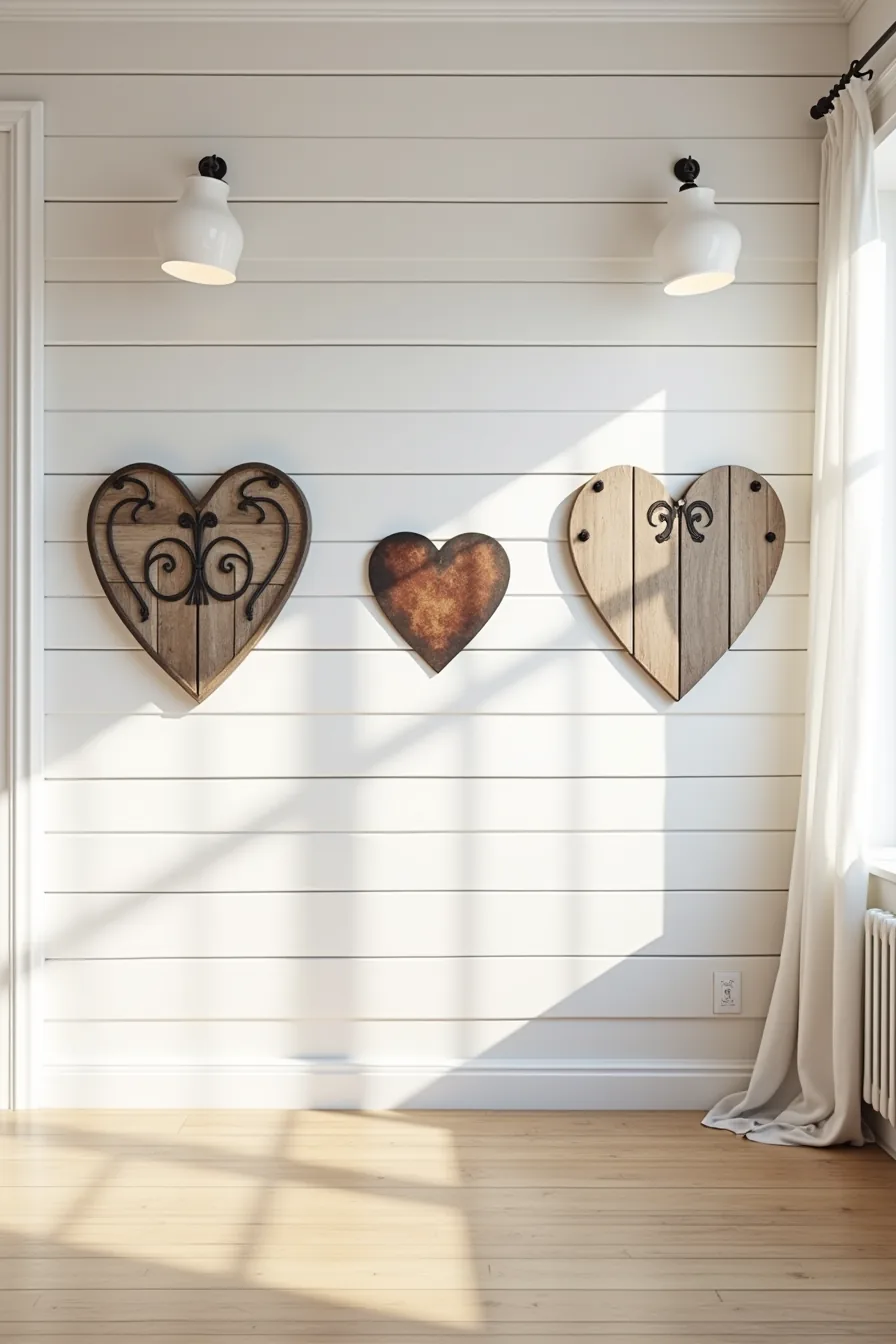
Mount a trio of layered hearts on a shiplap wall, one large weathered wood heart with a wrought-iron overlay, a smaller rusted metal cutout, and a reclaimed barn wood piece with iron scrollwork. Offset them at varying heights with 6-10 inches of breathing room between each piece; this staggered rhythm reads more intentional than a rigid row. For a 5-7 foot wide wall, keep the largest heart to roughly 18-22 inches across and scale smaller pieces down proportionally.
This approach suits living rooms or entryways where you want a permanent seasonal anchor, but it isn’t renter-friendly, screwing into drywall or plaster leaves holes you’ll need to patch. Source pre-made pieces from Etsy or local salvage yards for $40-$120 total, or build your own from scrap lumber and an iron scroll bracket from a hardware store. Dust the metal elements monthly with a dry microfiber cloth; avoid liquid cleaners on rusted finishes, as they’ll strip the patina.
Linen Table Runners with Embroidered Motifs
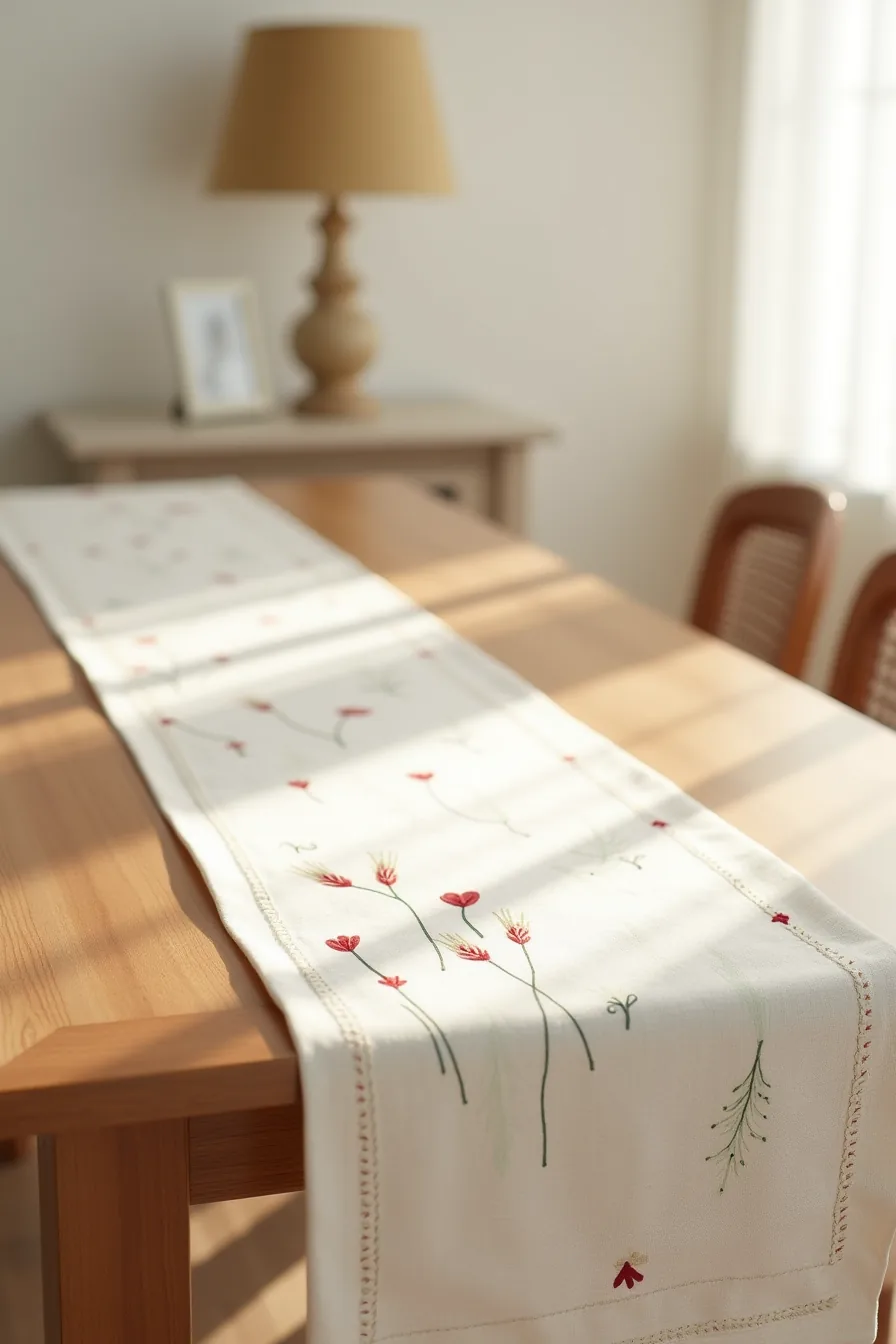
A cream linen runner with stitched red wheat stalks and small hearts spaced roughly 6 inches apart gives a console table a soft, handmade focal point without covering the wood surface. On a standard 6-foot console, choose a runner that overhangs 6-8 inches on each end; a runner that ends flush with the table edge looks like a mistake, not a design choice.
This is the most renter-friendly option in the farmhouse valentines day decor spectrum, no hardware, no wall damage, and it folds into a drawer on February 15th. Expect to pay $35-$75 for a quality linen runner with hand-embroidery; machine-embroidered versions run $20-$40 but show a tighter, more uniform stitch that reads less rustic. Linen wrinkles naturally, which works in your favor here, but spot-clean only and hang to dry, since machine washing shrinks the fabric and distorts the embroidery pattern.
For Practical Farmhouse Valentines Day Decor planning tips on surface styling, pair the runner with simple ceramics and skip garlands that compete with the embroidery’s rhythm.
Galvanized Metal Vases with Dried Botanicals
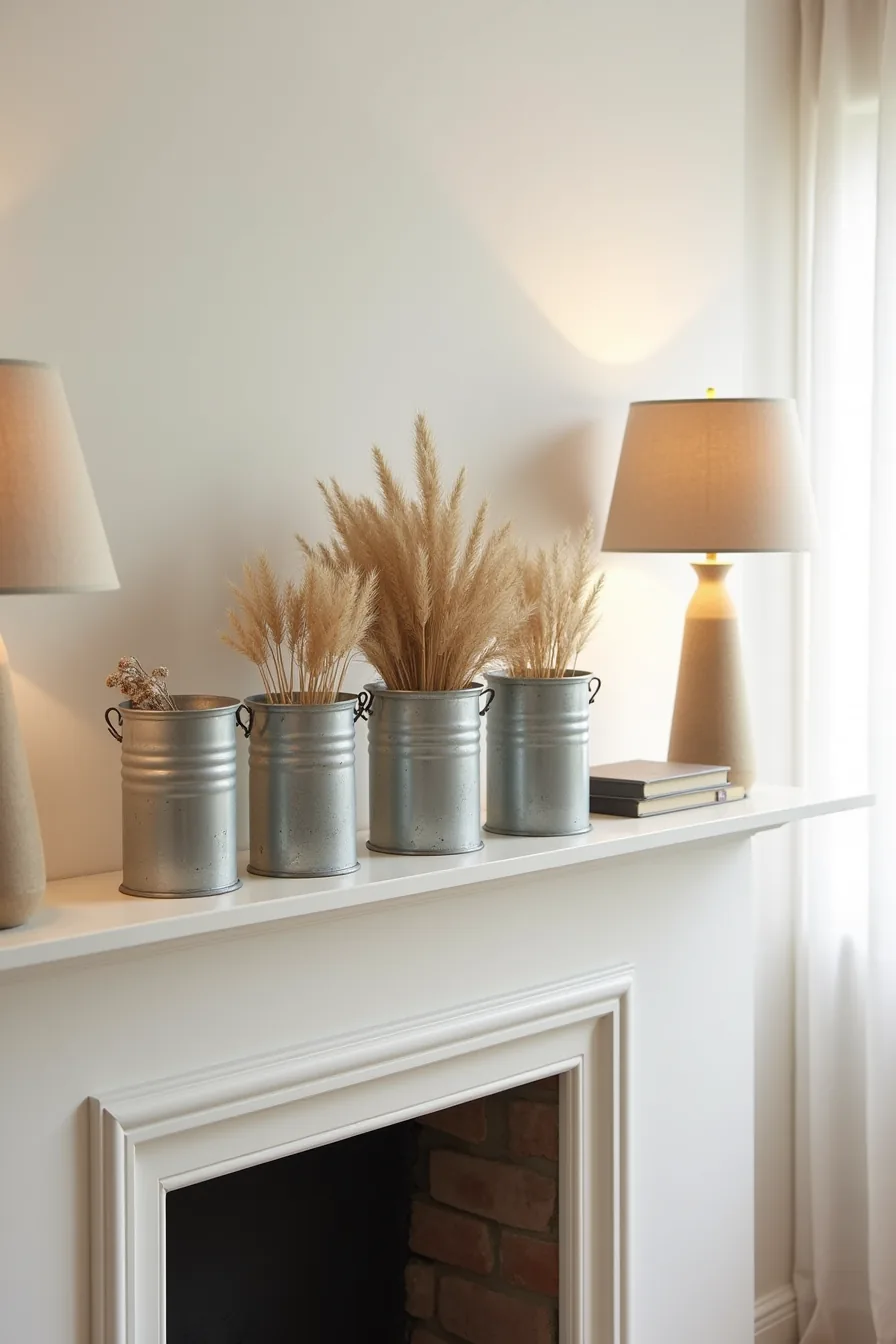
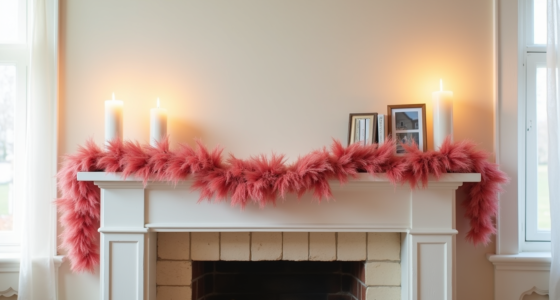
Five galvanized containers in graduated sizes, from a 4-inch tall votive up to a 14-inch tall urn, create a rhythmic line across a mantel that reads as collected over time rather than purchased as a set. The key is varied heights: keep dried pampas towering 20-24 inches above the tallest vase, let wheat sit mid-level, and trim bleached eucalyptus to just 3-4 inches above the rim of the smallest vessel. This staggered silhouette draws the eye diagonally across the fireplace without blocking sightlines into the room.
For sourcing, flea markets and estate sales yield authentic, rust-speckled pieces for $5-$15 each; new galvanized options at home stores run $12-$40 and lack the patina that makes aged metal feel farmhouse. Mixing old and new is fine, just keep the finish consistent so the grouping looks intentional. This arrangement shines on a 60-inch or wider mantel; on narrower surfaces, drop to three containers to avoid crowding.
Dried botanicals last 6-12 months if kept out of direct sunlight, and you can refresh them seasonally for under $20. Dust with a soft brush attachment; never spray water on galvanized metal, as it promotes oxidation streaks. This is the splurge-worthy route for those who want a Valentine’s display that transitions smoothly into spring, swap wheat for tulips and it earns its keep year-round.
Vintage Enamelware and Ceramic Heart Collections
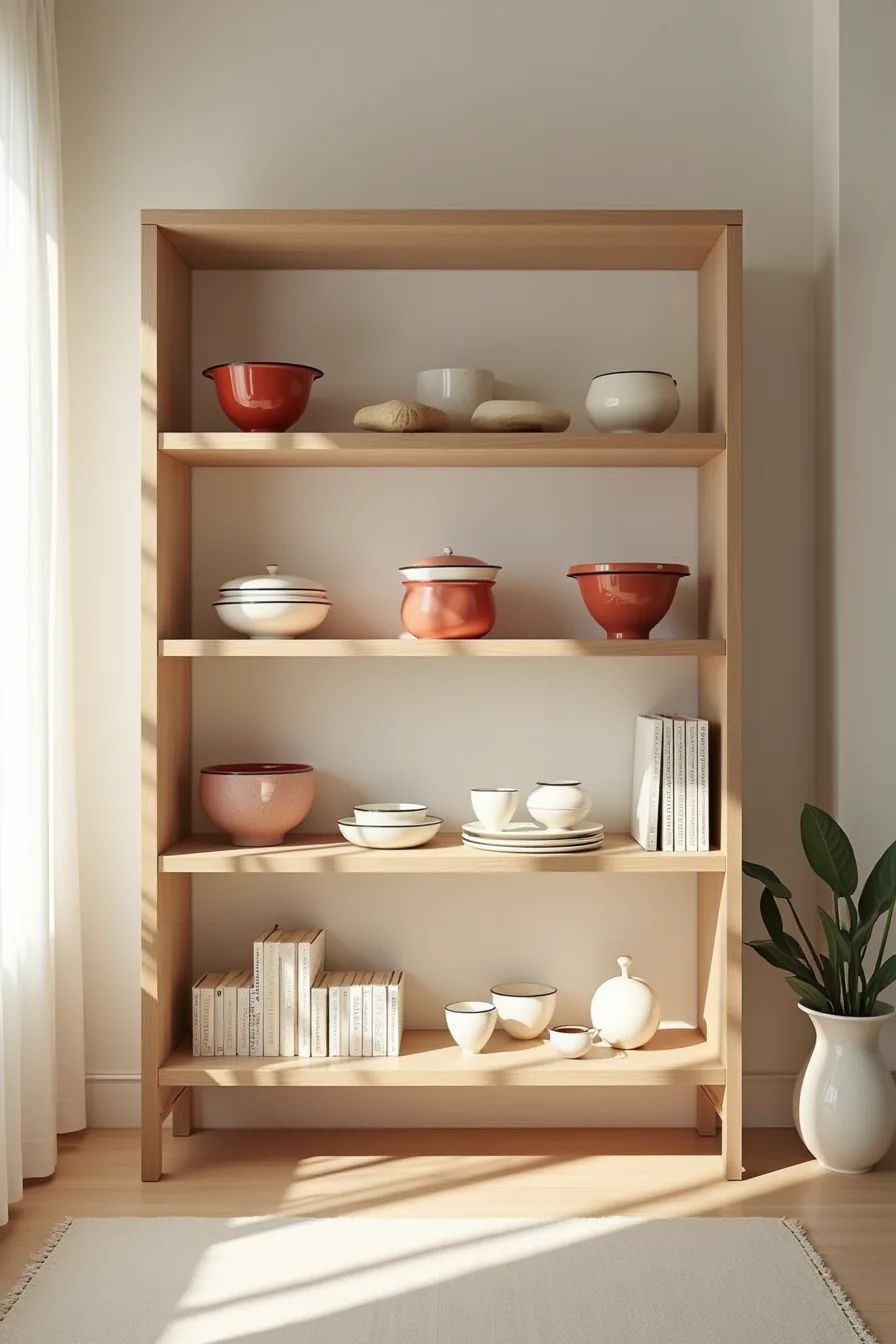
A freestanding wooden shelf unit with three open tiers gives you room to build depth, not just a row. Place the largest stoneware vessels at the back corners, drop cream enamelware bowls mid-depth, and let the smallest ceramic hearts sit forward where their shape reads clearly. This front-to-back layering prevents the collection from looking flat, and the mix of warm cream, soft red, and white keeps the palette cohesive without matching.
Authentic vintage enamelware from the 1940s-1960s typically runs $8-$25 per piece at antique malls, but genuine heart-shaped pieces are scarce, expect to pay $30-$60. Reproductions at big-box stores cost $10-$20 and pass visually at arm’s length, though they lack the hairline crazing and soft, hand-dipped edges that give originals their character. Combine both: use reproductions for the larger bowls you see at a distance)Skip the auction sites and save originals for the small, close-up hearts.
Storage matters here. Stack enamelware with paper towels between pieces to prevent chipping, and keep ceramic hearts off the shelf’s edge if you’ve kids or pets. Dust every two weeks with a dry microfiber cloth; avoid soaking enamelware in water, as rust forms at the rim where the steel is exposed.
This route suits renters and collectors alike, the pieces pack flat into a single banker’s box and require no wall damage.
Burlap and Lace Garland Swags
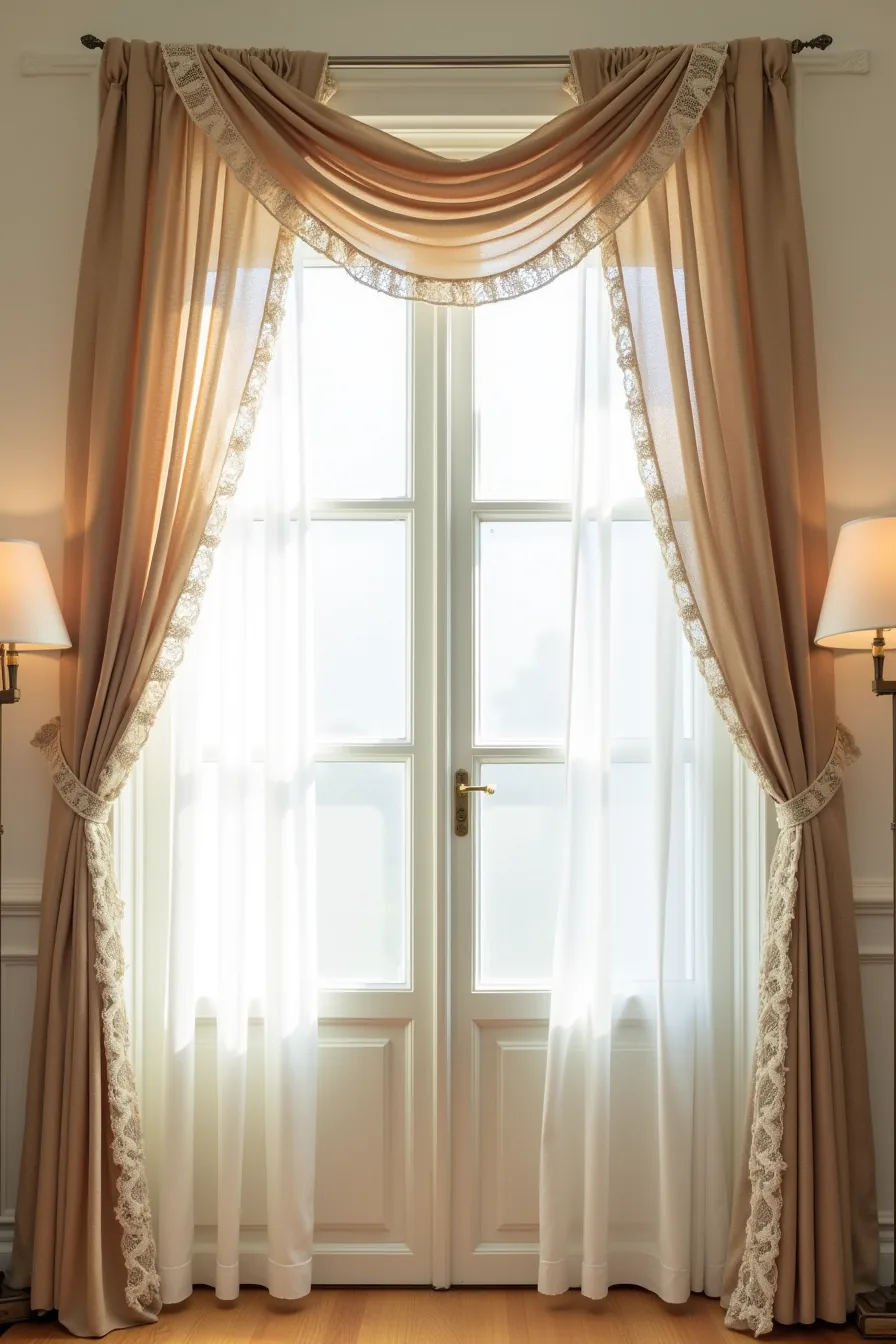
The doorway swag setup relies on two distinct layers: a textured burlap base with an ivory lace overlay woven through the loops at 12-18 inch intervals. This prevents the lace from reading as a separate strip and gives the garland a hand-crafted depth that a single material can’t achieve. At an 18-inch drop, the swag reads clearly without obstructing head clearance in a standard 80-inch doorway.
For renters, attach both ends to command hooks placed at the upper frame corners and secure the center dip with a single piece of thin-gauge wire clipped behind the hinge strike plate. Landscape staples work better for homeowners, push one through the burlap at each corner of the frame, leaving a lint-sized hole you can patch with putty in spring.
Pre-made 9-foot combinations run $20-$35. Bulk DIY with two yards each of 6-inch burlap and 3-inch lace costs roughly $12 and takes 20 minutes to knot together. Store twisted in a round plastic bin, facing olive, in a night stand drawer between seasons, this relation sheds the shed.
Farmhouse Valentines Day Decor Mistakes and Trade-Offs
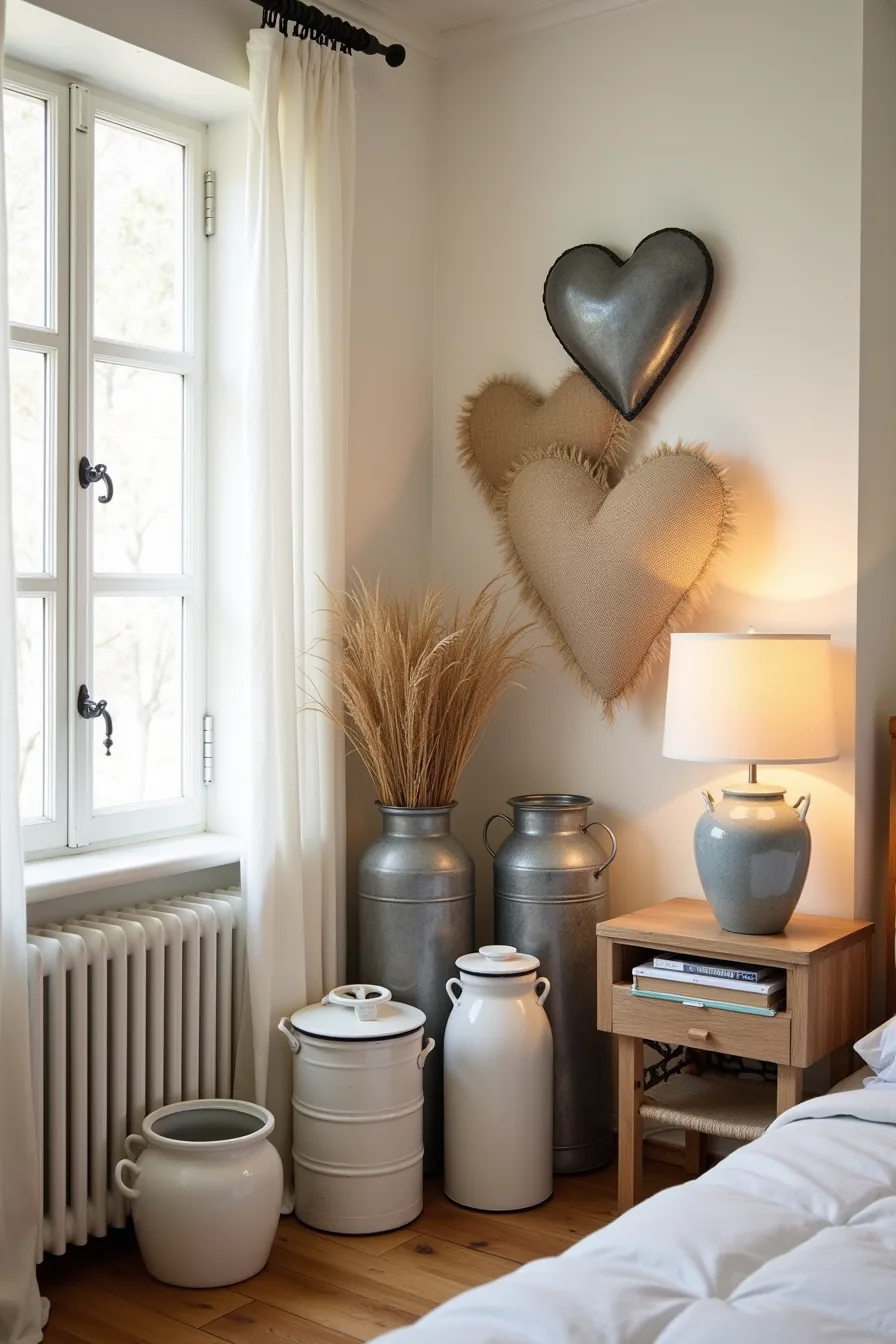
The most common mistake with farmhouse valentines day decor mistakes to avoid is ignoring the square footage you actually have. A 10×10-foot bedroom can’t absorb oversized galvanized vases, layered wall hearts, burlap swags, and stacked enamelware simultaneously, you end up with a crowded arrangement that blocks window access and turns the mantel into a storage shelf. Pick one focal point per surface, not three.
Burlap and dried botanicals are dust traps that need weekly attention. If you can’t commit to wiping each piece down every seven days, substitute smooth cotton ticking or painted wood, which only need a monthly pass with a dry microfiber cloth.
Finally, evaluate color against your permanent palette before buying. A blush-and-cream scheme looks jarring against cool gray walls; warm terra-cotta and sage integrate better. When in doubt, limit red accents to less than 15 percent of the visual surface area, this keeps the room feeling intentional rather than themed.
Your first move
Pick the single idea that solves your most pressing constraint, whether that’s the $15 budget garland, the renter-friendly window clings, or the heirloom-quality mantel sign. Buy only the materials for that one project and complete it this week.
Living with one finished piece for seven days will tell you more about scale and color than any mood board. If it feels right, layer in a second piece. If it overwhelms the room, you’ve learned that before spending on the rest.
Start with the one that fits your space and your tolerance for maintenance.
Frequently Asked Questions
What counts as farmhouse valentines day decor versus generic rustic decor?
Farmhouse valentines day decor pairs rustic textures, wood, galvanized metal, linen, with heart motifs, red or blush accents, and vintage-inspired pieces. Generic rustic decor lacks the Valentine-specific color palette and romantic symbolism.
Can I use farmhouse valentines day decor in a rented apartment without damaging walls?
Yes. Use command hooks, freestanding ladders, mantel-scape displays, or leaning framed art. Avoid adhesive strips on wallpaper or textured surfaces.
Heavy wreaths belong on doors with over-the-door hangers, not nails.
How do I scale farmhouse valentines day decor for a studio versus a large living room?
In a studio, focus on one vertical vignette, a console table or shelf, plus a small centerpiece. For large rooms, layer three zones: mantel or buffet, coffee table, and entryway. Keep proportions balanced: 24-36 inches of decor per 6 feet of wall.
What’s the realistic budget range for a complete farmhouse valentines day decor refresh?
A thrifted or DIY approach runs $15-$40. Mid-range store-bought pieces cost $50-$120. A full investment refresh with quality wood, ceramic, and linen items typically lands between $150-$300, excluding large furniture.