Dorm room decor ideas rarely fail because of a lack of creativity; they fail because of poor planning around space, rental rules, and budget, so here are six distinct approaches that solve for those constraints first. Each route below targets a different priority: one for tight wallets, one for damage-free walls, and one for pieces that outlast graduation. You’ll get placement logic, material specs, and maintenance trade-offs for every look, plus a checklist to match your room’s square footage.
Pick the strategy that fits your lease, not just your Pinterest board.
Key takeaways
- Plan your layout around your actual traffic path: leave at least 24–36 inches of clear floor space between the bed and desk to avoid constant side-stepping.
- Command strips and poster putty hold most framed prints and tapestries up to 5 pounds, but peel them off slowly at a 45-degree angle to avoid paint damage.
- Layer three light sources, overhead, task, and accent, using a clip-on LED lamp (under $20) and a warm-toned string light to shift from study mode to relaxing after 10 PM.
- Choose storage that doubles as seating like a trunk or ottoman with a 12–18 inch height, which works for small rooms but adds bulk you’ll need to move for vacuuming.
Minimalist Layouts for Tight Spaces
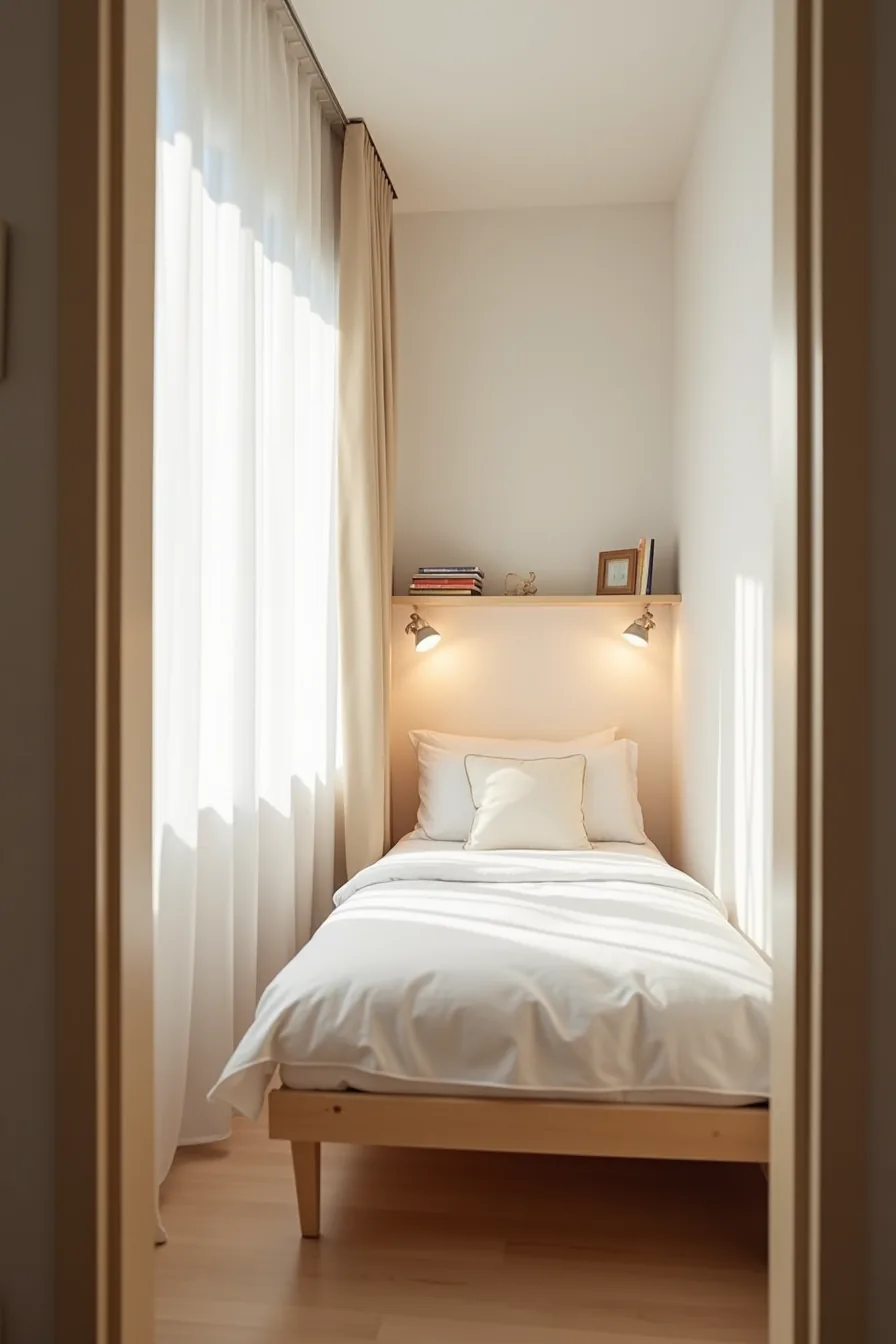
A minimalist layout works best when your floor plan is the constraint. In a narrow room, the goal isn’t to hide the lack of square footage, it’s to make the available path clear. Your twin bed with white sheets and a single throw pillow anchors one wall, leaving visible floor space on both sides.
That gap on each side is the critical move: it keeps the bed from feeling like a barricade and makes the room easier to vacuum and handle.
The floating shelf above holds just three evenly spaced items, which forces you to edit what you display. The bare wall around it isn’t unfinished, it’s negative space doing structural work, giving your eye a place to rest. This setup suits a single occupant who prefers calm over stimulation and is willing to resist filling empty surfaces.
To reproduce it, budget roughly $30–60 for a floating shelf rated for 10–15 pounds, and choose bedding in one solid tone to avoid visual noise. The trade-off is that you’ve zero concealed storage in this zone, so you’ll need a bed skirt or under-bed bins for out-of-season items.
Accent Wall Techniques Without Permanent Damage
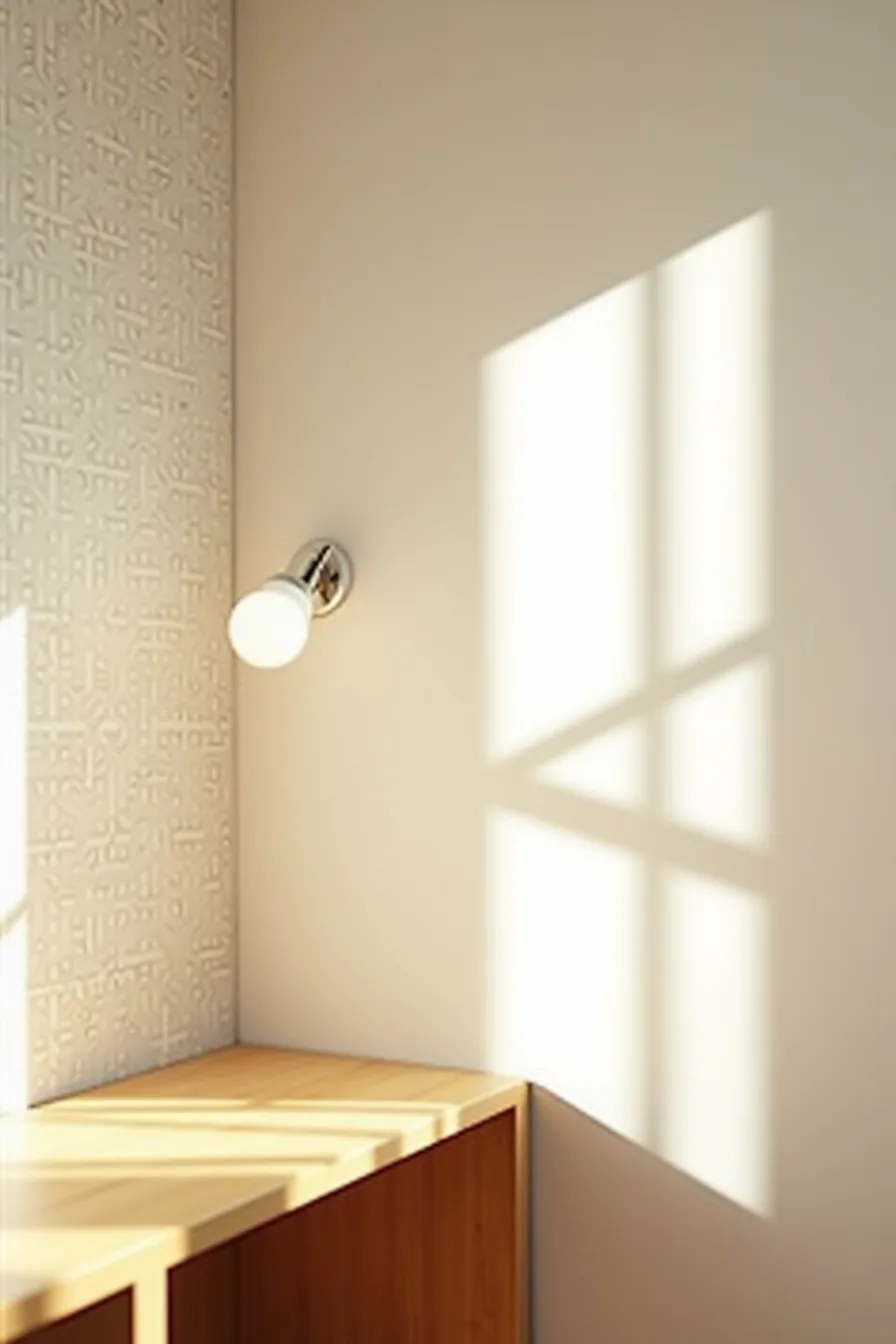
Peel-and-stick wallpaper is the strongest renter-friendly option for dorm room decor ideas. In the setup here, a geometric pattern covers the lower half of one wall, meeting a white painted section at a crisp horizontal edge, a technique called a chair-rail split. This approach works because it adds visual weight at eye level without making the room feel smaller, and it suits anyone who wants pattern but hesitates to commit to a full wall.
Half-coverage also cuts your material cost nearly in half: most rolls run $25–45 and cover 28–56 square feet, so a 6-by-8-foot dorm wall section takes 2–3 rolls.
The clean seam at the mid-point is the detail that makes it look intentional, not accidental. Measure and mark a level line before applying, and use a smoothing tool to press out air bubbles, expect 15–20 minutes per 4-foot section. The trade-off: cheaper brands can peel at corners in humid rooms, so wipe the wall down with a damp cloth and let it dry 24 hours before application.
If your dorm prohibits any adhesive, swap the wallpaper for fabric panels stretched over lightweight artist canvas frames (under $20 each)and attached with Command strips rated for 5 pounds, same geometric look, zero wall contact.
Layered Lighting for Mood and Function
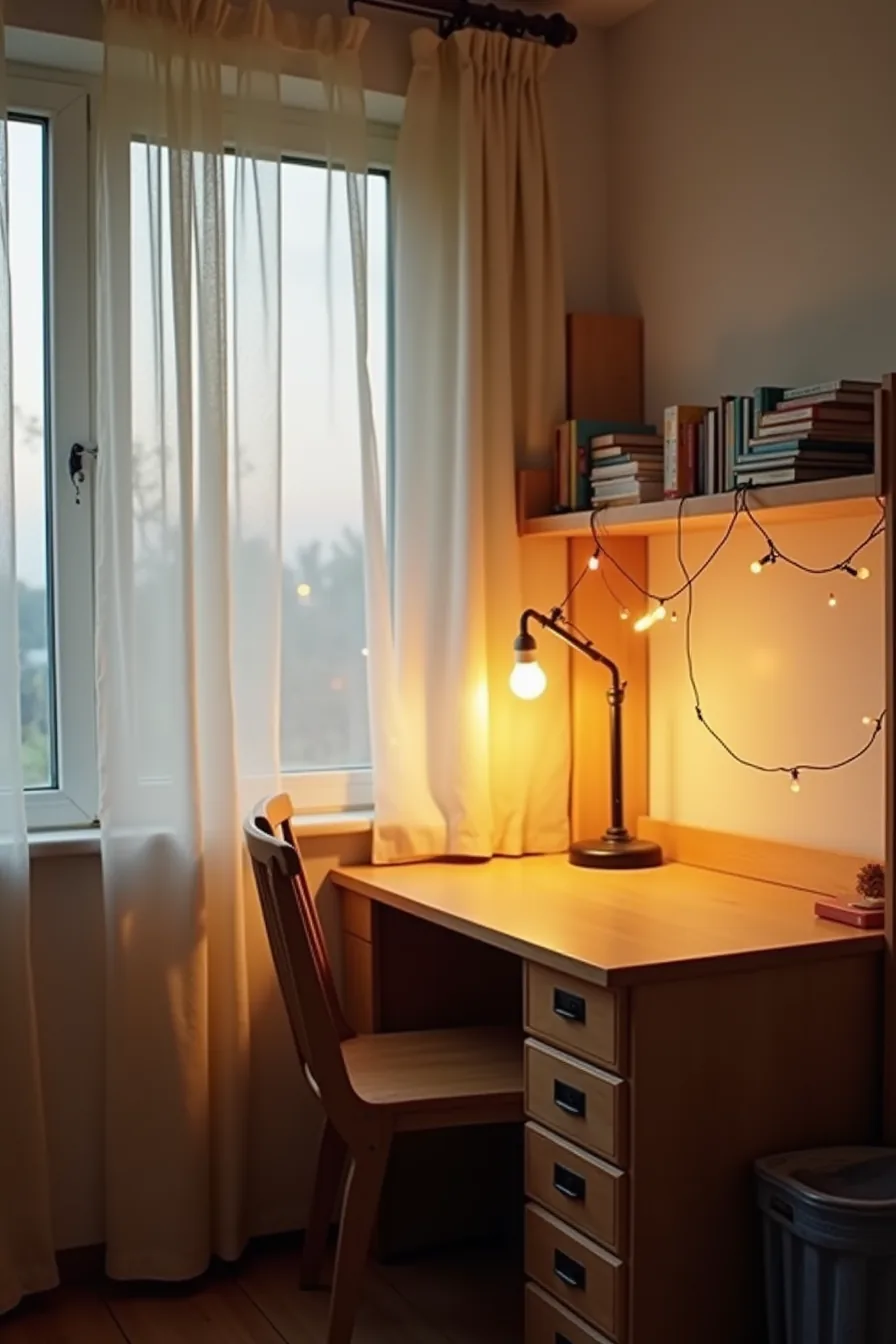
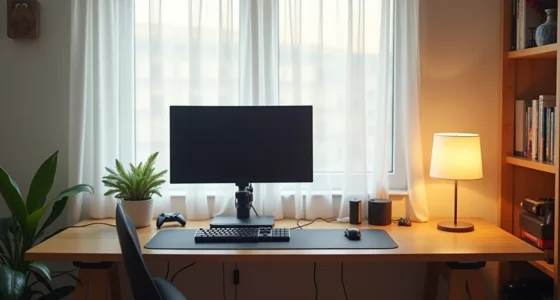
The desk setup pictured here uses three separate light sources to split the room into functional zones. The desk lamp with a warm bulb creates a tight, focused pool for late-night reading, while the string lights draped in loose swoops across the wall above soften the space for winding down. The overhead ceiling fixture stays off entirely, its default position for most dorm dwellers, because its harsh, even brightness flattens the mood you’re trying to build.
This layering works because each light serves a distinct job, not because you turn everything on at once. For study sessions, run the desk lamp alone at 2700–3000K (warm white) to reduce eye strain. For socializing, switch to the string lights only, they cast roughly 10–15 percent of the brightness of a standard 60-watt equivalent, enough to see faces but not textbooks.
For the rare full-room clean-up, use the ceiling fixture.
Most dorm desks are 24–30 inches deep, so position the lamp at the corner opposite your writing hand to avoid shadows. Maintain the string lights by checking the adhesive clips monthly, they loosen with temperature swings, and a sagging strand near a vent is a fire hazard you don’t want.
Storage-as-Decor Solutions
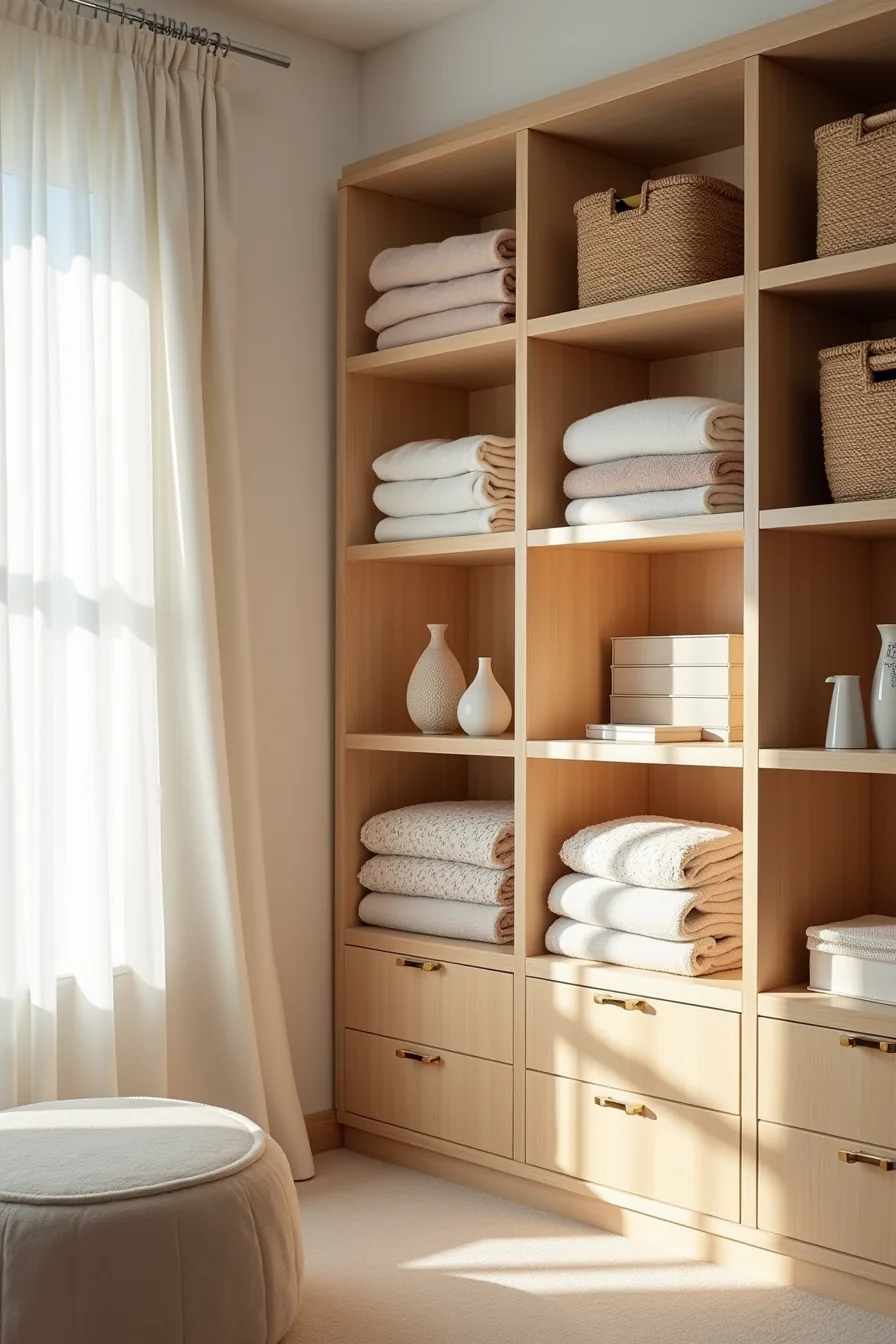
Wall-mounted cubbies arranged in a grid turn storage into the room’s main visual feature. The setup shows four open shelves holding folded sweaters in cream and oatmeal tones, woven baskets for loose items, and decorative boxes that hide smaller gear, all in a coordinated neutral palette that reads as intentional design rather than clutter containment. You get roughly 12–18 inches of usable depth from each cubby, which fits folded knitwear or stacked bins without protruding into walkway space.
This approach suits anyone who wants everything visible and reachable, especially in rooms where floor space is the limiting factor, most standard dorm rooms measure 10–12 feet per side, so vertical storage is your only expansion route. Mount the cubbies 48–60 inches from the floor so the bottom shelf clears your desk chair and the top stays within arm’s reach. Use toggle bolts rated for drywall (each cubby should hold no more than 10–15 pounds when fully loaded), and dust the open shelves weekly or the folds develop a permanent gray film.
Textile Choices That Define the Space
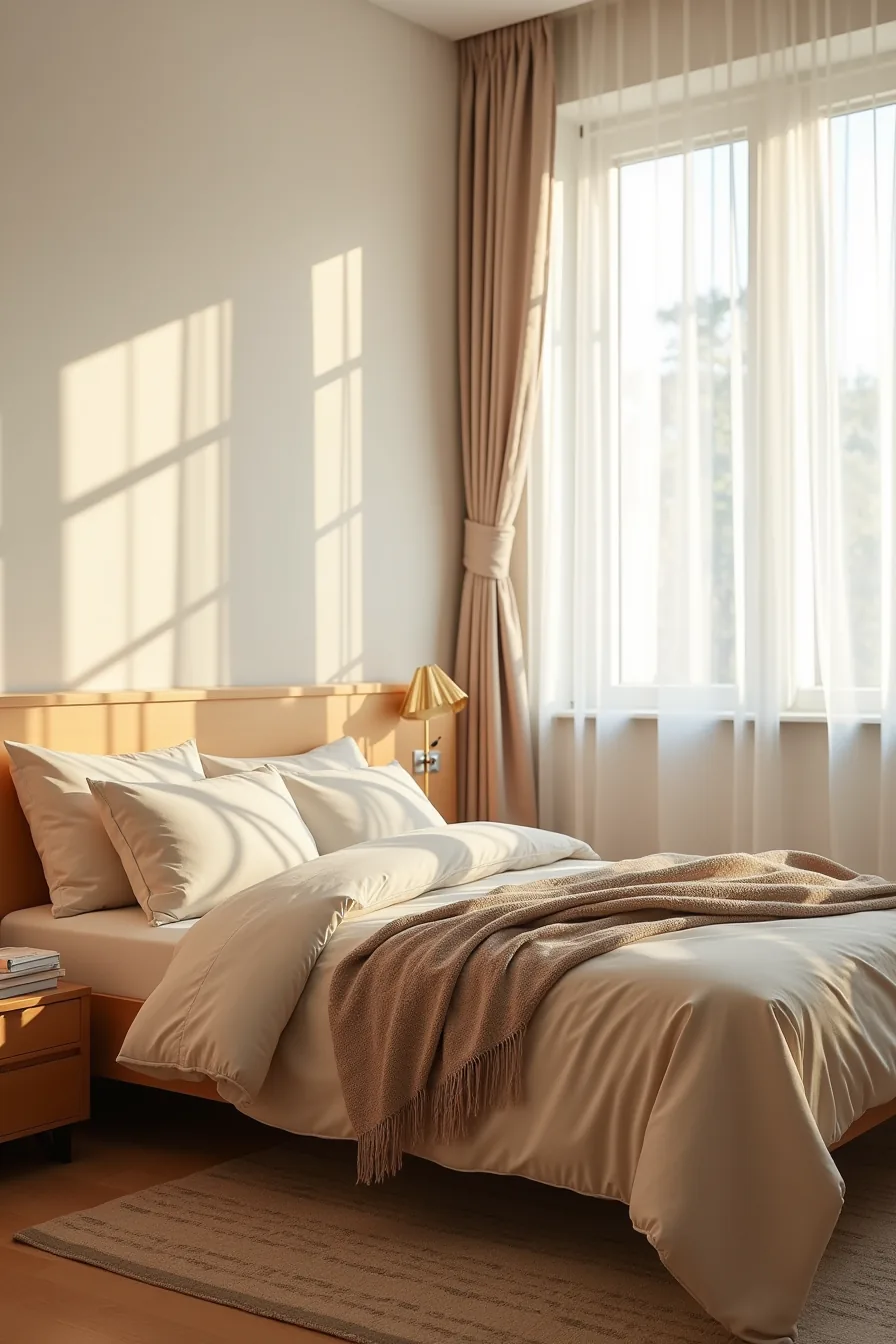
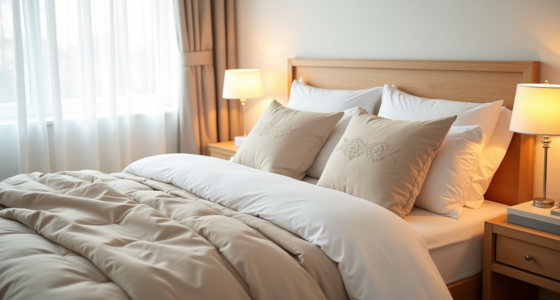
Layered bedding in warm neutrals, a cream duvet, a camel-colored blanket, and a chunky knit throw draped over one corner, anchors the entire palette before you add a single wall hanging. The textured throw isn’t decorative filler; it triples as a lap blanket for study sessions and an extra layer when your roommate cranks the AC. Choose a duvet with a washable cover in a 200–400 thread count range, and you’ll get softness without the dry-clean-only hassle that silk or velvet alternatives demand.
A patterned area rug beneath the bed frame does two jobs simultaneously: it absorbs the echo that makes dorm rooms sound like stairwells, and it defines the sleeping zone in a room where furniture often floats without visual boundaries. Stick to low-pile wool or polypropylene in the 5×7 to 6×9 foot range for a standard twin XL bed, anything deeper traps crumbs and sheds visibly. Coordinate curtains at the window edge with your bedding’s secondary tone, not the dominant one, so the room reads layered rather than matchy-matchy.
Blackout curtains in a 3-pass weave cut morning light for late sleepers, but budget for a tension rod, since drilling into dorm window frames usually violates lease terms.
Personal Display Without Overdoing It
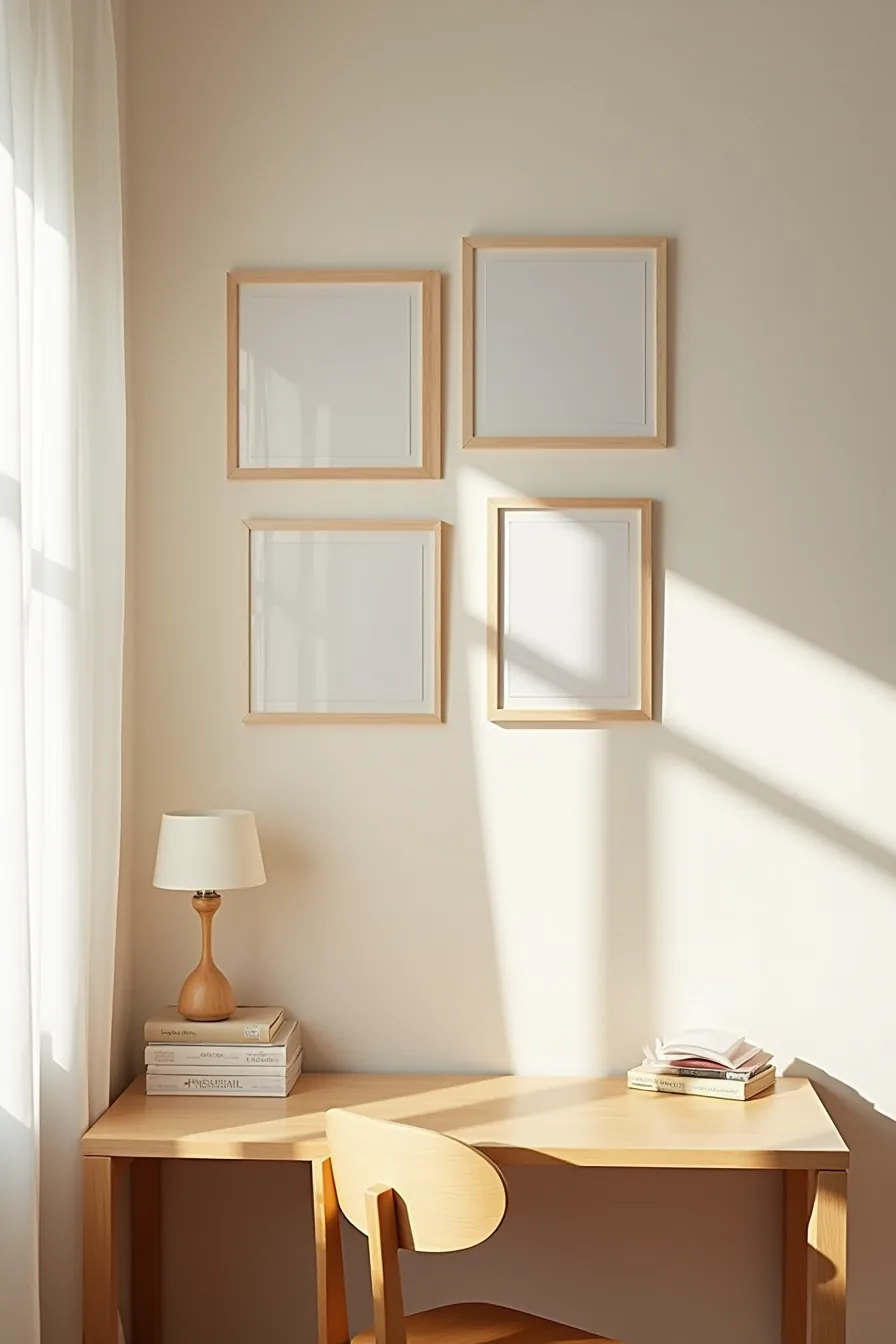
The mistake most students make with dorm room decor ideas is treating every wall as a gallery, which turns the room into visual noise within a week. A tighter approach, four framed photos in a loose grid with 3-4 inches between frames, creates a focal point that reads as intentional rather than cluttered. Stick to one small shelf below the grid holding just two personal objects, and leave the rest of the wall as white space; the contrast is what makes each item feel curated instead of accumulated.
Use command strips rated for 5–10 pounds per frame rather than nails, since most dorm contracts prohibit wall punctures and charge for spackling at move-out. Rotate the objects on the shelf monthly, a small plant, a ceramic mug, a book spine-out, so the display evolves without requiring new hardware or wall damage. If you’re prone to collecting ticket stubs and postcards, allocate one corkboard strip in a corner for those, keeping them out of the framed grid to preserve its clean lines.
What to do first
You’ve six distinct directions, but they share one foundation: measure your room before you buy anything. Grab a tape measure and map out your bed, desk, and closet clearances first, this single step prevents 80% of decor regret.
Your next move is choosing one anchor piece that does double duty, like a storage ottoman that serves as seating and a laundry bin. Start with that, then build your color palette around it.
Frequently Asked Questions
What’s the difference between dorm room decor ideas that work for renters versus homeowners?
Renters need damage-free, removable solutions like command strips and peel-and-stick film. Homeowners can invest in permanent fixtures like built-in shelving or painted accent walls, which add resale value but require commitment.
How do you make a dorm room feel larger when you’re working with 100–150 square feet?
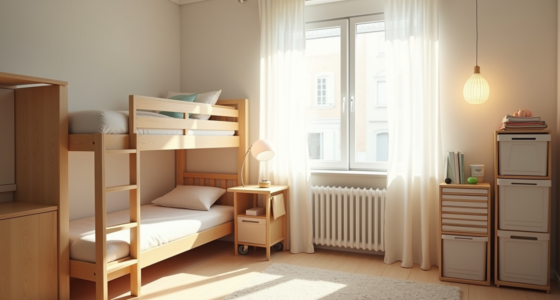
Use vertical storage, tall bookcases or over-door organizers, to free floor space. Choose a light wall color, one large mirror, and multi-functional furniture like a lofted bed with a desk below to maximize sightlines.
What’s the best budget-friendly dorm room decor approach that doesn’t look temporary?
Invest in quality textiles, a thick duvet, blackout curtains, and a wool rug, in a cohesive color palette. These anchor the room visually, hide institutional furniture, and cost less than new furniture while looking intentional and permanent.
Can you layer multiple dorm room decor ideas in one small space without it feeling chaotic?
Yes, by sticking to one neutral base color and two accent hues. Layer textures, baskets, throw pillows, and a woven wall hanging, rather than patterns, and limit wall art to one gallery wall to keep visual noise controlled.