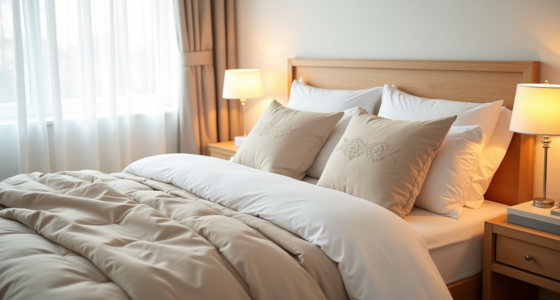
Your dorm room is a 12-by-15-foot blank slate where you’ll sleep, study, and socialize for the next nine months, and the college dorm room ideas for guys that actually work start with how you use the floor plan, not with posters. A smart layout turns a cramped double into a functional zone for focus and downtime, while the wrong decor just eats square footage you don’t have. The six setups below range from a $150 budget refresh to a $600 long-term investment, each matched to a specific room size and habit pattern, so you can pick the one that fits your actual space, not a Pinterest fantasy.
Key takeaways
- Gaming setups need a minimum 30-inch-deep desk to prevent monitor glare and controller clutter, plus a mesh chair under $150 to avoid sweat buildup during long sessions.
- Minimalist dorms work best with a single 5×7-foot rug to define the study zone, requiring a lofted bed to free up floor space in rooms under 120 square feet.
- Social hub layouts demand a low-profile futon (under 12 inches off the ground) and a foldable coffee table that tucks under it, keeping walkways at least 36 inches wide for fire-code compliance.
- Renter-safe upgrades like command-strip cable raceways and peel-and-stick wall tiles cost $20-40 total and remove cleanly, while a $200-300 standing desk is the only long-term piece that survives post-college moves.
The Gaming-Focused Setup
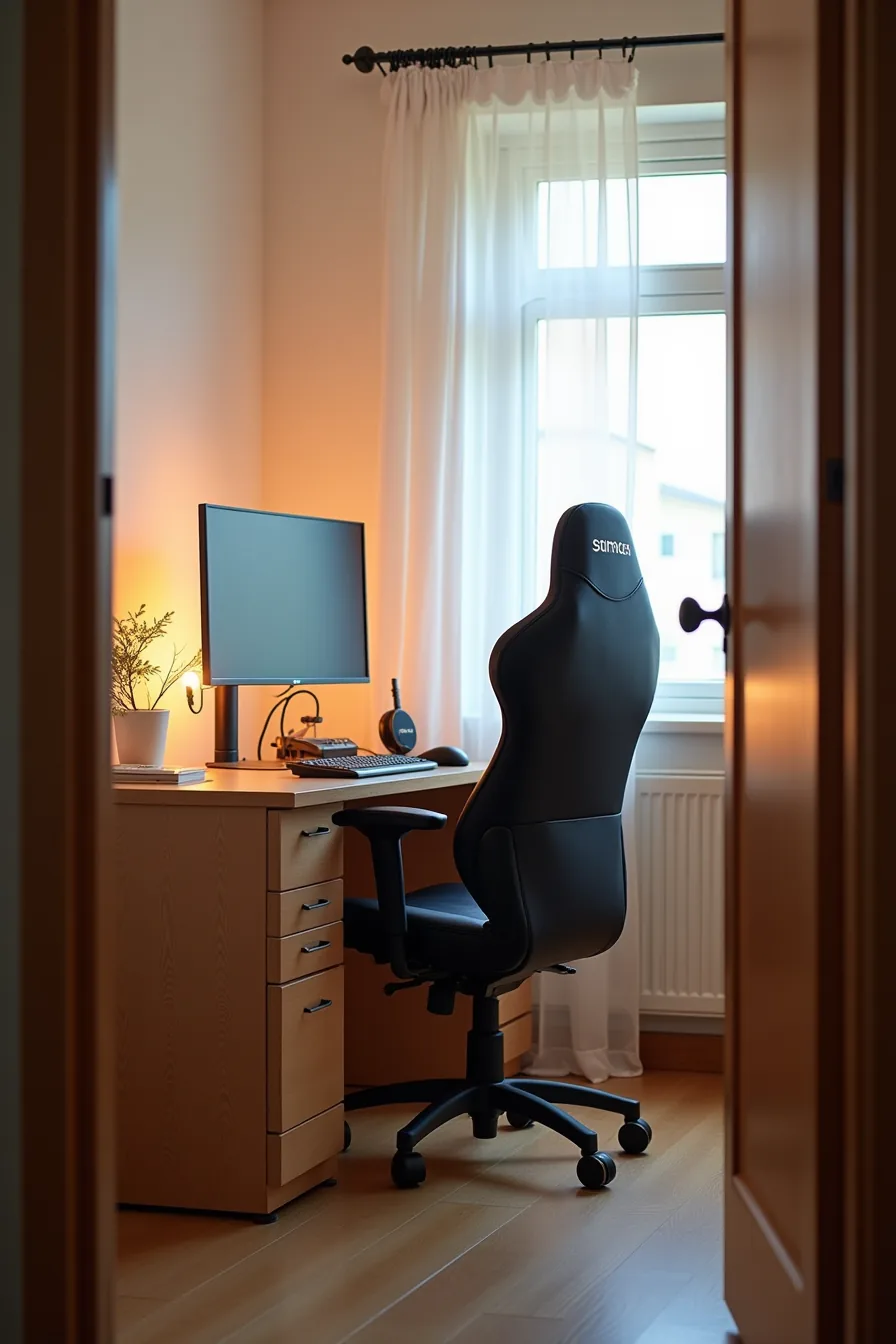
If late-night ranked matches are your primary hobby, build the room around the screen, not the bed. The layout that works best in a standard 10×12 dorm places your desk against the longest uninterrupted wall, with the monitor mounted on an articulating arm so you can pull it to the edge of the desk for competitive play and push it back for study sessions. Position the screen so its center sits at eye level when you’re seated; for most guys in a standard office chair, that means the mount’s tilt range should allow roughly 5-7 degrees of downward adjustment to reduce neck strain.
The 27-inch monitor paired with an RGB LED strip behind it creates bias lighting that reduces eye fatigue during long sessions, but skip the cheap battery-powered strips, they die within weeks. Invest in a USB-powered strip with adhesive backing that plugs directly into your monitor or PC. The high-back gaming chair should sit approximately 24 inches from the screen, which gives you full peripheral visibility without having to turn your head.
If your roommate walks behind you frequently, angle the chair 15 degrees toward the door so you can see them approach without breaking focus.
Cable management separates a functional setup from a cluttered one. Use an under-desk cable tray to collect the power strip, monitor cable, and headset wire, then route your headset cable along the desk’s back edge to the headset stand on the right side. Choose a headset stand with a weighted base, lightweight stands tip over when you grab the headset one-handed.
If you’re on console instead of PC, place the console on the desk’s left side, not the floor, where dust accumulation will shorten its lifespan.
The Minimalist Study Dorm
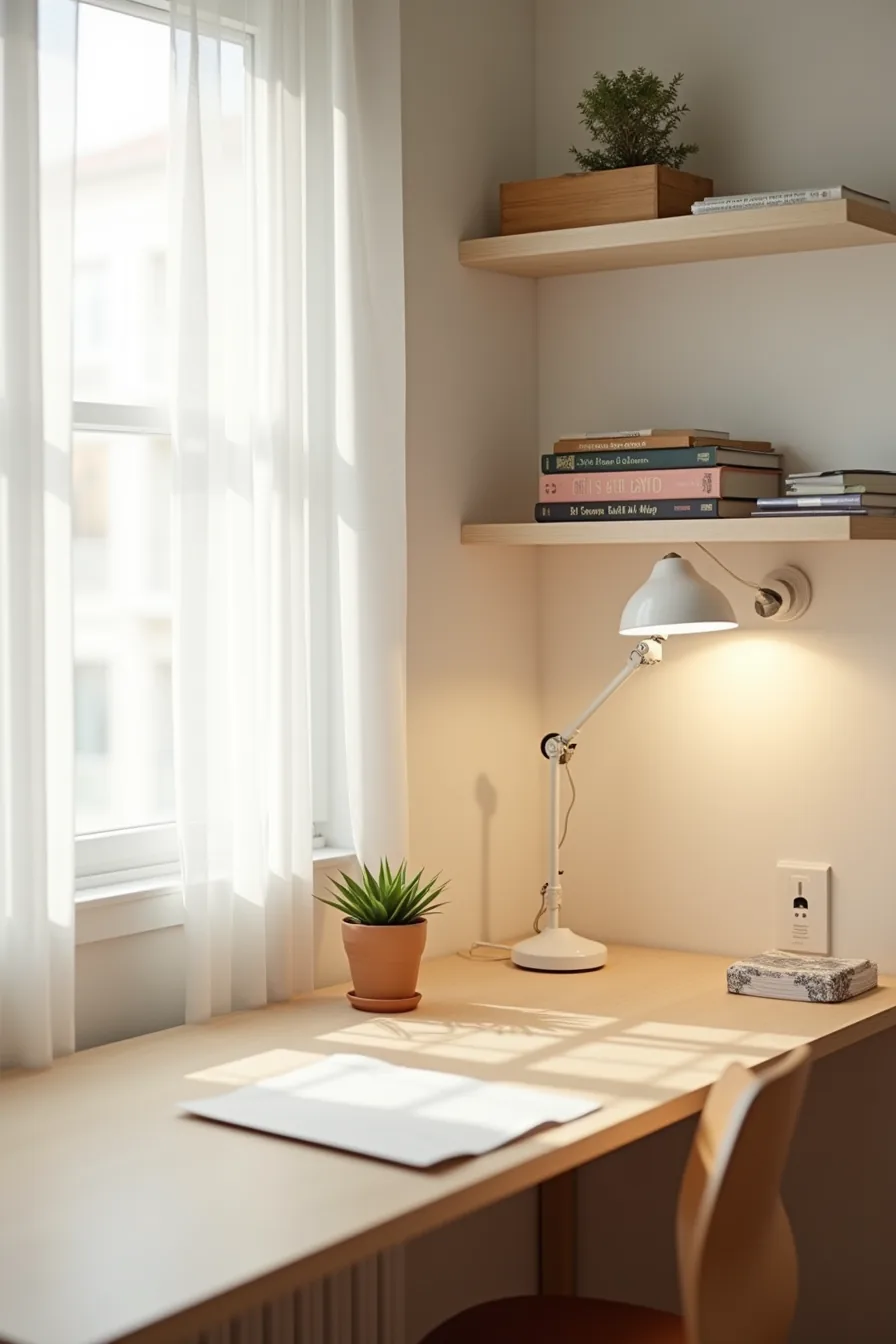
If your dorm room is under 150 square feet, a minimalist layout is the only practical option. Start with a compact desk 36 inches wide positioned against the window wall for natural daylight; place it so your screen faces away from the door to minimize visual distractions. A task lamp with a clamp base frees up desk surface, clamp it to the back edge rather than using a weighted standing lamp that eats 12 inches of floor space.
Floating shelves mounted 18 inches above the desk hold only what you use daily: a desk organizer for pens and a textbook stack. Anything else goes in a drawer or closet, because visible clutter in a small room reads as chaos, not character. The small potted plant on the desk’s corner is the single decorative element; choose a low-maintenance succulent or snake plant that survives 2-3 weeks of missed watering during finals.
This setup suits a student who studies primarily at their desk and needs zero friction between sitting down and focusing. You’ll need a drill with wall anchors rated for 20-30 pounds per shelf, and you must check with your housing office about wall-mounting rules before buying hardware. For maintenance, wipe the desk weekly and you’re done, there’s nothing else to clean.
The Social Hub Layout
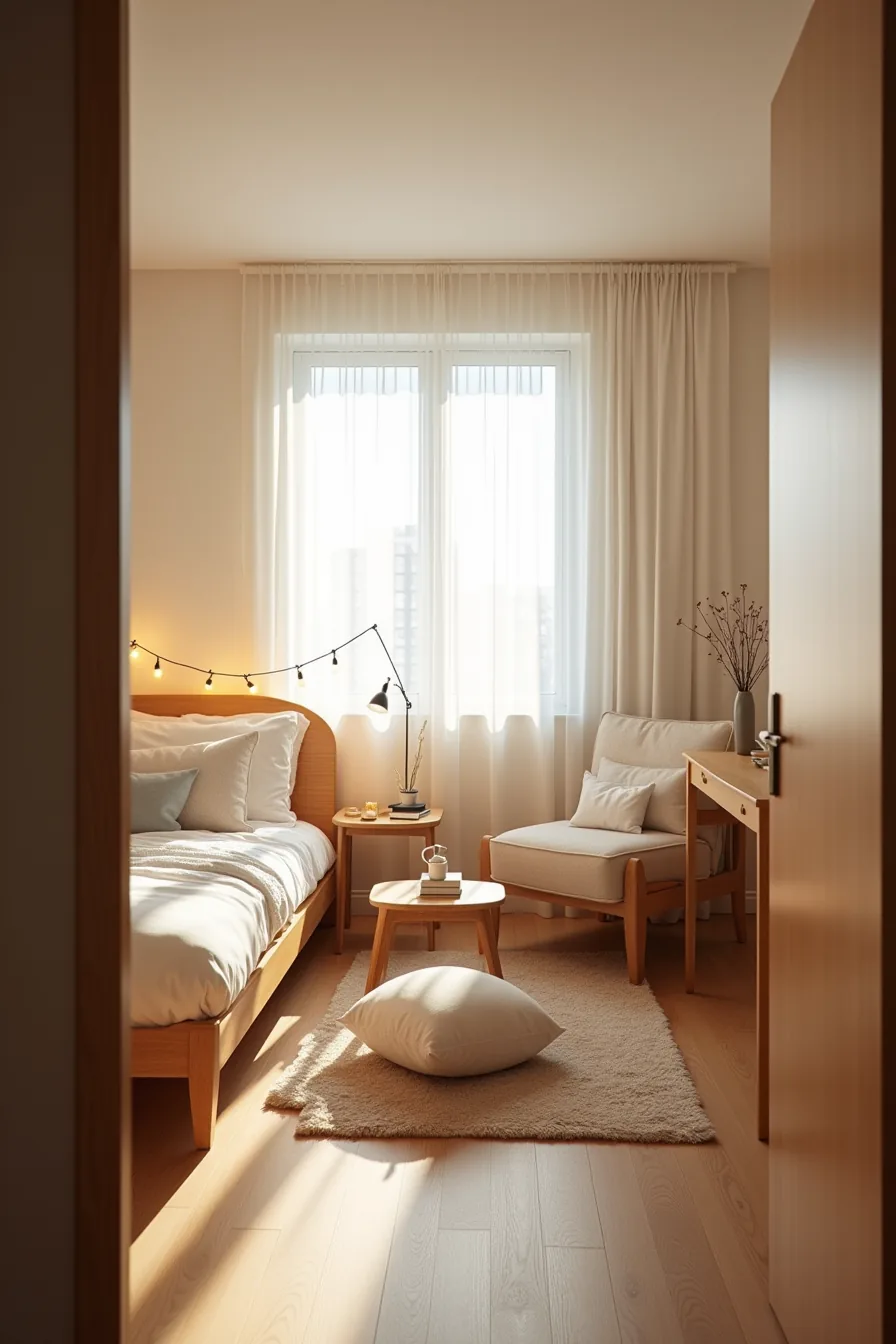
If your goal is a room where people naturally gather, arrange furniture to create a central zone rather than pushing everything against the walls. Push the bed against one wall, place a low coffee table in the middle, and surround it with floor cushions and a compact sofa, this forms a conversation circle that keeps sightlines open from the doorway so visitors feel invited rather than intrusive. Tuck your desk into a corner facing the wall; this visually separates study from social space without needing a physical divider.
The low coffee table works because it lowers the visual center of gravity, making a standard double feel more like a lounge. A sofa 60–72 inches wide fits most doubles; skip a full-size couch unless you’ve a triple. String lights along the headboard add warm ambient lighting without taking floor space, use LED options that stay cool and daisy-chain max three sets for safety.
This layout suits an extroverted student who hosts frequently but still needs a defined sleep corner; the bed’s wall placement offers a visual retreat even when the room is full.
Budget-Friendly Assembly Without Sacrifice
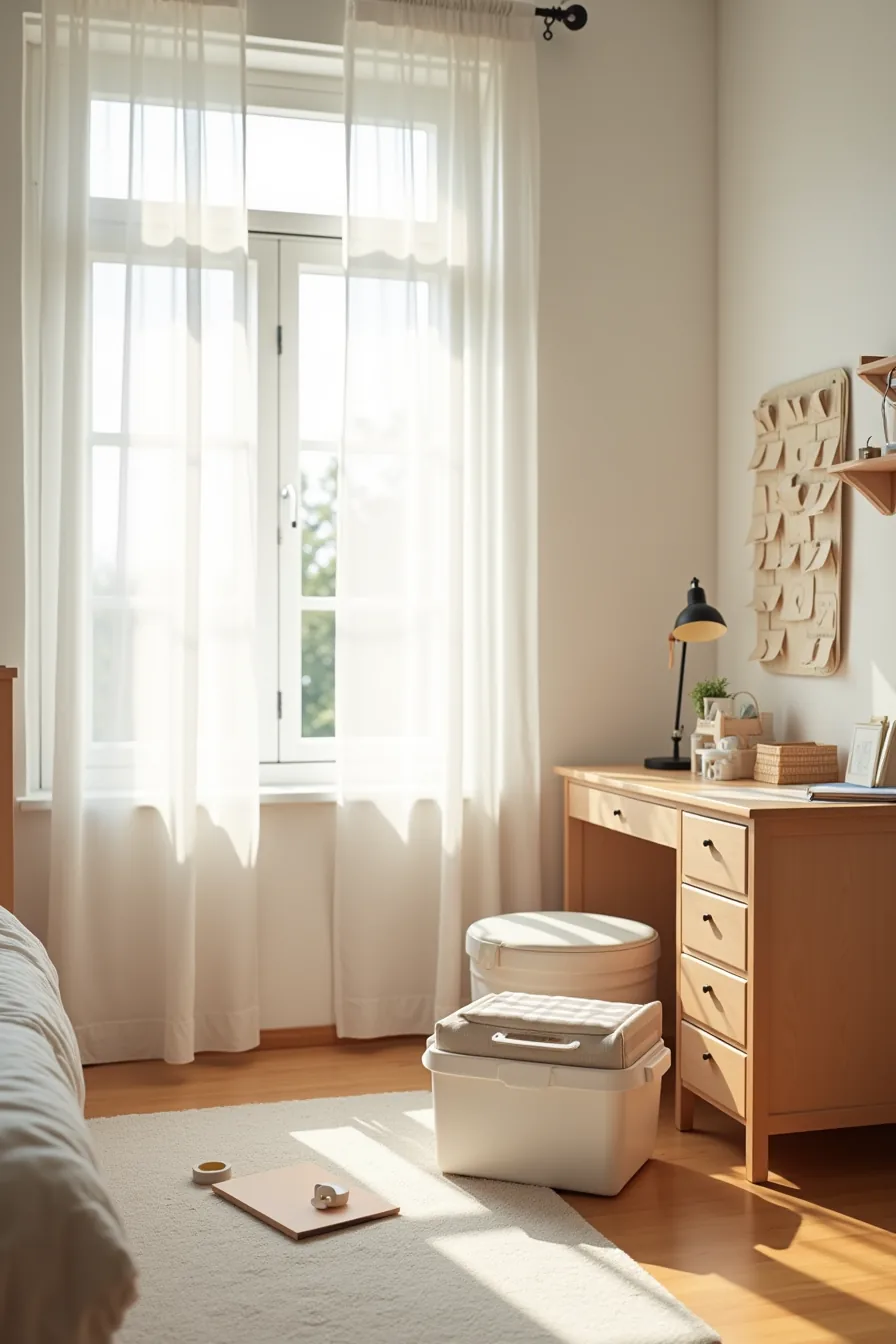
A complete dorm setup for under $300 doesn’t require scavenging garage sales. Start with a 30-gallon plastic storage bin with removable dividers, spend about $15 at Target or Walmart and use the dividers to separate socks, cables, and meds rather than buying three smaller organizers. Pair it with adhesive wall organizer pockets ($10–15 for a four-pack from Amazon) mounted beside your desk to hold chargers and notebooks off the work surface.
The tension rod with a fabric curtain costs roughly $25 and transforms an open closet into a visually clean zone, skip installing a real door, which typically runs $75–150 plus tools you’ll never use again. Add a basic LED desk lamp ($20–30) and painter’s tape ($5) to mount posters and command strips without stripping paint. The entire setup: under $150 if you buy secondhand first.
This route suits anyone splitting room costs or living in a freshman double where furniture exists but lacks character. Prioritize pieces that do double duty, the bin becomes a nightstand, the curtain hides laundry. Splurge later on one item you’ll actually miss, not on four you’ll abandon in May.
Renter-Safe Customization Strategies
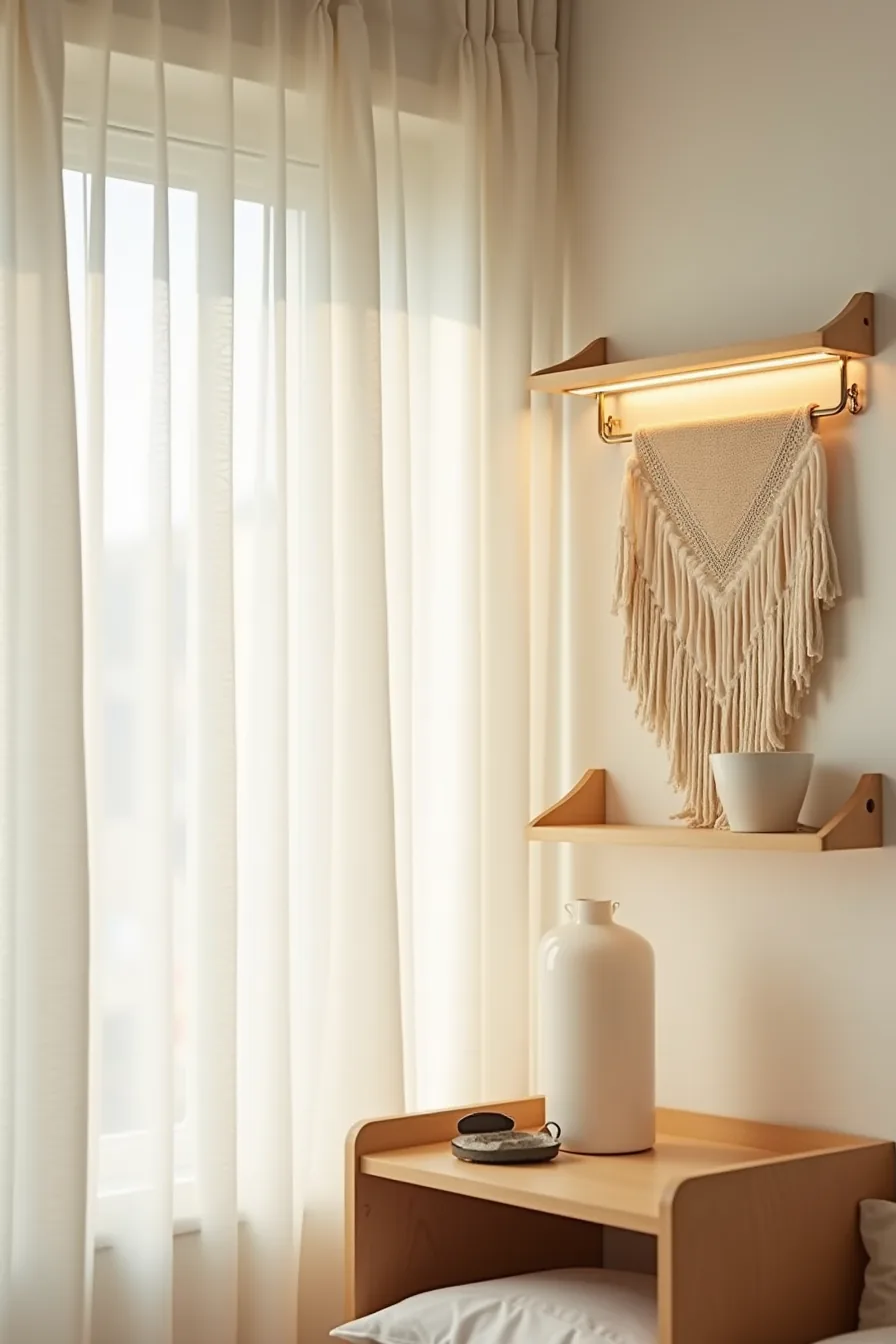
Your security deposit hinges on choosing adhesives rated as removable, not just “easy to apply.” Command strips and adhesive hooks hold up to 4 pounds each when mounted on clean, painted drywall, but they fail on wallpaper, textured surfaces, and anything exposed to humidity above 60%. For fabric tapestries, use three adhesive hooks spaced evenly along the top edge rather than one central hook, which causes sagging and eventual pull-off.
Adhesive LED strip lights with a 3M peel-and-stick backing remove cleanly within the first 12 months of application, but they can leave residue after two or more years in heat-direct sunlight. Test a two-inch segment in a corner before committing to a full perimeter. For a small shelf, use two interlocking Command strips rated for the shelf’s loaded weight, then press firmly for 30 seconds and wait one hour before adding weight.
Mark your intended hook positions with painter’s tape first to avoid the most common College Dorm Room Ideas For Guys mistakes to avoid: misplaced adhesives that strip paint when repositioned.
Long-Term Investment Pieces Worth Buying Now
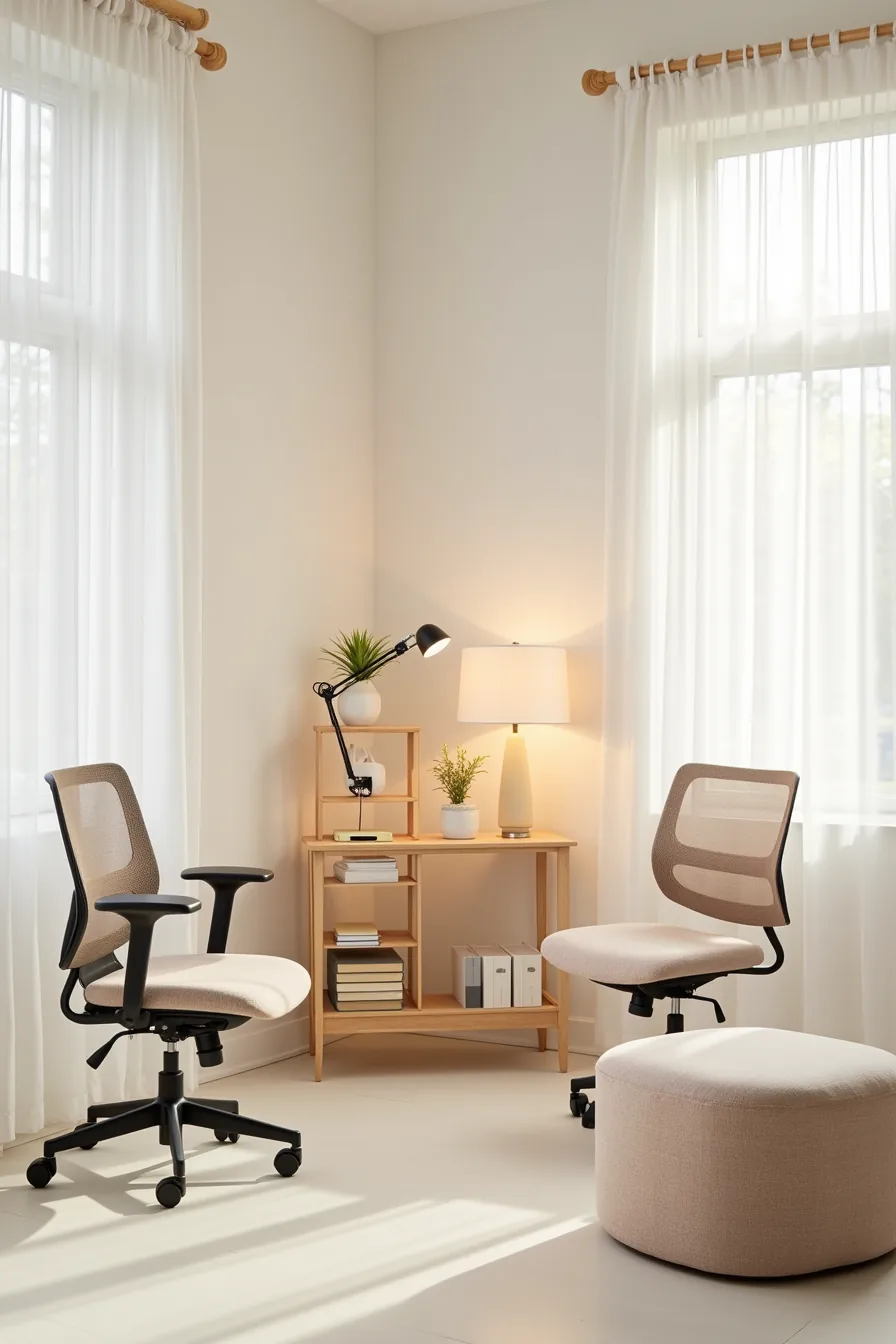
A quality desk chair outlasts every trend in your dorm. Look for an ergonomic mesh model with adjustable lumbar support and armrests; expect to pay $150–$400 for one that survives four years of daily use and then moves into your first apartment. Skip the $60 gaming chairs, their bonded leather flakes within 18 months.
A modular shelving unit in wood and metal pays for itself through sheer versatility: it works as a nightstand, a media console, then a kitchen pantry shelf post-graduation. You’re buying a $120–$250 piece that eliminates the need for three cheaper, disposable alternatives.
Pair it with a high-output desk lamp featuring a metal adjustable arm (the $40–$80 range delivers reliable 5000K daylight for late study sessions) and a desk organizer with dedicated compartments for cables, pens, and sticky notes. Finish with a storage ottoman, $50–$90 for a sturdy one, that doubles as guest seating and hides bedding or gaming controllers. These five pieces consolidate what would otherwise be annual replacement costs into a single efficient purchase, which makes them the most cost-effective route for anyone planning beyond move-in day.
Your move: pick a lane and commit
You now have six distinct directions, from the $150 crate-and-clamp setup to a $600+ heirloom-quality desk. The wrong choice is the one you abandon halfway through November.
Start with your smallest constraint: your room’s square footage and your landlord’s rules. If you’re in a 10×10 box, skip the lounge chair and invest in a wall-mounted shelf system. If you’re renting, buy renter-friendly command hooks and tension rods before anything else.
Do this first: Measure your floor space, note your bed’s exact dimensions, and choose the single idea that solves your biggest daily frustration, clothes on the floor, no desk surface, or a dark corner. Buy only the 3-5 pieces that make that problem disappear. Add one décor accent, then stop.
You can always upgrade next semester.
Frequently Asked Questions
What is the ideal desk size for a college dorm room?
Aim for a desk 42–48 inches wide and 24–30 inches deep. This fits a laptop, textbook, and lamp without crowding walkways. Compact 36-inch versions work if you mount shelves above.
How do you arrange a dorm room to fit two people comfortably?
Place beds against opposite walls or bunk them to open floor space. Keep desks back-to-back or along one wall, leaving a 36-inch central aisle. Use vertical storage to keep floors clear.
What are the best storage solutions for small dorm rooms?
Use under-bed rolling bins, over-door shoe organizers, and stackable cube shelves. Add a 5-tier over-the-door rack for toiletries. Maximize closet vertical space with hanging shelves and slim hangers.
Can you use a full-size bed in a standard college dorm?
Most standard dorms fit only twin or twin XL beds. Full-size mattresses typically exceed the 36-inch width of standard dorm bunk frames and reduce floor space by about 25 percent. Check your room’s dimensions before buying.