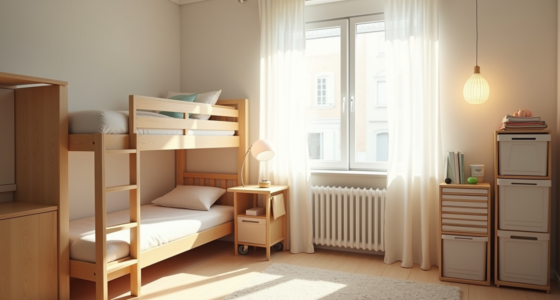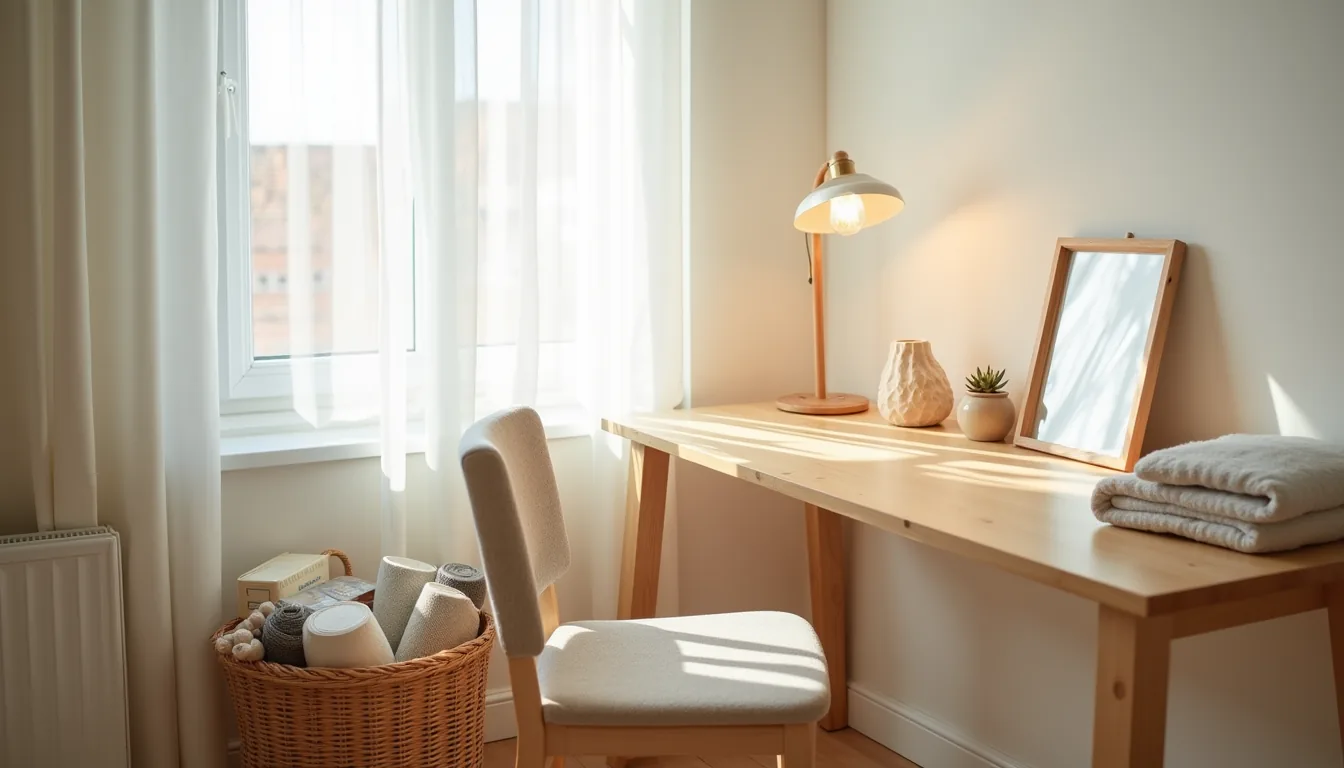
Your dorm room is a 10-by-12-foot blank canvas where you’ll sleep, study, and socialize for the next nine months, so the decor you choose needs to survive constant use, shareable spaces, and the inevitable move-out inspection, which is why these six dorm room decor ideas for girls college prioritize function first and aesthetics second. Each concept below tackles a specific spatial or lifestyle constraint, from lofted-bed lighting to communal-area privacy, and pairs it with a budget, renter-friendly, or long-term investment route. You’ll learn what each setup requires in terms of square footage, hardware, and daily maintenance, so you can pick the one that matches your actual room dimensions and roommate dynamics.
The final checklist will help you compare trade-offs before you spend a single dollar.
Key takeaways
- Layer your lighting in three zones, overhead, task, and accent, using plug-in sconces or clip-on lamps to avoid bulky floor fixtures in tight rooms.
- Mount command strips for gallery walls and tapestries, but test them on a small patch first and remove slowly at move-out to prevent paint peeling.
- Choose storage that multitasks, like ottomans with hidden compartments or over-the-door shoe racks, to cut clutter without sacrificing floor space.
- Invest in a quality duvet cover and throw pillows in washable fabrics, since they survive four years of dorm life and transition straight into your first apartment.
Maximalist Wall Displays: Gallery Walls and Tapestries
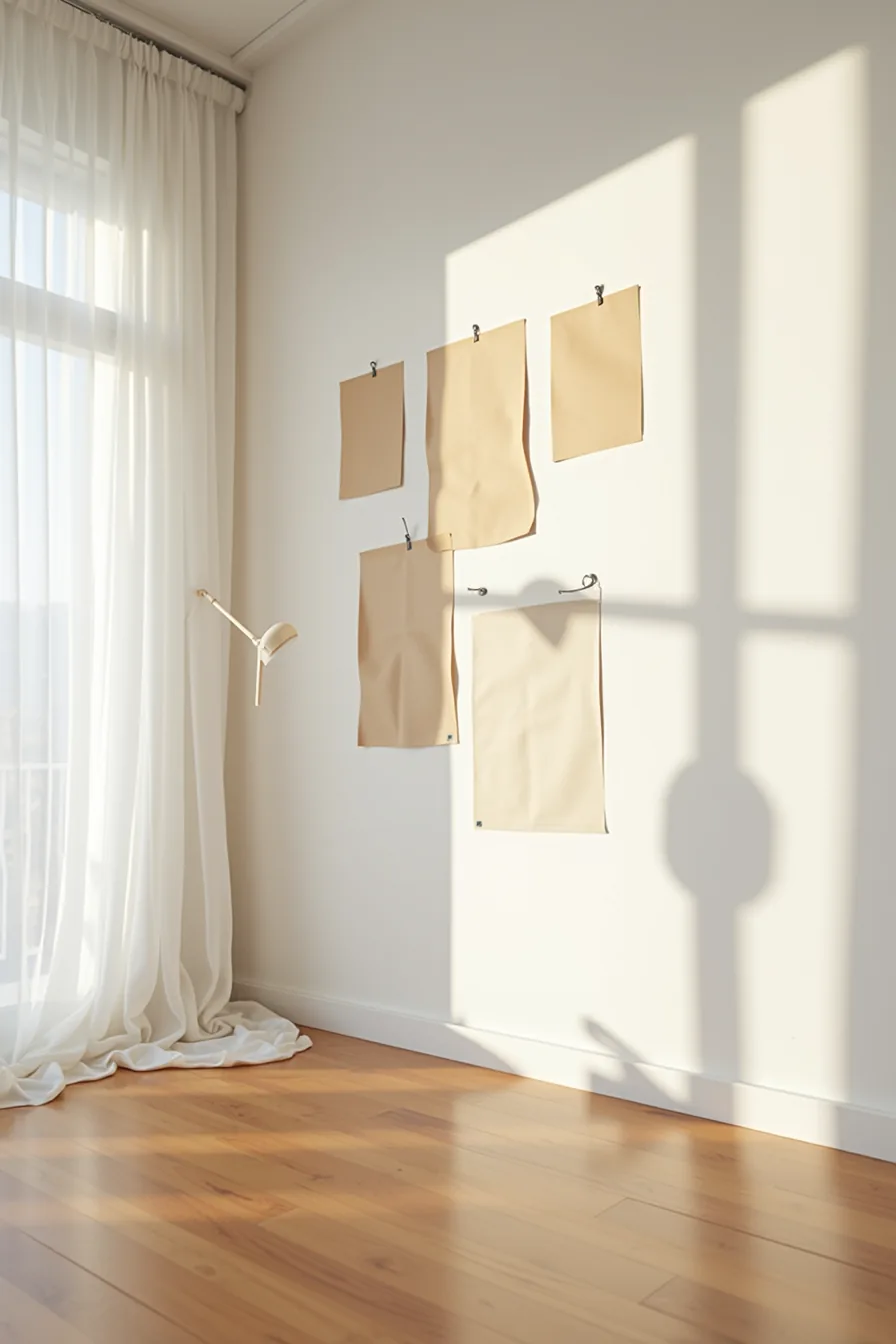
The layered look starts with five posters in mixed sizes, think one 18×24-inch anchor piece flanked by smaller 11×14-inch and 8×10-inch prints. Arrange them asymmetrically with slight overlaps and uneven 2- to 4-inch gaps; the deliberate irregularity reads as curated, not chaotic. Use removable adhesive strips rated for 5 pounds per pair; they release cleanly from painted drywall and most dorm cinderblock, but test a small corner first.
Drape a fabric wall hanging diagonally across one corner of the arrangement, letting it overlap the nearest poster’s edge by an inch or two. This softens the hard lines of the paper frames and adds texture without requiring a rod or hardware, secure it with two adhesive strips hidden behind the top corners.
This setup suits rooms with at least a 4-foot stretch of bare wall at eye level. In a compact single, skip the bottom row of posters to keep the display above desk height; in a shared double, claim one wall section and keep your overlap tight to avoid visual clutter bleeding into your roommate’s side. The biggest mistake to avoid: mixing more than two frame styles, which turns the collage into noise.
Stick to black, white, or natural wood frames for cohesion.
Functional Storage That Doubles as Decor
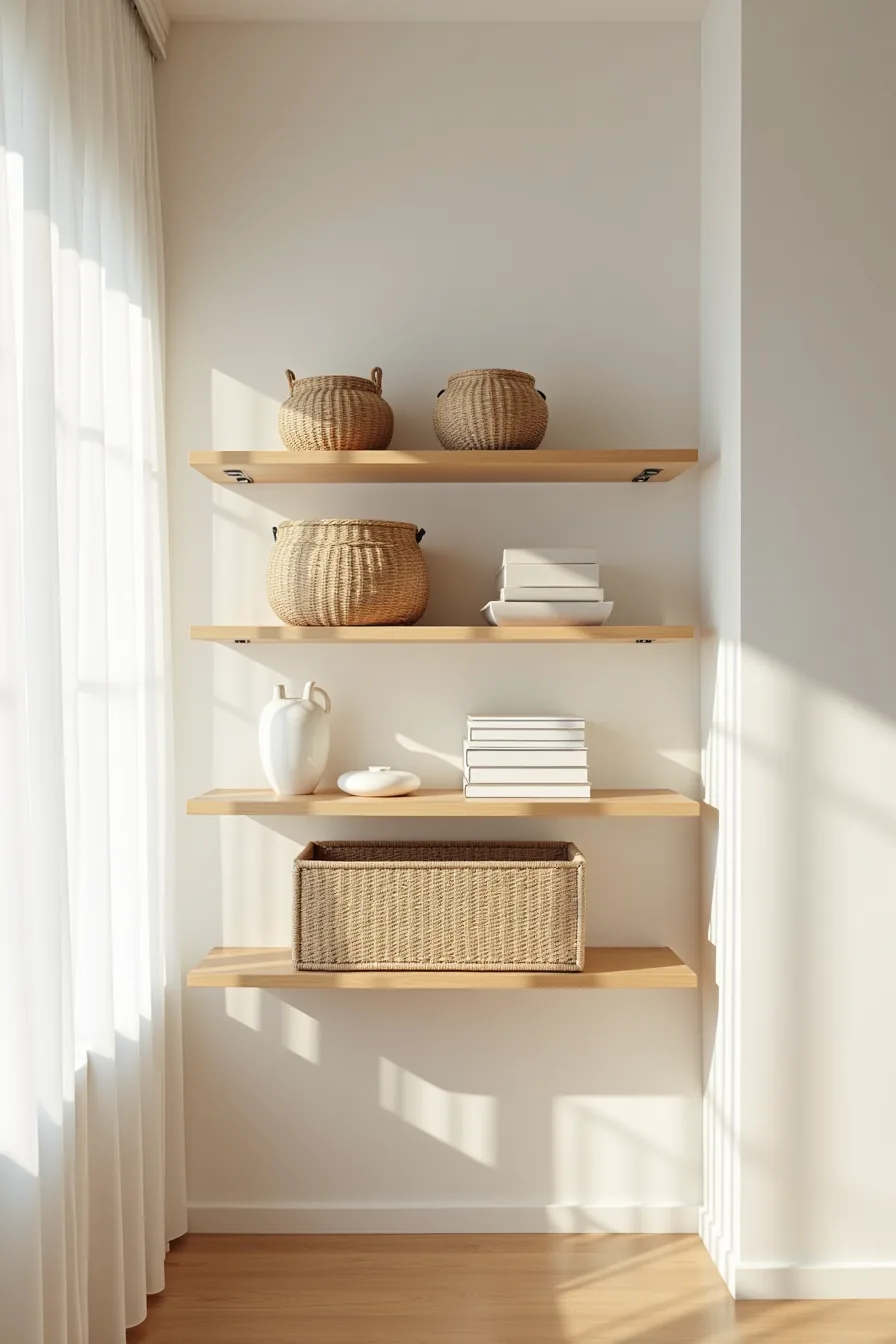
The shelving unit set against your wall becomes a styled display when you treat storage containers as design objects. Arrange three woven baskets on the upper shelf, they hide scarves, hats, and spare bedding while their natural texture warms up the space. Stack two or three matching storage boxes on the middle shelf for items you access weekly, like extra toiletries or craft supplies.
Place a single geometric-patterned bin on the lower shelf for bulkier gear; its bold print anchors the unit visually.
Scale matters: the shelving unit should span roughly half your wall width, and every container should sit front-facing with breathing room between pieces. Overstuffing defeats the purpose, an 80-percent fill rate keeps items accessible and the display clean. For a compact single, choose baskets under 12 inches in diameter to avoid overwhelming the shelf.
In a medium double, mix two basket textures (seagrass and woven cotton) for depth without pattern overload. Wipe woven surfaces weekly with a dry microfiber cloth to prevent dust buildup in the fibers.
This practical dorm room decor ideas for girls college planning tip works best for organizing everyday items you need within arm’s reach, not sentimental keepsakes you rarely touch. If your room has low ceilings, keep the top shelf at or below eye level so the unit reads as furniture, not storage clutter.
Lighting as a Design Element
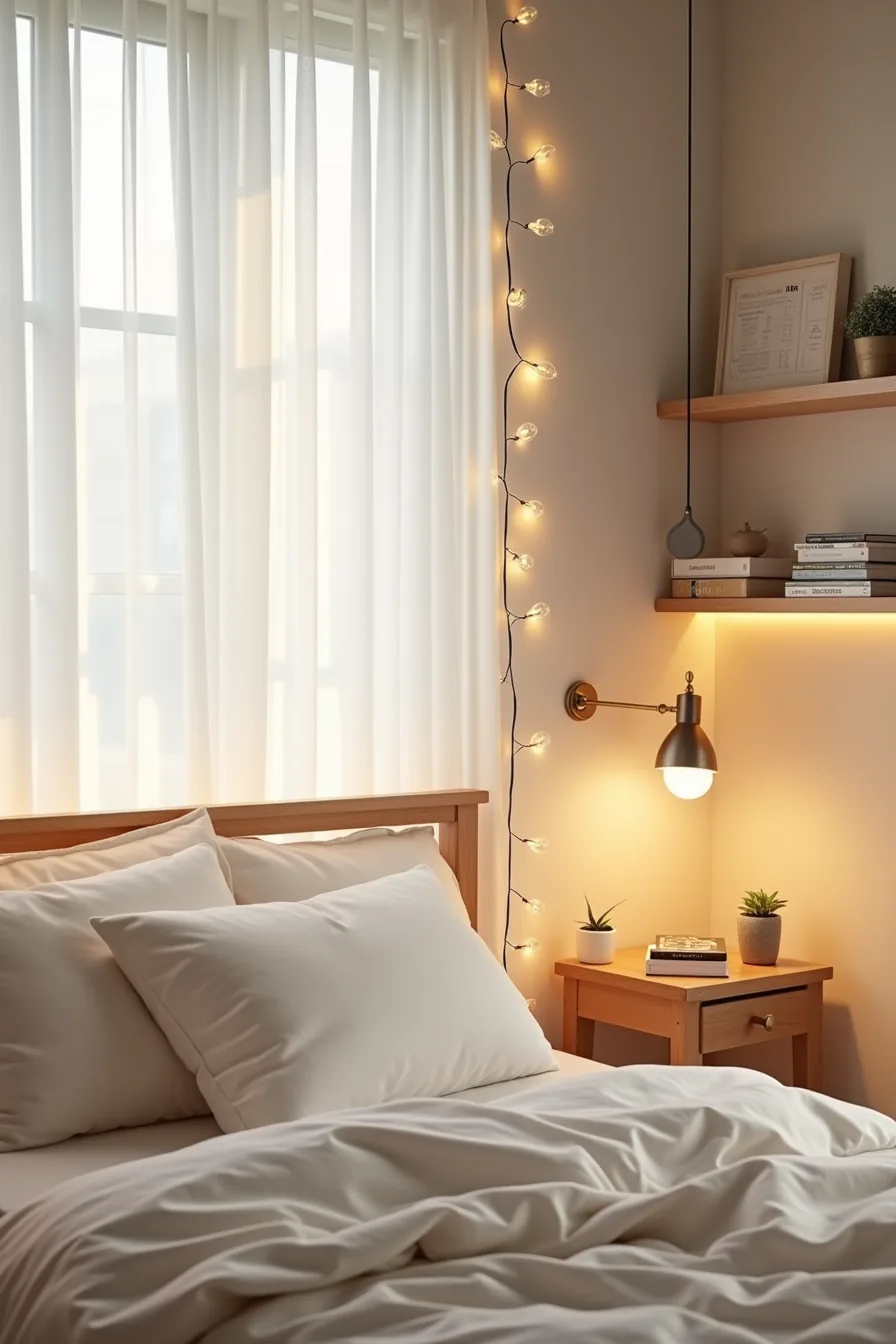
Dorm lighting rarely works as a single fixture, so layer three distinct sources to separate sleep from study zones. String lights draped horizontally above your bed cast a diffuse glow that softens the room after dark, while an adjustable-arm desk lamp directs a focused beam exactly where you need it for late-night reading. Mount LED strips along the underside of a floating shelf to wash the wall below in ambient light without taking up surface space.
Each light serves a different task, which is the point. The string lights cost $10–$20 and set the evening mood; the desk lamp, $25–$50, provides task lighting for exams; the LED strips, typically 6–10 feet per roll, fill corners overhead fixtures miss. Check your dorm’s wattage limit before plugging in, most rooms share a single circuit, and exceeding 900 watts trips the breaker.
Stick to LED bulbs and strips exclusively; they run cool and reduce fire risk.
Command hooks rated for 5 pounds hold the string lights securely, but route them away from curtains and bedding. You’ll replace adhesive strips every two months as they lose grip in humid rooms.
Textiles and Soft Furnishings on a Budget
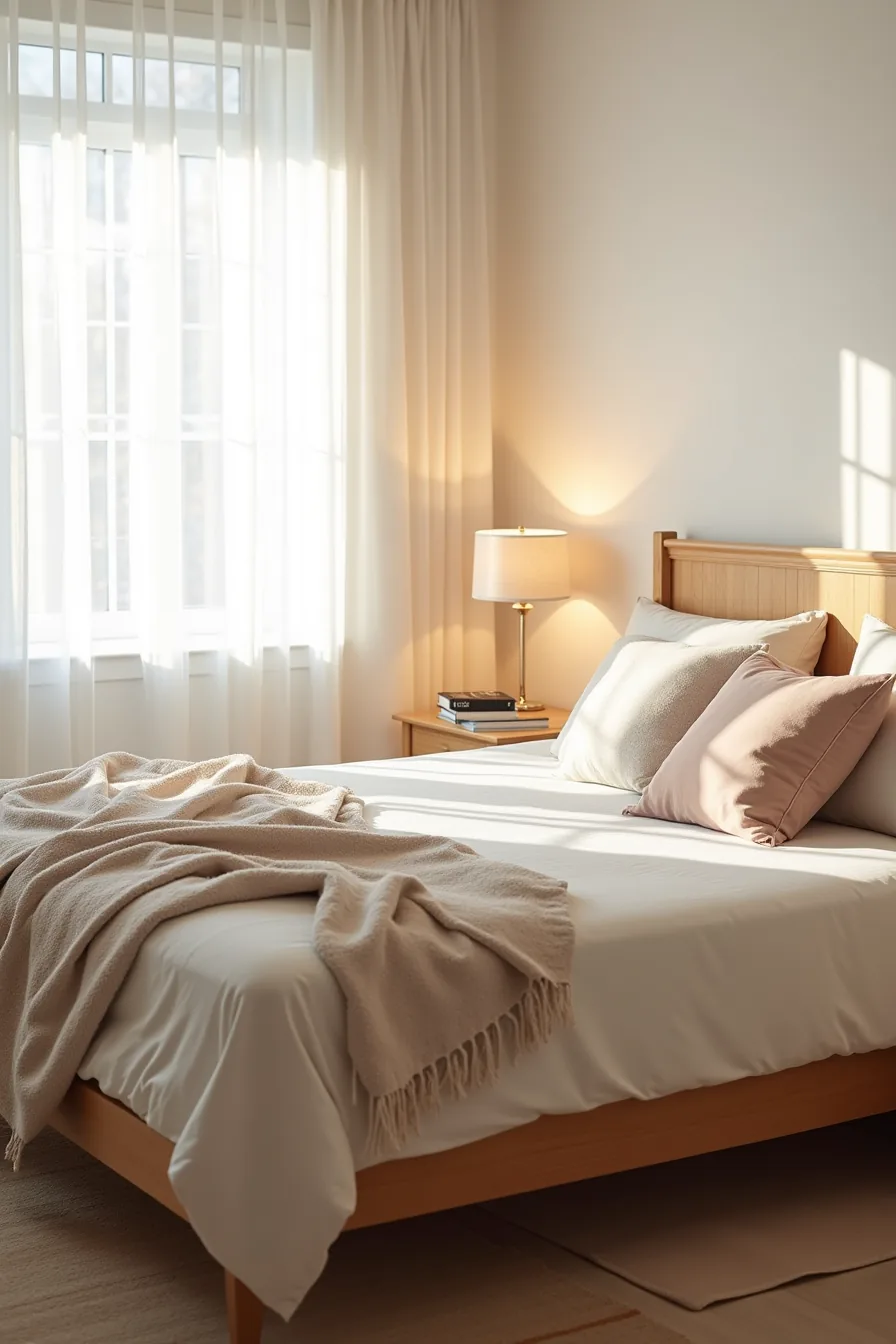
Textiles deliver the fastest visual payoff per dollar in any dorm room, and they leave zero damage when you move out. A patterned throw blanket folded over the mattress edge becomes the room’s focal point without requiring a single screw or nail. Pair it with two throw pillows in contrasting textures, one knit, one velvet, to create depth against a plain headboard.
The layered area rug beneath the bed frame anchors the space and muffles foot traffic from the room above.
The practical math favors this approach. A 6×9-foot area rug runs $40–$80 at big-box retailers, while a queen-sized throw blanket costs $15–$30 and twin-sized pillows $8–$15 each. Machine-wash everything weekly during cold and flu season; dorm laundry machines handle these sizes easily, unlike bulky comforters.
Choose dark or patterned textiles if your building has communal kitchens, they hide stains better than solids. Skip wool rugs in favor of polypropylene or cotton blends, which resist mildew in humid rooms and survive repeated washing without shrinking. Replace the throw pillows’ inserts annually; they flatten within two semesters of regular use.
Renter-Friendly Alternatives to Paint and Wallpaper
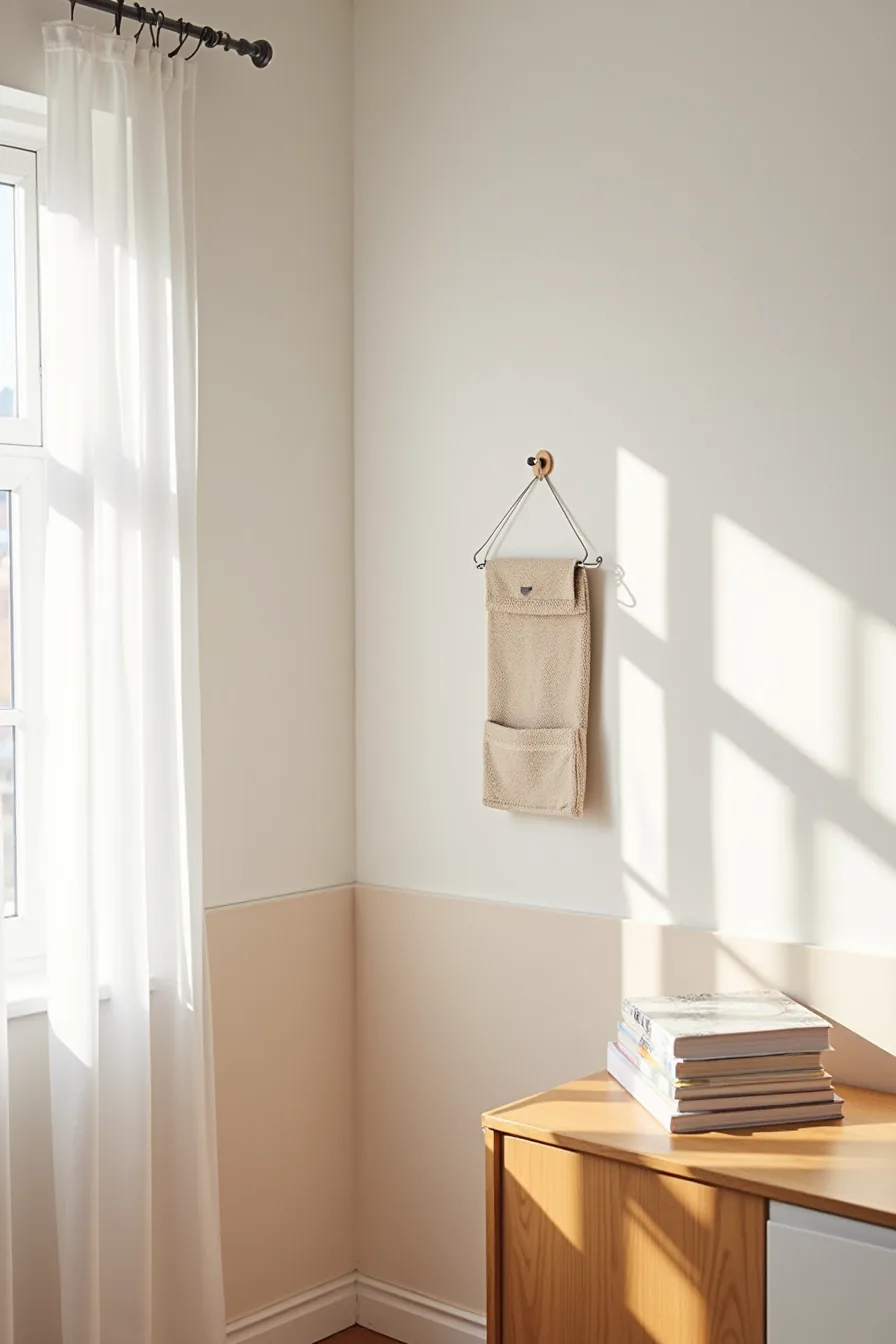
Peel-and-stick wallpaper solves the blank-wall problem without risking your security deposit, provided you check your housing contract first. Most residential halls prohibit any adhesive that leaves residue, but removable wallpaper with a low-tack backing typically peels off cleanly within two years of application. Apply it to the lower two-thirds of the wall behind your bed, the upper third stays bare, which draws the eye upward and makes a 10×12-foot room feel taller than it’s.
Warm the adhesive with a hair dryer for 60 seconds before removal to prevent tearing.
Above the wallpaper, a fabric wall hanging pinned at the top corners adds color without paste or nails. Command strips hold up to four pounds each, so a canvas or woven textile stays secure without damaging the paint. A removable adhesive hook on the adjacent wall supports a hanging organizer for remotes, chargers, and sunglasses, choose one rated for at least two pounds to avoid mid-semester failure.
This combination costs $25–$60 total, takes under an hour to install, and reverses completely in ten minutes on move-out day.
Investment Pieces Worth Keeping After College
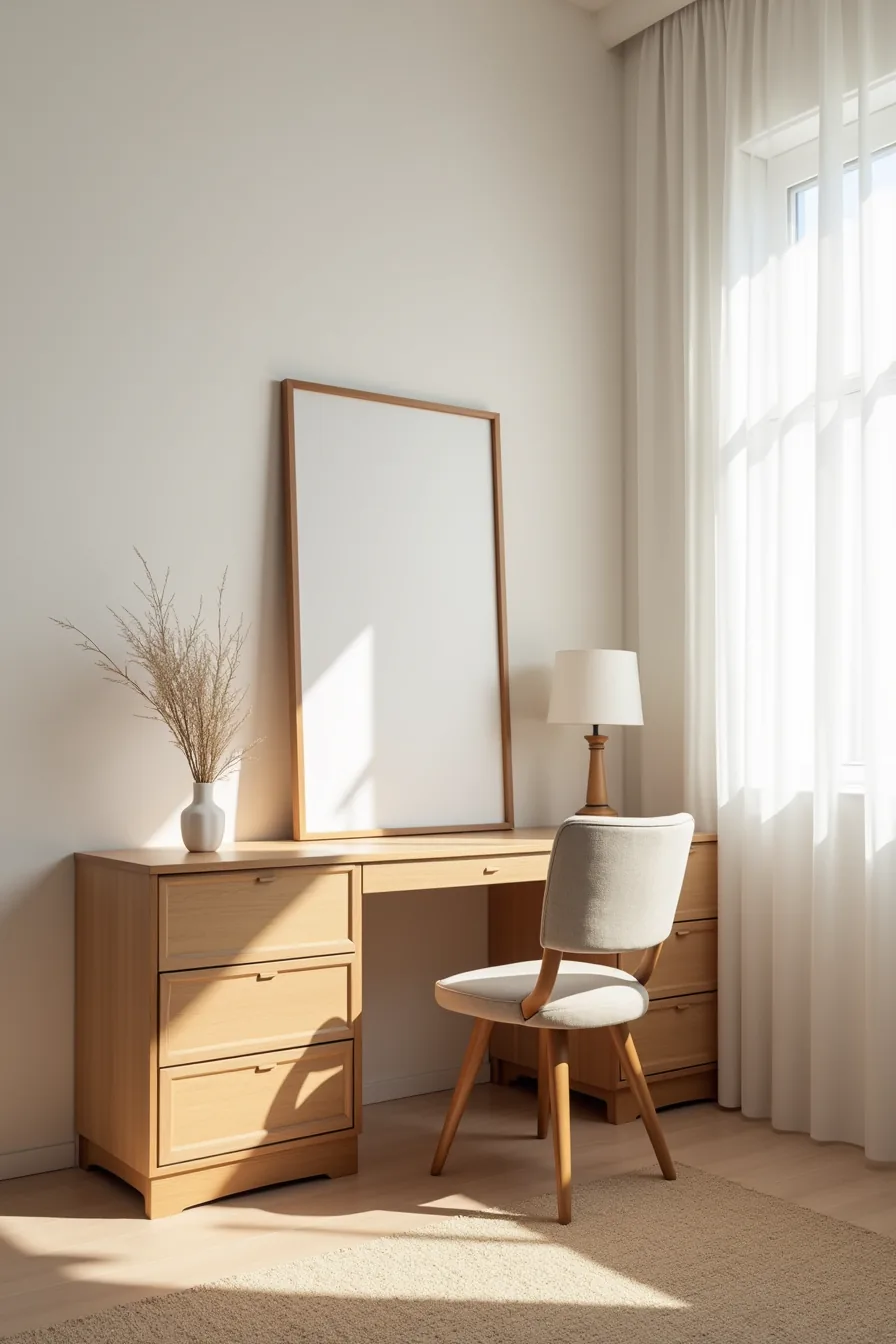
A solid wood dresser, a large framed mirror, an upholstered desk chair, and a woven area rug form the core of a dorm room that transitions into a first apartment without replacement. The dresser, choose one with dovetailed drawers and solid fronts rather than veneer, will survive a decade of moves, while a mirror 60–70 percent of the dresser’s width leans against the wall above it to double the perceived light in a room under 120 square feet. An upholstered chair with a removable, machine-washable cover costs $150–$400 but outlasts three cheap desk chairs, making its cost-per-use lower by year two.
A flat-woven rug in a neutral tone (wool or polypropylene, 5×7 to 6×9 feet) anchors the seating area and hides wear better than a plush pile. Skip anything branded, themed, or color-matched to your current bedding, timeless means the piece works in a beige apartment or a navy-walled studio equally well. If your budget forces a choice, prioritize the dresser and mirror first; they deliver the most visual weight and longest lifespan.
Your one-week launch plan
You don’t need to buy everything at once. Start with the bed, since it occupies the most visual space, then layer in lighting and storage. That order gives you the biggest impact for the smallest spend.
Most students complete the full look in two to three shopping trips, once they know their room’s dimensions and what their roommate already owns. Measure before you buy, and keep all receipts for the first 30 days.
This week: measure your bed, window, and floor space, then order your duvet and mattress topper. Those two items set the foundation everything else builds on.
Frequently Asked Questions
What adhesives and hanging methods are safe for dorm walls?
Use command strips, hooks, and poster tape rated for painted drywall. Avoid nails, screws, or double-sided foam tape, which can peel paint. Test any adhesive on a small, hidden area first.
How do you fit decor into a small dorm room without making it feel cramped?
Prioritize vertical storage, wall-mounted shelves, over-door hooks, and bed risers. Keep surfaces clear, choose multi-functional pieces like ottomans with storage, and limit wall art to one focal point per wall.
Can you use paint or wallpaper in a college dorm room?
Most dorms prohibit paint and permanent wallpaper. Instead, use removable peel-and-stick wallpaper or fabric panels stretched over frames. Check your housing contract first; some allow temporary wall coverings if removed without residue.
What dorm decor items are worth buying new versus secondhand?
Buy new: mattress pads, pillows, bedding, and shower caddies, hygiene matters. Buy secondhand: lamps, rugs, mirrors, storage bins, and decorative frames. Avoid used upholstered furniture, which may harbor bedbugs or odors.