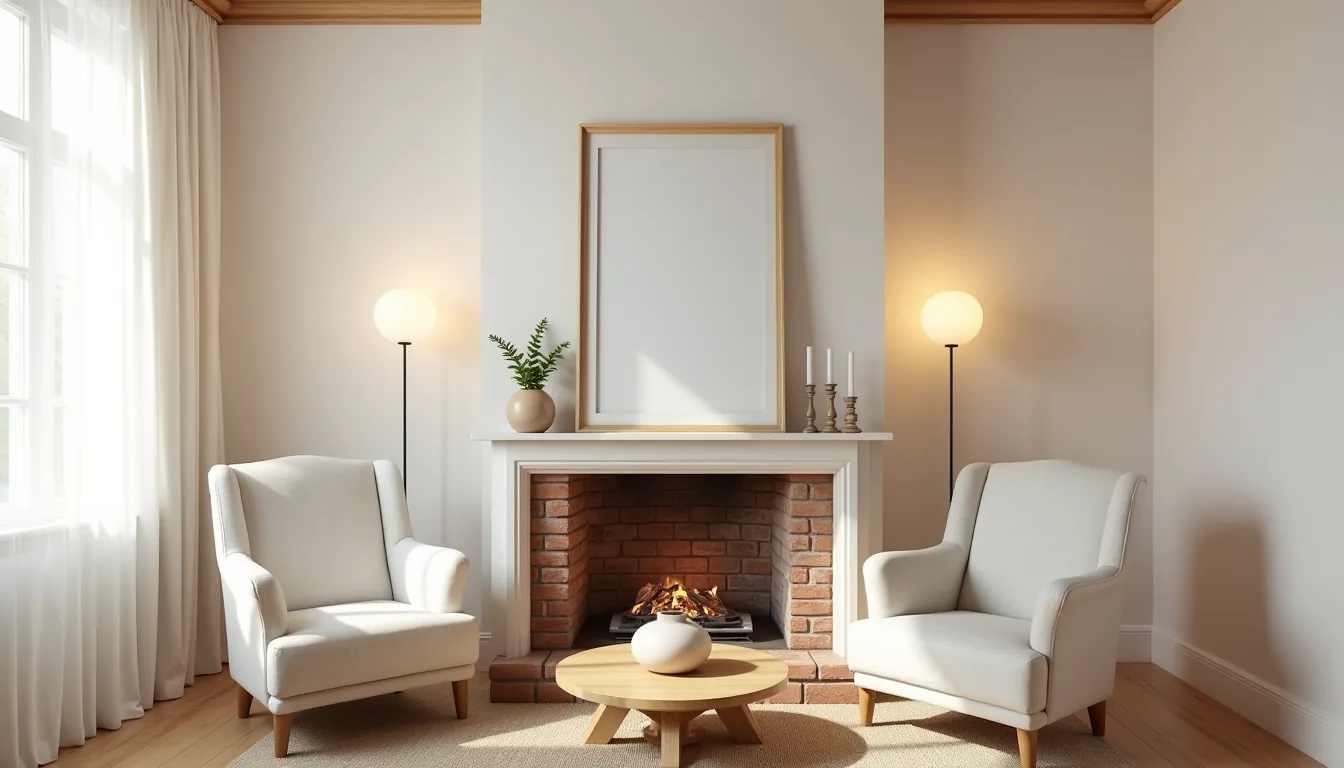
A fireplace living room is a single architectural feature that dictates seating, traffic flow, and material choices across the entire floor plan, so the layout you pick must serve your room’s dimensions and your daily habits before it serves the aesthetic. That means the decision is less about picking a pretty surround and more about matching the fireplace’s position to your sightlines, heat output, and how you actually move through the space. The six configurations below range from a zero-clearance electric insert for renters to a full masonry rebuild for long-term homeowners, each with the exact scale, clearance, and maintenance trade-offs you need to commit to before you buy.
Key takeaways
- A TV-free focal point works best when you anchor the fireplace with a large-scale art piece or mirror at least two-thirds the width of the mantel, keeping the eye level at 57–60 inches from the floor.
- For TV-and-fireplace balance, mount the TV at eye level when seated and keep a minimum 12-inch clearance above the mantel, using a swivel bracket if the fireplace is off-center to avoid neck strain.
- A cozy seating circle requires at least 36 inches of walkway clearance behind chairs and positions seating 6–8 feet from the firebox to avoid overheating while maintaining conversation distance.
- Renter-friendly styling relies on peel-and-stick tile, a freestanding fireplace screen, and a weighted console, all removable without patching walls or altering electrical outlets, with total setup under two hours.
Fireplace as Main Focal Point Without a TV
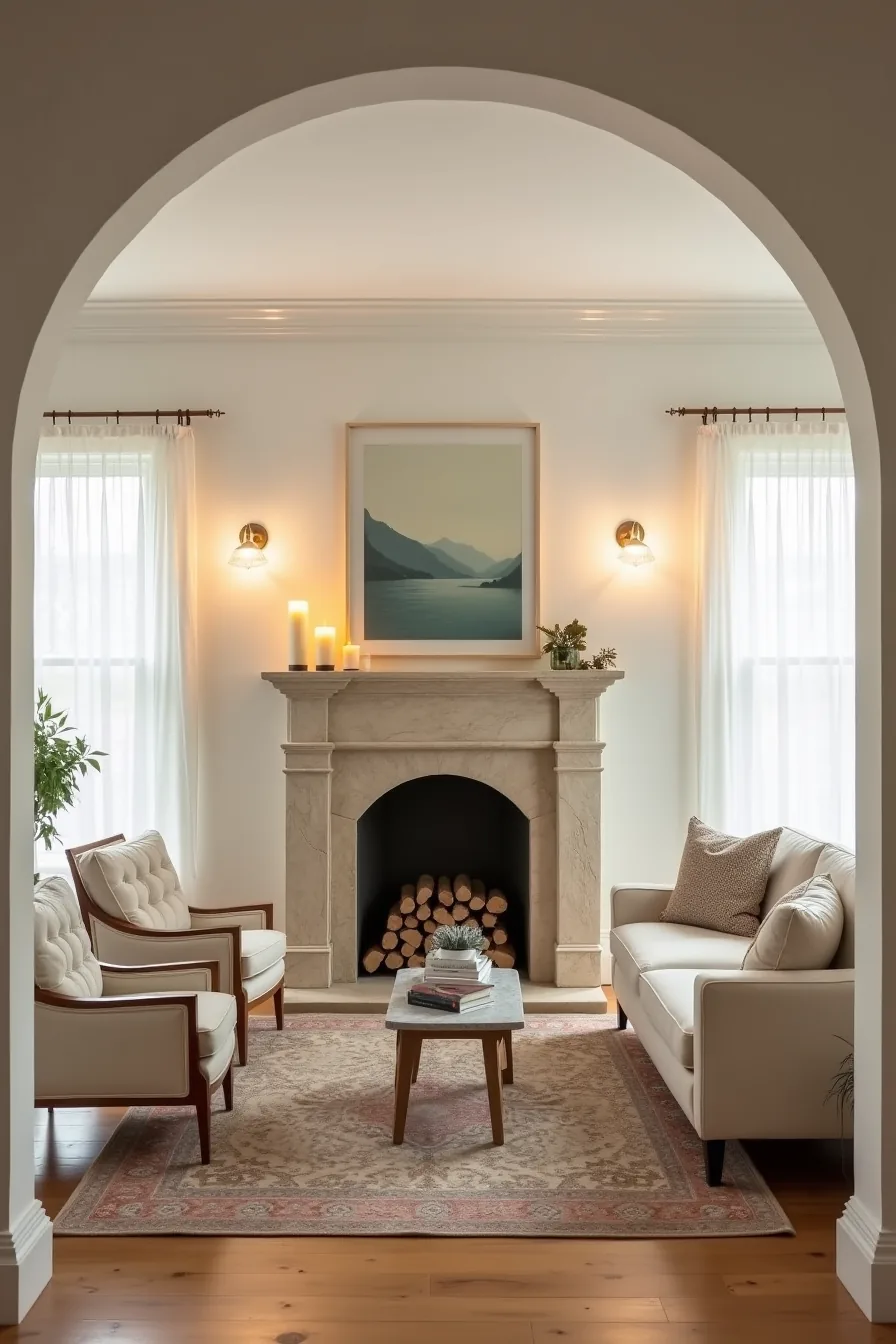
When you remove the television from the equation, the fireplace becomes the single anchor for the entire room. The setup that works most reliably places a three-person sofa directly facing the hearth at roughly 8 feet, close enough for warmth but far enough to avoid a cramped conversation zone. A pair of accent chairs angled at 45 degrees to the sofa creates a natural U-shape that keeps sightlines on the stone fireplace while still allowing side conversations.
The stone fireplace with an arched opening centered on the wall gives the room its symmetry. A patterned area rug beneath the seating zone defines the boundaries of your arrangement, so the furniture doesn’t float disconnected from the hearth. On the mantel, books stacked horizontally, a few candles of varying heights, and a landscape painting above keep the eye moving without competing with the fire itself.
This layout suits rooms where the fireplace occupies a full wall and you’ve at least 12 feet of depth to work with. It works best for people who entertain conversationally rather than host movie nights. You’ll need to commit to the hearth as the sole focal point, any additional large decor on adjacent walls will split attention and dilute the effect.
TV and Fireplace Balance on the Same Wall
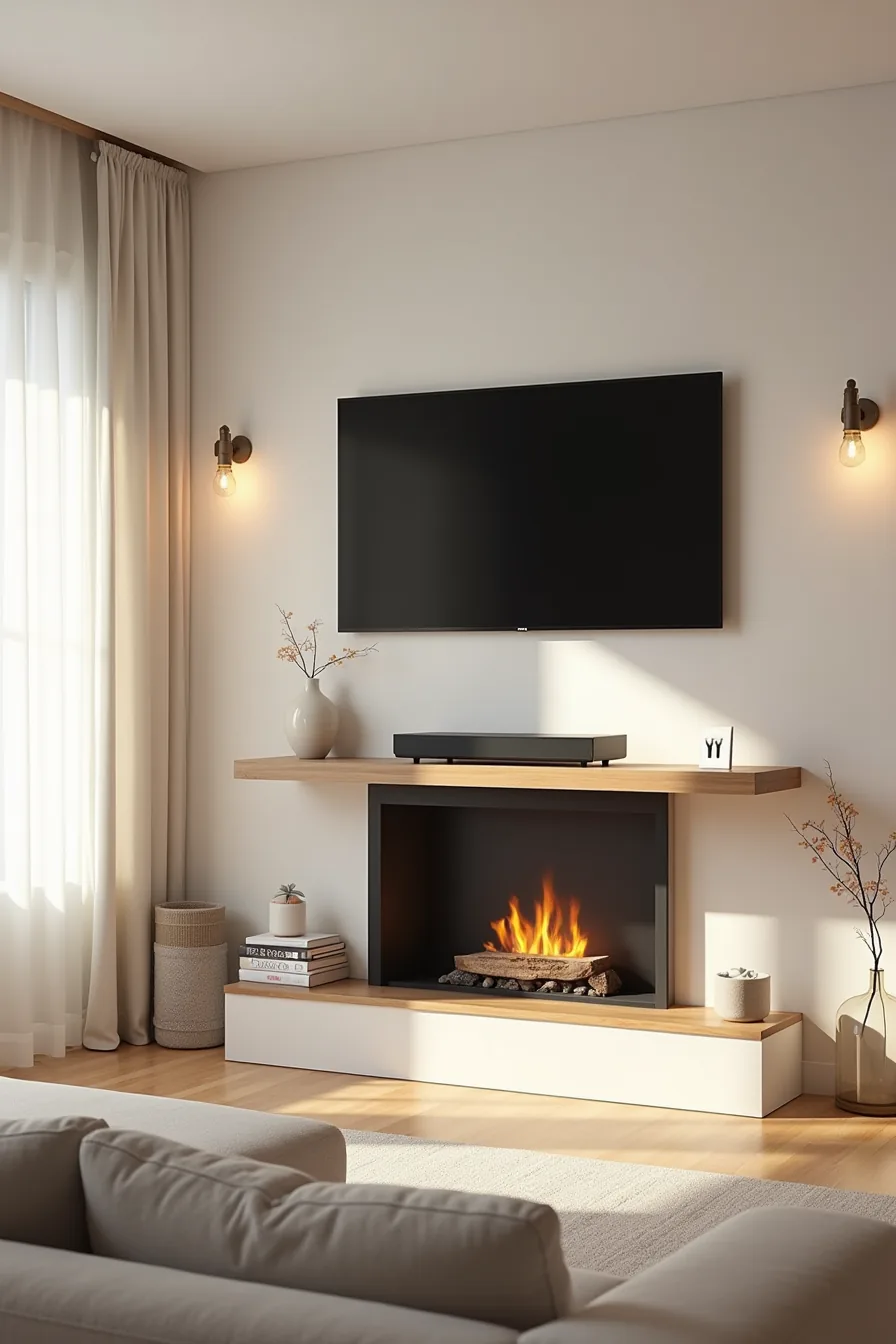
Mounting the television above the fireplace opening is the most space-efficient solution, but it forces a compromise: the screen sits higher than the ideal 42-48 inch viewing center. If you watch TV for more than two hours at a stretch, neck strain becomes a real trade-off. The setup that minimizes this places the screen flush against the wall, with a shallow console table below holding streaming boxes and a soundbar, keeping the fireplace and TV on one clean vertical axis.
Floating shelves flanking both sides of the fireplace visually widen the wall and draw the eye outward, reducing the dominance of the television. For balance, keep the mantel itself nearly bare, one low object, so the stacked visual weight of fireplace, screen, and console doesn’t overwhelm the room. Position low-profile seating 10-12 feet from the wall: far enough to soften the high screen angle, close enough to feel the heat.
This arrangement suits medium-to-large rooms where you watch TV daily but still want the fire lit during colder months. Side-by-side placement, where the TV sits on a stand beside the hearth, works only if you’ve at least 8 feet of uninterrupted wall, otherwise, the two focal points create a cluttered sightline.
Cozy Seating Circle Around the Hearth
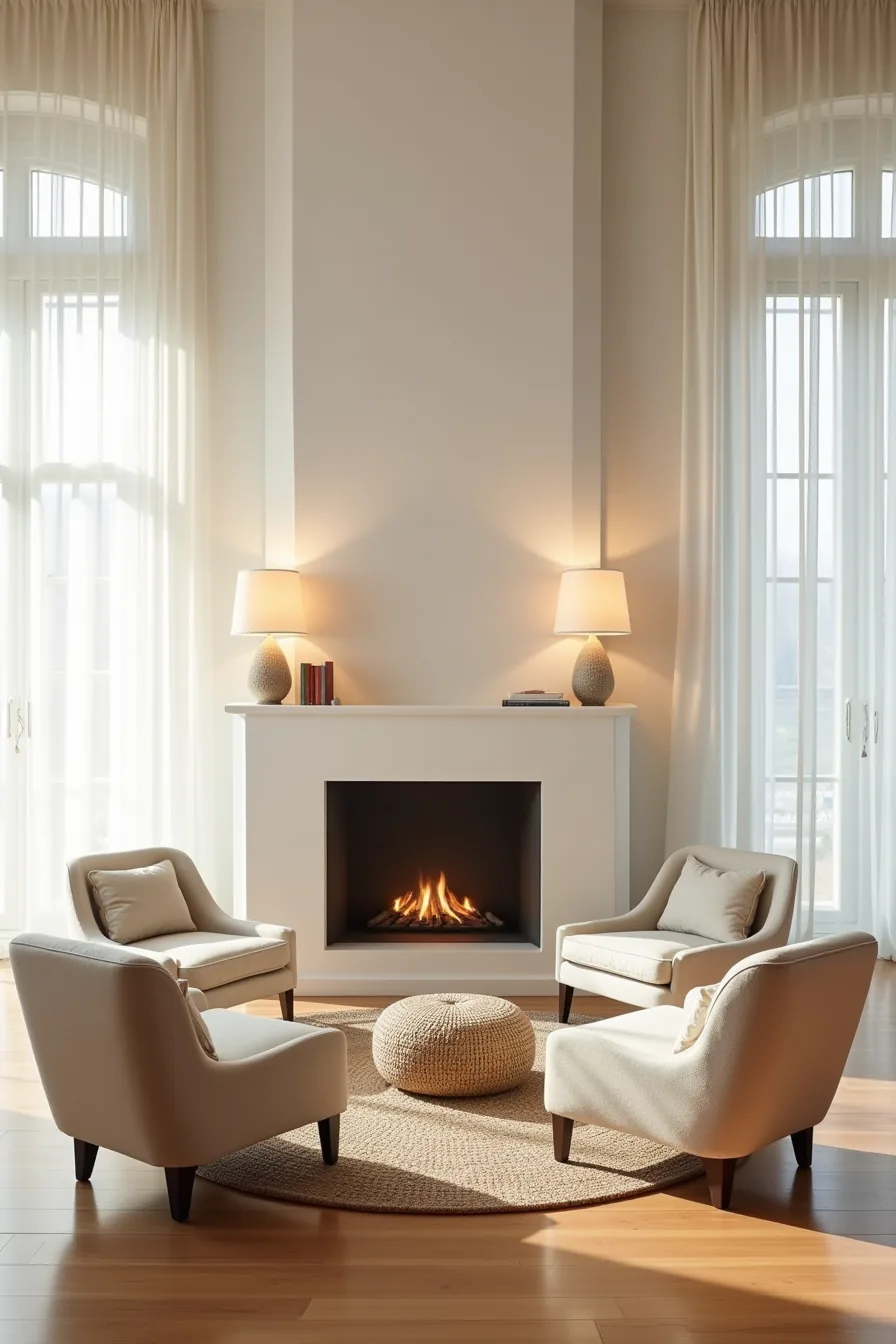
A true cozy seating circle prioritizes conversation over screen viewing. Arrange four upholstered chairs in a loose semicircle facing the fire, with the opening angled toward the center of the room rather than the wall. This pulls everyone within 5-7 feet of the flames, close enough to feel consistent radiant heat without risking overheating.
Between each pair of chairs, place a round side table 18-22 inches in diameter; any larger and you create gaps that break the conversational flow.
Woven poufs fill the remaining openings in the arc, providing flexible overflow seating that tucks away when not in use. The area rug should extend roughly 12-18 inches beyond the chairs on all sides, defining the grouping while leaving a clear 36-inch walkway behind it. For small rooms, swap two chairs for a low bench or built-in window seat.
In large spaces, double the arc into two concentric rows, with the back row raised on a low platform so sightlines to the fire remain unobstructed.
Modern Minimalist Fireplace Living Room
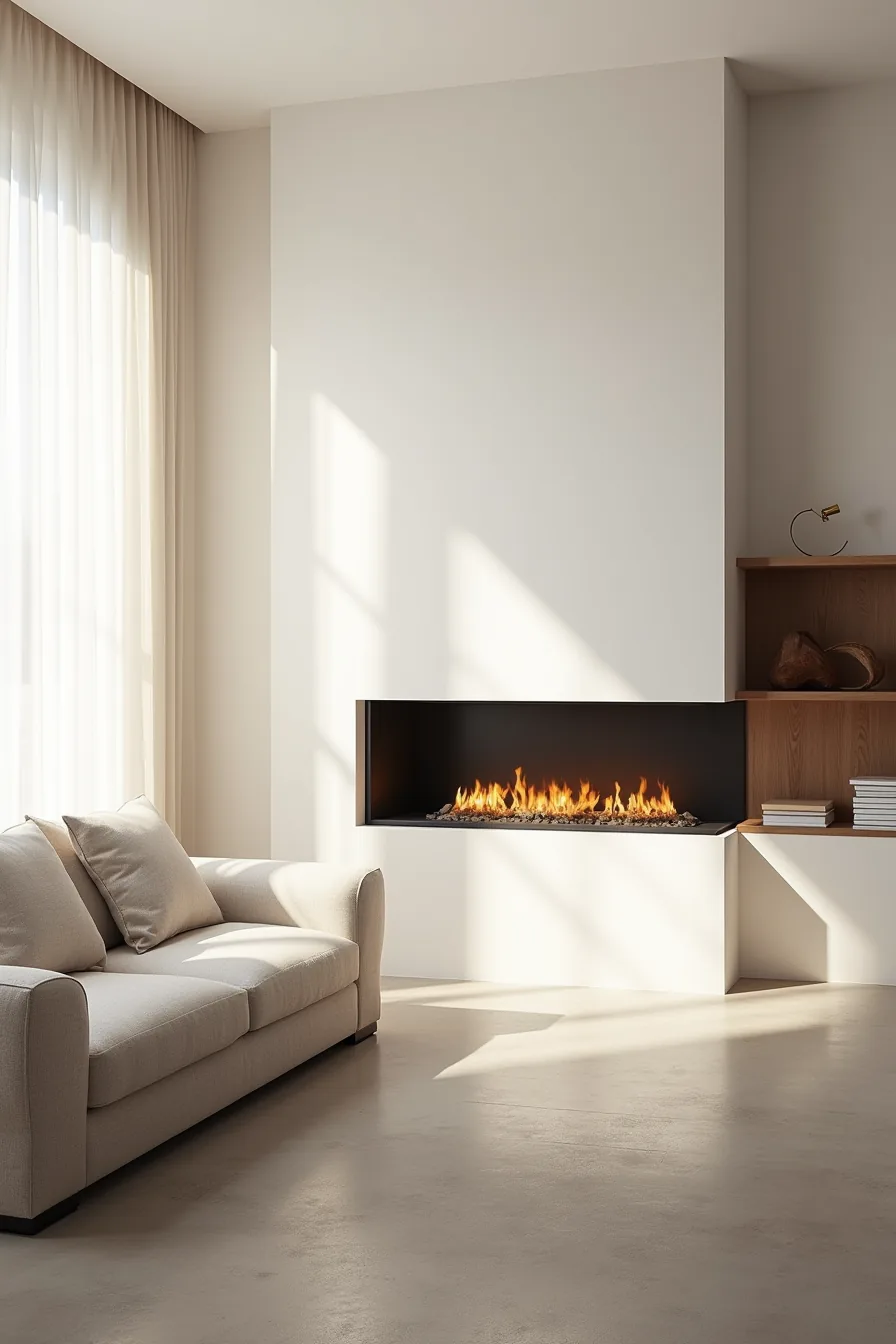
A linear gas fireplace set into a smooth plaster wall creates the clean sightline this style demands. The concrete hearth sits flush with the floor, skip the raised slab entirely, as it interrupts the visual flow and collects dust in the joint. Flanking the firebox with floating shelves keeps the composition balanced while giving you storage for no more than three or four objects; anything beyond that reads as clutter against the neutral backdrop.
A low-profile sectional in natural linen anchors the seating zone, positioned 6-8 feet from the fire so the heat reaches you without dominating the space. ThePolished concrete flooring reflects both light and warmth, but budget for radiant heating beneath it if you live in a colder climate, bare concrete stays cold from November through March. The single sculptural wooden accent piece provides the only visual warmth in the room, so choose something with visible grain rather than a painted or stained finish.
This setup works best in open-plan modern homes where the fireplace acts as a room divider rather than a focal point.
Renter-Friendly Fireplace Styling Without Permanent Changes
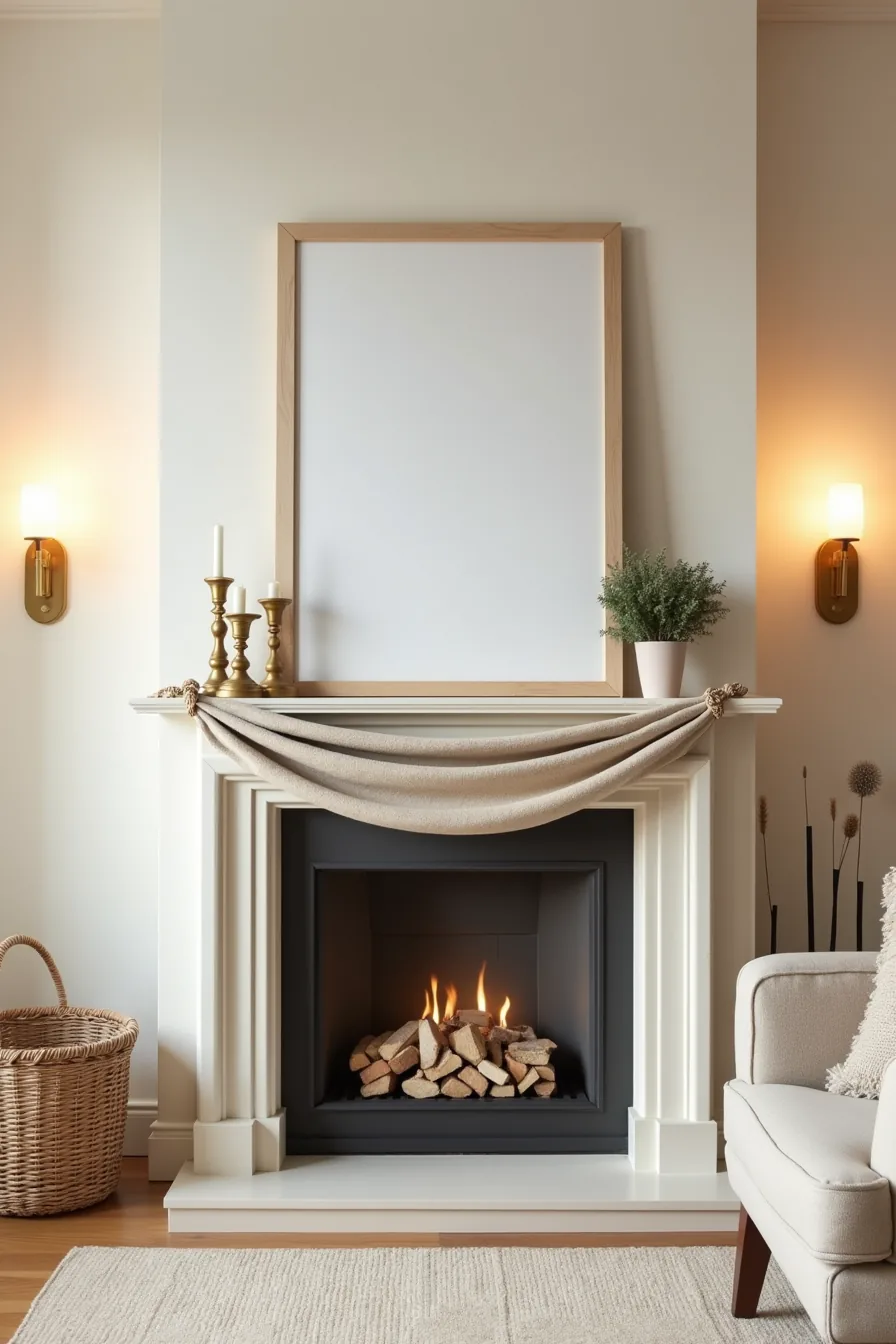
A decorative screen panel placed directly in front of the firebox transforms the opening when you can’t install a gas insert or replace the surround. Choose a metal or mesh screen that spans at least two-thirds of the opening’s width, anything narrower leaves exposed gaps that draw the eye and reduce the visual anchoring effect. This approach works for anyone renting, since it takes under five minutes to set up and removes without a trace.
Drape a fabric mantel swag over the existing mantelpiece rather than drilling for a new shelf or tile backsplash. A textured weave in a solid tone adds depth without competing with the fireplace itself, and you can swap it seasonally for under $30. Pair it with portable brass candlestick holders and potted plants on the hearth, these introduce height variation and warmth while leaving the original surfaces untouched.
For seating, arrange modular pieces that you can reconfigure when you move, keeping the entire zone within 10-12 feet of the firebox for comfortable heat exposure. A freestanding room divider beside the fireplace defines the seating area without mounting anything to the walls, making the whole setup fully reversible and landlord-approved.
Refresh Your Fireplace Living Room for Colder Months
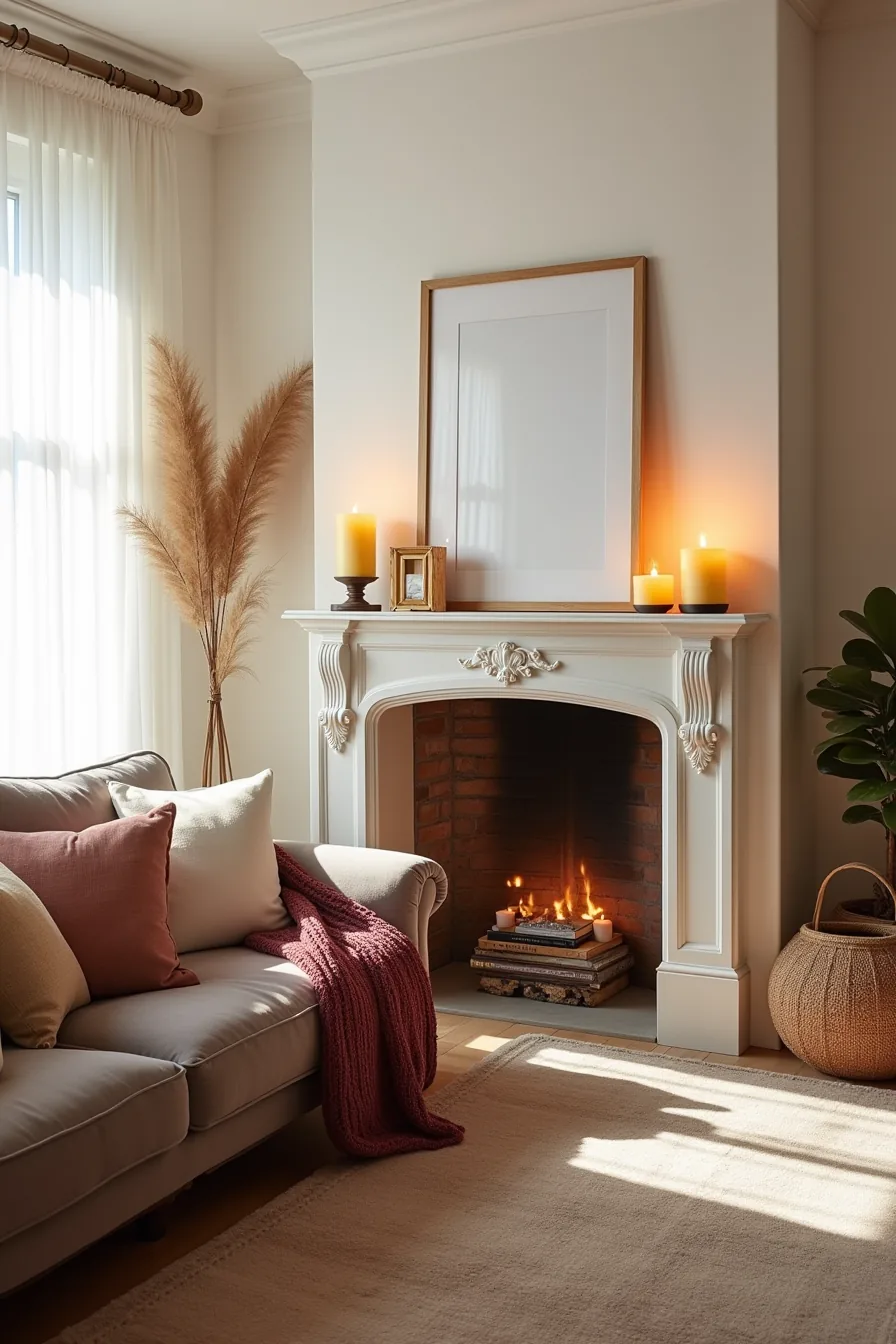
Swap lightweight linens for chunky knit throw blankets draped over sofa arms, wool and cotton blends trap body heat far better than synthetic fleece, and two or three are enough for a standard three-seat sofa. Layer a flat-weave jute rug under a thicker wool area rug; the stacked insulation reduces cold-floor drafts within a 6- to 8-foot radius of the firebox.
Deep burgundy and gold accents work because they absorb and reflect firelight differently than pale neutrals, metallic throw pillows bounce flickering light outward, while darker textiles make the flames read brighter against them. Replace table lamps with warm-toned string lights strung above the mantel, dropping the color temperature to roughly 2700K for a dusk-like glow. Set lanterns with pillar candles on the hearth as a backup heat-free light source; group them in odd numbers at varying heights to create visual rhythm without blocking firebox airflow.
Rotate these items back out by early spring, burgundy reads heavy once natural daylight returns.
Where to start
Pick your constraint first: budget, timeline, or permanence. That single decision eliminates most options immediately. If you rent or move often, prioritize the mantel-less electric insert and freestanding screen, both install in under an hour and leave zero trace.
If you own and expect to stay five-plus years, budget for a vented gas line or wood stove conversion; the $3,000–$8,000 range pays back in daily use and resale appeal.
Measure your wall and seating distance before buying anything. You need at least 36 inches of clearance in front of a heat source and roughly 10–12 feet of viewing space for comfortable conversation.
Your next step: photograph your room, note the wall dimensions, and compare against the six layouts here. That 10-minute audit tells you which idea fits before you spend a dollar.
Frequently Asked Questions
Can you have a fireplace living room without a TV, and will guests find it awkward?
Yes, absolutely. A fireplace becomes the natural focal point, encouraging conversation and relaxation. Guests won’t find it awkward if you arrange seating in a U-shape or facing each other, to promote interaction.
What’s the ideal distance between a sofa and a fireplace for safety and comfort?
Keep the sofa at least 36 inches from the fireplace opening. This distance prevents overheating and sparks while allowing comfortable legroom. For corner fireplaces, maintain a 24-inch clearance on the angled sides.
How do you arrange furniture in a small living room with a fireplace and limited wall space?
Float the sofa perpendicular to the, not facing, the the fireplace. Angle two chairs opposite the sofa, creating a conversation zone that leaves the hearth clear. This maximizes floor space and keeps the fire visible from every seat.
What’s the cheapest way to update a fireplace living room if the fireplace itself is outdated?
Paint the surround and mantel with high-heat matte paint in a contrasting color, costs under $50. Replace the firebox screen with a modern mesh panel, and swap the hearth tile for peel-and-stick stone veneer for a full refresh.