
The right living room rug does more than anchor your furniture, it defines how the entire space feels, and getting it wrong usually comes down to a few fixable mistakes in size, placement, or material. You don’t need a designer’s budget or a perfect room to get this right. What follows are six distinct, decision-ready approaches, each paired with the exact conditions, costs, and upkeep they demand, so you can pick the one that matches your room rather than your Pinterest feed.
Key takeaways
- Front legs on the rug anchors your seating and suits rooms 12×12 feet or larger; all four legs off works best in compact spaces under 10×10 feet to keep traffic paths clear.
- Choose a rug that extends at least 18–24 inches beyond your sofa’s sides; a 5×8 rug fits a loveseat, while an 8×10 or 9×12 handles a three-seater in an average living room.
- Match rug colors by pulling the sofa’s secondary tone, not the dominant one, to create contrast; pair a gray sofa with a warm beige or terracotta rug for depth without clashing.
- Rotate two rugs seasonally, one wool for fall/winter and one flat-weave cotton or jute for spring/summer, to refresh the room every four to six months without buying new pieces.
Front Legs On vs. Off the Rug: Which Placement Works for Your Layout
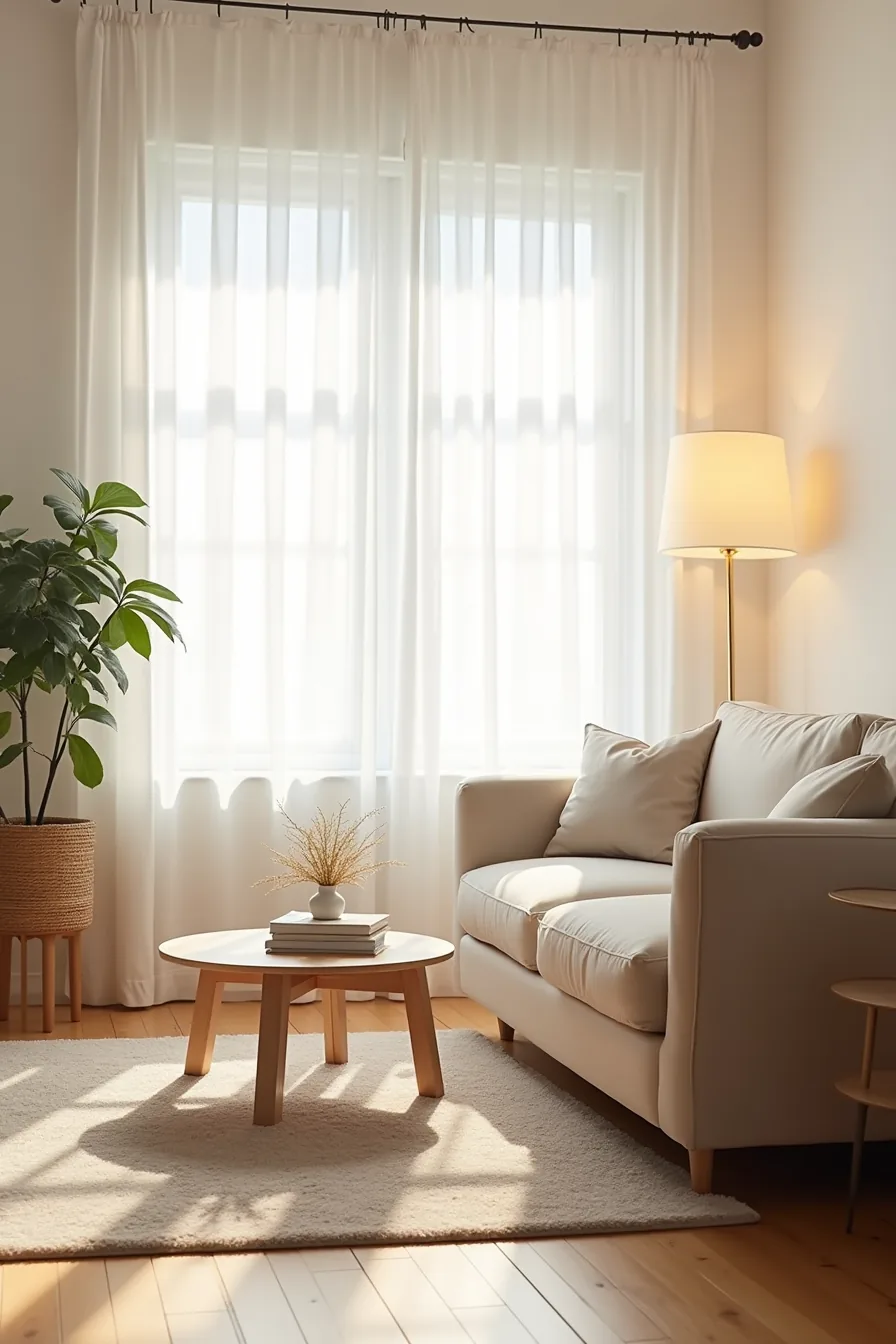
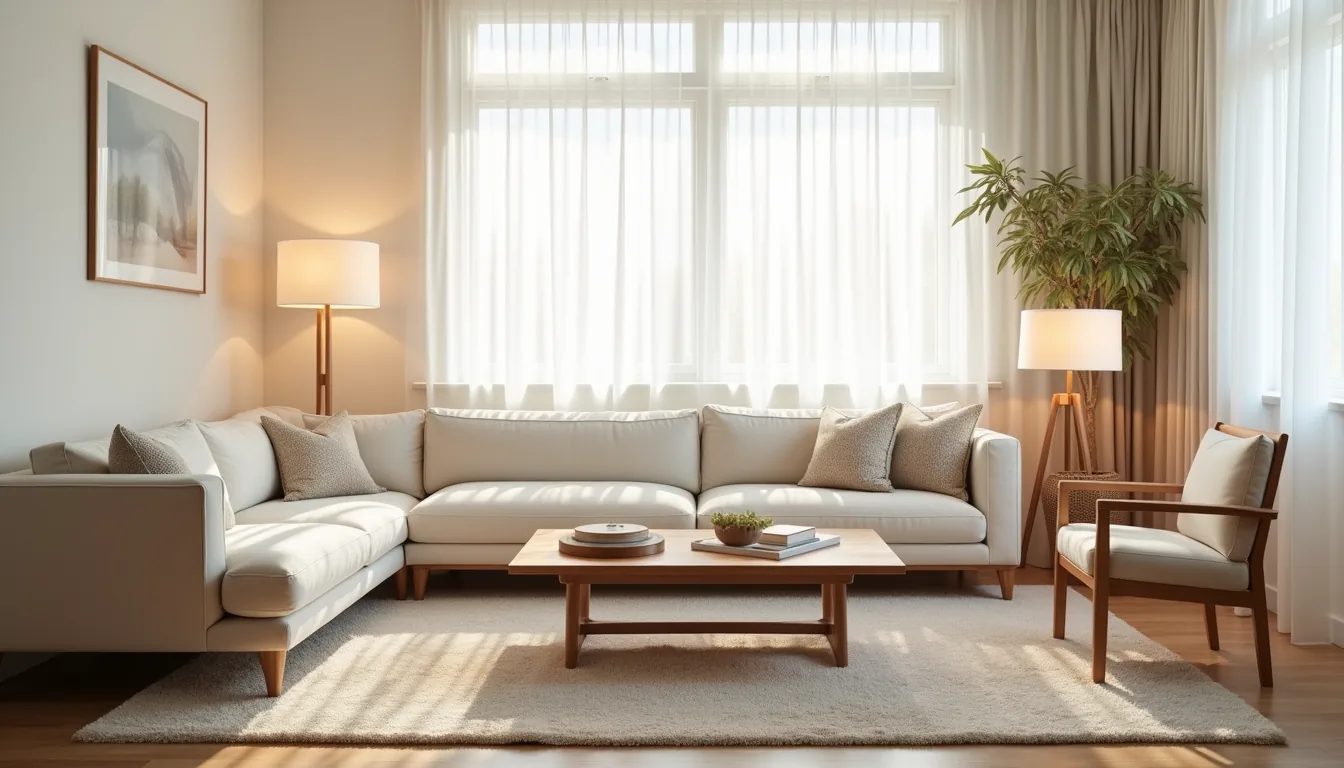
The image here captures the most balanced compromise: a patterned rug anchored under your sofa’s front legs, with the back legs resting on hardwood. This works best for medium-to-large rooms where your sofa sits at least 4–6 inches from the wall, it visually extends the seating zone without committing your entire sectional to the rug.
Front legs on keeps your coffee table and side table partially on the rug, which creates a unified conversation cluster. If your rug is smaller than 6×9 feet, front-legs-on avoids the awkward “floating island” look while still showing flooring around the perimeter. Front legs off, by contrast, suits compact layouts where you need every visual inch of floor space, but it requires a rug large enough to sit fully clear of the sofa’s base, otherwise you get a cluttered half-on, half-off effect.
For your circulation and sight lines, keep at least 8–12 inches of exposed floor between the rug’s edge and the wall when using front legs on. With a smaller sofa, choose front-legs-on to visually extend the foundation; with a large sectional, let it sit front-legs-on only if the rug spans two-thirds of the sofa’s width, sparing you the overstuffed feel.
Large Rug vs. Small Rug: Sizing Your Rug to Room Dimensions
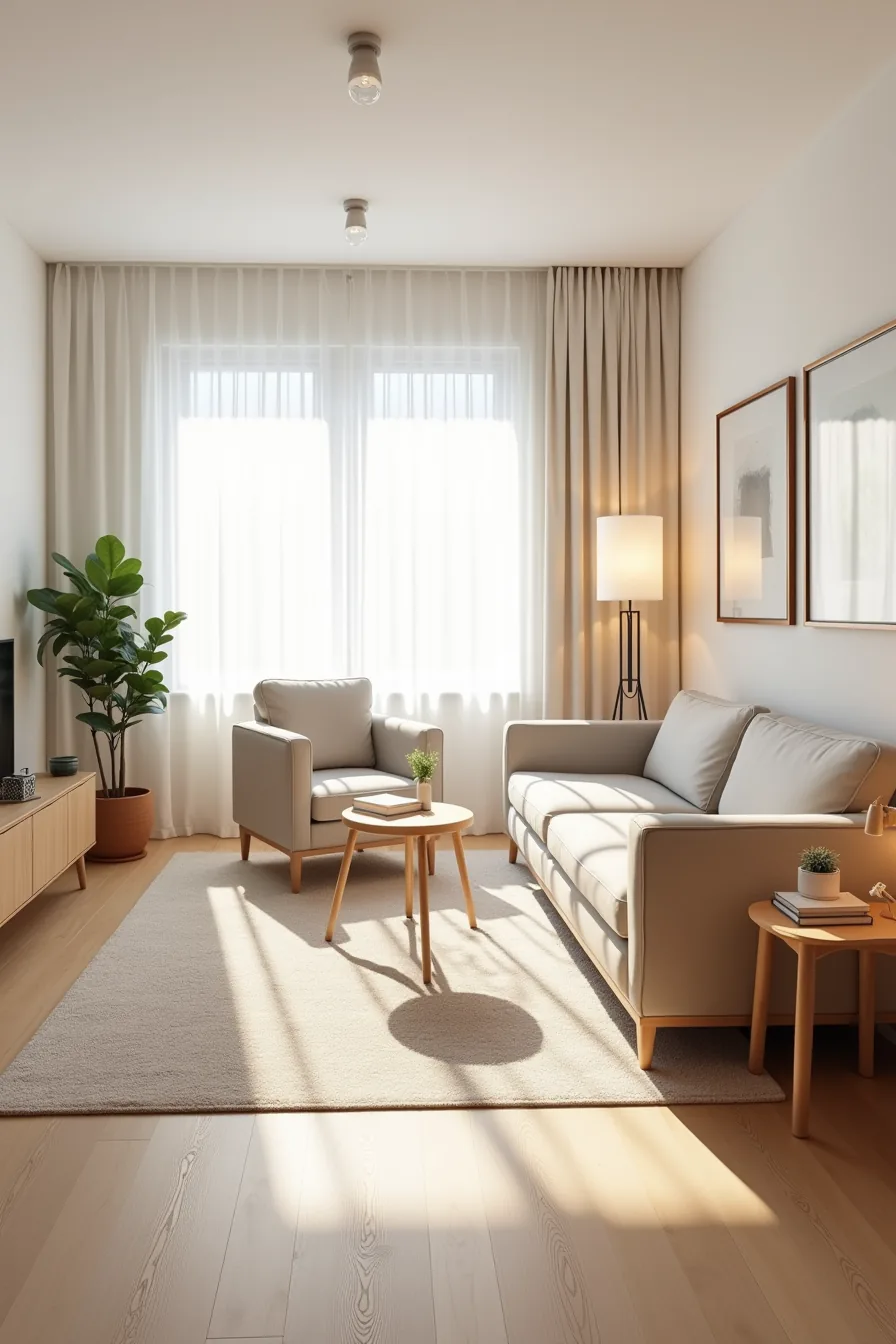
The most reliable rule: your rug should extend at least 12–18 inches beyond your sofa’s front edge on all sides. In a small living room with a compact sofa, small armchair, and low console table, a large area rug that leaves only a slim floor perimeter visible eliminates the chopping effect that small rugs create in tight layouts.
Measure your room’s length and width, then subtract 24–36 inches from each dimension. That gives you the maximum rug footprint that leaves enough bare floor to avoid a wall-to-wall look. For a 10×12-foot room, a 6×9-foot rug works; for a 15×20-foot room, step up to a 10×14 or 9×12.
Going too small is the more common error, a 5×7 rug under a 7-foot sofa leaves your back legs off the surface entirely, creating a floating look that disrupts the visual flow.
The trade-off: larger rugs cost more and are heavier to rotate for cleaning. If budget or storage is tight, choose the smaller end of your range and accept that your rug will anchor the coffee table rather than the full seating group. Always verify your rug can slide under the sofa’s front legs without bunching, thick pile rugs need an extra inch of clearance from baseboard vents and door swings.
Sofa and Rug Color Pairing: Creating Harmony Without Matching
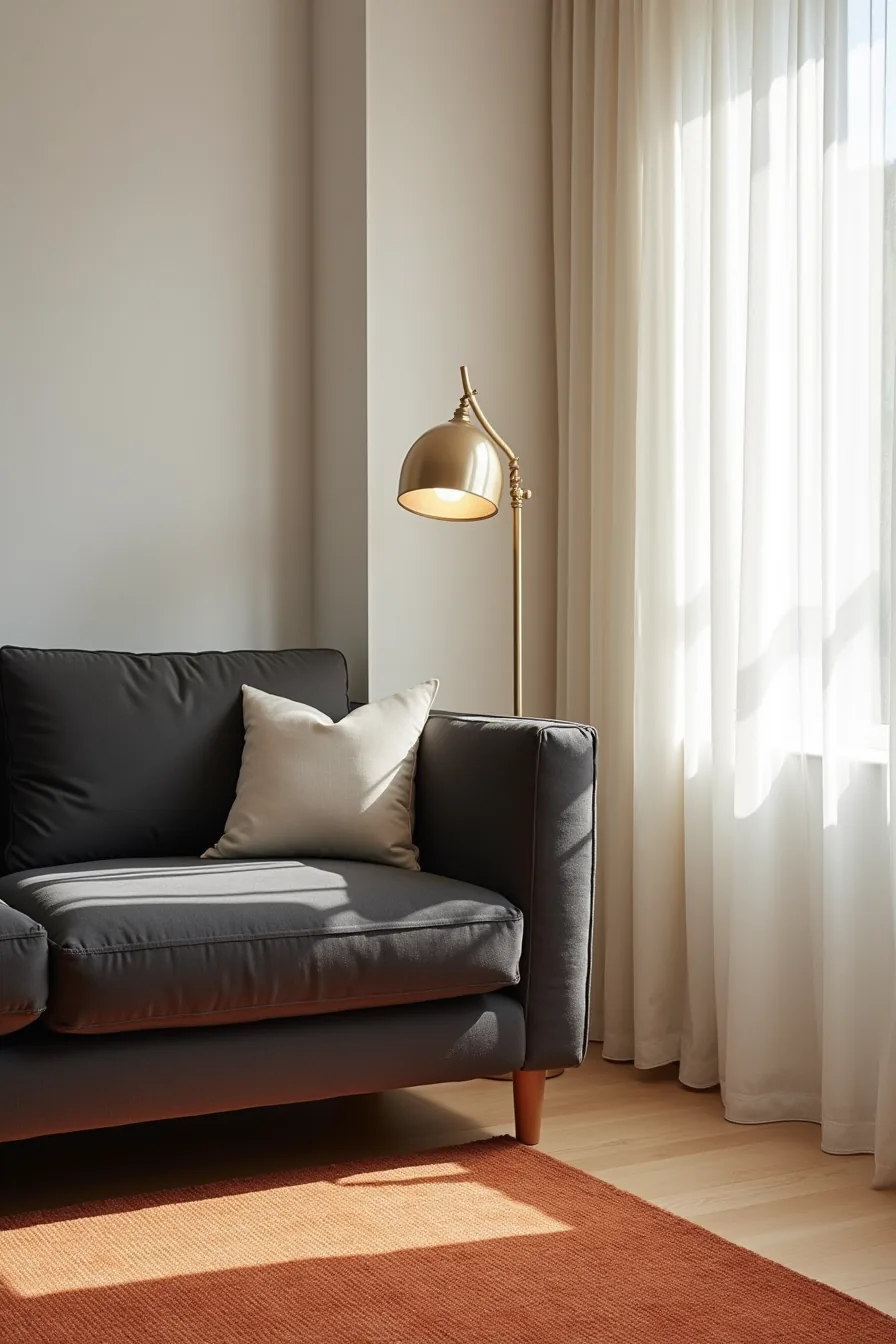
Harmony doesn’t require identical colors, it requires a shared undertone. A charcoal sofa and a rust-toned geometric rug work because both carry warm undertones (charcoal often reads slightly brown next to pure black). Your sofa’s fabric is your anchor: identify whether it skews warm or cool, then pull your rug’s dominant color from that temperature family rather than matching the exact hue.
Rust works with charcoal because it sits opposite on the color wheel, warm orange against cool-leaning gray creates visual tension without clashing. For a navy sofa, try ochre or terracotta; for a beige sofa, olive or burnt sienna. The geometric pattern on the rug matters less than its background color: a rust background with cream shapes maintains the warm undertone connection.
Test your pairing by holding a fabric swatch from your sofa against the rug’s base color in natural daylight. If the contrast reads as jarring, look for a rug that includes a third neutral (like cream or taupe) to bridge the two. This works best for medium-to-large sofas where the rug’s edge is visible beyond the furniture footprint.
Budget-Friendly Living Room Rug Ideas: Rental and Temporary Options
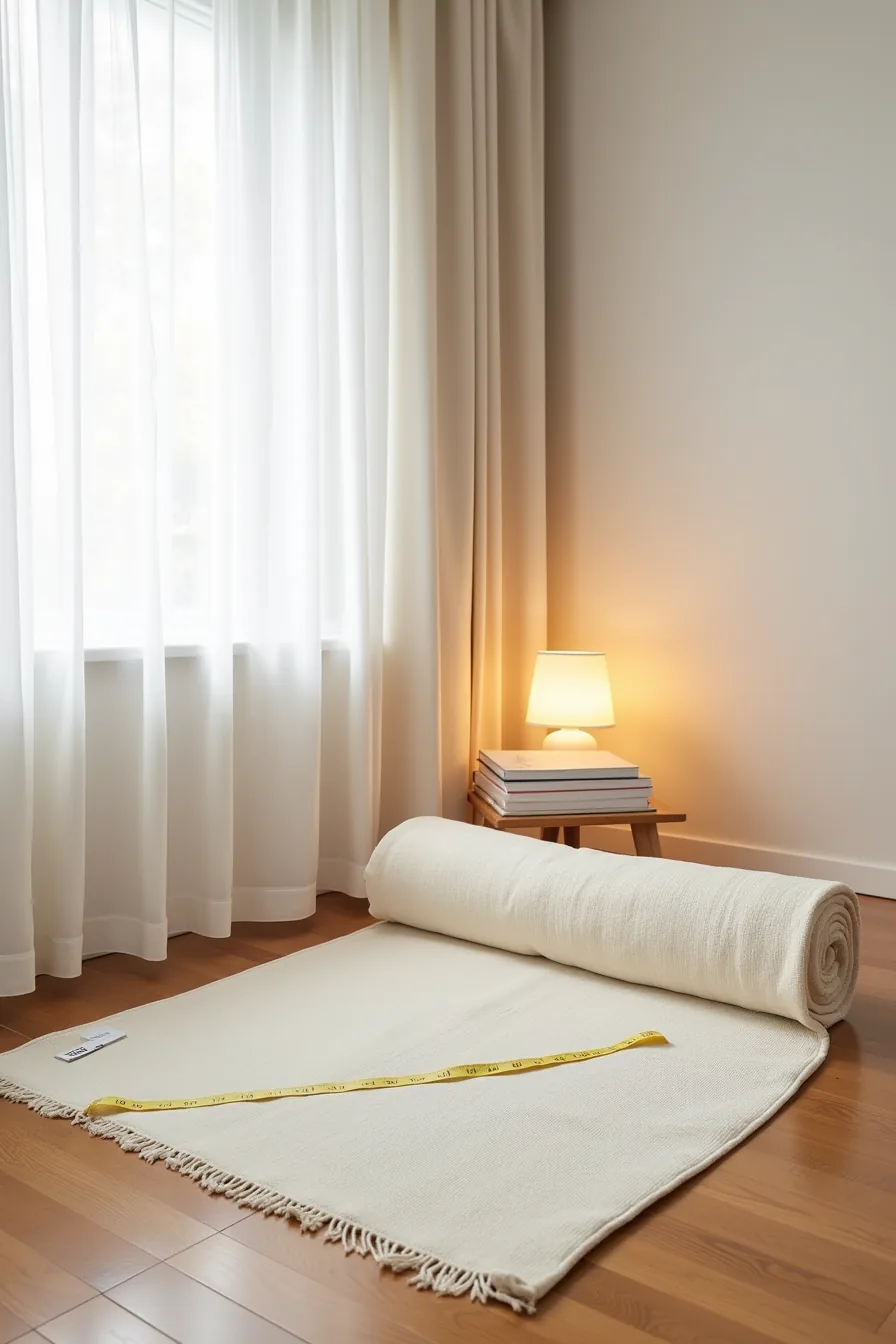
A rolled cotton dhurrie rug gives you a low-commitment way to test a pattern or color scheme without the $200–$600 price tag of wool or silk. Cotton rugs typically run 5–8 mm thick and lie flat enough to avoid trip hazards, but they slide easily on hardwood, a removable rug pad underneath is non-negotiable for both safety and keeping the rug from bunching at doorways. Expect to re-vacuum cotton weekly and spot-clean spills within minutes; unlike wool, cotton absorbs moisture quickly and stains permanently.
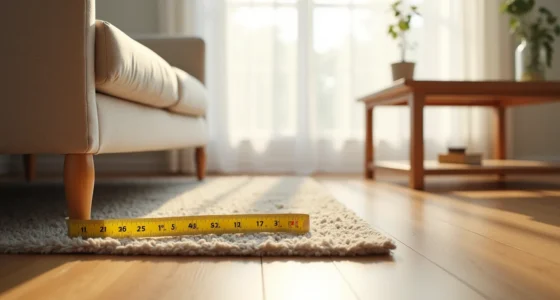
Measure your space before unrolling: for a standard 6–9 foot sofa, a 5×8 rug fits under the front legs only, while an 8×10 covers the full footprint. Since cotton rugs often shrink slightly after the first wash, buy one with a printed pattern rather than a woven one, minor distortion is far less noticeable that way. When you’re ready to rotate or return the room to bare floors, roll the rug with the pattern facing inward, secure it with twill tape, and store it upright to avoid creases that take weeks to flatten.
Long-Term Investment Rugs: Materials and Durability for High-Traffic Spaces
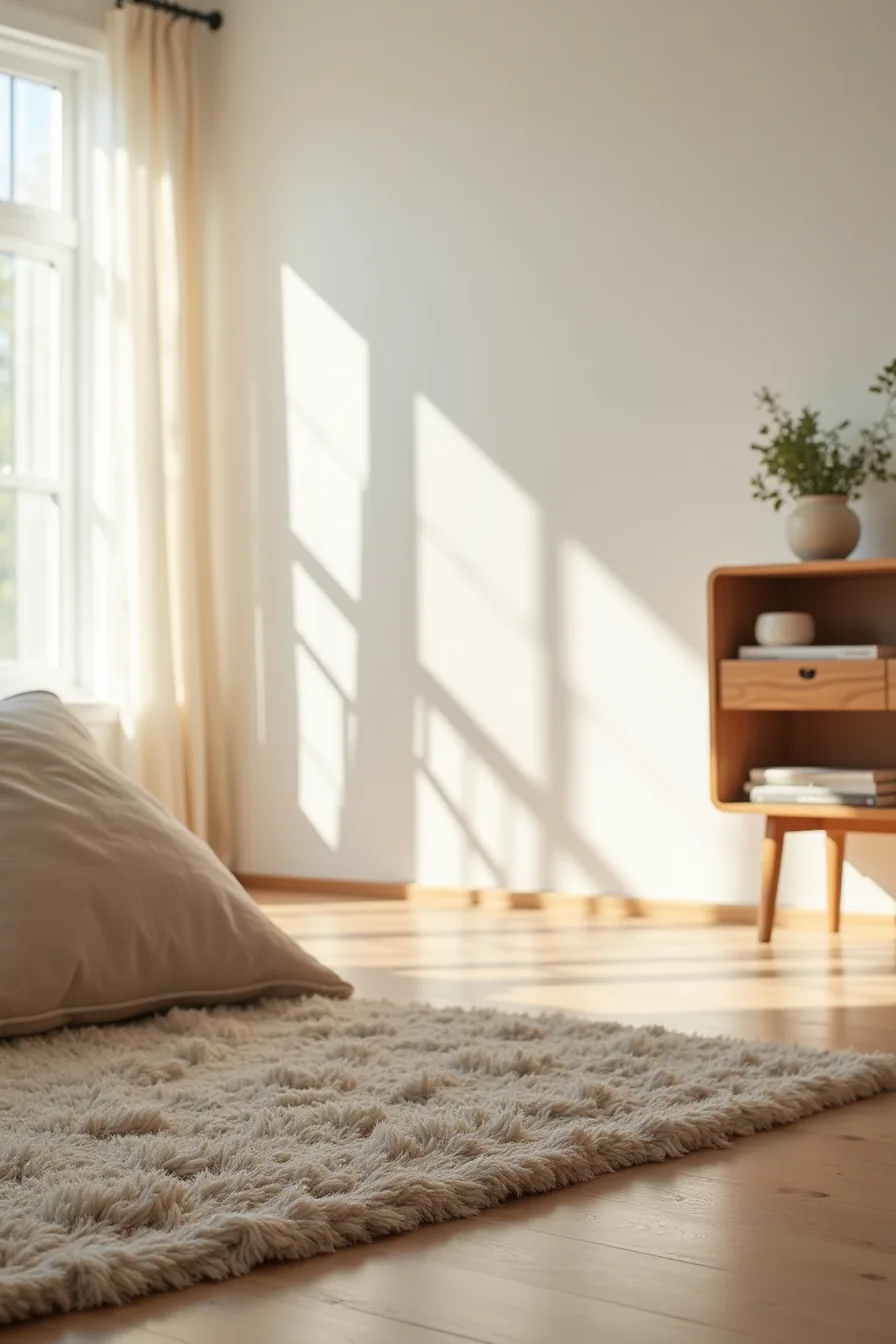
When you commit to a rug for a decade or more, wool remains the benchmark, its natural crimp resists crushing, and a dense hand-knotted construction of 80–120 knots per square inch will hold a defined footpath without losing color, exactly like the worn-in trail visible across the pile of a well-used living room. That visible path isn’t a defect; it’s the pile bending under pressure, and wool’s elastic memory lets it recover when you vacuum against the grain with a beater bar. The edge binding, typically cotton or wool tape sewn 1–2 inches around the perimeter, is your early-warning system, check it twice a year for fraying, as rebinding costs $5–$15 per linear foot and is far cheaper than replacing the whole rug.
For households with kids or pets, flatweave wool kilims or low-pile (3–5 mm) wool blends survive better than plush piles that trap crumbs and show vacuum marks. Expect to reverse the rug twice a year to distribute wear evenly, and rotate it 180 degrees every six months, a 9×12 rug in a high-traffic hallway will otherwise develop a permanent bald lane within three years. Professional deep cleaning every 12–18 months costs $3–$6 per square foot, which is a fraction of the $1,200–$3,000 you’d spend on a new wool rug of similar size.
Synthetic fiber blends (polypropylene, nylon) cost 40–60% less upfront and resist staining, but they flatten permanently after 5–7 years and lack the patina that makes wool age gracefully.
Living Room Rug Ideas for Seasonal Refreshes: Rotating Rugs Without Replacement
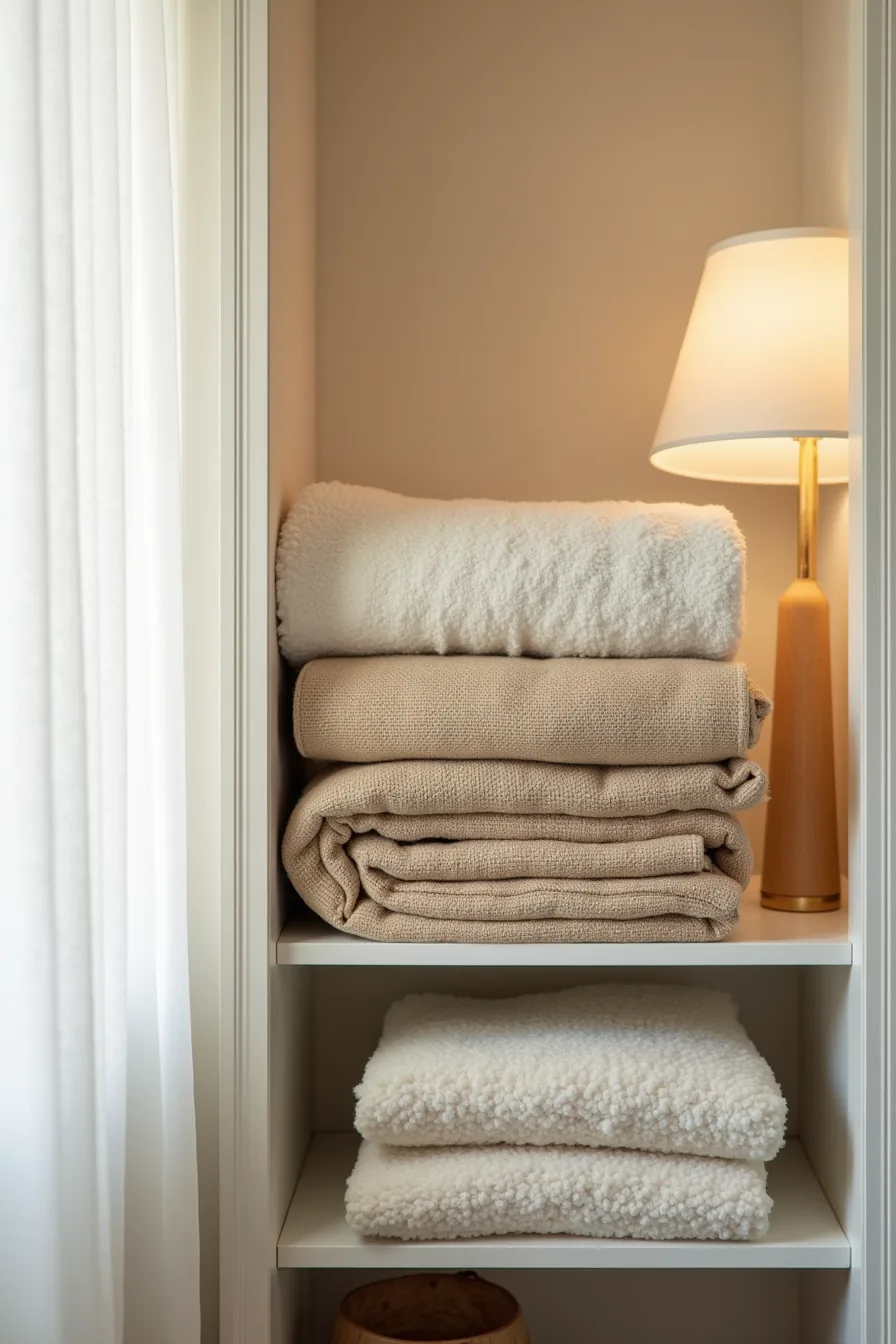
Seasonal rotation costs nothing beyond storage, you already own the rugs. A lightweight jute rug for summer heat and a dense wool rug for winter insulation create two distinct room personalities from the same footprint. Stack the off-season rug flat on a shelf in a linen closet, never folded, since creases in jute become permanent cracks within weeks.
Roll the winter wool rug around a cardboard tube with a cedar block inside to deter moths, then slide it into a vacuum-sealed storage bag to compress it to roughly one-third of its volume. You can fit three seasonal rugs in the same closet space as one bulky one. When you swap, give the incoming rug 24–48 hours to flatten before furniture goes on top, edges that curl from tight storage take a week of floor time to relax fully.
Match the rotation to your heating season: lighter rugs come out in April, wool returns as temperatures drop in October.
This strategy suits anyone with two rugs already or those willing to buy both at once. Budget versions run $150–$300 for a 5×8 jute rug, which peaks at six to eight seasons before the burlap backing wears through. The upfront cost buys you a fresh focal point twice yearly, and neither rug takes the full year’s wear.
Your next step
Start with the rug you already own. Lay it flat, stand at your seating area, and check whether the front legs of your sofa and chairs sit on it. If they do, you’ve a workable foundation.
If not, you’re facing a sizing problem, not a style problem.
Measure your main seating zone before you browse anything. Most living rooms need a rug between 8 by 10 and 9 by 12 feet; if yours is smaller, a 5 by 8 can anchor a single chair or a console area. Write those dimensions down and keep them beside you while you shop.
Buy a sample swatch of your top two candidates and live with them for a week. Place each on the floor, walk on it barefoot, and check it under your lamps and daylight. That week will tell you more than any photo ever will.
Frequently Asked Questions
Should all four furniture legs sit on the rug or just the front two?
Either works, but consistency matters. All four legs grounded creates a unified zone, ideal for large rugs. Front-legs-only suits smaller rugs, visually anchoring seating without overwhelming the space.
What size rug do I need for a 12-by-15-foot living room?
A 9-by-12-foot rug fits most 12-by-15 rooms, leaving 18–24 inches of bare floor around the perimeter. For front-legs-only placement, an 8-by-10-foot rug works well.
How do I choose a rug color that won’t clash with my gray sofa?
Match the rug’s undertone to your gray, cool grays pair with blue or charcoal tones, warm grays with beige or taupe. Add a contrasting accent color (like mustard or rust) in low-pile patterns for depth without conflict.
Can I use a small rug in a large living room without it looking out of place?
Yes, if you define a distinct seating area. Use a 5-by-8-foot rug under a coffee table with front legs only, then add a separate rug for a reading nook. Avoid floating a small rug in open space.