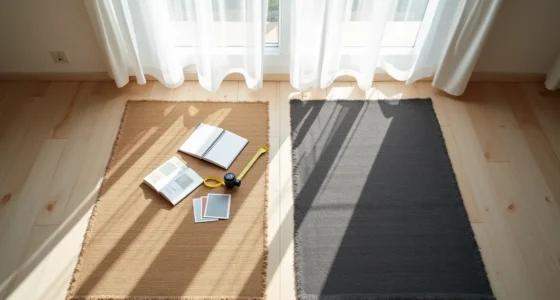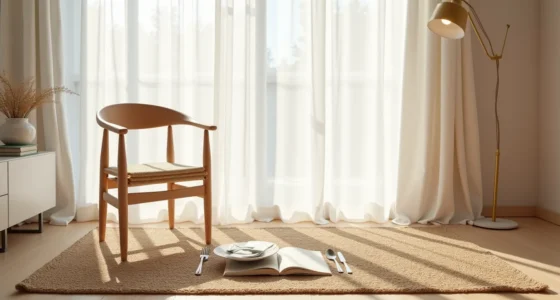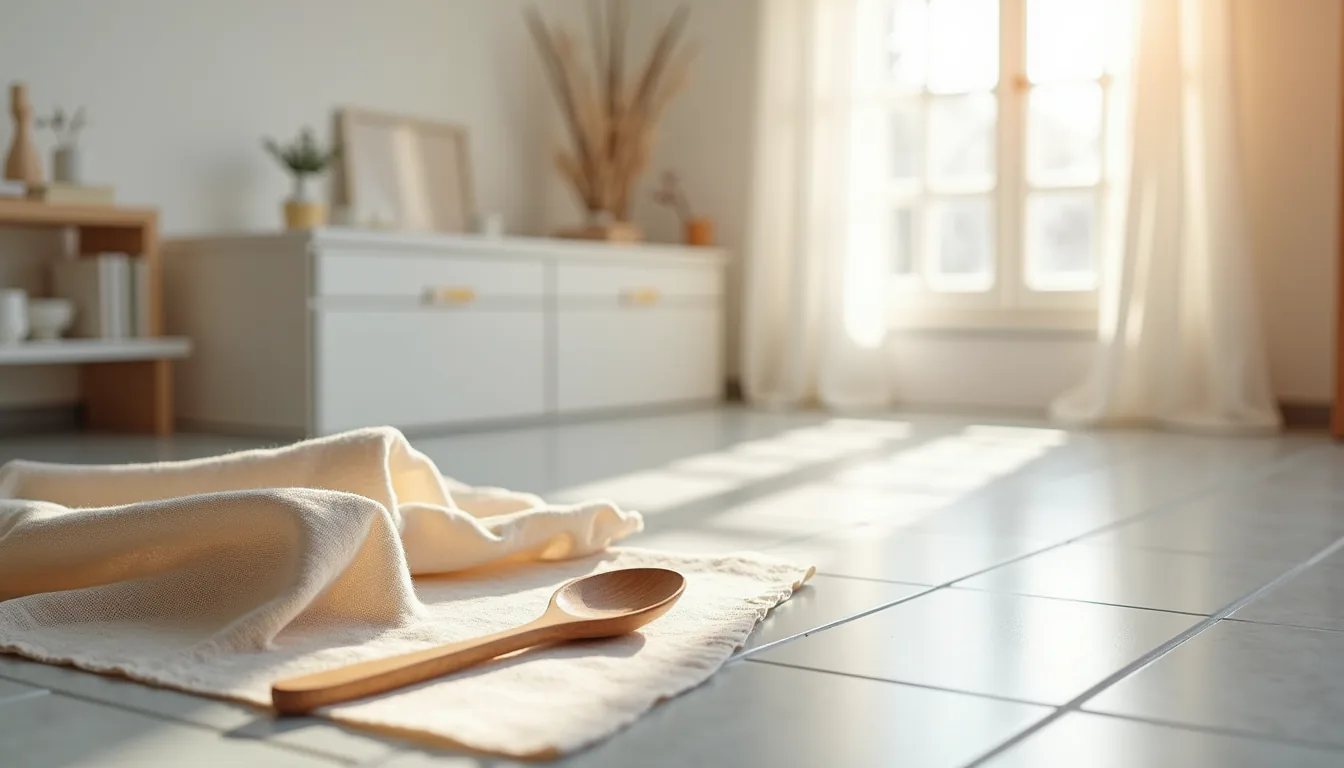
Grey floors are a neutral backdrop that reads cold the moment sunlight leaves the room, but you can shift the entire temperature of the space by layering warm-toned rugs, wood, walls, and lighting in specific, measurable ways. The fix isn’t about hiding the grey, it’s about rebalancing its undertone. In the following breakdown, you’ll find five distinct strategies, each with its own cost, maintenance, and suitability, so you can pick the one that matches your room’s size, your budget, and your tolerance for upkeep.
The right approach turns that chilly slab into a grounding base, not a liability.
Key takeaways
- Rugs change everything: Choose a warm-toned wool or sisal rug covering 60–80% of the main seating area to instantly neutralize grey floors.
- Wood adds contrast: Introduce oak, walnut, or teak furniture and trim in warm finishes, this shifts the floor’s perceived temperature more than any other single change.
- Lighting is free heat: Swap cool-toned LED bulbs (4000K+) for warm 2700K–3000K options, and aim two to three light sources at different heights to soften the grey.
- Scale your fix: In small rooms, use one large rug and warm wall paint; in large spaces, layer multiple rugs and add a wood-topped coffee table to anchor warmth without overwhelming the layout.
Why Grey Floors Feel Cold and What Actually Changes That
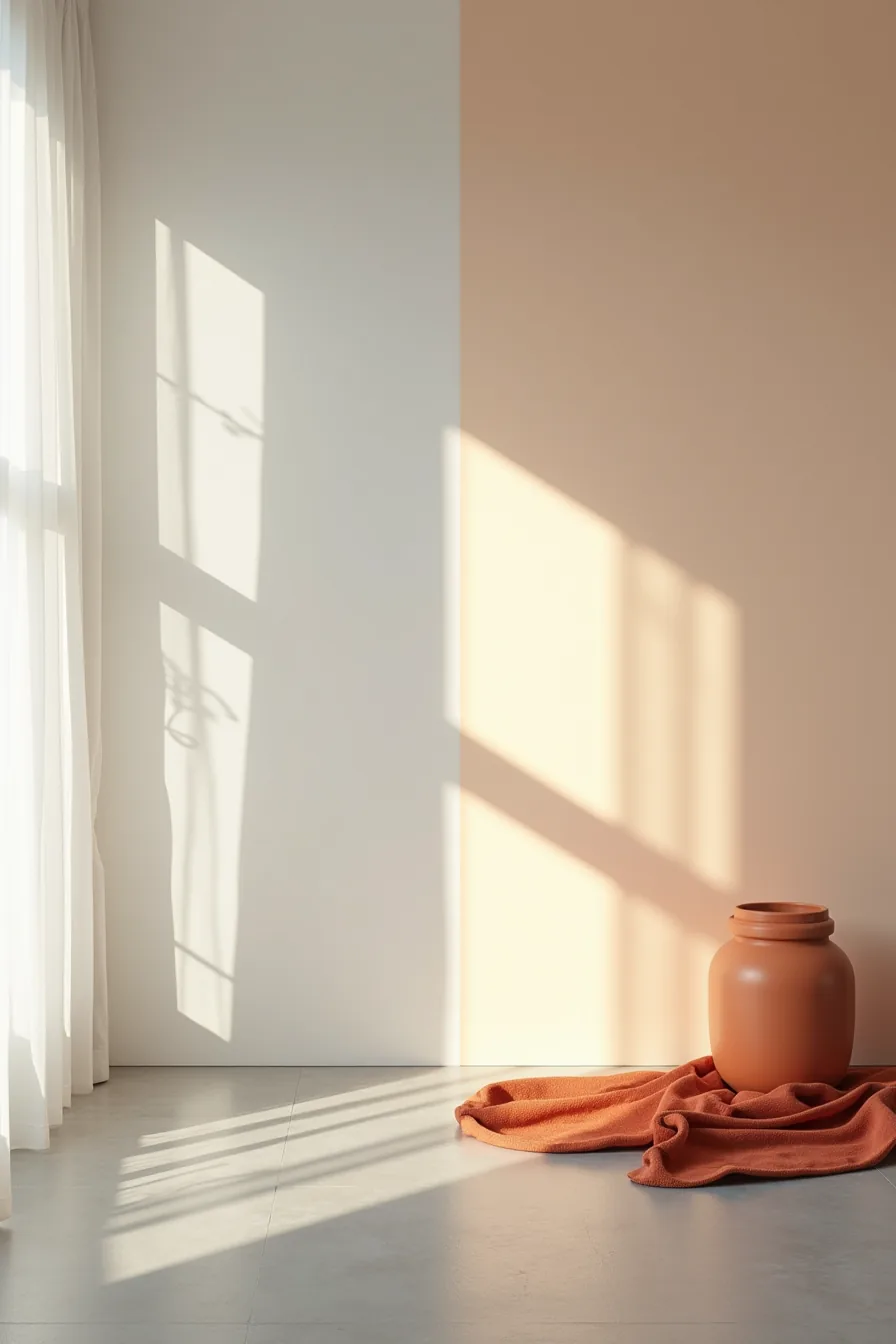
Grey floors reflect more light than warmer browns or beiges, so your eye reads them as cooler and more distant. The fix isn’t ripping up the floor, it’s introducing contrast, texture, and undertone. Take a polished grey floor with a terracotta clay pot and rust-colored fabric swatch resting on it.
The orange-red hues offset the grey’s blue or green undertones, while the matte clay and woven fabric break up the slick, reflective surface.
This contrast-based approach works because warmth is a perception of balance, not a physical property of the floor itself. You don’t need to add heat, you need to add visual weight. For a small room, one saturated accent object in a warm tone creates enough pull.
For larger spaces, you’ll want multiple warm-tone elements distributed across the room so the cool floor doesn’t dominate the periphery. The principle is simple: every warm item you place on a grey floor shifts the room’s overall temperature perception one step further from cold.
Layer Warm-Toned Rugs to Ground the Space
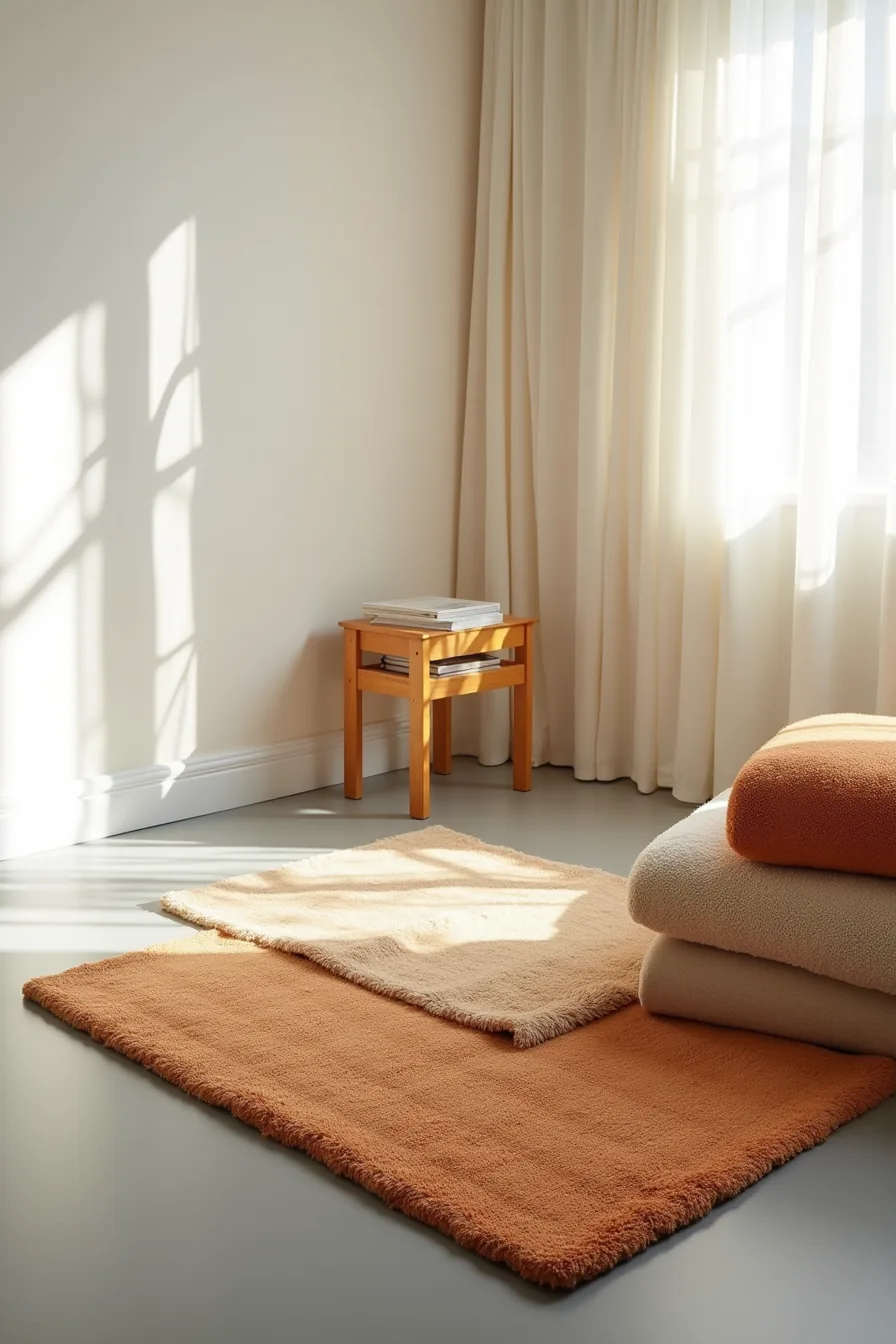
A rug is the single most effective tool for warming grey floors because it inserts a large block of physical texture and color directly between your feet and the cool surface. For the best results, look for best rug colors for grey floors: ochre, burnt sienna, terracotta, and warm cream. These tones carry orange or yellow undertones that neutralize the blue or green cast common in grey flooring.
Size dictates impact. For a small room (under 150 square feet), a single 5×8 rug placed under the front two legs of your sofa is enough to anchor the seating zone. Medium rooms benefit from an 8×10 rug that extends at least 18 inches beyond the sofa’s edges.
In large open-plan spaces, layer a 9×12 neutral base rug with a smaller 5×7 ochre or burnt sienna rug rotated 15–20 degrees on top, like the cream, ochre, and burnt sienna stack resting on the grey floor beside the wooden furniture leg.
Material matters more than pattern. Wool and jute offer natural matte texture that absorbs light, whereas synthetic shags reflect it. Budget route: a low-pile polypropylene rug in a warm tone runs $80–$200 for an 8×10.
Renter-friendly route: a washable, non-slip rug pad underneath protects the original floor and lets you swap the rug out when you move without leaving marks. Vacuum wool rugs weekly and rotate them every six months to prevent uneven fading near windows.
Pair Grey Floors with Warm Wood Furniture and Trim
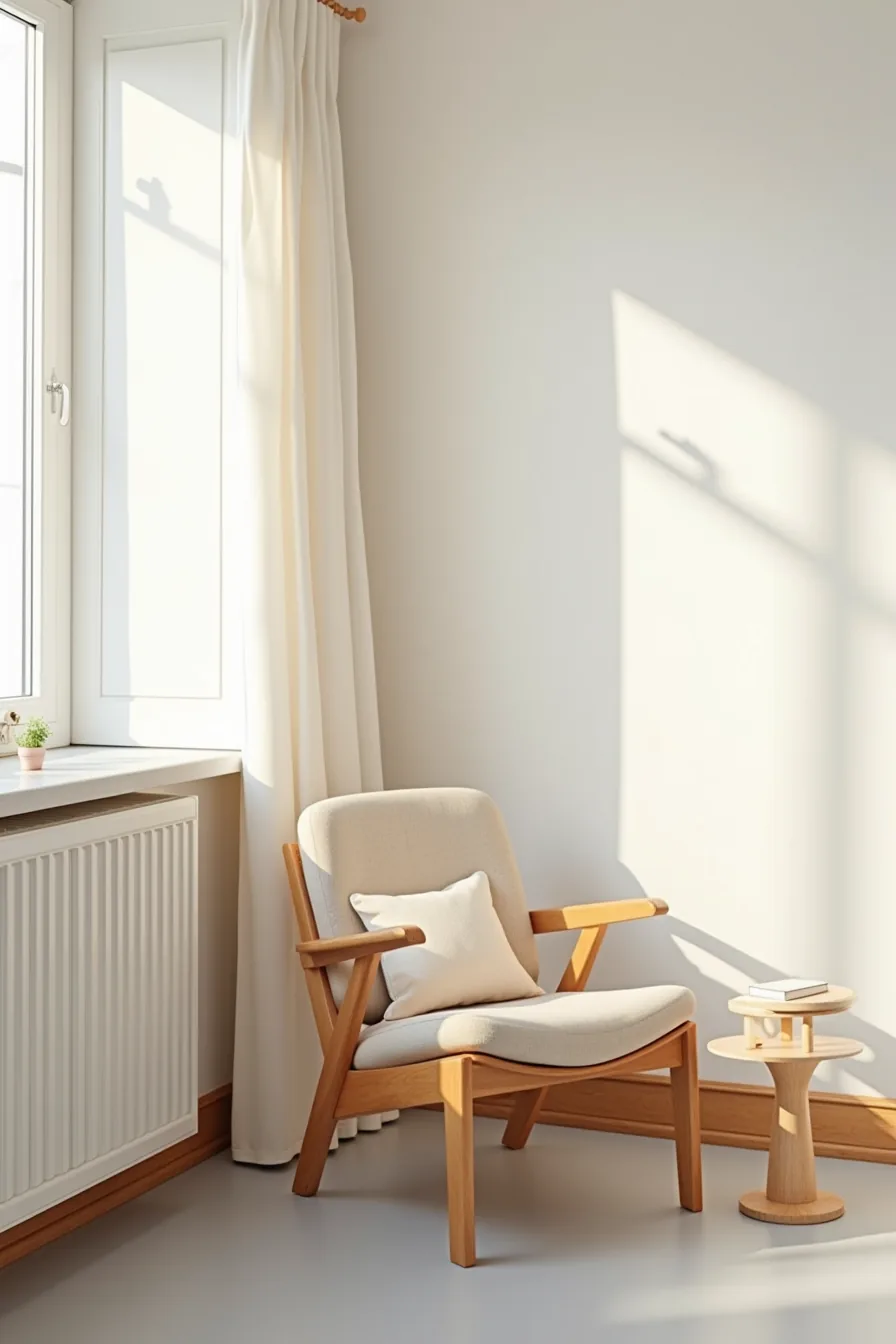
Wood acts as a natural thermal anchor, and the undertone you choose determines how much warmth it injects into a grey-floored room. Honey-toned oak and walnut carry orange or red pigments that directly counter the cool blue cast of grey, while pale ash or maple can actually amplify the chill. In a corner arrangement, a honey-toned wooden chair paired with a matching side table creates a concentrated pocket of warmth that radiates outward across the cool floor.
Scale and placement dictate effectiveness. One small accent table does little in a large room, you need mass. A substantial wooden chair, a console table, or a dining set provides enough surface area to shift the room’s visual temperature.
Position warm wood pieces directly on or near the grey flooring rather than tucking them into corners, and the contrast becomes more pronounced from multiple sightlines.
Baseboard trim is the forgotten player. Swapping grey or white baseboards for a warm wood version frames the entire floor and pulls the walls into the warm side of the palette. For renters, this upgrade costs $50–$150 per room in peel-and-stick wood-look trim that removes cleanly.
Long-term homeowners can invest in solid oak baseboards, which run $4–$8 per linear foot installed and require only occasional wiping with a damp cloth. This warm wood pairing strategy works best in rooms with moderate to large floor areas, where the wood pieces have enough surrounding grey to create meaningful contrast.
Use Wall Color and Accent Lighting to Shift Perception
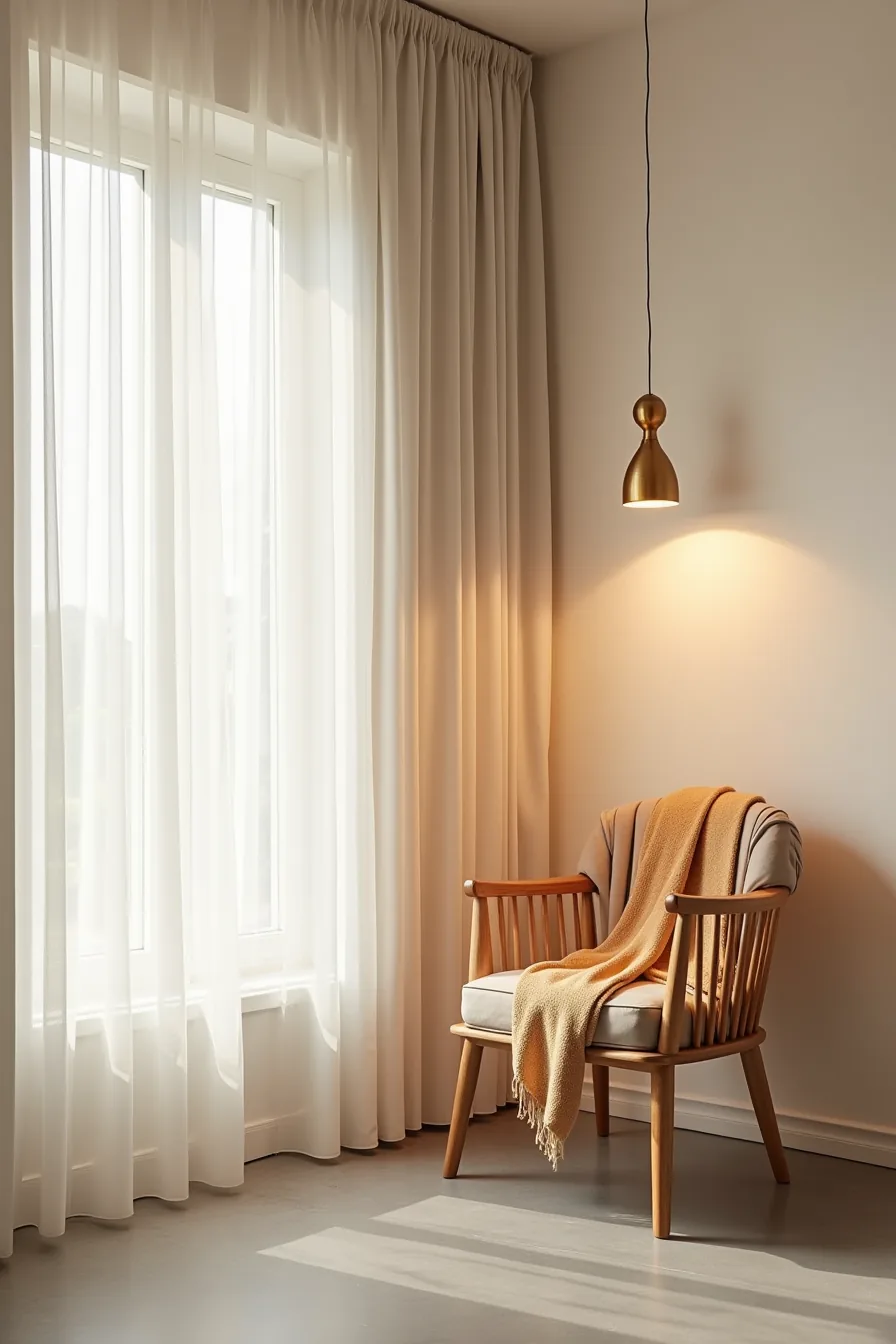
Warm wall color does the heavy lifting that rugs can’t. A warm beige or greige (grey-beige) wall adds a brown undertone that visually neutralizes the cool cast of grey flooring, the wall and floor begin to share a family resemblance rather than competing. Farrow & Ball’s setting plaster or Benjamin Moore’s revere pewter are common choices, but any warm beige with a yellow or red undertone achieves the same effect.
This approach suits medium to large rooms where wall surface area dominates sightlines; in small spaces, the same color can feel heavy, so dilute it with a lighter version of the same hue.
Warm-bulb lighting closes the gap further. Swap cool daylight bulbs (5000K+) for soft white (2700K–3000K), which casts a golden tint across the floor surface. A brass or gold-toned pendant light amplifies this by reflecting a warm glow downward, position it over a seating area or dining spot rather than centering it in the room, so the light pools where you sit.
A warm-toned throw draped over a nearby chair seat adds a soft texture that catches the light and reinforces the amber direction without adding visual clutter. This combination works best for renters: paint and bulbs are reversible, and the pendant can be a plug-in model that installs without rewiring, typically $60–$150.
Warm Grey Floors Without Replacing a Thing: Quick Wins
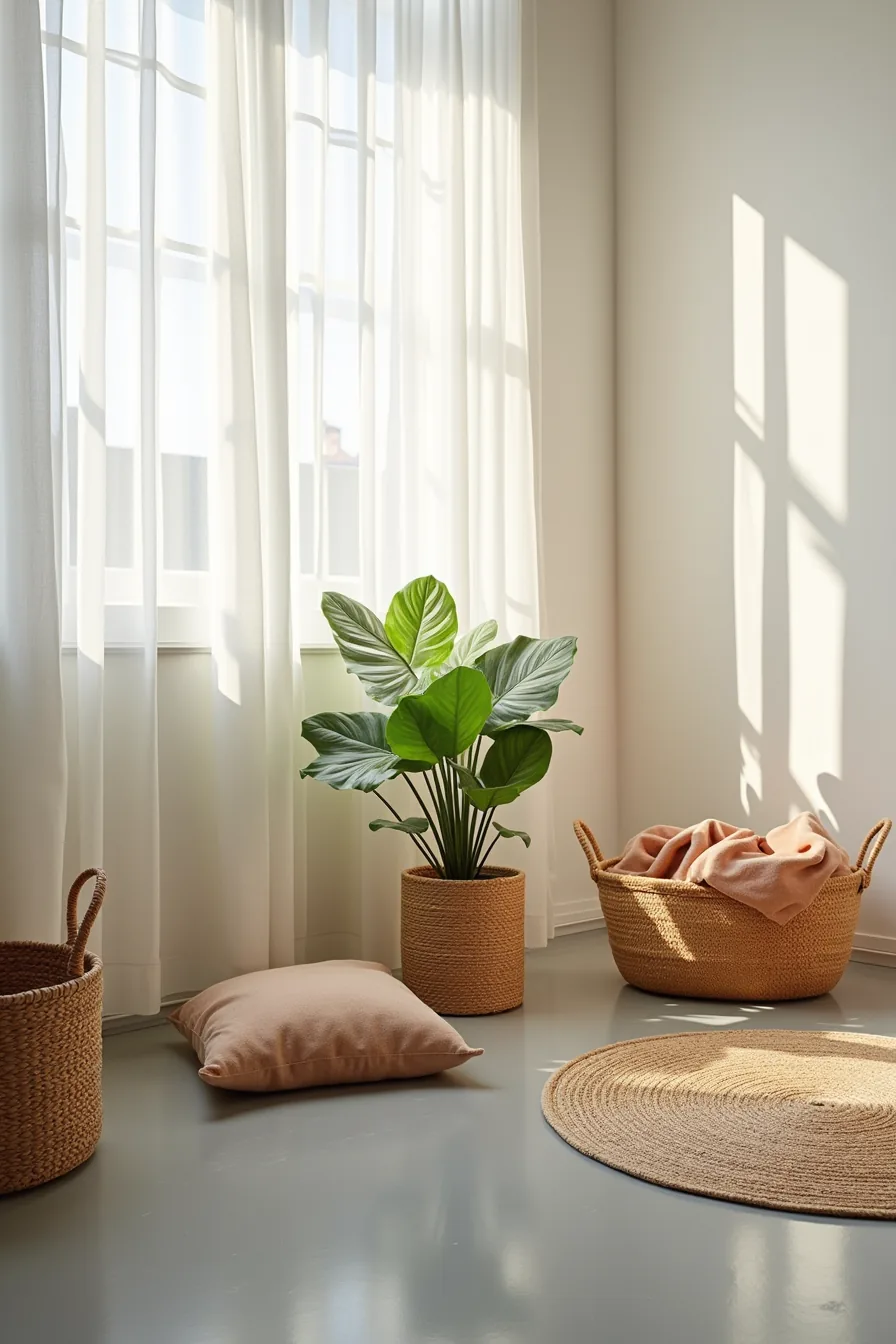
A removable rug is your fastest reset. Choose one with a warm ivory or terracotta ground, rather than a white base, which would throw more grey back at the floor. For a standard living area, a 5×7-foot or 6×9-foot rug reads balanced under a two-seat sofa; go larger if the sofa extends past 84 inches.
A flat-weave wool or cotton option in that size runs roughly $120–$250, and it rolls up for cleaning without special tools.
Anchor the rug’s corner with a woven basket filled with a folded blanket or throw. The basket’s natural tan and the blanket’s heathered rust or ochre pull the eye downward, giving the floor a warm focal point that costs nothing to move. Set a potted plant beside the basket, a broad-leaf variety such as a fiddle-leaf fig or monstera in a matte ceramic pot.
The green foliage carries a warm undertone that breaks the grey field, and the matte pot avoids the shine that glossy finishes bounce back. This portable grouping suits renters and anyone who wants to test a warm palette before committing to paint or flooring purchases.
Scale and Adapt These Methods to Your Room Size
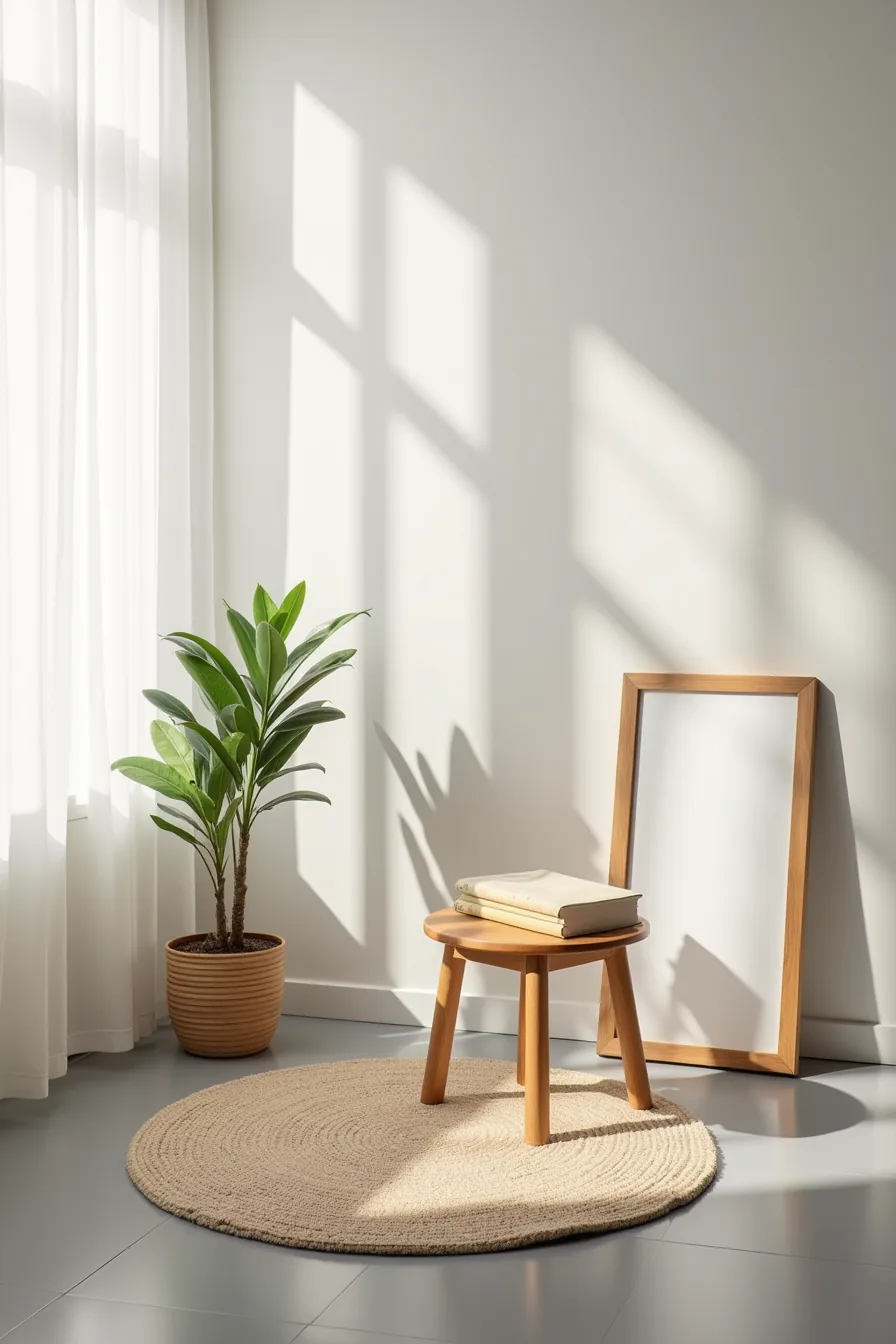
In a compact corner under 100 square feet, the 5×7 rug on your grey floor should sit entirely beneath a single wooden stool, leaving a 6-inch border of floor visible on all sides to define the seating zone without swallowing the room. The framed mirror leans against the wall at the stool’s right edge, its warm brass or oak frame bouncing light back across the grey surface, while the potted plant, a trailing pothos or snake plant in a matte terracotta pot, balances the opposite corner. This triangulated arrangement creates a warm island in a small footprint without blocking the path to a doorway or window.
For medium living areas of 150–300 square feet, scale the rug to 8×10 or 9×12 feet and place the stool as a side table beside a sofa, not in the center of the room. In open-plan spaces exceeding 300 square feet, repeat the same three-item grouping twice, once near the seating cluster and once near a reading nook, spacing them at least 4 feet apart so the warm zones read as intentional anchors rather than scattered decor.
Where to Start
Walk into your room and identify the single coldest zone, usually the area around the largest window or the seating arrangement. Choose one warming layer for that zone before touching anything else, whether it’s a wool rug, a leather ottoman, or a pair of ochre curtains.
That one intervention gives you a reference point. Add a second layer only after you’ve lived with the first for a week. You’ll see the grey floor differently once it’s anchored.
Your next step: Take a photo of your floor in daylight, then order one fabric swatch in a warm shade, terracotta, camel, or olive, and lay it flat on the floor for 48 hours before committing to anything larger.
Frequently Asked Questions
What rug color works best with grey floors?
Warm cream, terracotta, or rust rugs add immediate contrast. Choose a rug with a textured weave, wool or jute, to soften the cool grey. Avoid pure white or icy blue, which intensify the chill.
Can you warm up grey floors without replacing them?
Yes. Layering rugs, swapping in warm-toned furniture, adding wood accents, and using warm lighting (2700K–3000K bulbs) shifts the room’s temperature. Area rugs covering 50–70% of the floor are the fastest fix.
How do you make a cool grey floor look warmer in a small room?
Use one large rug (leave 12–18 inches of bare floor around edges) in a warm neutral like oatmeal or camel. Add a floor lamp with a fabric shade, light bounces warmly off the rug. Keep walls warm white or beige.
What wood tone pairs best with cool grey flooring?
Mid-tone woods, walnut, hickory, or acorn oak, offer warmth without clashing. Avoid ash or pale maple, which blend into grey. Use wood in furniture legs, shelving, or a coffee table. Match undertones: choose wood with red or orange hues, not olive.