Rug Inspo isn’t about finding one perfect rug, it’s about knowing which of six distinct placement and styling strategies will solve your room’s specific layout, traffic, and budget constraints. Each approach carries different material demands, sizing rules, and upkeep costs, so choosing blindly leads to wasted money or a tripping hazard. The right strategy depends on your floor type, room dimensions, and whether you own or rent.
Before you browse another pattern, you need a decision framework, here are six proven routes, each with its trade-offs spelled out.
Key takeaways
- Start with scale: Measure your room and add the rug’s length to the sofa’s length; aim for at least 8–12 inches of exposed floor on three sides in a living room.
- Layer for renters: Use a washable flatweave or indoor-outdoor rug as the base (starting around $50–$150) and top it with a smaller, removable wool or cotton piece so you protect the floor without permanent installation.
- Invest by material: A hand-knotted wool rug in a low-traffic bedroom or dining area can last 15–20 years if you rotate it seasonally, while synthetic blends suit high-traffic hallways and fade-resistant UV prints for sunlit rooms.
- Rotate with seasons: Swap in a light, low-pile rug for spring and summer (easier to clean, cooler underfoot) and a thicker, higher-pile wool for fall and winter to change the room’s warmth and acoustics.
Pattern or Plain: Choosing Your Starting Point
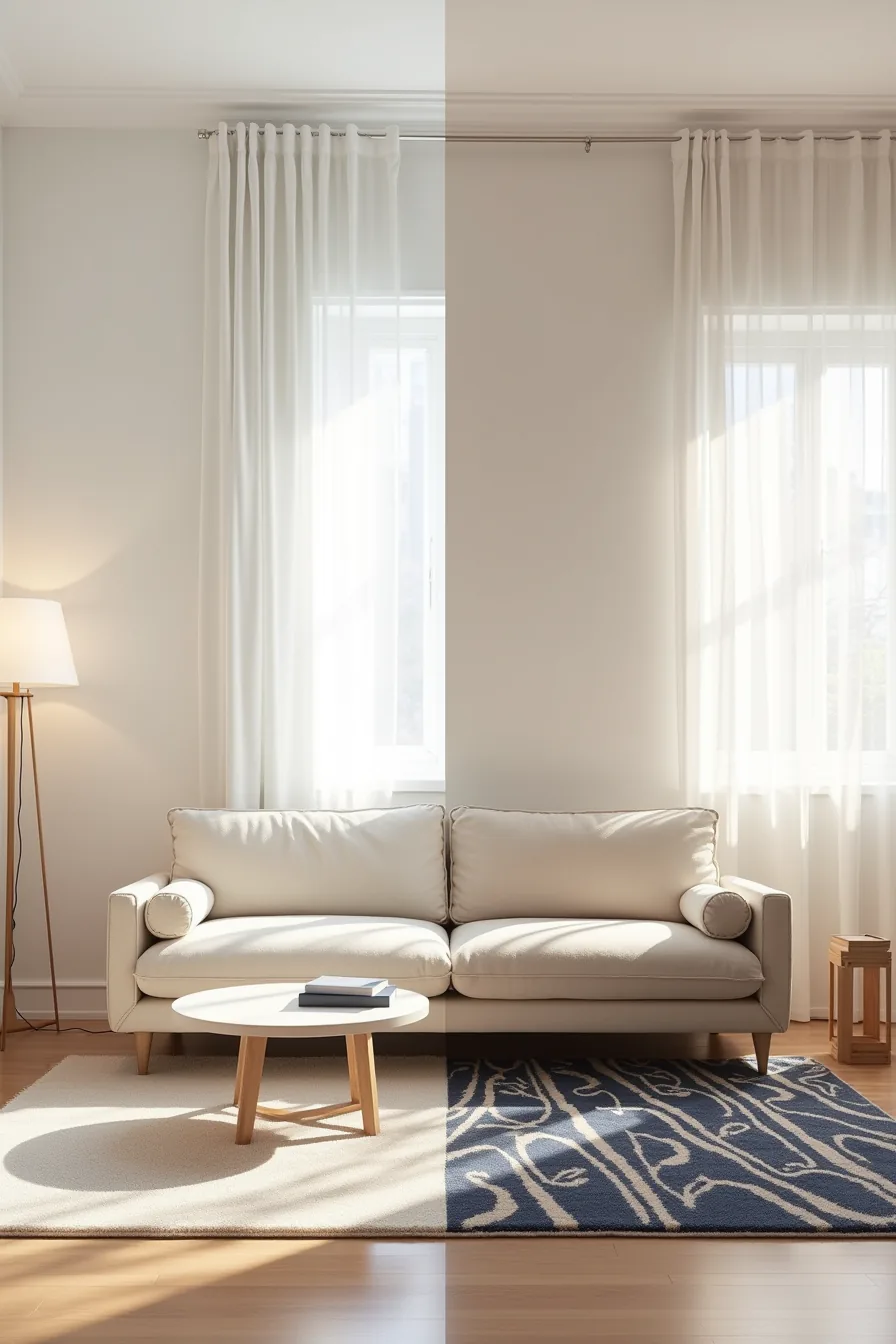
A solid cream wool rug under a minimalist sofa gives your eye a place to rest. It recedes, letting throw pillows and a coffee table carry the visual weight. Choose this route for small rooms or busy spaces; the lack of pattern makes furniture appear larger and the floor easier to sweep clean.
A geometric patterned rug in navy and cream flips the dynamic. It anchors the sofa, defines the seating zone, and hides footprints between vacuuming sessions, which matters in high-traffic households. Solid rugs show every stain and pile matting; patterns forgive both.
Pick a pattern for larger rooms that need a focal point, but commit to a low-pile weave so the sofa legs sit level and the design doesn’t compete with wall art.
The Layered Rug Mood: Combining Multiple Rugs for Depth
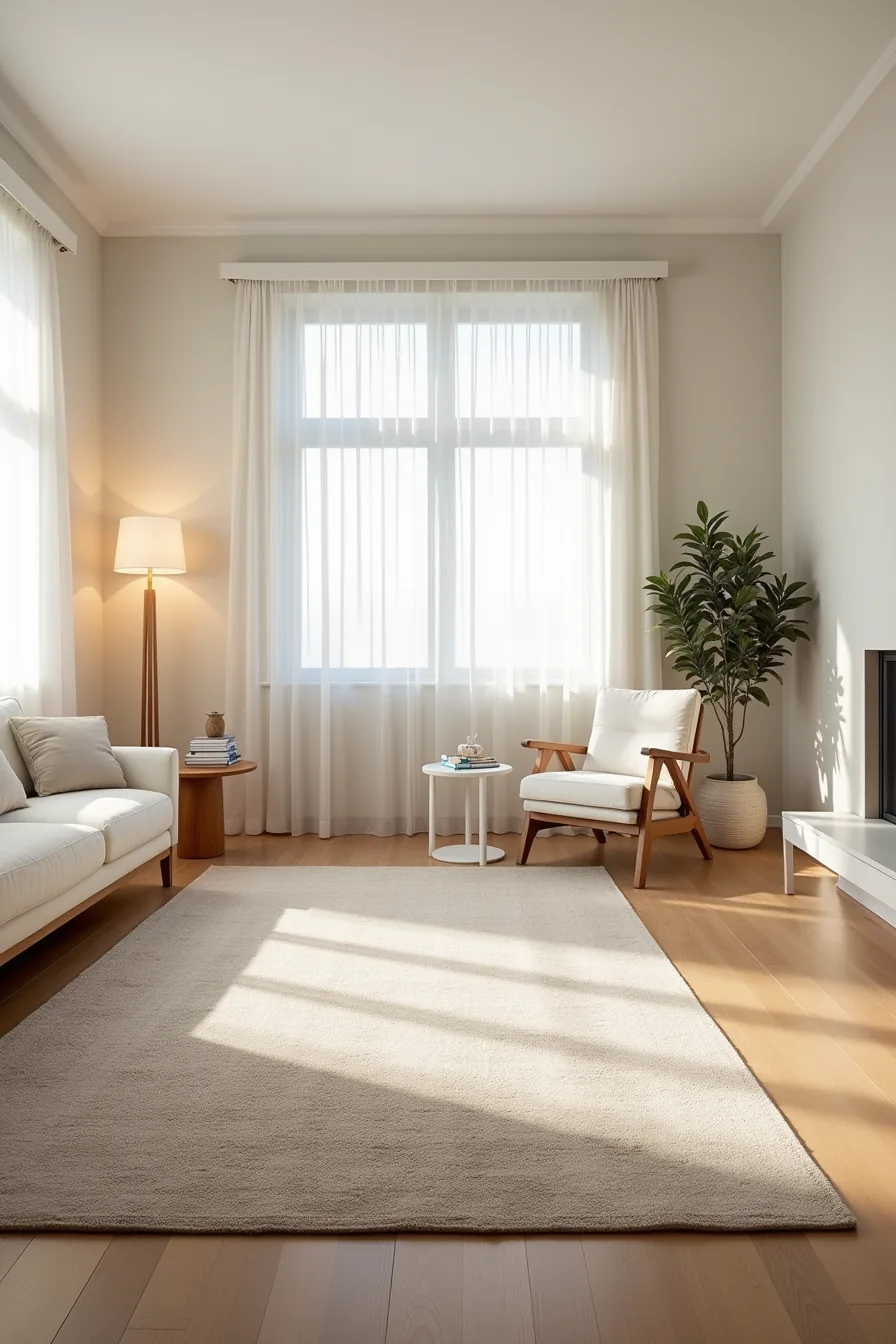
Layering is the fastest way to make an open-plan room feel intentionally composed rather than accidentally furnished. Start with a large neutral base rug, jute or low-pile wool, that extends past your sofa’s front legs. On top, angle a smaller patterned runner across the center of the seating zone; the contrast in scale and orientation breaks up the floor’s monotony without overwhelming it.
Reserve a third texture for the periphery. Place a shag or flat-weave accent rug beside an armchair and side table to carve out a quiet reading nook within the larger footprint. This works best in rooms over 300 square feet; in tighter spaces, stick to two layers and keep both rugs within 3 inches of the same color family so the floor doesn’t fragment visually.
Stick to a maximum of three layers. More than that creates tripping hazards at edges, and each rug needs a non-slip pad underneath, especially the top layer, which shifts with foot traffic. Keep the base rug’s pile low (under half an inch) so the layered piece sits flat and doors and vents stay clear.
Color-First Rug Search: Building a Room Around Hue
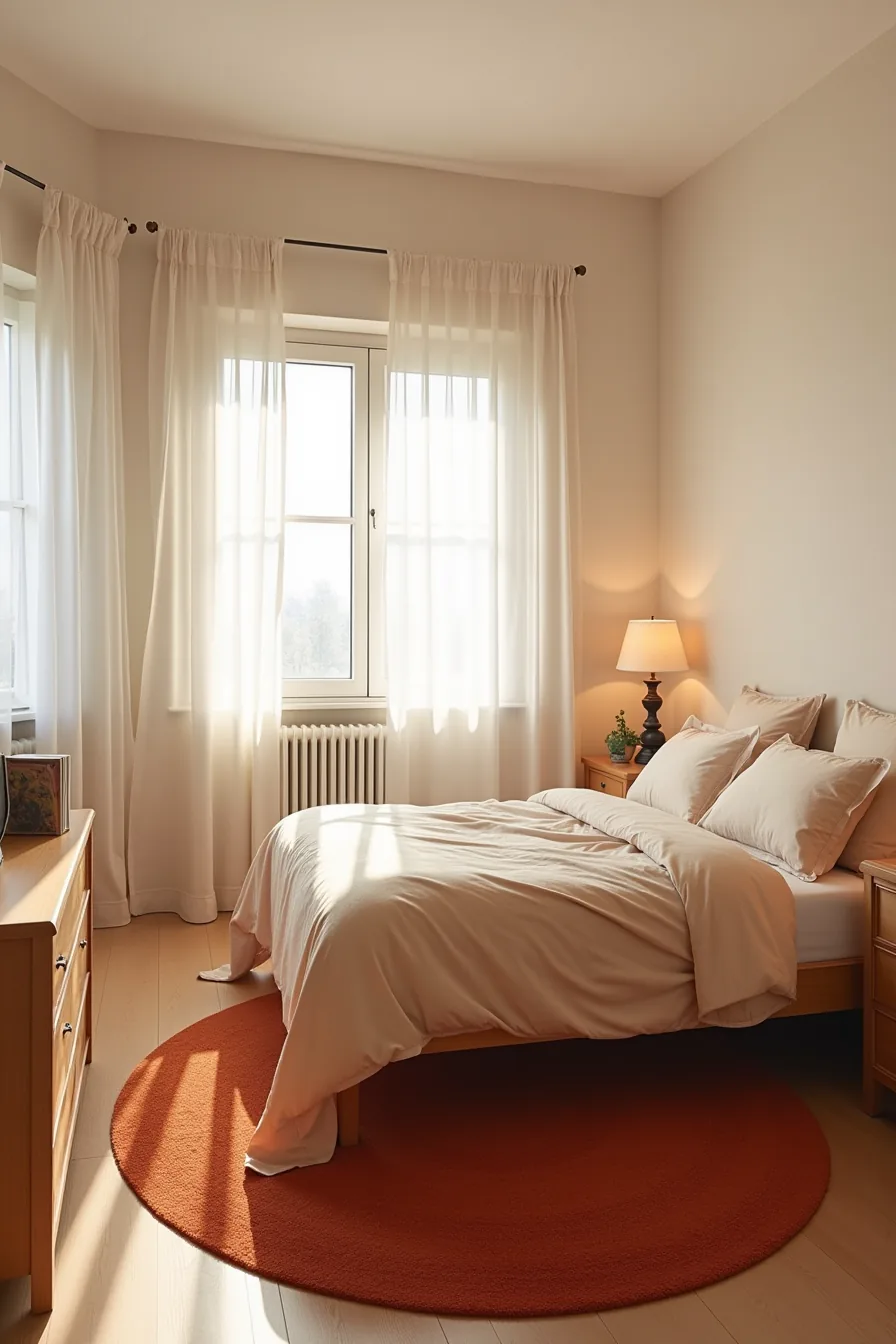
A color-first rug search flips the typical design order: instead of matching a rug to existing furniture, you let the rug dictate the room’s entire palette. In a bedroom, a deep terracotta rug serves as the anchor. You then pull saturated earth tones from it, terracotta walls, clay-toned bedding, and curtains in a lighter, complementary sand, so the space feels cohesive without any single element matching another exactly.
This approach suits rooms where you’re starting fresh or willing to repaint. Take the wooden dresser and neutral nightstands in that scene: they work because they recede, letting the rug and wall carry the color story. The rule of thumb is to choose one dominant hue, then use two supporting tones at different saturations, one lighter, one darker, across your textiles and paint.
For a 10×13-foot room, a rug covering roughly 80% of the floor area under the bed’s lower two-thirds prevents the color from feeling like an afterthought.
Budget-Friendly Rug Inspo: Renter and Short-Term Solutions
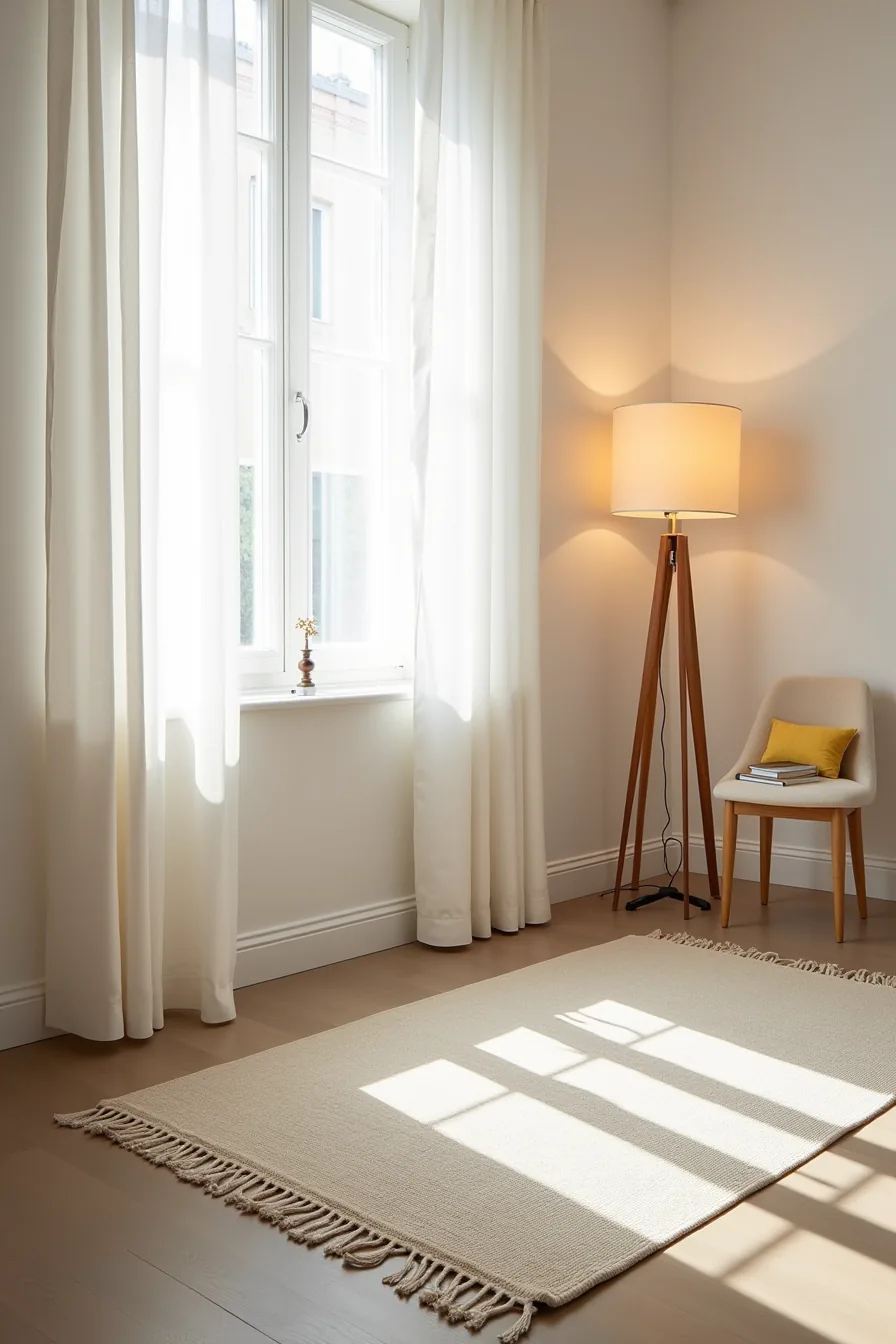
For renters, a concrete floor is a blank canvas, not a limitation. The flat-weave cotton rug layered with a removable runner gives you two distinct looks for the price of one flexible system. The cotton rug provides a soft, neutral base that defines the seating or sleeping zone, while the runner adds a contrasting texture and a visual pathway through the room, both edges visible, clean, and easy to reposition.
This setup works because neither piece is permanently affixed. Flat-weave cotton rugs run $40–$150 for a standard 5×8 size, and they roll up for storage or transport in minutes. The removable runner, typically 2×6 feet, costs $25–$60 and can be swapped seasonally or washed in a standard machine.
No padding or adhesive is needed on concrete; a simple non-slip gripper under the cotton base prevents shifting without leaving residue.
This is your best route if you move frequently, have a strict security deposit, or want to test a color palette before committing to an investment piece. The trade-off is longevity: expect 2–4 years of daily wear before the weave thins, especially in high-traffic corridors. For a small studio, this layering visually separates zones without permanent walls, the runner guides foot traffic, while the larger rug anchors the entire space.
Investment Rugs: Long-Term Pieces That Outlast Trends
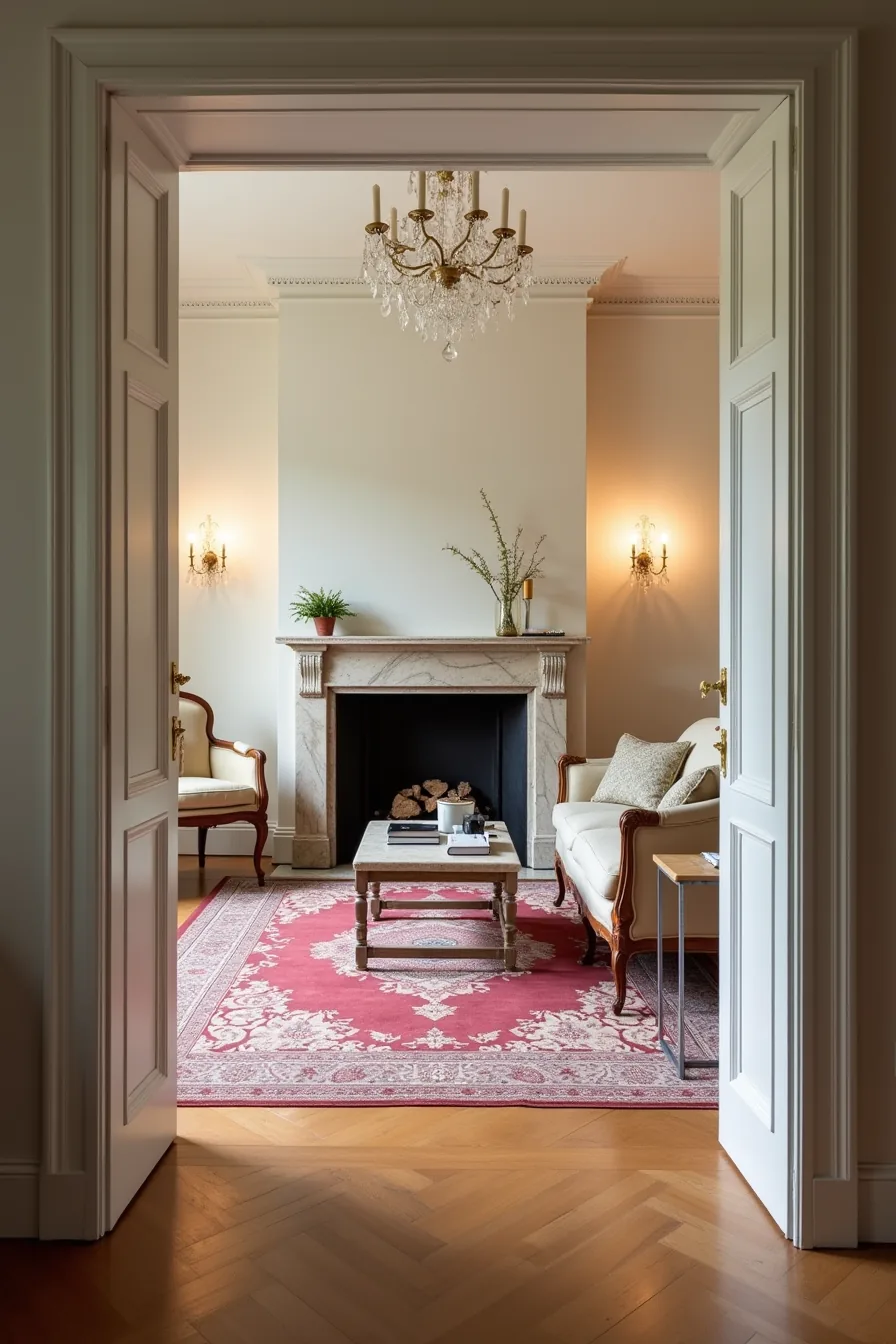
When you want a single purchase that will still look intentional in fifteen years, hand-knotted wool is the standard. A Persian or similar Oriental rug in jewel tones, deep ruby, sapphire, teal, placed under a marble fireplace and anchored by an antique sofa and a crystal chandelier creates a formal living room that needs no seasonal updates. The density of the hand-knotted construction (typically 120–400 knots per square inch) is what separates it from machine-made alternatives; that density resists crushing under furniture legs and stays lively in high-traffic areas.
This route suits homeowners or long-term renters with a stable floor plan and a classic furniture base. You’re paying for the wool pile, which naturally repels spills and springs back after compression, and for a design that doesn’t chase a trend cycle. Expect to spend $1,000–$5,000 for a 6×9 or 8×10 piece of this quality, and plan on professional cleaning every 2–3 years.
Rotate the rug 180 degrees annually to even out sun exposure, and you’ll likely pass it down rather than replace it.
Seasonal Room Refresh: Rotating Rugs for Year-Round Change
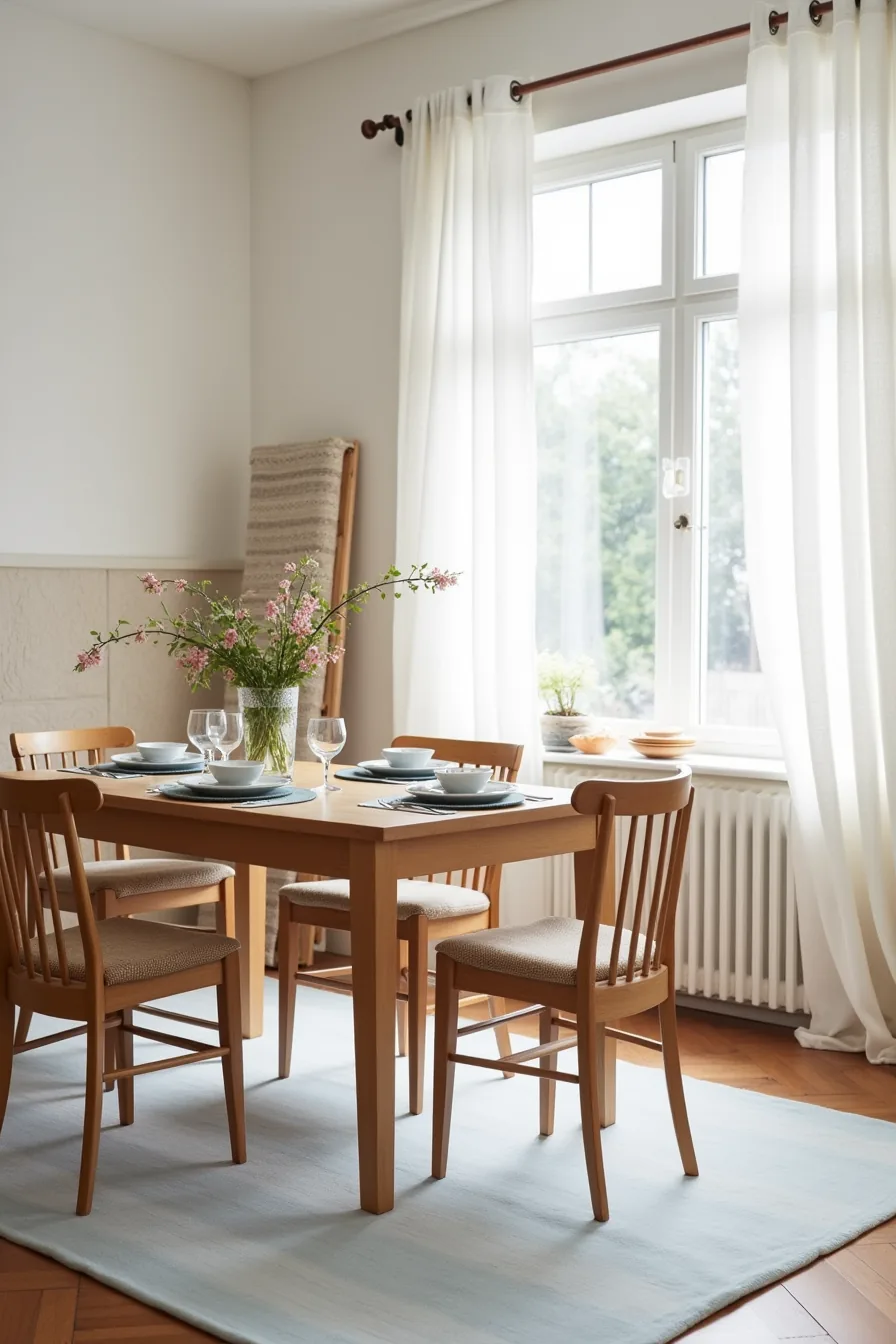
A seasonal rotation turns your rug into the cheapest room renovation you’ll ever execute. The setup here, a lightweight linen rug in pale blue and white under the dining table, with a rolled summer rug and a folded winter rug leaning against the wall, costs nothing extra beyond the rugs themselves and takes under ten minutes to swap.
Linen and cotton flatweaves suit this strategy because they fold without creasing permanently and roll into a 12–18 inch diameter bundle that fits in a closet or leans in a corner. For spring, choose a pale ground with a sparse pattern; it reads cooler and visually expands a small dining area. In autumn, swap in a deeper-tone wool flatweave that hides crumbs and grounds the room against shorter daylight hours.
Sizing gets simpler when you rotate: keep all rugs within two inches of the same dimensions so your furniture placement never shifts. Store off-season rugs rolled, never folded, to prevent fiber fatigue, and vacuum both sides before storage to keep dust from settling into the weave. This approach suits renters who can’t paint or install permanent fixtures, the rug is the entire seasonal statement, and the rolled spares double as decorative texture against the wall.
Where to start
You don’t need to match a single rug to your whole room, you need to match it to your traffic, your furniture, and your maintenance budget. A wool flatweave suits a dining room; a low-pile loop survives a hallway; a silk blend dresses a low-traffic bedroom.
Before buying, tape the rug’s dimensions on your floor with painter’s tape and live with the outline for 24 hours. Verify you’ve at least 8 inches of bare floor around your furniture edges, and confirm every entry door swings clear of the pile height.
Start with the smallest room that frustrates you most, commonly an entryway or bedroom, and prototype a 6×9 patterned accent rug there. Measure, tape, order, and observe for a week. That single test will teach you more about texture and scale than browsing a hundred photos.
Frequently Asked Questions
What size rug should I buy for my living room?
Measure your main seating area, then add 18–24 inches beyond the furniture’s front legs. For most sofas 84–96 inches long, an 8×10 or 9×12 rug works best. Leave 12–18 inches of bare floor around the rug’s perimeter.
How do I clean a patterned rug without damaging the design?
Vacuum weekly on low suction, skipping tassels and fringe. Blot spills immediately with a white cloth and cold water, never rub. For deep cleaning, use a professional service annually; avoid steam machines on wool or natural fibers.
Can I layer rugs in a small bedroom, or will it make the space feel cramped?
Yes, layer strategically. Use a flat-weave base rug slightly larger than your bed, then place a smaller textured rug under the foot area only. Keep both rugs within 6–12 inches of the bed’s edges to preserve floor visibility.
What’s the difference between a natural fiber rug and a synthetic one in terms of durability?
Synthetic rugs (polypropylene, nylon) resist stains, fading, and moisture better, lasting 5–10 years in high-traffic areas. Natural fibers like wool or jute are softer and eco-friendly but wear faster, typically 3–7 years, and require gentler cleaning. Choose synthetics for kids’ rooms or entryways.