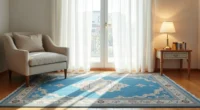
A blue rug is one of the most forgiving design purchases you can make, it anchors a room without dictating its entire style, working just as well under a weathered oak farmhouse table as it does beneath a chrome-and-glass coffee table. That versatility is why you need to match the shade, pile, and weave to your specific traffic and lighting, not just your color palette. Get those three variables right, and you can shift from a serene navy retreat to a crisp, coastal statement without repainting a single wall.
The six approaches ahead break down exactly which blue works for your space, budget, and lifestyle.
Key takeaways
- Shade choice dictates mood: Navy blue rugs anchor a room with formality and depth, while faded or washed blues create an airy, relaxed coastal feel, select based on your existing furniture contrast.
- Scale beats color: In small rooms, use a 5×8 rug with at least 6 inches of bare floor around the perimeter; in large spaces, extend the rug 24 inches beyond the sofa’s front legs to define the seating zone.
- Layer for rentals: Skip permanent changes; use a low-pile, stain-resistant polypropylene rug (typically $150–$300 for a 5×8) over a felt pad to protect the floor and allow easy swaps.
- Maintenance varies by fiber: Wool rugs last decades but require professional cleaning every 18–24 months, whereas synthetic options withstand weekly vacuuming and spot cleaning but fade faster in direct sunlight.
Navy vs Faded Blue: Choosing Your Shade
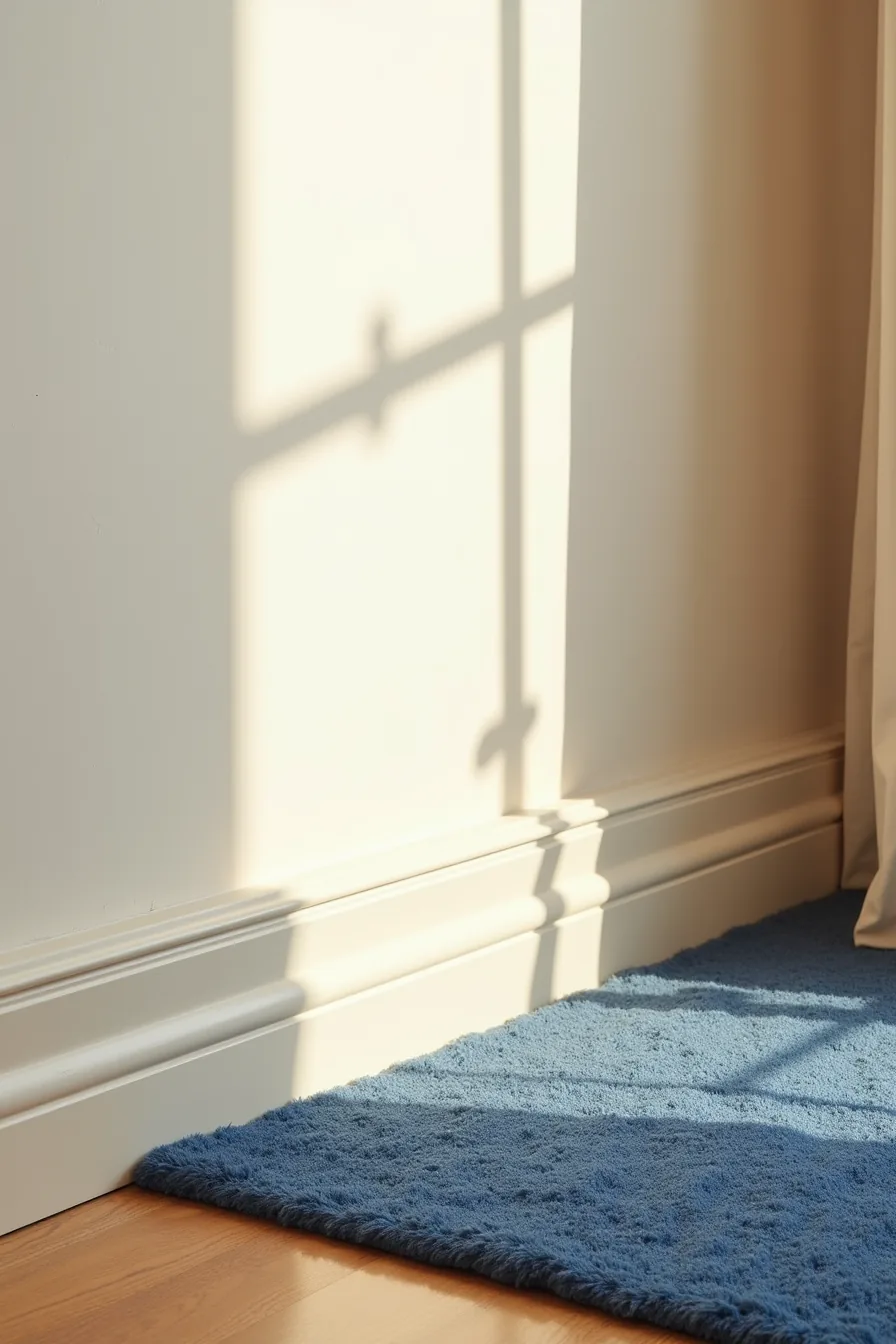
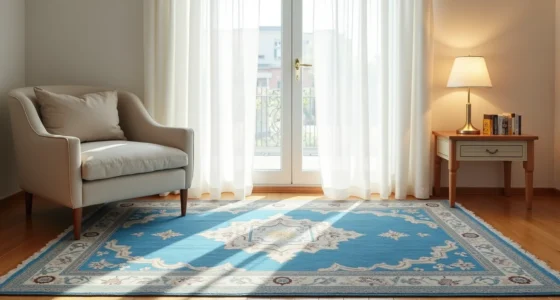
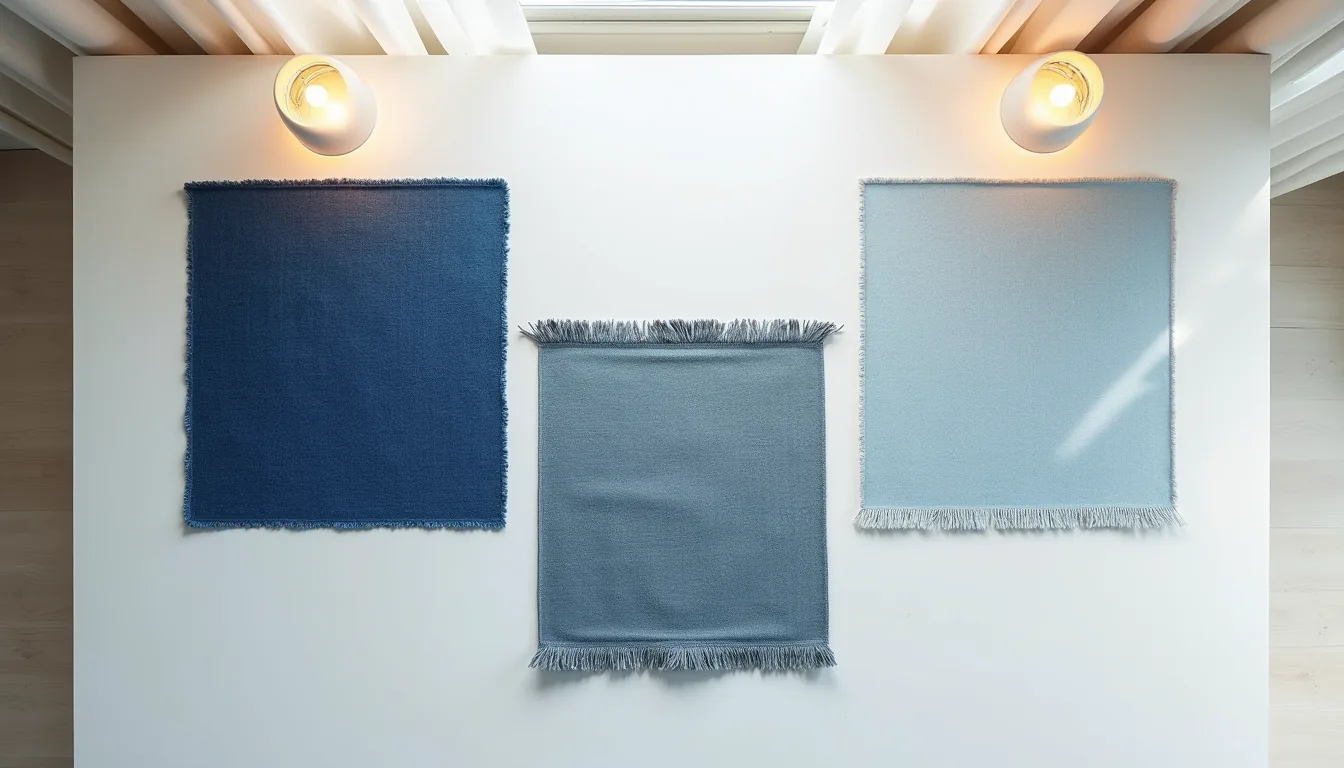
The distinction between navy and faded blue goes far beyond saturation, it’s about undertone and light response. Deep navy rugs carry a cool, almost indigo base that reads as formal and grounding, while washed-out blues lean into gray or green undertones that feel casual and airy. A navy rug against a warm beige wall, like the one photographed with morning sunlight hitting its pile, will absorb light and create a sharp visual anchor; the same rug in a north-facing room can look nearly black.
For rooms with generous natural light, navy secures the space without overpowering hardwood floors and cream baseboards. Faded blue suits low-light hallways or south-facing sunrooms where strong pigment would feel heavy. If your décor mixes brass and dark wood, choose navy; if you work with whitewashed furniture or linen textures, the softer end of the spectrum blends more naturally.
Blue Rug as Focal Point in Open Floor Plans
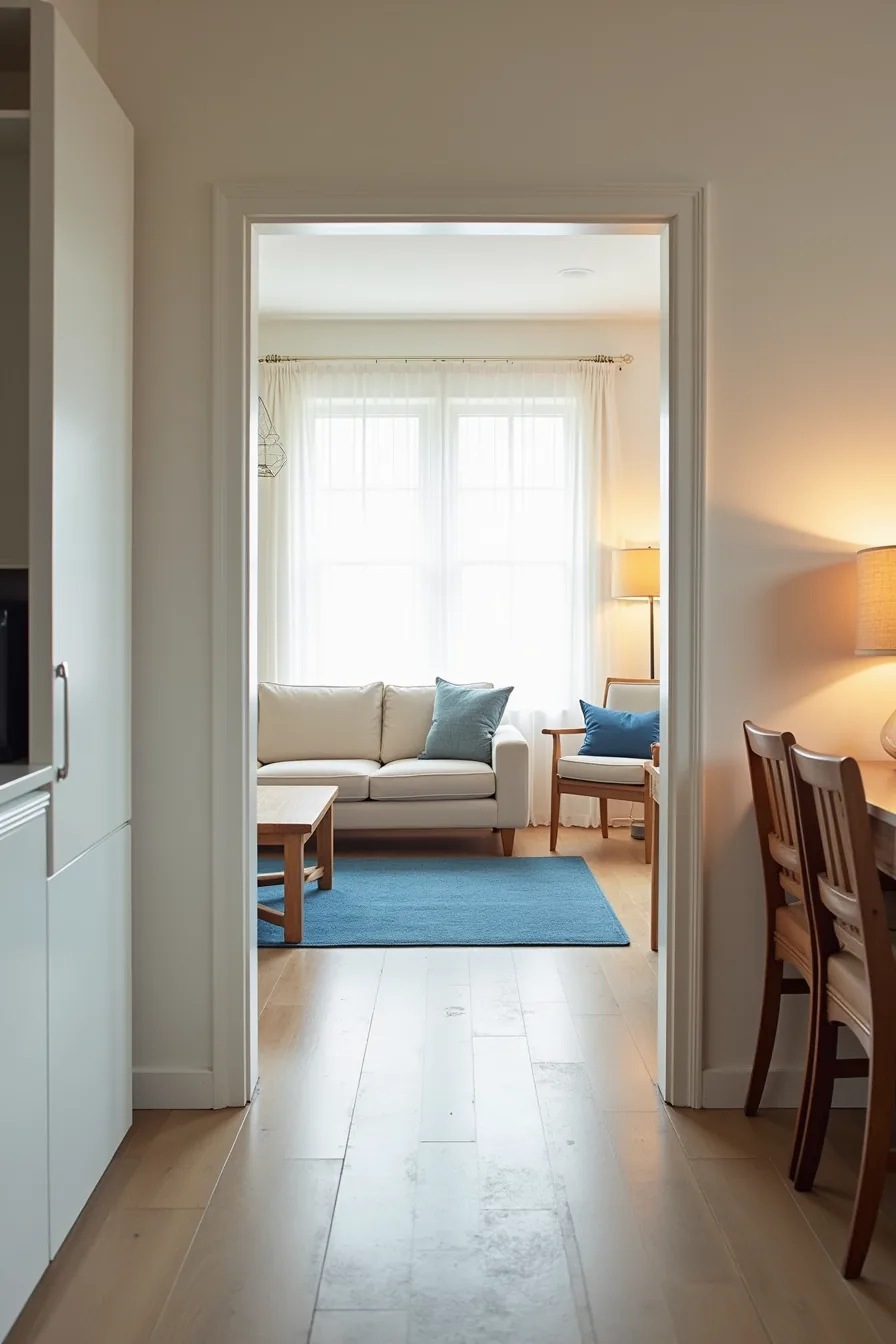
In a large, undefined space, a blue rug does more than decorate, it creates a room within a room. Anchor your conversational seating around a rug large enough that the front legs of your sofa and both chairs rest on its edge, pulling the arrangement together without isolating it from the flow of the space.
A standard living-area rug for this purpose runs 8 by 10 feet for a two-chair-and-sofa configuration; go wider if your seating spans more than 10 feet. Keep the dining table entirely off the rug, leaving a 24–30 inch walkway between its edge and the rug perimeter so traffic moves freely around the zone you’ve defined. A dense, low-pile wool or textured loop works best here, since it withstands the footfall from adjacent pathways and won’t shift under chair legs.
The contrast between the rug’s blue field and a concrete or hard floor perimeter visually seals the seating area, turning an otherwise aimless room into a deliberate layout you can handle without obstacles.
Coastal Palette: Pairing Blue Rugs with Neutrals
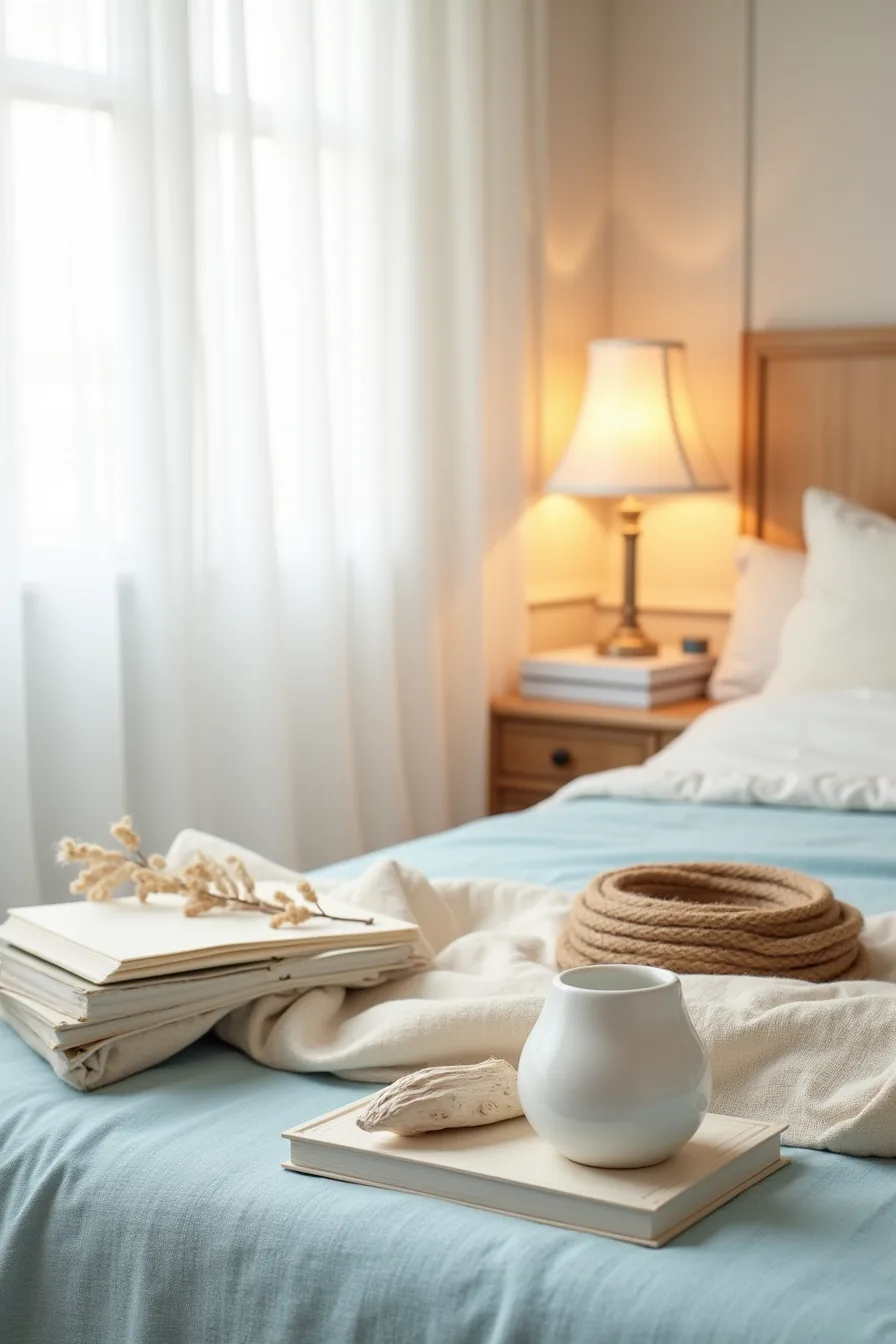
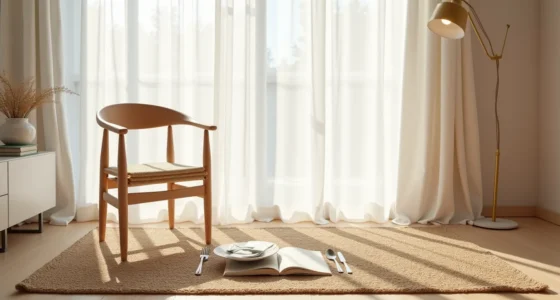
The coastal palette works because it lets the rug carry the color while everything else recedes into calm. Layer a pale blue rug with a cream linen fabric swatch draped on a nearby chair, a natural jute rope coil resting in a woven basket, and a white ceramic vessel holding dried grasses, the rug’s blue reads as water against warm sand tones, not as a loud accent.
This approach suits rooms with abundant natural light, where the blue picks up cool shadows without turning gray. On a flat lay, the driftwood piece placed at the rug’s corner breaks up the field and introduces organic texture that echoes the jute and linen. For maintenance, choose a polypropylene or wool-blend loop in light blue; it hides sandy tracked-in grit better than a solid navy and cleans with a simple vacuum pass.
The muted palette forgives daily wear, making it ideal for sunrooms, porches, or family bedrooms where you want seaside calm without preciousness.
Blue Rugs That Calm Busy Living Spaces
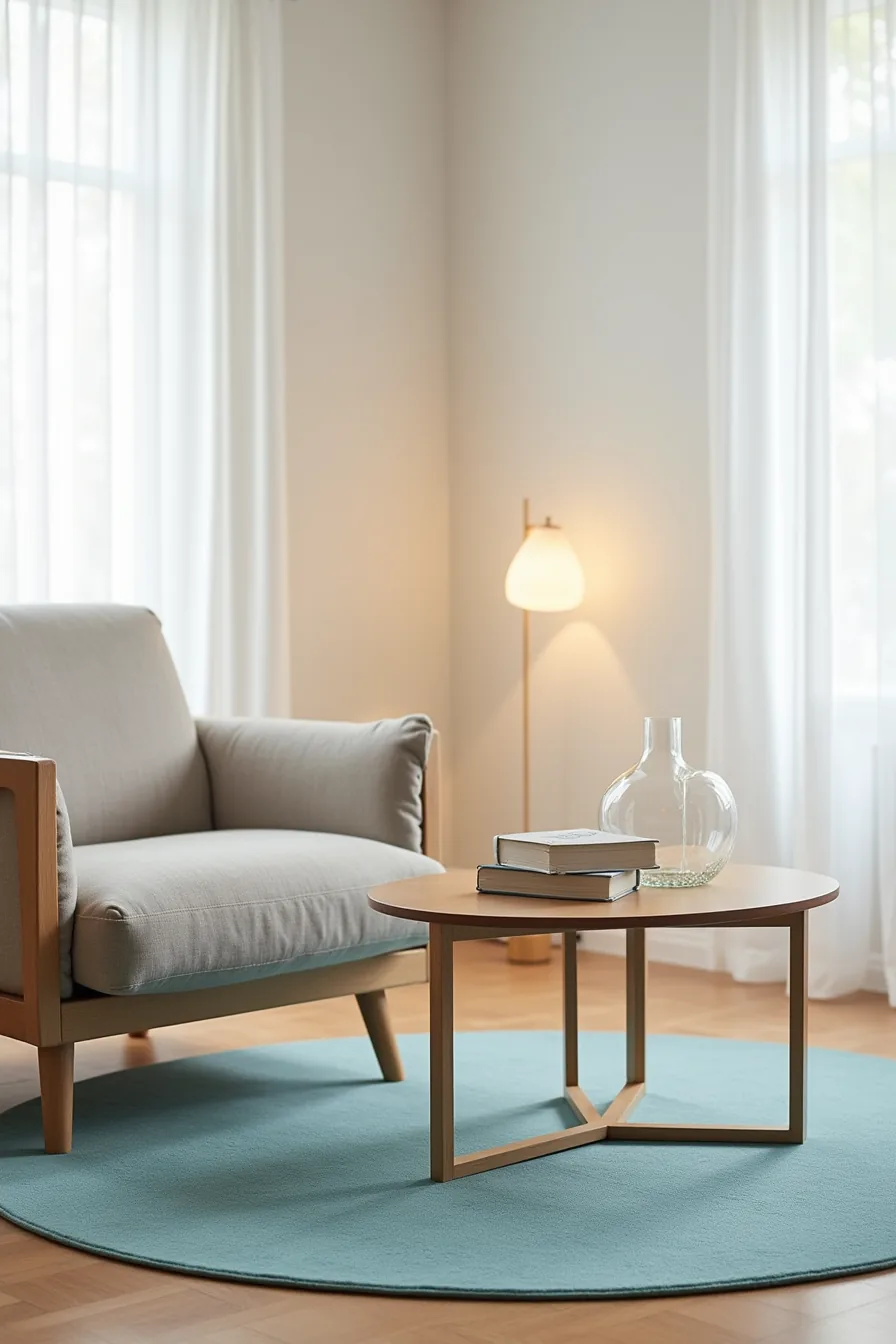
A solid medium-blue rug with a low pile is the fastest way to quiet a room already crowded with pattern, texture, or furniture. Because the rug carries zero visual competition, the eye rests on it, letting everything else, upholstery, curtains, a gallery wall, drop a full step in perceived intensity. The side table set at the rug’s edge, holding a single glass vase and a small stack of three books, works precisely because the unadorned blue field frames those objects as deliberate focal points rather than adding to the clutter.
This rug suits open-plan rooms where sight lines cross multiple zones, or living rooms with busy sofas and patterned throws. Choose a tight loop or flatweave polypropylene in a mid-tone blue, not navy, which reads heavy, and not pastel, which reads weak, and keep the pile under a half-inch so vacuuming pulls nothing loose. Expect to clean it monthly with a low-suction pass and spot-treat spills immediately; the low pile dries fast, but it shows liquid stains within minutes if ignored.
Scale and Placement for Small, Medium, and Large Rooms
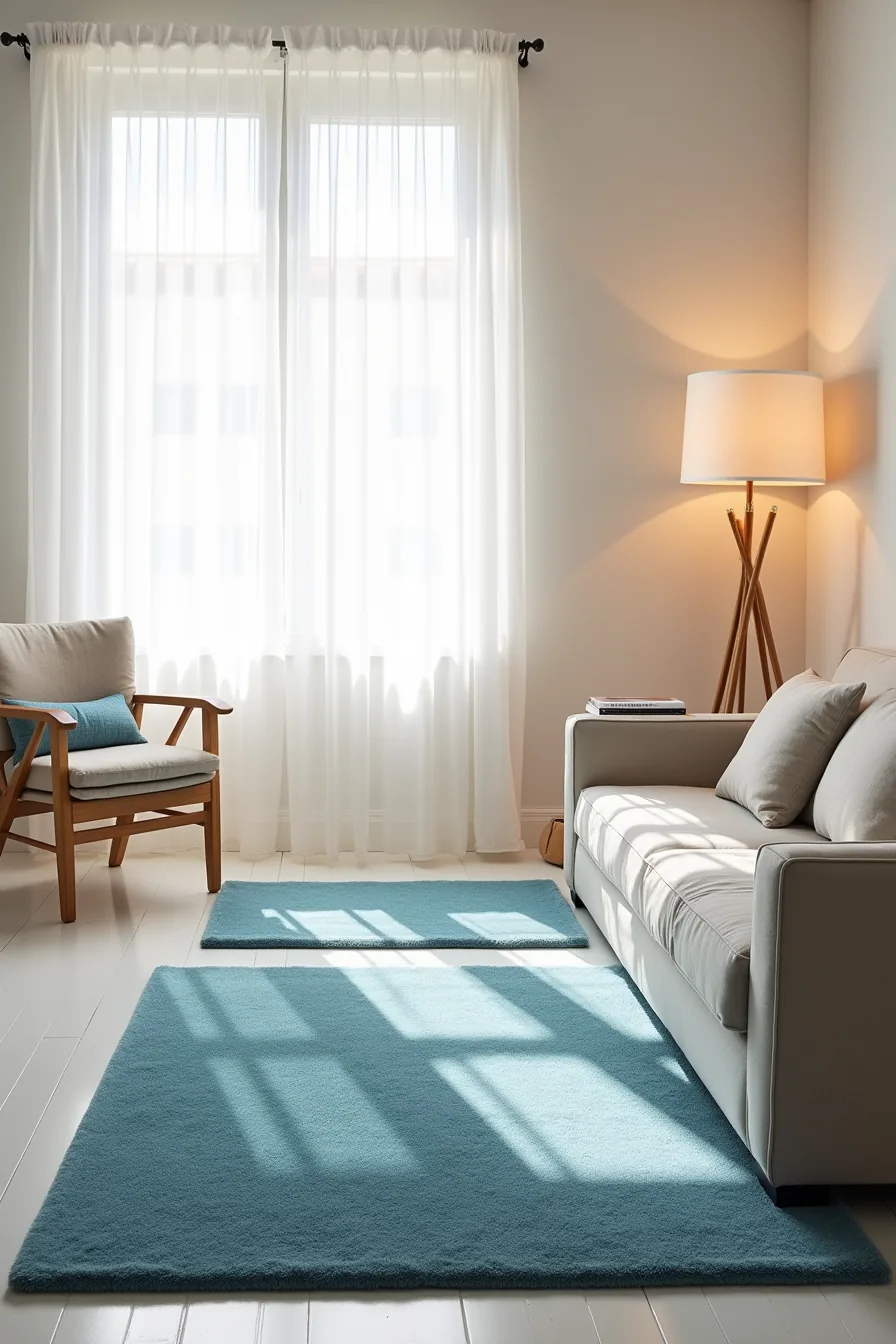
Sizing your blue rug to the room is the difference between an anchor and an afterthought. A small rug, roughly 3 by 5 feet, belongs under a single accent chair, position it so the chair’s front legs rest fully on the rug and the back legs stay off, which visually extends the floor and keeps the chair from feeling trapped.
A medium rug, in the 5 by 8 range, should sit under a sofa’s front legs only, leaving six to ten inches of bare floor visible on all sides. This is the most forgiving proportion because it defines the seating zone without committing the entire room to the pattern. For a large rug anchoring a full seating area with a sofa and chairs, extend it at least 12 inches beyond each piece’s front edge, your 8 by 10 or 9 by 12 option should leave a uniform 18-inch border of floor around its perimeter to keep the room from feeling wall-to-wall.
In small rooms, a medium rug under the sofa’s front legs reads more spacious than a large one that nearly touches the walls; in large rooms, undersizing is the more common failure, so err toward the next size up if you’re between measurements.
Budget, Rental, and Investment Routes
Your budget tier dictates the material before the pattern. The synthetic polypropylene rug, typically $1.50 to $3.50 per square foot, offers the lowest entry cost and the simplest maintenance, spot-clean with mild soap and water, and expect a five-to-seven-year lifespan before fading or crushing in high-traffic paths.
The peel-and-stick rug works for renters because it requires no tack strips, padding, or drilling, just a clean, dry, level floor. Removal is the trade-off: adhesive residue accumulates over time, and these rugs lose stickiness after two or three repositionings, so treat them as a two-year solution rather than a permanent fix. Most peel-and-stick options run 6 to 8 millimeters thick, which leaves a visible seam line and an audible difference underfoot compared to a woven rug.
The hand-knotted wool rug is the investment tier at $8 to $20 per square foot, depending on knot density. It holds color for decades, survives professional cleaning, and resists crushing, but it demands rotation every six months to avoid uneven sun fading and a wool-safe vacuum without a beater bar. Between the three, only wool appreciates in condition with proper care; the other two degrade predictably regardless of how carefully you treat them.
Where to Start
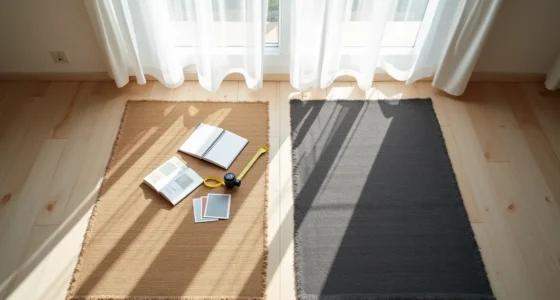
You now have six distinct paths to a blue rug, each with its own trade-offs. Before you buy, measure your room and sketch the furniture footprint, this single step prevents 80% of rug-sizing mistakes.
Start with the rug that solves your biggest problem first. If durability tops your list, choose the flatweave. If rental rules constrain you, the washable rug wins.
Every other decision flows from that one priority.
Your next move: pull up a tape measure and identify your room’s focal point. That determines your rug’s placement, and everything else follows.
Frequently Asked Questions
What color blue rug works best with gray walls and natural light?
A muted navy or dusty slate-blue rug works best, as it anchors cool gray without competing. In bright, natural light, opt for a lighter periwinkle or powder blue to prevent the room from feeling heavy.
Can you put a blue rug in a bedroom, or is it only for living rooms?
Absolutely. Blue rugs suit bedrooms, especially deep navy or soft denim tones that promote calm. Choose a low-pile wool or cotton blend for easy maintenance and a plush feel underfoot.
How do you clean a blue rug without fading the color?
Vacuum weekly, and spot-clean immediately with cold water and mild detergent, never hot water or bleach. Avoid direct, prolonged sunlight, and rotate the rug every six months to ensure even fading.
What size blue rug do you need under a sectional sofa?
For a standard L-shaped sectional, choose a rug at least 8×10 feet; for larger sectionals, go 9×12 feet. Ensure the rug extends 12–18 inches beyond the front edge of the sofa to anchor the seating area.