

A sink curtain skirt is a fabric panel that hides the open space under a bathroom or kitchen sink, turning exposed plumbing and stored supplies into a deliberate design feature rather than a functional afterthought. It ranges from a simple tension-rod valance to a full, floor-length skirt, and the right choice depends on your counter height, storage needs, and tolerance for fabric maintenance. The six approaches that follow cover budget-friendly clips, renter-safe tension rods, and tailored, permanent installations, each with the specific measurements and material trade-offs you need to match one to your space.
Key takeaways
Choose materials first, cotton and linen blends resist moisture better than polyester, and a 2–3 inch header allowance prevents sagging over time. Measure twice, mount once, for gathered skirts, plan for fabric 1.5–2 times your sink’s width, while flat panels need only 1–2 inches of overlap on each side. Match the mount to your walls, tension rods work for renter-friendly setups under 30 inches wide, but cabinet-door frames or adhesive clips suit permanent or heavy fabric installations. Prioritize clearance over aesthetics, keep the skirt’s bottom edge at least 4–6 inches above the floor to avoid trapping dust, and never block plumbing access panels or vents.
Cottage-Style Gathered Fabric: Soft and Forgiving
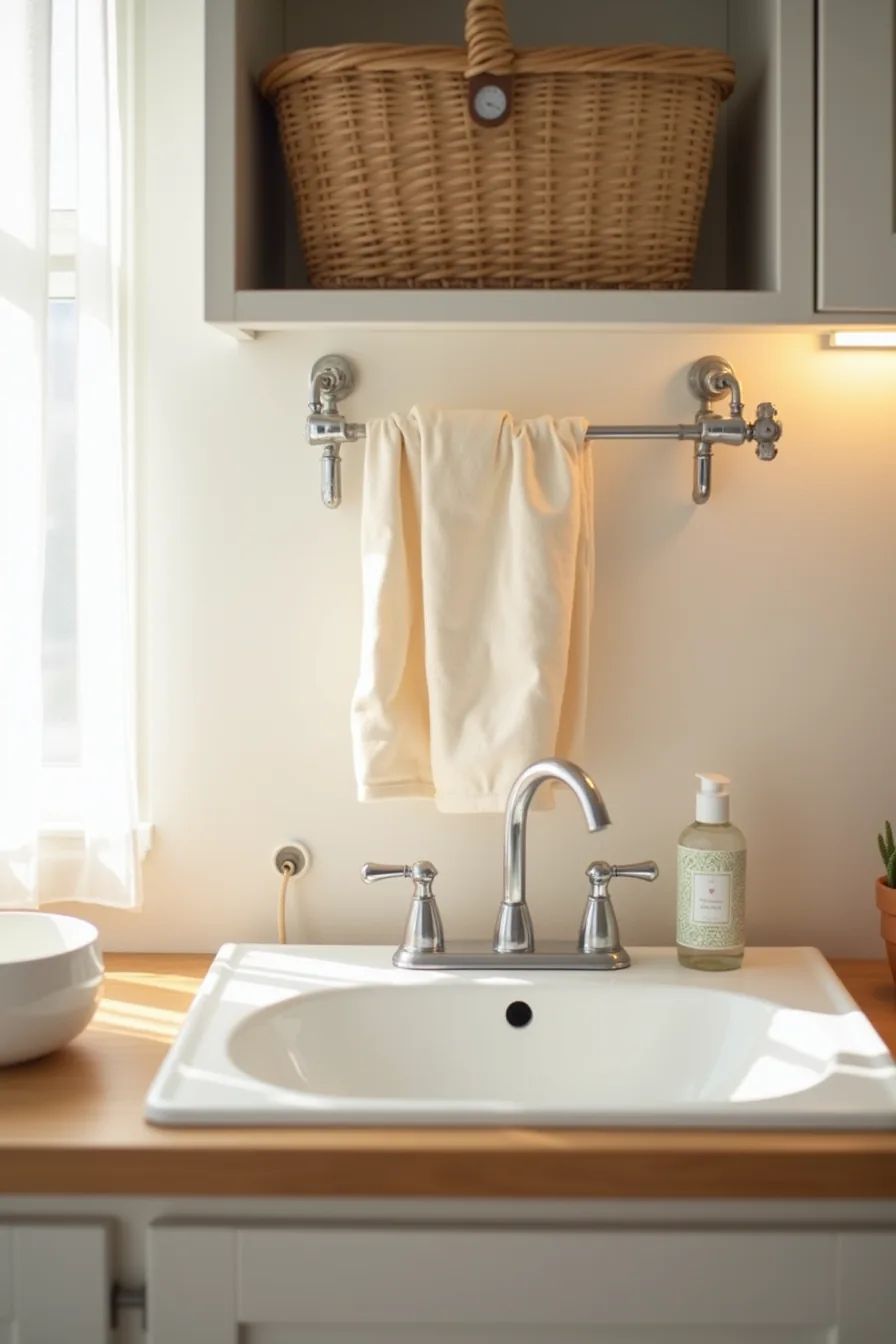
This approach uses a tension rod fitted inside the cabinet opening, with cream cotton fabric bunched along it rather than pulled taut. The relaxed gathering is the key, it drapes softly over exposed pipes while forgiving the uneven cabinet frame that makes a rigid panel impossible to install. Because the rod mounts independently of the cabinet sides, you can set each end at a different height to follow the frame’s natural line.
The wicker basket on the shelf above anchors the country aesthetic, but the real advantage is practical: gathered fabric conceals plumbing without demanding precise measurements. You need roughly 1.5 to 2 times the opening width in fabric for proper bunching, and a tension rod rated for your cabinet’s depth. This suits renters (no hardware, no permanent changes) and anyone with older, asymmetrical cabinetry.
Cotton launders easily, though you’ll re-fluff the gathers after washing, a ten-minute task that preserves the casual cottage look versus the tailored flat-panel alternative.
Tailored Flat-Panel Look: Clean Lines and Precision
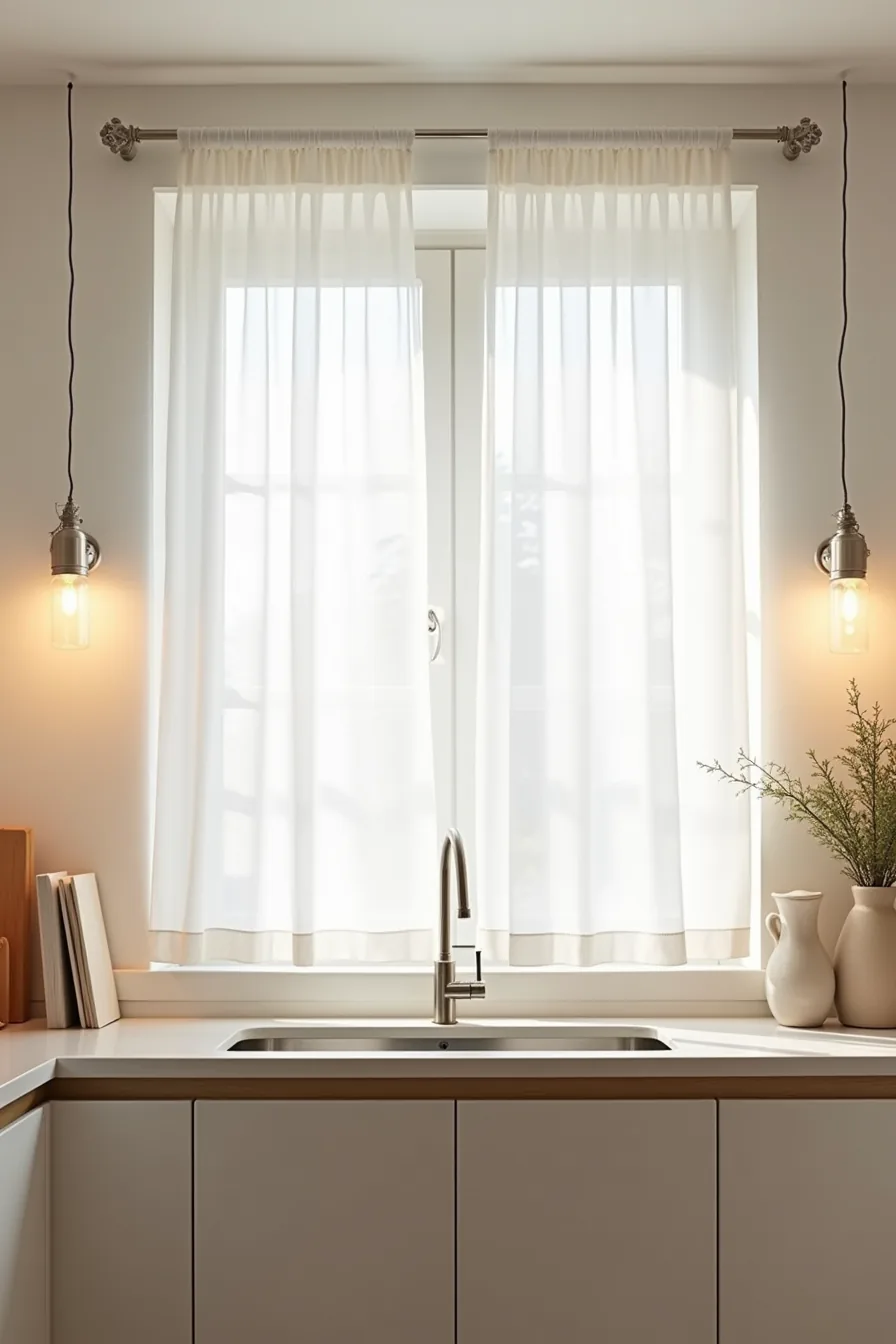
When your kitchen leans modern or transitional, the answer is structured flat linen panels hung from a brushed-nickel rod, no gathering, no overlap, just two crisp widths meeting exactly at the center. The fabric is cut to the opening’s precise width plus a 1-inch seam allowance on each side, with a 2-inch hem at the bottom that stops a quarter-inch above the floor to keep the line sharp. You need a rod with a 1-inch clearance on each side of the cabinet frame so the panels hang true rather than bowing against the wood.
This setup suits a stainless steel faucet and geometric tile floor because it echoes those hard, clean edges instead of fighting them. Unlike gathered cotton, flat linen shows every wrinkle, so plan on steam-ironing after each wash and using a rod that allows the panels to slide without snagging. The trade-off is maintenance for precision: you lose the forgiving fit of gathers, but you gain a visual order that makes a busy countertop feel intentional.
Patterned Fabric Moment: Pattern as the Focal Point
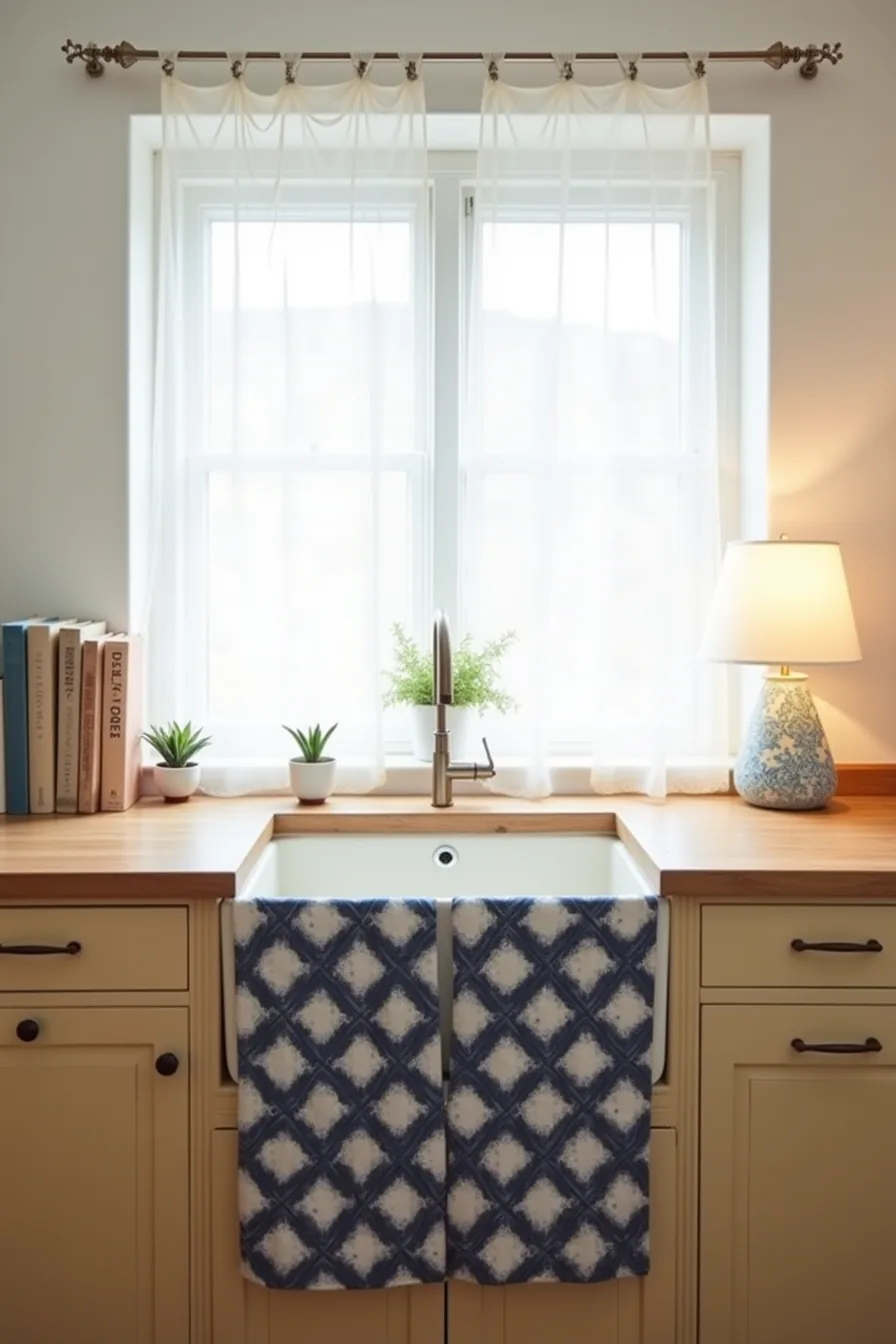
A bold geometric print in navy and white transforms the under-sink zone from afterthought to anchor. Tension rods make this a zero-drill installation, measure the inside width of the cabinet opening and extend the rod until it locks against the interior walls, no hardware required. This route suits renters or anyone hesitant to commit, since swapping the fabric takes under five minutes and costs less than a decorative throw pillow.
The pattern does the heavy lifting, so keep surrounding elements quiet: solid-color cabinets on either side and a simple potted plant on the counter keep the visual competition low. Vintage pull handles echo the navy tones without demanding attention. For small kitchens, choose a print where the background matches your cabinet color, the eye reads the pattern as texture rather than additional mass.
Avoid oversized medallions in tight spaces; a repeating geometric scale of 4–6 inches reads balanced without overwhelming.
Cabinet-Door Alternative: Permanent Frame Solution

When you outgrow fabric, two white hinged cabinet doors mounted on a flush frame deliver the most finished look a sink skirt can offer. The door frame anchors the unit to the cabinet opening, while magnetic catches on the door edges keep everything snugly closed, no sagging hems, no rod slippage, just a surface that matches the surrounding cabinetry and a quartz countertop above it. This route suits homeowners planning to stay put for five-plus years, as it raises resale value and requires zero ongoing adjustment.
Installation demands more than a screwdriver: you’ll need a table saw or a pre-cut lumber order, wood filler, and paint that matches your cabinets to within one sheen level. Budget a full weekend for the build and $60–$120 in materials, versus $15–$30 for a tension rod and fabric. Access to plumbing stays excellent, hinged doors swing open fully, unlike a curtain that bunches against shut-off valves.
If you rent, skip this option; the frame and hinge holes will leave scars the landlord will notice. Pair the doors with the same pulls used elsewhere on the cabinets to keep sightlines continuous.
Sink Curtain Skirt Ideas for a Budget Refresh
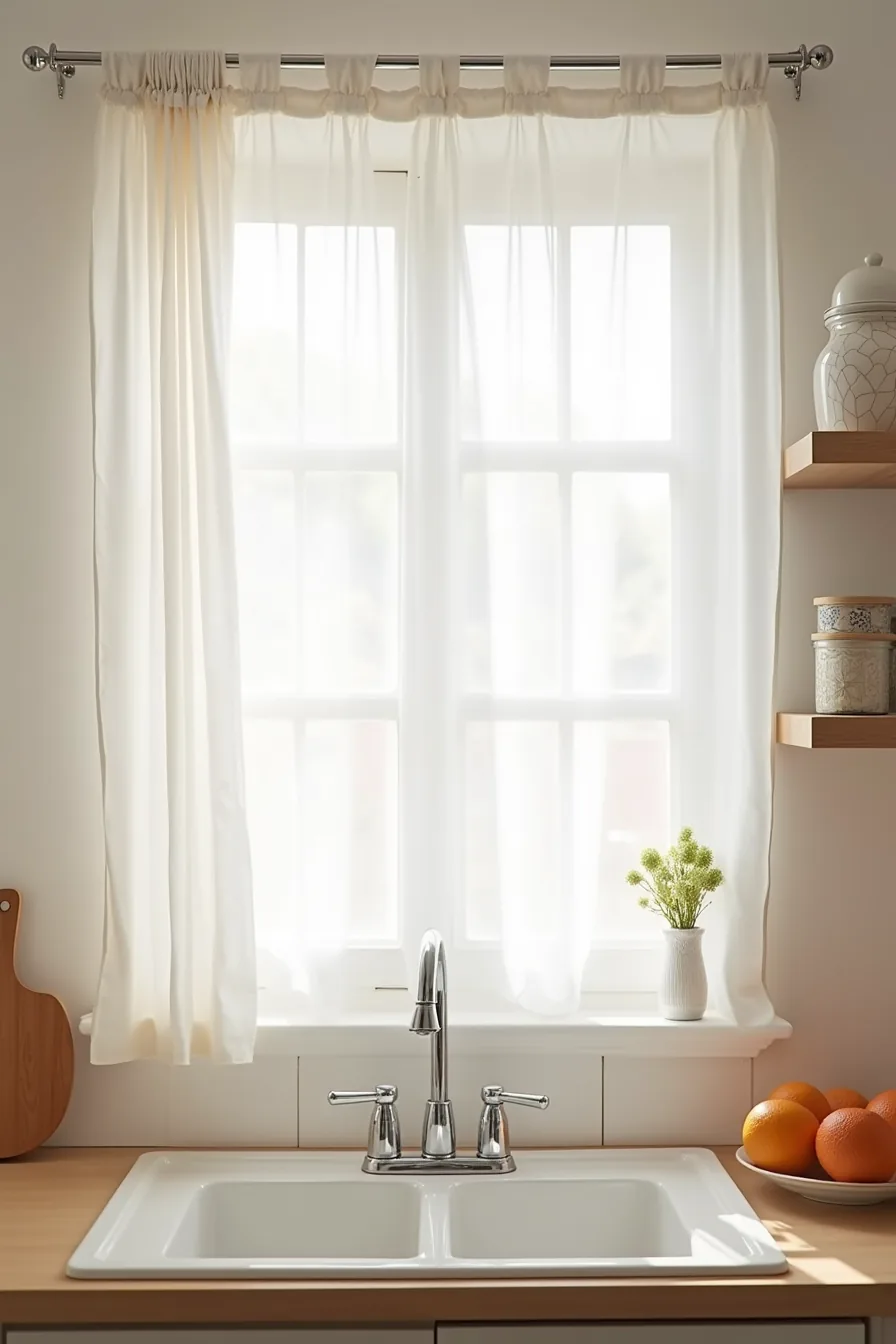
A standard queen-size bedsheet gives you 90–100 inches of width, enough to gather across most double-basin sink openings (typically 30–36 inches) with room for deep folds. Fold the sheet in half lengthwise to double the opacity and create a casing for a tension rod. Plastic clips at each gathered point distribute the fabric evenly and let you adjust fullness in minutes, no sewing required.
This setup works best in rental kitchens or starter homes where you want a soft visual anchor under a busy countertop without permanent hardware. The chrome rod holds friction-fit between the cabinet sidewalls, leaving the interior cavity fully accessible for plumbing access. Expect to refresh the fabric every two to three years, as kitchen heat and humidity flatten the cotton weave; a $12–$18 replacement sheet keeps the look new without a custom sewing project.
Adapting Scale and Proportion to Your Space
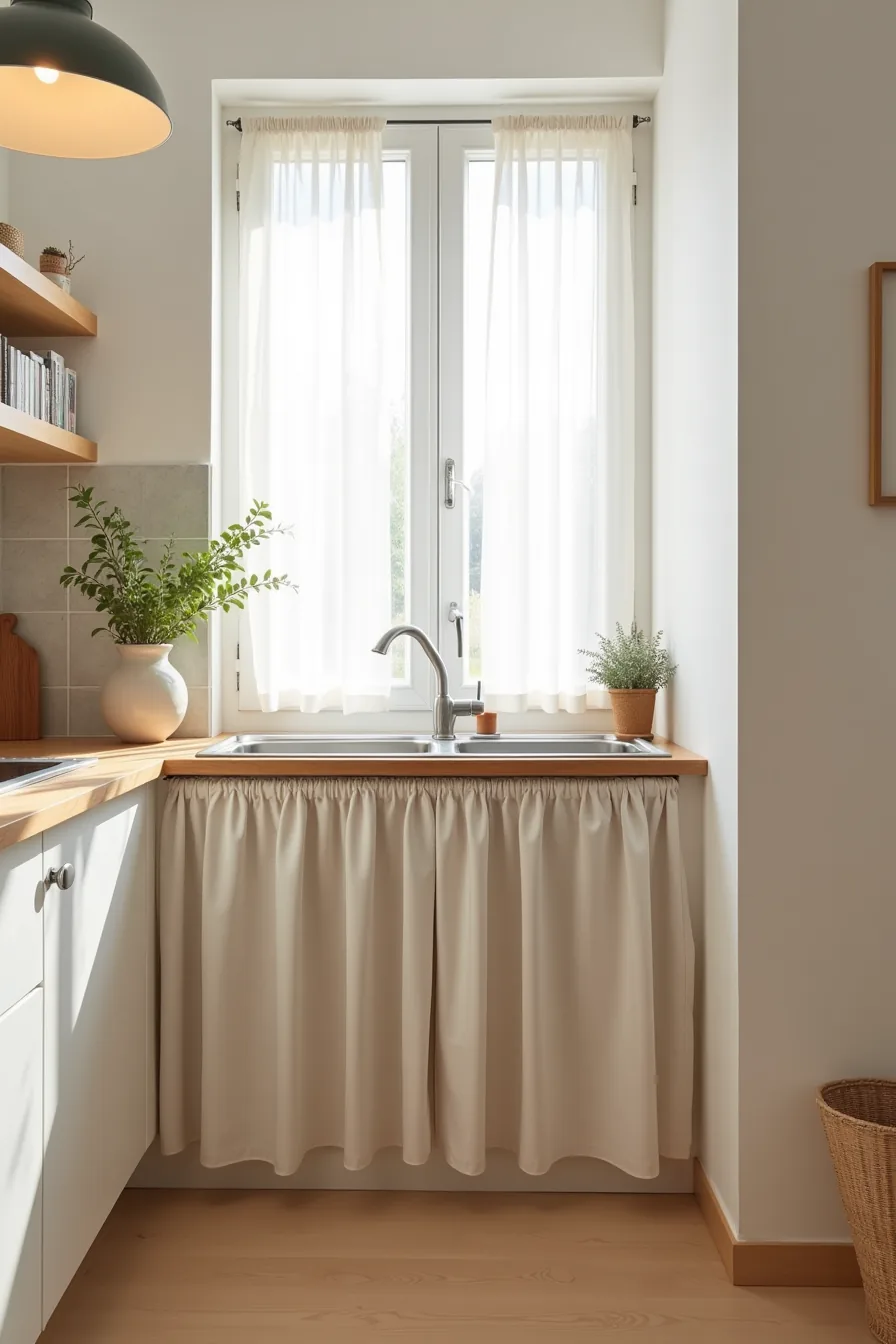
In a compact galley kitchen, the fabric skirt’s scale should shrink with the room’s footprint. Mount the tension rod flush against the cabinet edge instead of the frame’s middle to keep the cavity visually open, and let the fabric drop end just above the baseboard, typically 8–12 inches, depending on your cabinet height. This leaves the narrow floor space exposed, preventing the visual weight of pooled fabric from crowding the walkway.
The stainless steel sink above stays the focal point; the skirt acts as a muted backdrop, not a competing feature. In a standard 10-foot-wide kitchen, a fuller gather works, but for open-plan homes, opt for a flatter panel with minimal puckering to avoid visual clutter from a distance.
Your Decision Checklist
Before you buy or DIY, run through this list. Measure your sink width and depth first; your skirt should be at least one-third wider than the opening to gather properly. Choose a fabric that suits your water exposure, polyester blends for heavy use, cotton for light.
For renters, a tension rod is your safest bet; for permanent homes, a spring rod or clip-on track works better. Prioritize easy removal for washing, and always leave a few inches of clearance around plumbing access points.
Your next step: Grab a measuring tape and note your sink’s exact dimensions now, so you can match the right rod and fabric on your next shopping trip.
Frequently Asked Questions
What is a sink curtain skirt and why would I use one instead of cabinet doors?
A sink curtain skirt is a fabric panel mounted under a pedestal or wall-hung sink, replacing fixed cabinet doors. You use it to hide plumbing while gaining flexible, accessible storage for cleaning supplies or baskets.
Can I install a sink curtain skirt myself, or do I need a professional?
You can install it yourself in under an hour. Most skirts attach with a tension rod, adhesive hooks, or a simple screw-mounted rod. No plumbing or electrical work is involved, so professional help is unnecessary.
What fabric works best for a sink curtain skirt, and how do I clean it?
Choose a water-resistant, tightly woven fabric like polyester, treated cotton, or outdoor canvas. Machine-wash on cold with mild detergent, then hang dry. Avoid heavy linens that absorb moisture and mildew quickly in damp bathroom air.
How do I measure and cut fabric for a sink curtain skirt if I’m sewing it myself?
Measure the sink’s width, then add 4–6 inches for hem allowance and gathered fullness. For length, measure from rod to floor, subtract 1 inch for clearance. Cut one panel, hem all edges, and attach a rod pocket at the top.